
25 Peaceful Zen Garden with Natural Stone
A peaceful zen garden with natural stone offers a quiet escape from the noise of everyday life. With carefully placed rocks, raked gravel, and simple greenery, this timeless Japanese-inspired design turns even a small backyard into a place of stillness, balance, and mindful calm.
Whether you have a spacious backyard or a tiny courtyard, these ideas show how natural stone can shape a garden that feels both grounded and serene. If you love soft color too, explore Cozy Cottage Garden with Colorful Flowers, and for a grander outdoor retreat, see Modern Luxury Garden Ideas. Together, they offer inspiration for every kind of peaceful outdoor living.
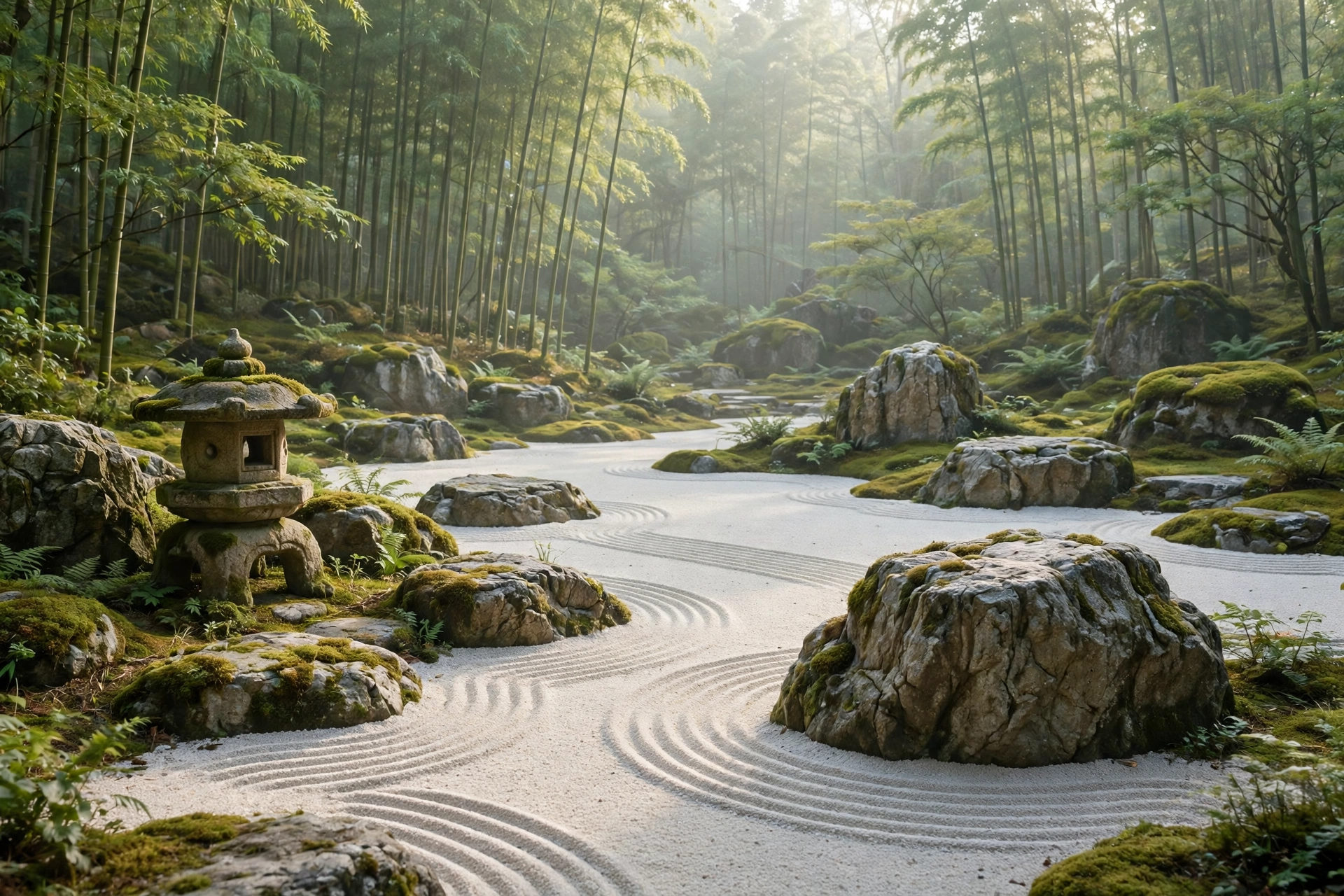
1. Natural Stone Pathways for Quiet Walks
A winding path of flat natural stones invites slow, mindful walking through your zen garden. Each step becomes a small ritual, encouraging you to notice the texture underfoot, the scent of nearby pine, and the gentle hush that settles over the whole space.
Choose irregular flagstones with soft gaps of moss or fine gravel between them, so the path feels organic rather than paved. Slight curves, rather than straight lines, keep the journey unhurried and make even a short garden walk feel longer and more contemplative.

2. Raked Gravel Patterns That Calm the Mind
Raked gravel is the soul of a traditional zen garden, its flowing lines suggesting water, wind, and quiet movement. A simple wooden rake and a few unhurried minutes each morning can turn garden care into a calming meditation practice of its own.
Use pale, fine gravel around larger stones so the raked patterns stand out clearly against the rock. Straight lines suit a formal mood, while gentle waves evoke a stream, letting you change the garden’s feeling whenever you rake it anew.

3. Moss-Covered Stones and Soft Groundcover
Moss softens hard stone with a velvety green carpet, giving the garden an aged, woodland feeling that cannot be rushed. In shaded, damp corners, moss will happily colonize rock surfaces, turning plain boulders into living, breathing features of quiet beauty.
Encourage moss by keeping stones shaded and lightly moist, and avoid harsh chemicals that would kill it. Paired with ferns and low groundcover, moss-covered stones create a lush green floor that feels cool, ancient, and deeply restful underfoot.
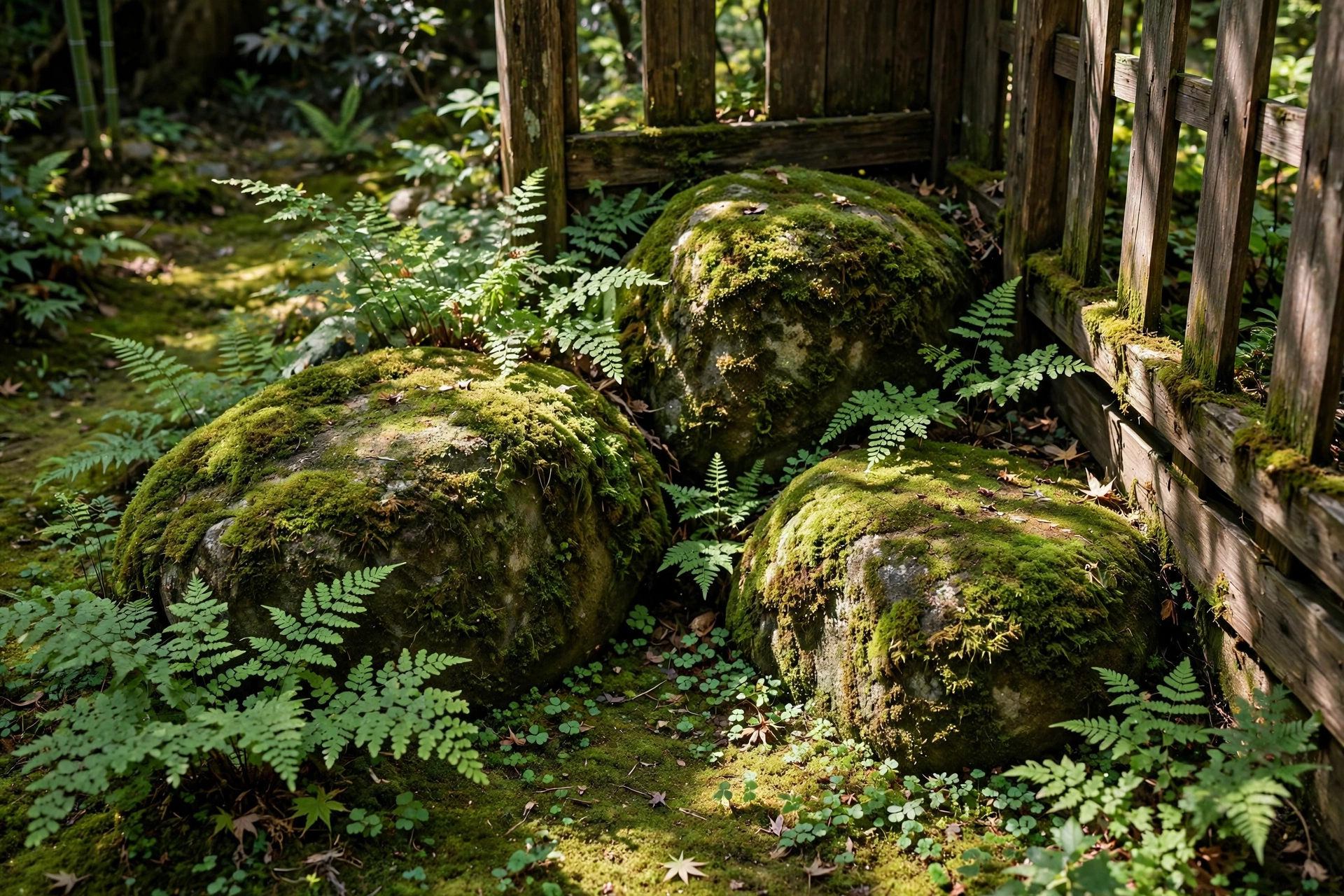
4. A Stone Water Basin for Ritual and Reflection
A carved stone water basin, or tsukubai, brings the gentle sound and shimmer of water into a zen garden. Traditionally used for ritual hand washing before entering a tea house, it now serves as a beautiful focal point for pause and reflection.
Place the basin low among stones and moss, with a bamboo spout trickling fresh water into it. The soft splash masks distant noise, draws birds to drink, and gives the garden a living, breathing center that changes with light and weather.
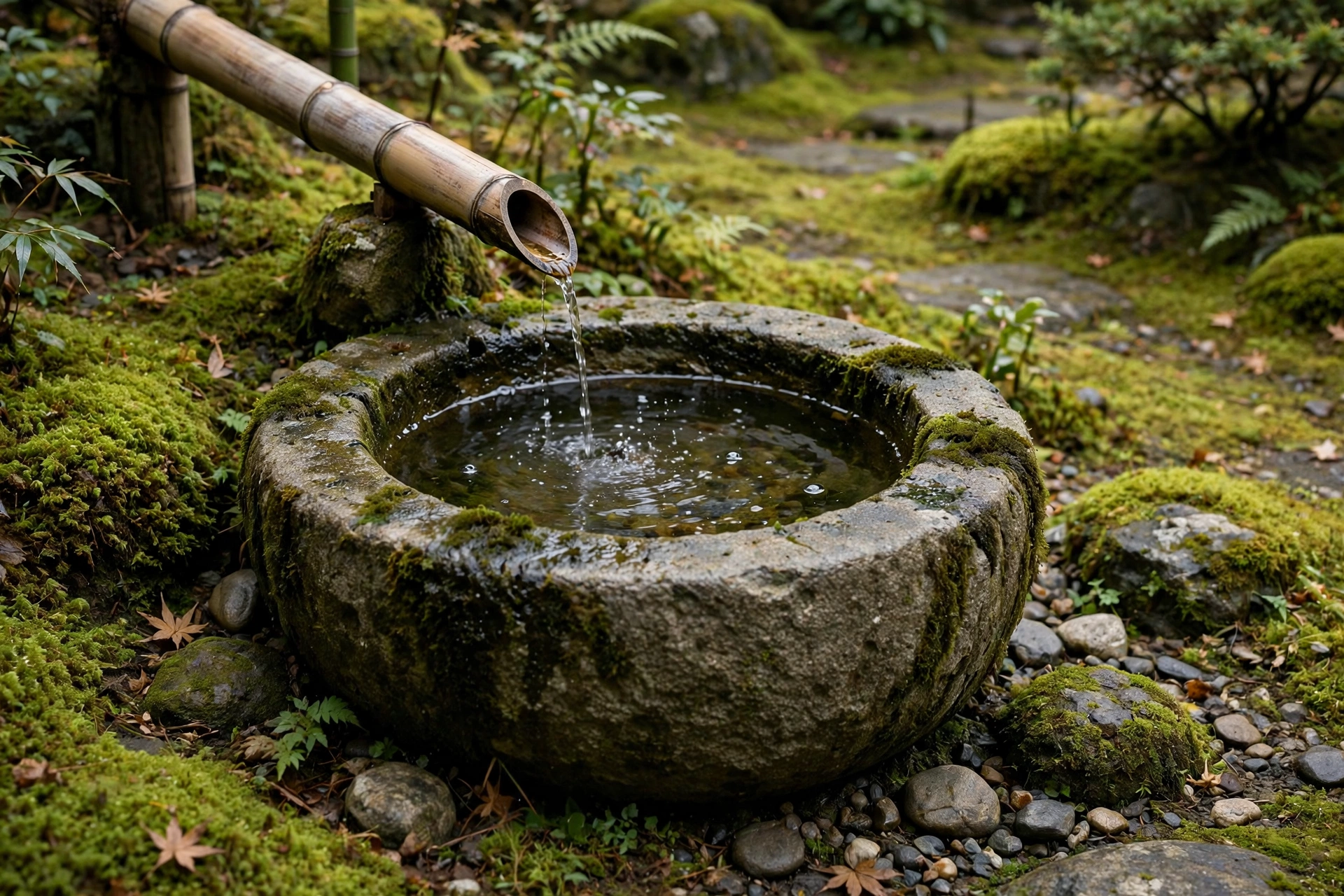
5. Bamboo Accents Beside Weathered Stone
Tall bamboo swaying beside weathered stone adds vertical grace and a soft, rustling soundtrack to the zen garden. Its slender green canes contrast beautifully with the weight and stillness of rock, balancing strength with gentle, flexible movement.
Plant bamboo in contained beds or large pots to keep its roots from wandering, and let a few canes lean naturally over stones. The filtered shade it casts creates shifting patterns of light that make the garden feel alive throughout the day.
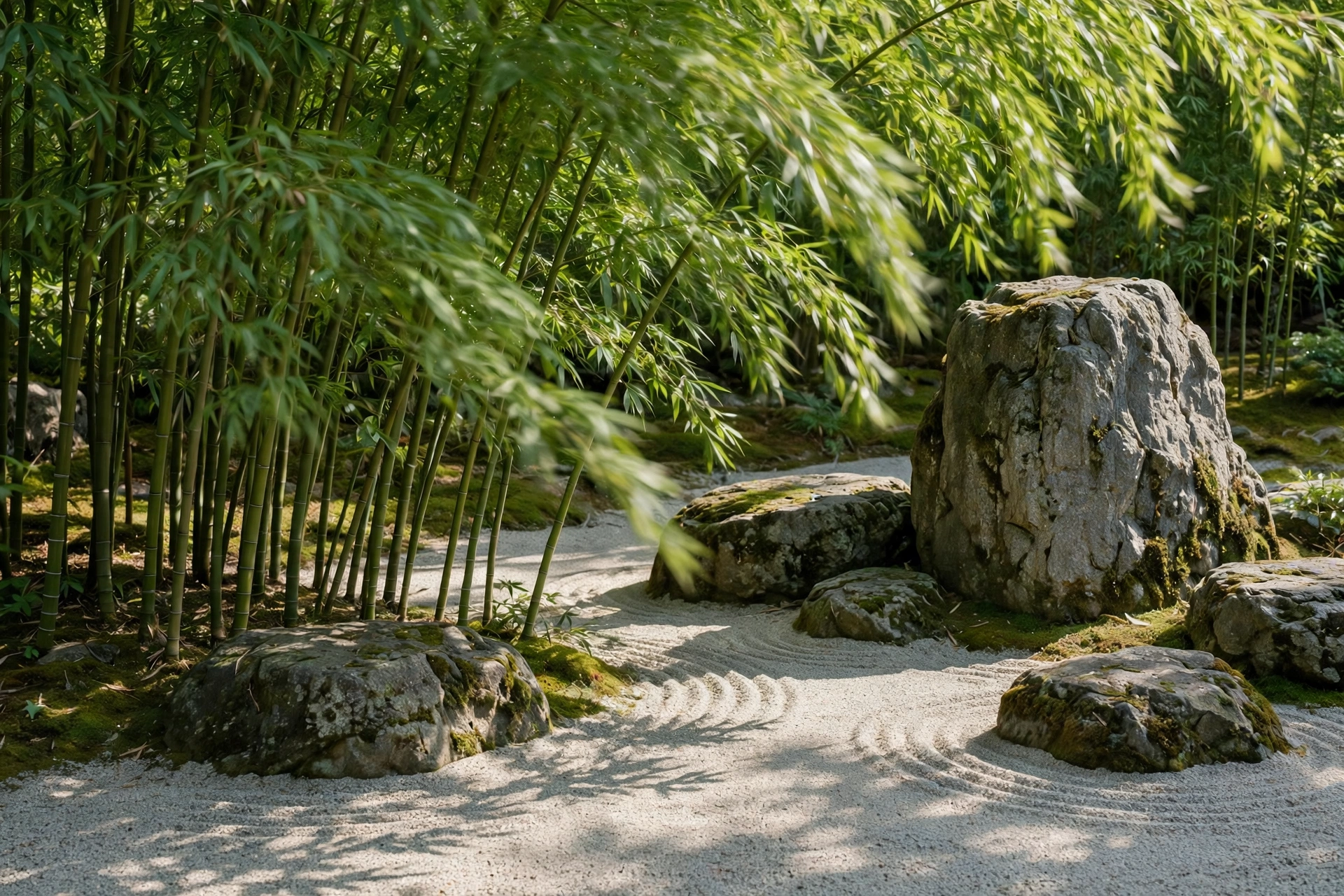
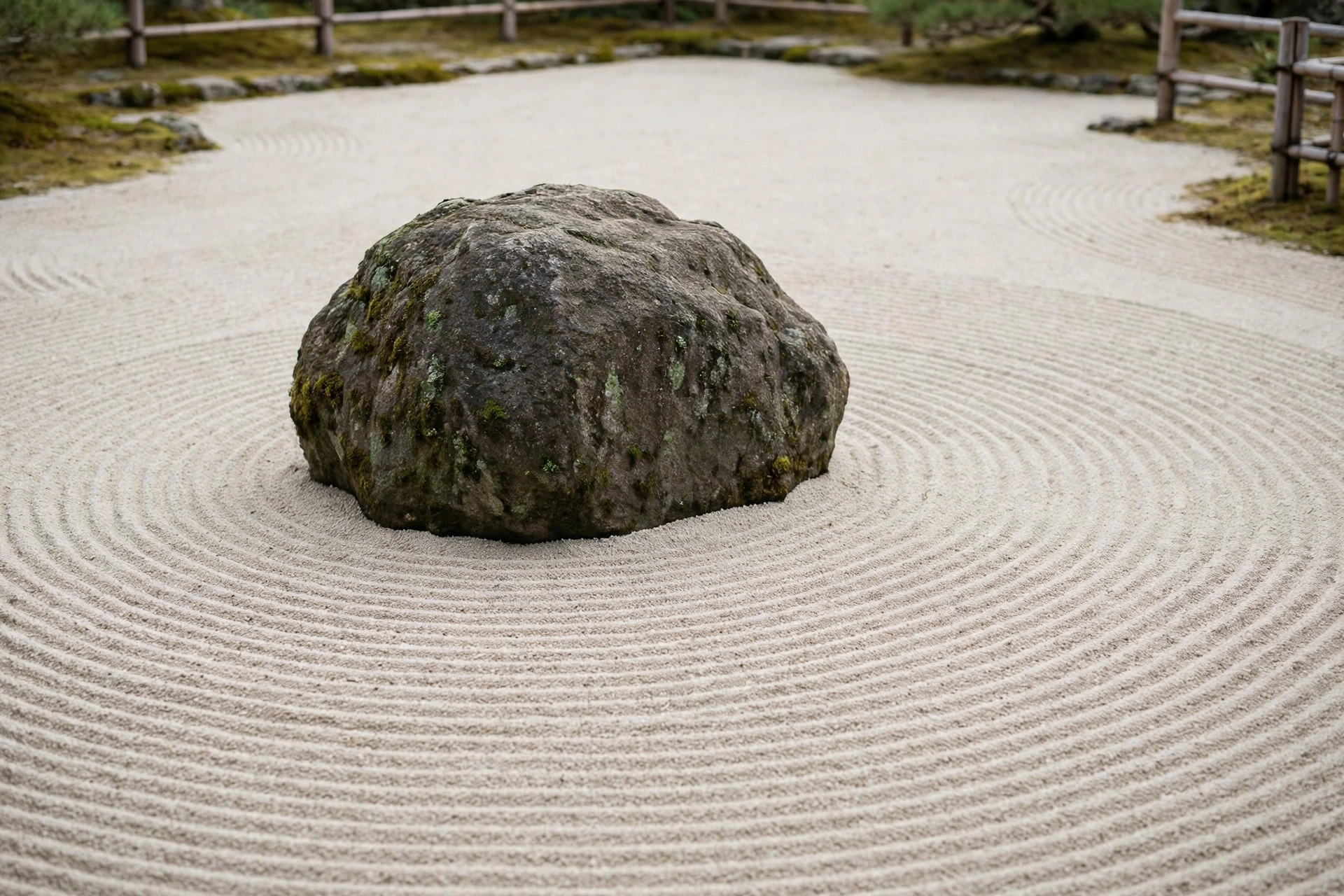
6. Large Boulder Focal Points
A single large boulder, set with care, can anchor an entire zen garden and give the eye a place to rest. In Japanese design, stones represent mountains or islands, so one well-chosen rock carries symbolic weight far beyond its physical size.
Bury the boulder a third deep so it looks naturally rooted rather than dropped in place, and angle its most interesting face toward the main viewing spot. Surround it with gravel or moss, and let empty space around it speak.
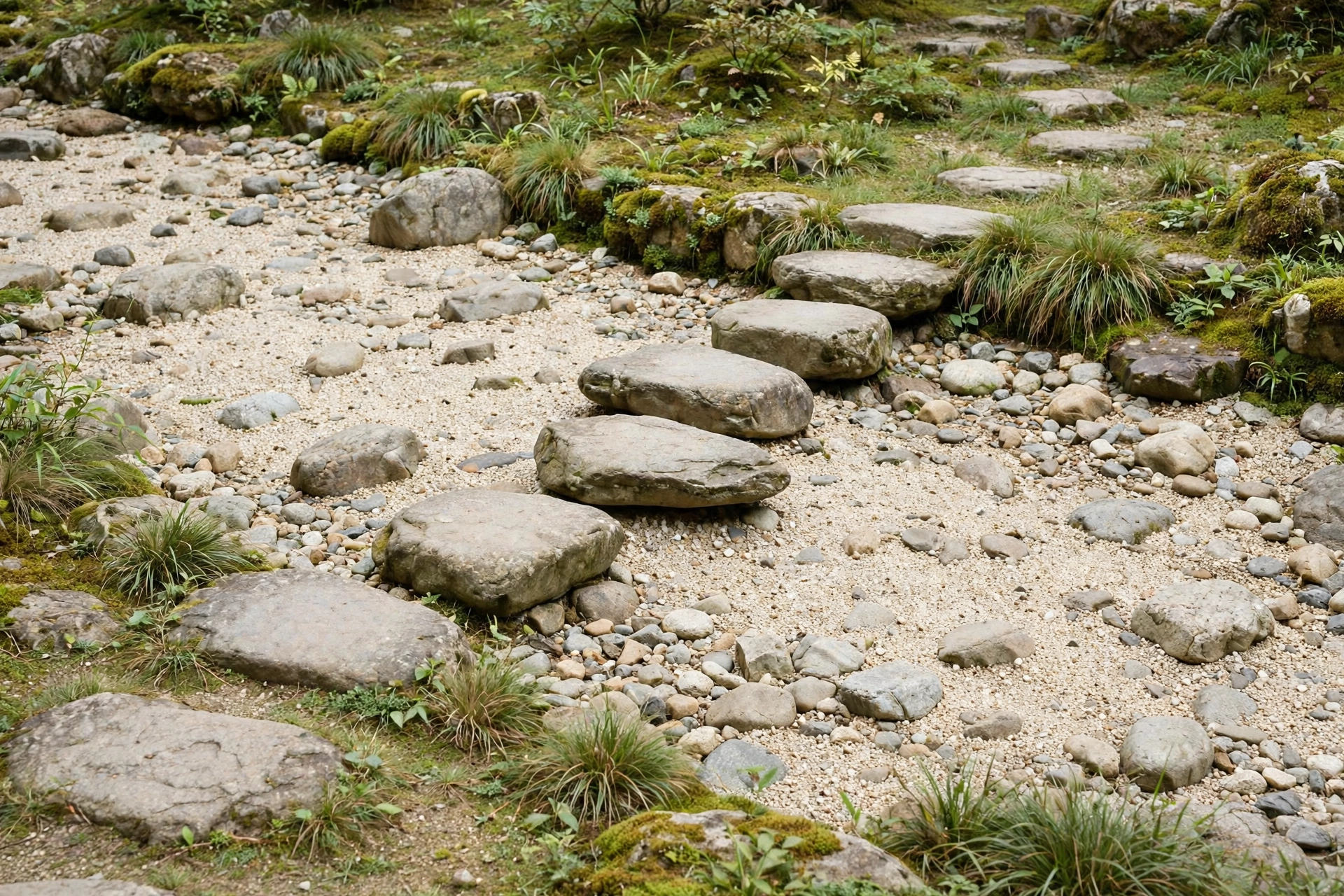
7. Stepping Stones Across a Dry Stream
Flat stepping stones crossing a bed of pale gravel suggest a stream without a single drop of water. This dry-stream design captures the spirit of flowing water while staying easy to maintain, even in gardens where real water is impractical.
Set the stones at a comfortable stride apart, slightly irregular in spacing, so crossing them requires gentle attention. Edge the dry stream with river rocks and low grasses to complete the illusion of a quiet, winding watercourse.
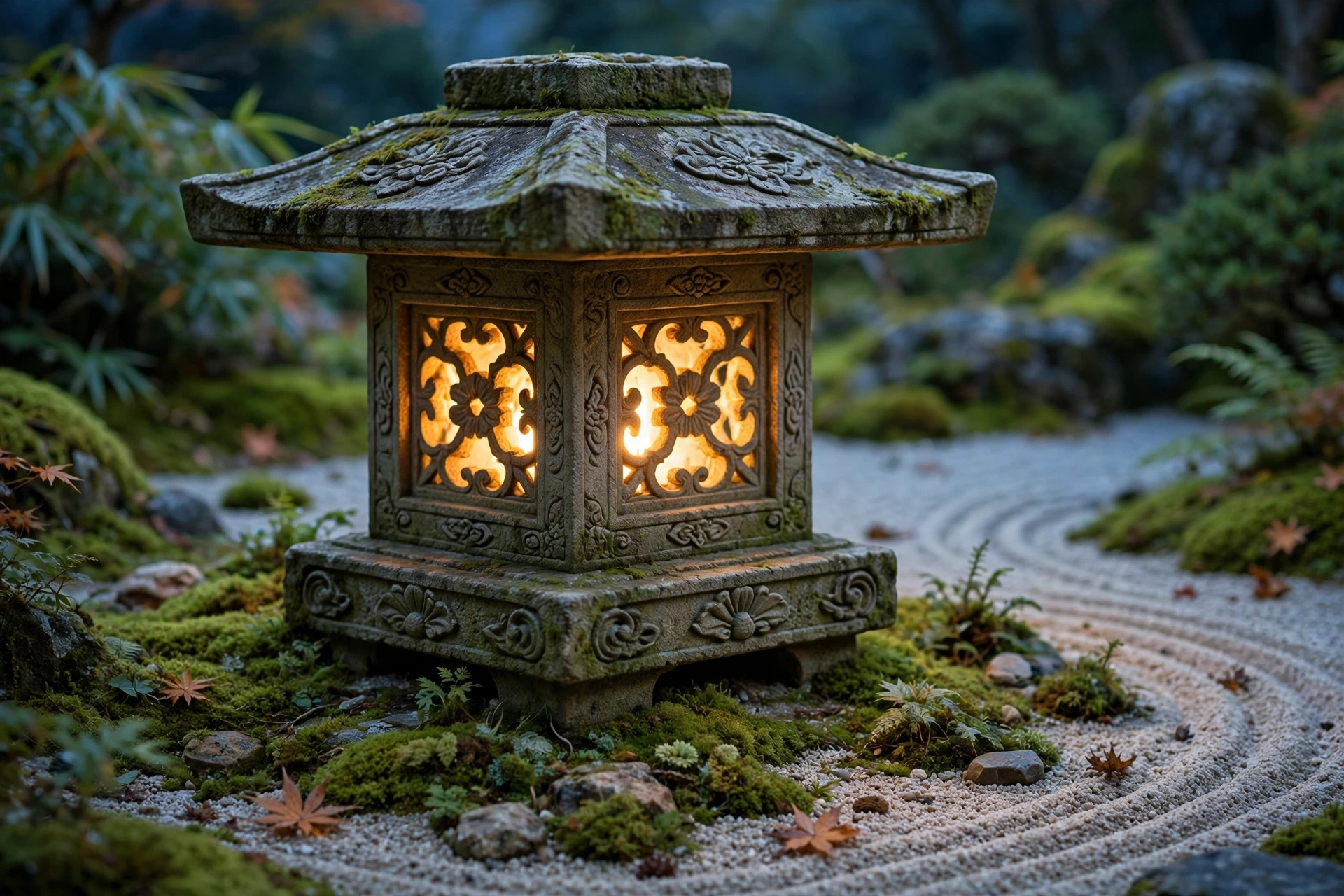
8. Stone Lanterns for Evening Glow
A traditional stone lantern adds history and soft evening light to a zen garden, its carved shape glowing warmly as dusk falls. Originally guiding visitors along temple paths, lanterns now mark quiet corners and invite evening strolls through the garden.
Place a lantern beside a path, near a water basin, or at a garden entrance, and fit it with a small candle or solar light. Its gentle glow transforms the garden after sunset into a calm, almost sacred space for reflection.
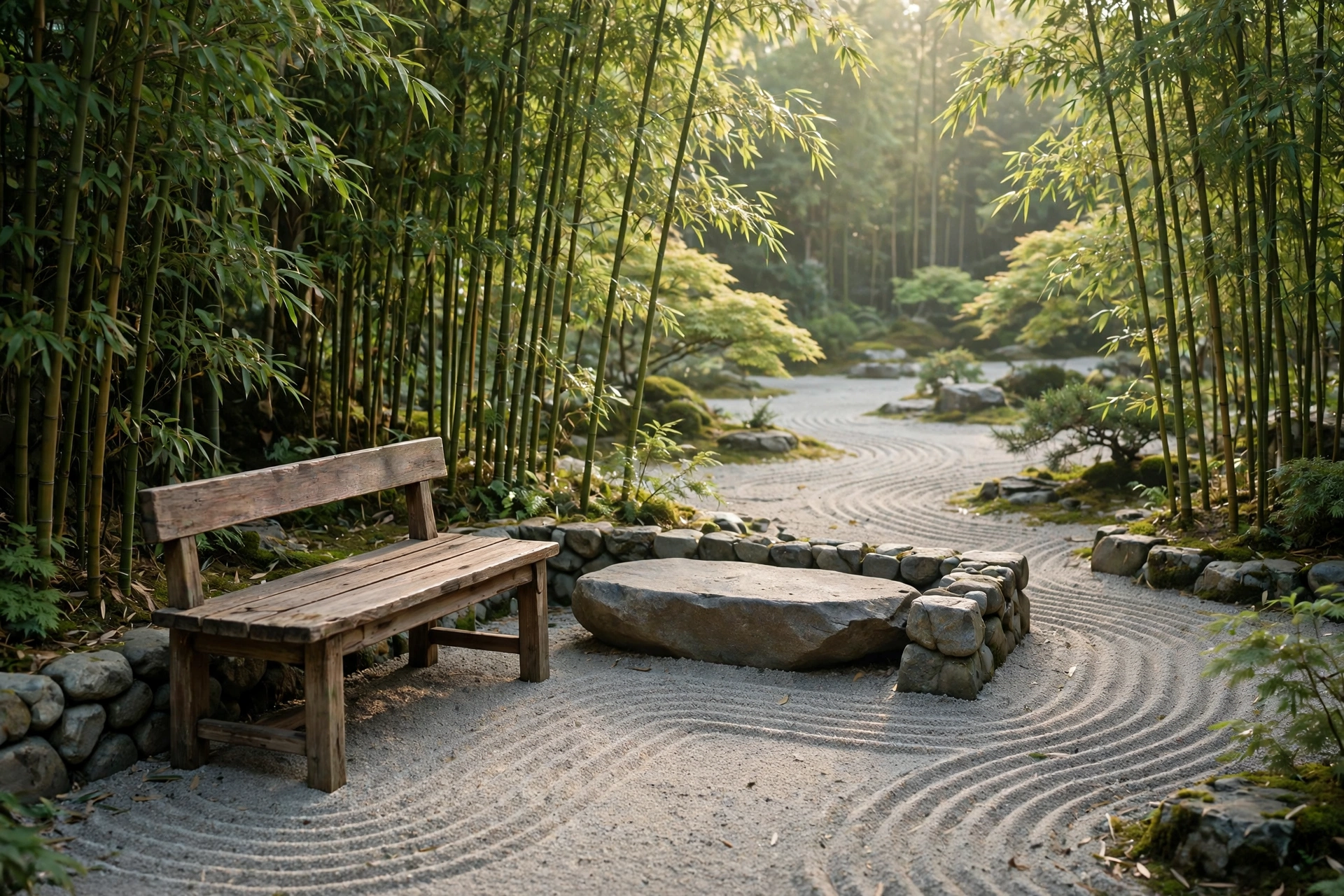
9. A Meditation Corner Framed by Stone
A small meditation corner framed by low stones gives you a dedicated place to sit, breathe, and simply be. A flat rock or simple wooden bench, sheltered by bamboo or a maple, becomes an outdoor room devoted entirely to stillness.
Keep the corner uncluttered, with only a cushion, a stone, and a view of gravel or greenery. Facing the morning sun or a favorite tree helps the mind settle, turning a few minutes of sitting into a genuinely restorative daily ritual.
10. River Rocks in a Dry Garden Bed
Smooth river rocks arranged in a dry garden bed bring the calm of a riverbank into your backyard without any plumbing. Their rounded shapes and muted tones soften the garden, offering a tactile, natural texture that invites touch and quiet contemplation.
Mix sizes from small pebbles to fist-sized stones, and let them drift in loose, natural groupings rather than rigid rows. A few larger rocks rising above the bed add rhythm, while groundcover creeping between them keeps the arrangement feeling alive.

11. Stone Benches for Stillness
A simple stone bench offers a cool, solid place to pause and absorb the garden’s quiet beauty. Unlike wooden furniture, stone weathers gracefully, growing more beautiful with moss, rain, and time, and it needs almost no care beyond an occasional sweep.
Position the bench where the view is best, perhaps facing raked gravel, a water basin, or a single striking boulder. Sitting at garden level, close to the stones, deepens the sense of being part of the landscape rather than merely looking at it.

12. Gravel and Stone Borders
Clean borders of gravel and stone give a zen garden its crisp, composed edges while keeping maintenance delightfully simple. A neat stone edging stops gravel from wandering into lawns or beds, and it frames each garden area like a picture.
Use larger stones as a border where paths meet planting beds, and fine gravel inside the bed itself for contrast. The simple rhythm of stone and gravel guides the eye gently through the garden, creating order without stiffness or fuss.

13. A Small Stone Bridge Over Stillness
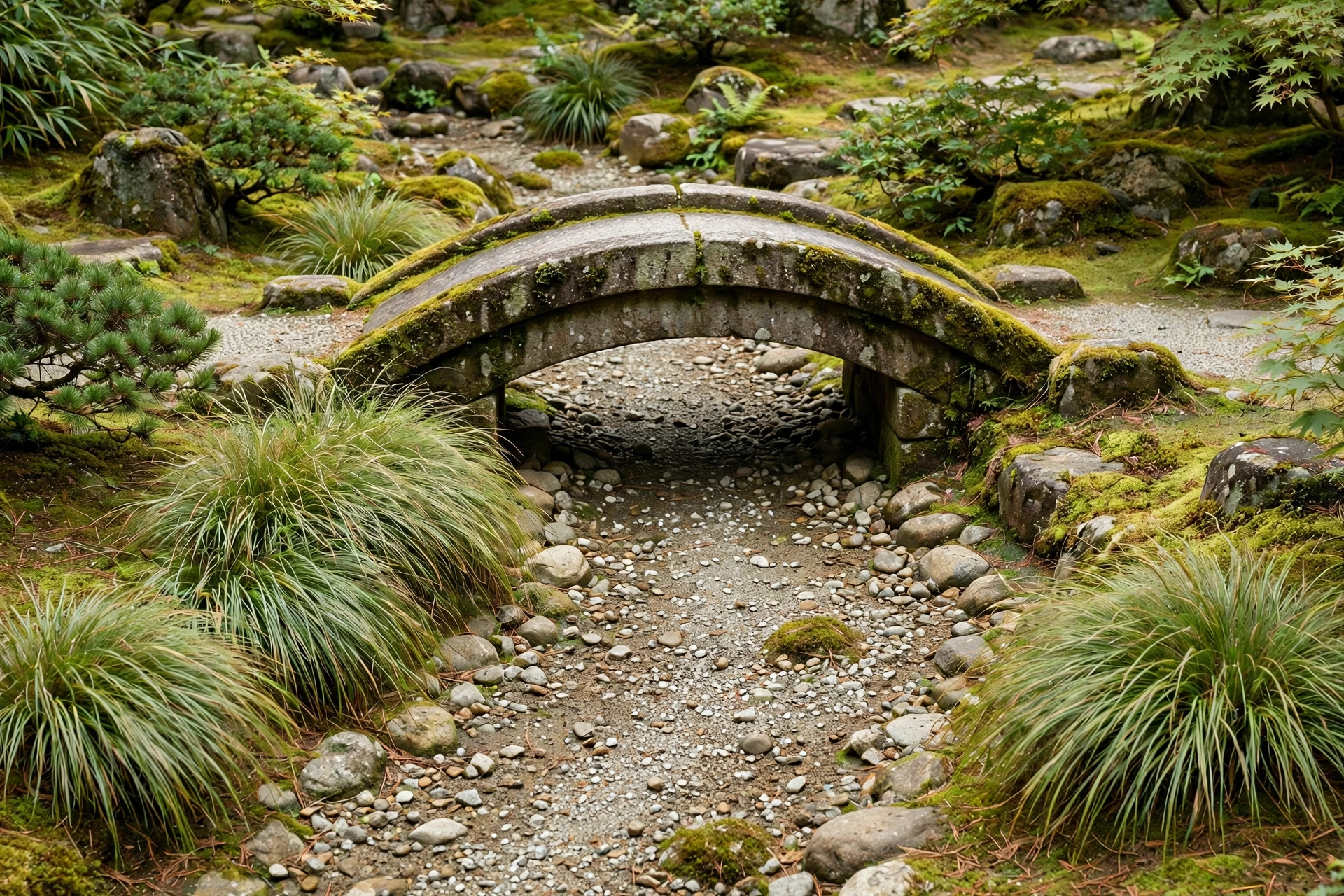
A small arched stone bridge crossing a dry stream or quiet pond becomes a charming focal point and a symbolic crossing from busy life into calm. Even a short bridge changes how you move through the garden, slowing each step.
Keep the bridge low and simple, using flat slabs or a gentle arch of stone that blends with the surroundings. Flanked by moss and grasses, it invites you to pause midway and take in the garden from a slightly new perspective.
14. Sand and Stone Balance in a Courtyard
In a small courtyard, pale sand and carefully grouped stones create a complete zen garden in miniature. The contrast between smooth sand and rough rock teaches balance, showing how emptiness and form can coexist in peaceful, beautiful harmony.
Rake the sand into simple patterns and group stones in odd numbers, leaving generous open space around each group. A single potted pine or bamboo completes the scene, proving that even the tiniest courtyard can hold a world of calm.

15. Stone Planters with Sculptural Greens
Rough stone planters filled with sculptural greens, such as clipped pine, juniper, or bamboo, add living architecture to the zen garden. The weight of the stone grounds the planting, while the pruned shapes echo the careful control of traditional Japanese gardens.
Choose planters with a natural, unfinished texture and keep plantings simple, with one strong shape per container. Grouped in threes near an entrance or path, stone planters welcome visitors with a sense of order, permanence, and quiet elegance.

16. Natural Stone Walls for Enclosure
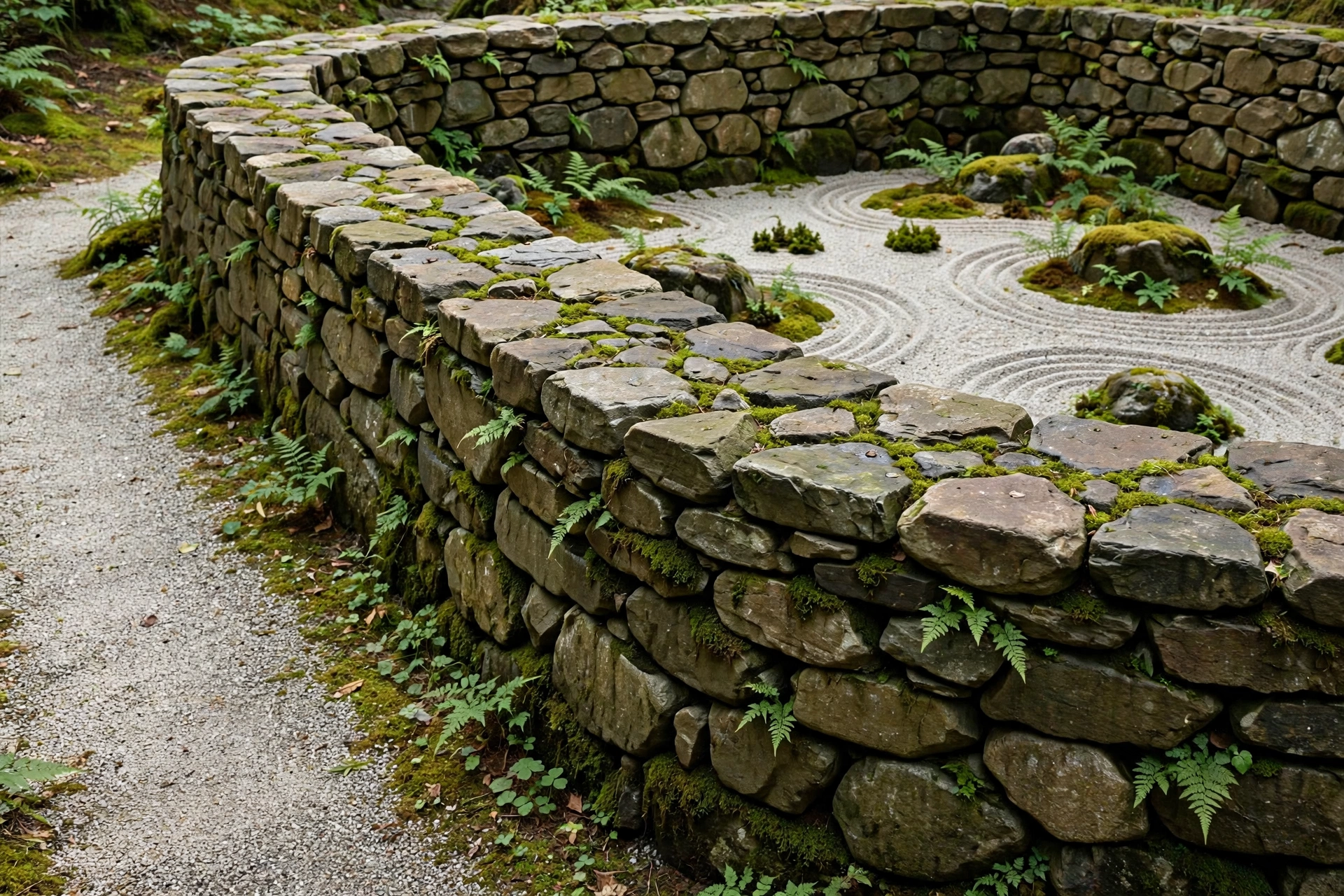
A low wall of stacked natural stone encloses the zen garden, shutting out the wider world and creating a sense of sanctuary. Dry-stacked walls, built without mortar, look ancient and organic, as though they have grown from the earth itself.
Keep the wall low enough to sit on, so it doubles as informal seating and a perch for quiet thought. Moss and small ferns settling into its crevices will soften the stone over time, making the boundary feel like part of nature.
17. A Secluded Stone Courtyard
A secluded stone courtyard, hidden behind bamboo or a garden wall, offers total privacy for meditation and rest. Paved with large flagstones and softened by moss, it becomes a private outdoor room where the outside world feels far away.
Furnish it sparingly with a stone bench, a water basin, and a single lantern, leaving most of the space empty. That emptiness is the point, giving the mind room to wander and the spirit room to settle in peace.

18. Stone and Water: A Gentle Fountain
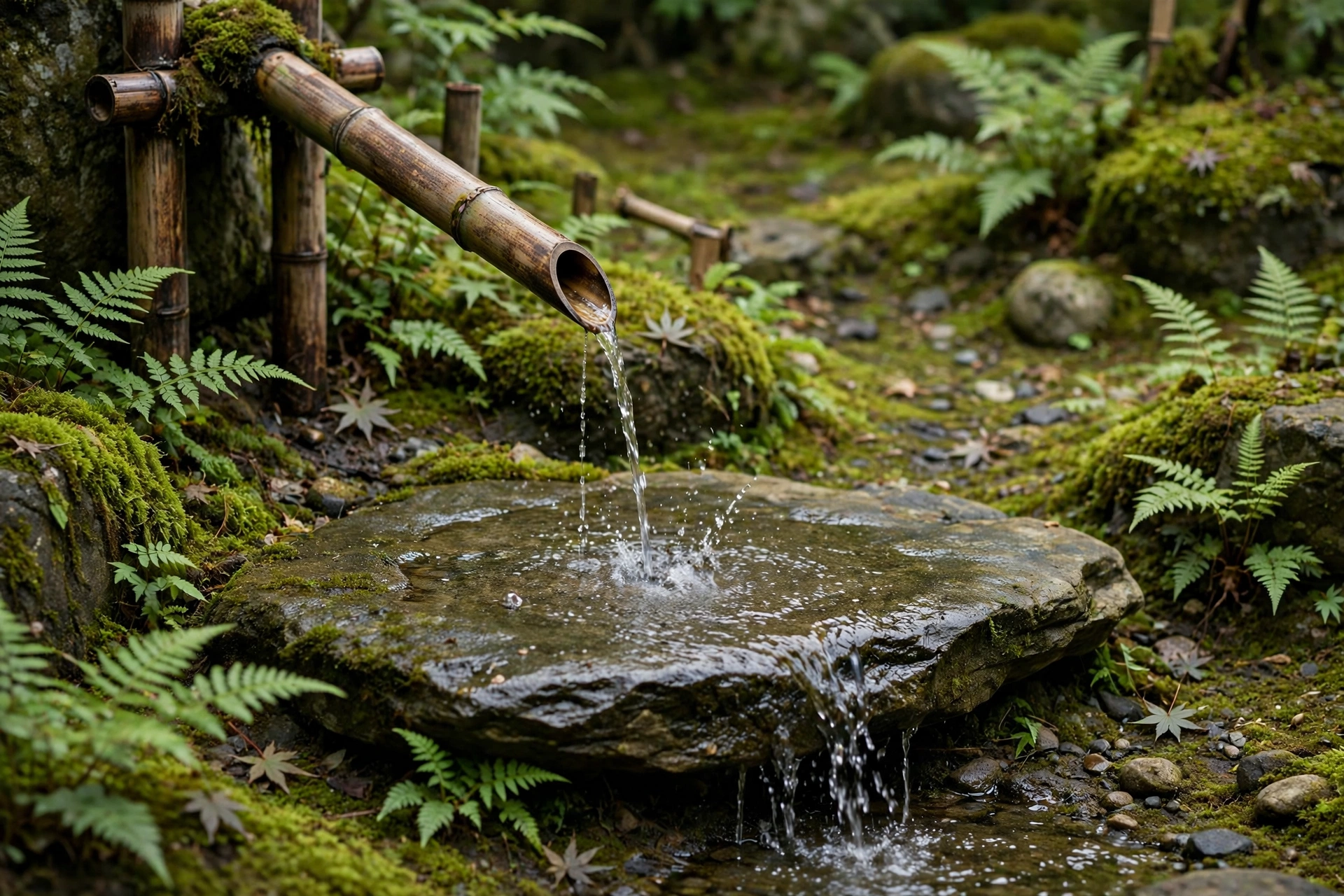
A gentle fountain of water falling over natural stone adds movement and soothing sound to a zen garden. The soft trickle draws attention away from traffic and chatter, replacing it with a steady, calming rhythm that helps the mind unwind.
Choose a simple design, such as water spilling from a bamboo pipe onto a flat rock, and let it recirculate quietly. Surrounded by moss and ferns, the fountain becomes a cool, refreshing heart for the whole garden space.
19. Pine, Maple, and Stone Combinations
The classic trio of pine, maple, and stone gives a zen garden year-round beauty and seasonal drama. Evergreen pine offers steady structure, maple brings fiery autumn color, and stone anchors both with timeless, unchanging presence through every season.
Prune pines into open, cloud-like shapes and let maples grow gracefully above low stones and gravel. The changing leaves against unchanging rock remind visitors that beauty lies in both permanence and the gentle passage of time.

20. Stone Steps Through a Hillside Garden
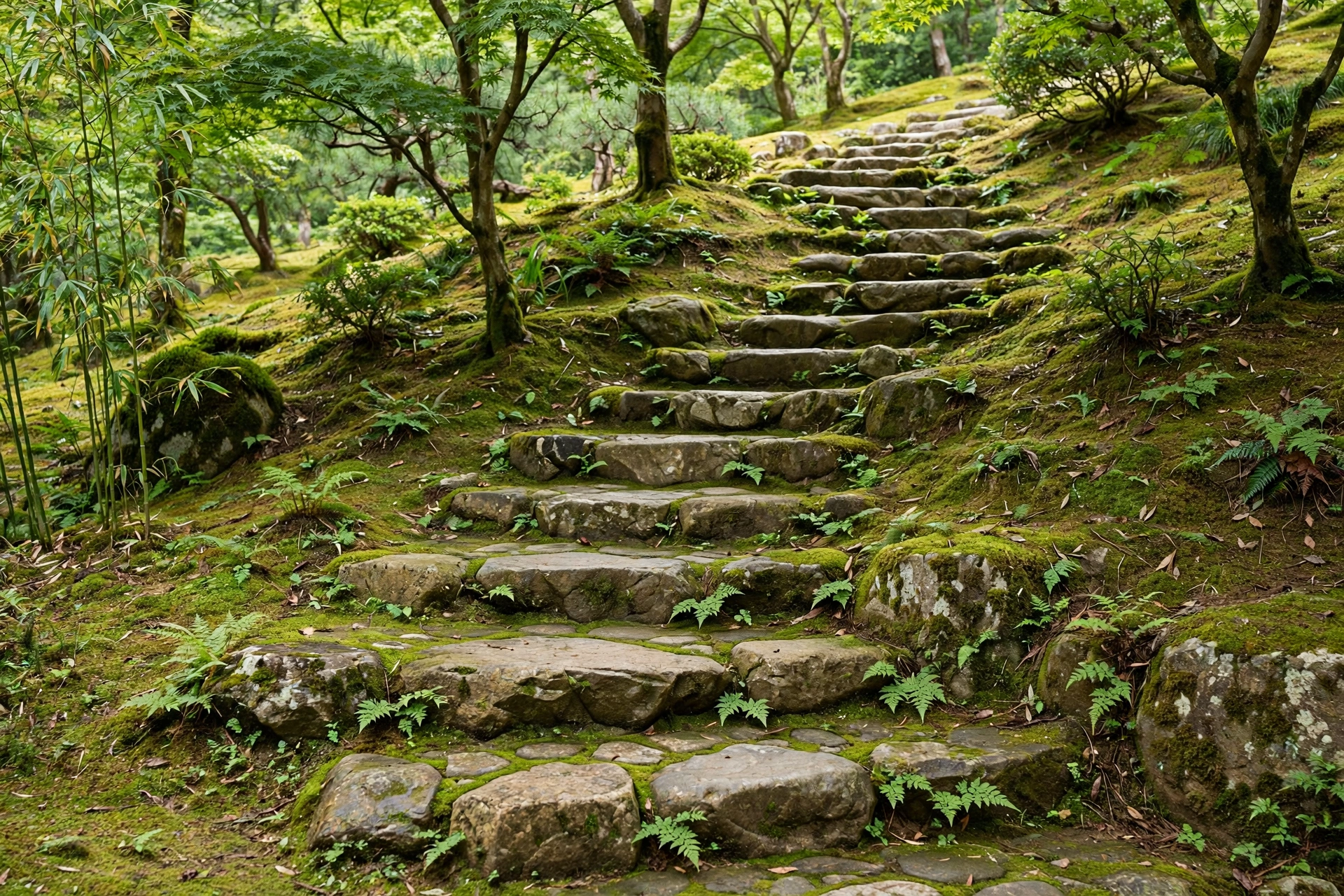
Natural stone steps climbing a gentle hillside turn a slope into a journey, each broad tread inviting a pause to enjoy the view. Irregular stones set into the earth feel far more peaceful than a formal staircase, blending the climb into the landscape.
Set each step slightly askew and plant moss, thyme, or small ferns in the gaps between them. The soft planting cushions the hard stone, and the slow ascent becomes a mindful walk that rewards every step with beauty.
21. A Stone Circle for Gathering and Calm
A circle of flat stones laid on gravel or moss creates a natural gathering place for quiet conversation, tea, or group meditation. The circular shape feels inclusive and ancient, echoing stone circles that have marked sacred ground for thousands of years.
Keep the circle open and uncluttered, with seating stones around its edge and a single lantern or boulder at its center. Used for morning tea or evening reflection, it turns the garden into a shared space for peace.

22. Weathered Stone and Aged Patina
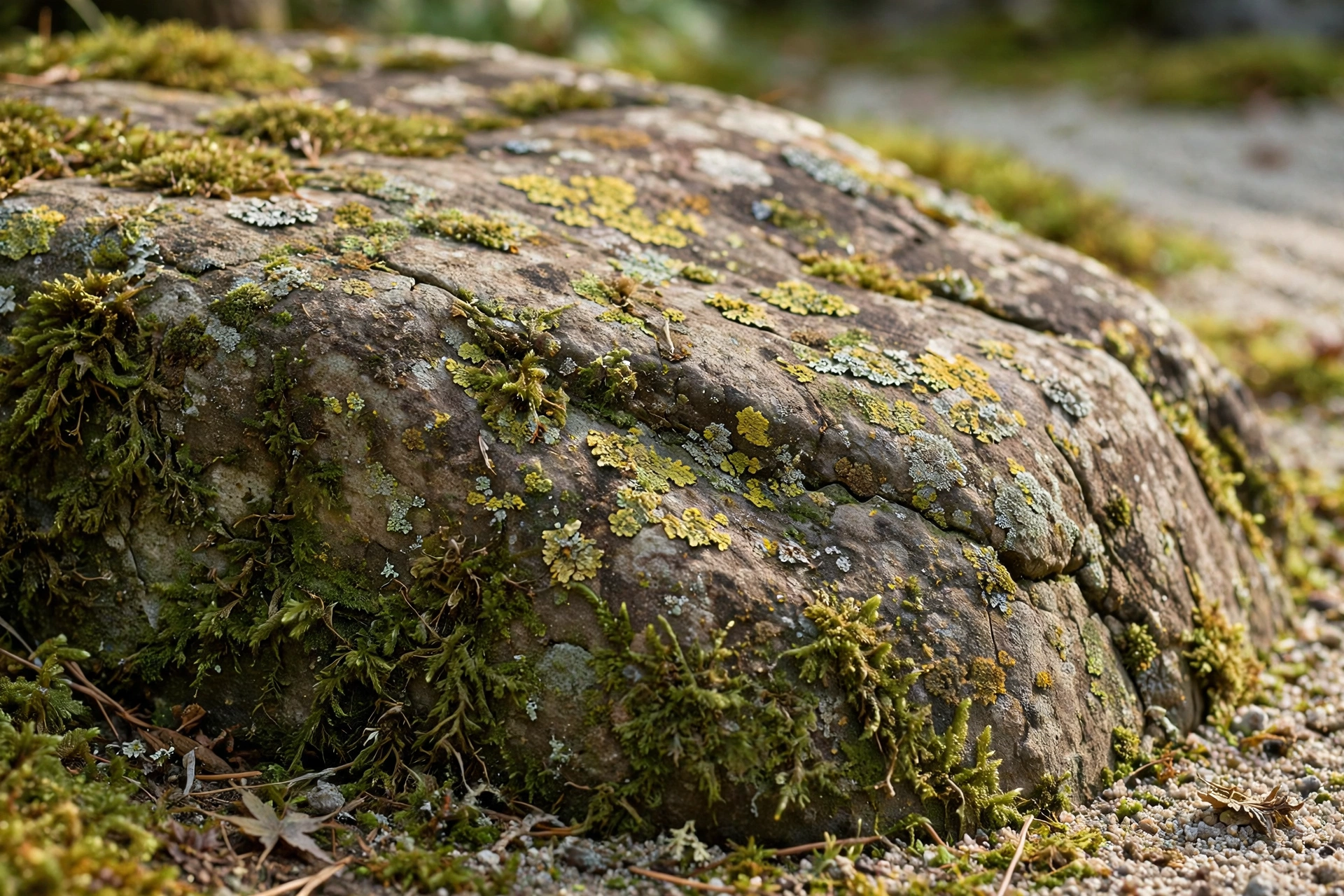
Weathered stone, softened by rain, moss, and years of exposure, carries a patina that new materials simply cannot imitate. In zen design, this aged quality is prized, reminding us that beauty deepens with time and that imperfection holds its own quiet grace.
Seek out reclaimed or naturally weathered stones for paths, walls, and focal points, and resist the urge to scrub them clean. Their lichen, stains, and softened edges tell a story, giving the garden depth, character, and a sense of history.
23. Stone Edging Along Garden Paths
Simple stone edging along garden paths keeps gravel, mulch, and soil exactly where they belong while adding a finished, crafted look. A row of upright stones or flat slabs guides the eye forward and gives every path a sense of purpose.
Choose stones similar in tone to the path itself for a seamless effect, or contrasting rock for a bolder outline. Either way, the edging frames the journey through the garden, turning an ordinary walk into a composed, peaceful experience.

24. Night Lighting on Natural Stone
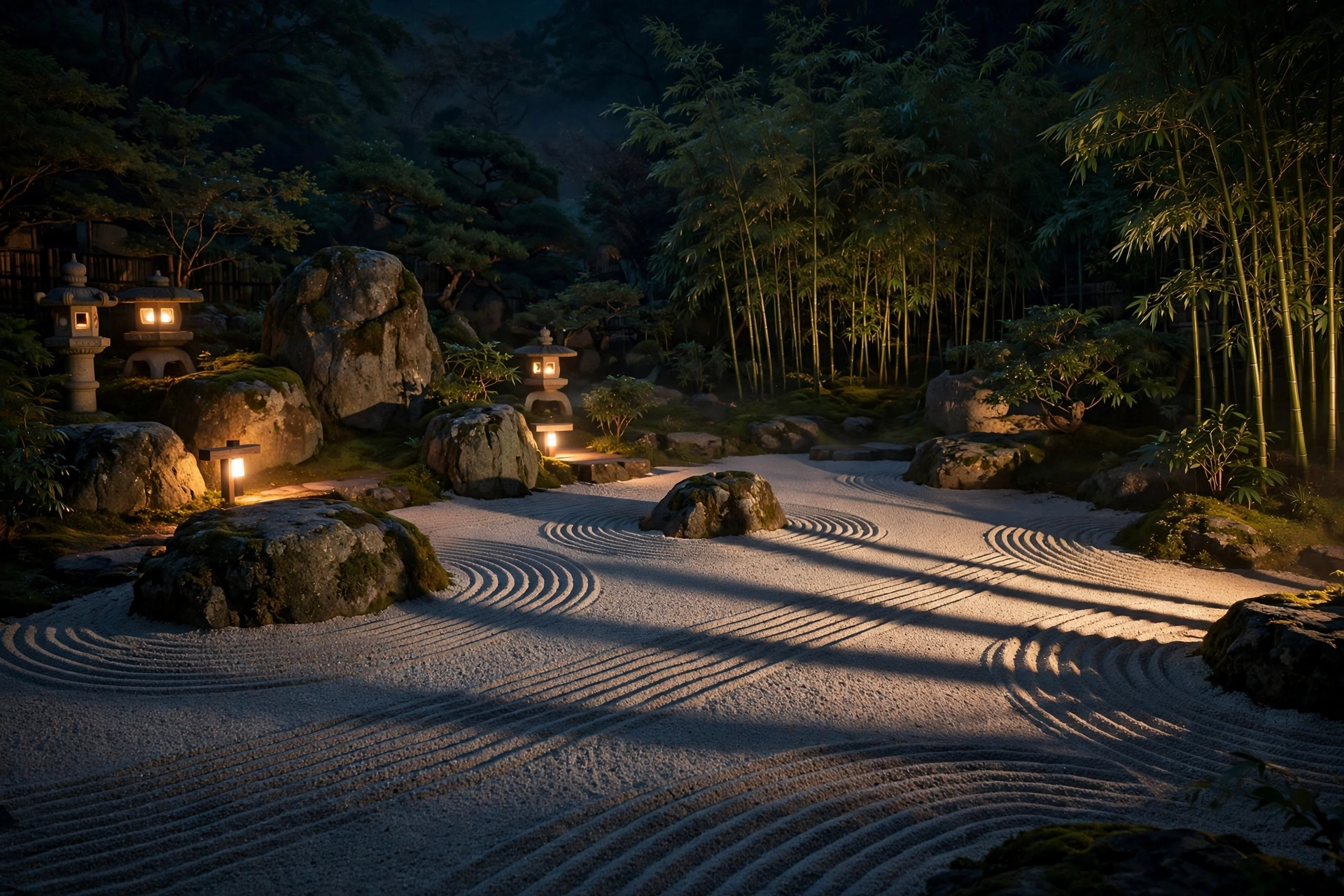
Soft night lighting reveals a different side of natural stone, as uplights and lanterns cast long shadows across gravel and moss. The garden takes on a mysterious, tranquil mood after dark, inviting quiet evening walks beneath the stars.
Use warm, low-level lights tucked behind boulders or beneath bamboo, avoiding harsh brightness that would break the calm. A few well-placed glows are enough to turn the zen garden into a magical nighttime retreat for reflection.
25. Finishing Touches for a Lasting Zen Retreat
The finishing touches of a zen garden are often the smallest ones, a wind chime, a single flower, or a carefully placed pebble that catches the eye. These quiet details reward slow looking and give the garden its personal, lived-in soul.
Step back often as you finish, removing anything that feels busy or unnecessary until only calm remains. A peaceful zen garden with natural stone is never truly finished, but tended with care, it will grow more beautiful and serene every year.


2 Comments