Small Living Room Ideas: 25 Smart Ways to Maximize Your Space
Small living room ideas prove that limited square footage doesn’t mean limited style. With smart furniture choices, clever storage, and the right color palette, even the tiniest living room can feel open, cozy, and functional. This guide walks you through 25 practical ideas to transform your compact living space.
Whether you rent a studio or own a small home, these small apartment layout tips will help you make every inch count — from multifunctional furniture to lighting tricks that visually expand the room.
Go Light with Colors and Mirrors
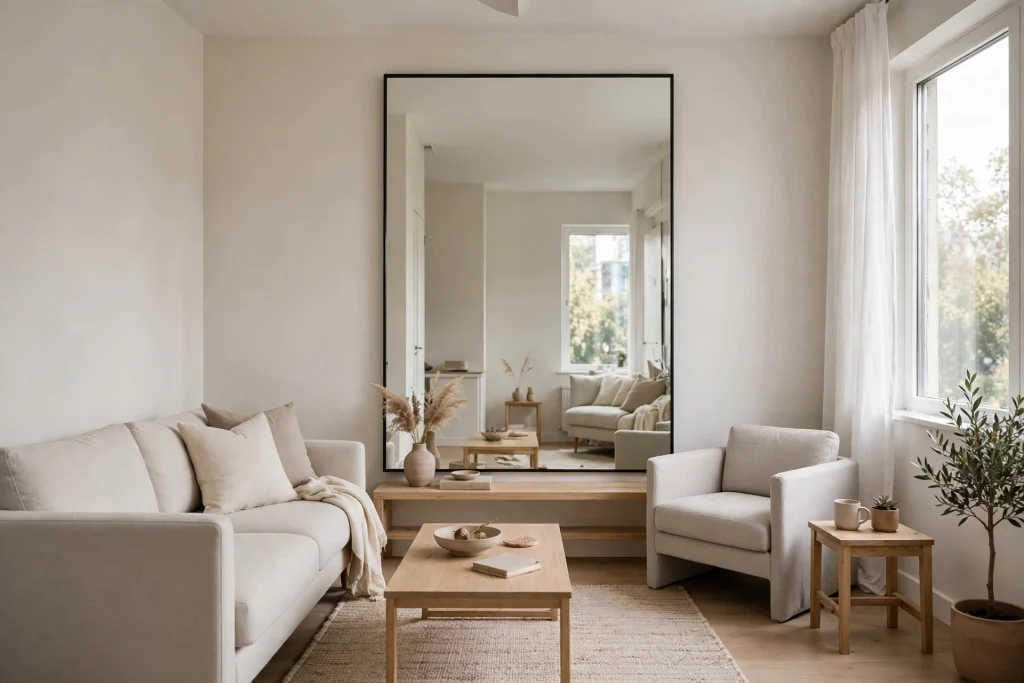
Light walls and a large mirror are the oldest tricks in the book — because they work. Pale neutrals reflect natural light, and a mirror doubles the visual depth of the room. Keep furniture legs visible to let light flow underneath.
A large mirror instantly doubles the sense of space in a small living room.
Light neutral walls bounce daylight into every corner.
Slim furniture with visible legs keeps the floor feeling open.
For more inspiration, explore small apartment decorating ideas to coordinate the rest of your home with your living room.
Choose Multifunctional Furniture
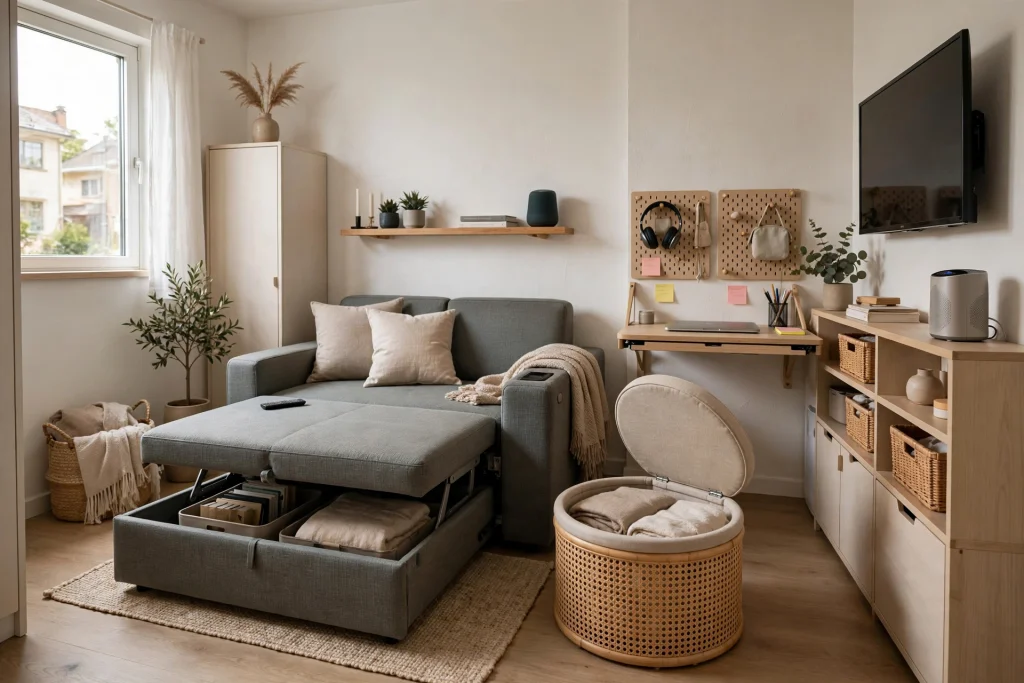
In a compact living space, every piece should earn its place. A sofa bed handles overnight guests, while a storage ottoman hides blankets and doubles as extra seating. Look for nesting tables and wall-mounted drop-leaf desks.
Multifunctional pieces let one item do the work of two or three.
A storage ottoman hides clutter while adding extra seating.
Sofa beds and nesting tables flex with your daily needs.
Think Vertical with Shelving
When floor space is scarce, go up. Tall floating shelves draw the eye upward and free up precious square meters. Style them with books, plants, and baskets for storage that looks intentional.
Vertical shelving uses wall space your floor plan can’t spare.
Tall shelves draw the eye up, making ceilings feel higher.
Baskets on shelves keep everyday items tidy and accessible.
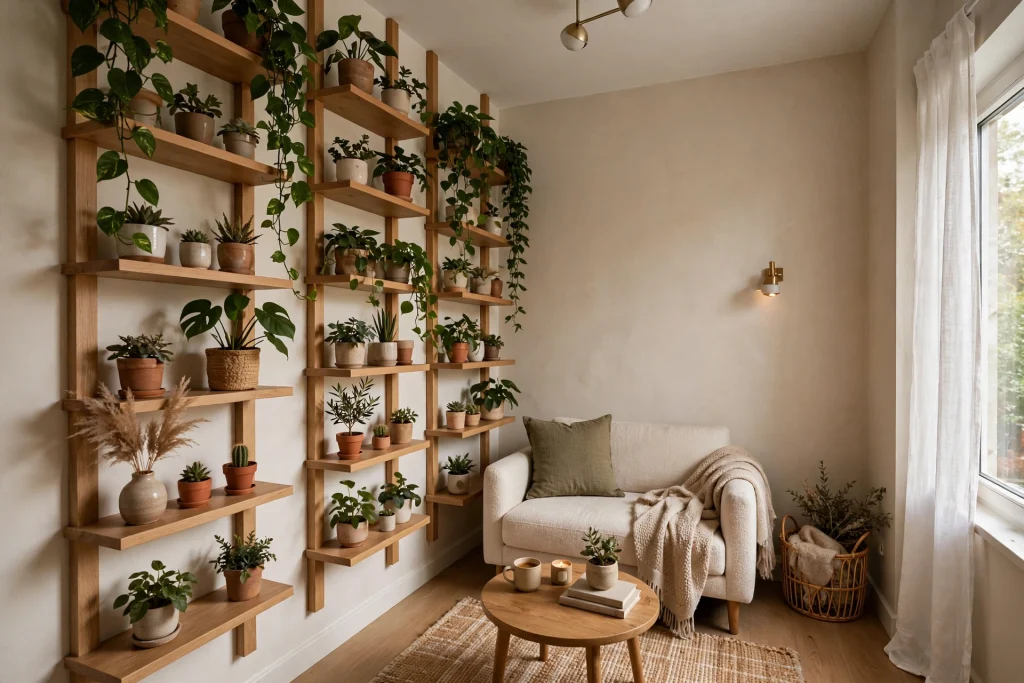
Pair these storage wins with cozy living room decor touches like throws and warm lighting to keep the space inviting.
Mount a Foldable Wall Table
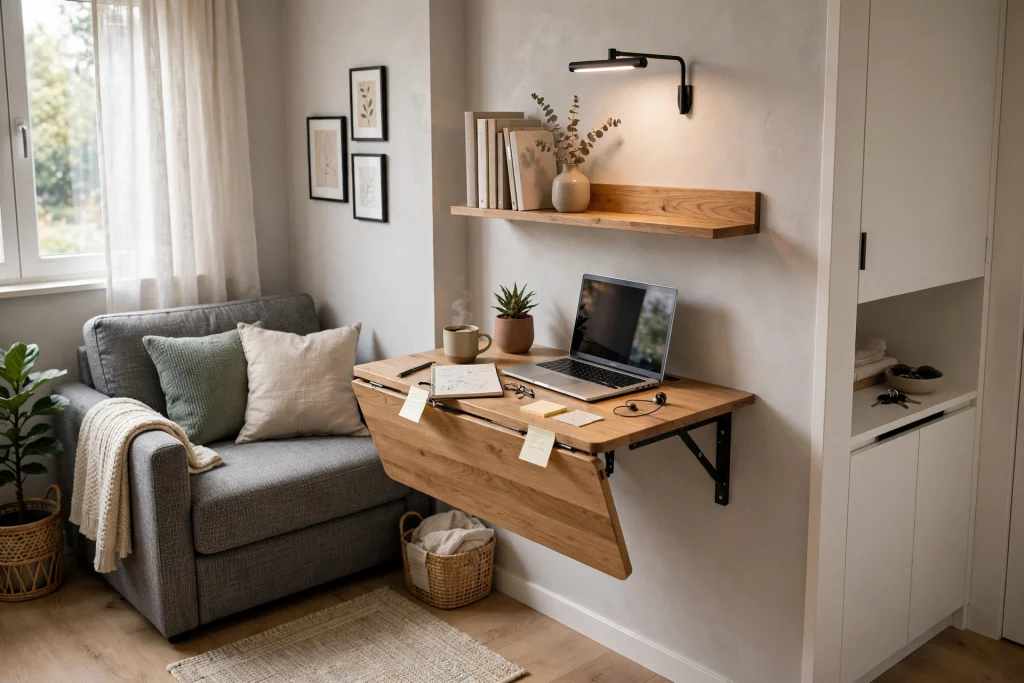
A wall-mounted drop-leaf table gives you a desk or dining spot that vanishes when you don’t need it. Fold it down for meals or laptop work, fold it up for open floor space.
A fold-down table adds function without stealing floor space.
Use it as a desk by day and dining table by night.
When folded up, the room breathes again.
Layer Your Lighting
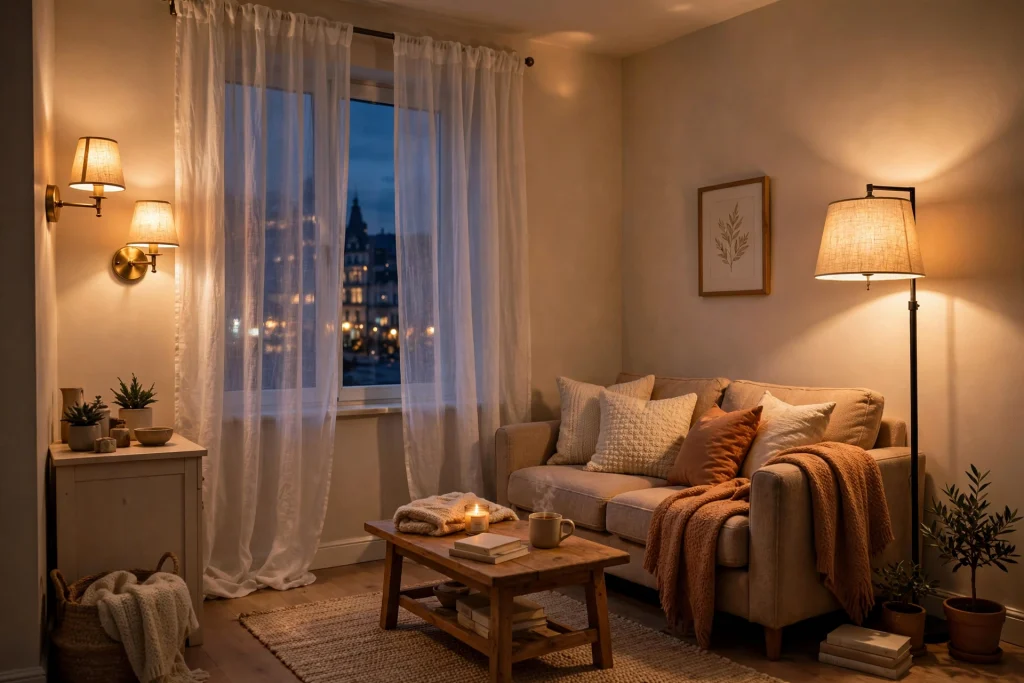
One overhead light flattens a small room. Layer floor lamps, sconces, and table lamps instead — pools of warm light create depth and make the space feel larger and more inviting after dark.
Multiple light sources add depth that one ceiling light can’t.
Warm lamps in corners push the walls visually outward.
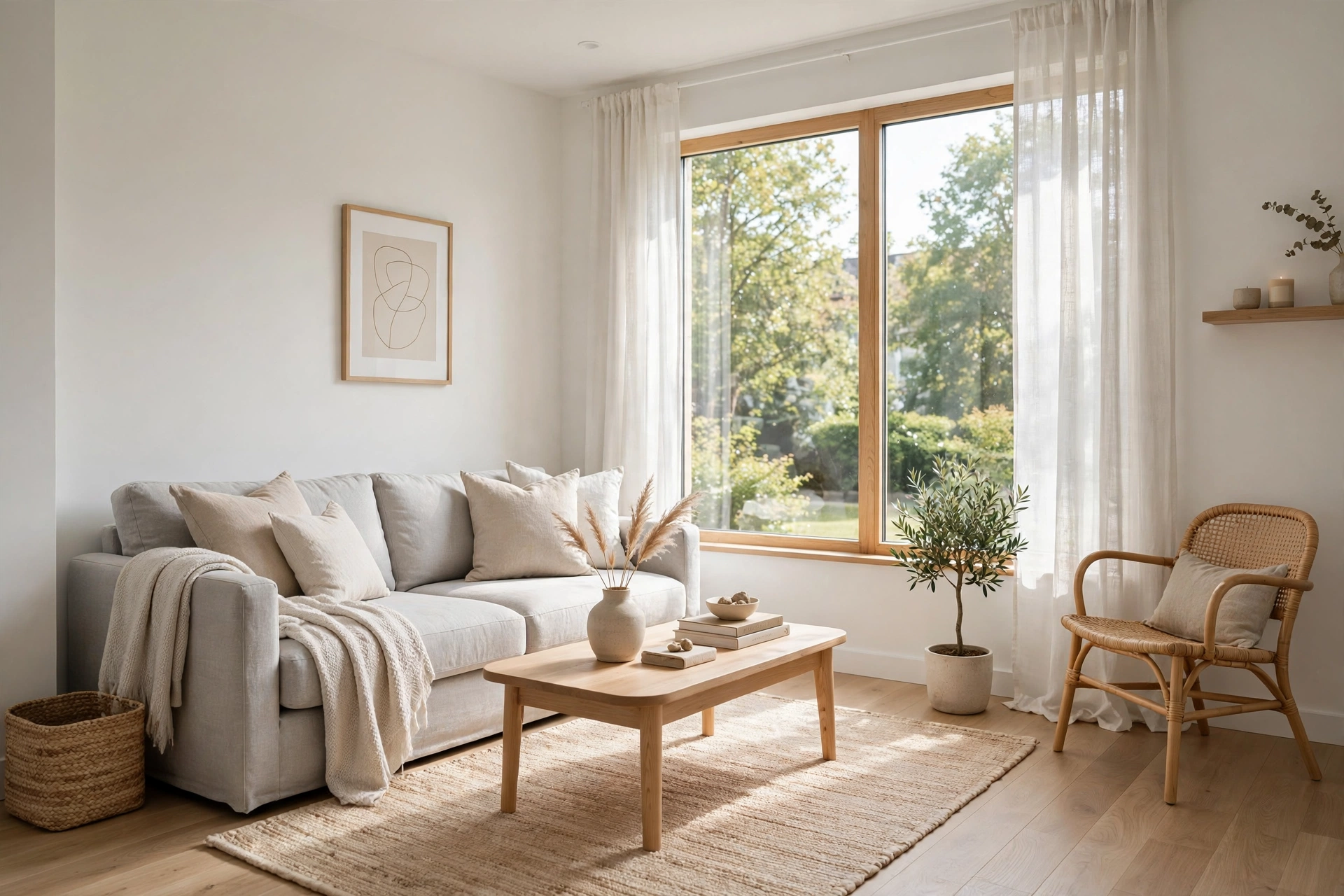
Sheer curtains keep daylight flowing during the day.
Define Zones with a Rug
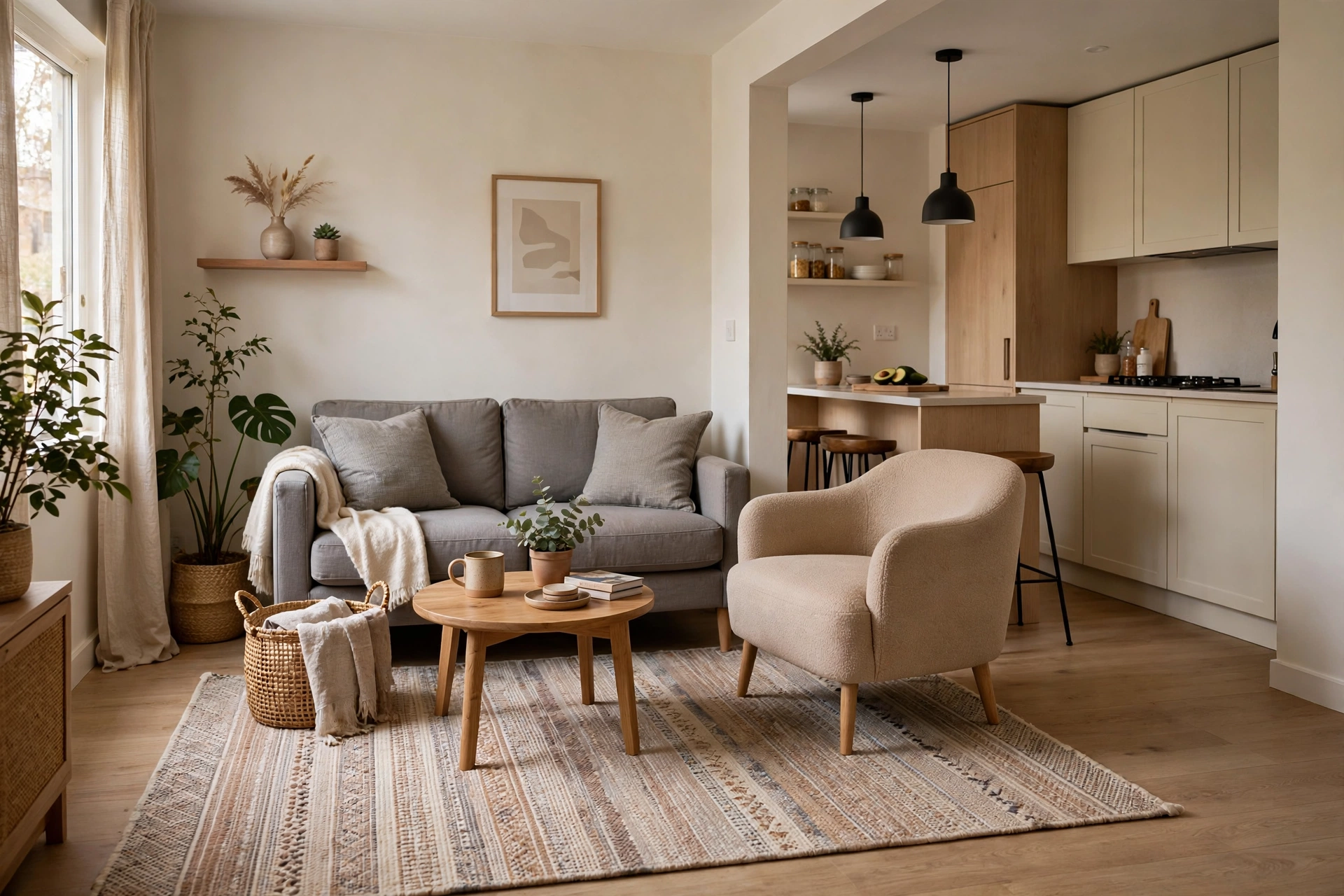
In open-plan small spaces, a rug anchors the seating area and gives the room visual structure. Choose a rug large enough that front legs of all seating sit on it — too-small rugs chop up the space.
An area rug visually organizes an open-plan layout.
Front legs on the rug unify sofa and chairs.
The right size rug makes the zone feel generous.
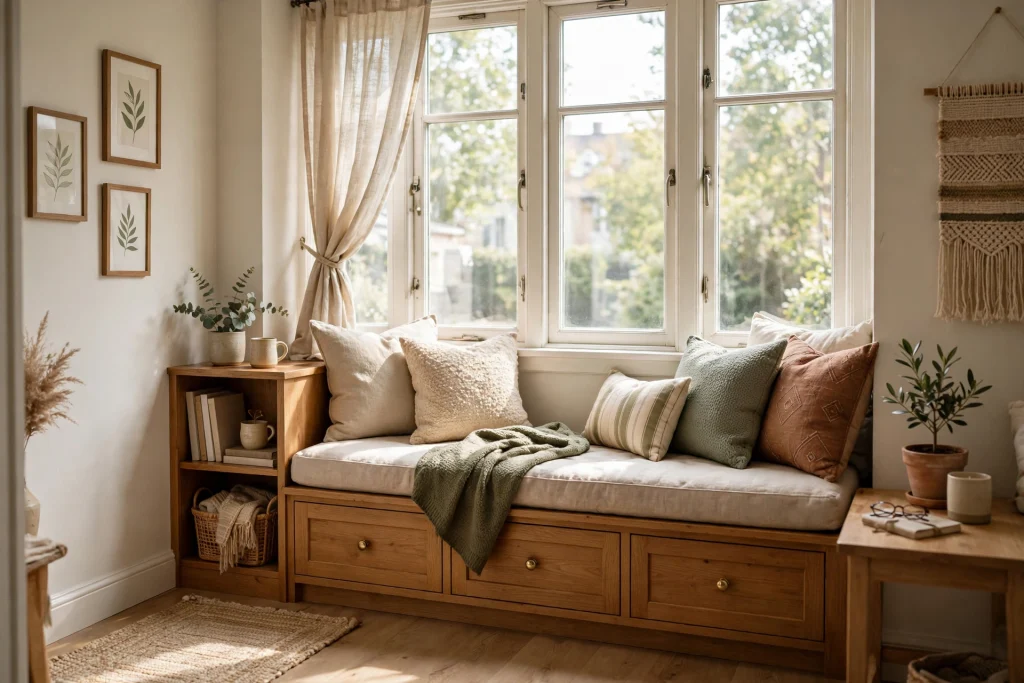
Build a Window Seat with Storage
Turn dead window space into the best seat in the house. A built-in bench with storage underneath gives you reading nook, extra seating, and hidden clutter control in one.
A window seat converts unused space into prime real estate.
Storage underneath swallows blankets, games, and seasonal items.
Natural light makes it the coziest spot in the room.
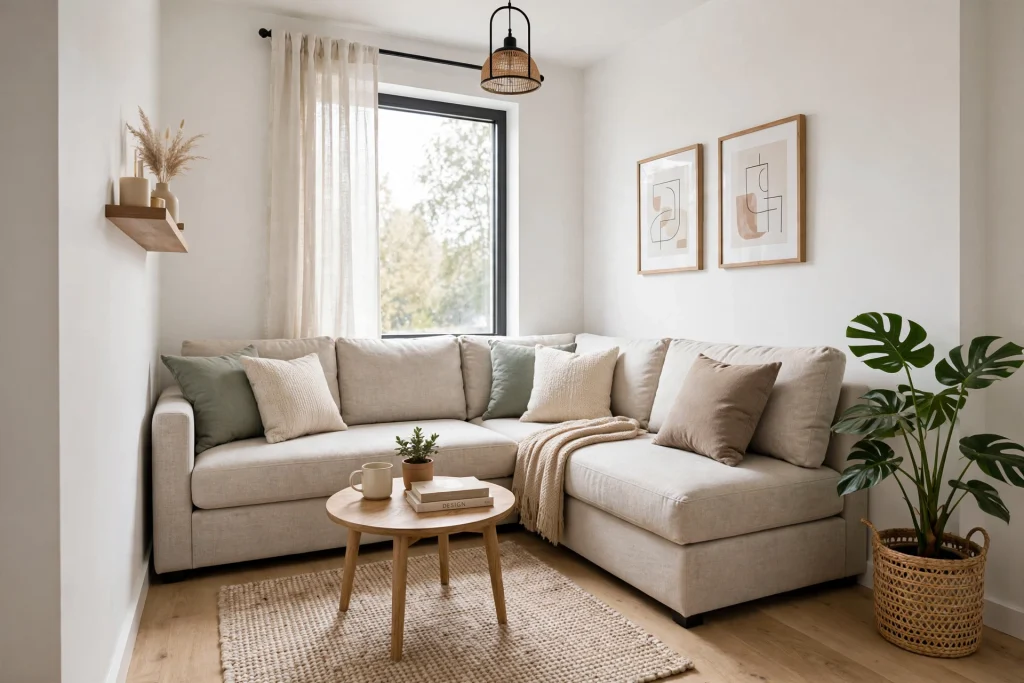
Tuck a Sofa into the Corner
Corners are wasted space in most small living rooms. A compact L-shaped sofa hugs two walls at once, freeing the center of the room while seating three comfortably.
An L-shaped sofa turns dead corners into prime seating.
Hugging two walls opens up the middle of the room.
Compact sectionals seat more without crowding.
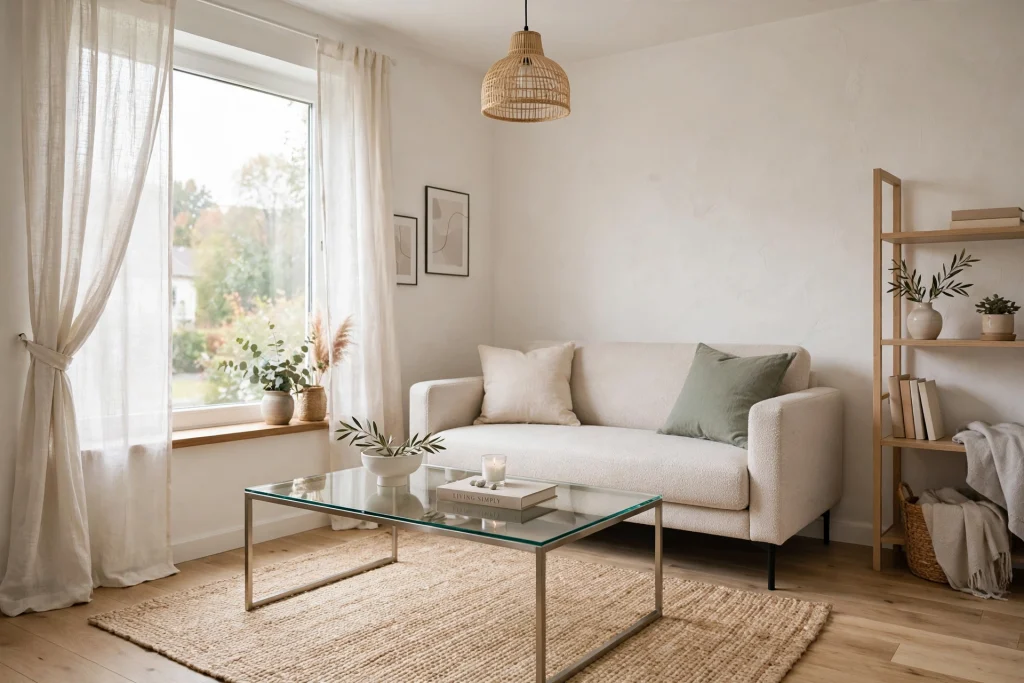
Swap in a Glass Coffee Table
Bulky wooden tables visually weigh down a small room. A glass coffee table practically disappears, letting light pass through and keeping sightlines clear from sofa to wall.
Transparent surfaces keep sightlines open across the room.
Light passes through instead of stopping at furniture.
The room reads larger with less visual bulk.
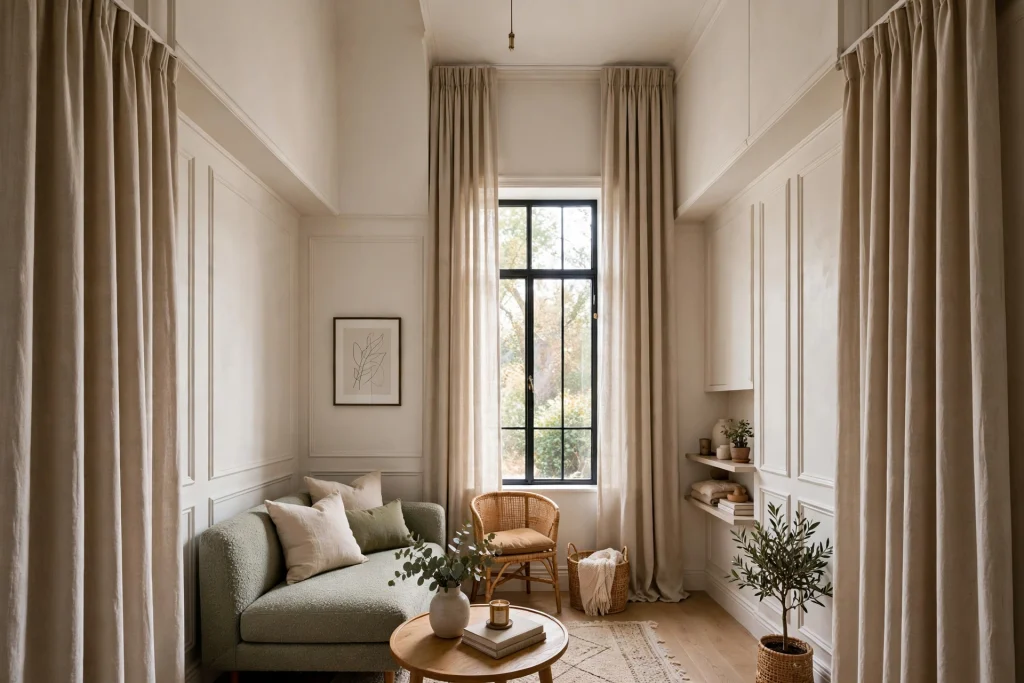
Hang Curtains High and Wide
Mount curtain rods close to the ceiling and extend them past the window frame. The fabric then frames a much larger “window,” tricking the eye into seeing taller walls and a grander view.
High-mounted rods make ceilings feel noticeably taller.
Extending rods wide suggests a bigger window.
Floor-length fabric adds softness and vertical flow.
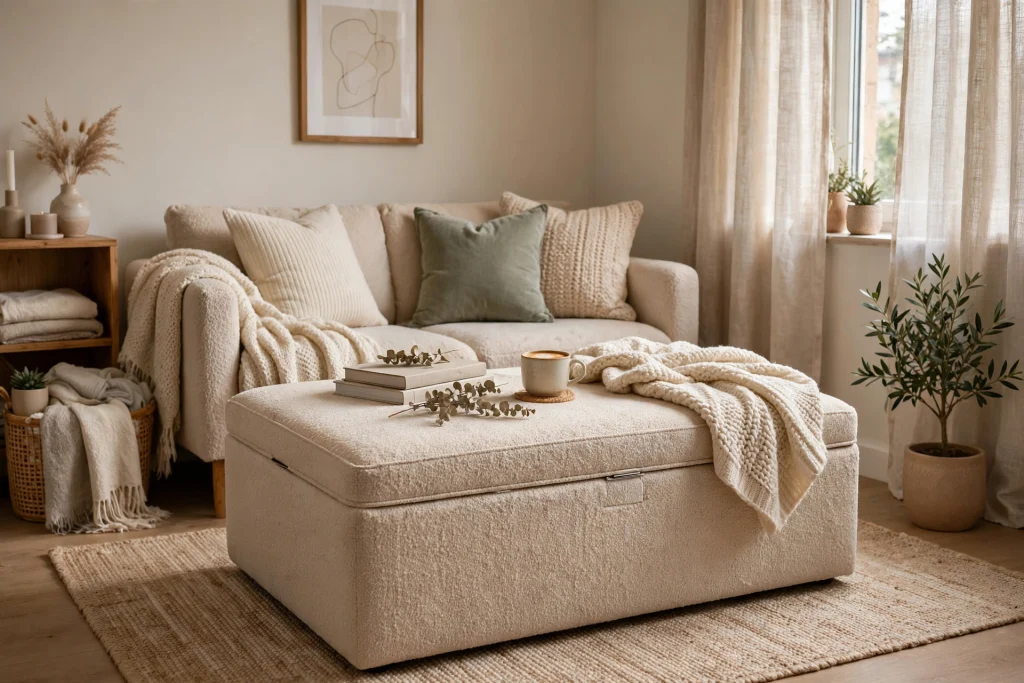
Use an Ottoman as Your Coffee Table
Trade the traditional coffee table for a large upholstered ottoman. The lid lifts for hidden storage, the top works as a footrest, and a tray turns it into a stable surface for drinks.
One ottoman replaces table, footrest, and storage bin.
The lift-up lid hides remotes, throws, and magazines.
A simple tray makes the top drink-friendly in seconds.
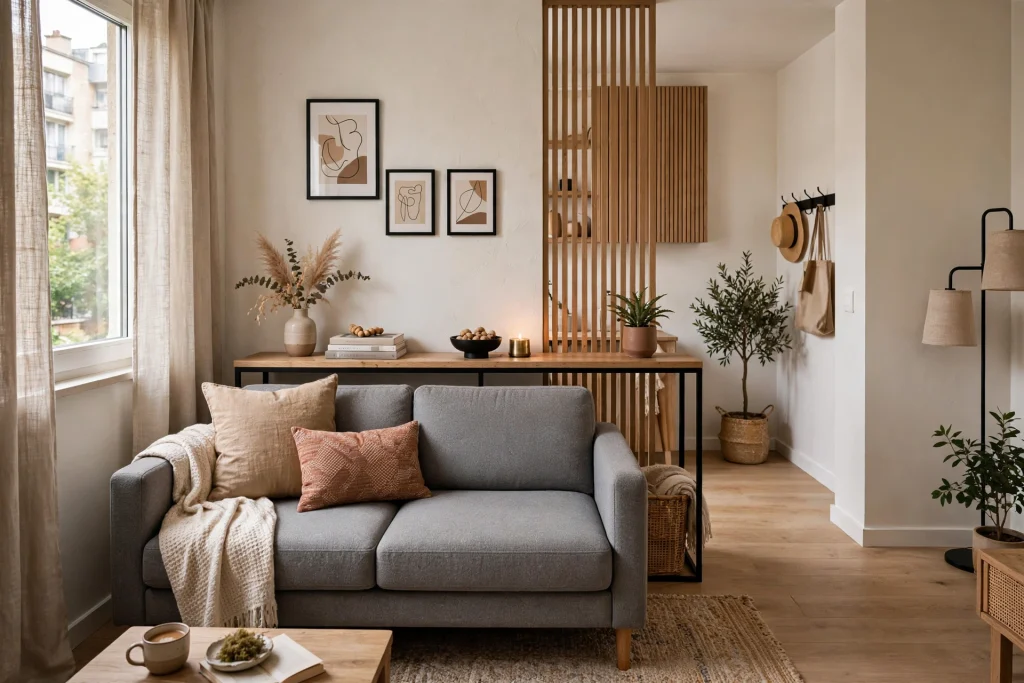
Divide with a Slim Console
A narrow console table behind the sofa subtly separates living and dining zones without walls. Style the top with a lamp and books — it adds surface area exactly where you need it.
A slim console divides zones without blocking light.
The surface behind the sofa becomes bonus display space.
Narrow profiles fit even the tightest layouts.
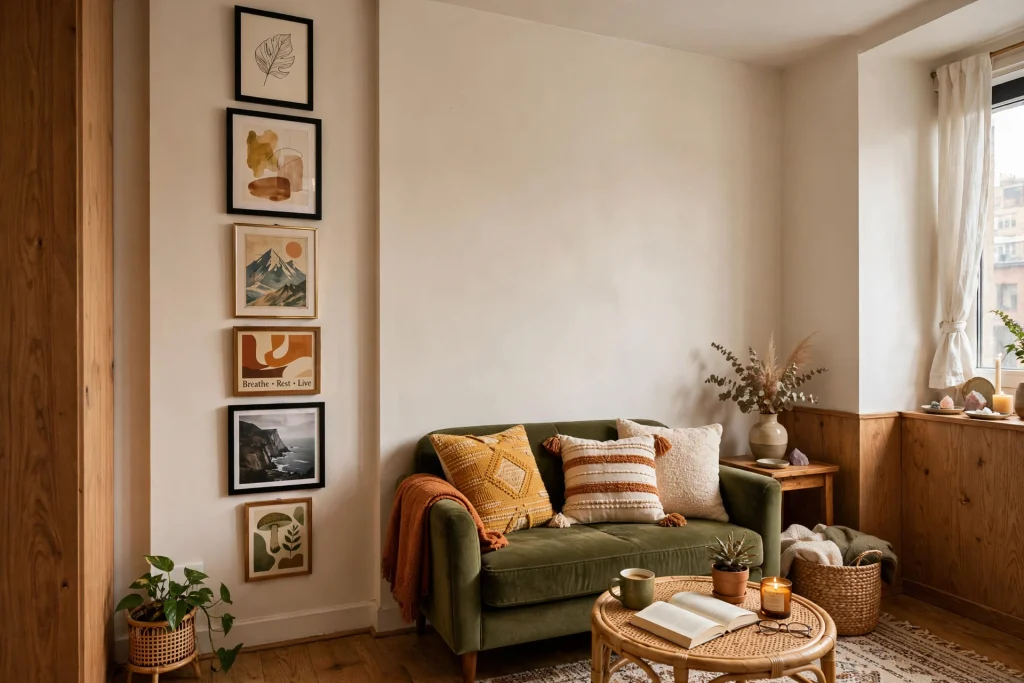
Go Vertical with a Gallery Wall
Blank walls are missed opportunities. A vertical gallery wall of framed prints draws eyes upward and injects personality without taking a single centimeter of floor space.
Art arranged vertically emphasizes ceiling height.
A gallery wall adds character with zero footprint.
Mix frame sizes for a curated, collected feel.
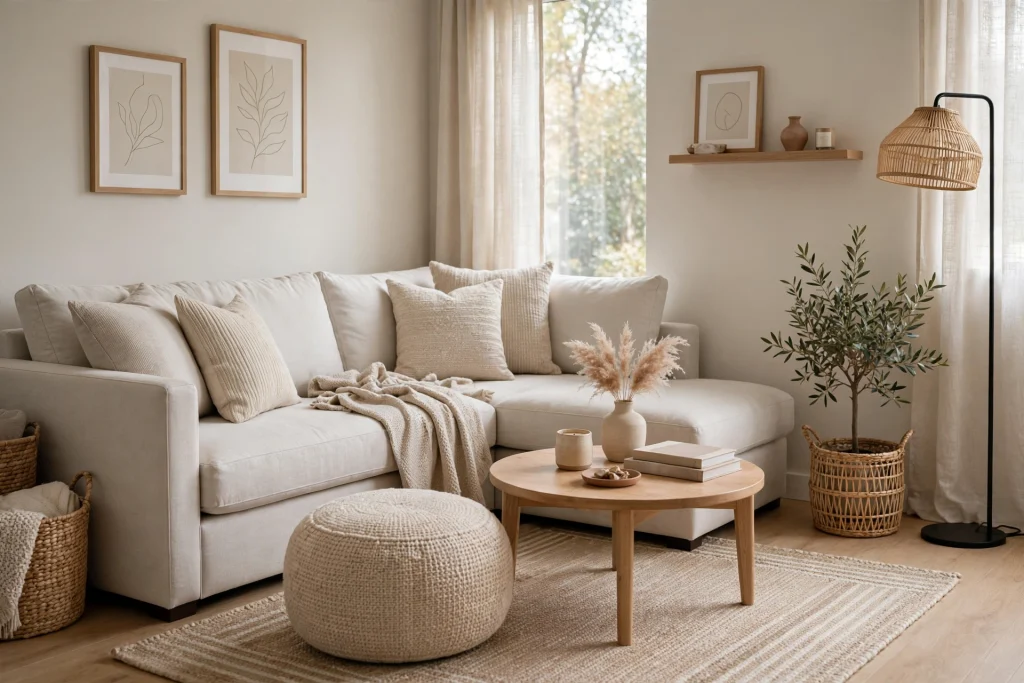
Keep It Soft with a Sectional and Pouf
A light-toned sectional plus a movable pouf gives flexible seating that never feels heavy. The pouf slides wherever it’s needed — footrest, side table, or extra seat for guests.
Light upholstery keeps large pieces feeling airy.
A pouf moves wherever seating is needed most.
Soft neutrals make the whole room feel calm.
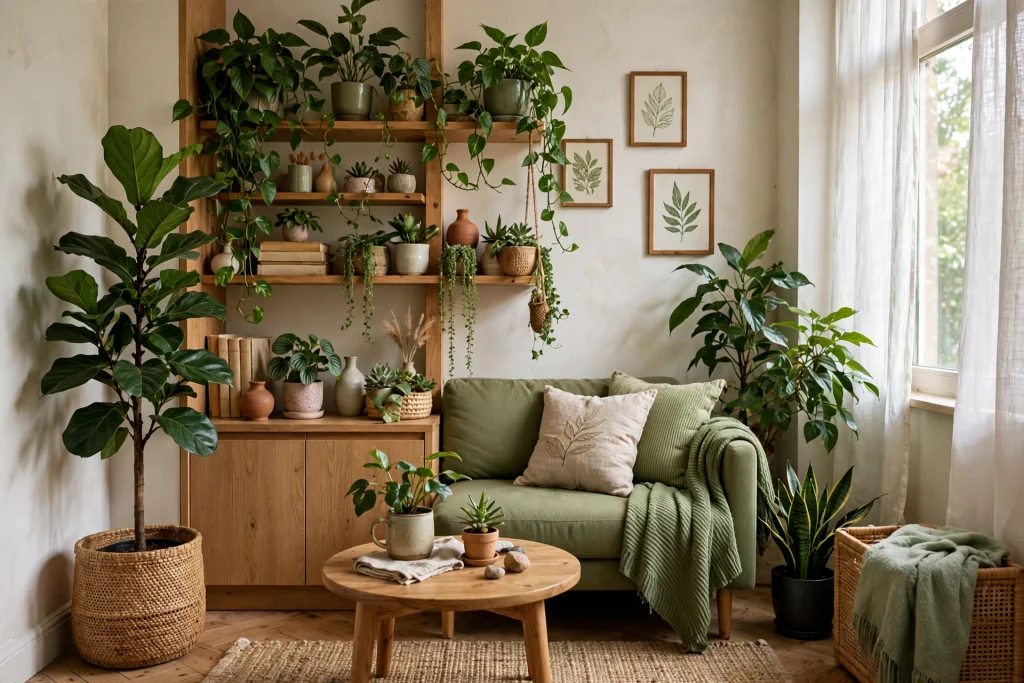
Bring in Indoor Plants
Plants add life, color, and even cleaner air to small living rooms. Tuck them into corners, hang them, or line a shelf — greenery makes compact spaces feel fresh rather than cramped.
Plants add life and color without visual clutter.
Corners and shelves host greenery with no floor lost.
Fresh foliage makes small rooms feel vibrant.
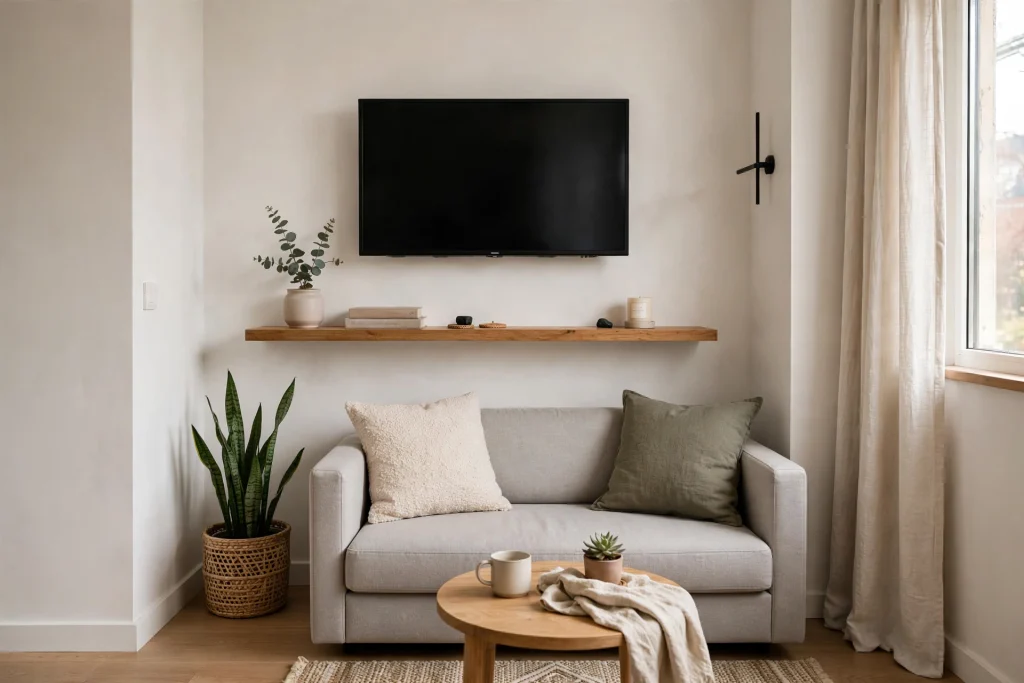
Mount the TV on the Wall
Ditch the bulky media console and mount your TV directly on the wall with a slim floating shelf below. You reclaim a full square meter of floor while keeping the setup clean and modern.
Wall-mounting frees floor space a console would eat.
A floating shelf holds devices without visual weight.
Cables tucked away keep the look streamlined.
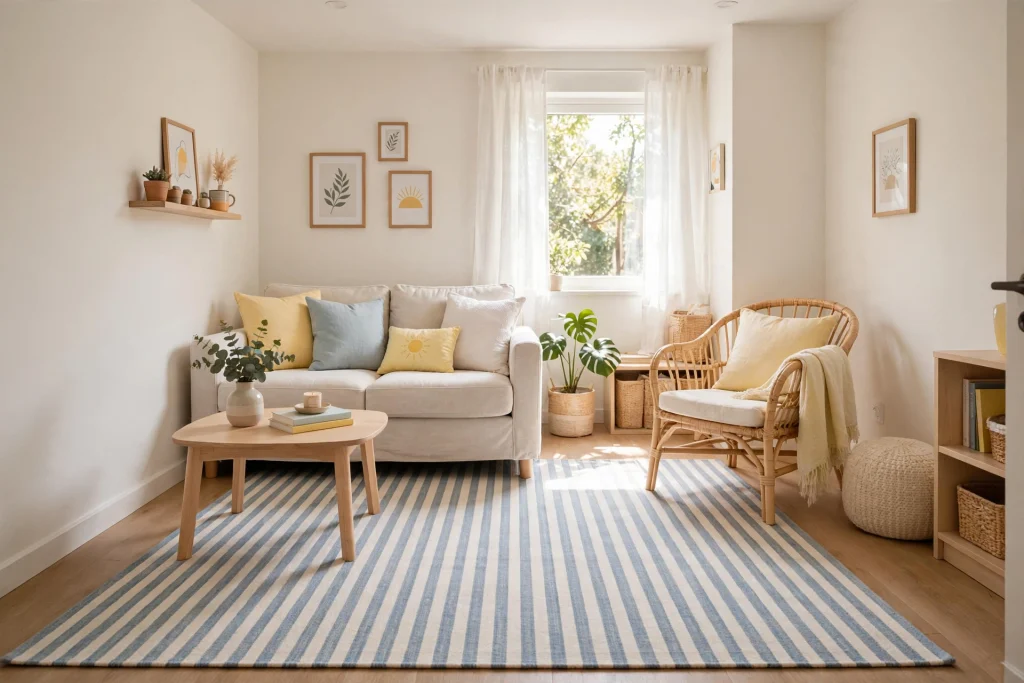
Stretch the Room with Stripes
A striped rug laid lengthwise visually elongates a narrow living room. The lines pull the eye from one end to the other, making the space feel longer than it is.
Lengthwise stripes create an elongating optical effect.
Light rug colors keep the trick feeling fresh.
Pattern adds energy without overwhelming the room.
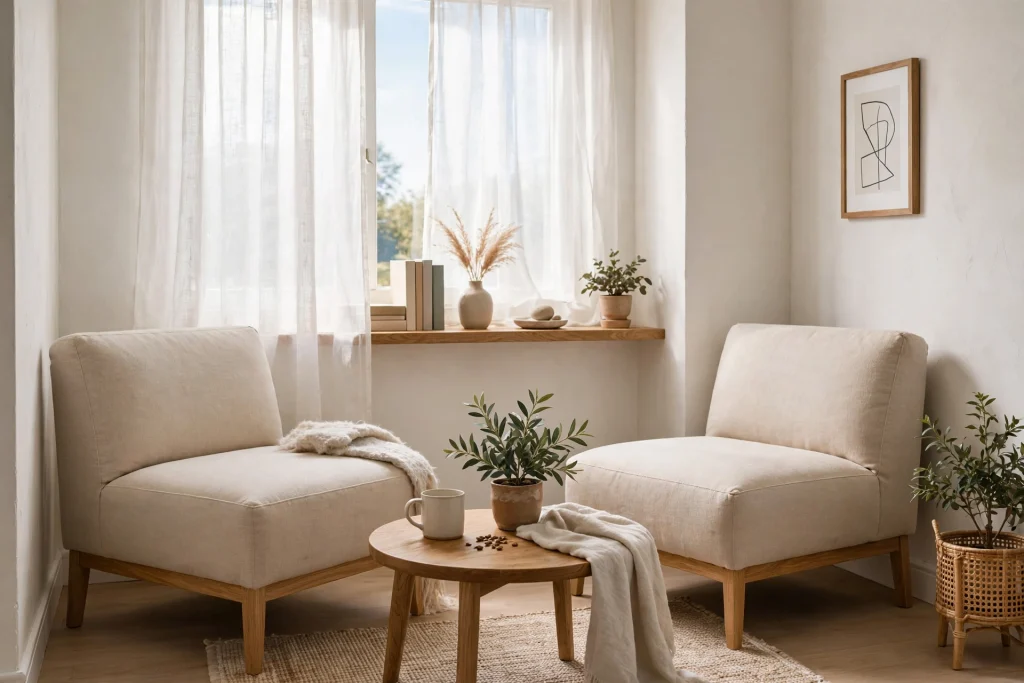
Choose Armless Chairs
Armless slipper chairs take up far less visual and physical space than traditional armchairs. Two of them tuck neatly around a small table, giving you flexible guest seating.
Armless profiles slip into tight spots easily.
Two small chairs flex better than one big armchair.
Open sides keep the arrangement feeling light.
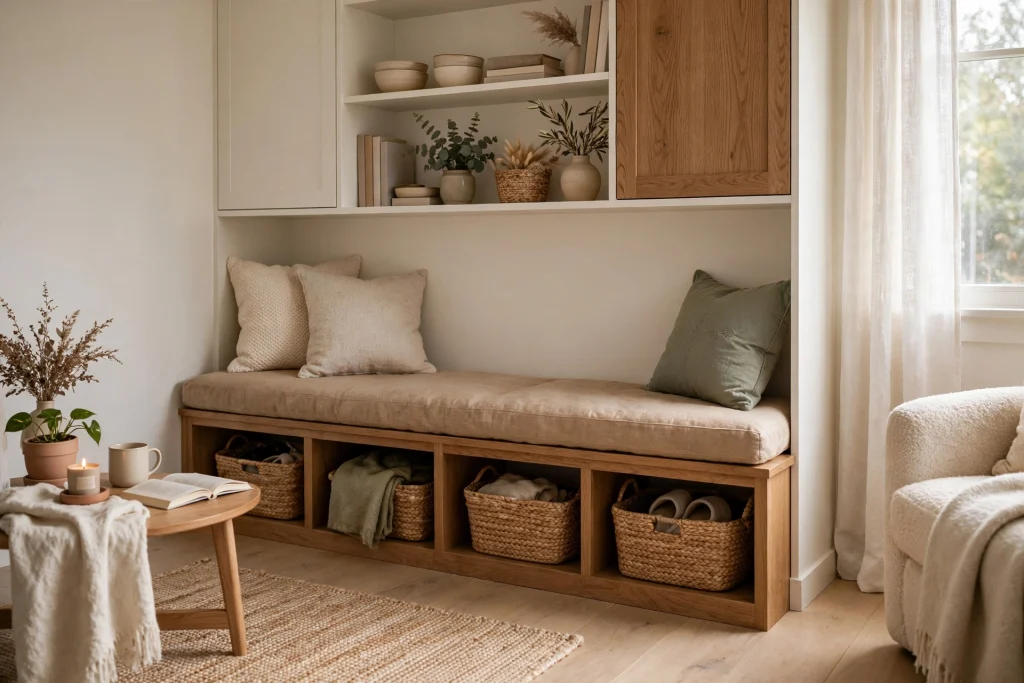
Add a Storage Bench
A built-in bench along one wall offers seating, display space, and hidden storage in a single footprint. Cushion the top for comfort and slide baskets underneath for everyday items.
One bench delivers seating, surface, and storage together.
Baskets underneath keep clutter out of sight.
The cushioned top doubles as a cozy reading spot.
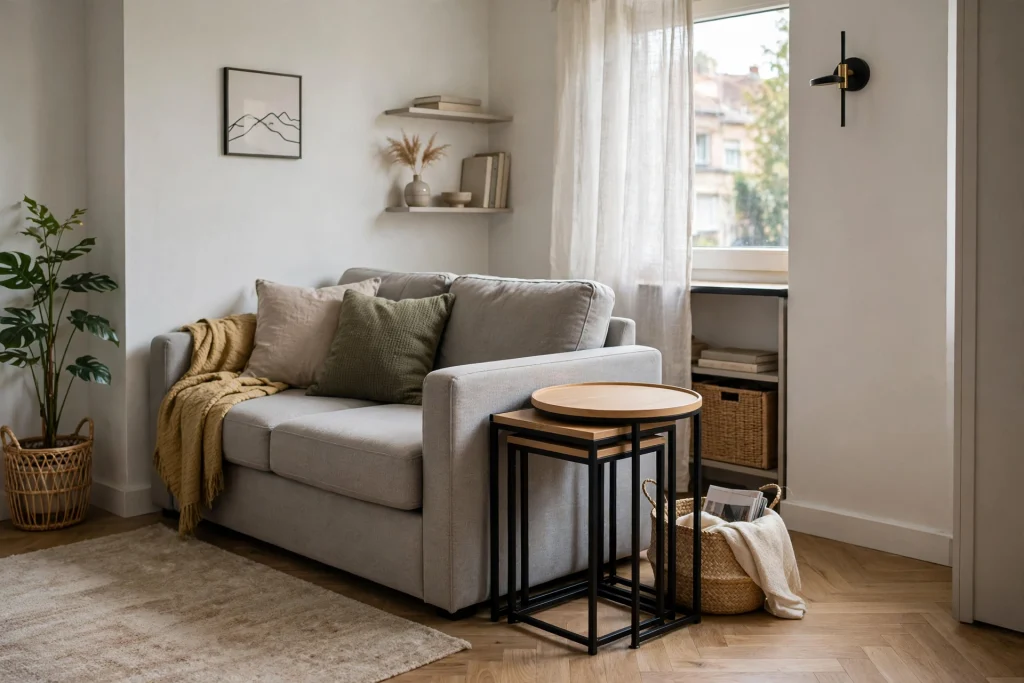
Nest Your Side Tables
Nesting tables give you two surfaces in the footprint of one. Pull the smaller table out when guests arrive, tuck it back when they leave — flexibility without permanent bulk.
Two tables occupy the space of one until needed.
Pull out the smaller for drinks during gatherings.
Tucked together, they read as a single sleek piece.
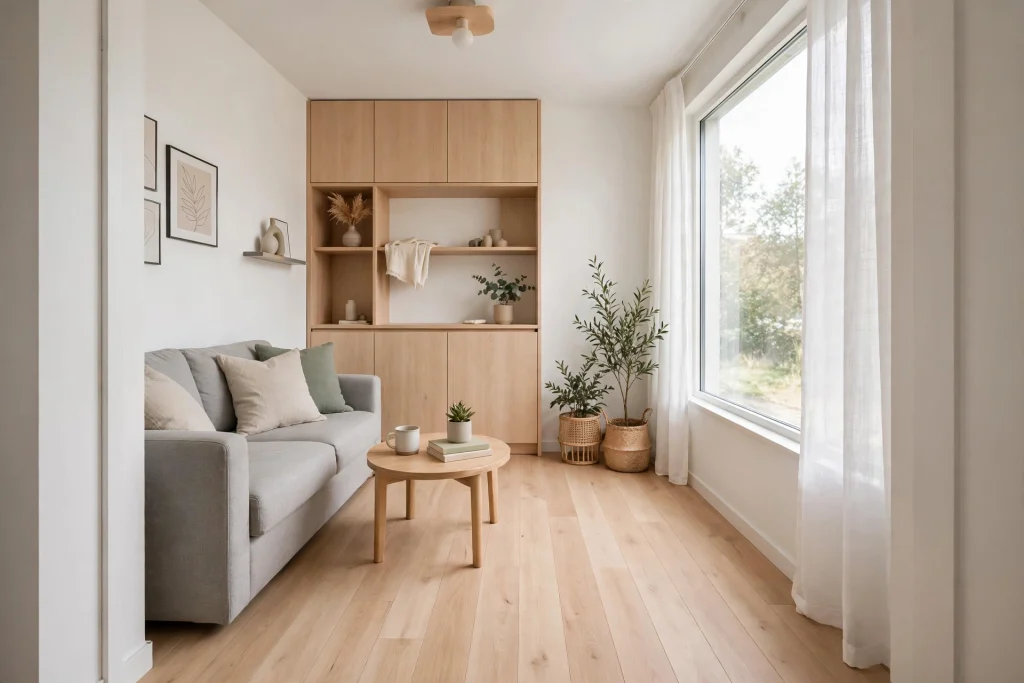
Keep Flooring Light and Continuous
Light wood floors that run unbroken through the space make a small living room feel twice as big. Avoid visual breaks between areas — continuity tricks the eye into seeing one generous room.
Continuous light flooring visually merges the whole space.
Pale wood reflects light better than dark finishes.
Fewer transitions mean fewer visual interruptions.
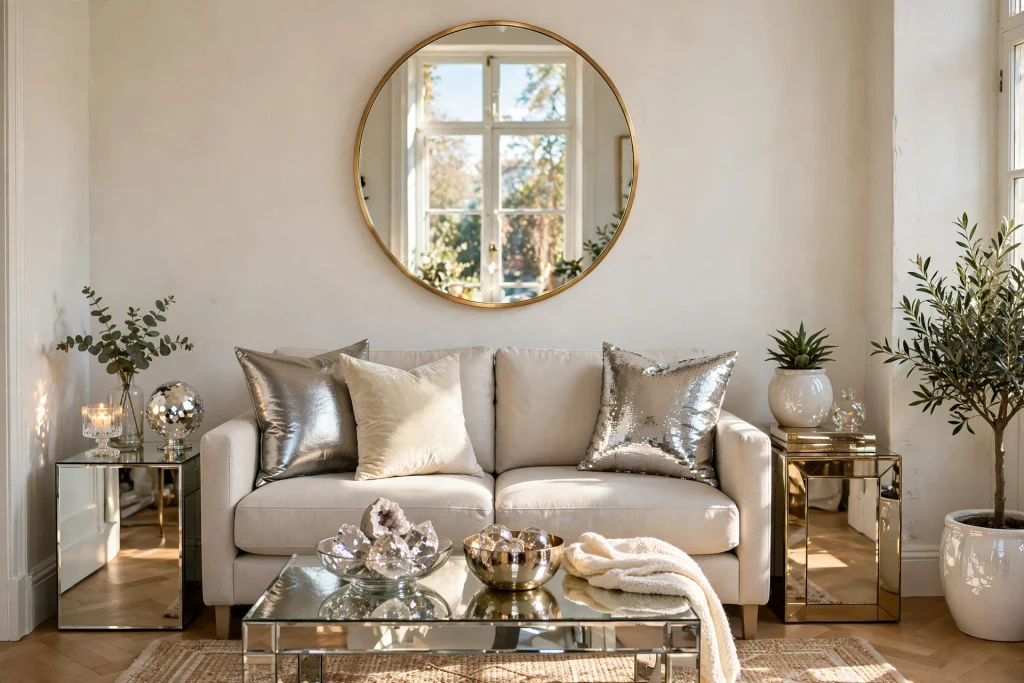
Reflect Light with a Round Mirror
A round mirror above the sofa bounces window light deep into the room and becomes a soft focal point. Round shapes also contrast nicely with the straight lines of sofas and shelves.
A mirror opposite or near a window doubles daylight.
Round shapes soften all the room’s straight lines.
Reflective decor adds glamour with zero footprint.
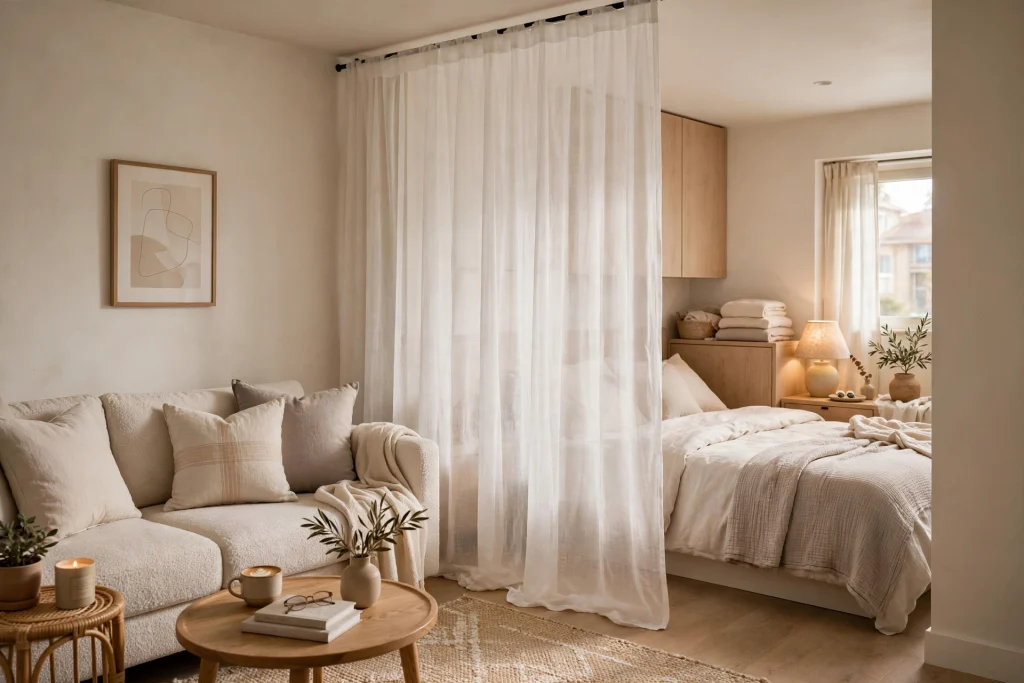
Divide with a Sheer Curtain
In studio layouts, a ceiling-mounted sheer curtain separates sleeping and living areas without the heaviness of a wall. It filters light beautifully and pulls back in seconds.
Sheer fabric divides space while sharing light.
A curtain track costs little and installs quickly.
Pulled back, the division disappears entirely.