25 Small Japanese Garden Pond Ideas
A small Japanese garden pond brings calm, balance, and natural beauty to even the tiniest backyard, turning a quiet corner into a peaceful retreat. With still water, smooth stones, and a few carefully chosen plants, a compact pond can capture the spirit of a traditional Japanese garden without needing a large space or a big budget.
Whether you dream of koi gliding beneath maple leaves or the gentle sound of a bamboo water spout, these small Japanese garden pond ideas show how stone, water, and greenery work together in harmony. For a completely different indoor style, explore Small Boho Apartment Decor Ideas, and discover how the same love of natural textures can transform a small apartment too.
1. Koi Pond with Stepping Stones
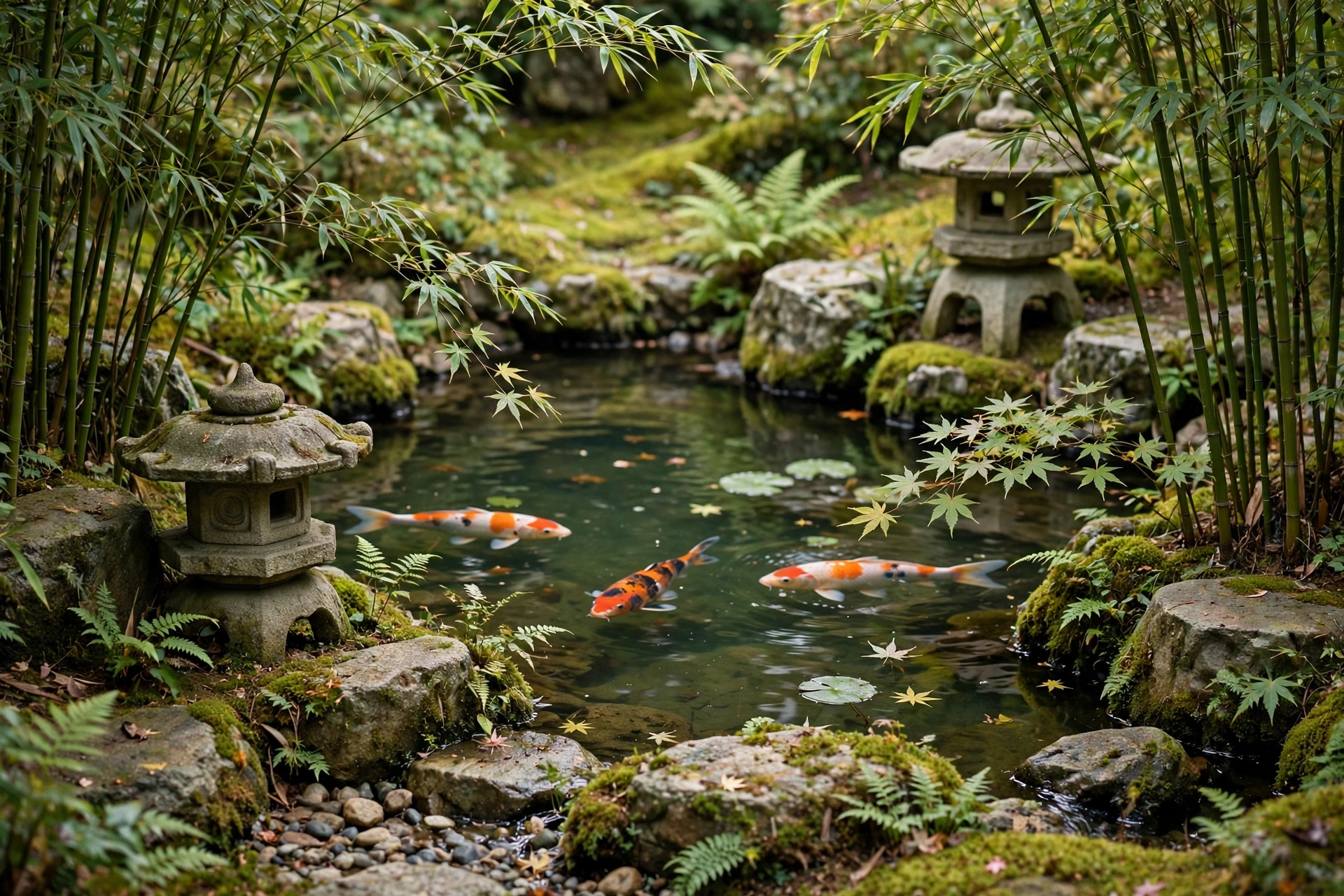
A koi pond with stepping stones is the classic heart of a small Japanese garden pond, combining colorful fish with flat stones that invite you to cross the water slowly. The stones should sit just above the surface, spaced for a natural walking rhythm that encourages quiet, mindful movement through the garden.
Keep the pond shallow enough for easy care but deep enough for koi to thrive, and choose smooth, weathered stones in soft grey tones. A few water lilies floating between the stones soften the edges and give the fish welcome shade on warm afternoons.

2. Stone Lantern Beside the Water
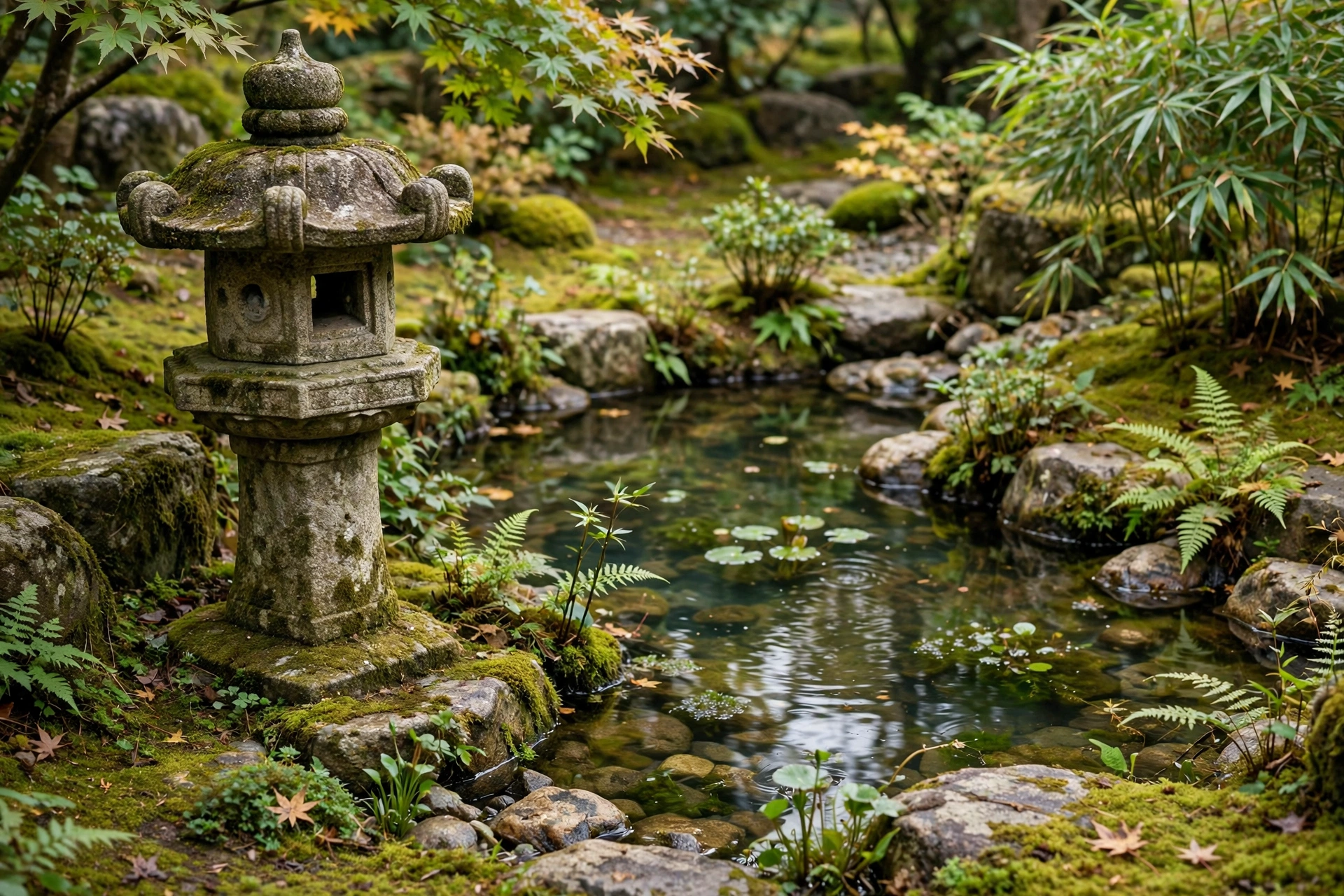
A stone lantern beside the water adds timeless character to a small Japanese garden pond, its carved shape echoing centuries of traditional garden design. Place the lantern at the pond’s edge where its reflection shimmers on the surface, creating a focal point that draws the eye without overwhelming the space.
Choose a lantern sized to match your pond, since an oversized piece can crowd a small garden while a tiny one may disappear among plants. Surround its base with moss and low ground cover so it looks settled and natural, as though it has stood there for years.
3. Bamboo Water Spout Feature
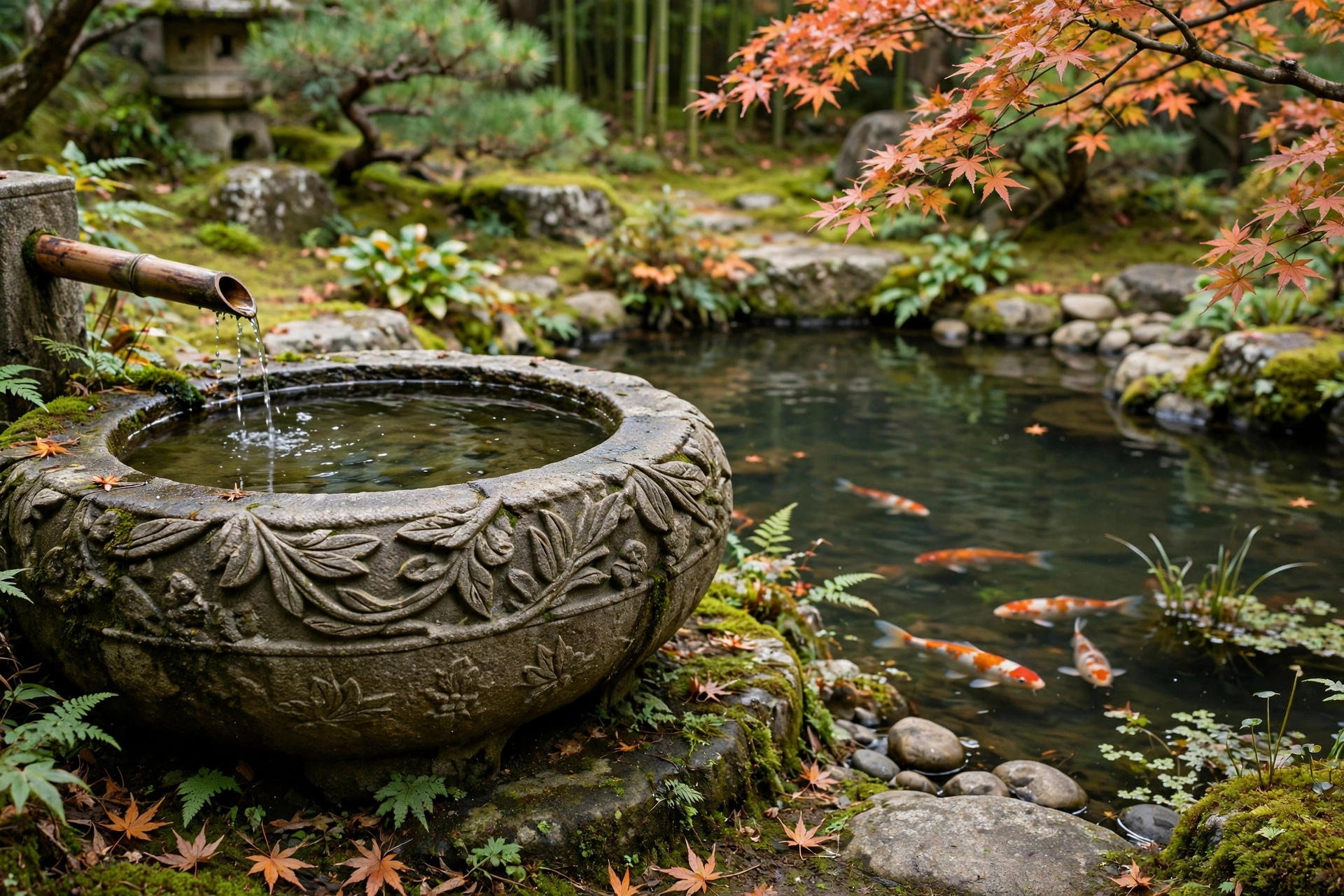
A bamboo water spout brings gentle sound and movement to a small Japanese garden pond, as water trickles from the hollow bamboo into the pool below. This simple feature, known as a shishi-odoshi style spout, creates a calming rhythm that masks street noise and deepens the garden’s sense of peace.
Mount the bamboo on a sturdy stone or wooden support, and let the water fall a short distance so the sound stays soft rather than splashing. Pair the spout with a small stone basin to catch the flow, and the whole corner becomes a meditative listening spot.

4. Moss-Covered Pond Edging
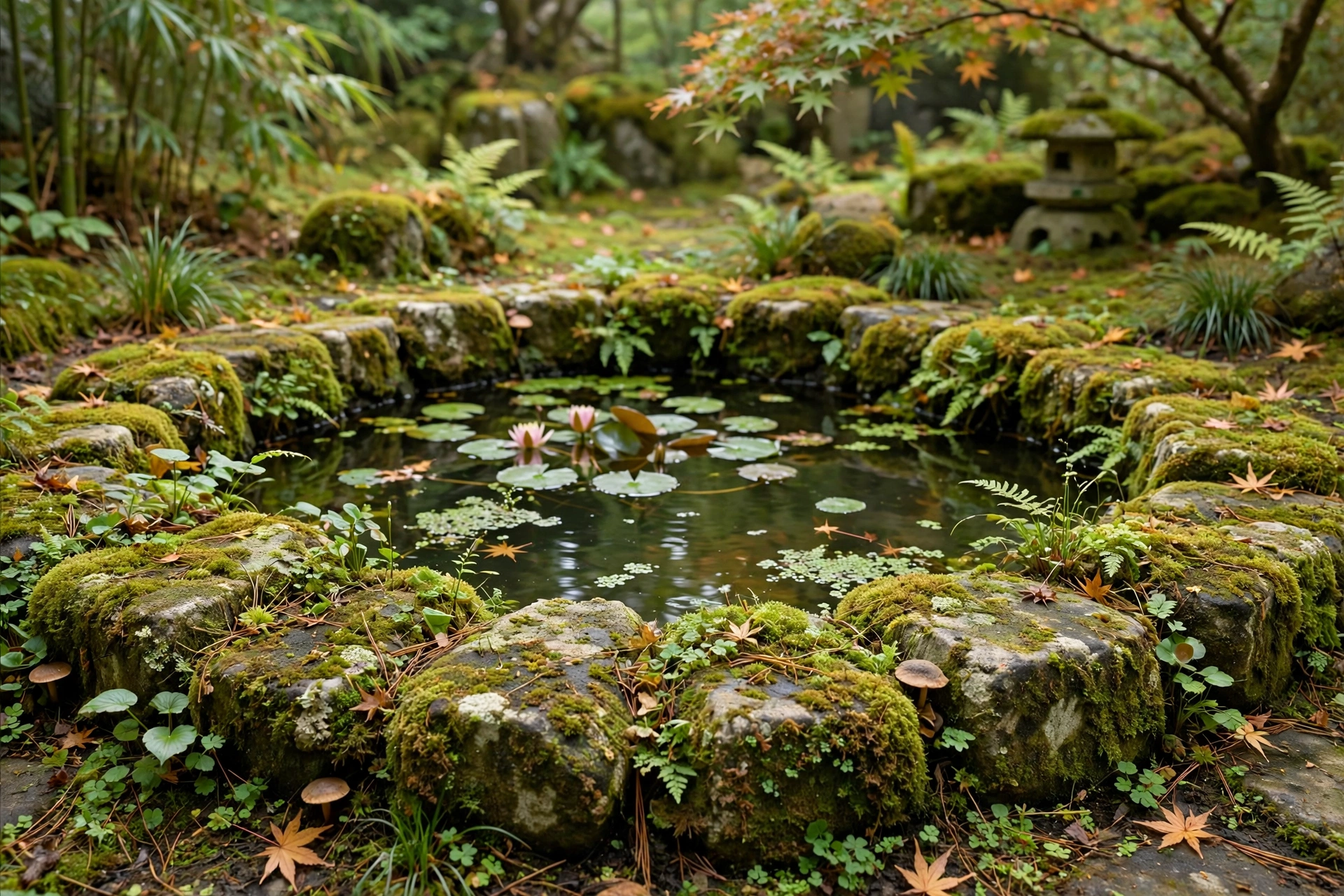
Moss-covered pond edging gives a small Japanese garden pond an aged, woodland feel, softening the hard line where water meets land. Thick green moss growing over rounded stones blurs the boundary and makes the pond look like a natural spring rather than a built feature.
Moss thrives in shade and moisture, so this edging works best on the sheltered side of the pond where trees filter the sun. Mist the moss during dry spells and keep foot traffic light, and it will spread slowly into a velvety green frame for the water.
5. Small Pond with Wooden Bridge
A small wooden bridge arching over a Japanese garden pond turns a simple water feature into a journey, even in a compact backyard. The gentle curve of a red or natural cedar bridge adds height and structure, giving the garden a classic silhouette that photographs beautifully from every angle.
Keep the bridge narrow and low so it suits the pond’s scale, and anchor it firmly on stone footings at each end. A bridge also creates a perfect viewing spot, letting you pause above the water and watch koi or reflections drift below.

6. Gravel Garden Around the Pond
A gravel garden around the pond borrows from Zen temple design, using raked gravel to suggest flowing water and open space beside the real pond. Pale gravel raked into gentle waves contrasts beautifully with dark water and green moss, making the whole area feel larger and more serene.
Edge the gravel with low stones to keep it from spilling into the pond, and rake it weekly to refresh the patterns. A single sculptural rock or pruned pine placed in the gravel becomes a quiet focal point that balances the pond’s living energy.

7. Japanese Maple Overhanging the Pond
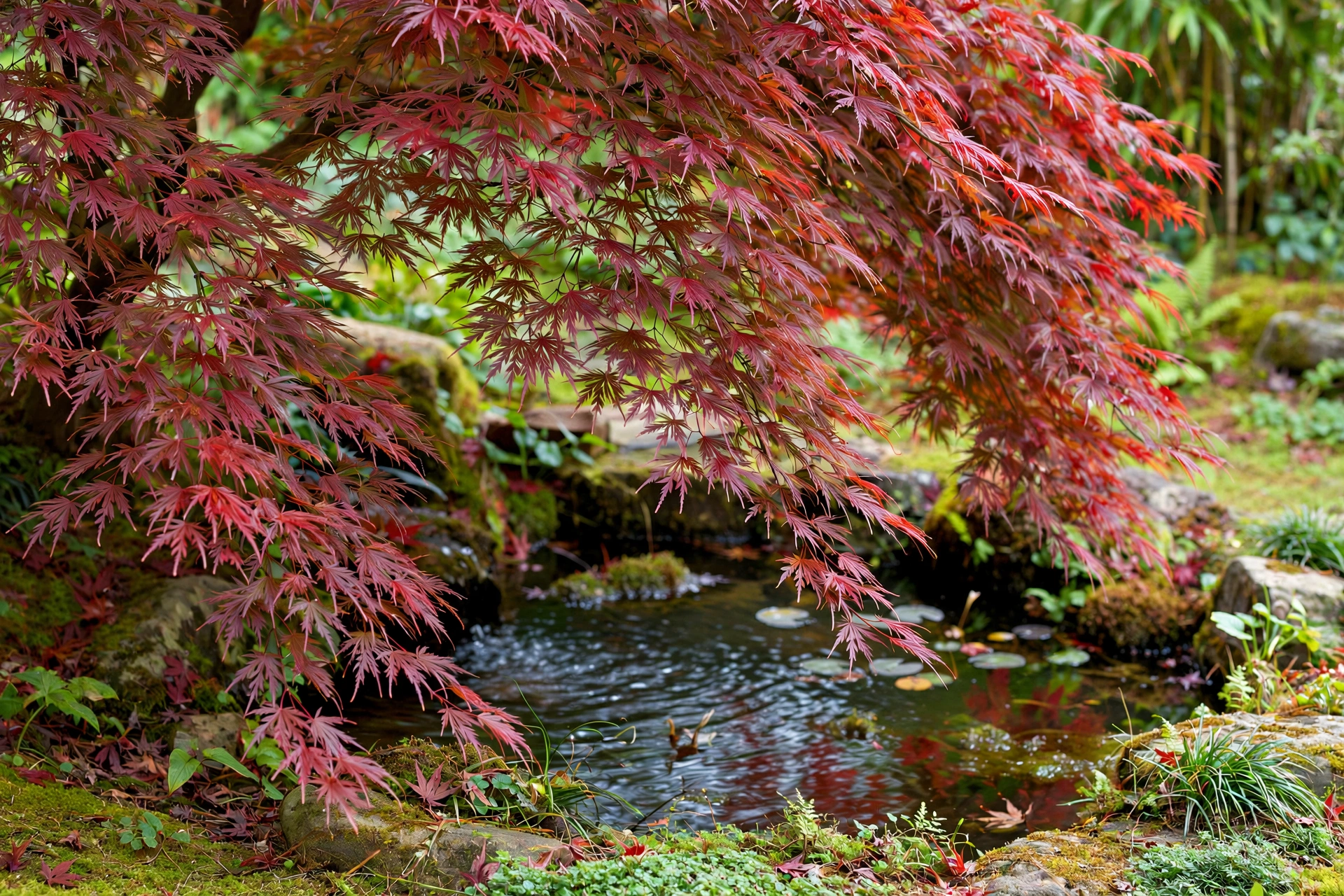
A Japanese maple overhanging the pond adds seasonal drama to a small Japanese garden pond, with delicate leaves that flame red in autumn and cast dappled shade in summer. The tree’s reflection doubles its beauty on still water, and falling leaves drifting on the surface look like a painting.
Choose a compact maple variety suited to containers or small gardens, and plant it on the north side so it shades the pond without blocking morning light. Prune lightly each year to keep its graceful layered shape and protect the pond from heavy leaf fall.
8. Stone Basin Water Feature
A stone basin water feature offers a compact alternative to a full pond, with a carved granite basin holding still water beside the main pool. Traditionally used for ritual hand washing, the basin adds authenticity and a second, smaller water element that complements the larger pond beautifully.
Set the basin on a bed of gravel with a bamboo ladle resting across its rim, and top it up regularly so the water stays clear. Even without a pump, the basin’s mirror-like surface reflects sky and leaves, doubling the garden’s sense of depth.
9. Pond with Water Lilies and Lotus
A pond planted with water lilies and lotus feels instantly like a Japanese garden, their broad leaves and elegant blooms floating serenely on the surface. White and pink flowers open with the morning sun, while the leaves shelter fish below and keep the water cooler through the hottest days.
Plant lilies in submerged baskets so they stay contained and are easy to lift for dividing each spring. Cover no more than two-thirds of the surface with leaves, leaving open water where reflections and koi remain visible.

10. Zen Rock Arrangement by the Pond
A Zen rock arrangement by the pond uses a few carefully placed boulders to suggest mountains, islands, and shorelines in miniature. In Japanese design, rocks carry deep meaning, and an odd-numbered grouping with one tall upright stone creates a composition that feels both natural and intentional.
Bury each rock a third of its depth so it looks rooted rather than dropped, and vary the heights for a sense of rhythm. Leave breathing space between stones, since the empty gravel or moss around them is as important as the rocks themselves.

11. Bamboo Fence Framing the Pond
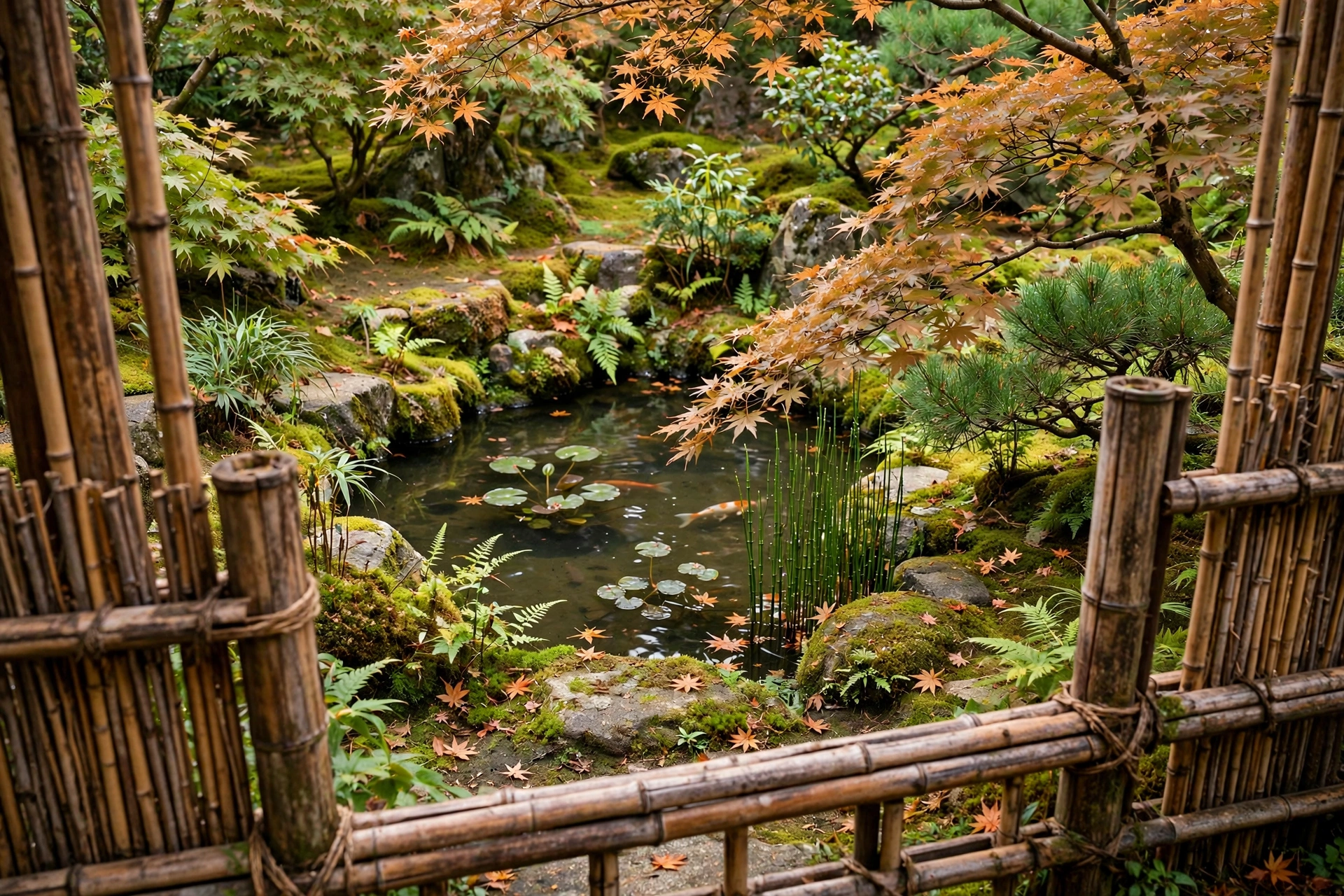
A bamboo fence framing the pond creates privacy and enclosure, screening out neighboring views while letting filtered light and breeze pass through. The warm honey tones of bamboo contrast softly with green foliage and grey stone, giving the pond area a secluded, temple-garden atmosphere.
Build the fence from natural bamboo poles lashed with dark twine, keeping it just high enough to block sightlines without casting heavy shade. Leave a small gap or gate so the pond remains easy to reach for feeding fish and seasonal cleaning.
12. Pond with Floating Stone Islands
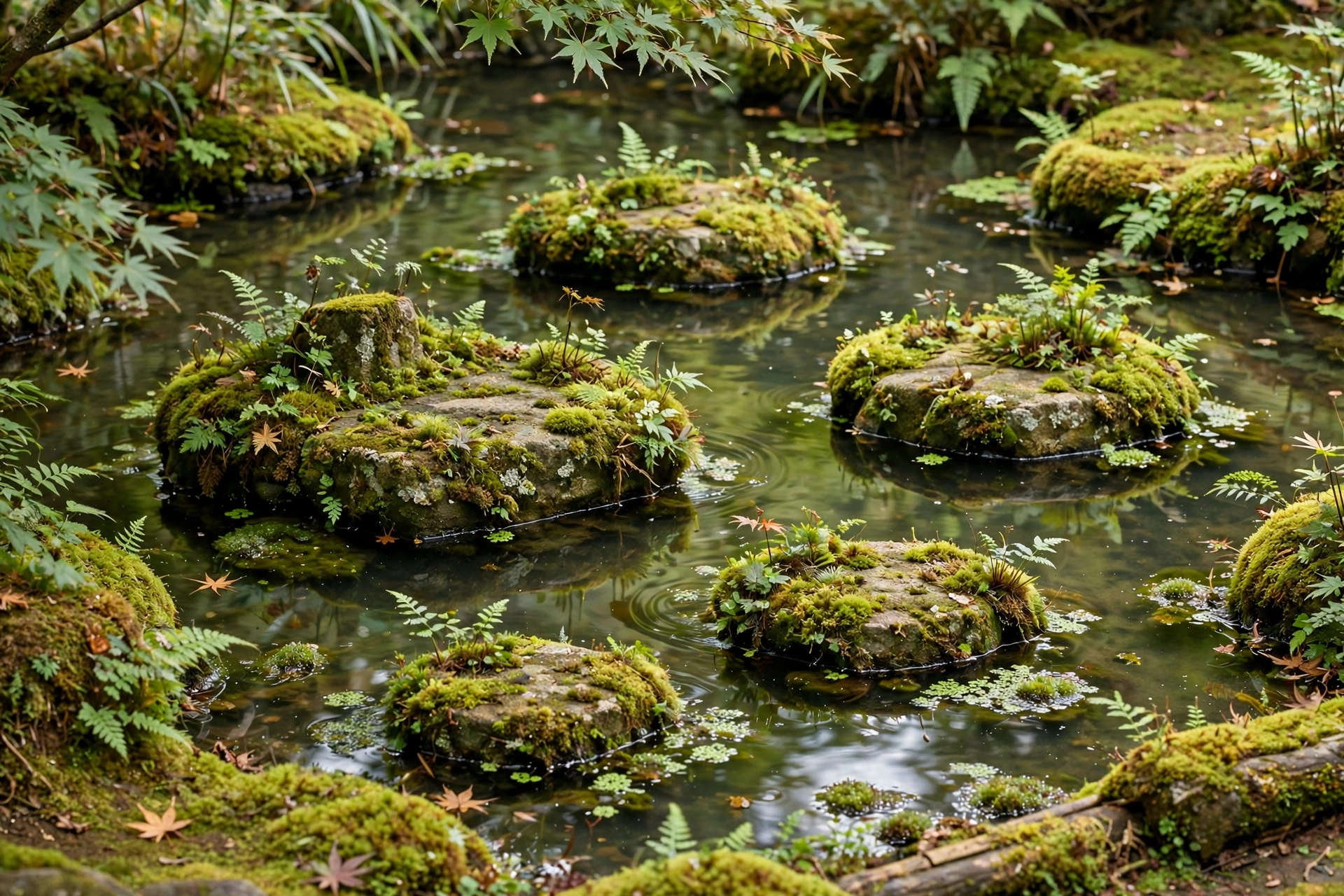
A pond with floating stone islands borrows a beloved Japanese motif, placing flat-topped rocks just above the water like tiny islands in a miniature sea. Each island can hold a single moss mound, a small pine, or a lantern, turning the pond into a living landscape painting.
Support each island on a hidden base of bricks or a sturdy shelf beneath the surface, keeping the stone stable and level. Space the islands unevenly for a natural look, and let one larger island anchor the composition near the pond’s center.
13. Mini Waterfall into the Pond
A mini waterfall cascading into the pond adds movement and sound that bring a small Japanese garden pond to life. Water tumbling over stacked stones oxygenates the pond for fish, while the gentle rush creates a soothing backdrop for quiet sitting and conversation.
Build the waterfall low and wide rather than tall and narrow, so it suits a small garden and the water falls softly. Hide the pump hose behind rocks and plant ferns around the cascade to blend the structure into the landscape.

14. Pond with Ornamental Grasses
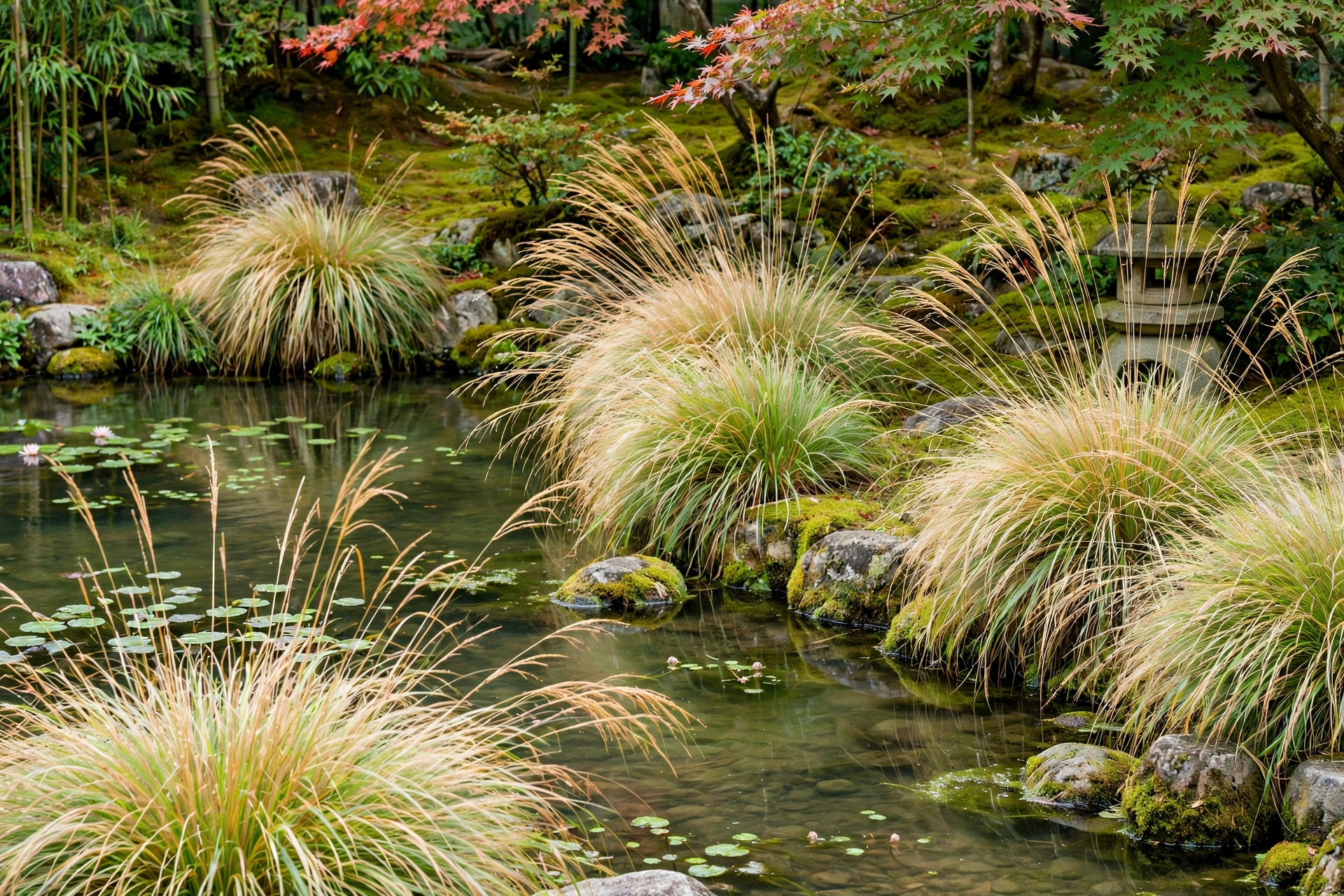
A pond edged with ornamental grasses gains soft movement, as slender blades sway above the water and catch the light through the seasons. Japanese silver grass and sweet flag echo the vertical lines of bamboo while staying compact enough for a small garden pond.
Plant grasses in submerged pots or in a boggy margin at the pond’s edge, trimming them back each spring before new growth appears. Their reflections ripple gently on the surface, adding texture without hiding the water itself.
15. Stone Path Leading to the Pond
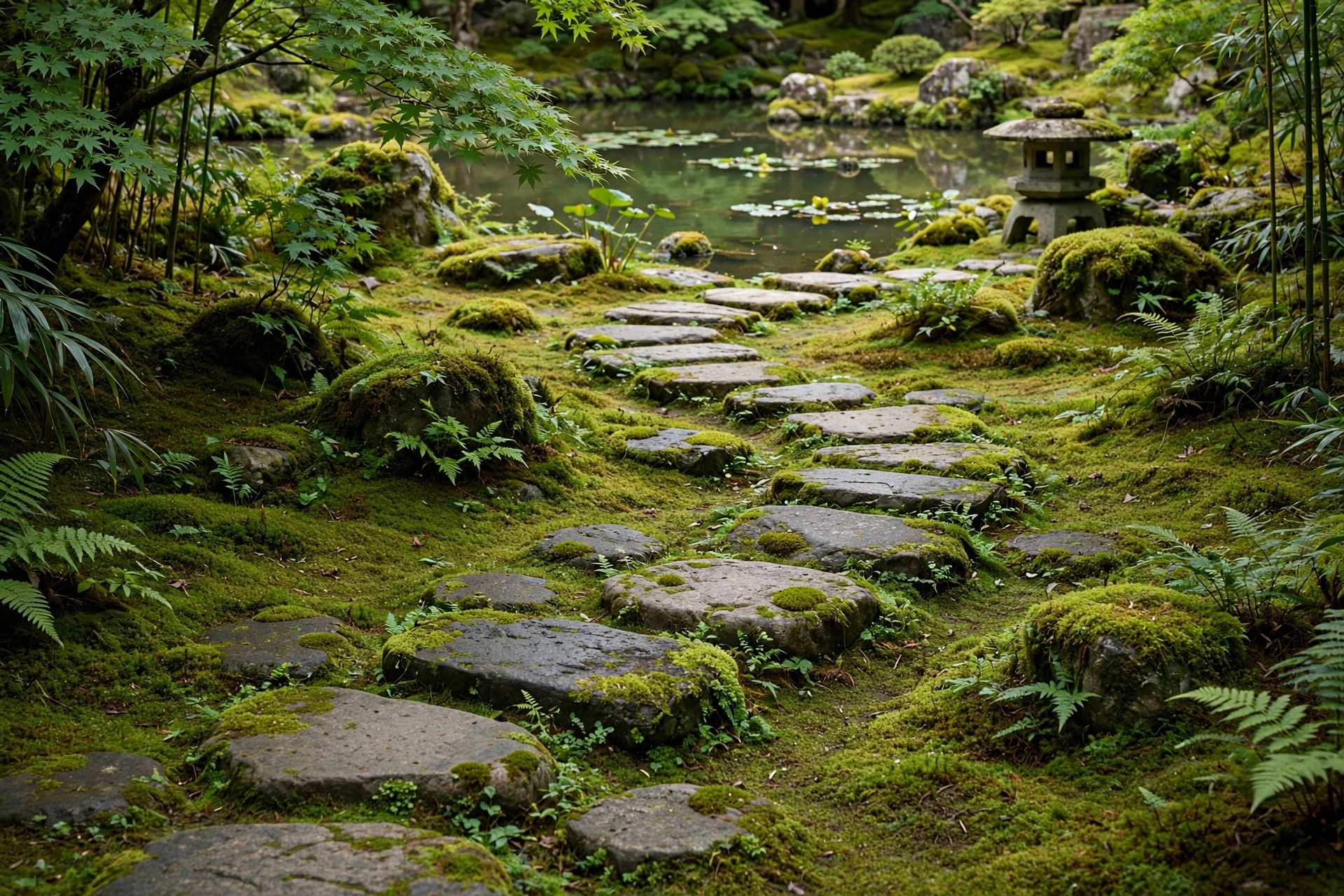
A stone path leading to the pond slows the journey and builds anticipation, with irregular stepping stones winding through moss and low plants toward the water. Unlike a straight walkway, a curving path hides the pond until the last step, making its reveal feel like a discovery.
Set the stones slightly uneven in height and spacing for a natural stride, and plant creeping thyme or moss in the gaps. The path becomes part of the garden’s meditation, encouraging visitors to look down, step carefully, and arrive calm.
16. Pond with Pine Tree Reflection
A pond with a pine tree reflection captures one of the most iconic images in Japanese garden design, the dark evergreen mirrored perfectly in still water. A pruned black pine trained into cloud shapes above the pond brings year-round structure and a sense of age and dignity.
Position the pine so morning light strikes its foliage while the pond stays calm and sheltered from wind, keeping reflections sharp. Prune in late winter to maintain the layered cloud form, and the tree will reward you with a living picture every single day.

17. Shallow Pebble Pond for Small Spaces
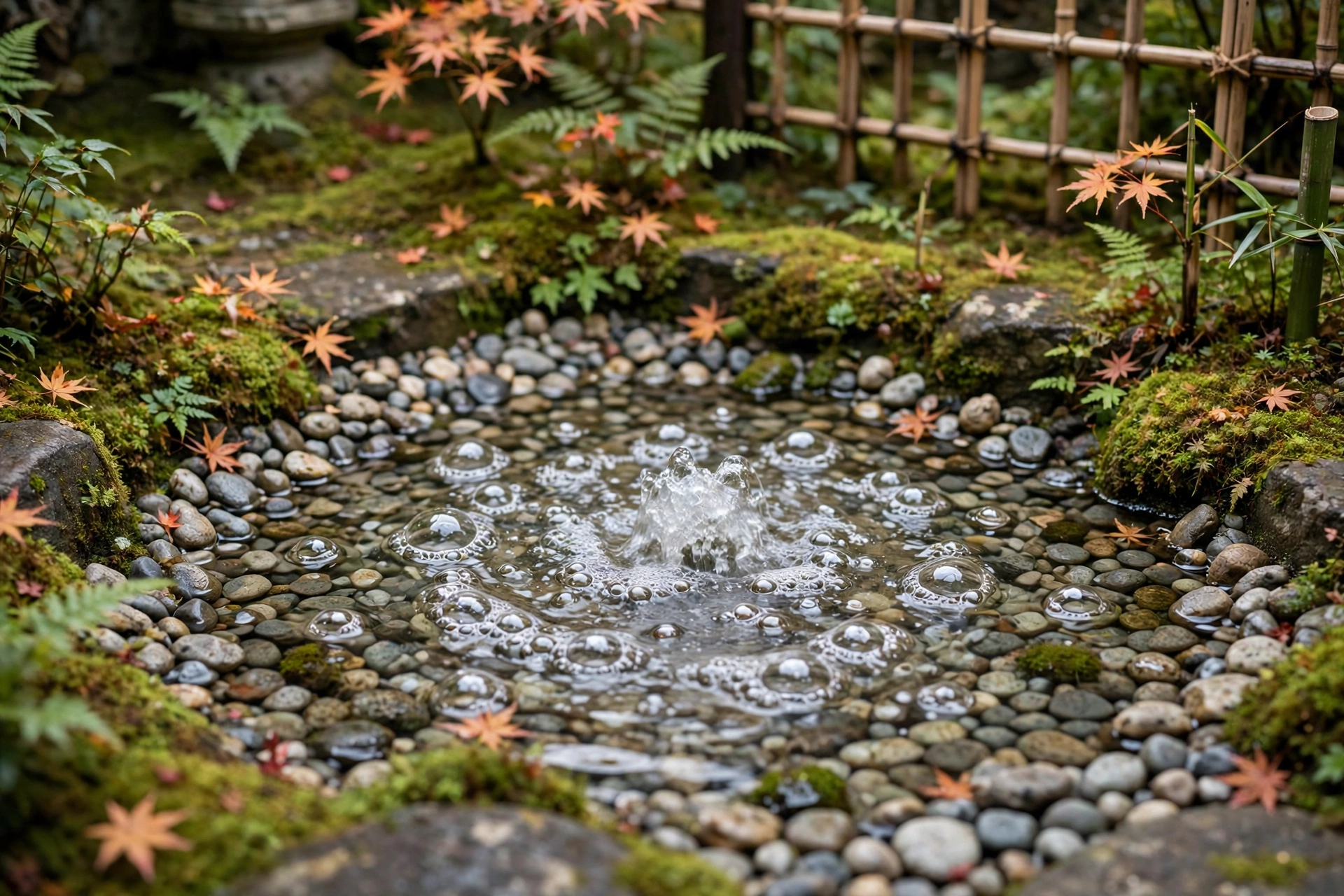
A shallow pebble pond is the perfect small Japanese garden pond for the tiniest spaces, using a hidden reservoir beneath smooth pebbles so water bubbles up without an open pool. This design suits patios and courtyards, stays safe for children and pets, and needs very little maintenance.
Choose rounded river pebbles in natural grey and beige tones, and let the water just kiss their tops so the surface glistens. A small solar pump keeps the water moving, and the feature can even fit on a balcony-sized patio.
18. Pond with Japanese Iris Planting
A pond edged with Japanese iris brings a burst of purple and white in early summer, their sword-like leaves and elegant blooms rising from the shallow margins. Irises love wet feet, so they thrive exactly where many plants struggle, turning the pond’s edge into a seasonal flower show.
Plant irises in baskets set just below the waterline on a sunny side of the pond, and divide the clumps every few years to keep them vigorous. After flowering, their upright leaves continue to add vertical interest beside the water all season long.

19. Wooden Deck Overlooking the Pond
A wooden deck overlooking the pond creates a place to sit, sip tea, and watch the water, extending your living space right to the pond’s edge. A low cedar deck feels warm underfoot and frames the pond like a picture, giving the garden a welcoming, lived-in quality.
Build the deck just above the water level with a small gap at the edge so rain drains freely, and leave room for a cushion and a low table. Evening light on the deck, with lanterns glowing nearby, turns the pond into the garden’s favorite gathering spot.

20. Pond with Mossy Stone Steps
A pond with mossy stone steps descending to the water invites you to sit at the very edge and trail your fingers in the cool pool. Wide, flat steps softened by moss feel ancient and gentle, turning the pond’s bank into natural seating for quiet moments.
Set the steps into a grassy or gravel bank with a slight slope, anchoring each stone firmly so it never wobbles. Moss will colonize shaded stones on its own over time, especially if you keep the area damp and undisturbed.

21. Pond with Paper Lantern Glow at Dusk
A pond lit by paper lantern glow at dusk becomes magical after sunset, with warm light reflecting on the water and stone lanterns. Hanging a few weatherproof paper lanterns from a maple branch or bamboo pole transforms an evening visit into something truly enchanting.
Use solar or battery lanterns for safety near water, choosing warm white tones that flatter stone and foliage. The glow doubles on the pond’s surface, making even a small garden feel deep, dreamy, and full of atmosphere.

22. Pond with Bamboo Grove Backdrop
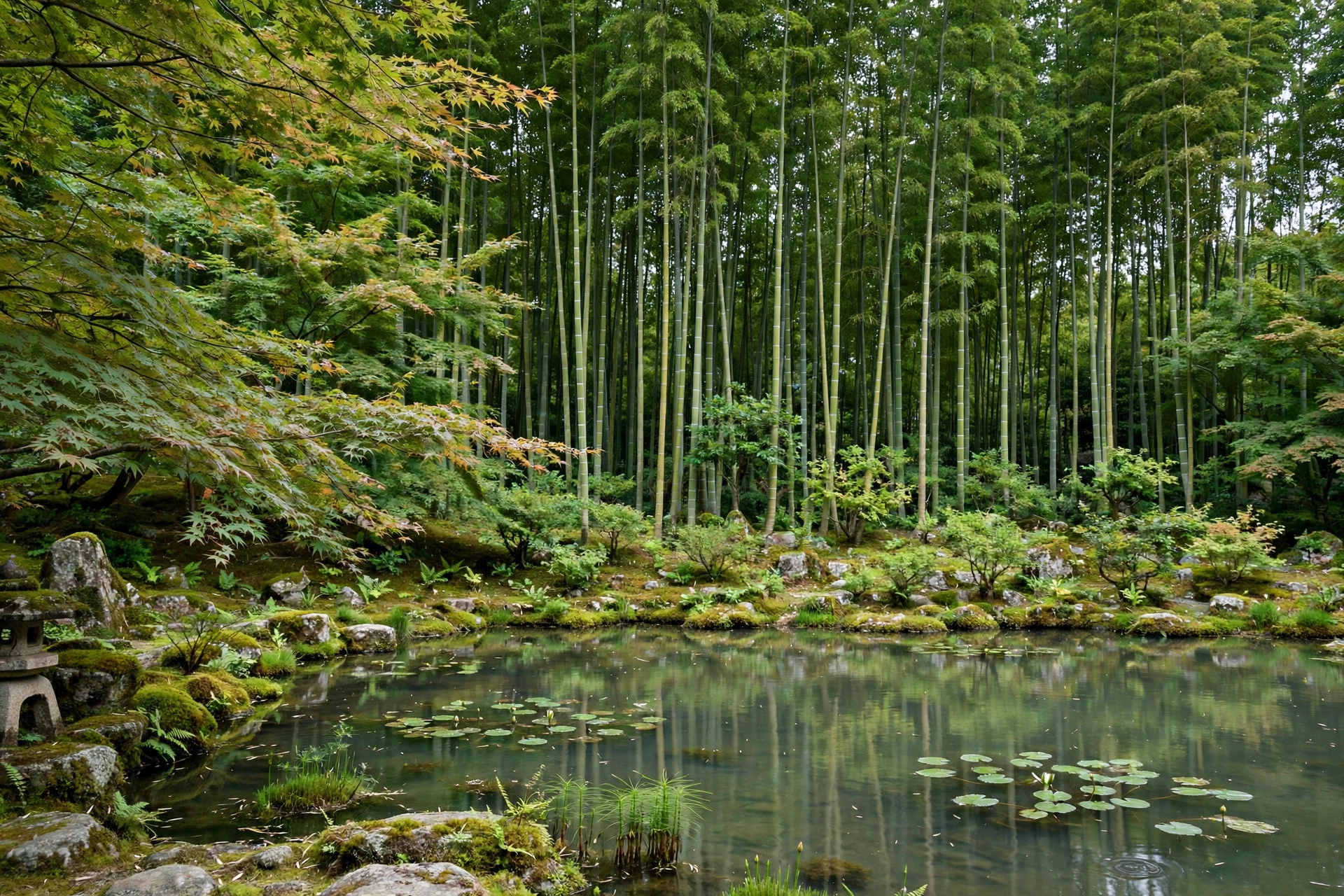
A pond backed by a bamboo grove gains instant height, privacy, and the soft rustling sound that defines Japanese gardens. Tall green culms rising behind the water create a living screen, while their filtered shade keeps the pond cool and the moss lush.
Plant bamboo in a root barrier or large container to stop it spreading into the pond or neighboring beds, and choose a clumping variety for easier control. Thin the oldest culms each year to keep the grove airy and let sunlight dapple the water.
23. Pond with Flat Stone Sitting Area
A pond with a flat stone sitting area gives the garden a natural terrace, where one large slab or a few joined stones create a platform beside the water. This simple seating spot is perfect for morning tea, sketching, or simply watching dragonflies skim the surface.
Choose a stone wide enough for a cushion and a small tray, and level it carefully so cups never slide. A single potted maple or lantern nearby completes the scene without crowding the peaceful view across the pond.

24. Pond with Seasonal Cherry Blossoms
A pond beneath seasonal cherry blossoms offers one of spring’s most beautiful sights, as pale pink petals drift down and float on the water like confetti. For a few precious weeks, the pond becomes a mirror of blossom and sky, changing almost every day.
Plant a compact cherry variety where its canopy can overhang part of the pond without dropping heavy branches, and skim fallen petals lightly so they never clog the pump. The fleeting blossom season teaches the Japanese garden’s deepest lesson: beauty is precious because it passes.

25. Finishing Touches for a Small Japanese Garden Pond
The finishing touches for a small Japanese garden pond are often the smallest details: a single frog ornament half-hidden in ferns, a smooth stone for sitting, a wind chime tinkling from a nearby branch. These quiet accents make the pond feel personal and complete rather than simply built.
These small Japanese garden pond ideas work best when you start with one strong element and add the rest slowly, letting the garden settle between changes. Keep the water clear, the edges soft, and the planting simple, and your pond will reward you with peace for years to come.