
25 Small Bedroom with Twin Beds: Smart Ideas for Shared Spaces
A small bedroom with twin beds is the classic shared-space puzzle — two sleepers, one small footprint. The good news: with smart layout and styling, a twin room can feel generous, organized, and personal for both.
These small bedroom with twin beds ideas cover layouts, storage, and style. Also explore our Modern Luxury Guest Bathroom, Small Space Living Apartment Ideas, and Easy Home Decor Ideas guides.
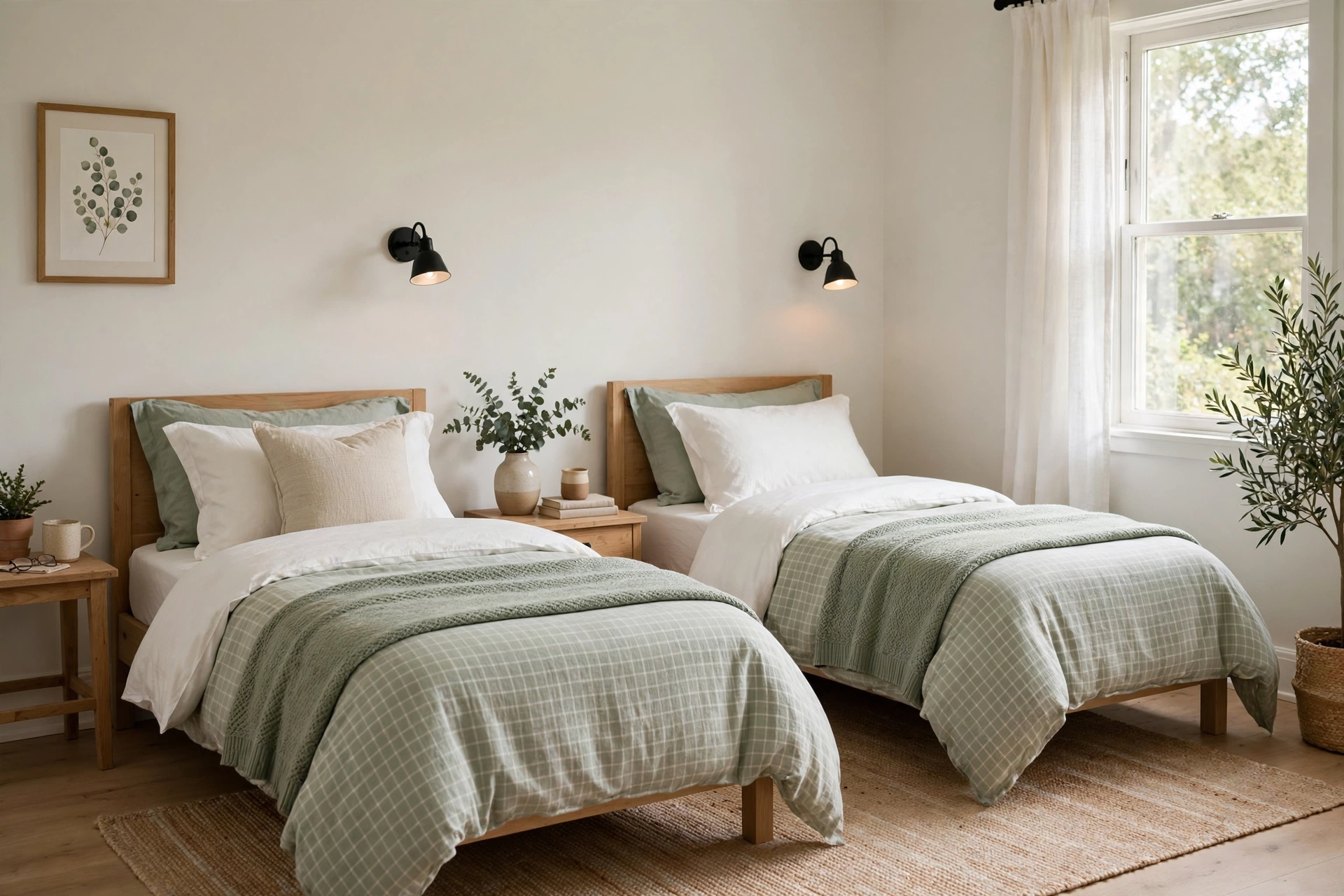
1. Place Beds Along One Wall
Lining both twin beds along the same wall leaves the other side free for desks, dressers, or play space. The room feels organized instead of split.
Keep the beds head-to-head along the wall. Symmetry calms a shared room.

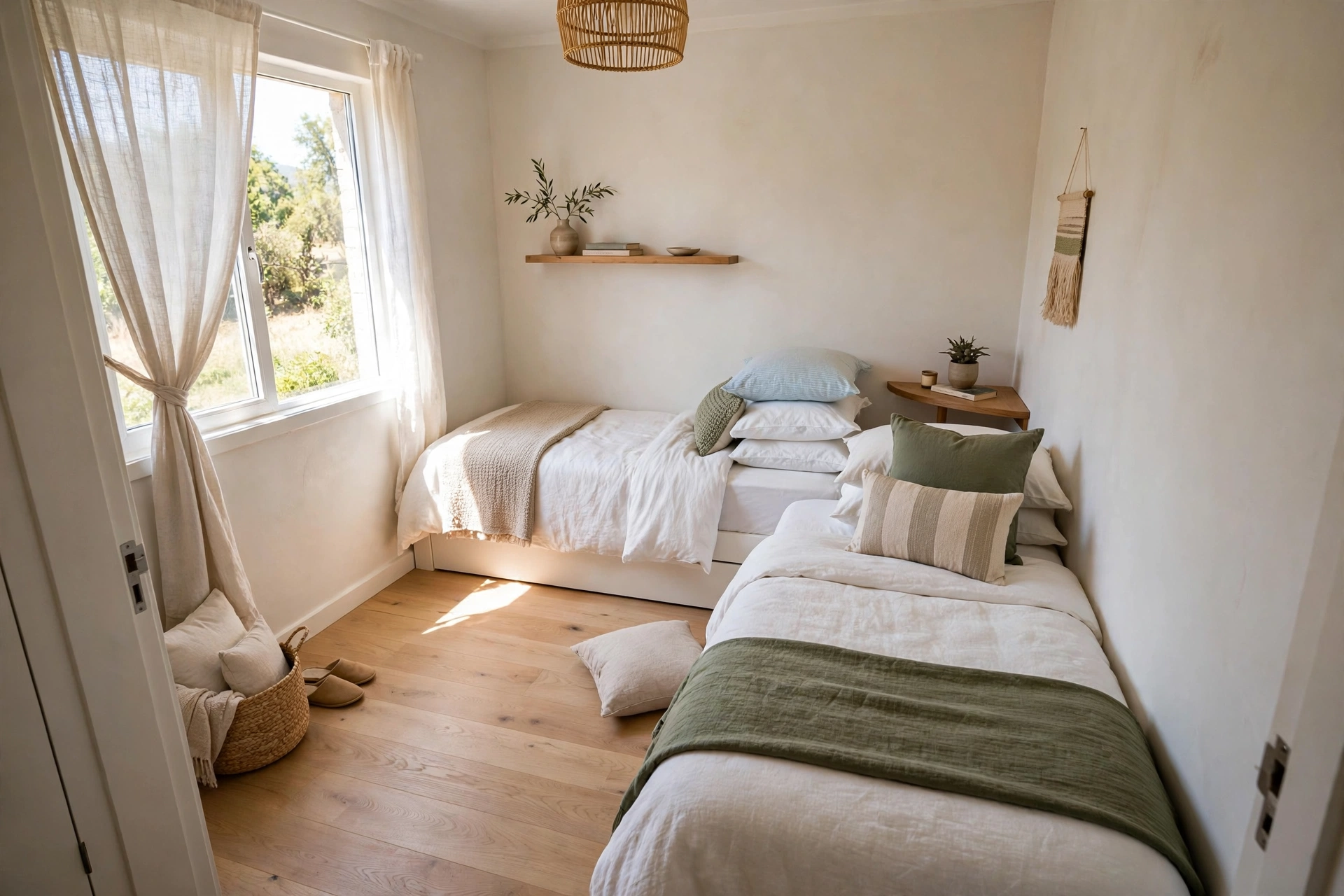
2. Use an L-Shaped Layout
An L-shaped arrangement — one bed against each of two walls, heads meeting in the corner — uses the corner smartly. It gives each sleeper their own zone.
A corner table where the heads meet serves both. Corner layouts make corners earn their keep.
3. Choose Matching Bedding
Matching bedding on both beds creates instant cohesion — the room reads as one designed space, not two random beds. It’s the fastest style upgrade.
Personalize with different throw pillows. Matching base, personal details.

4. Add a Shared Nightstand Between
One nightstand between the beds serves both sleepers and centers the layout. A shared lamp and two small drawers keep the peace.
Symmetry helps shared rooms feel fair. Shared furniture, zero arguments.

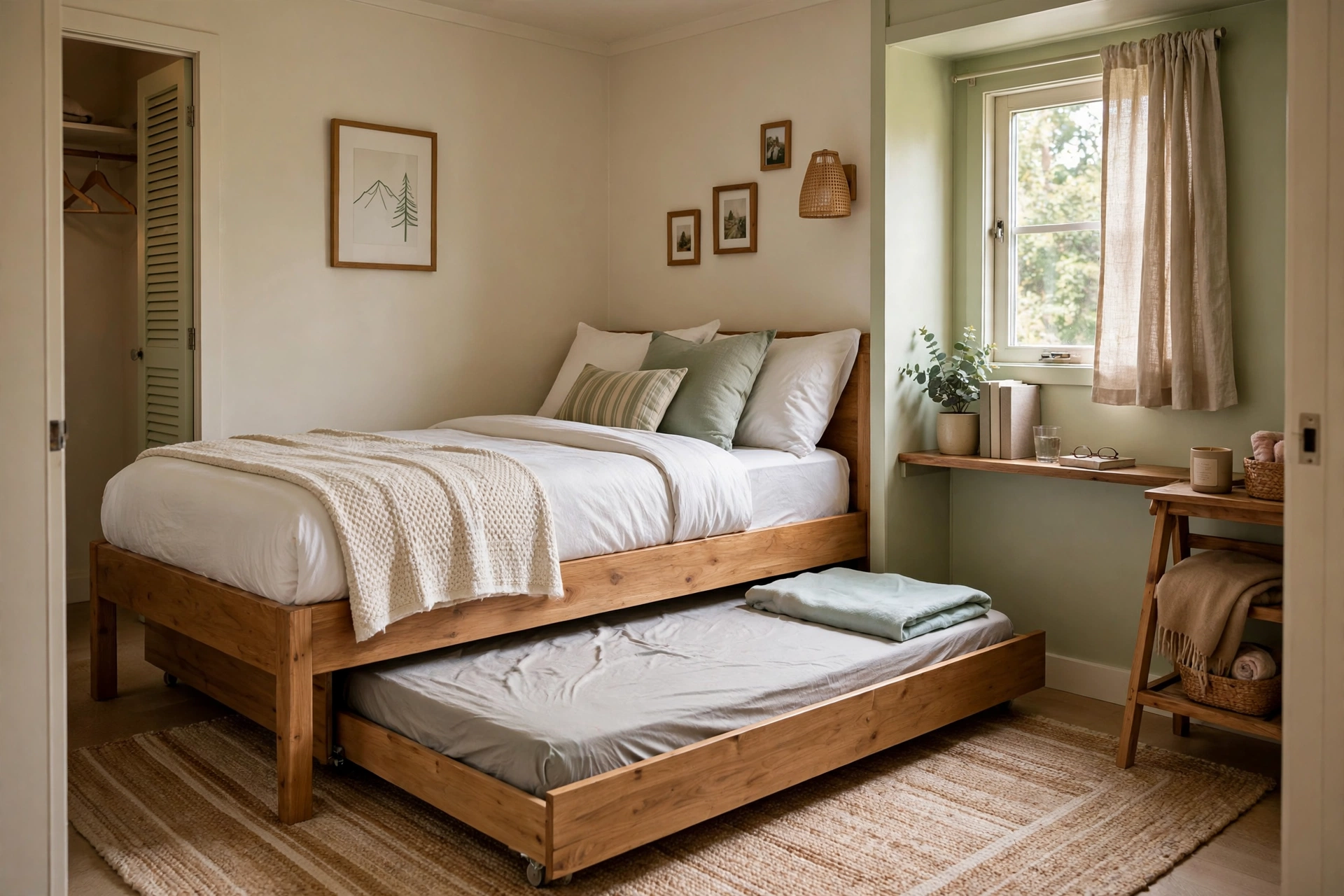
5. Use Trundle Beds for Guests
A trundle bed hides a third bed underneath — perfect for sleepovers in a small room. By day, it’s just one bed.
Choose a pop-up trundle that rises to full height. Guests deserve a real bed.
6. Build In Under-Bed Storage
Drawers under each twin bed swallow clothes, toys, and bedding — crucial storage in a small shared room. Every inch counts.
Label the drawers by owner. Shared rooms need clear territory.

7. Hang Wall Sconces
Wall sconces beside each bed free up the nightstand and give each sleeper their own reading light. No cords to fight over.
Individual lights prevent bedtime battles. Light equity matters.

8. Create a Headboard Wall
A painted or paneled accent wall behind both headboards unifies the beds into one feature. The wall does the decorating.
Run the accent across both beds. One feature, two beds, zero clutter.

9. Use Bunk Beds to Save Floor
When floor space is truly tight, bunk beds stack the sleeping and free the floor for living. Modern bunks look nothing like summer camp.
Add storage stairs instead of a ladder. Every step can hide a drawer.

10. Add Individual Reading Lights
Clip-on or plug-in reading lights give each child their own glow without disturbing the other. Small lights, big harmony.
Choose warm light for bedtime reading. Sleep-friendly and sibling-friendly.

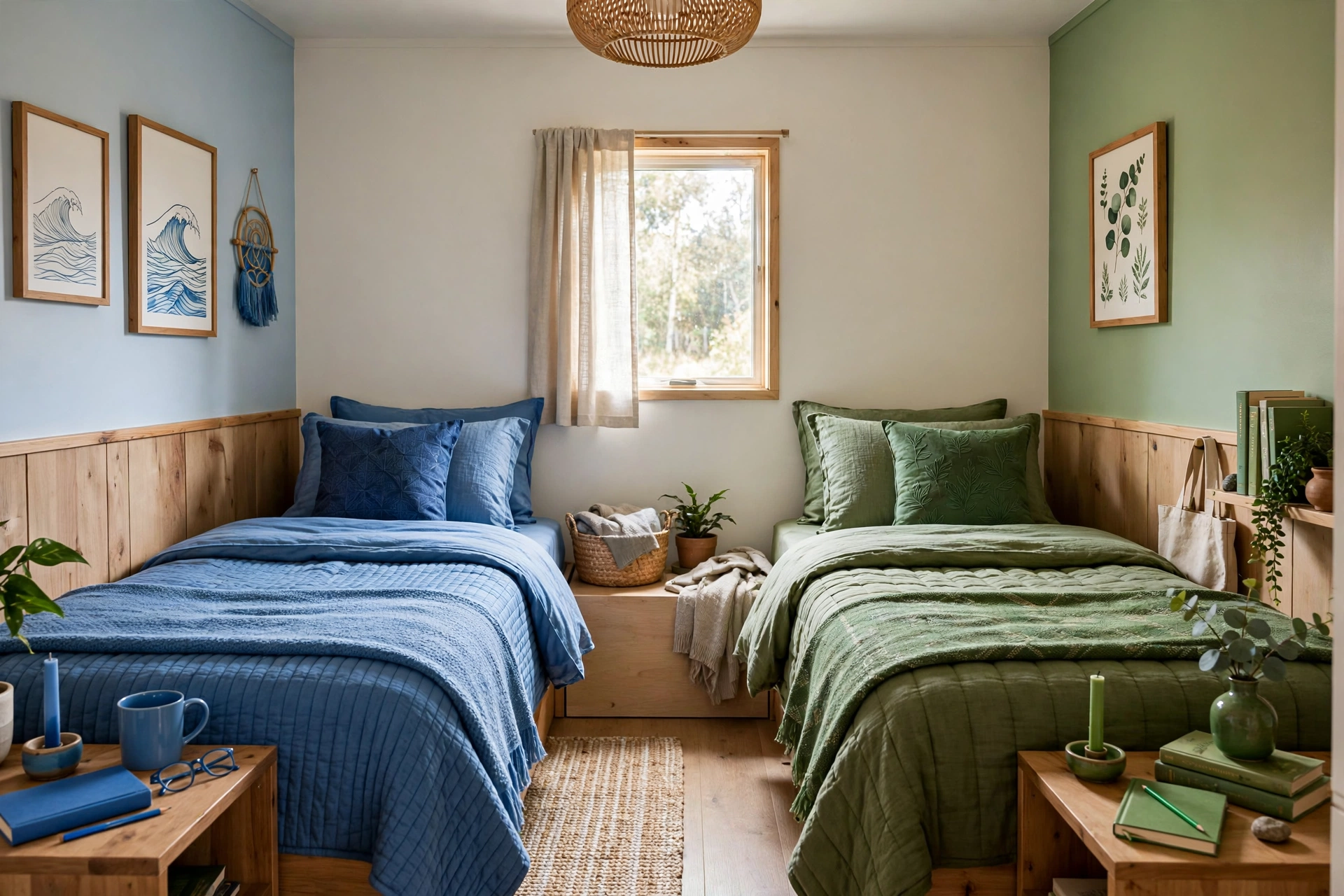
11. Color-Code Each Side
Give each sleeper a signature color — pillows, throws, storage bins — while the base stays matching. Identity within unity.
It ends the “that’s mine” debates. Color coding is peacekeeping.
12. Float a Shelf Above Each Bed
A small shelf above each bed holds books, a clock, and treasures — personal space that takes no floor. It’s each sleeper’s tiny territory.
Keep shelves shallow and high enough. Safety first in kids’ rooms.
13. Choose Low-Profile Frames
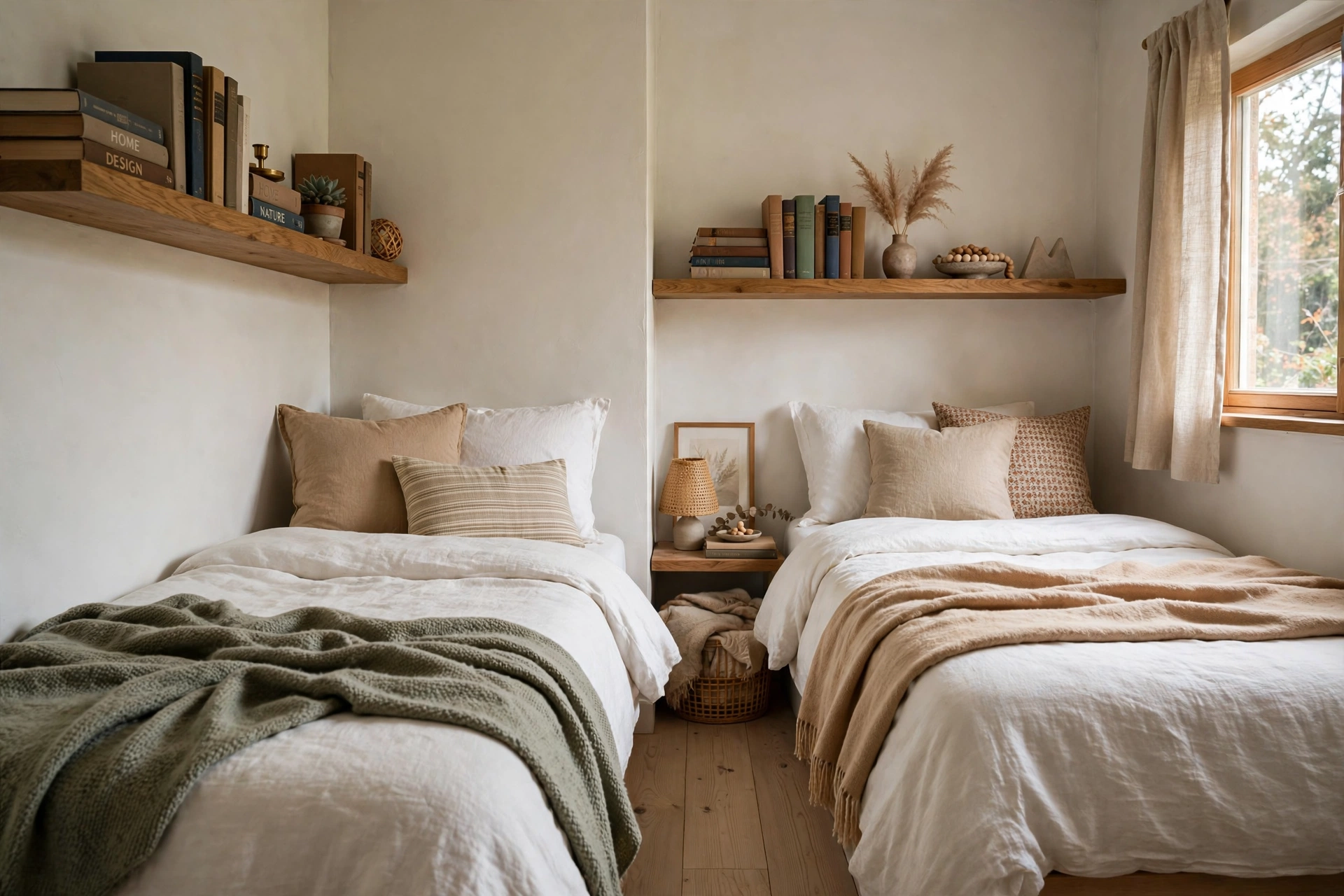
Low-profile bed frames make a small room feel taller and airier. Less visual bulk means more breathing room.
Skip the box spring with platform frames. Lower beds, higher-feeling ceilings.
14. Add a Rug Between the Beds
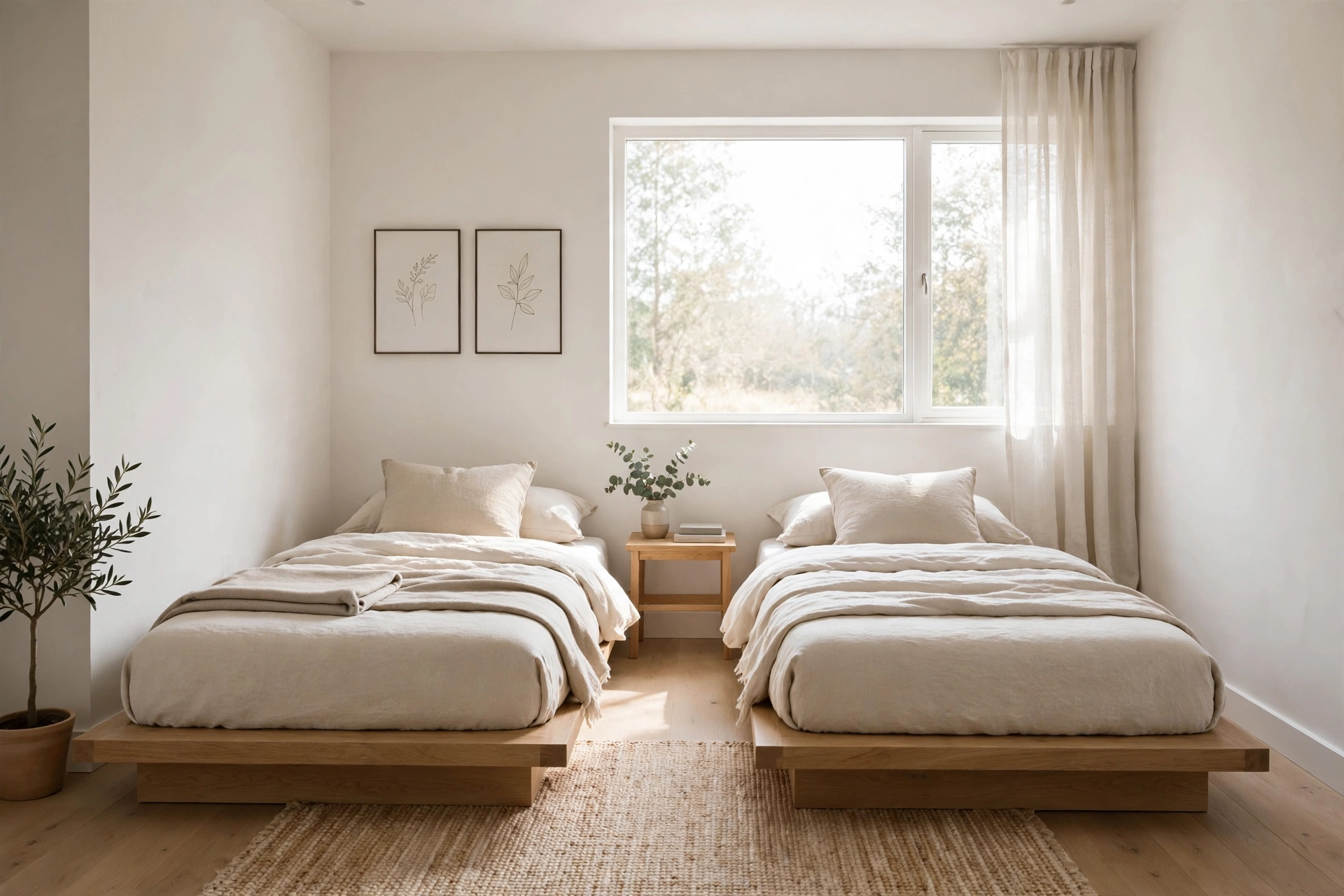
A runner or rug between the beds softens the floor and defines the walkway. Bare feet approve.
Choose a washable rug for kids’ rooms. Practical beats precious.

15. Use Mirrored Closet Doors
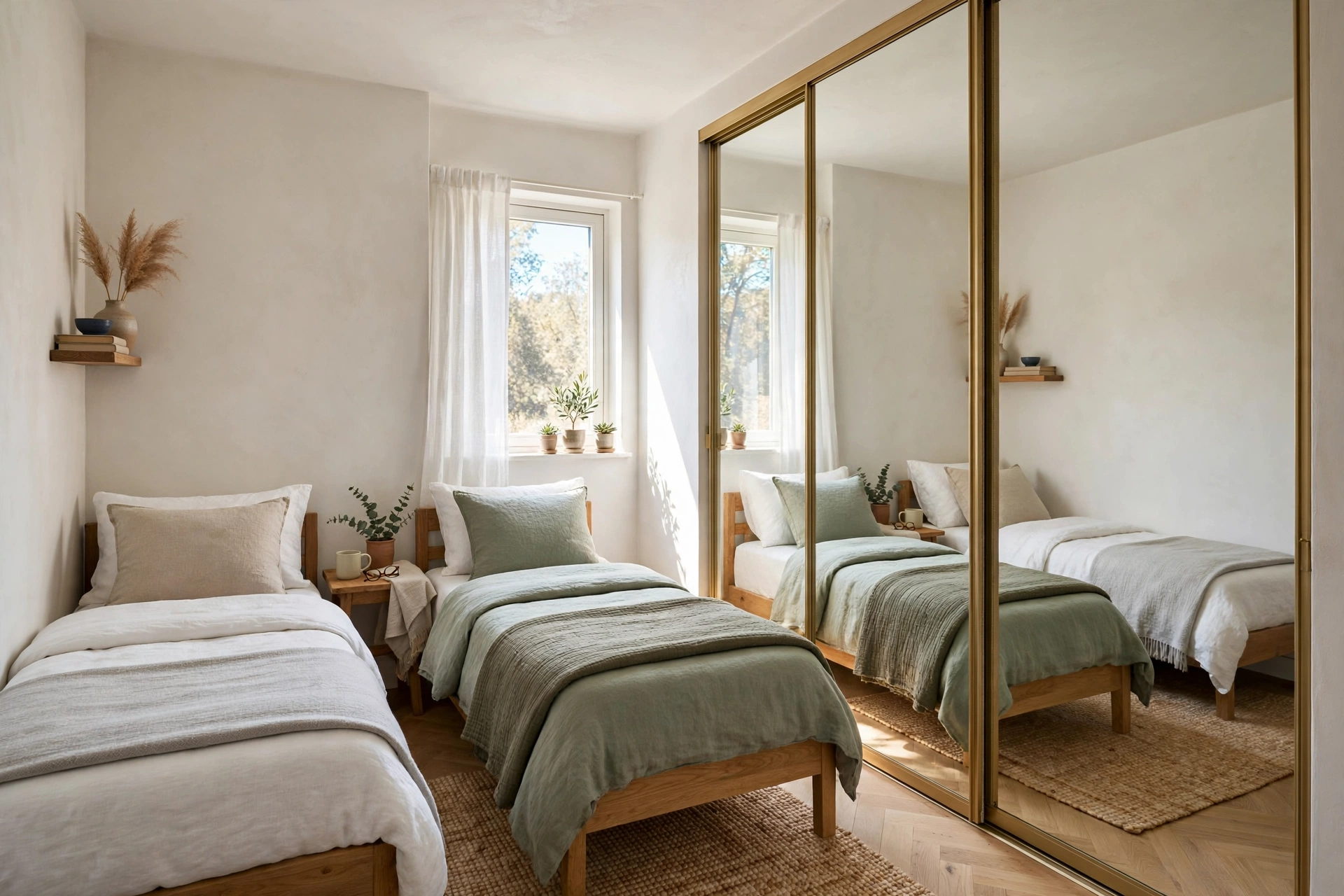
Mirrored closet doors bounce light and double the room visually — a classic small-space trick that still works.
They also serve as getting-ready mirrors. Function doubled.
16. Install a Corner Desk
A corner desk shared by both — or two small desks back-to-back — gives homework a home without eating the room.
Wall-mount the desk to float it. Floating furniture makes small rooms breathe.

17. Hang Curtains High
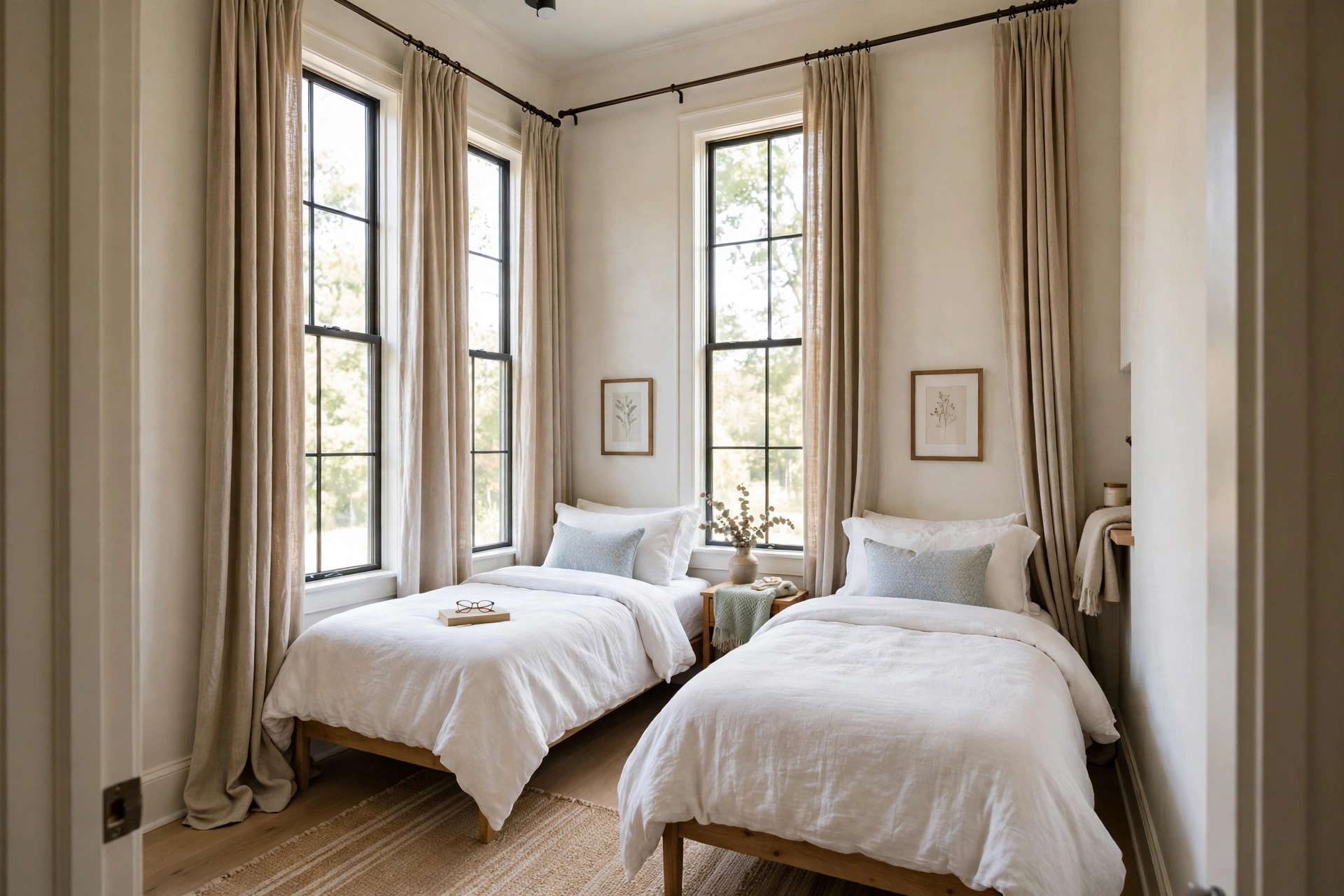
Curtains hung near the ceiling make windows — and the room — feel taller. The eye travels up, not across.
Let them just kiss the floor. Height is the illusion that matters.
18. Pick Storage Headboards
Headboards with built-in shelves or cubbies replace nightstands entirely — storage where the bed already is.
Great for books and bedtime essentials. The headboard earns its space.

19. Keep a Light Palette
Light walls and bedding keep a small shared room feeling open — pale colors reflect light and calm busy rooms.
Add color through pillows and art. Light base, playful accents.

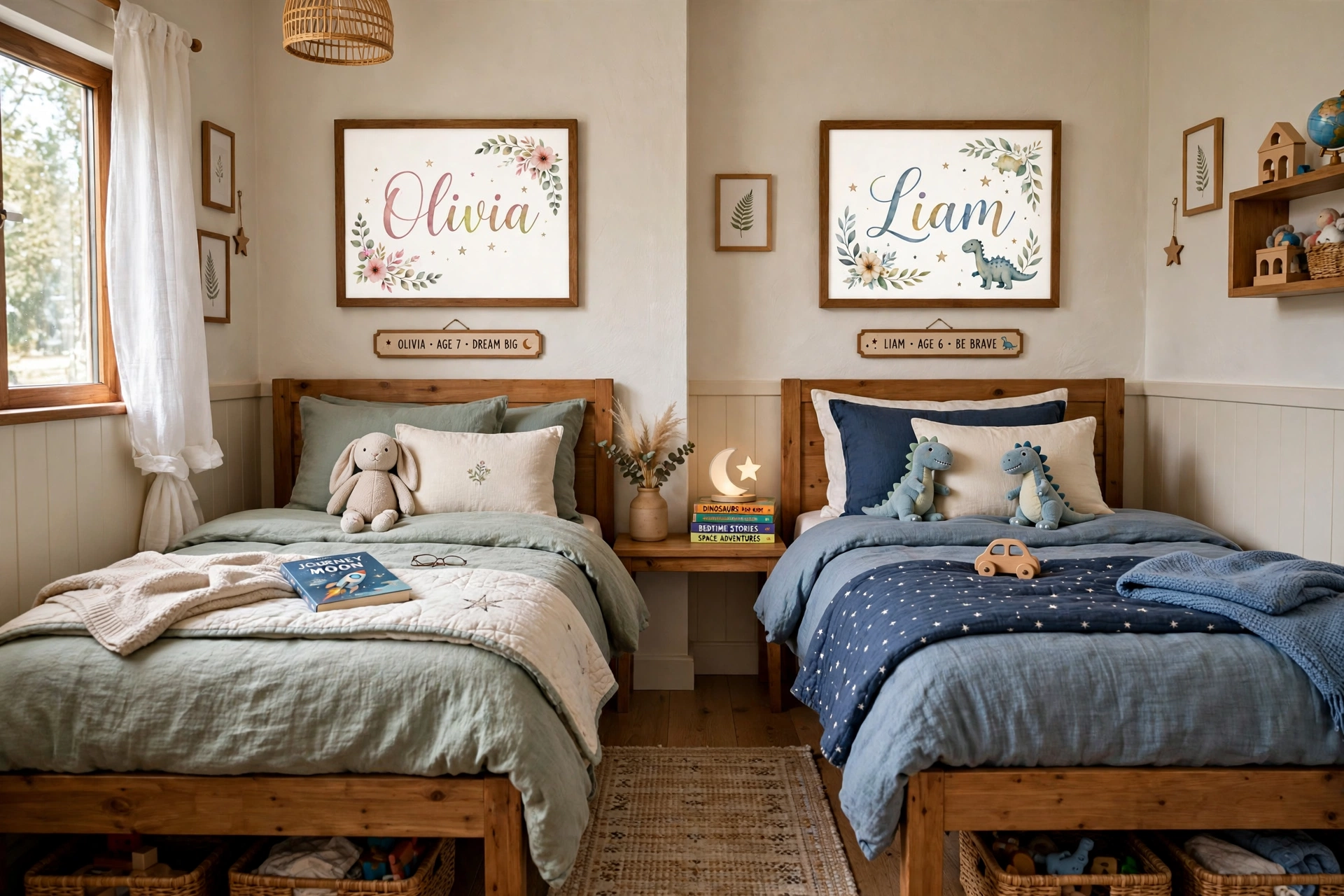
20. Add Personal Name Art
Name art or initials above each bed marks territory sweetly — each sleeper’s spot is unmistakably theirs.
It costs little and means a lot. Personal touches prevent turf wars.
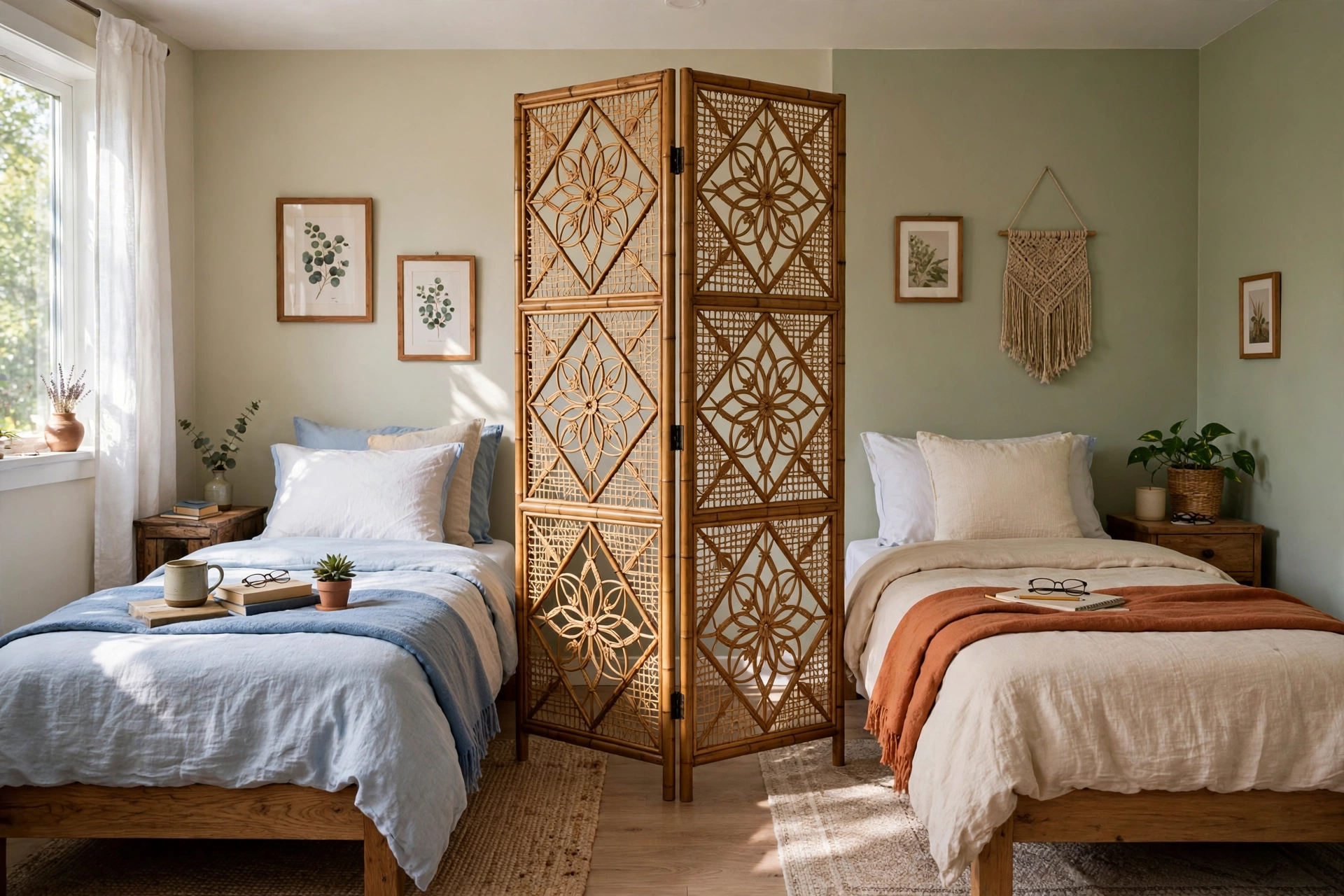
21. Use a Folding Room Divider
A lightweight folding screen creates privacy on demand — for changing, reading, or cooling off after a sibling spat.
Fold it away when not needed. Flexible privacy for shared life.
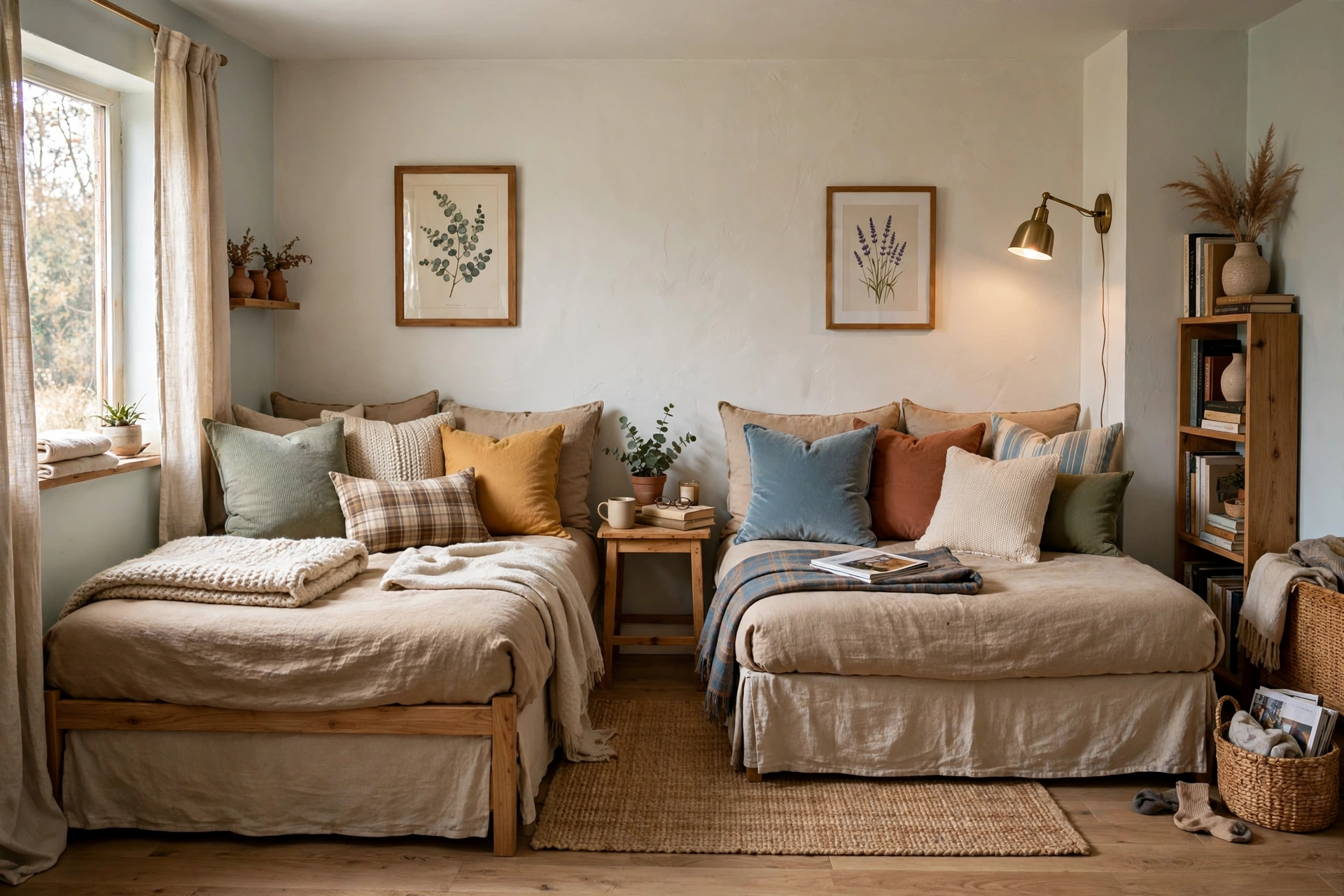
22. Choose Daybeds for Dual Duty
Twin daybeds against opposite walls double as sofas by day — the room becomes a hangout, not just a dormitory.
Dress them with bolsters for sofa mode. Two rooms in one footprint.
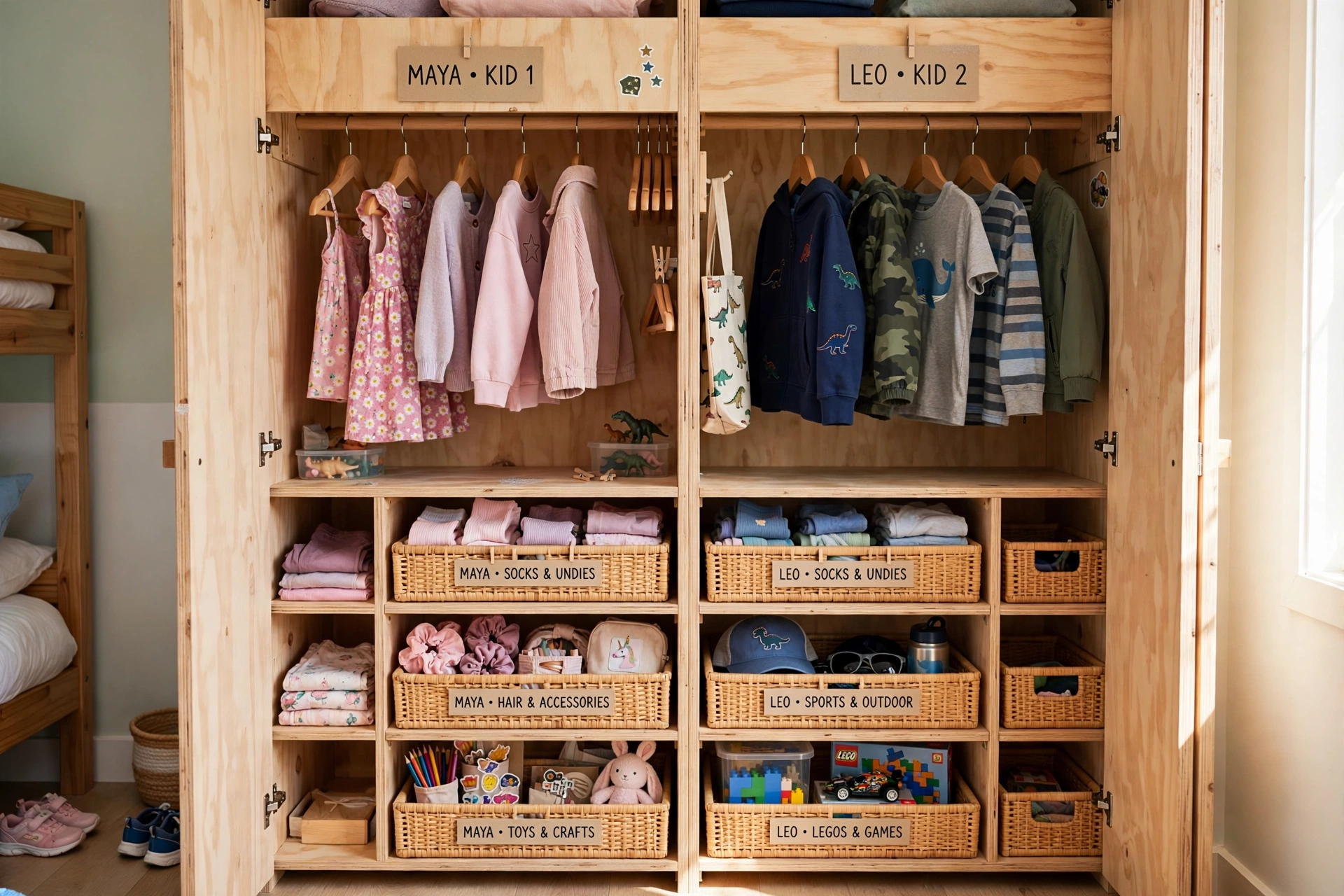
23. Maximize Closet Organization
A well-organized shared closet — double hanging rods, labeled bins, door organizers — prevents the morning scramble.
Assign each side clearly. Organization is sibling diplomacy.
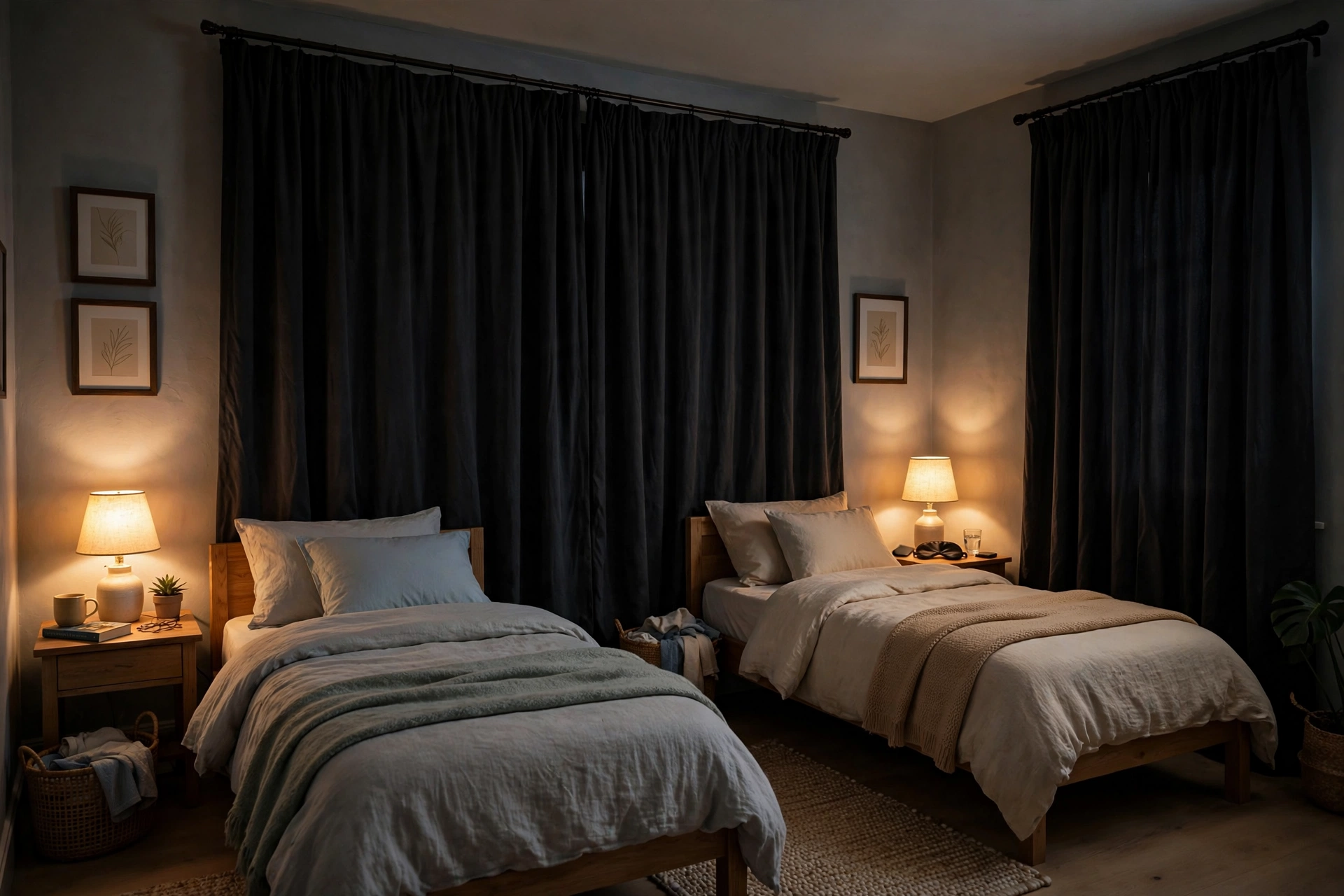
24. Add Blackout Curtains
Blackout curtains help both sleepers rest properly — especially when bedtimes differ or street lights glare.
Layer them behind decorative panels. Sleep quality is the real luxury.
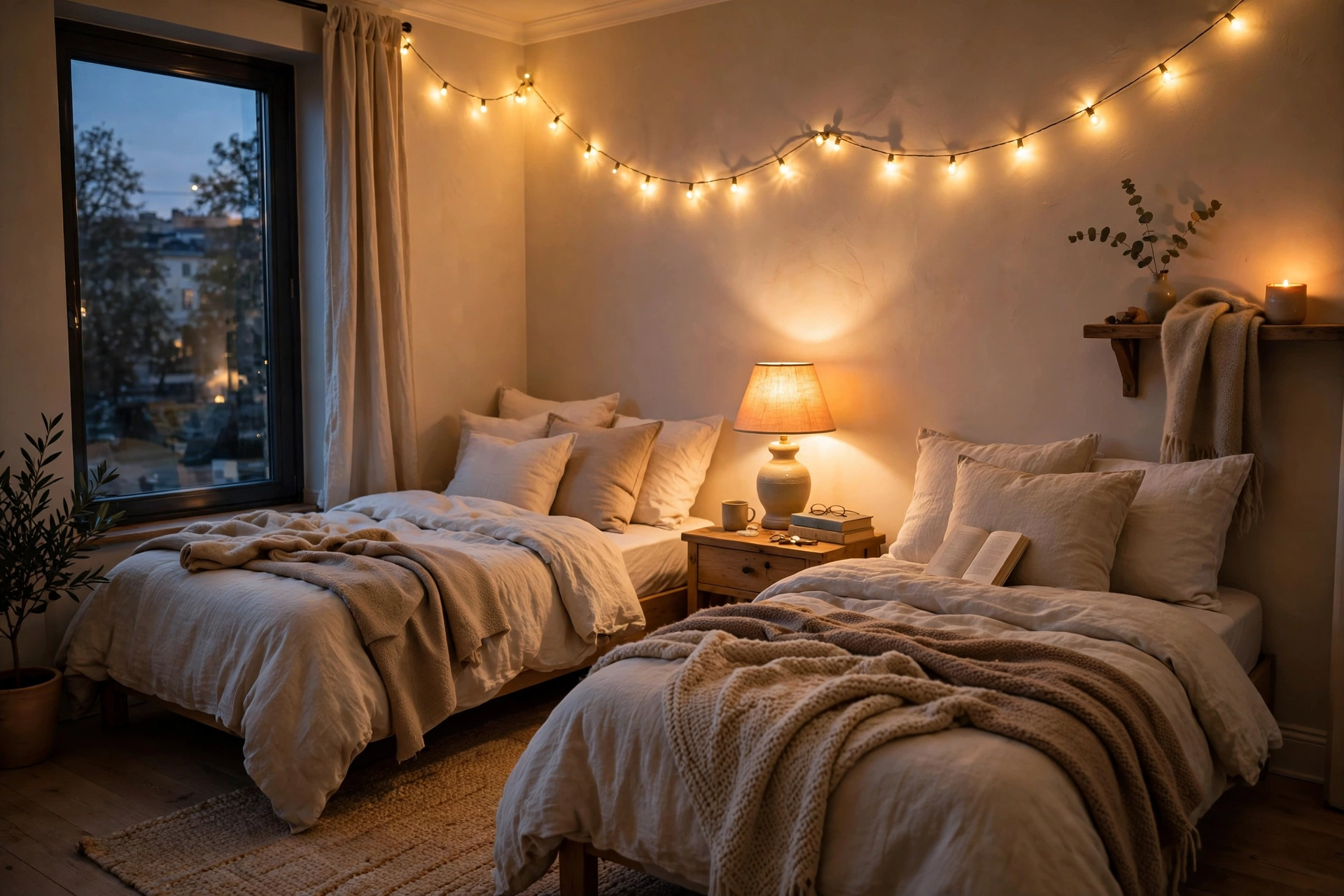
25. Finish with Soft Lighting
A warm ceiling light plus individual lamps make the small twin room feel cozy at night — soft light forgives small spaces.
Dimmer switches help wind down. End the day gently.

3 Comments