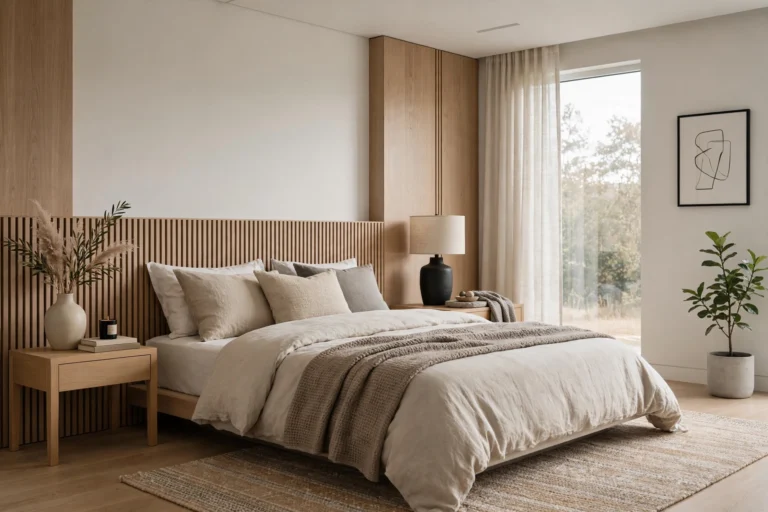
25 Minimalist Bedroom Design
A minimalist bedroom design turns the most personal room in the home into a calm, restful retreat, where clean lines, soft neutrals, and uncluttered surfaces help the mind unwind at the end of every day. With fewer objects competing for attention, the bedroom becomes a place for deep sleep, quiet mornings, and genuine relaxation.
Whether your bedroom is large or compact, these minimalist bedroom design ideas show how thoughtful furniture choices, a restrained palette, and smart hidden storage create comfort without clutter. For a welcoming first impression outside the home, explore Front Yard Gate Ideas.
1. Neutral Color Palette for a Calm Bedroom
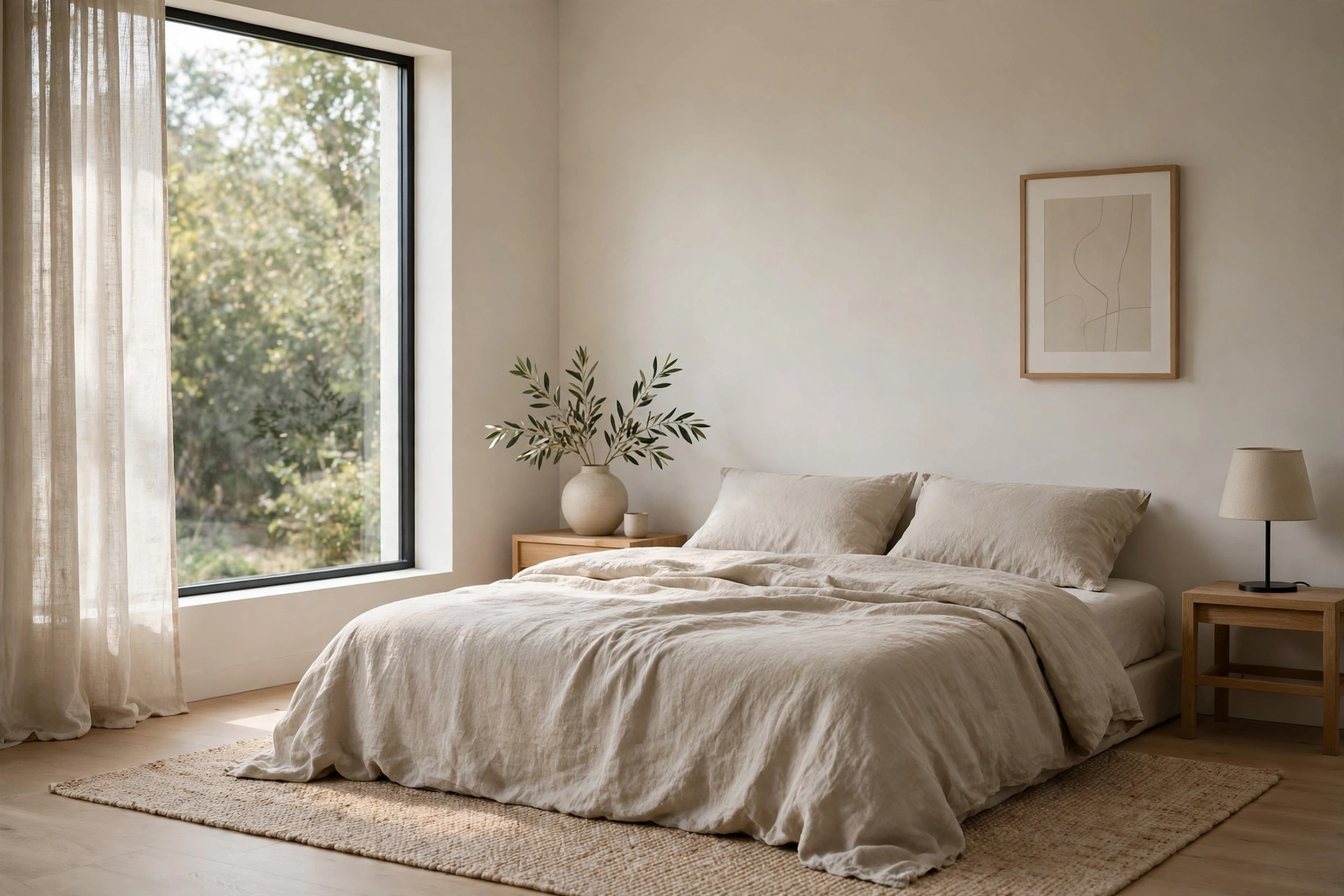
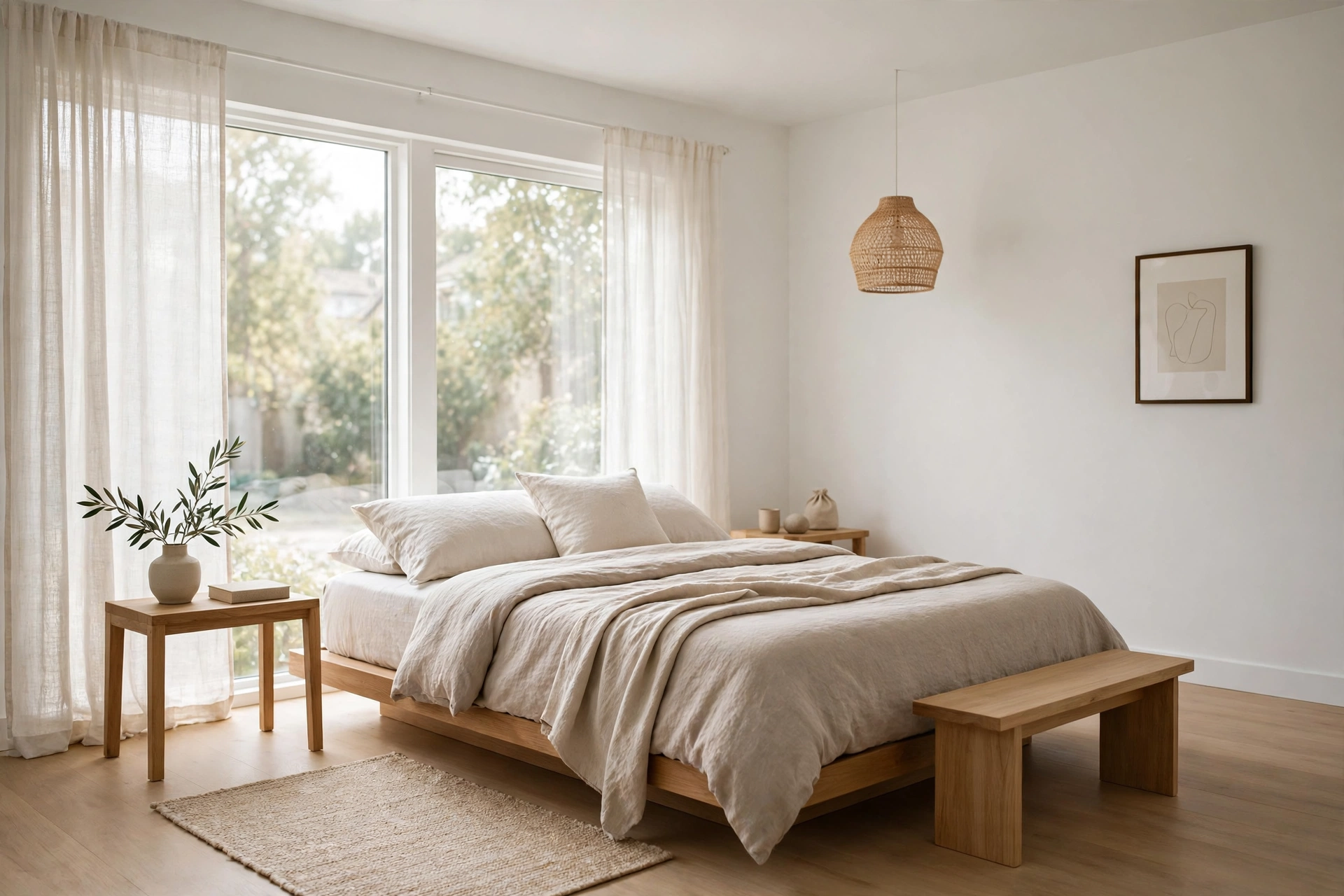
A neutral color palette is the foundation of minimalist bedroom design, with soft whites, warm beiges, and gentle greys creating a backdrop that feels peaceful rather than plain. When walls, bedding, and furniture share the same quiet family of tones, the room instantly feels larger, lighter, and easier to rest in.
Keep the palette to three tones at most: a light wall color, a slightly deeper neutral for furniture, and one warm accent for textiles. This restraint stops the eye from jumping around the room and lets the few chosen pieces stand out beautifully.
2. Low Platform Bed as the Centerpiece
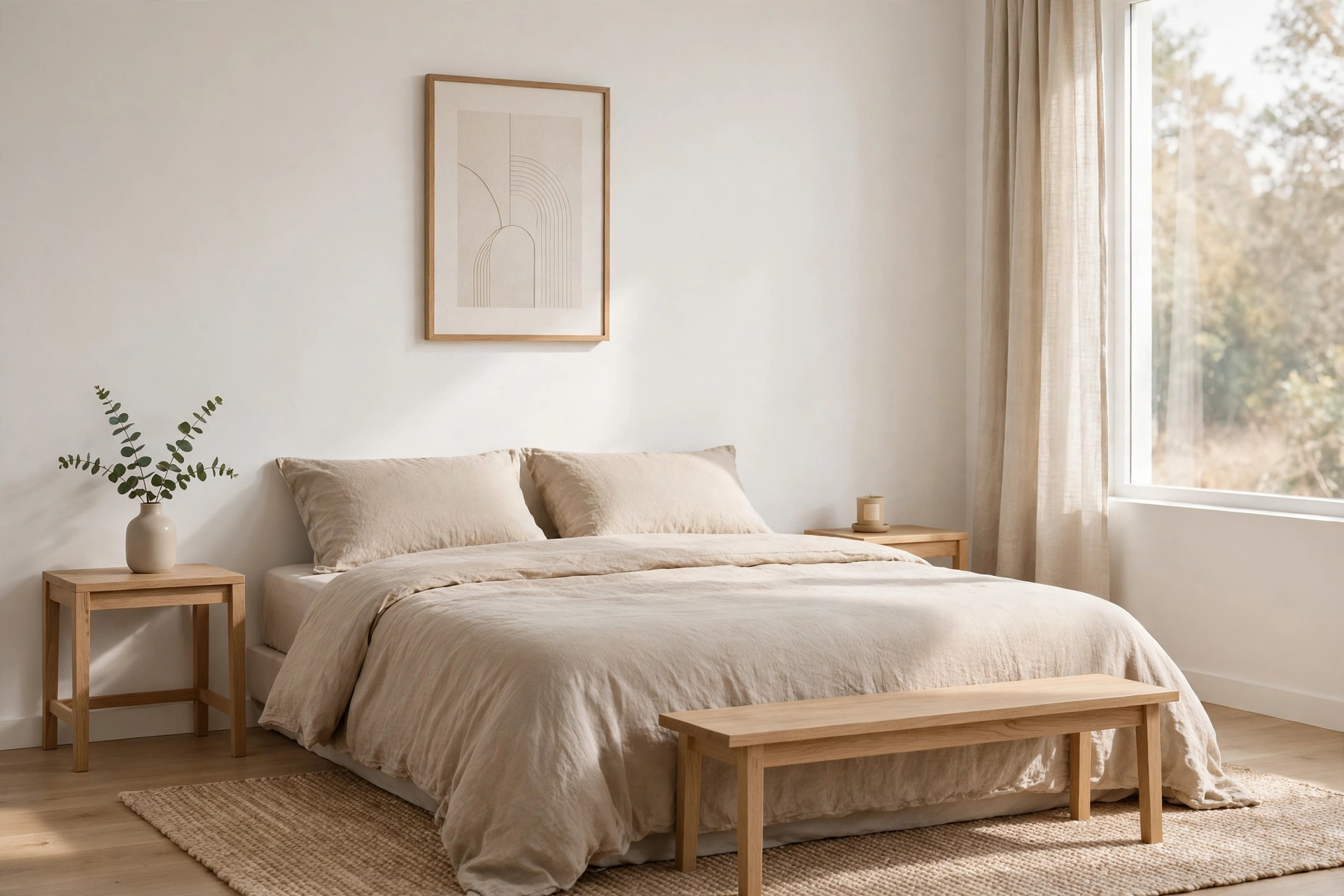
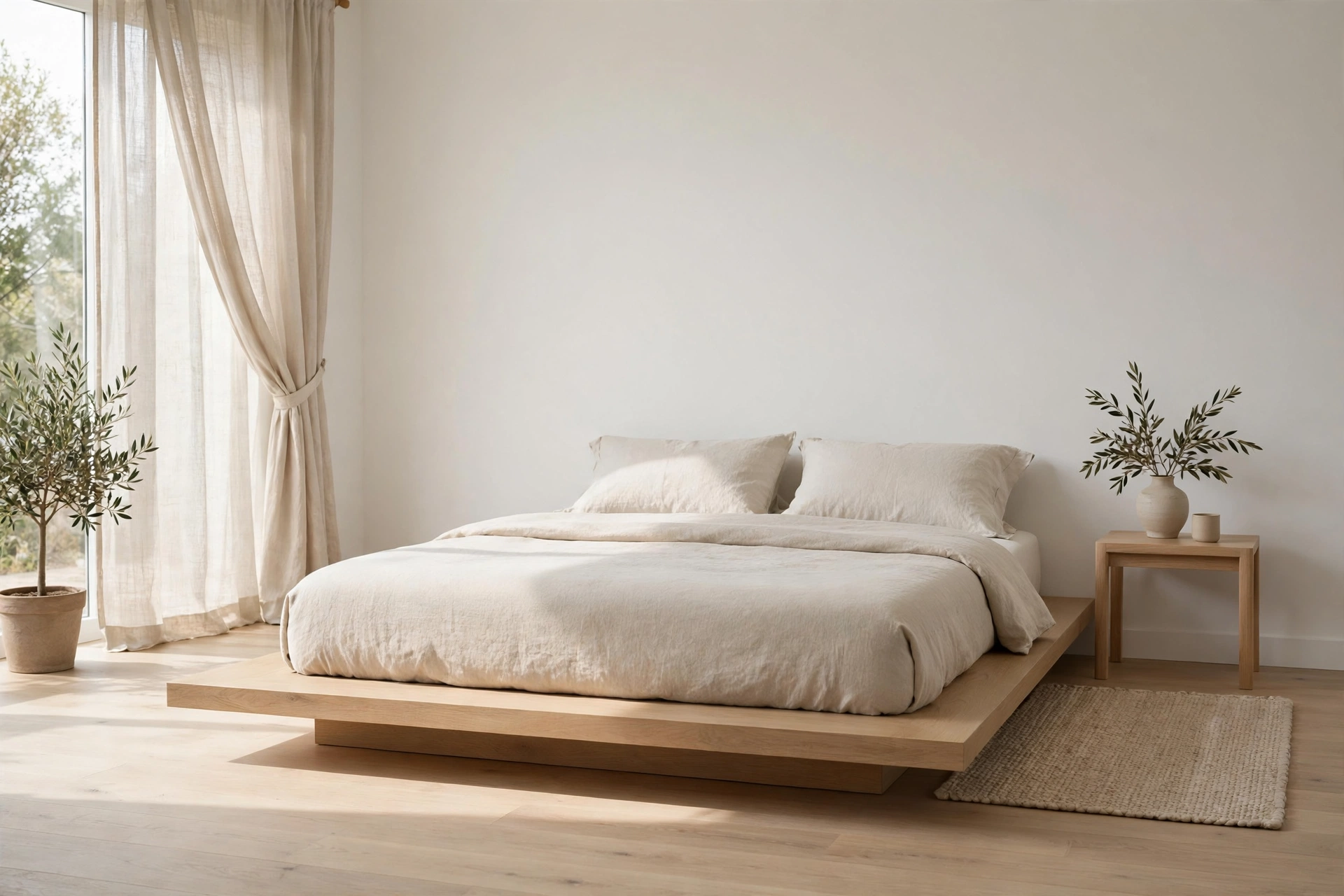
A low platform bed makes a natural centerpiece in minimalist bedroom design, its simple frame sitting close to the floor and giving the room a grounded, serene feeling. Without a tall headboard or bulky frame, the bed reads as a calm horizontal line that anchors the whole space.
Choose a platform bed in light oak or matte white, and dress it with crisp, plain bedding in a single soft tone. The low profile also makes a small bedroom feel taller, since more wall remains visible above the bed.
3. Clutter-Free Nightstands with One Essential Each
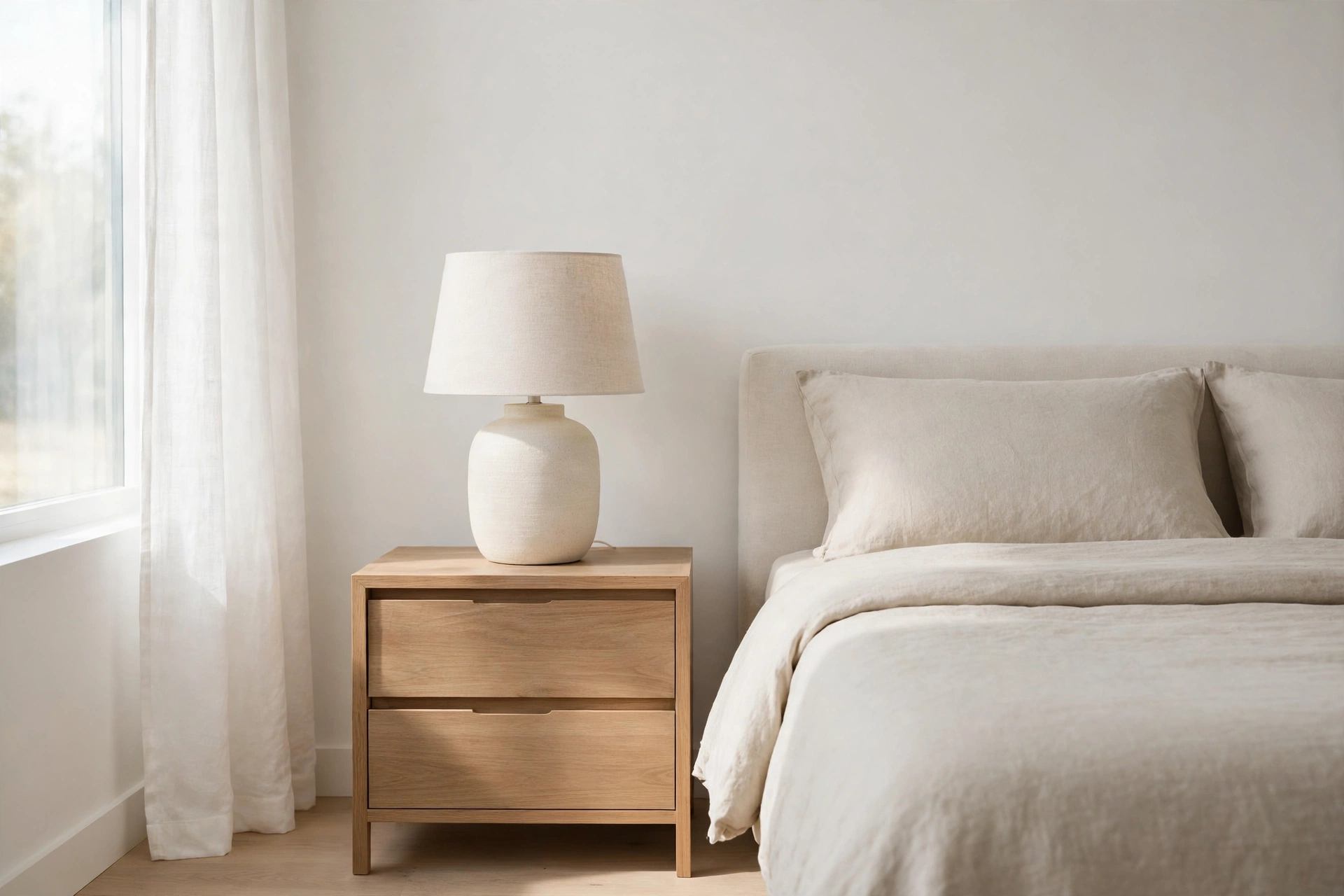
Clutter-free nightstands keep minimalist bedroom design honest, with each bedside table holding just one or two essentials instead of a pile of chargers, books, and bottles. A single lamp, a glass of water, and perhaps one book are all the bedside truly needs.
Choose nightstands with a drawer to hide anything else, and make clearing them part of your nightly routine. The empty surface becomes a small daily luxury, a visual pause that helps the mind settle before sleep.
4. Built-In Wardrobes with Handleless Doors
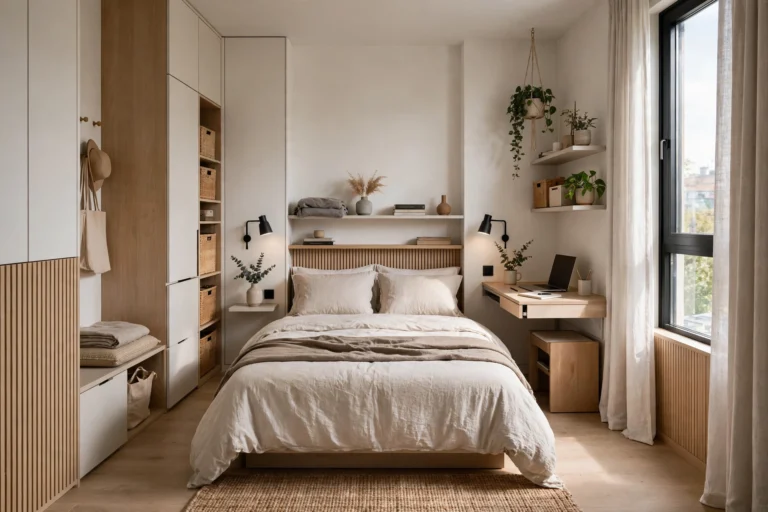
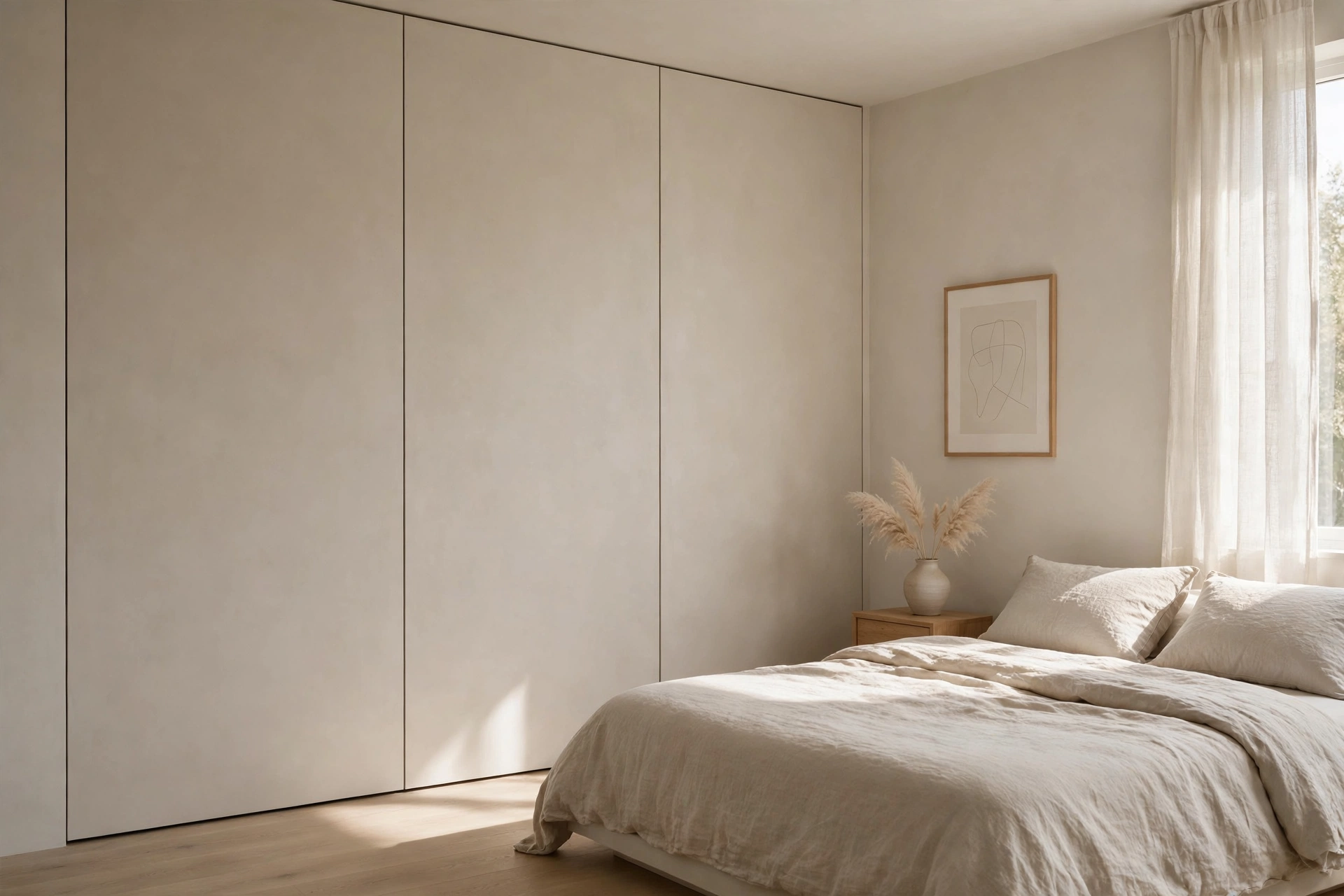
Built-in wardrobes with handleless doors give minimalist bedroom design its seamless look, hiding clothes and belongings behind flat panels that blend into the wall. Without handles, knobs, or visible hinges, the wardrobe disappears and the room feels calm and continuous.
Match the wardrobe doors to the wall color, and run them floor to ceiling so no dusty gap remains on top. Inside, organize with simple dividers and boxes so the calm exterior is matched by an orderly interior.
5. Soft White Bedding in Natural Linen
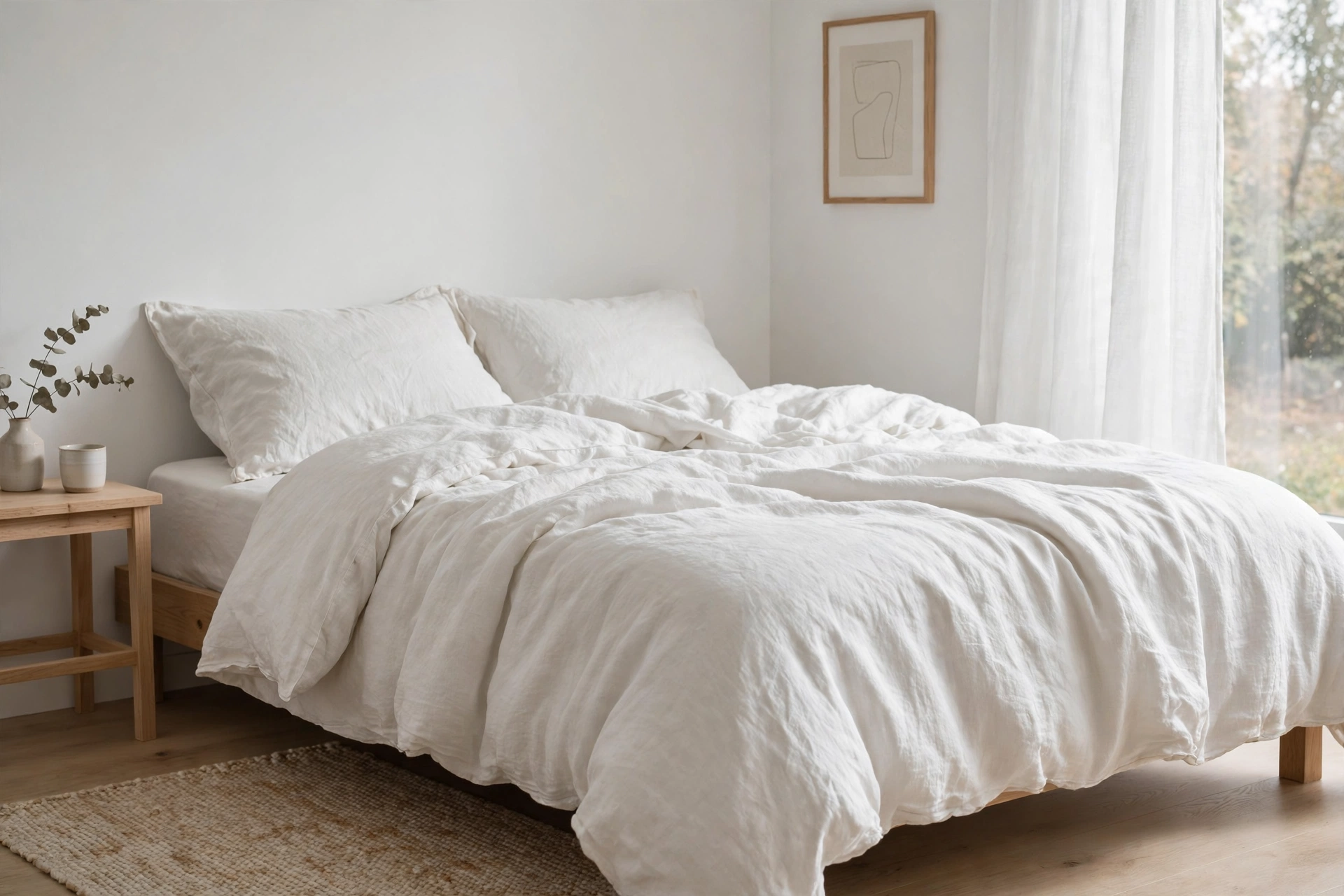
Soft white bedding in natural linen brings gentle texture to minimalist bedroom design, replacing shiny synthetics with breathable fabric that wrinkles softly and invites touch. Undyed linen in white or oatmeal feels fresh, honest, and effortlessly luxurious.
Keep the bedding plain, without bold patterns or fussy trims, and let the texture of the linen provide the interest. A single folded throw at the foot of the bed adds warmth without breaking the room’s quiet simplicity.
6. One Statement Artwork Above the Bed
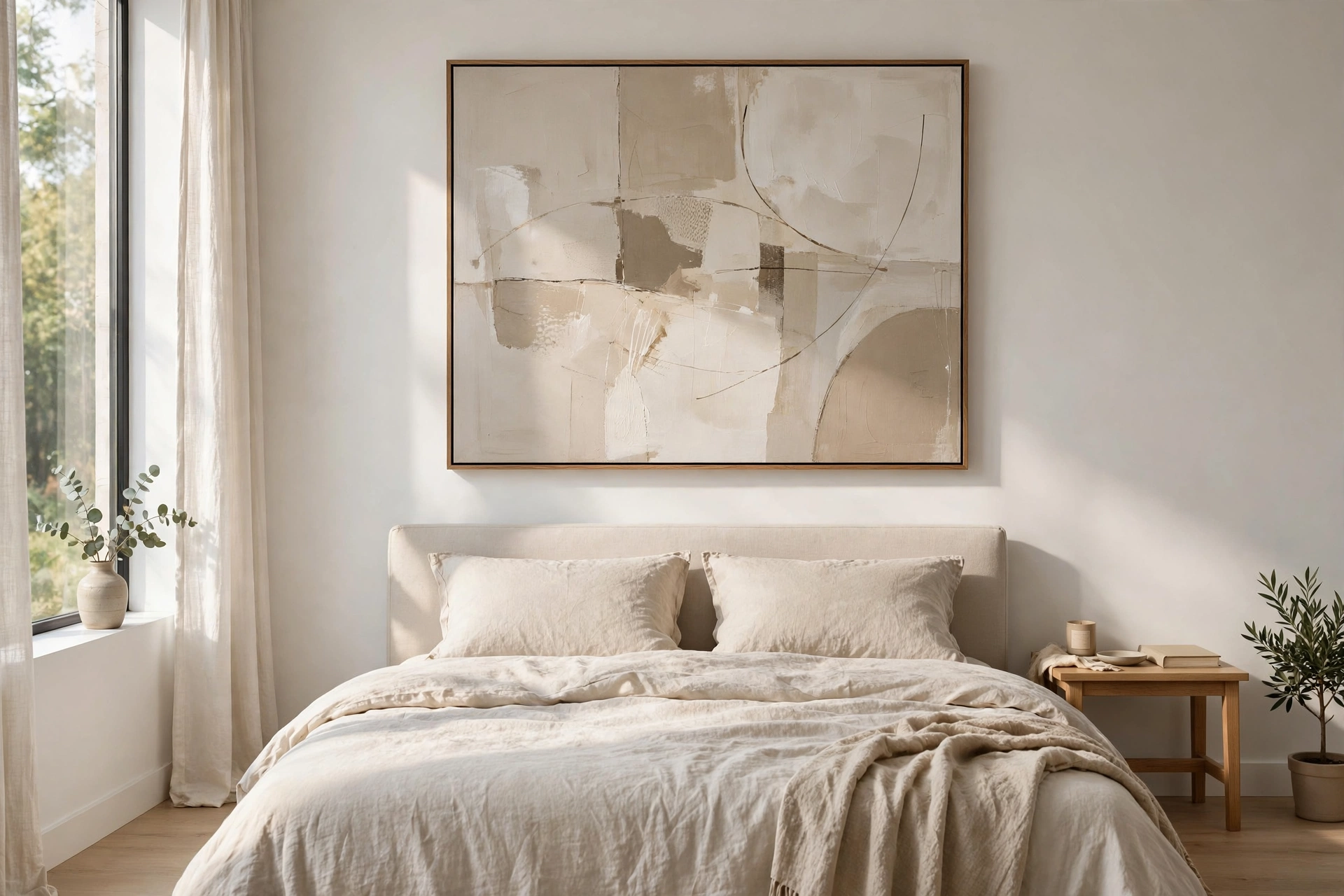
One statement artwork above the bed gives minimalist bedroom design a focal point without filling the walls, proving that a single well-chosen piece has more impact than a crowded gallery. A large abstract print in muted tones draws the eye and completes the room.
Choose art that echoes the room’s palette, hang it centered above the bed, and leave the remaining walls bare. The empty wall space around the artwork is not wasted; it is what makes the piece feel special.
7. Warm Wood Accents for Gentle Warmth
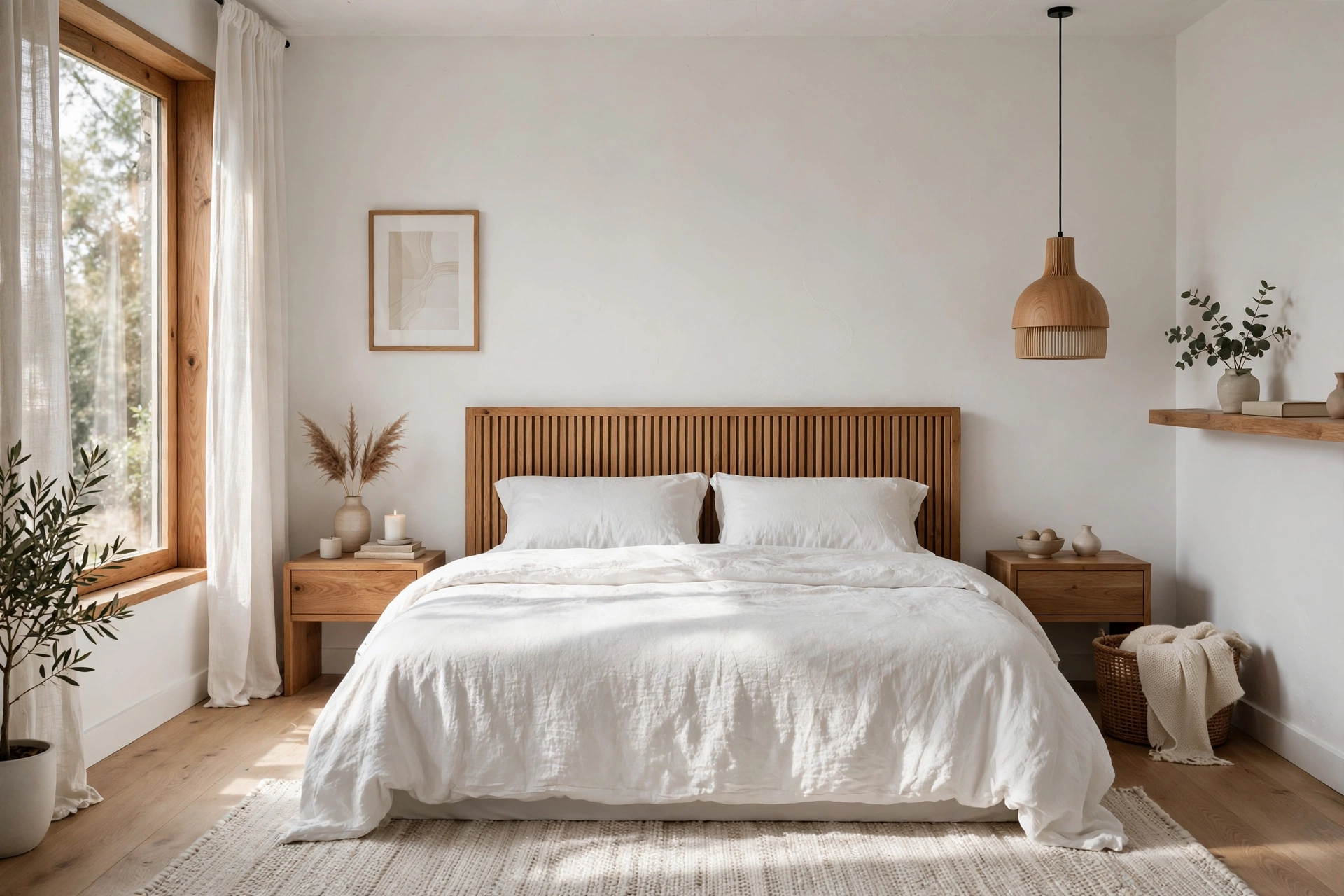
Warm wood accents stop minimalist bedroom design from feeling cold, with light oak, ash, or walnut adding organic warmth to white walls and pale bedding. A wooden bed frame, a simple bench, or a timber tray brings nature indoors in a quiet, understated way.
Keep the wood tones consistent across the room so the pieces feel related, and let the grain provide the decoration. Even a single wooden element can soften the whole bedroom and make it feel welcoming rather than stark.
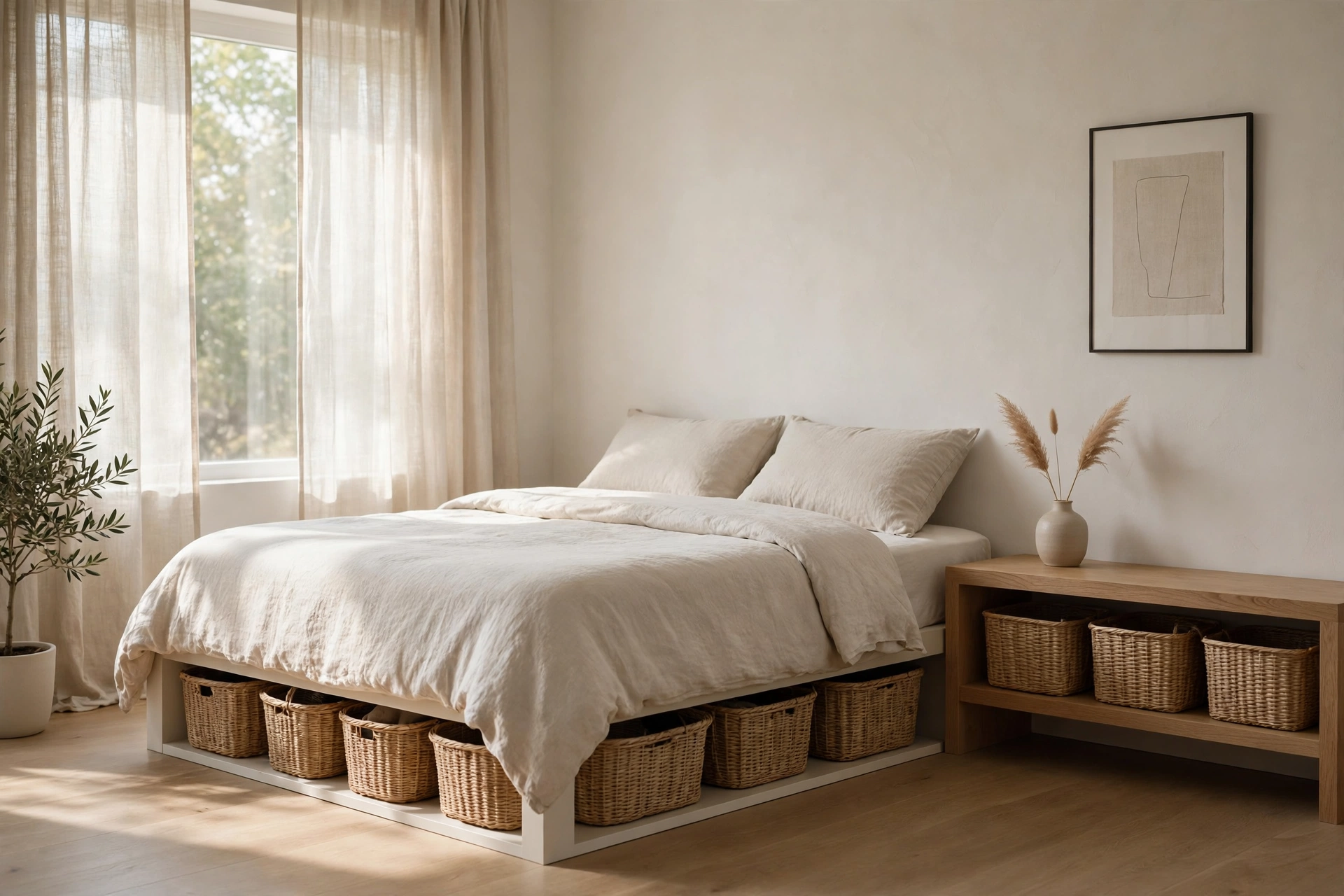
8. Hidden Storage Under the Bed
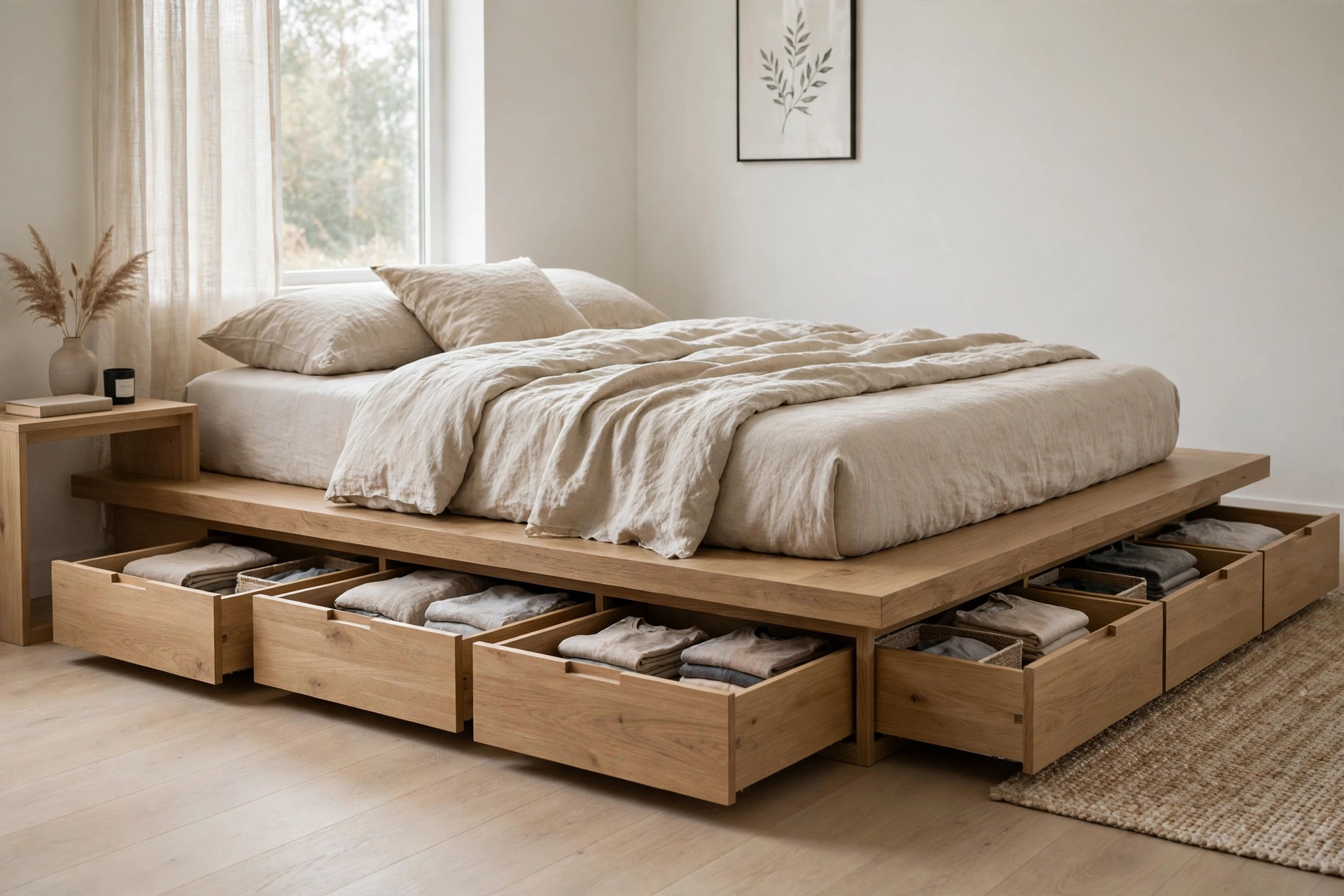
Hidden storage under the bed is a quiet hero of minimalist bedroom design, tucking away out-of-season clothes, spare bedding, and keepsakes where they never disturb the room’s calm surface. A platform bed with built-in drawers keeps everything reachable yet invisible.
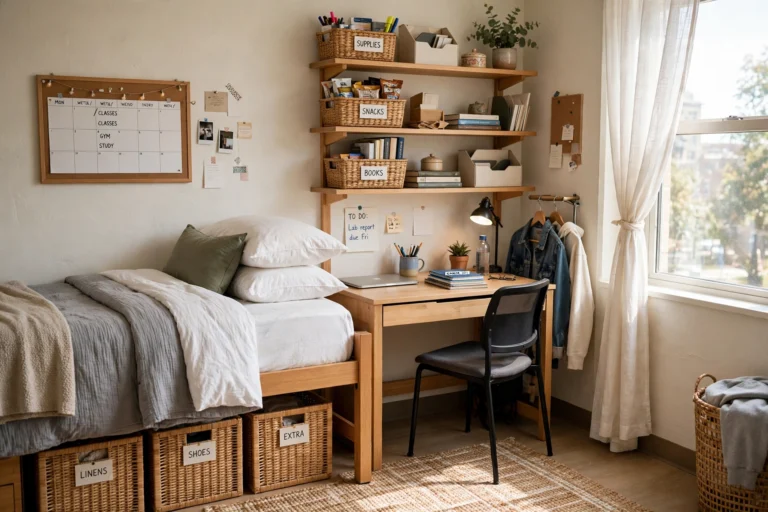
Use flat, labeled boxes if your bed has no drawers, and slide them fully out of sight. When storage disappears, the bedroom floor stays clear and the room feels larger, cleaner, and far easier to keep tidy.
9. Sheer Curtains for Soft Natural Light
Sheer curtains filter daylight into a soft, diffused glow that flatters minimalist bedroom design beautifully, turning harsh sunlight into a gentle haze. Natural light makes the room feel larger, while the sheer fabric keeps privacy without blocking the sun.
Choose undyed linen or cotton voile in white, hung from ceiling to floor so the window feels taller. Morning light through sheer fabric turns pale walls and plain bedding into a calm, golden scene every day.

10. Minimalist Pendant Lights Beside the Bed
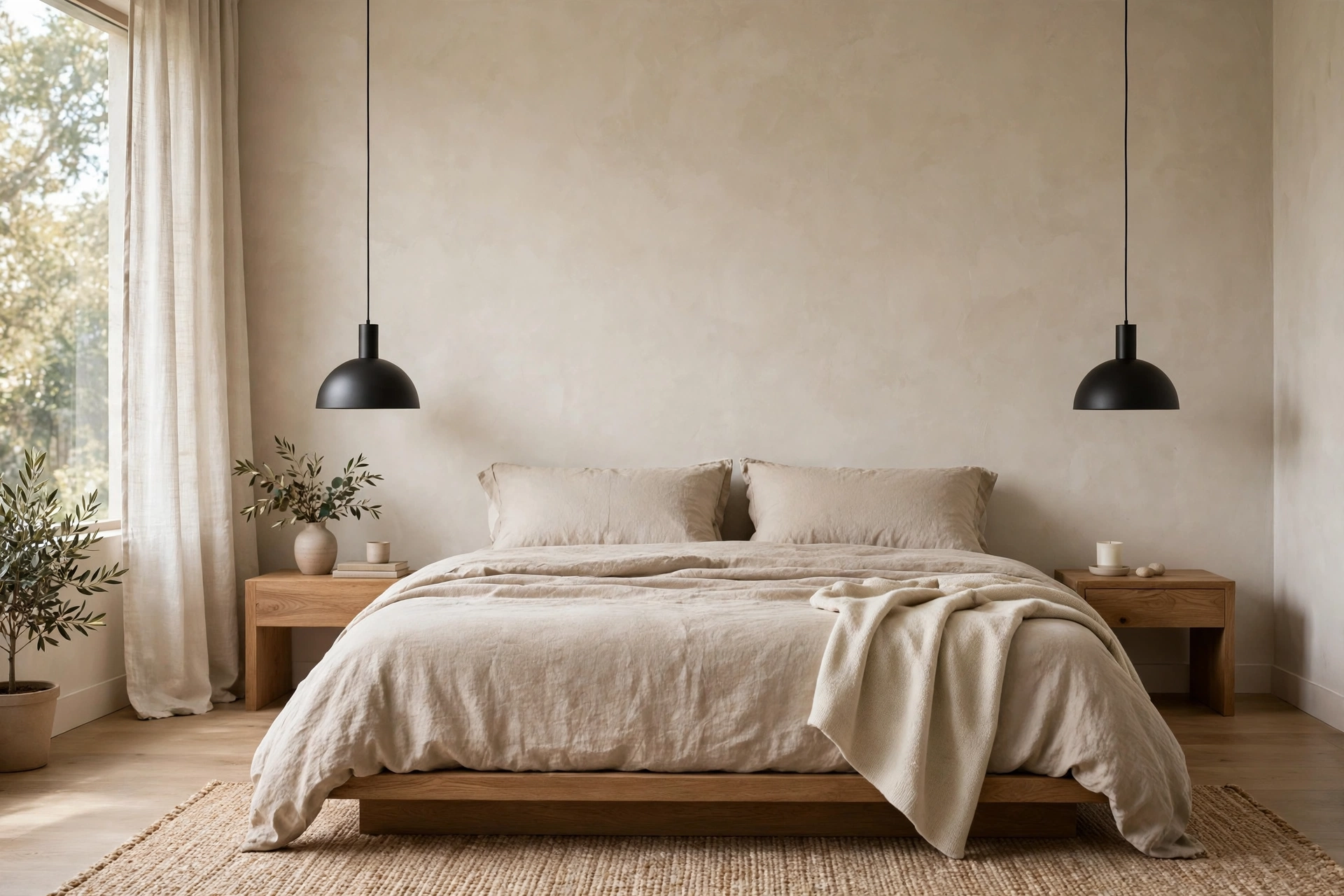
Minimalist pendant lights beside the bed replace bulky table lamps in minimalist bedroom design, hanging slim cords from the ceiling to free the nightstands completely. The floating lights look sculptural and modern while keeping surfaces clear for rest.
Hang the pendants at reading height, one on each side of the bed, and choose simple shades in white, black, or brushed metal. Dimmable bulbs let the light shift from bright morning to soft evening without any extra fixtures.
11. A Single Accent Chair in the Corner
A single accent chair in the corner gives minimalist bedroom design a quiet place to sit, read, or put on shoes, without filling the room with extra furniture. One well-chosen chair in a soft neutral fabric adds comfort and completes the layout.
Keep the chair simple, with clean lines and no fussy detailing, and leave the space around it empty. The chair becomes a small retreat within the bedroom, a spot that belongs entirely to slow mornings.

12. Open Floor Space with Bare Floors
Open floor space is essential to minimalist bedroom design, with bare wood or pale floors left largely uncovered so the room can breathe. When the floor is visible, the bedroom feels bigger, cleaner, and calmer, even if the room itself is compact.
Skip wall-to-wall carpet and heavy rugs, or use one small rug beside the bed for bare feet in the morning. Keeping the floor clear also makes cleaning quick, which helps the room stay minimal with very little effort.

13. Textured Throw for Subtle Coziness
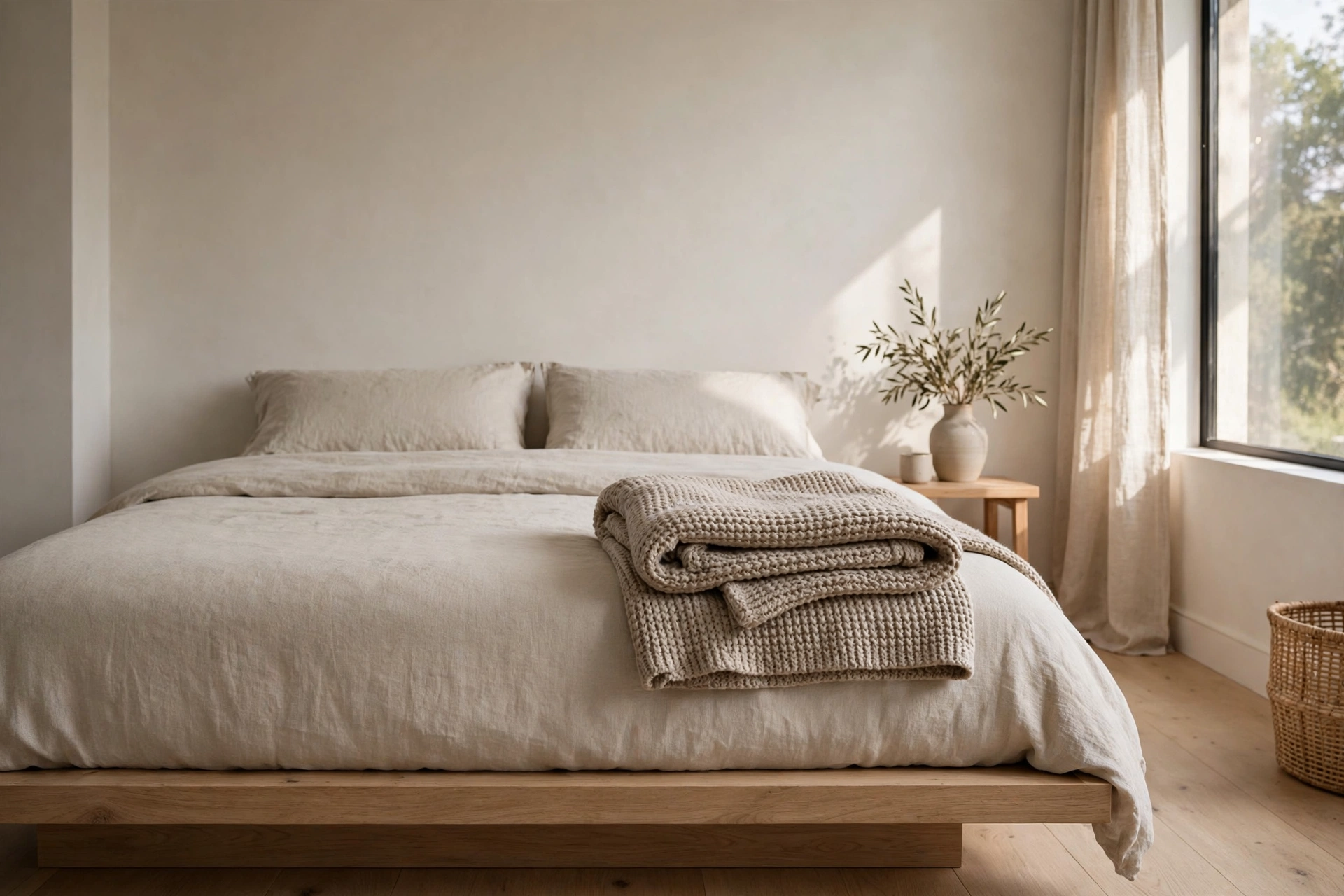
A textured throw adds subtle coziness to minimalist bedroom design, layering a chunky knit or waffle weave over plain bedding without adding color or pattern. The texture invites touch and warmth, making a restrained bedroom feel snug rather than bare.
Fold the throw neatly at the foot of the bed, in the same neutral family as the bedding, so it reads as texture rather than decoration. One throw is enough; the restraint is what keeps the room feeling minimal and calm.
14. Floating Shelves with a Few Curated Pieces
Floating shelves with a few curated pieces give minimalist bedroom design a personal touch without clutter, displaying only the objects that truly matter. A small vase, a framed photograph, and one book are plenty on a single slim shelf.
Leave generous empty space between objects so each piece can breathe, and resist the urge to fill every inch. The shelf becomes a quiet gallery of favorites rather than another surface for accumulation.

15. Muted Green Plants for Living Calm
Muted green plants bring living calm to minimalist bedroom design, with one or two easy plants adding gentle color and fresh air to a neutral room. A single olive tree, snake plant, or pothos softens hard lines and makes the bedroom feel alive.
Choose plain pots in white, terracotta, or concrete, and place plants where they get soft light without crowding the room. One plant is often enough; in a minimalist bedroom, greenery works best as a quiet accent.

16. Streamlined Dresser with Clean Lines
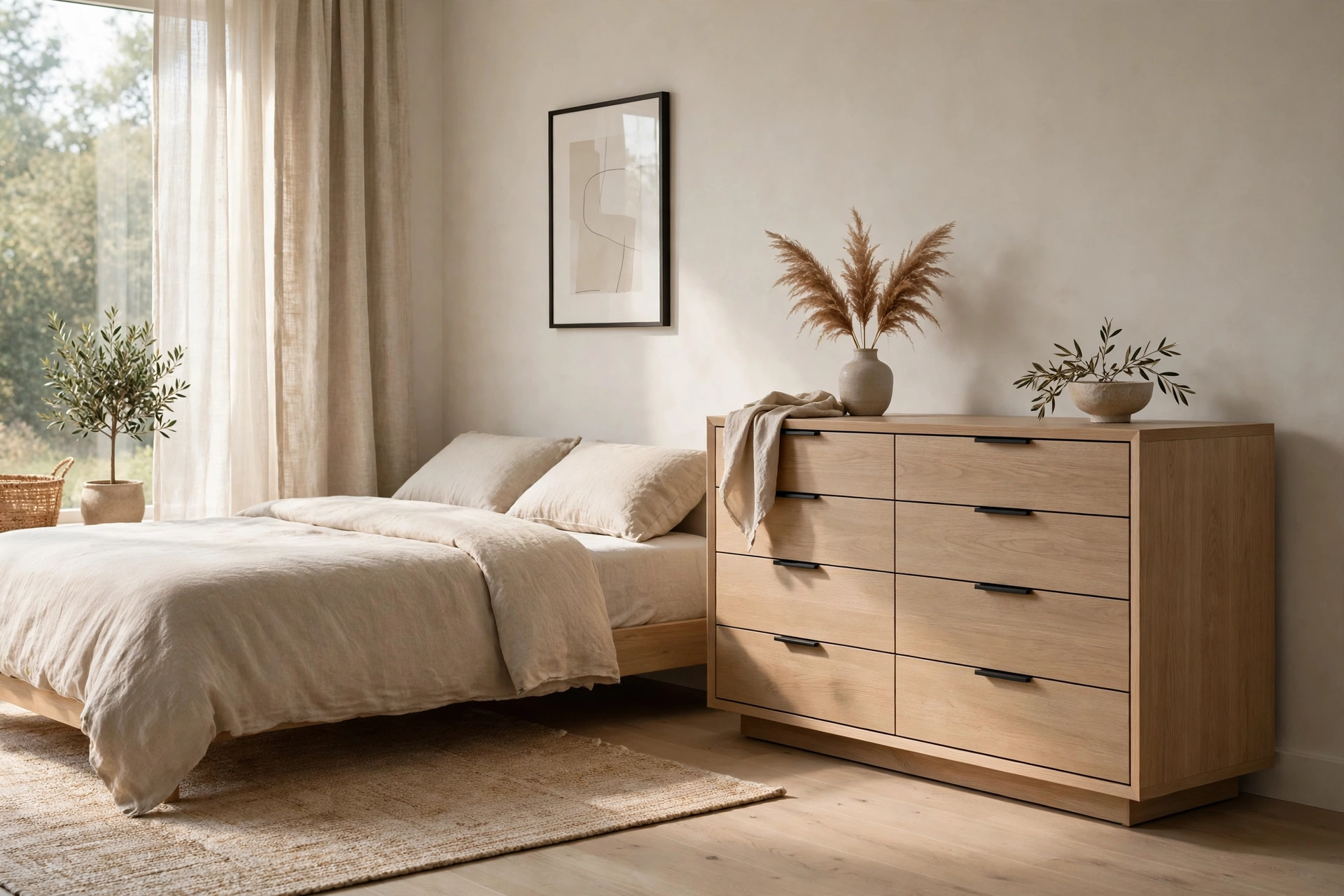
A streamlined dresser with clean lines keeps minimalist bedroom design orderly, offering generous storage behind flat drawer fronts with no ornate detailing. A low, wide dresser in white or light wood also doubles as a display surface for one small vase.
Keep the top of the dresser almost empty, with just a mirror or a single decorative object, and store everything else inside the drawers. The uncluttered surface mirrors the calm of the whole room.
17. Monochrome Bedding in Soft Greys
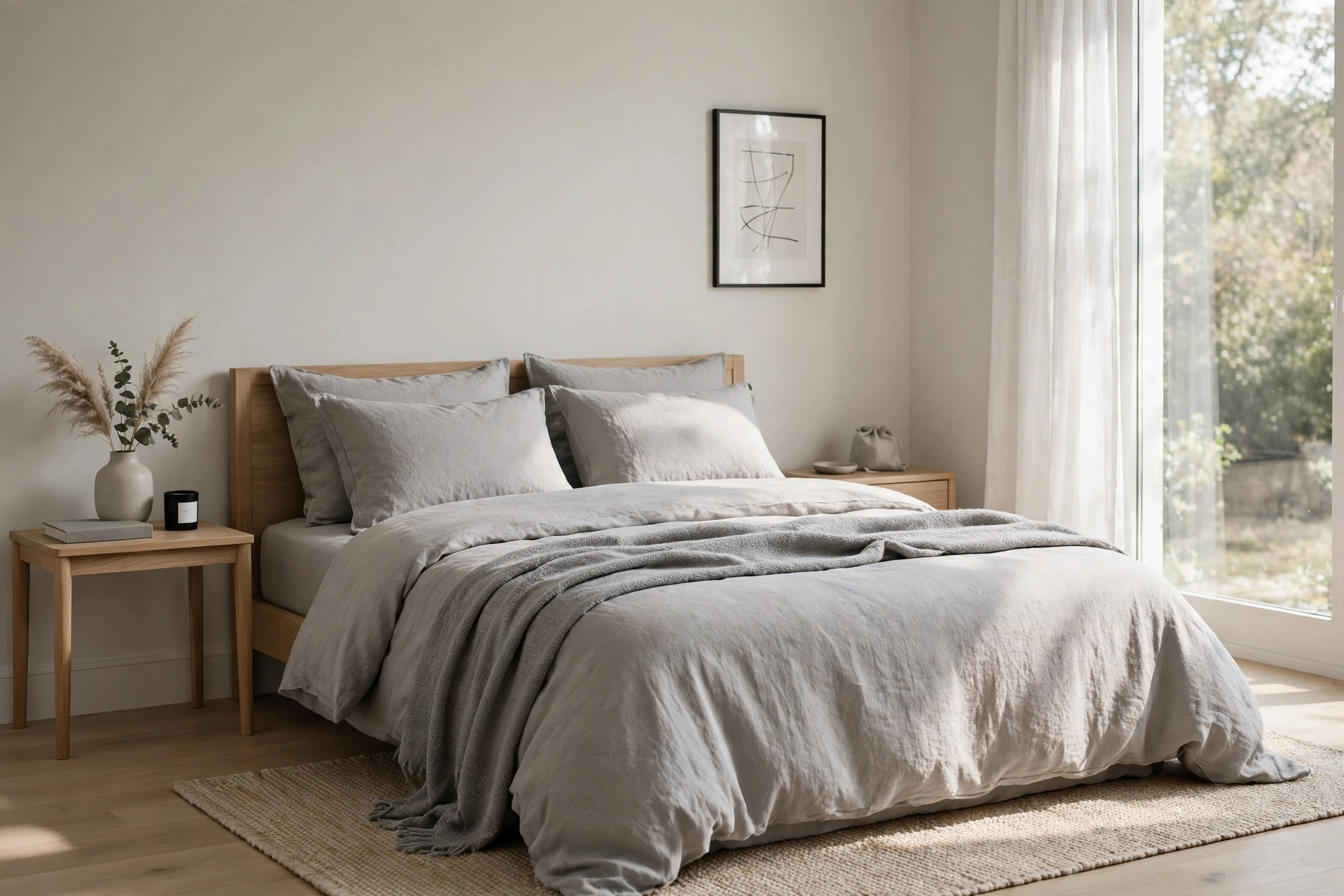
Monochrome bedding in soft greys offers a gentle alternative to all-white minimalist bedroom design, layering pale grey, stone, and charcoal in one quiet family. The subtle variation adds depth without introducing bold color or busy pattern.
Mix textures rather than colors: a smooth grey duvet, a knitted cushion, and a linen throw in slightly different shades. The result feels sophisticated and restful, like a soft black-and-white photograph.
18. Paper Lantern Lighting for a Soft Glow
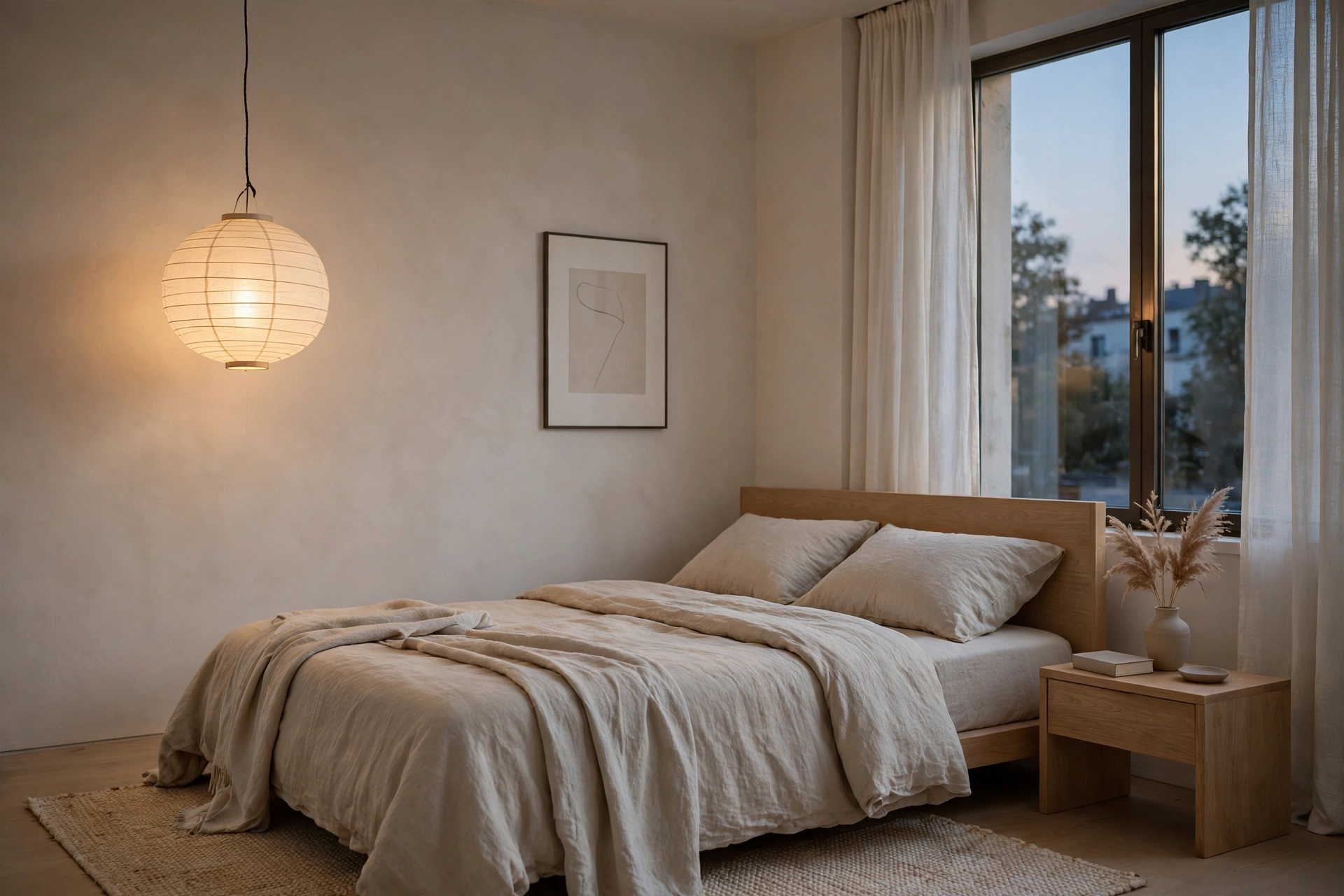
Paper lantern lighting casts a soft, even glow across minimalist bedroom design, turning a plain ceiling light into a warm, diffused orb. The gentle light flatters pale walls and plain bedding, making evenings in the bedroom feel peaceful and unhurried.
Choose a simple white paper lantern in a generous size, hung low enough to feel intentional but high enough to clear the room. Paired with dimmable bulbs, it becomes the only ceiling light the bedroom needs.
19. Minimalist Desk Nook for Quiet Mornings
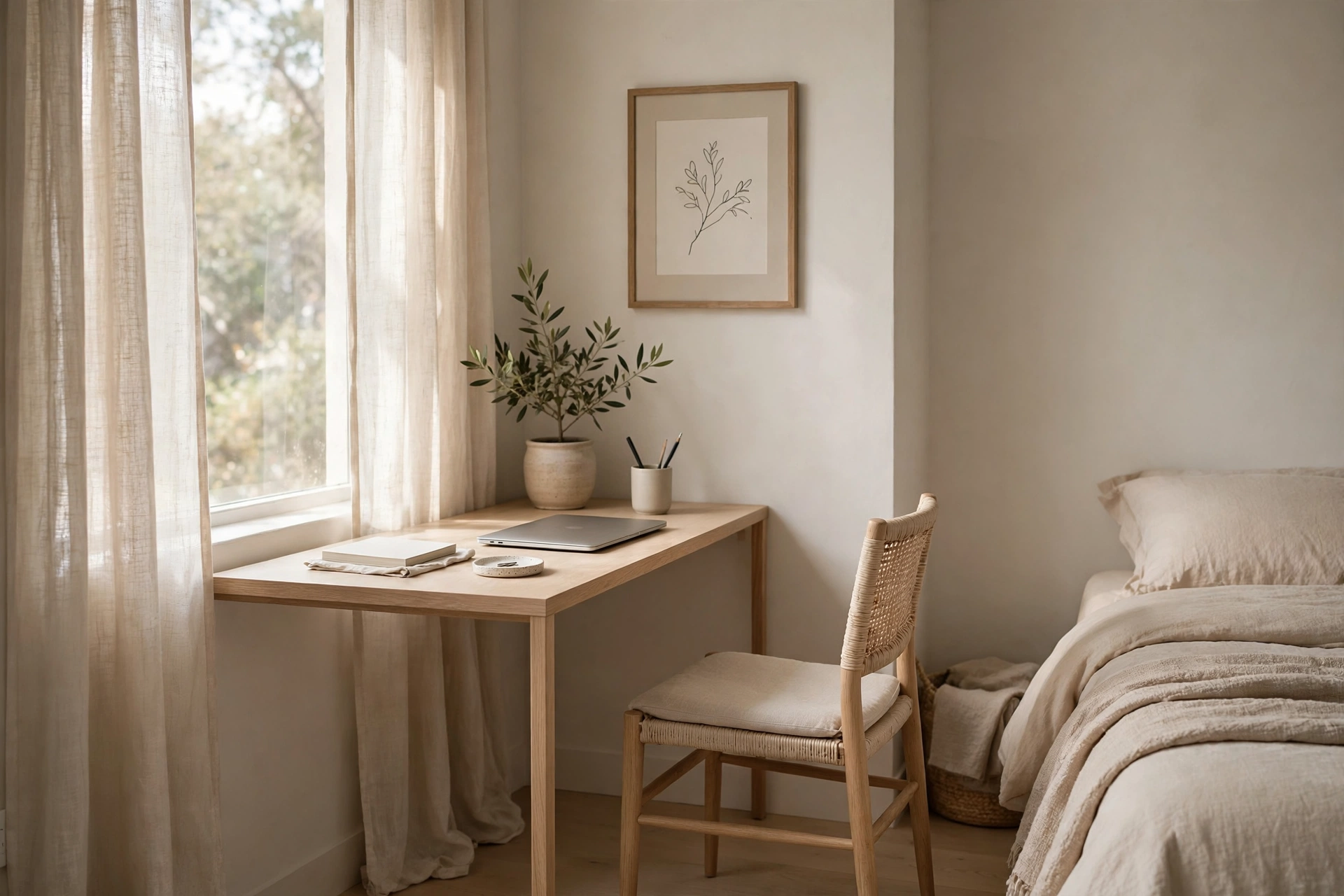
A minimalist desk nook gives the bedroom a quiet corner for journaling, reading, or slow mornings, without turning the room into an office. A slim wall-mounted desk and one comfortable chair are all the nook needs to feel purposeful.
Keep the desk surface clear apart from a lamp and a notebook, and hide cables and supplies in a single drawer. The nook stays calm because it holds only what the morning actually requires.
20. Neutral Rug to Ground the Room
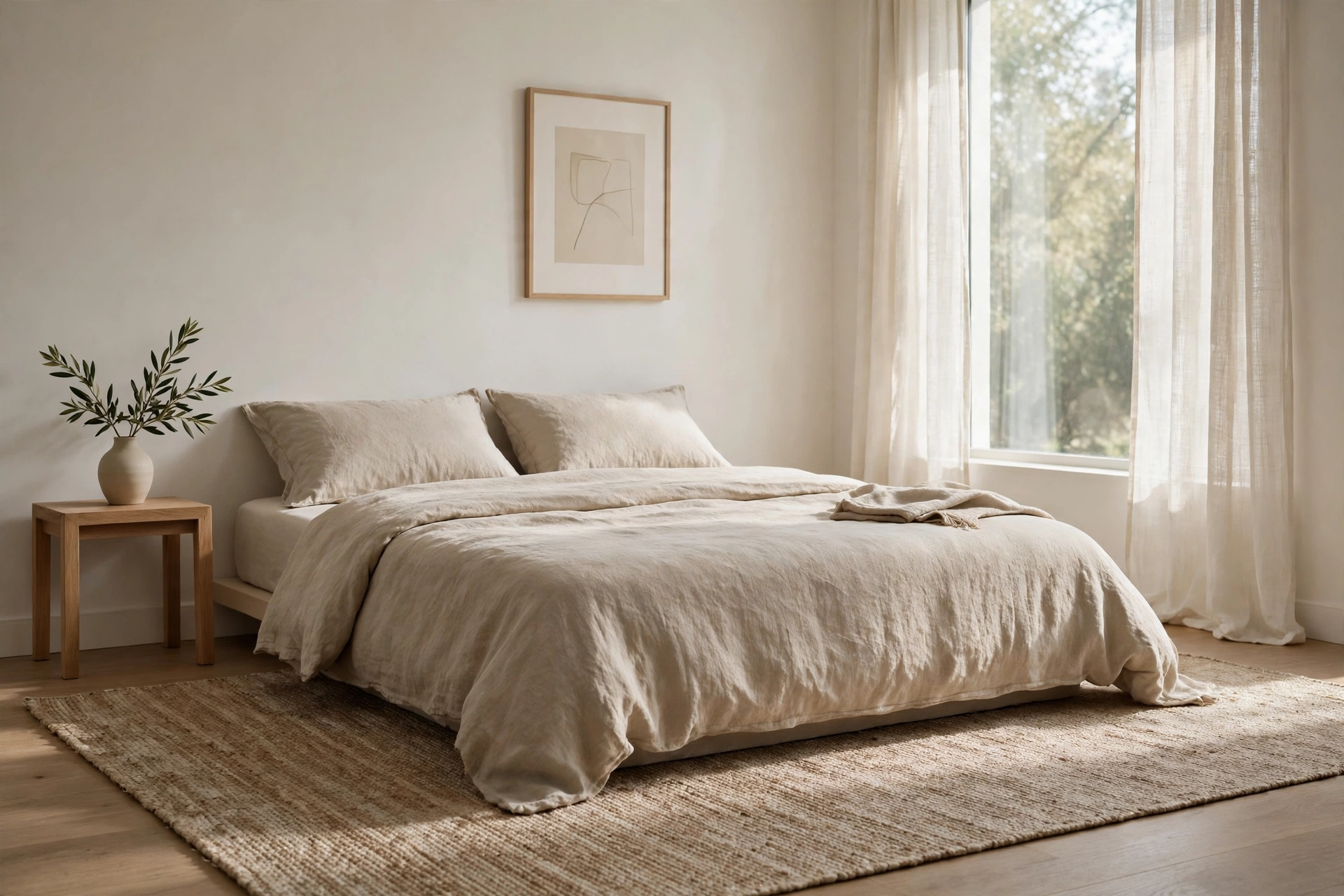
A neutral rug grounds minimalist bedroom design, defining the sleeping area with soft texture underfoot while keeping the palette quiet. A large rug in cream, beige, or pale grey anchors the bed and makes the floor feel warm on cold mornings.
Choose a plain rug without bold patterns, large enough to extend beyond the bed on both sides. The rug should feel like part of the floor rather than a decoration, adding comfort without visual noise.
21. Slim Black Frames for Personal Photos
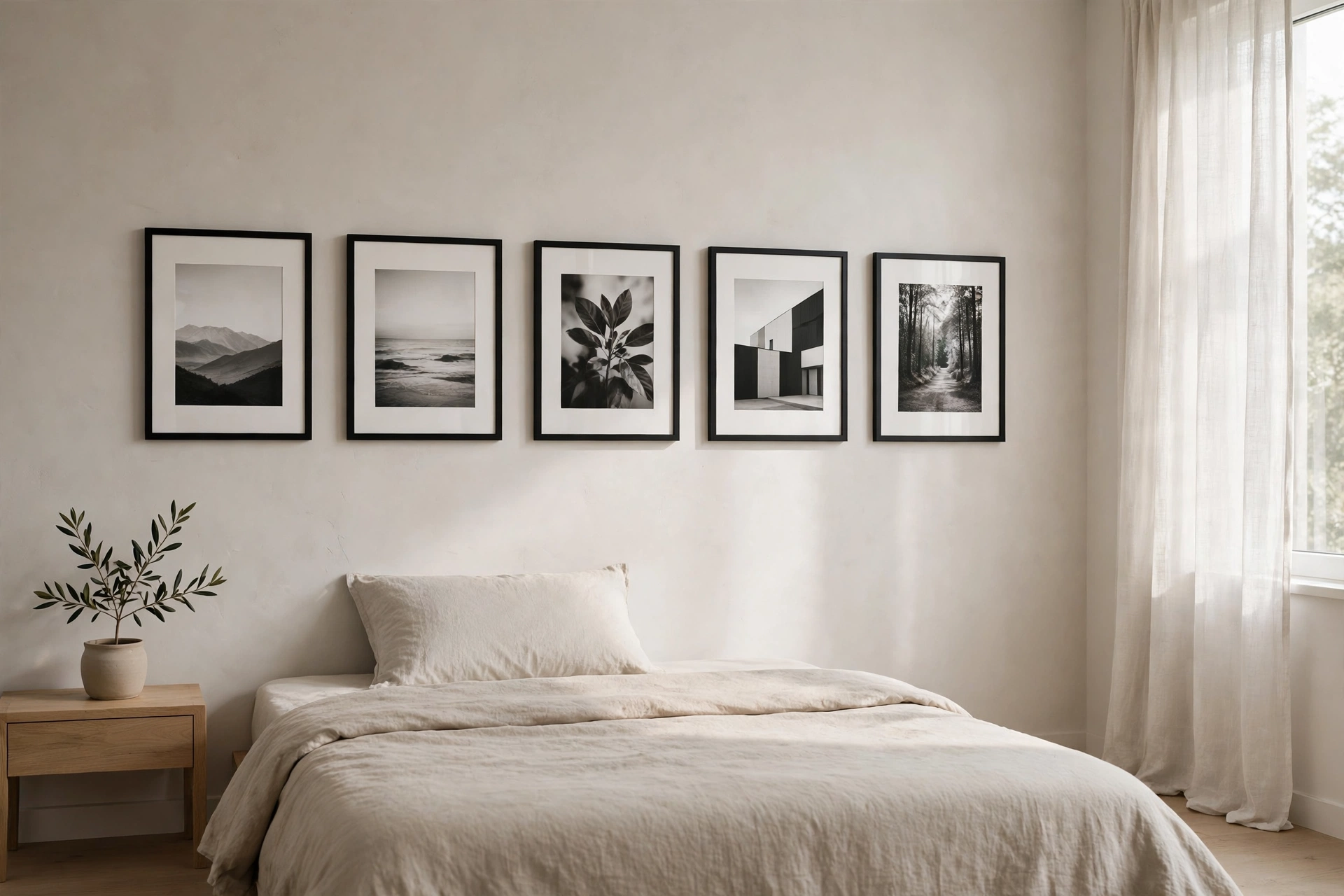
Slim black frames give personal photos a quiet, gallery-like presence in minimalist bedroom design, with thin borders that never compete with the images inside. Two or three matching frames in a row feel intentional, while a scattered mix feels cluttered.
Hang the frames in a straight line at eye level, with even spacing, and choose black-and-white prints for the calmest effect. The photos add meaning to the room without disturbing its clean, restful order.
22. Calm Reading Corner with One Lamp
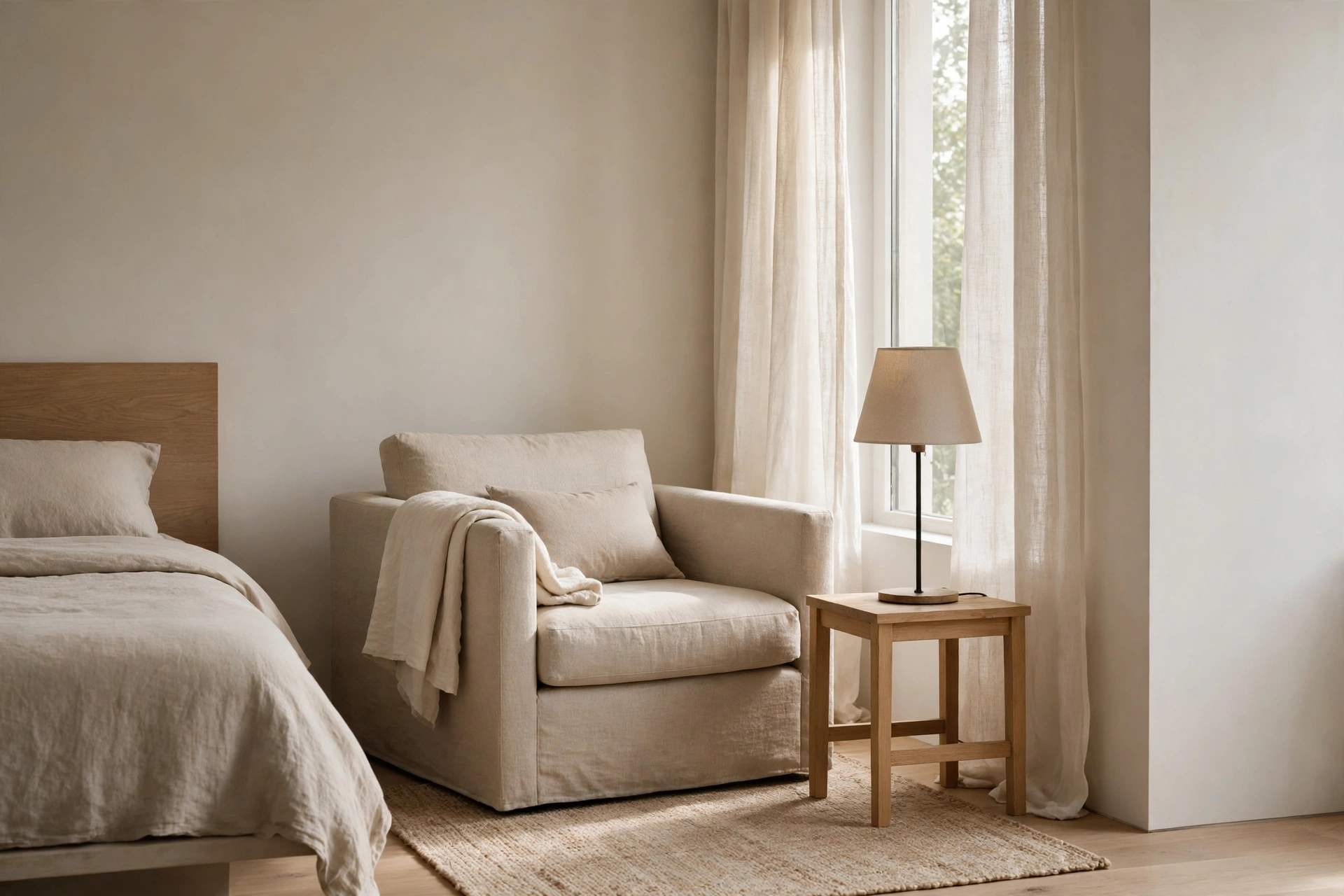
A calm reading corner with one lamp completes minimalist bedroom design, pairing a comfortable chair with focused light and a small stack of books. The corner invites slow evenings without adding furniture the room does not need.
Place the chair near the window for daylight, and add a slim floor lamp that arcs gently over the seat. Keep the corner free of extra objects, so reading stays the only activity the space suggests.
23. Woven Baskets for Hidden Storage
Woven baskets hide everyday clutter in minimalist bedroom design, holding extra blankets, magazines, and chargers inside natural, breathable containers. Their woven texture adds warmth to the room while keeping small items completely out of sight.
Use one large basket beside the bed and a smaller one in the wardrobe, in matching seagrass or cotton rope. When everything has a basket, tidying takes seconds and the bedroom stays calm between deep cleans.
24. Light Oak Furniture Throughout
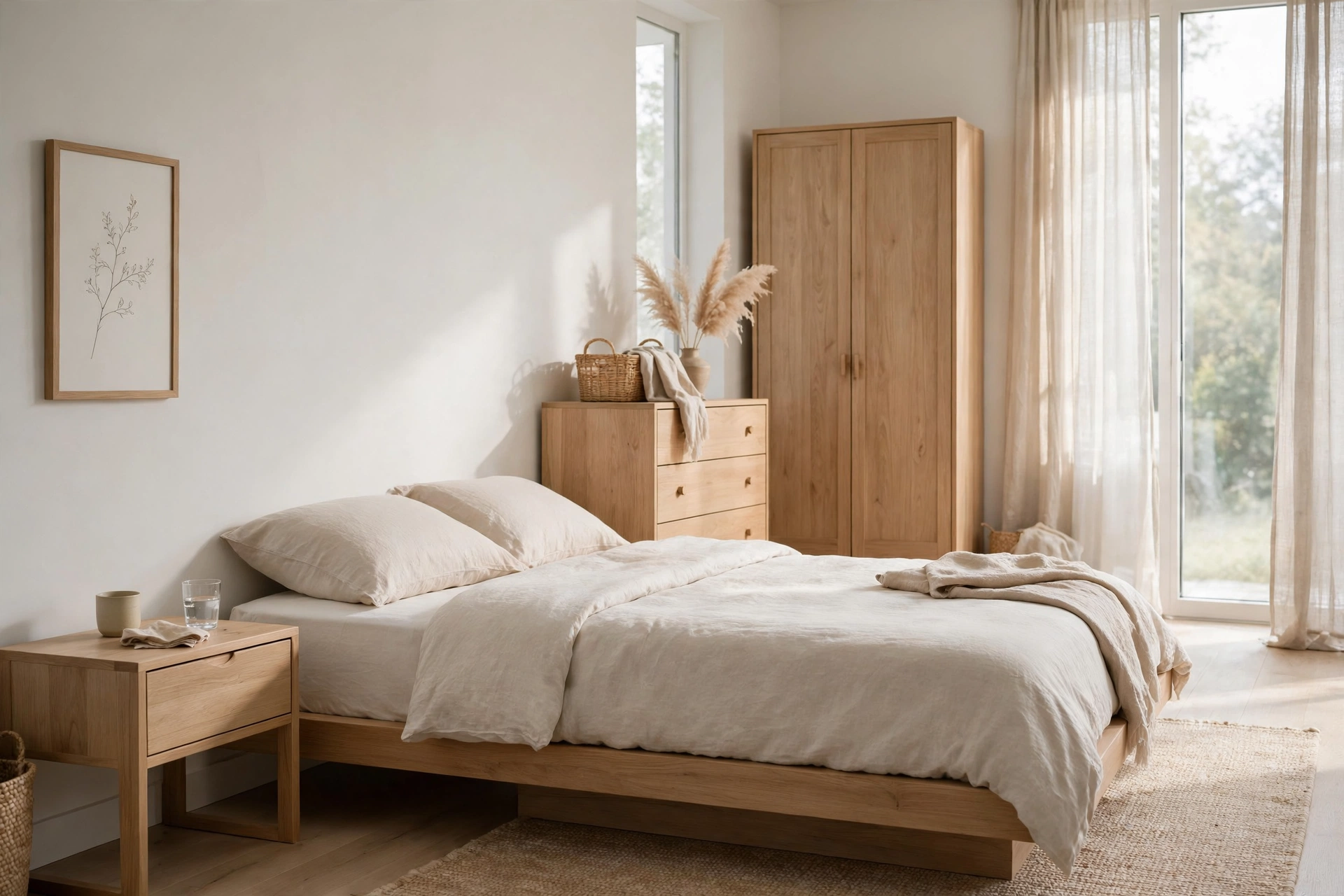
Light oak furniture throughout gives minimalist bedroom design a consistent, airy warmth, linking the bed, nightstands, and dresser in one pale timber. The uniform wood keeps the room cohesive, so the eye moves smoothly instead of stopping at mismatched pieces.
Choose furniture with the same finish and simple shapes, and let the pale oak brighten the room like another neutral. Against white walls, light oak feels Scandinavian and calm, never heavy or dark.
25. Finishing Touches for a Minimalist Bedroom
The finishing touches for a minimalist bedroom are often the smallest ones: a neatly made bed each morning, a single scented candle, a window opened for fresh air. These quiet rituals make a simple bedroom feel intentional, personal, and truly restful.
These minimalist bedroom design ideas work best when you start by removing what the room does not need, then add back only what brings comfort or joy. Keep the palette calm, the surfaces clear, and the furniture simple, and enjoy a bedroom that helps you rest beautifully every night.