
25 Luxury House Design with a Beautiful Front Porch
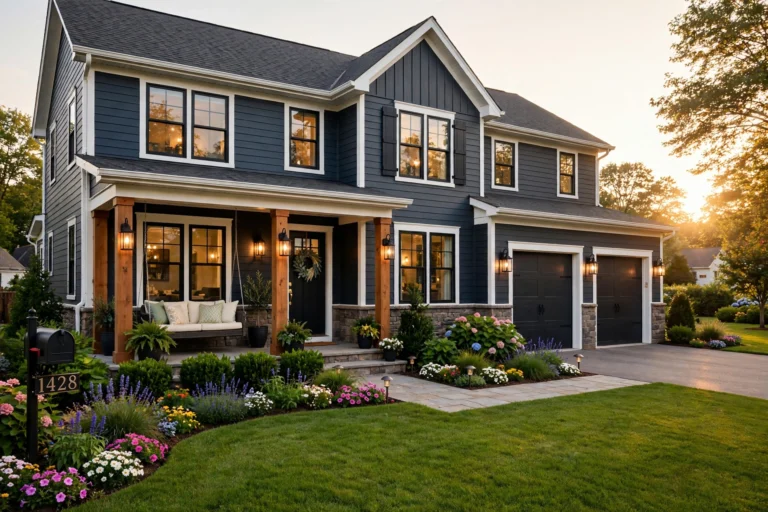
A luxury house design with a beautiful front porch is made for homeowners who want their home to feel grand, warm, and welcoming from the very first glance. With elegant architecture, generous outdoor living space, and thoughtful details, the front porch becomes the heart of the home’s curb appeal.
The porch sets the tone for everything inside, offering a gracious place to greet guests, enjoy slow mornings, and watch the neighborhood go by in comfort. If you love soft, flowing lines indoors too, explore Home Interior with Curved Walls. The twenty-five ideas below will help you design a luxury home whose front porch is just as beautiful as the rooms behind it.
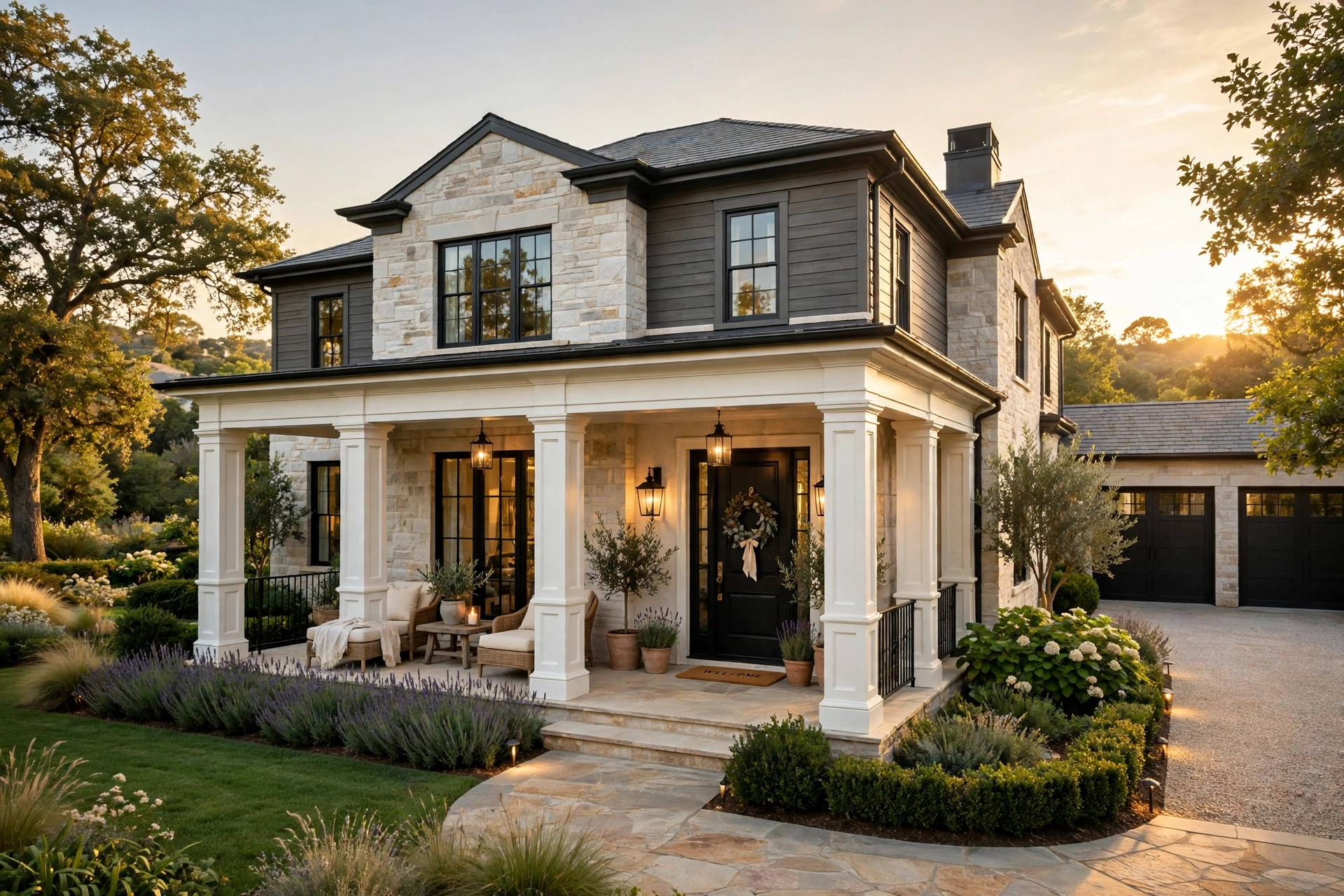
1. Grand First Impressions in a Luxury House Design with a Beautiful Front Porch
A grand first impression starts with proportion: a porch at least eight feet deep gives room for real furniture, not just a doormat, and a raised entry of three to five steps adds presence. Symmetrical columns and a centered front door immediately signal that the home was designed, not merely built.
Avoid the common mistake of a shallow, decorative-only porch that nobody can actually use. Measure your furniture before you build, and leave at least three feet of clear walkway so guests never feel squeezed against the railing when they arrive.
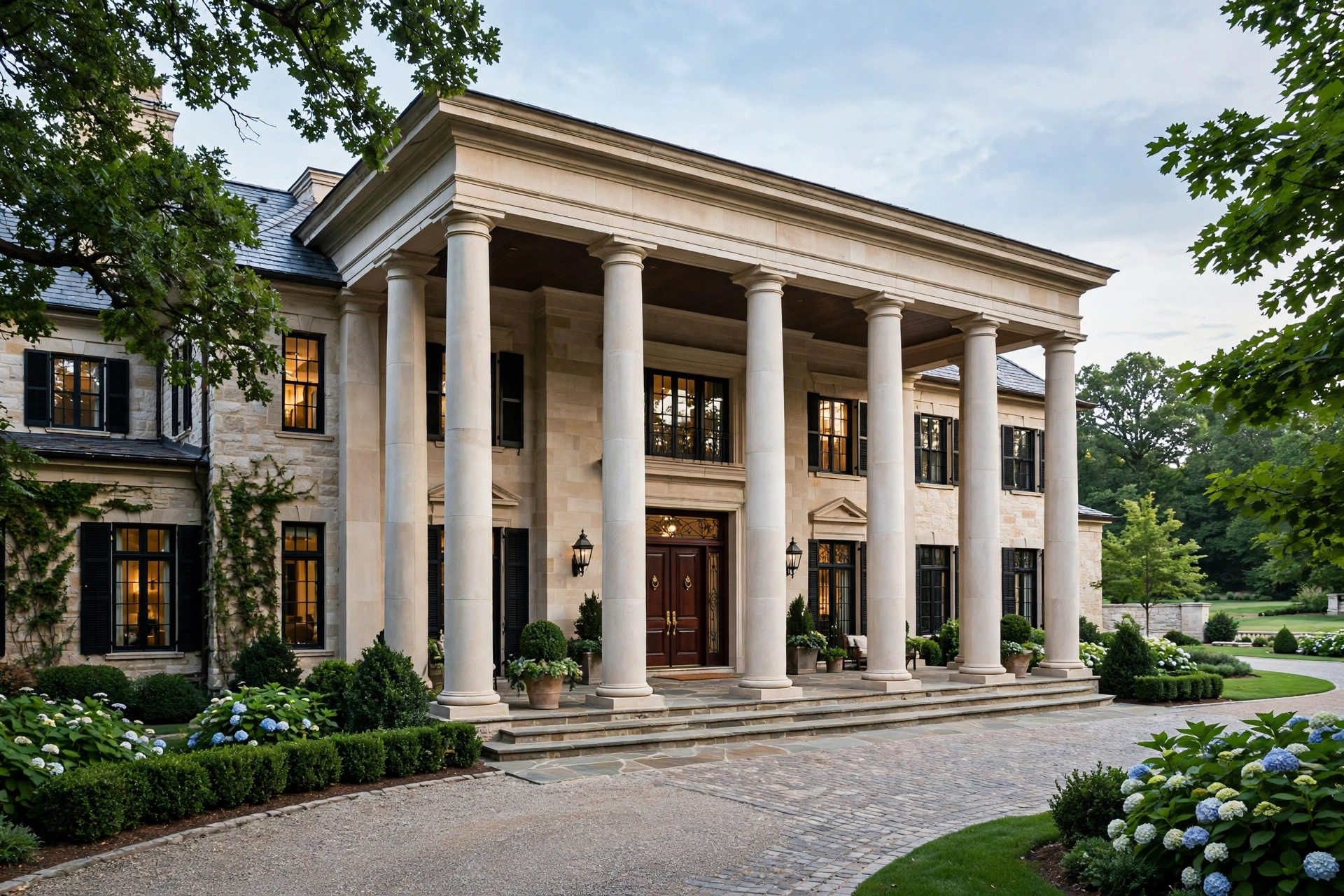
2. Wide Covered Porch for All-Weather Relaxing
A covered porch with a roof extending at least ten feet from the house wall keeps rain off the seating area and protects the front door from harsh sun. Beadboard or wood-plank ceilings painted in a soft haint blue or warm white add a classic, finished look overhead.
Check that the roof pitch directs water away from the walkway, and add gutters so drips never fall on guests. A ceiling fan rated for damp locations keeps the space comfortable through humid summer afternoons without any extra effort.
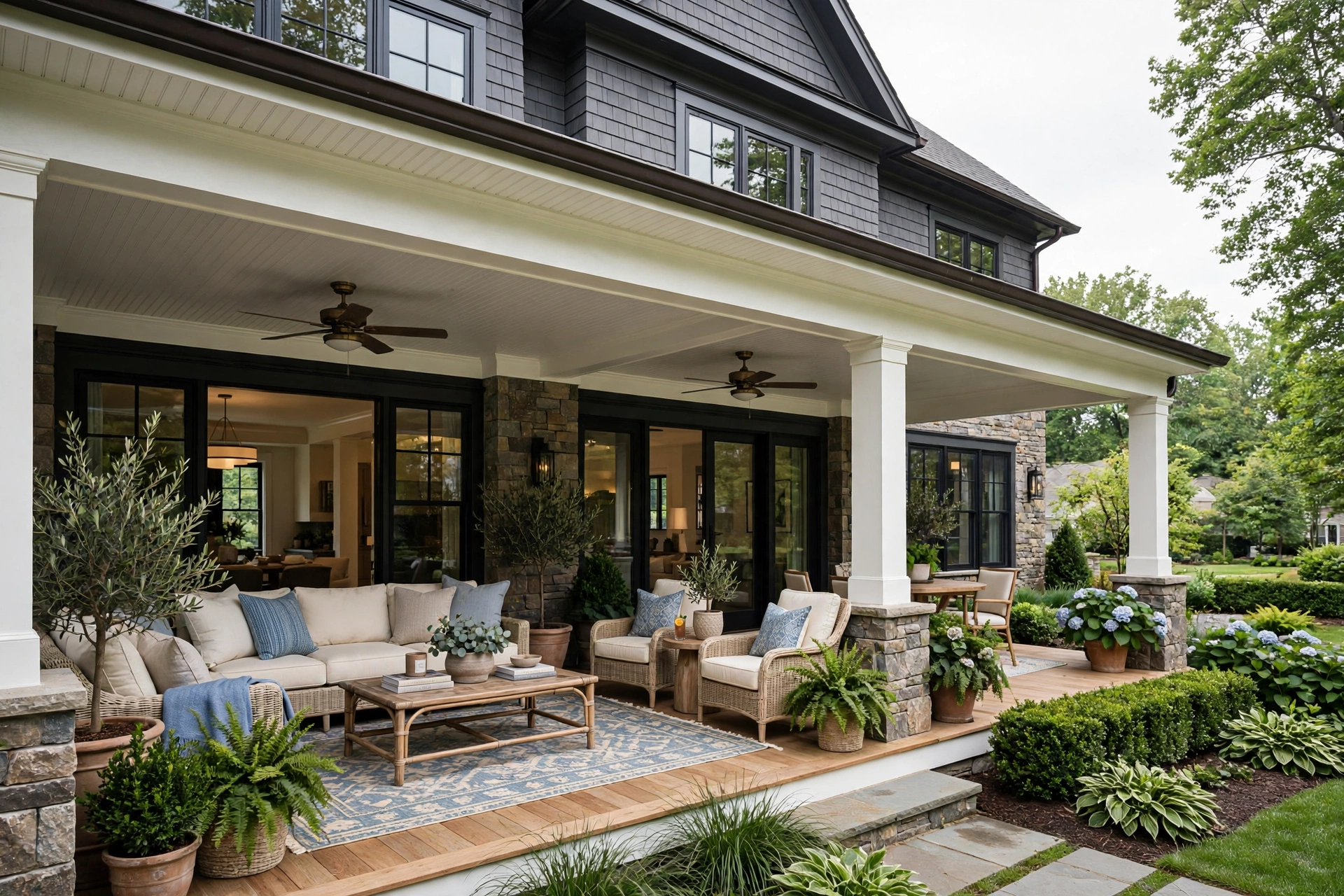
3. Tall Columns and a Classic Portico
Tall columns, ideally eight to ten inches in diameter for a two-story home, give a portico its stately rhythm and support a generous roof overhang. Fiberglass or wood columns with a simple Tuscan or Doric profile suit most luxury styles without looking fussy or overdone.
Space columns evenly, usually six to eight feet apart, so the entry feels balanced from the street. A common mistake is choosing columns that are too slim for the roof they carry, which makes even an expensive porch look fragile and temporary.
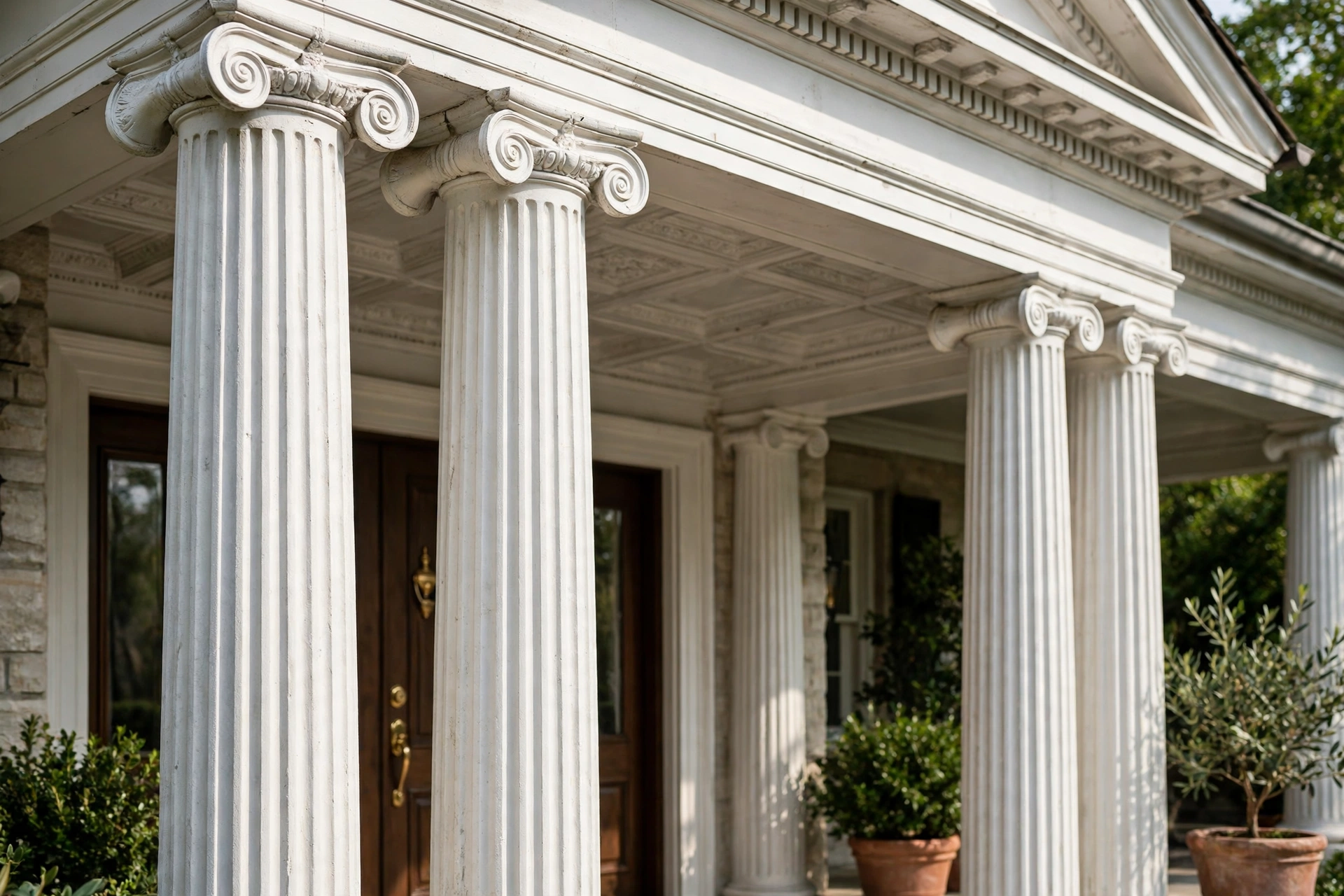
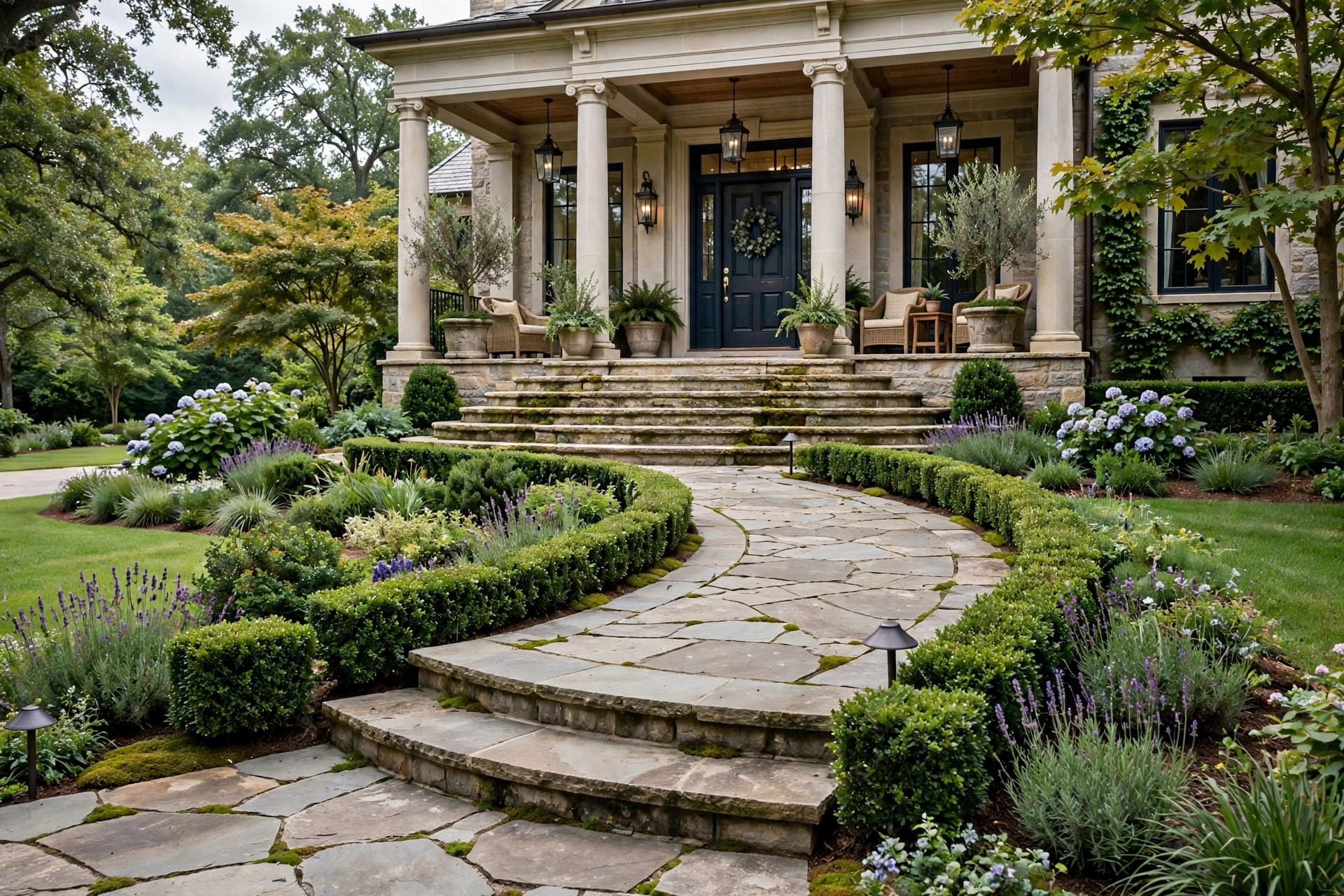
4. Stone Steps and a Curved Walkway
Wide stone steps, at least five feet across with a gentle six-inch rise each, make the approach feel gracious and safe for every guest. Bluestone, limestone, or granite treads resist wear and stay cooler underfoot than dark concrete on sunny days.
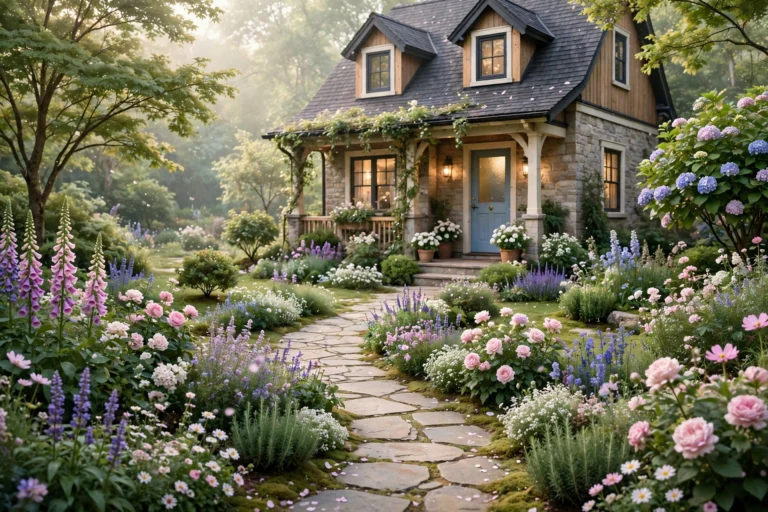
A gently curved walkway in matching stone softens a formal facade and guides visitors naturally toward the door. Keep the path four feet wide minimum, and avoid loose gravel near the steps, where it can scatter and become a tripping hazard.
5. Warm Layered Lighting for Evening Arrivals
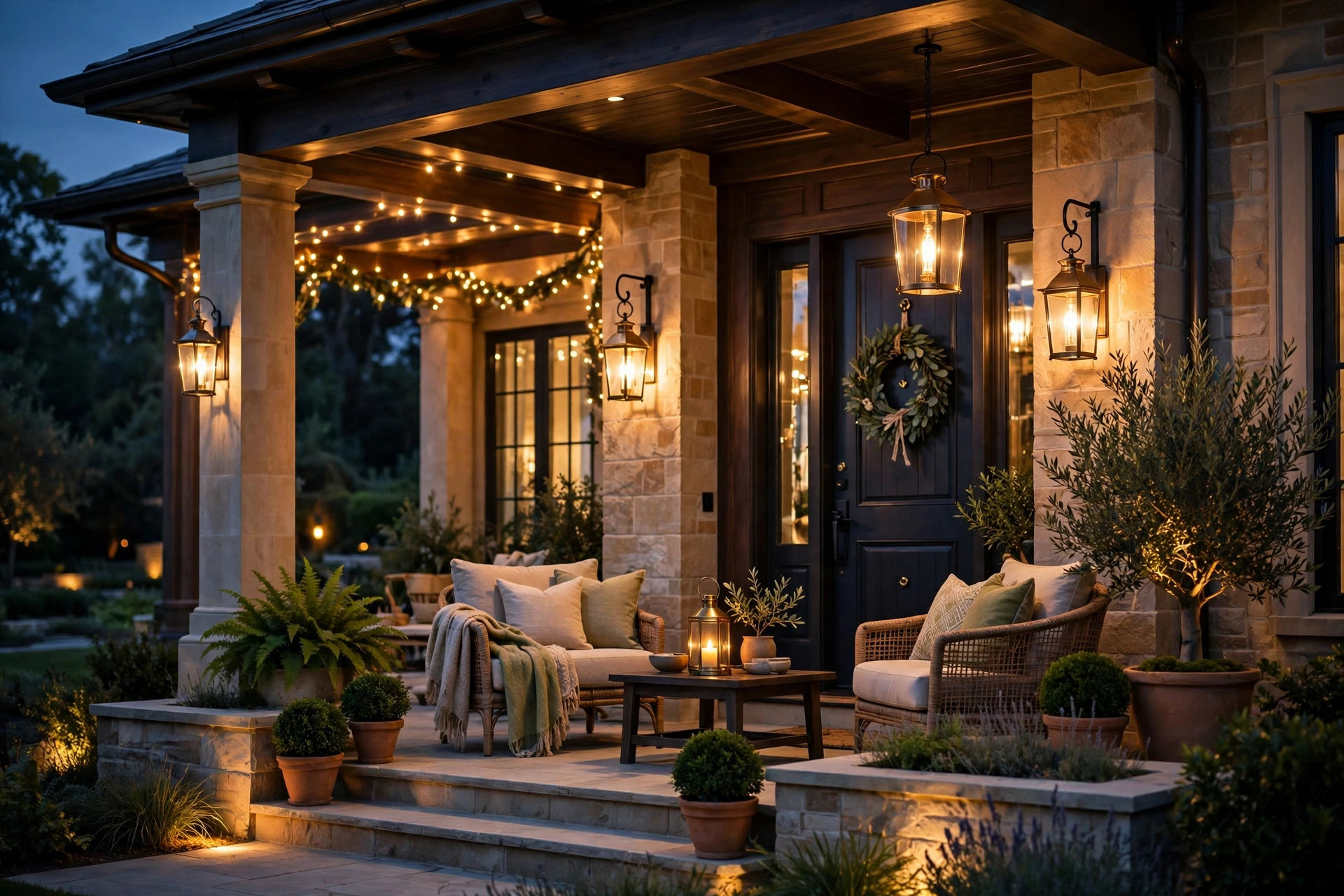
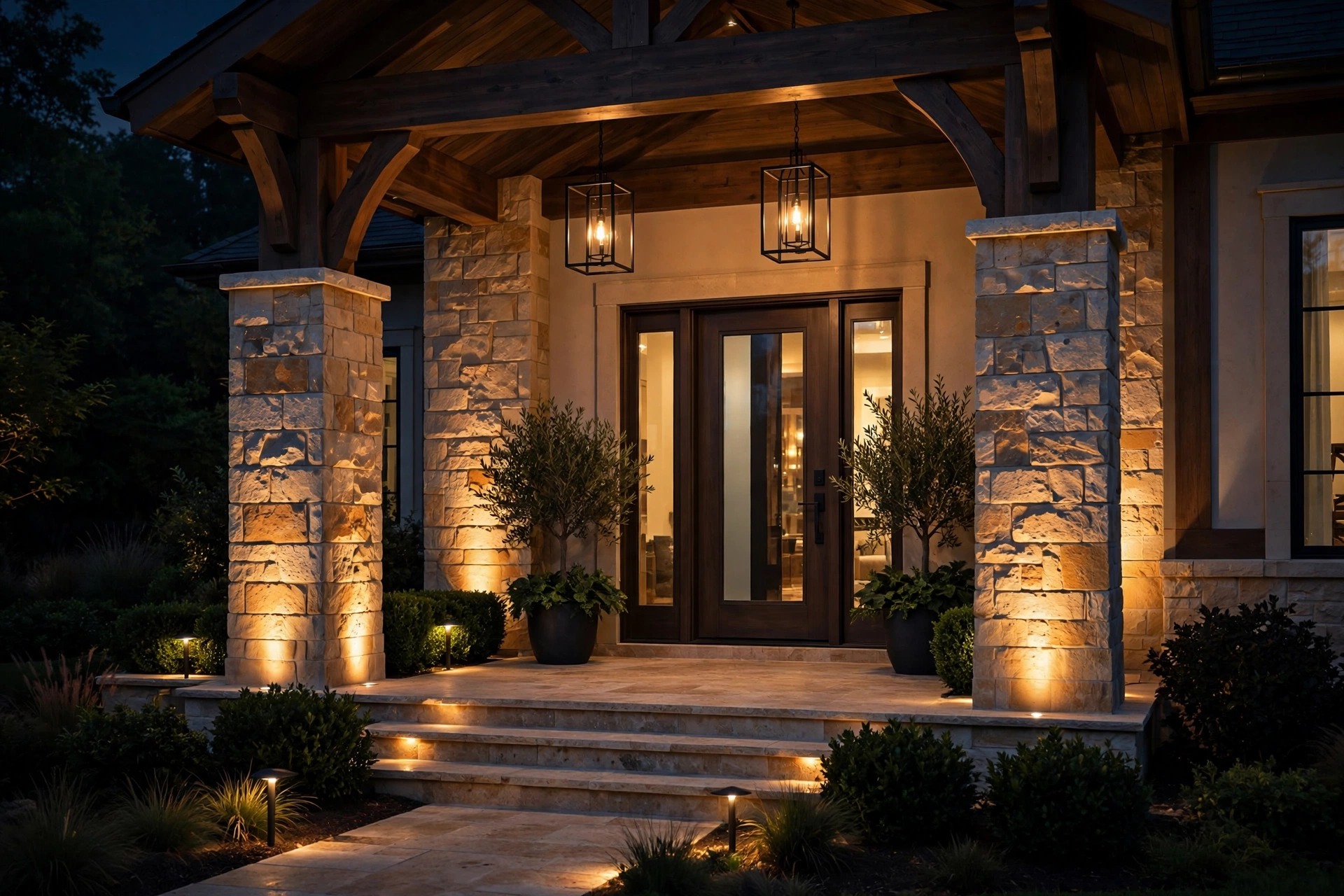
Layered lighting transforms a porch after dark: wall lanterns flanking the door at about sixty-six inches high, recessed ceiling lights on a dimmer, and low path lights along the walkway. Warm-white bulbs around 2700K flatter stone, wood, and skin tones alike.
Put the lanterns on a dusk-to-dawn sensor so the house always looks welcoming, and never rely on a single harsh overhead bulb. That one mistake flattens the architecture and leaves the seating area in shadow exactly where guests gather.
6. Comfortable Porch Seating for Slow Mornings
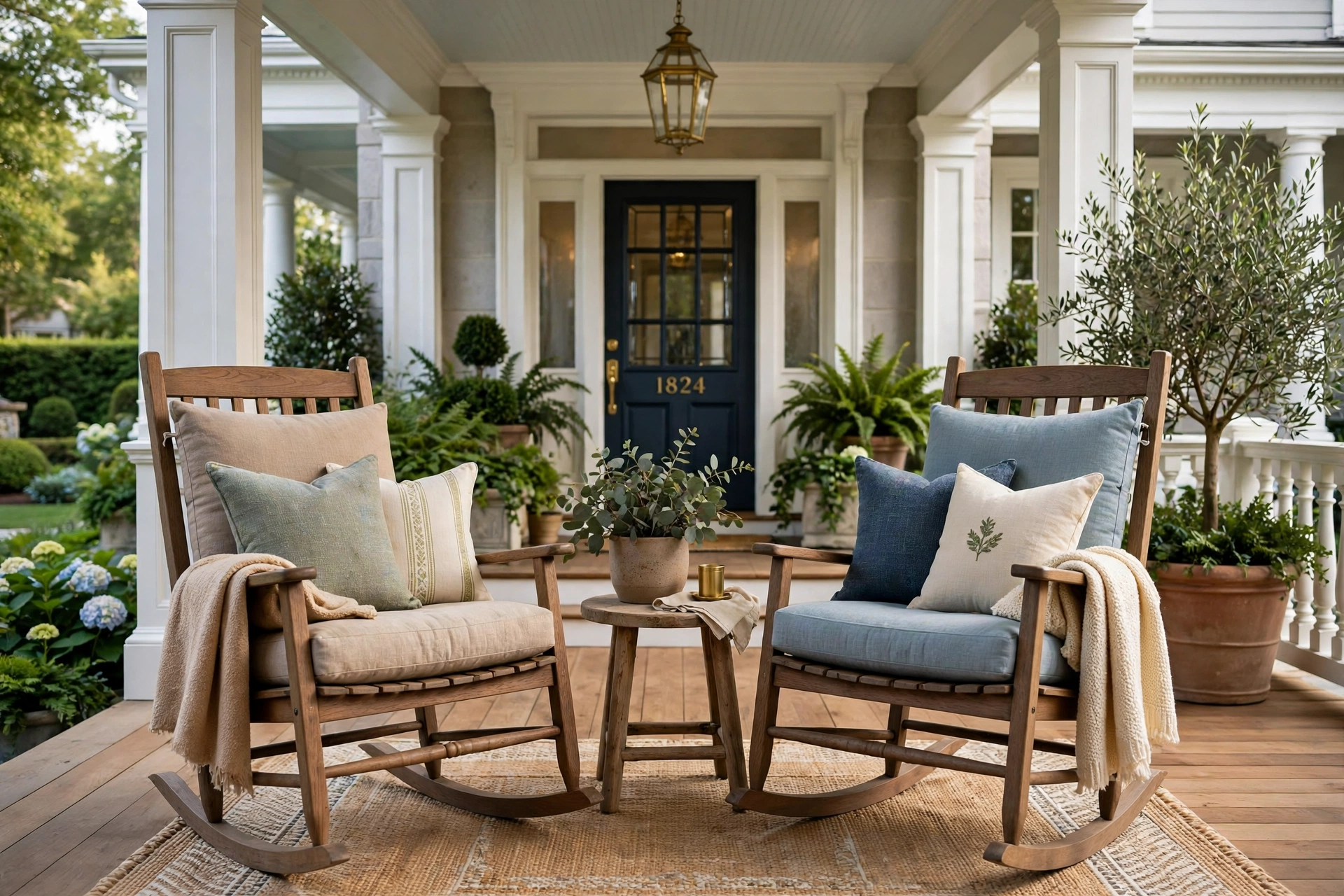
Real porch seating needs depth: chairs with seats at least twenty-two inches deep and weatherproof cushions in solution-dyed acrylic will actually get used every morning. A pair of rocking chairs or a small loveseat, plus a side table for coffee, turns the porch into a second living room.
Place seating against the house wall rather than at the railing, so sitters feel sheltered and can watch the street comfortably. Avoid metal chairs without cushions, which become unusable in both summer heat and winter cold.
7. A Statement Front Door for a Luxury House Design with a Beautiful Front Porch
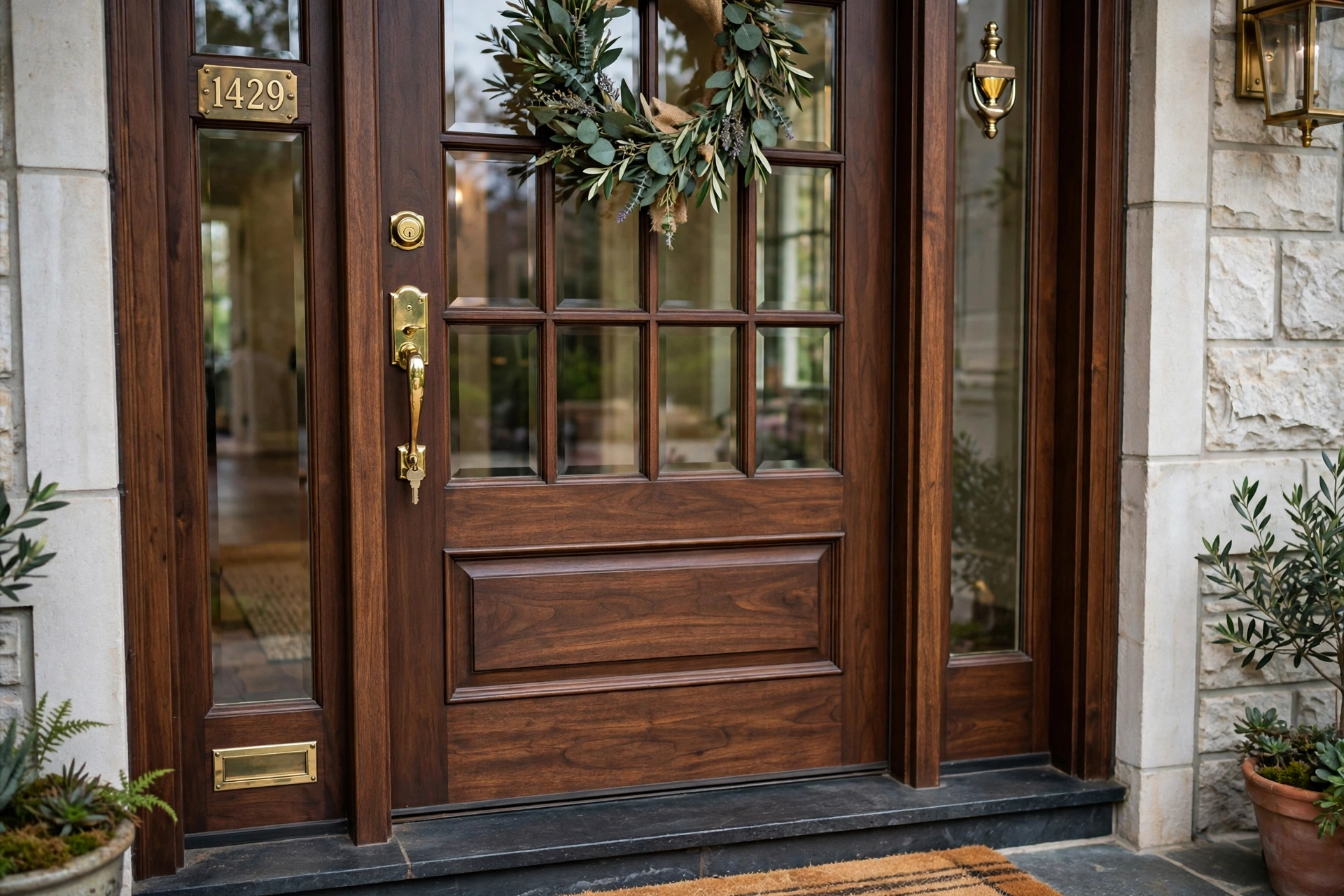
A statement front door, ideally thirty-six to forty-two inches wide and eight feet tall, anchors the whole porch composition. Solid mahogany, walnut, or painted hardwood with glass side panels lets daylight into the entry while keeping the door itself the clear focal point.
Choose hardware in a single finish, such as unlacquered brass, and keep it consistent with the lanterns and house numbers. Mixing three different metals at the entry is a small mistake that quietly undermines an otherwise luxurious look.
8. Hanging Planters and Lush Porch Greenery
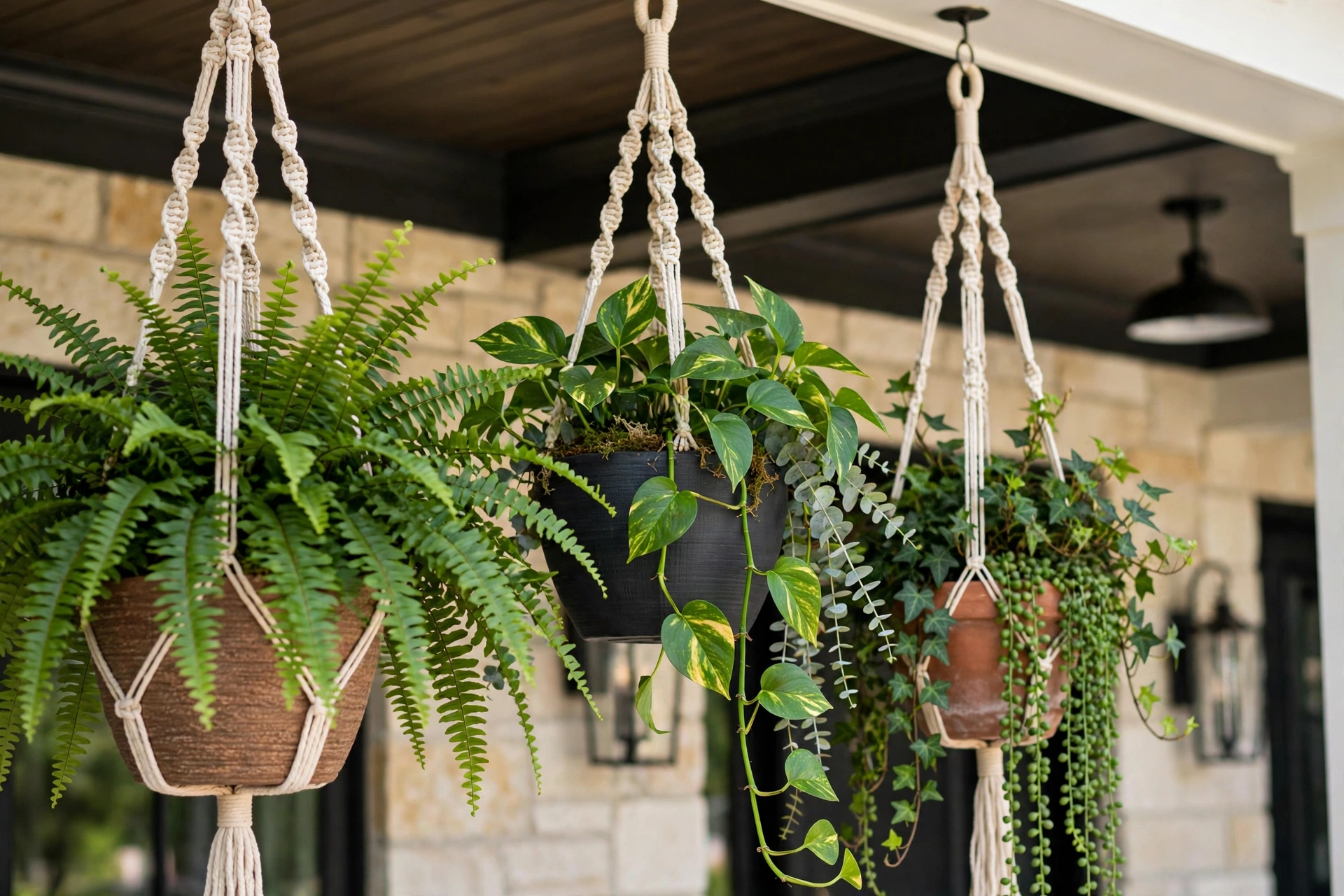
Hanging planters soften hard architecture fast: trailing ivy, ferns, or petunias in fourteen-inch baskets add color at eye level without taking floor space. Place one basket between each pair of columns, hung high enough that nobody brushes it when walking past.
Water baskets every other day in summer, since they dry out far faster than ground planters. Self-watering inserts are worth the small cost, because a single dead basket at the entry draws the eye more than any other porch detail.
9. Symmetrical Windows and a Balanced Facade
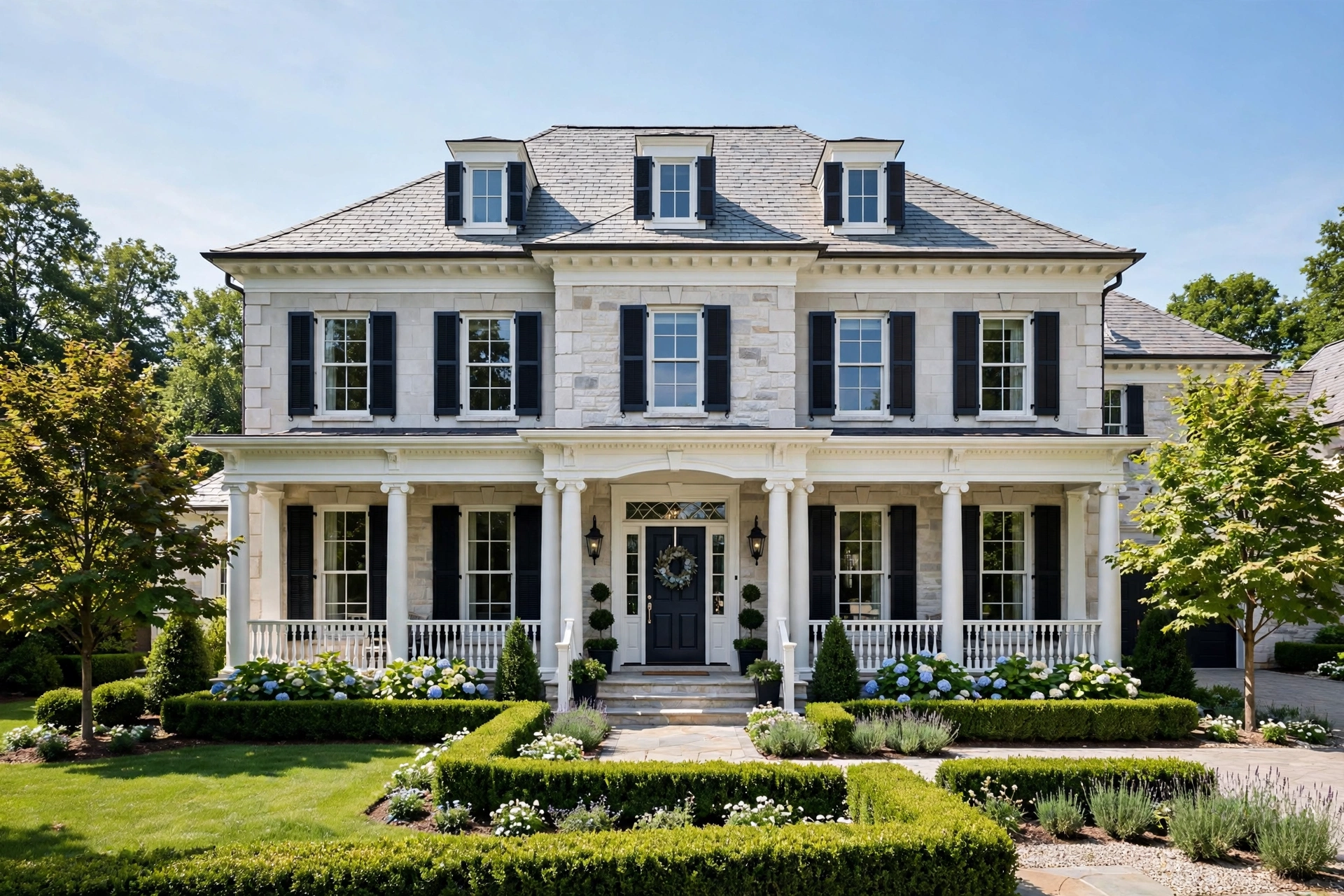
Symmetry gives a luxury facade its calm confidence: matching windows on either side of the porch, aligned vertically floor to floor, make the house read as intentional from the street. Six-over-six or eight-over-eight divided panes suit traditional luxury homes especially well.
Keep window trim the same width, usually four to six inches, across the whole front elevation. Inconsistent trim widths are easy to miss during construction but very noticeable in photographs, where the facade is judged at a glance.
10. A Porch Swing with Soft Cushions
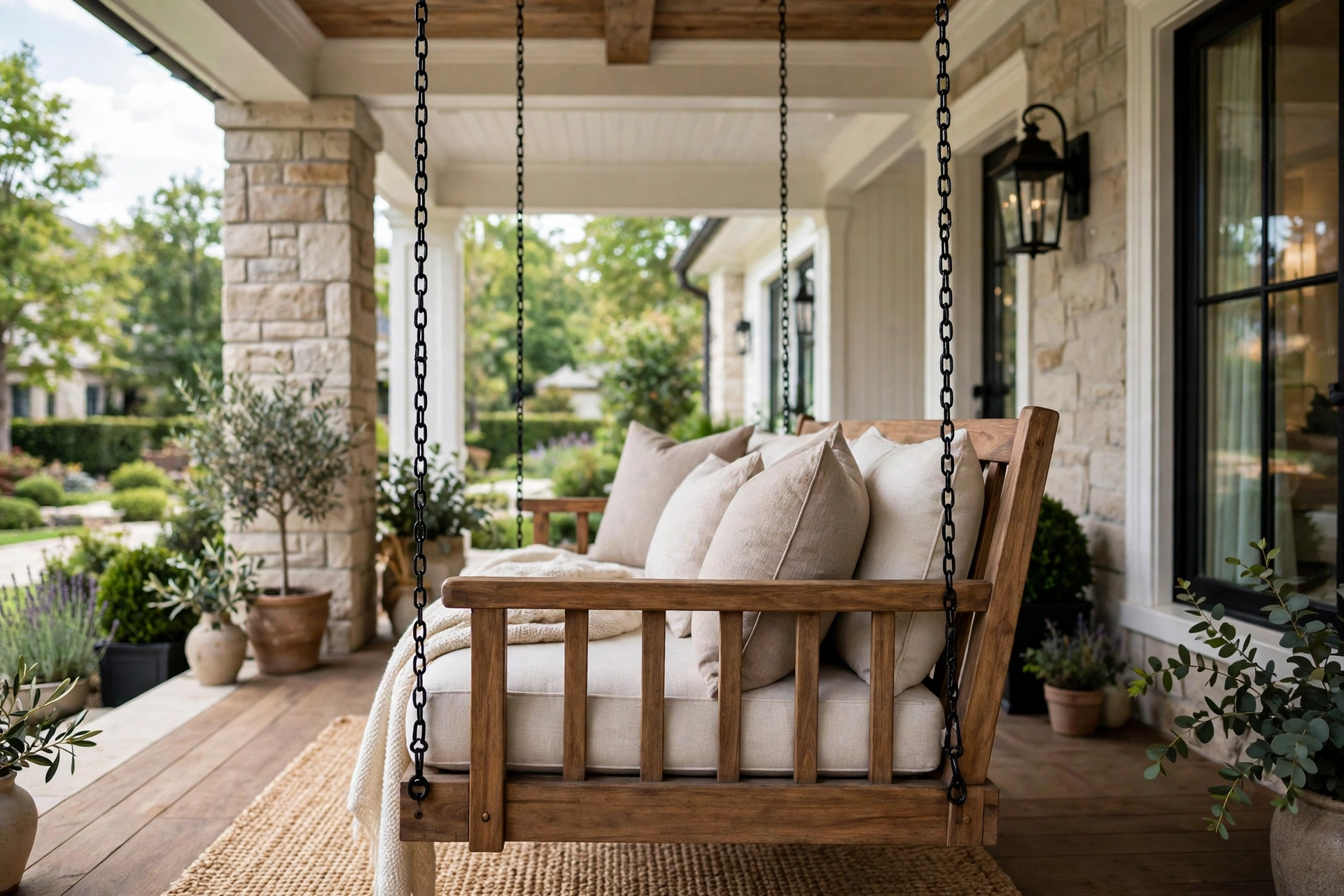
A porch swing hung from chains rated for at least six hundred pounds, with a seat about five feet long, invites long, lazy evenings for two or three people. Thick outdoor cushions and a small throw make it comfortable well beyond a quick photo opportunity.
Hang the swing from ceiling joists, never from the porch ceiling boards alone, and leave eighteen inches of clearance behind it for a full, gentle arc. A swing that barely moves because it was hung too close to the wall is a wasted luxury.
11. Brick, Stone, and Wood Exterior Mix
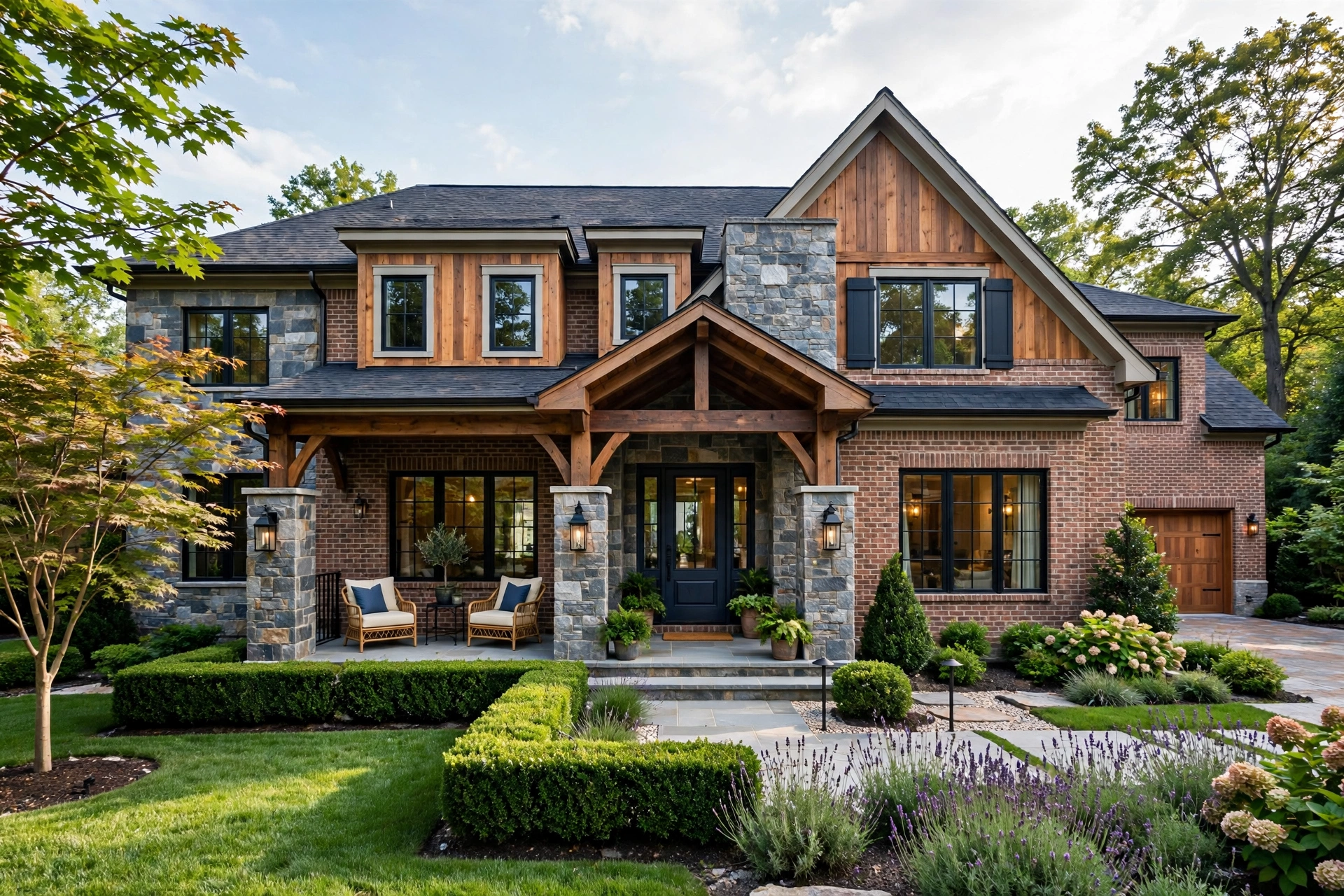
Mixing materials adds richness without clutter: a stone base, brick walls, and wood porch details in a tight palette of three tones look expensive and grounded. Use stone on the porch piers and steps to tie the entry visually to the rest of the house.
Limit the palette to three exterior materials at most, because a fourth usually tips the facade from layered into busy. Mortar color matters too: a warm, matching mortar makes brickwork look far more refined than bright white joints.
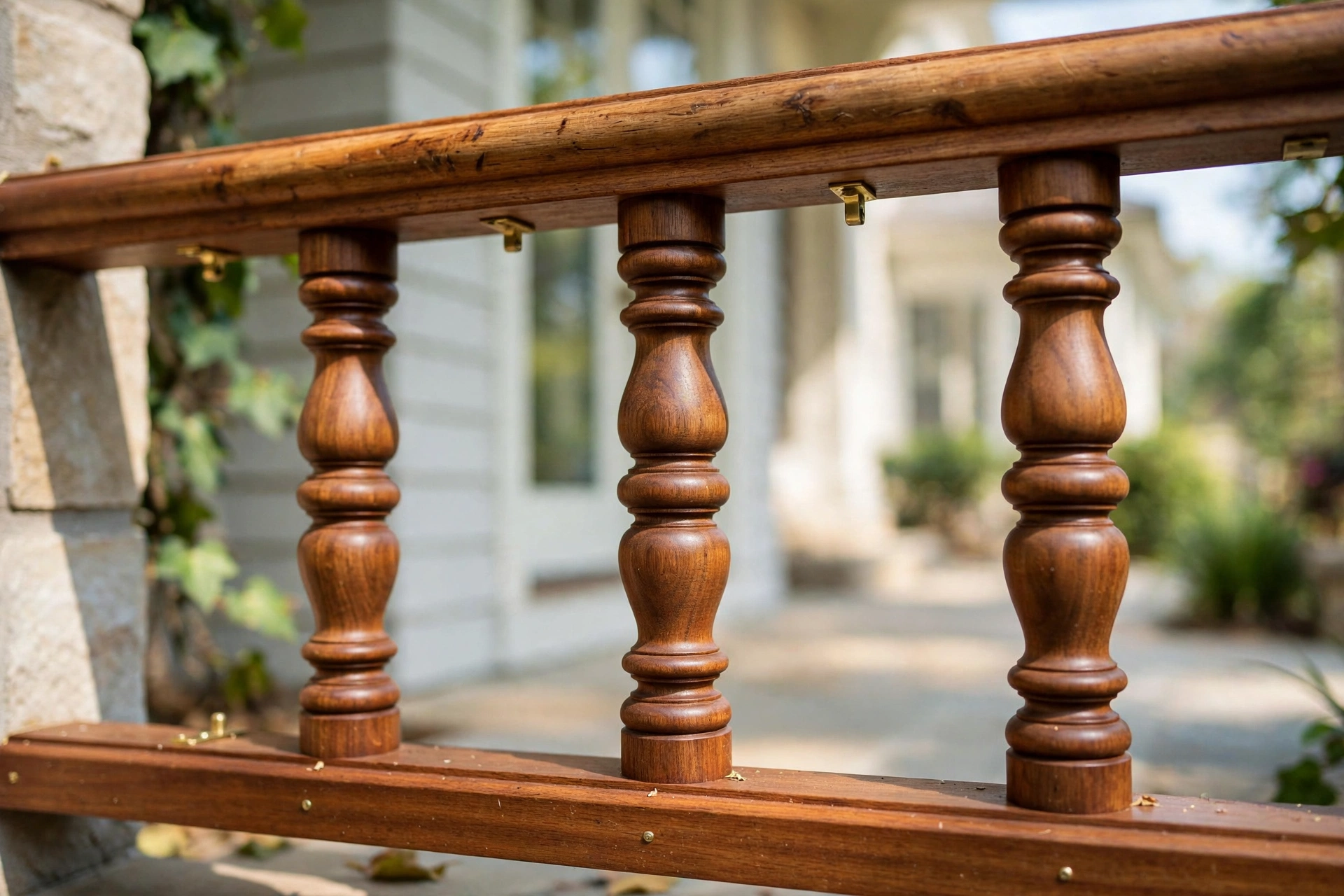
12. Railing Details That Add Character
Railings are jewelry for a porch: turned wood balusters, slim black metal spindles, or a chunky wood top rail each set a different tone. Keep baluster spacing under four inches apart, which is both the safety standard and the proportion that looks most refined.
A top rail about three inches wide doubles as a resting spot for a coffee cup and feels substantial under the hand. Thin, flimsy rails are a common budget shortcut that guests notice immediately when they lean on them.
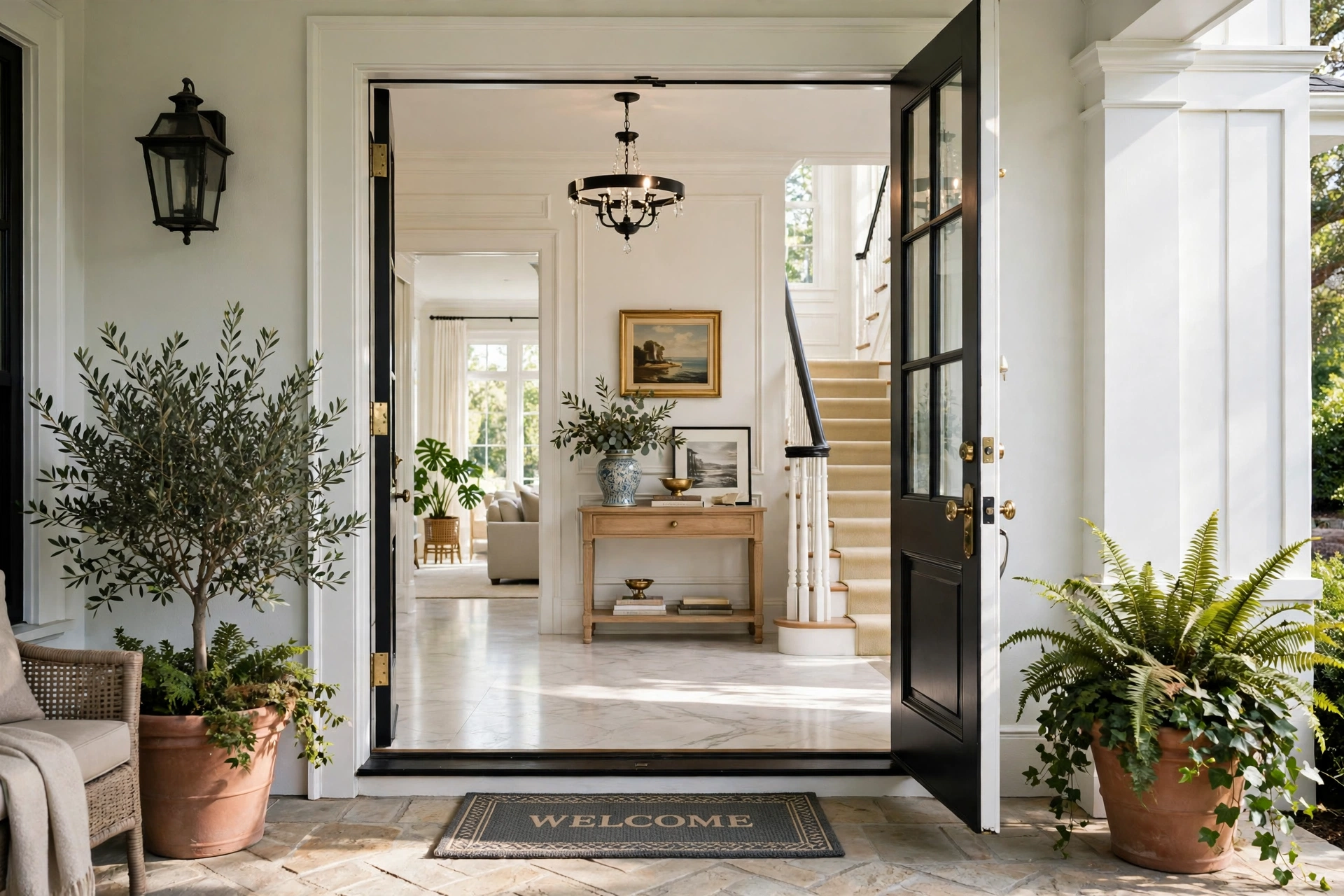
13. Indoor-Outdoor Flow in a Luxury House Design with a Beautiful Front Porch
The best porches flow straight into the entry hall: matching floor tones, a wide forty-two-inch doorway, and sightlines from the porch through to the living spaces make the house feel larger the moment you step inside. Glass panels beside the door carry daylight deep into the hall.
That same sense of flow continues inside when the architecture curves gently rather than stopping at hard corners, which is why many homeowners pair a gracious porch with a Home Interior with Curved Walls. Keep thresholds flush, with no step lip, so the transition feels seamless for everyone.
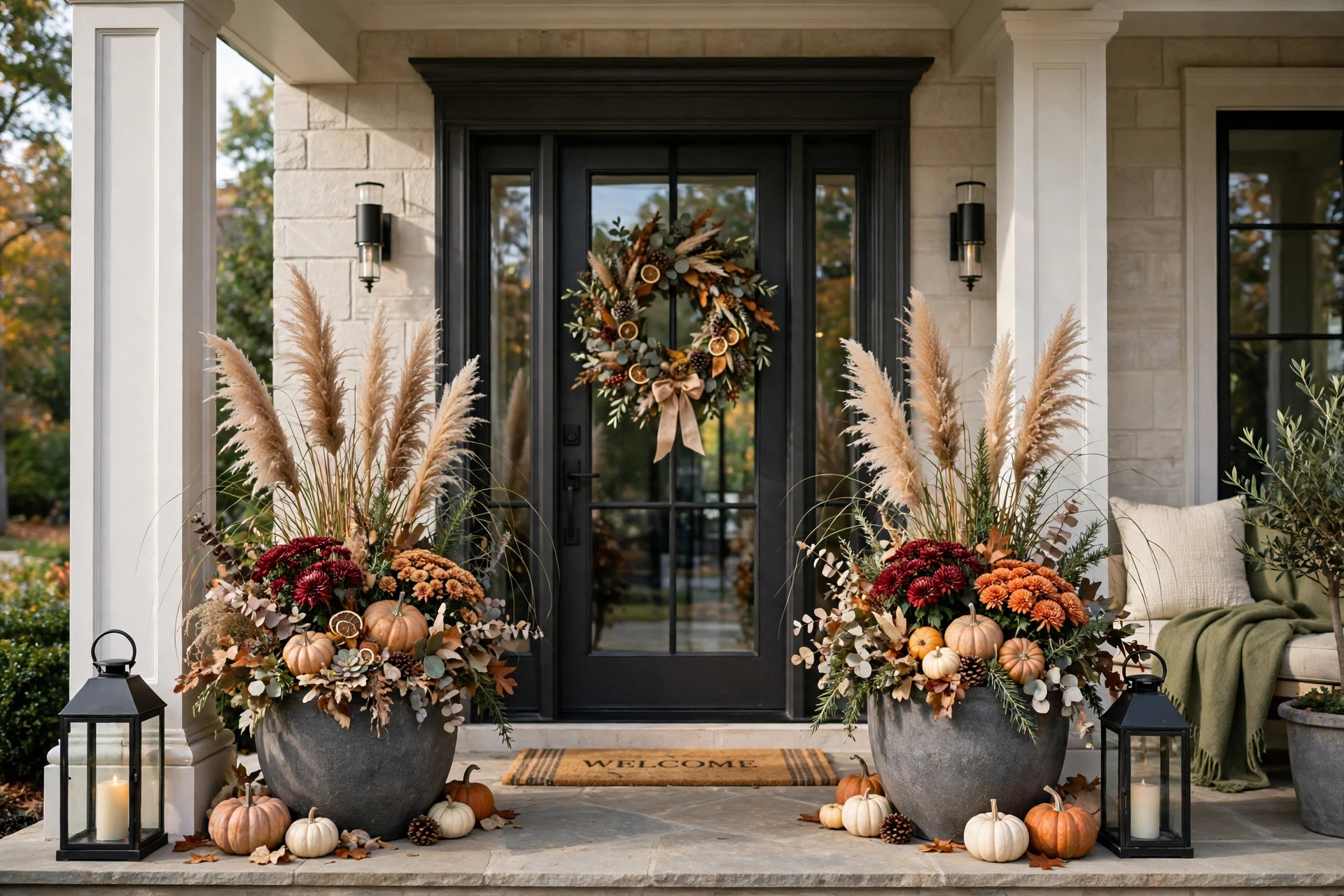
14. Seasonal Porch Decor That Stays Elegant
Seasonal decor stays elegant when it follows one rule: change only the plants and one accent, never the whole porch. Swap summer ferns for autumn mums or winter evergreens in the same large planters, and keep the furniture and lanterns untouched year-round.
Use planters at least twenty inches tall so arrangements read from the street, and avoid small, scattered decorations that look cluttered from the sidewalk. Two confident pieces always beat ten tiny ones at a luxury entry.
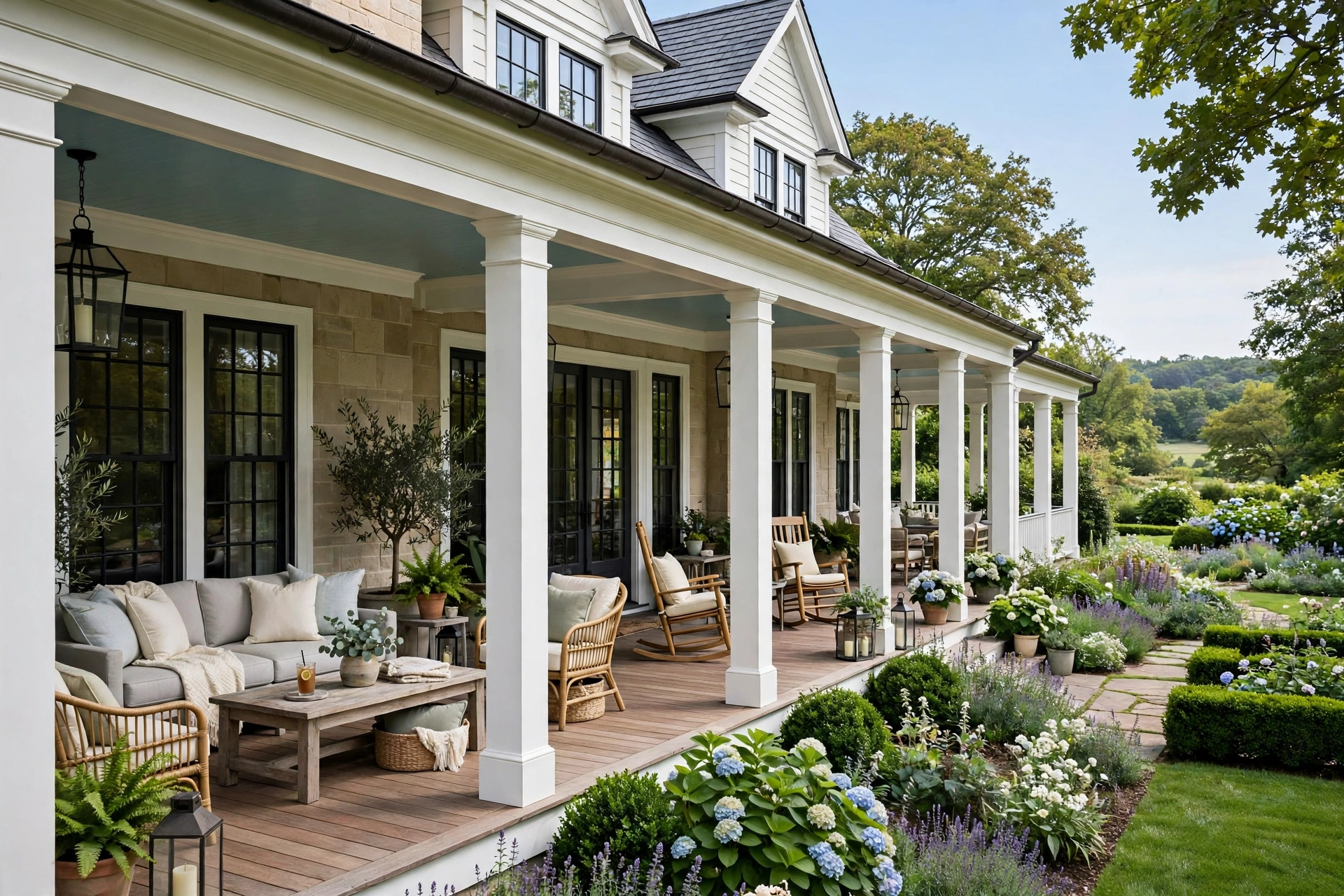
15. A Wraparound Porch for Generous Views
A wraparound porch, at least eight feet deep along two sides of the house, turns the front of the home into a full outdoor room with views in more than one direction. It suits corner lots and garden-facing homes best, where each side offers something different to look at.
Zone the wraparound into areas: seating near the front door, dining around the side, and a quiet reading corner at the far end. Without zones, a long porch can feel like an empty corridor instead of a series of inviting rooms.
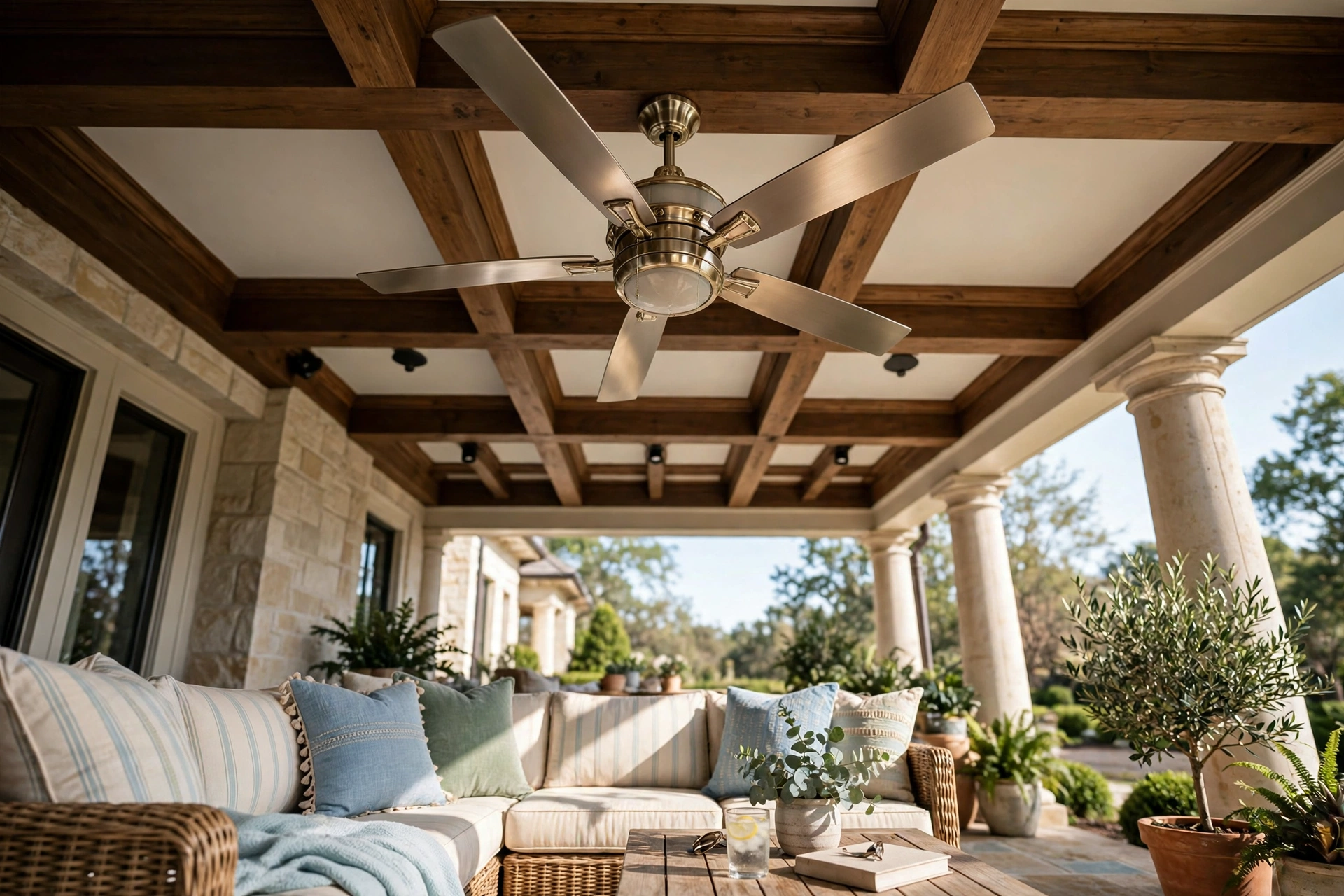
16. Ceiling Fans and Outdoor Comfort
A damp-rated ceiling fan with a fifty-two-inch blade span moves enough air to make a covered porch comfortable even on still, humid evenings. Mount it at least seven feet above the porch floor and choose a quiet motor, since a humming fan ruins conversation fast.
Pair the fan with a dimmable light kit so one fixture serves both purposes, and place it over the main seating group rather than centered on an empty stretch of porch. Fans over walkways waste airflow where nobody sits.
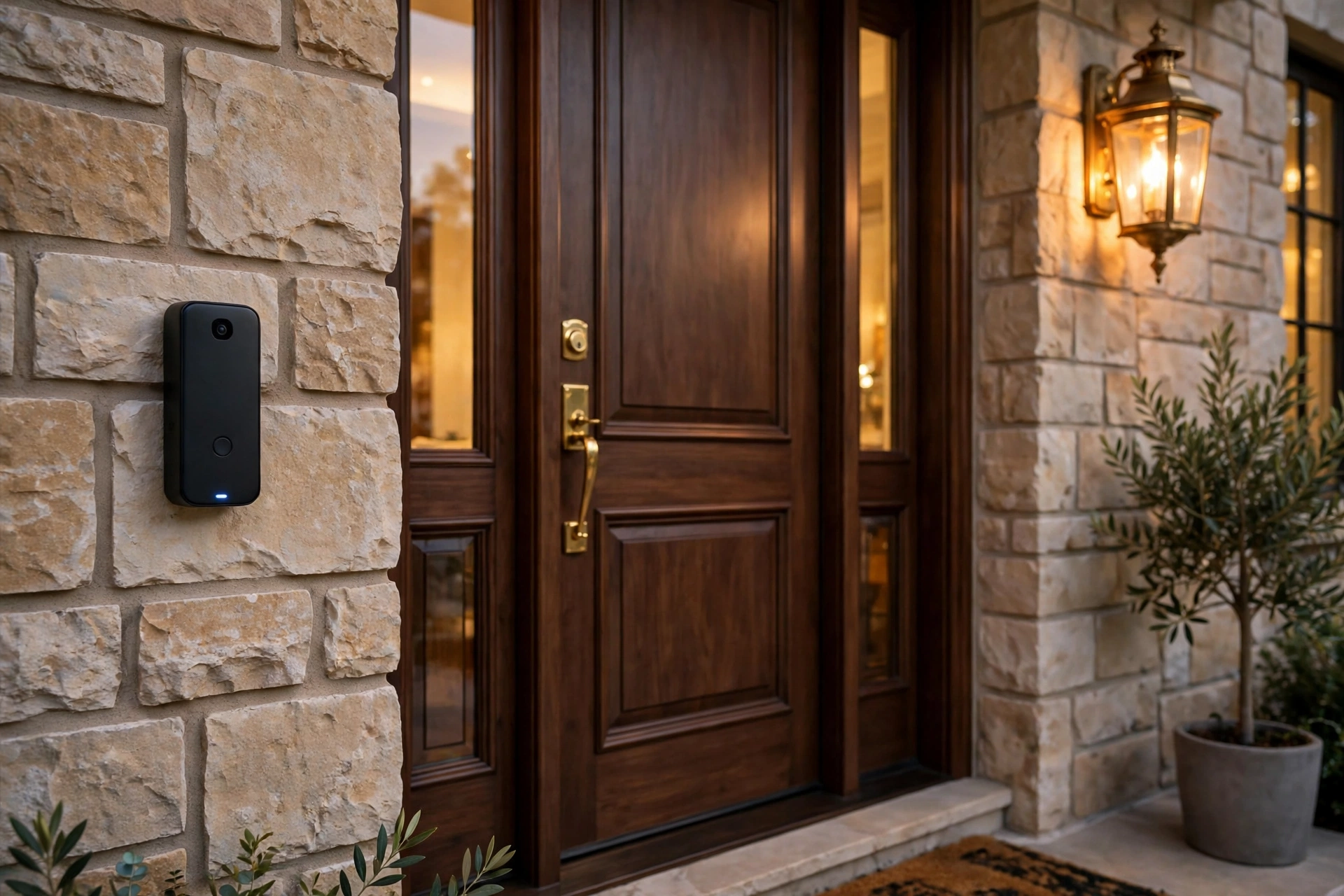
17. Smart Security That Blends In
Smart security should protect without advertising itself: a video doorbell in a brass or bronze finish, discreet cameras tucked under the porch roof, and motion lighting that matches the lanterns keep the entry safe and beautiful. Mount the doorbell at about forty-eight inches high for a natural viewing angle.
Avoid bulky white plastic cameras bolted to the facade, which clash with traditional materials and draw the eye for the wrong reason. Paintable camera housings or bronze finishes cost little more and preserve the porch’s carefully designed look.
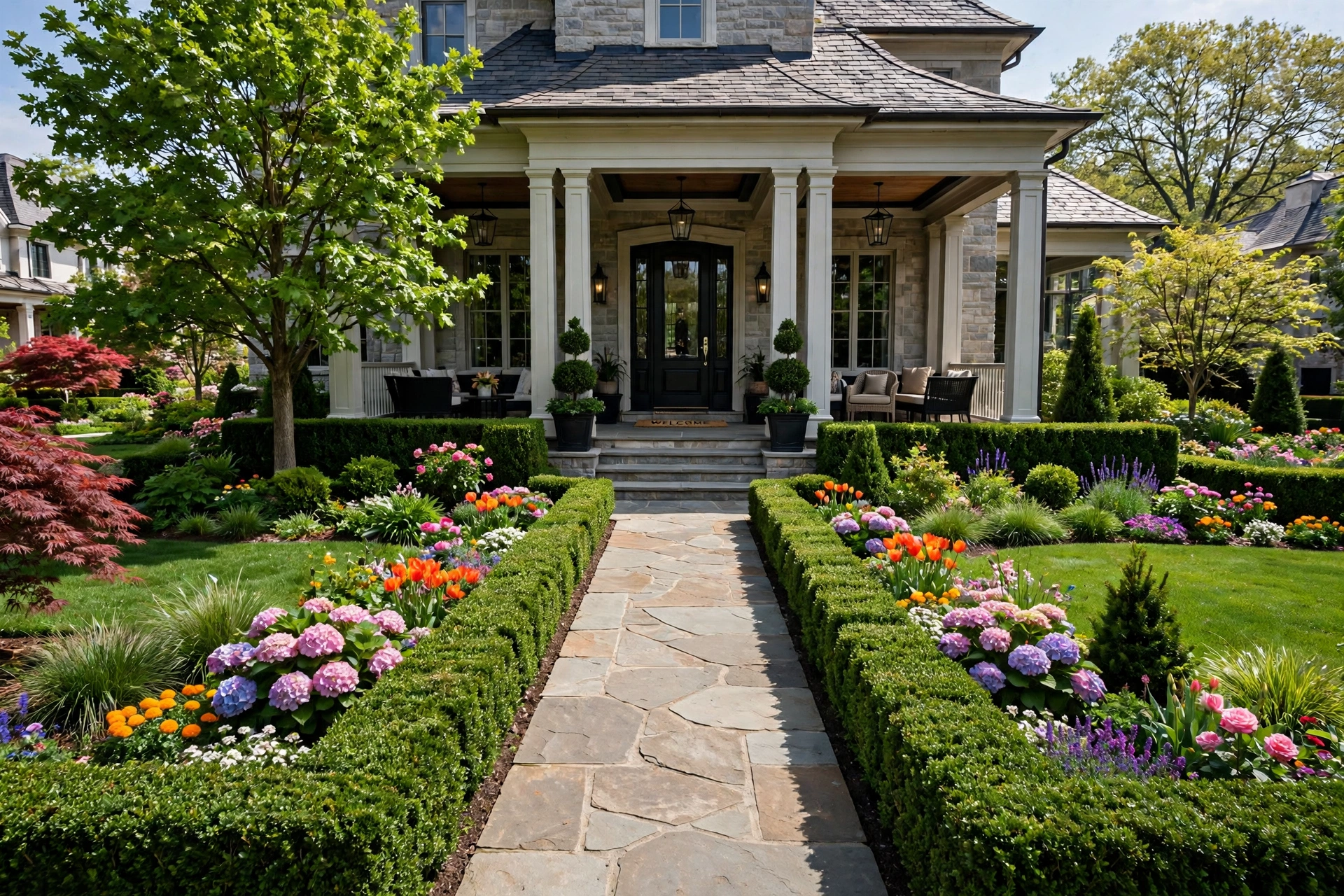
18. Landscaping That Frames the Porch
Landscaping should frame, never hide, the porch: low boxwood hedges under eighteen inches tall along the foundation, taller shrubs at the corners, and a flowering tree set back at least fifteen feet keep the entry visible from the street. Layer plants by height for depth.
Leave the porch itself unobstructed, with no shrub blocking the steps or the door. The most common landscaping mistake is planting fast-growing shrubs that swallow a beautiful porch within three years, so check mature sizes before you plant.
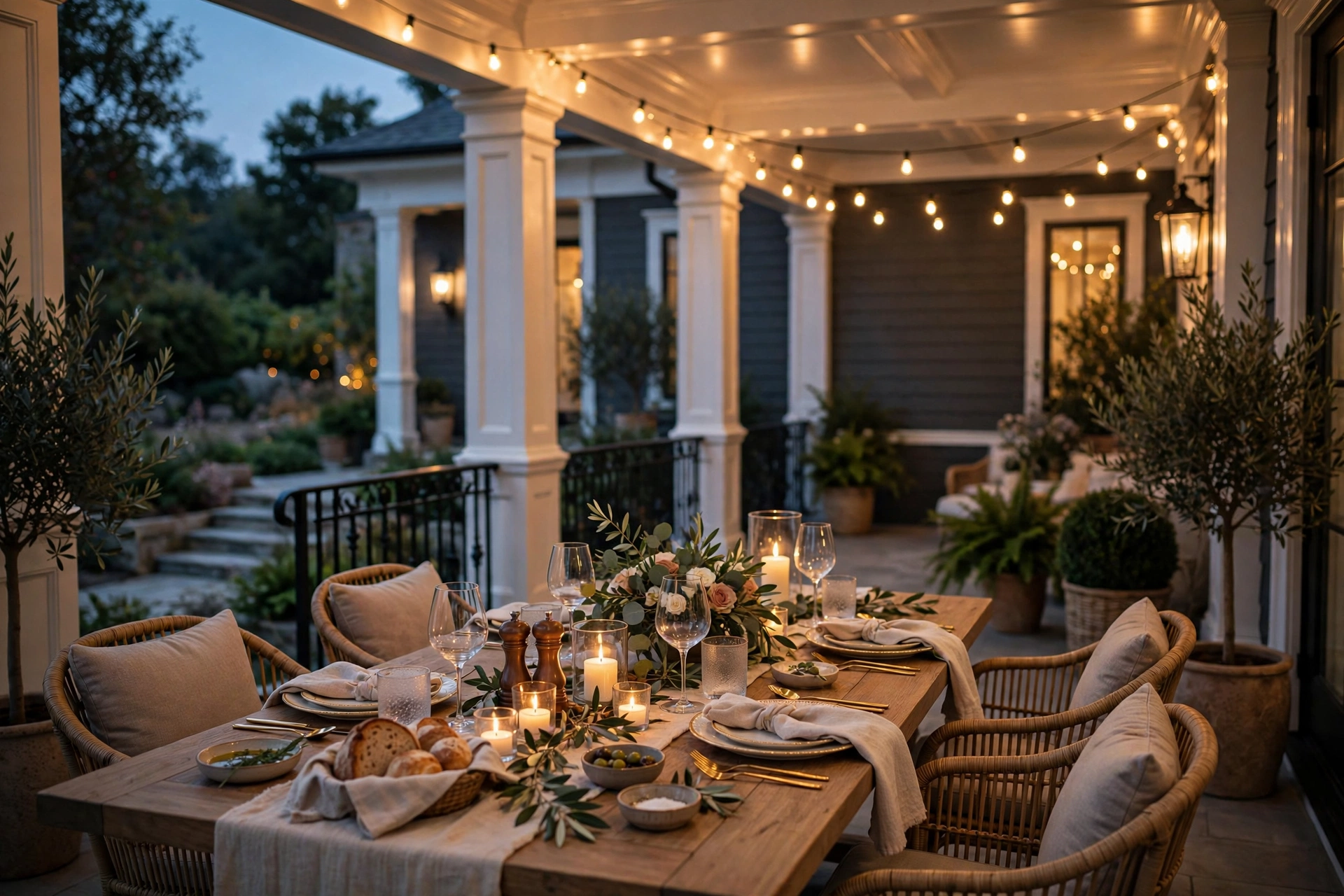
19. Porch Dining for Warm Evenings
Porch dining works when the table fits the space: a forty-eight-inch round table with four chairs needs a clear ten-by-ten-foot area, so measure before buying. A small bistro set suits narrow porches, while a farmhouse table belongs only on deep, wide ones.
String lights or a single lantern hung above the table at seven feet create an intimate glow without glare. Skip overhead lights directly above diners’ heads, which cast harsh shadows on faces and food alike.
20. Arched Doorways and Soft Curves
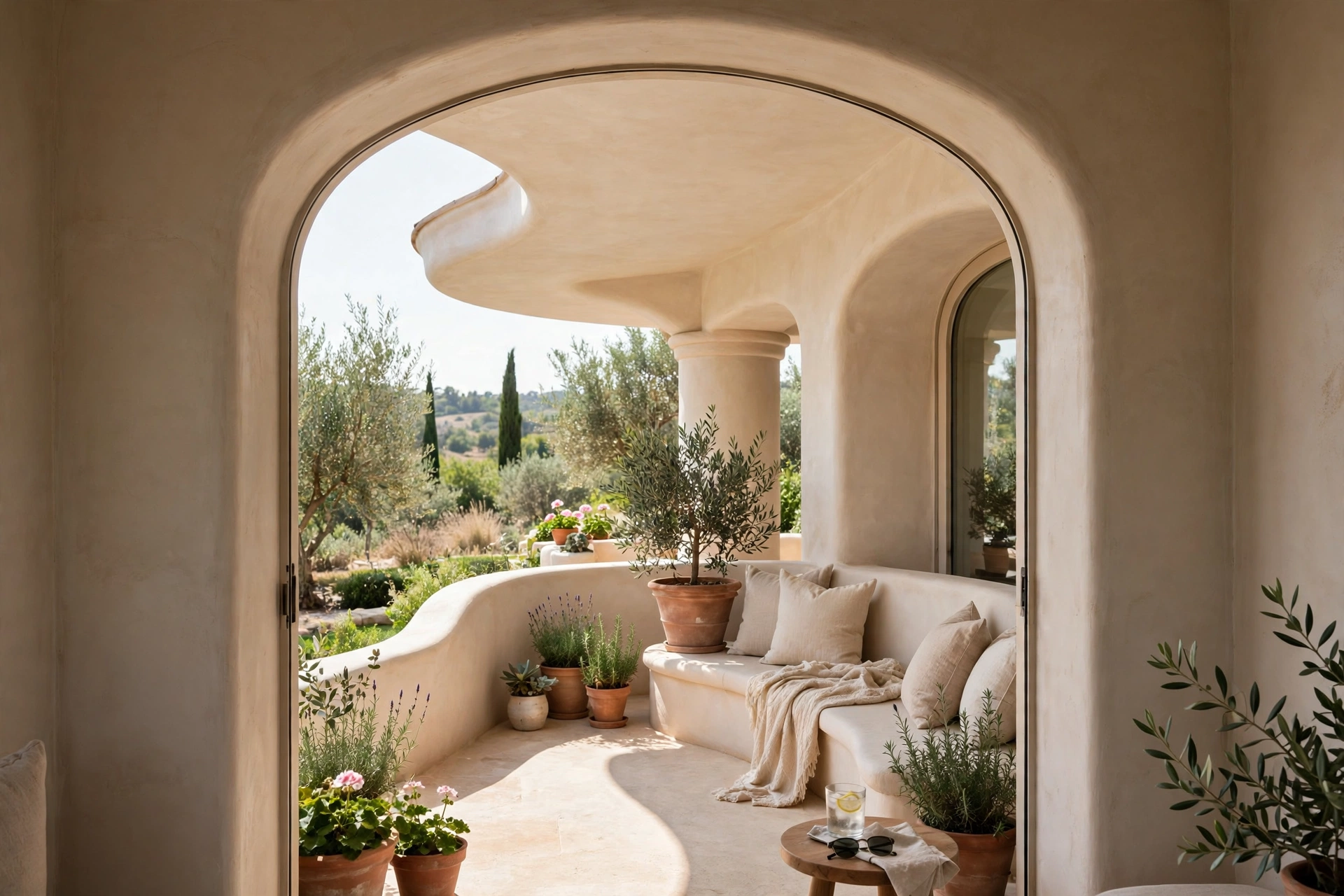
Arched doorways soften a grand facade, with a gentle radius arch above the front door or porch openings echoing classical and Mediterranean luxury styles. A twelve-inch arch rise over a forty-two-inch opening gives a graceful curve without weakening the structure.
Repeat the arch shape once more, perhaps in a window or garden gate, so it reads as a deliberate theme rather than a one-off detail. A single unmatched arch can look accidental, while a repeated motif ties the whole exterior together.
21. Neutral Paint with a Bold Door Color
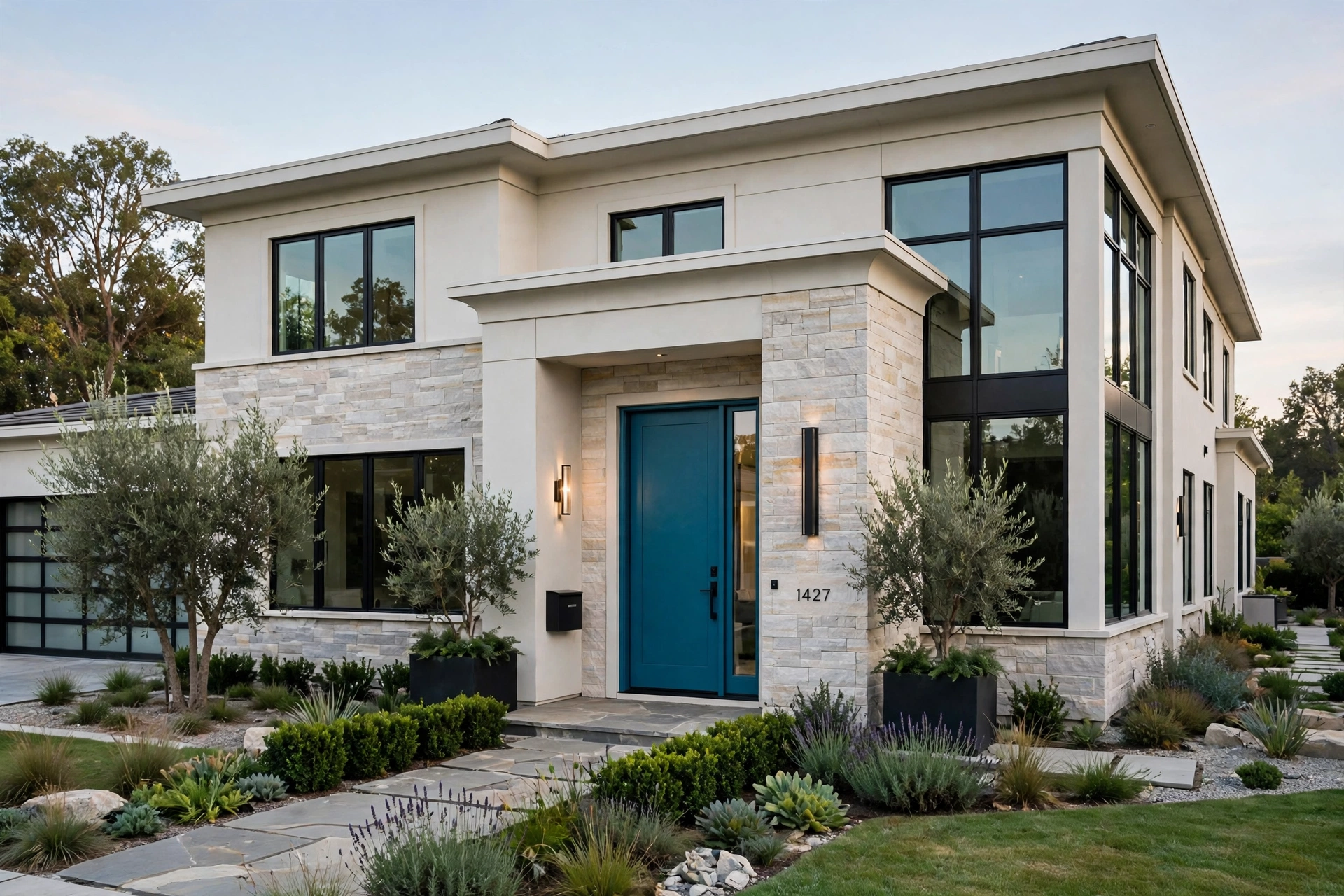
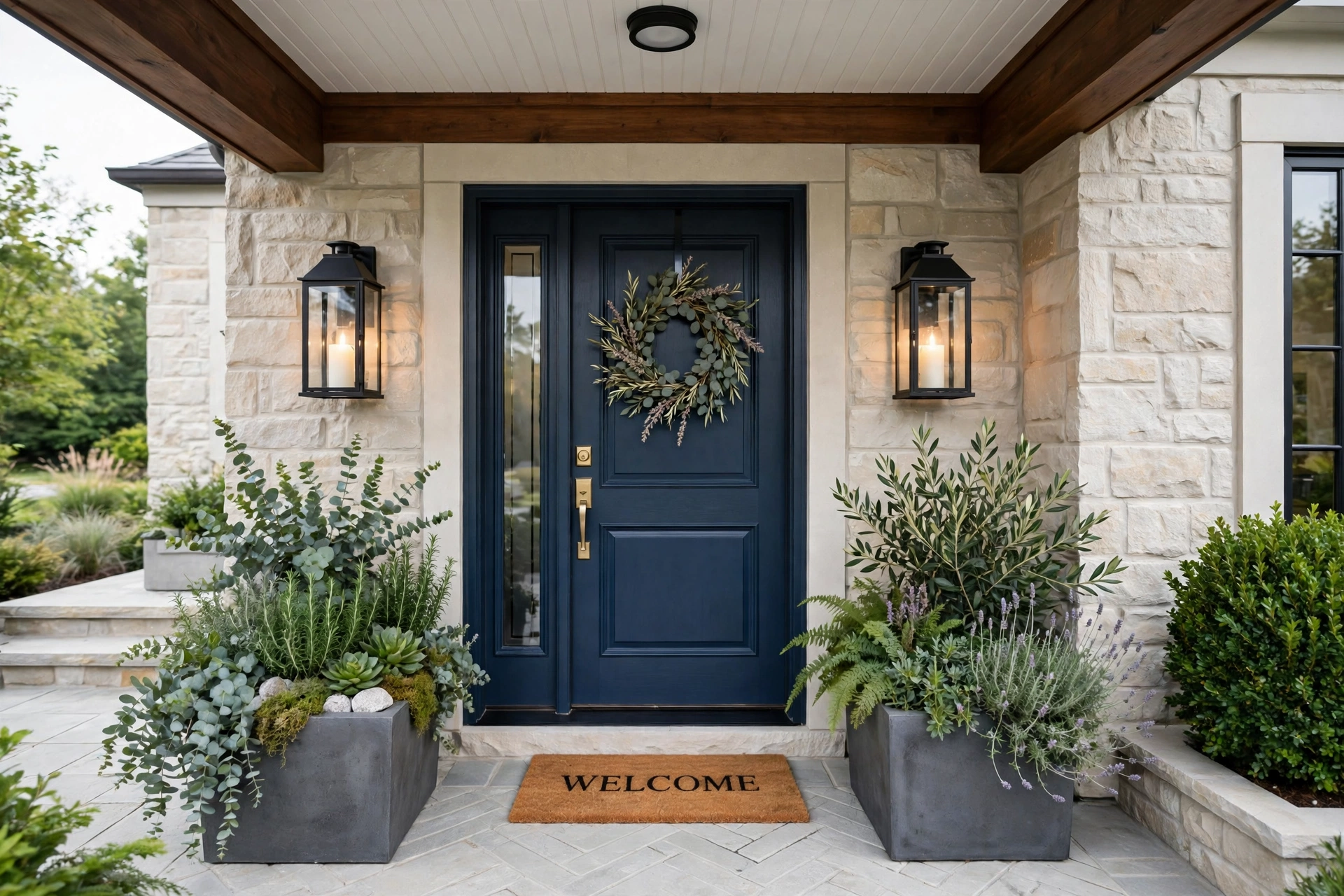
A neutral facade in warm white, greige, or soft stone lets one bold door color shine: deep navy, forest green, or classic black on a forty-two-inch door draws the eye straight to the entry. Test the color in daylight and lamplight before committing, since undertones shift dramatically.
Keep the rest of the palette quiet, with trim one shade lighter than the walls, so the door remains the single accent. Painting shutters, trim, and door in competing bright colors is the fastest way to make a luxury home look busy.
22. Fireplace or Heater for Cool Nights
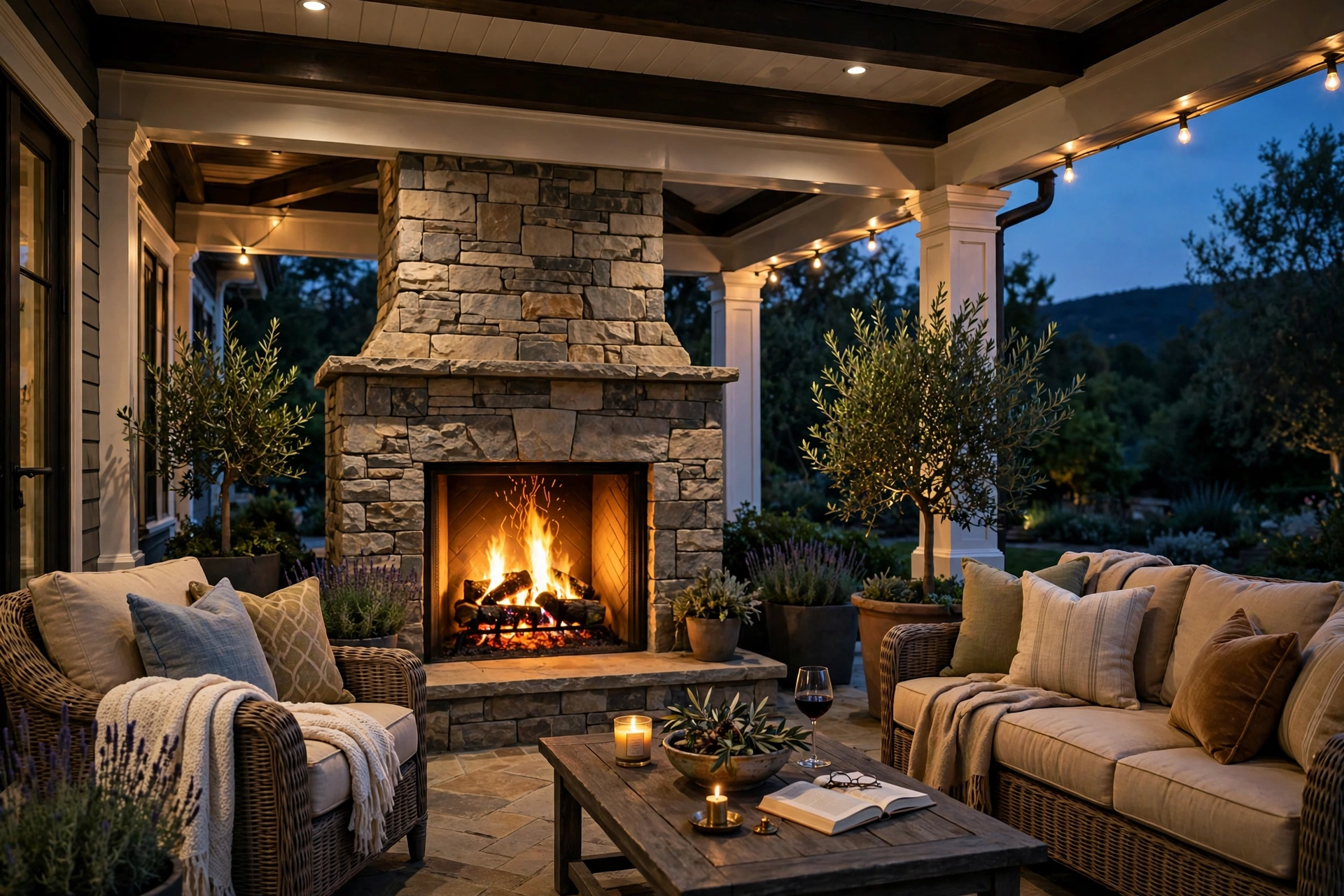
An outdoor fireplace or a wall-mounted infrared heater extends porch season by months: a gas fireplace with a thirty-six-inch firebox warms a ten-foot seating radius, while infrared heaters heat people directly without warming the night air. Both suit covered porches with proper ventilation.
Place the heat source where sitters face it, not behind them, and keep cushions and throws at least three feet from any open flame. A fire feature nobody can feel is decoration only, so size it to the seating area, not the wall.
23. Storage Benches and Tidy Entryways
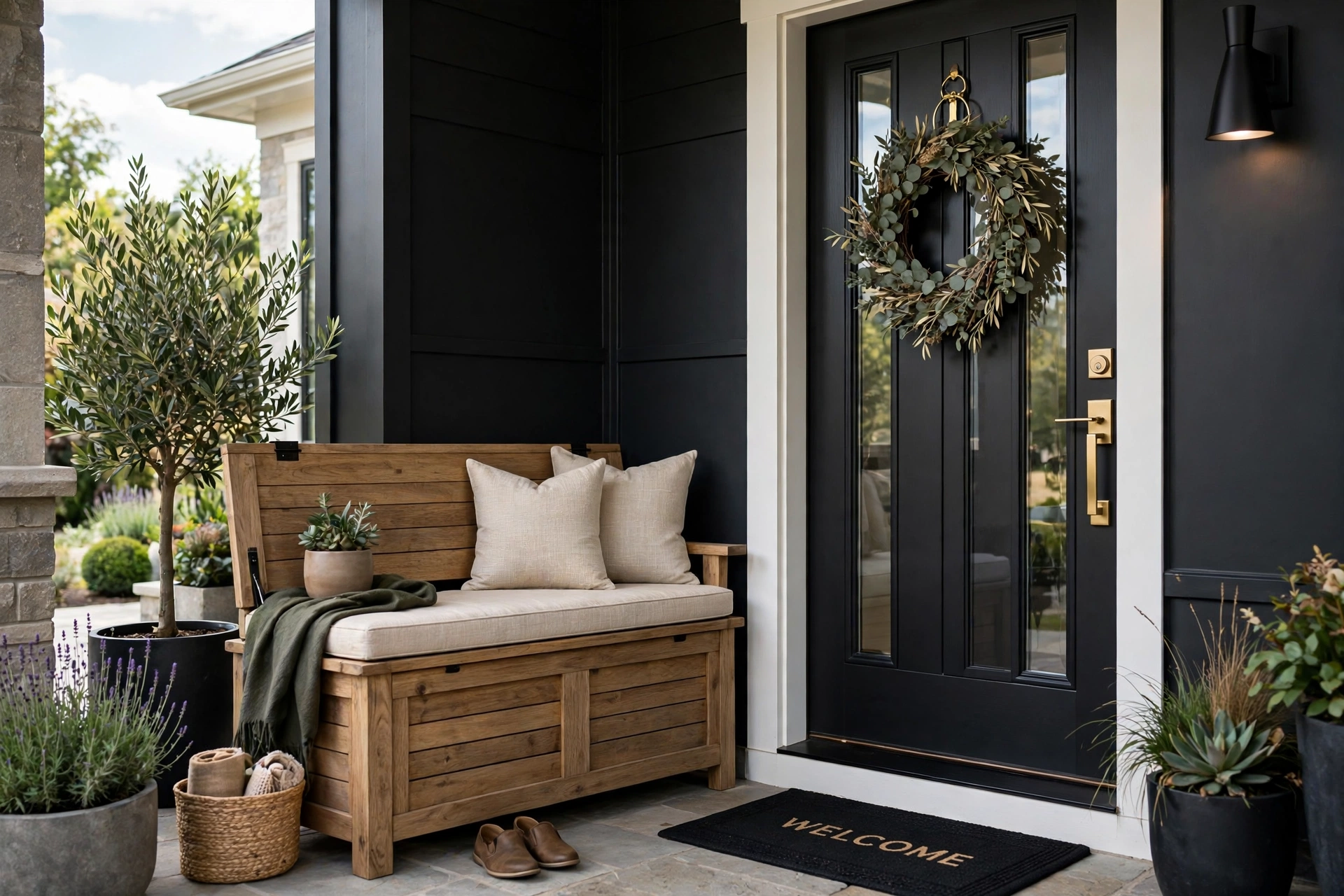
A storage bench, about forty-eight inches long with a lift-up seat, hides shoes, umbrellas, and garden tools that otherwise collect by the front door. Place it against the house wall near the door, where it doubles as extra seating for guests putting on shoes.
Choose weatherproof materials like teak or powder-coated metal so the bench survives rain without swelling or rusting. An open pile of shoes at a luxury entry undoes the entire first impression, no matter how beautiful the architecture is.
24. Curb Appeal After Dark
Curb appeal after dark depends on uplighting: two well lights aimed at the facade from about ten feet out, plus lit house numbers in four-inch brass figures, make the home legible and inviting at night. Keep uplights warm-white to match the porch lanterns.
Avoid cool-white floodlights that wash out stone and paint and create harsh glare for drivers and neighbors. Soft, layered light flatters materials and makes the porch the brightest, most welcoming spot on the street.
25. Finishing Touches for a Luxury House Design with a Beautiful Front Porch
The finishing touches are small but decisive: a coir doormat at least thirty-six inches wide, matching lanterns, a polished house-number plaque, and one sculptural planter by the door. Walk the approach as a guest would, and remove anything that feels busy or unfinished.
These luxury house design with a beautiful front porch ideas work best when layered slowly, starting with structure and proportion, then adding light, planting, and furniture. With patience and restraint, your porch will welcome guests beautifully every single day.
One Comment