25 Home Interior with Curved Walls
A home interior with curved walls is made for homeowners who love modern design but want rooms that feel softer, warmer, and easier to live in. Instead of sharp corners, gentle curves create flowing spaces that feel elegant, calm, and welcoming from the moment you step inside.
Curves work in every room, from arched doorways to curved kitchen islands and cozy window bays. The twenty-five ideas below show how to use them with confidence, whether you are building new or adding one curved feature. If you are planning the outside too, take a look at Luxury House Design with a Beautiful Front Porch for an exterior that matches this soft, flowing style.
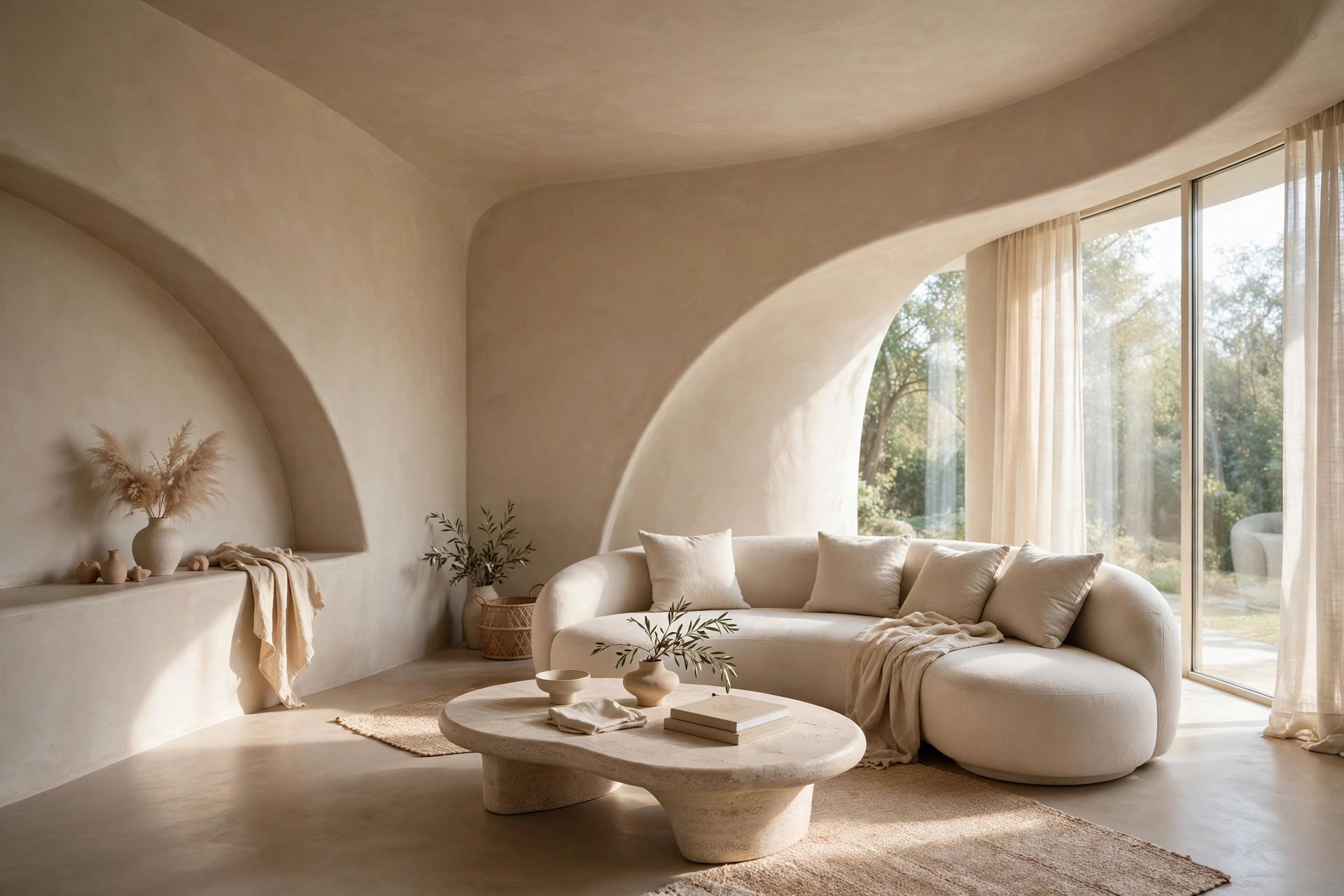
1. Curved Entryway That Welcomes You In
A curved entryway wall instantly makes a home feel welcoming, greeting guests with a soft, sweeping line instead of a hard corner. Build the curve with a radius of at least 600 millimetres so it reads as deliberate architecture, not an awkward bump.
Keep the entry console slim, no deeper than 300 millimetres, so the walkway stays clear. The curve continues the welcome begun outside, so pair this entry with a Luxury House Design with a Beautiful Front Porch and let the soft lines flow from the porch straight into the hall.
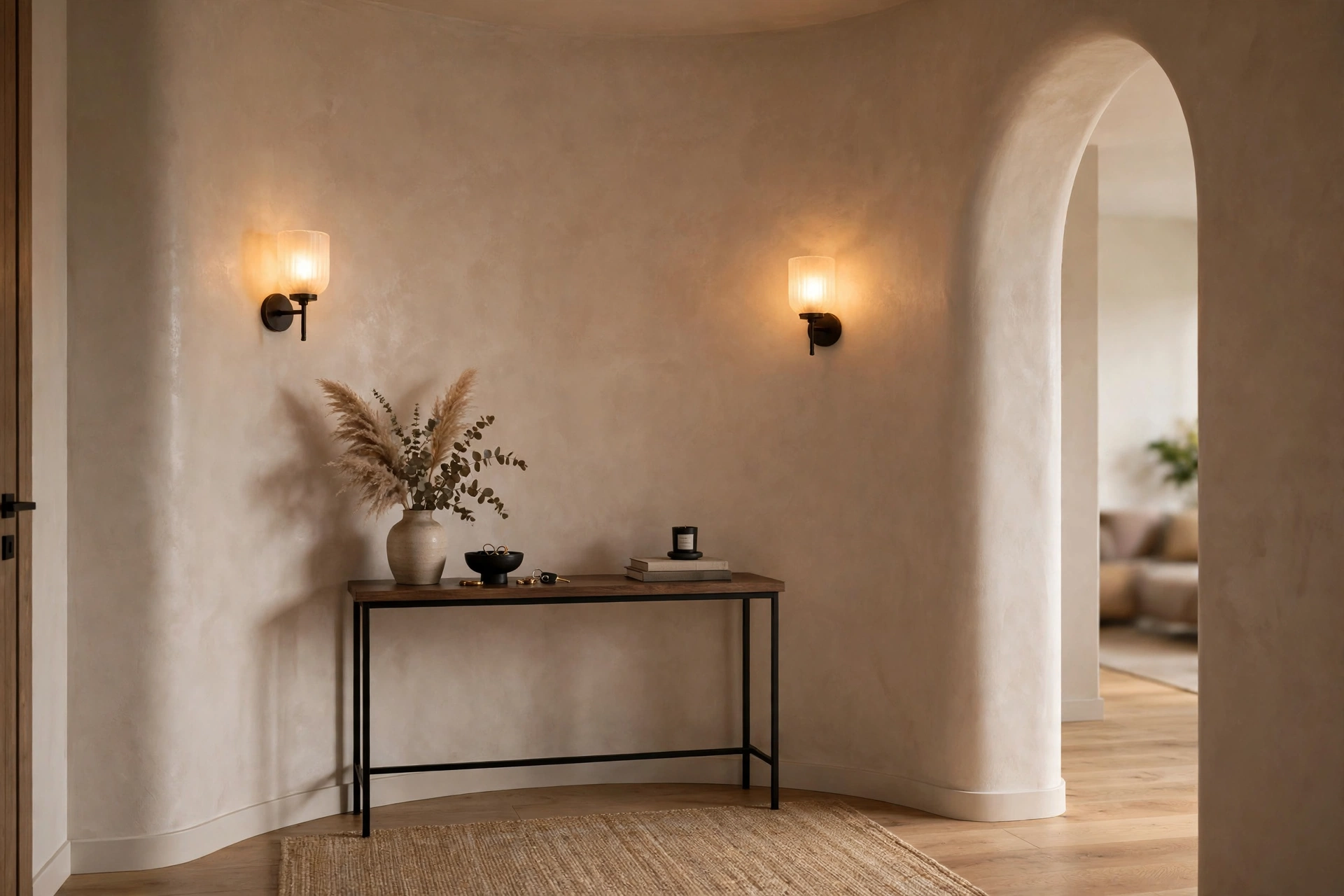
2. Arched Doorways Between Rooms
Arched doorways are the simplest way to introduce curves, since they replace a standard rectangular opening with a gentle, rounded top. A semicircular arch at least 2.1 metres high keeps the doorway feeling generous, while a wider arch of 1.2 metres suits open-plan transitions between living and dining areas.
Finish the arch in smooth plaster and paint it the same colour as the surrounding wall so the curve looks built-in rather than added on. Avoid fussy trims around the arch, because a clean edge lets the shape itself do all the talking.
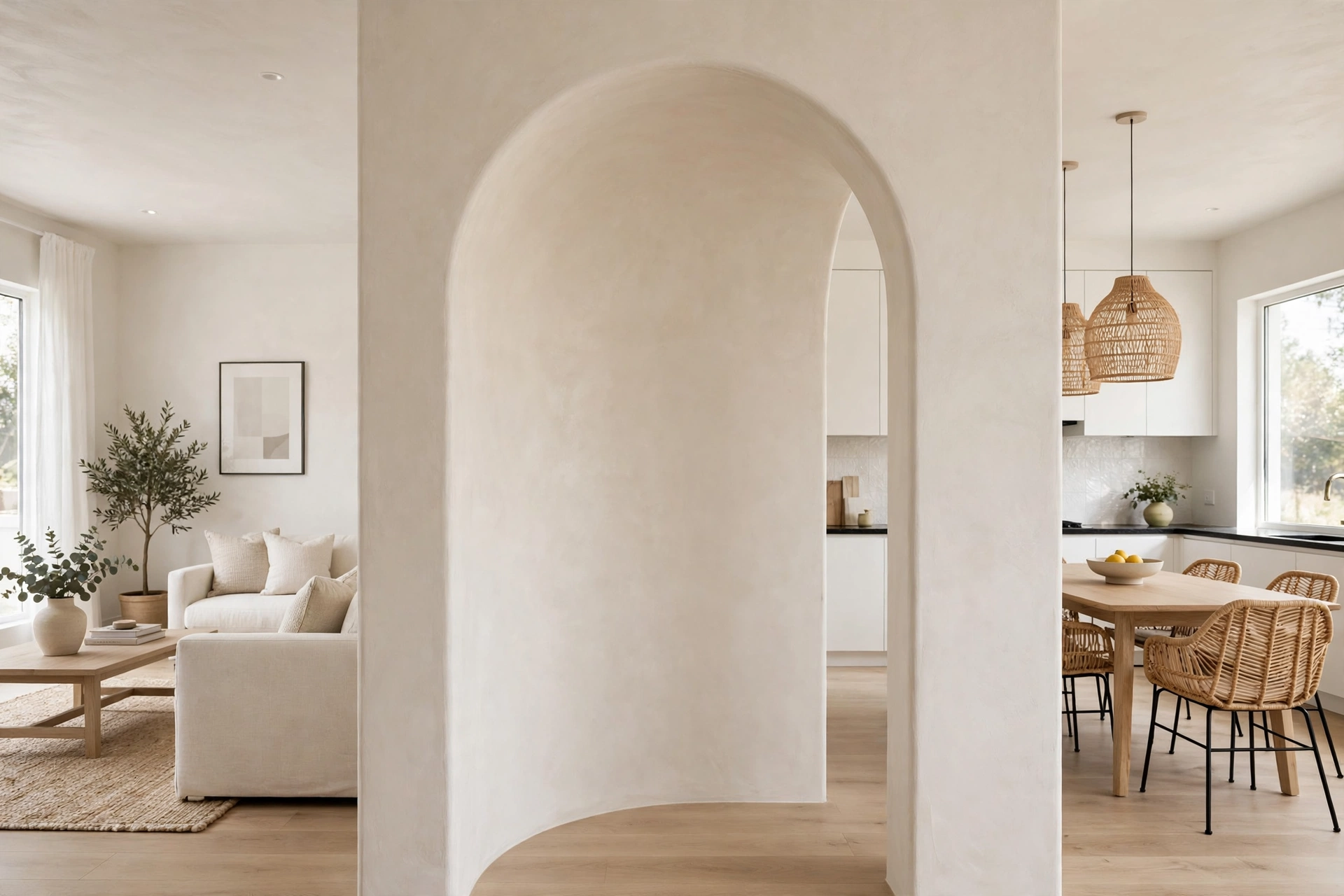
3. Curved Living Room Feature Wall
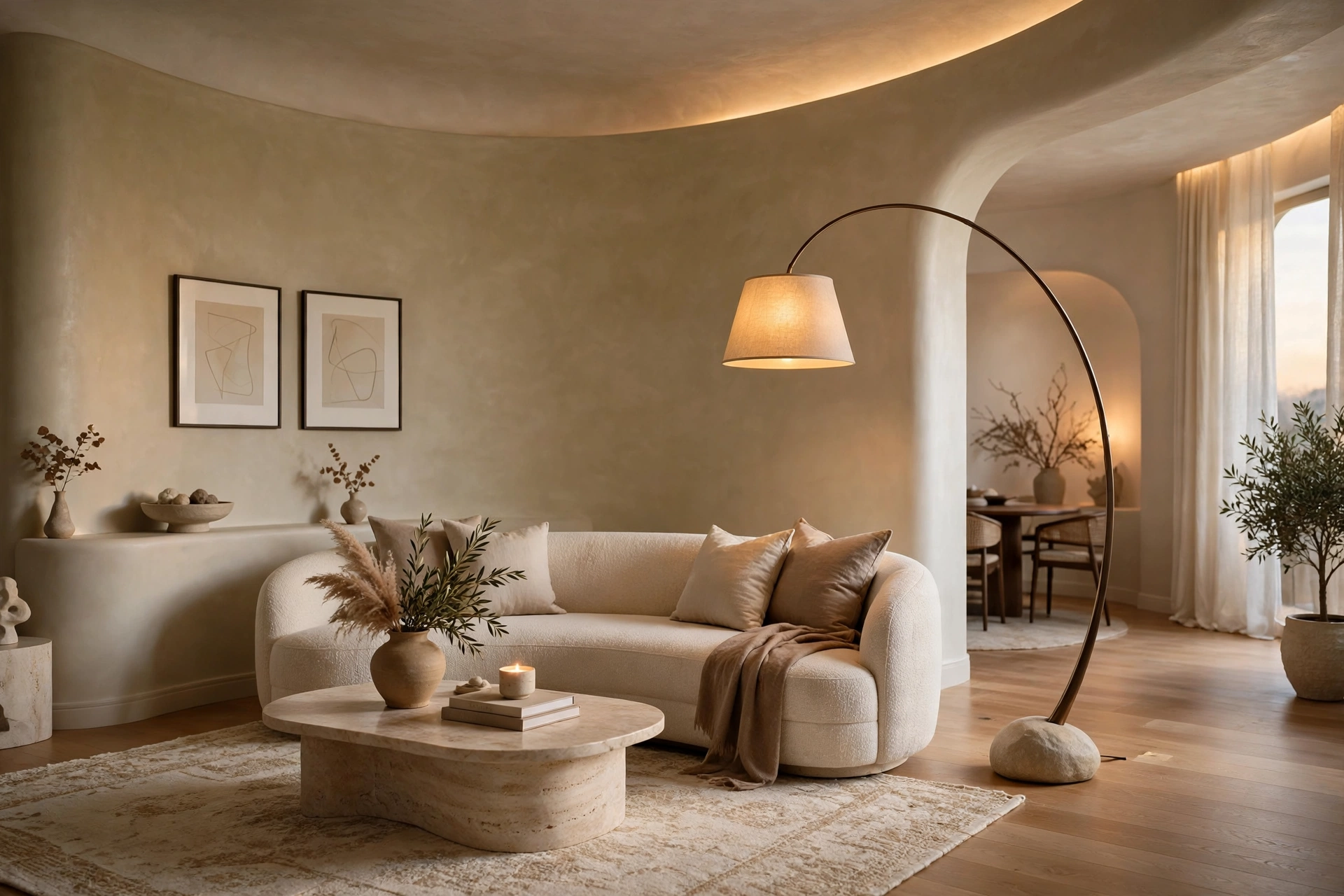
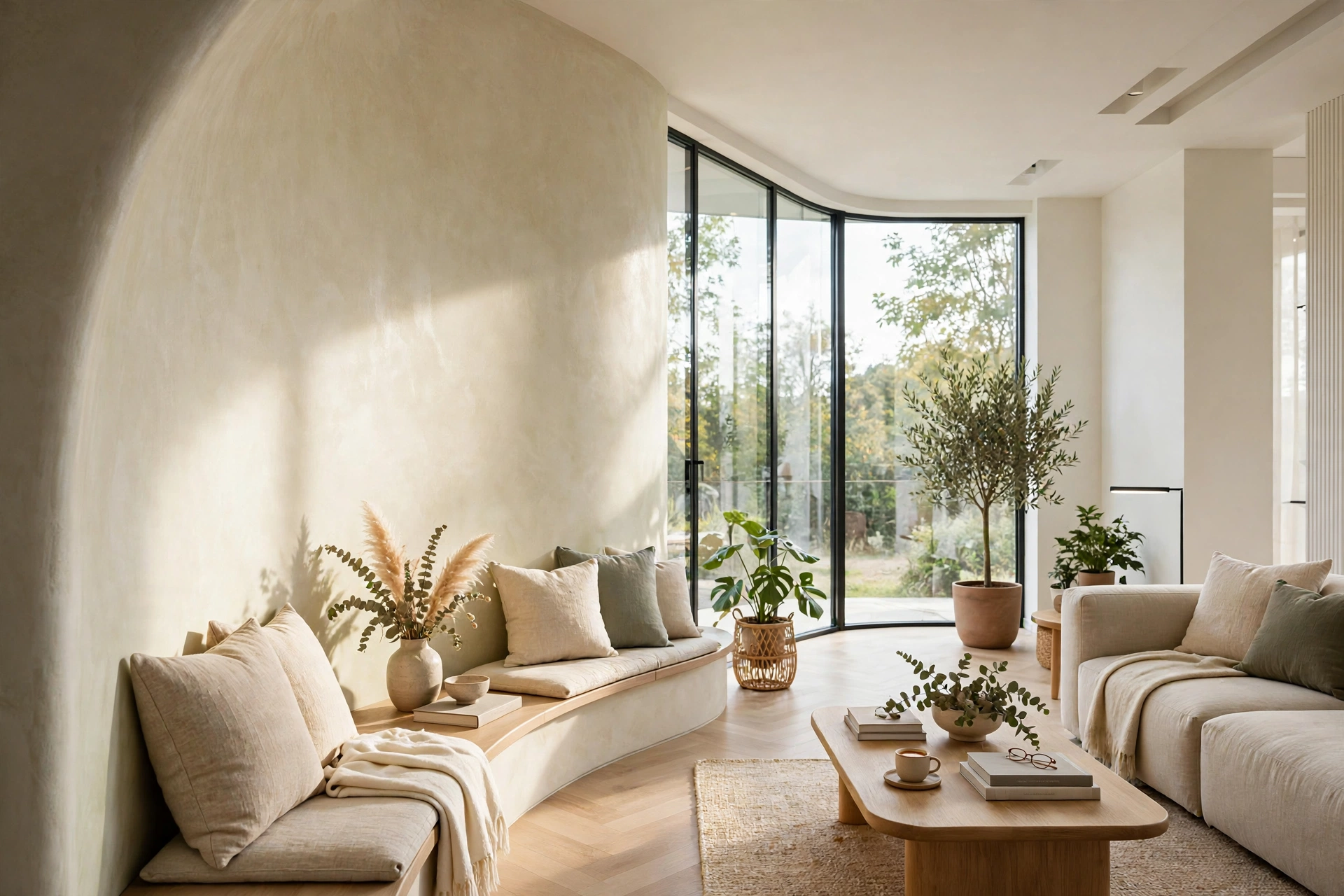
A curved feature wall gives a living room a natural focal point without bold colour or busy wallpaper. Bend the wall gently across three to four metres, and place a low, rounded sofa about 300 millimetres away so the seating echoes its shape.
Use a warm neutral paint or a soft limewash on the curve, since textured finishes catch the light and show off the shape beautifully. One common mistake is crowding the wall with tall bookcases, which hides the curve entirely, so keep furniture low and simple.

4. Rounded Plaster Fireplace Wall
A rounded fireplace wall turns the hearth into a sculptural centrepiece, with the chimney breast curving softly outward instead of jutting into the room. Build it from curved plasterboard or flexible plywood framing, skimmed with a 3-millimetre plaster coat.
Keep the mantel simple, perhaps a single floating oak shelf about 150 millimetres deep, so nothing competes with the shape. A curved fireplace also improves flow in the room, since nobody has to walk around a sharp corner near the fire.
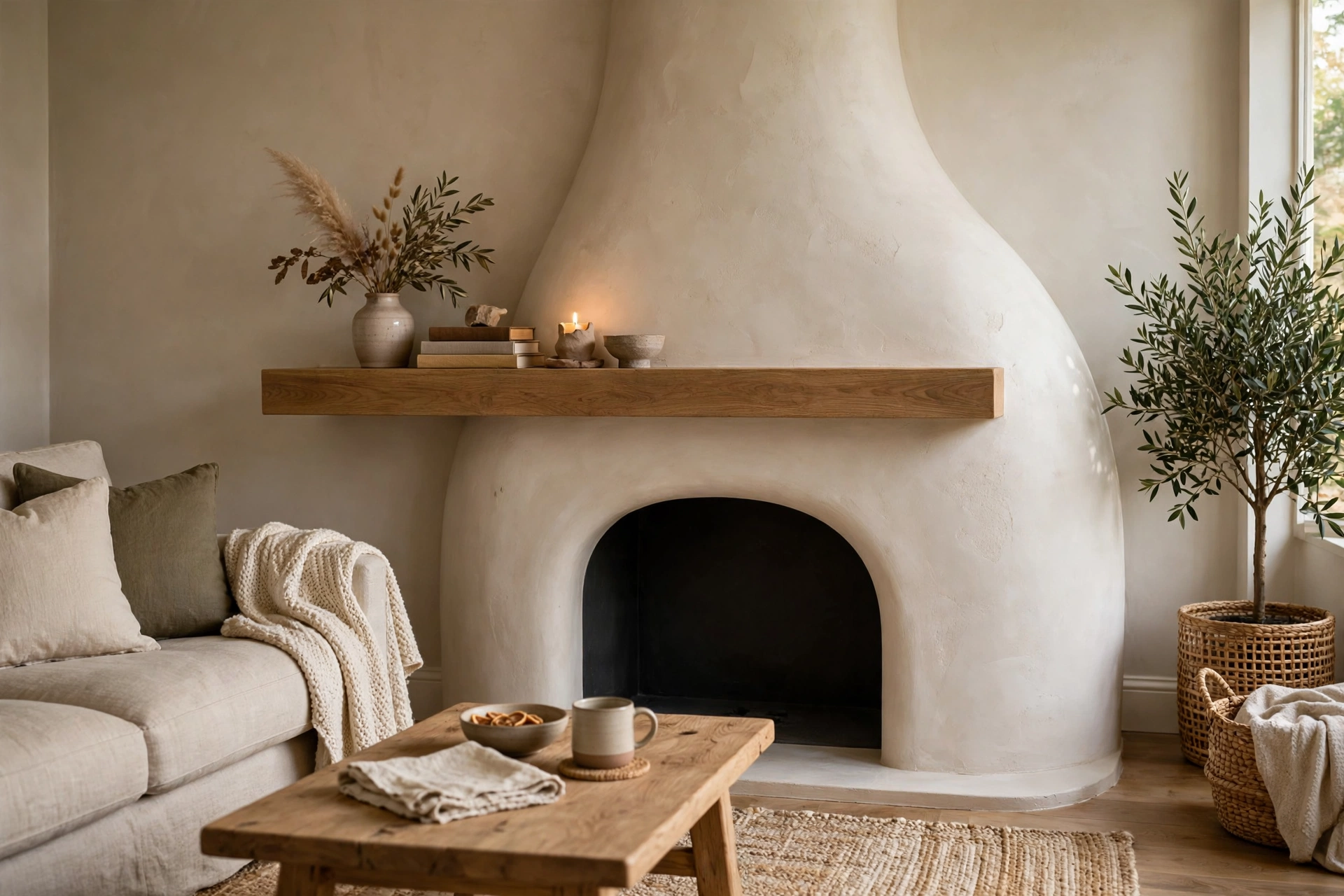
5. Planning a Home Interior with Curved Walls Around Light
Light is a curved wall’s best friend, because a gentle curve catches sunlight and shadow as flat walls never do. Place curves near windows, and leave at least one metre of clear wall beside a window so daylight can play across the plaster.
Wall washers mounted 300 millimetres from the ceiling will graze the curve in the evening and reveal its shape after dark. Avoid a single harsh ceiling light in the middle of a curved room, since flat overhead lighting flattens the very shape you built.
6. Curved Kitchen Island and Breakfast Nook
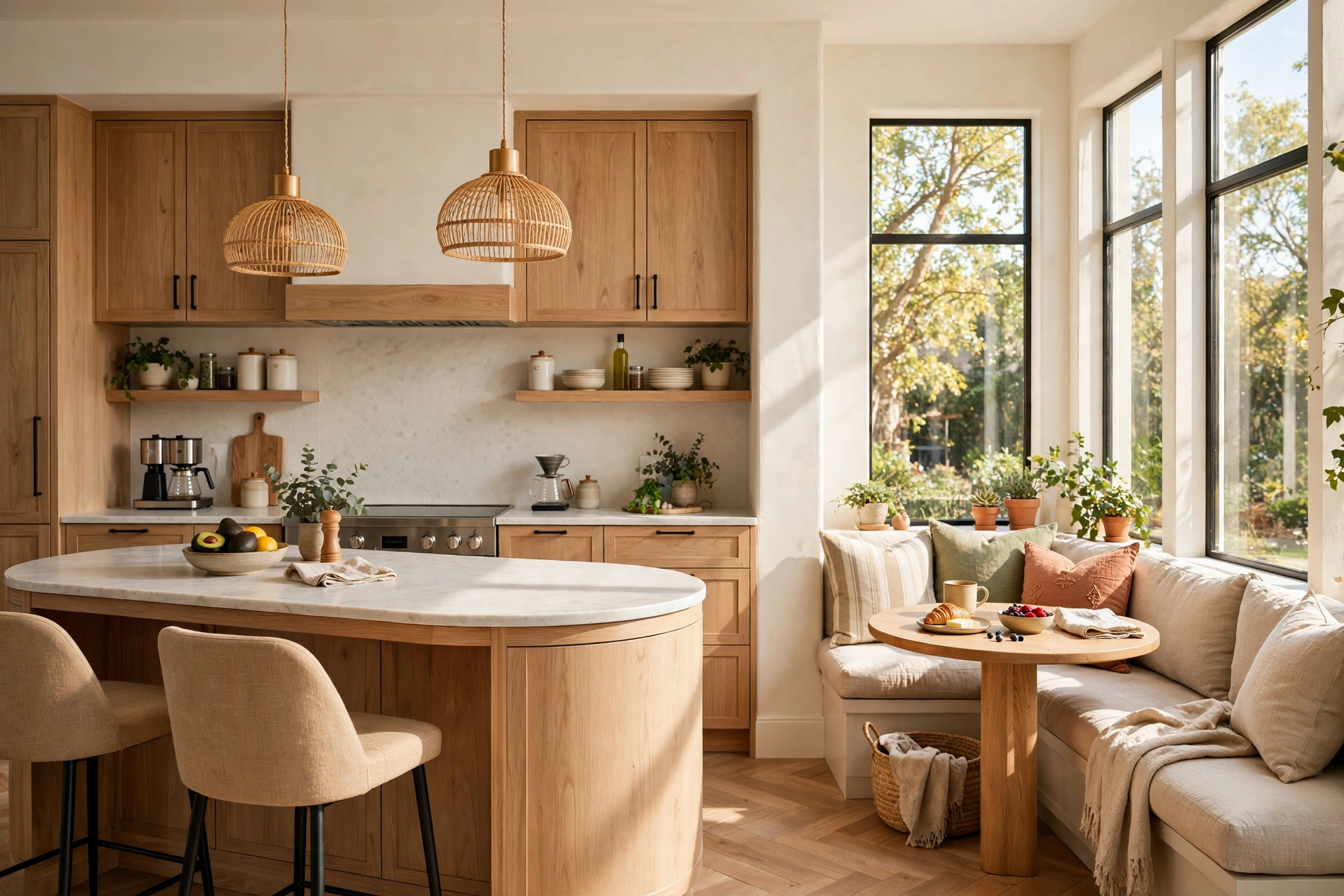
A curved kitchen island softens the hardest-working room in the house and makes it safer for families. Choose an island with a rounded end of at least 450 millimetres radius, and leave 1.1 metres of clearance so two people can pass even with the oven door open.
Pair the island with a curved breakfast nook, using a built-in banquette that follows the wall’s shape and a round pedestal table. Round tables suit curved nooks perfectly, since there are no corners to bump into during busy mornings.
7. Rounded Bathroom Walls and Wet Rooms
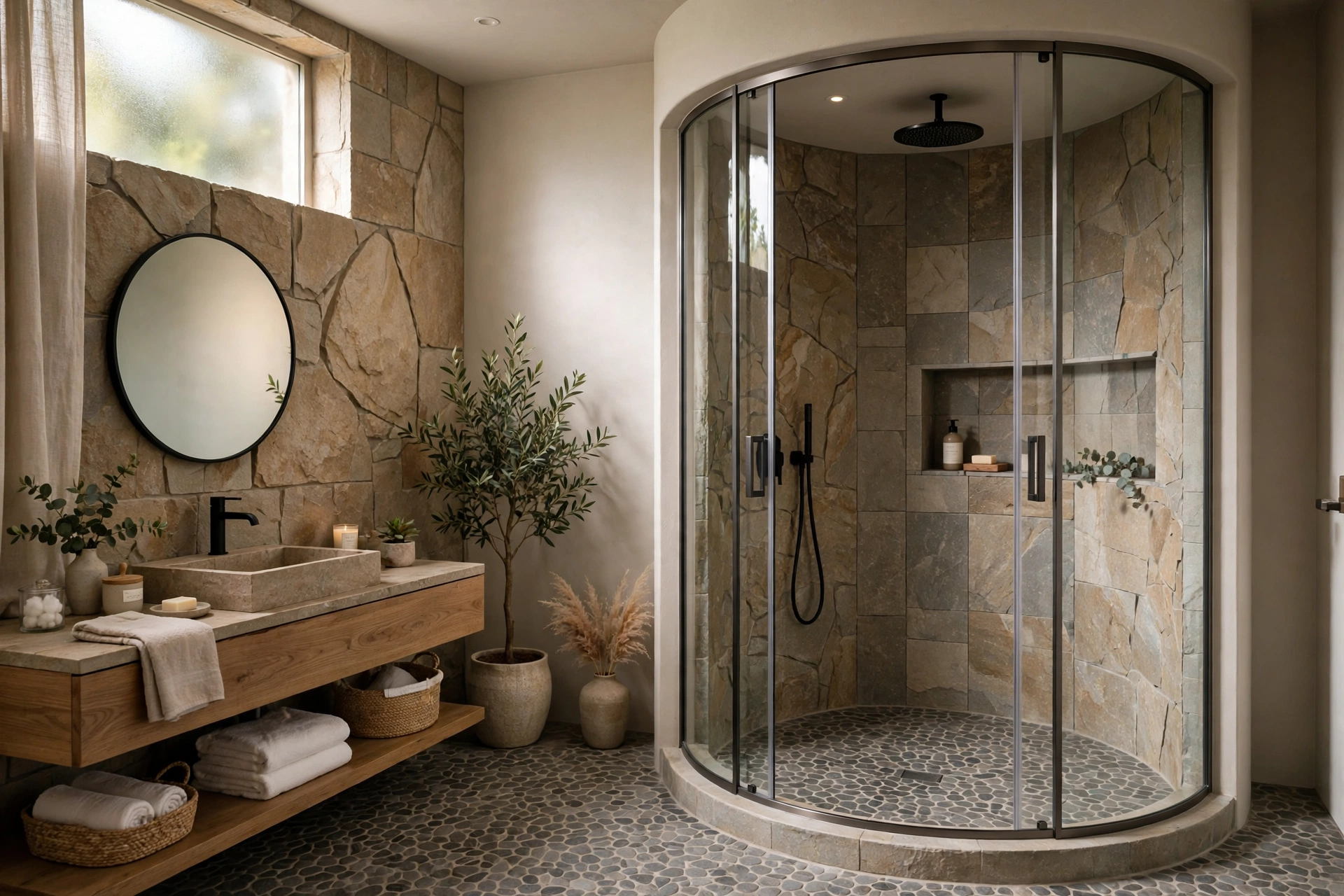
Rounded walls are ideal for bathrooms, where a curved shower enclosure feels luxurious and is far easier to clean than a tiled square corner. Build the shower curve with a radius of about 900 millimetres, which gives a comfortable standing area while keeping the rest of the bathroom usable.
Use large-format tiles or microcement on the curve, since small tiles need many grout lines that can crack on a bend. A curved vanity wall with a floating oak counter, about 500 millimetres deep, keeps the room feeling open and spa-like.
8. Curved Bedroom Headboard Wall
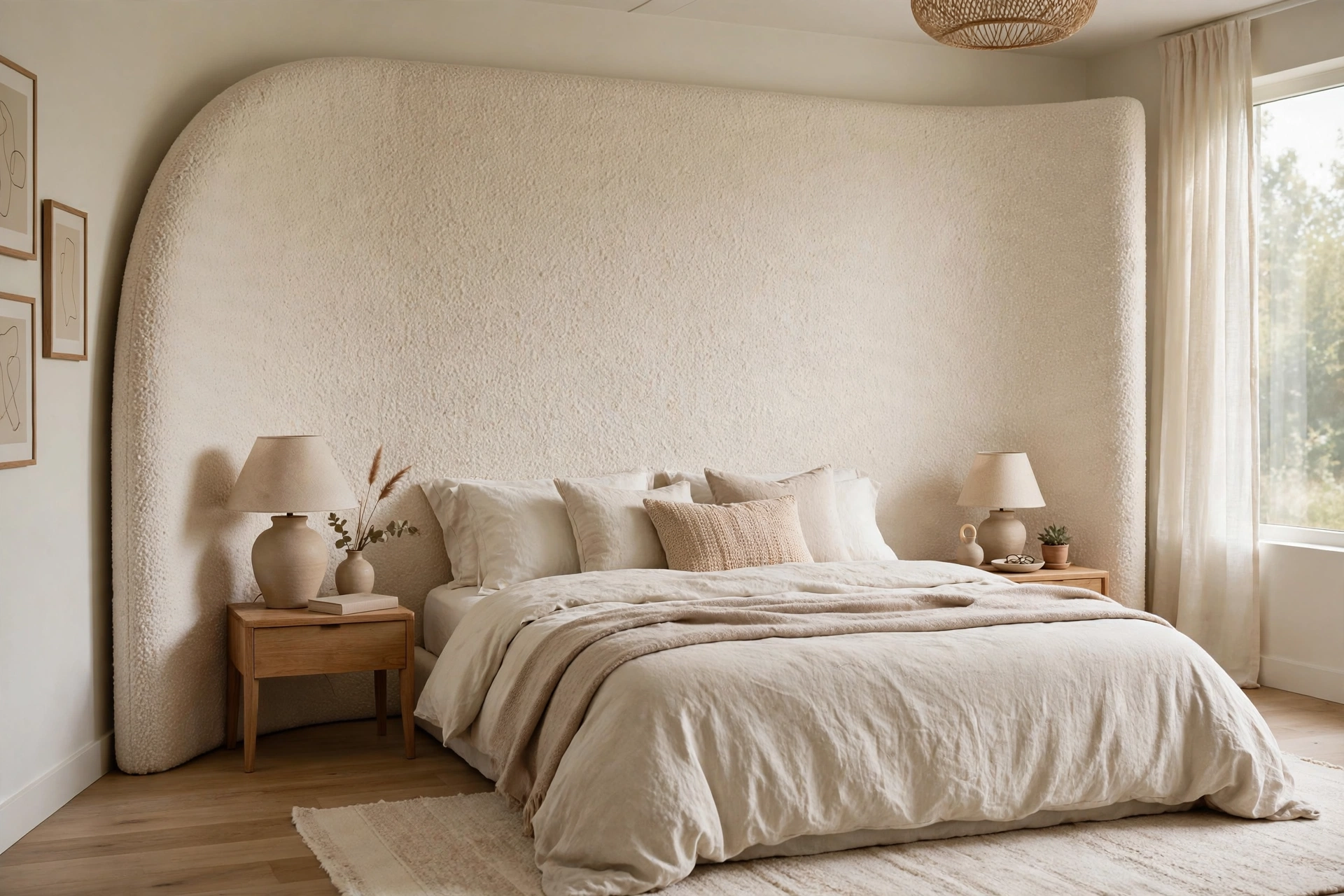
A curved headboard wall wraps the bed in a gentle embrace and makes the bedroom feel like a private retreat. Curve it across the full width of a king-size bed, about 1.9 metres, upholstered in soft bouclé or linen for a boutique-hotel look.
Mount reading lights directly on the curve at about 1.5 metres high, so each sleeper gets their own pool of light without a bulky bedside lamp. Keep bedside tables round and compact, no wider than 450 millimetres, to preserve the soft geometry.
9. Arched Niches and Display Shelves
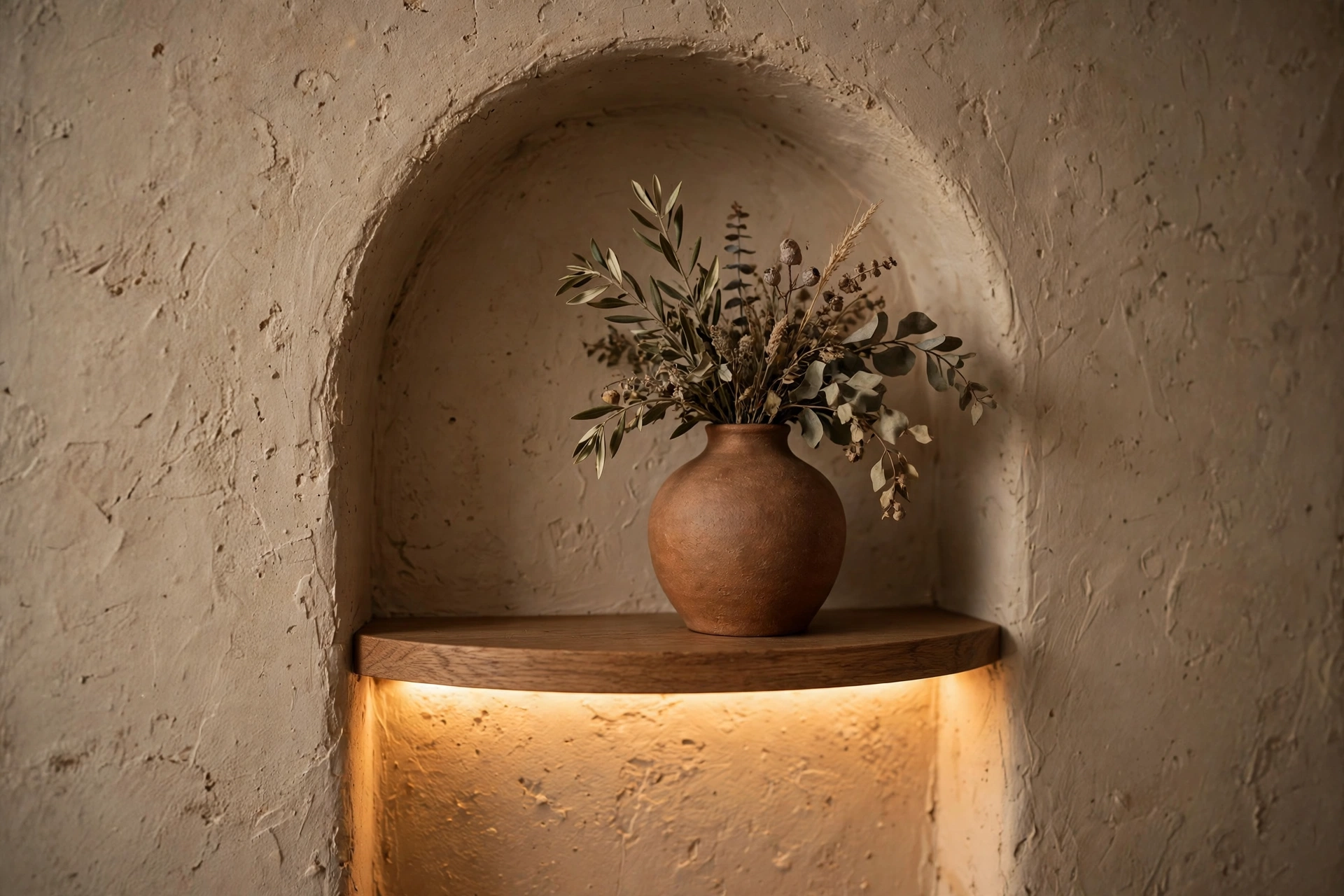
Arched niches are small curved recesses in a wall, perfect for displaying vases, sculpture, or one piece of art. Cut niches about 400 millimetres wide and 150 millimetres deep into a non-load-bearing wall, lined with the same plaster finish.
Add a tiny LED strip, hidden behind a 20-millimetre lip at the top of each niche, to make the display glow in the evening. The most common mistake is filling niches with clutter, so limit each niche to one or two beautiful objects.
10. Curved Staircase Wall
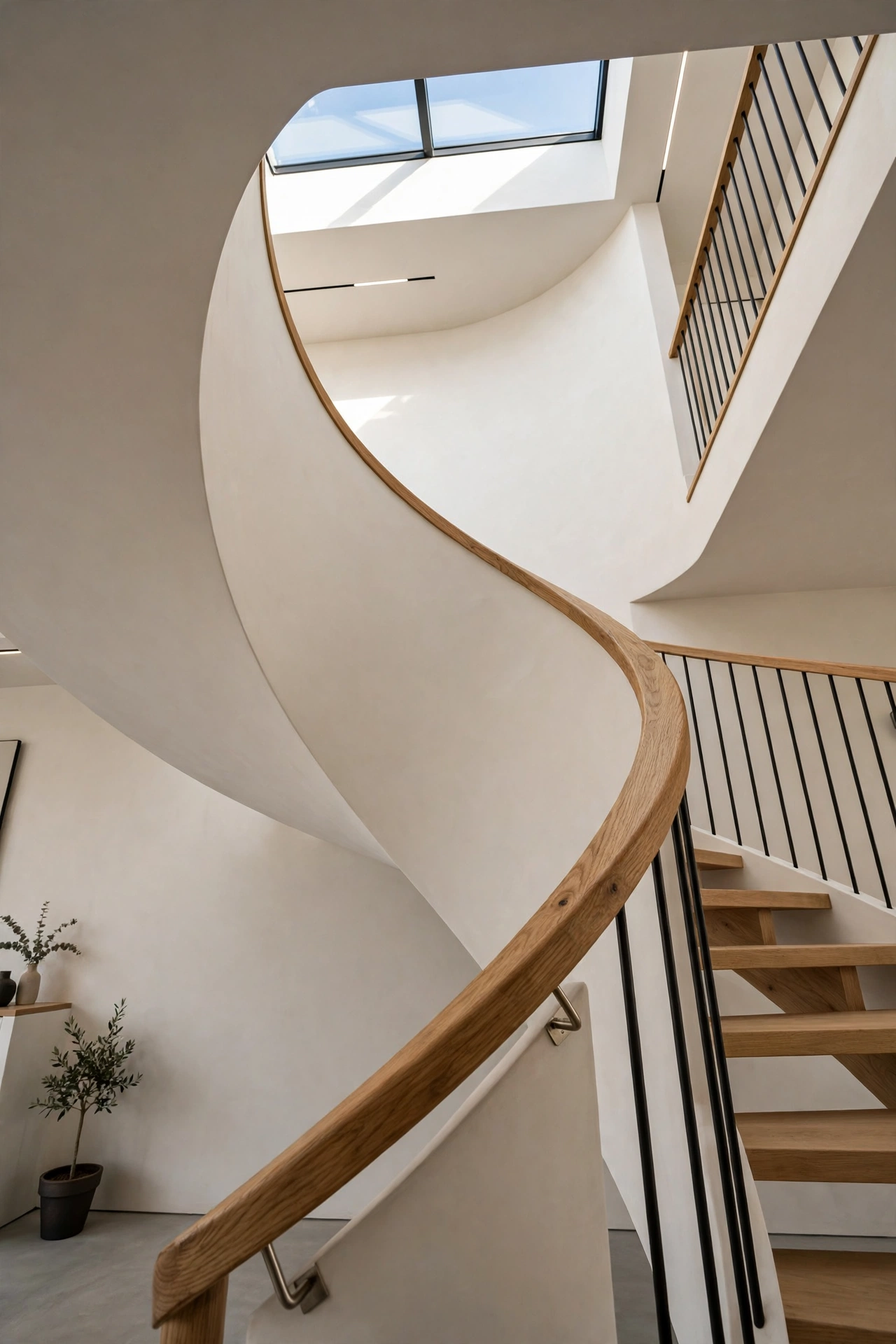
A staircase that follows a curved wall feels grand and graceful, turning an everyday journey between floors into a design feature. Allow a stairwell at least 2.4 metres wide for a gentle curve, and use a continuous curved handrail in oak or brass to guide the eye upward.
Paint the stair wall a shade lighter than the rest of the hall so the curve stands out in the vertical space. Avoid hanging large pictures on a curved stair wall, since frames sit awkwardly on a bend and distract from the sweep of the stairs.
11. Rounded Window Bays and Reading Corners
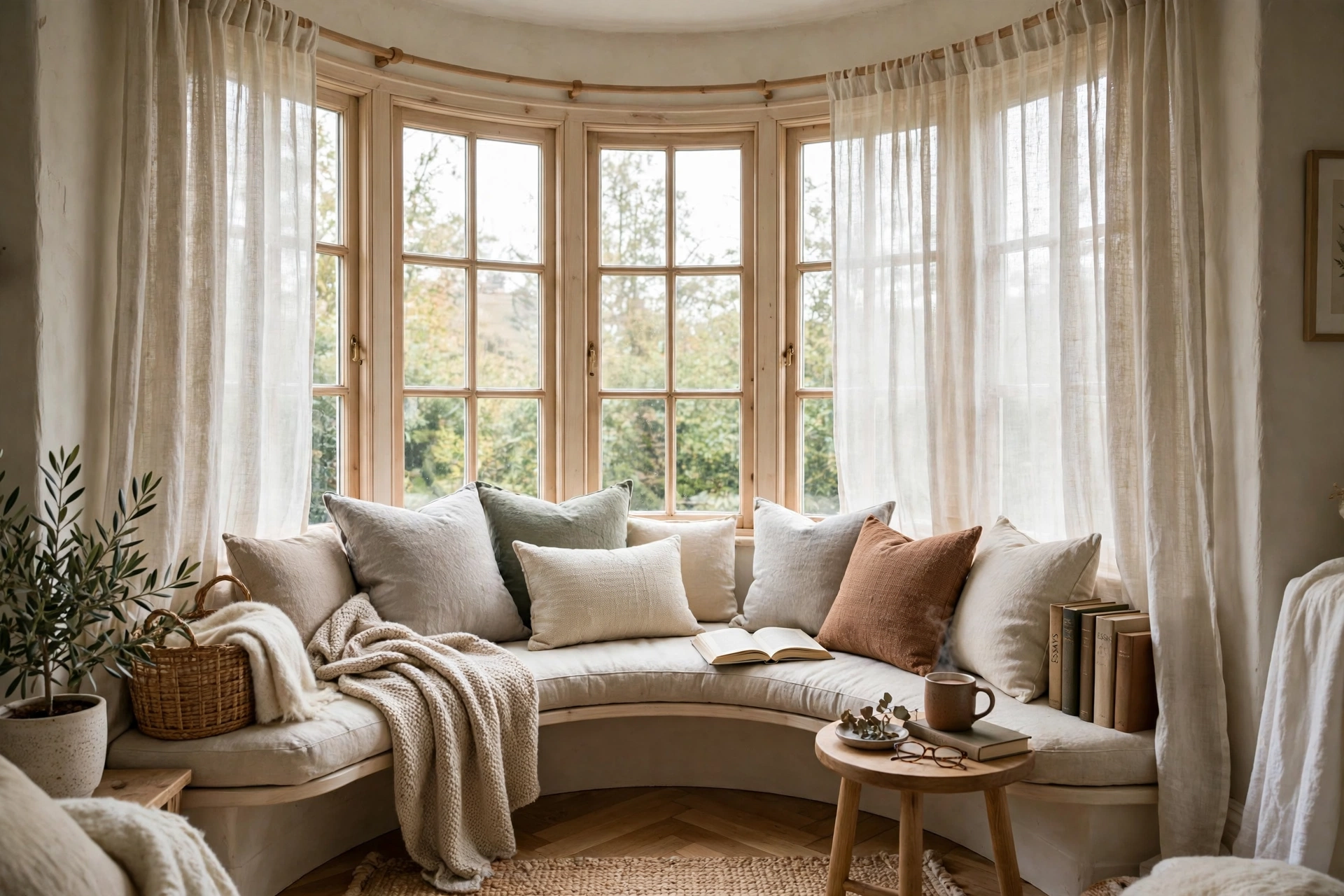
A rounded window bay turns an ordinary window into a favourite spot in the house, with a curved bench seat made for reading and daydreaming. Build the bench about 450 millimetres high and 600 millimetres deep, with storage drawers underneath for books and blankets.
Dress the bay with a made-to-measure cushion in a washable fabric, since a window seat gets daily use and plenty of sunlight. Sheer linen curtains hung on a curved ceiling track will follow the bay’s shape and filter the light beautifully.
12. A Home Interior with Curved Walls for Small Spaces
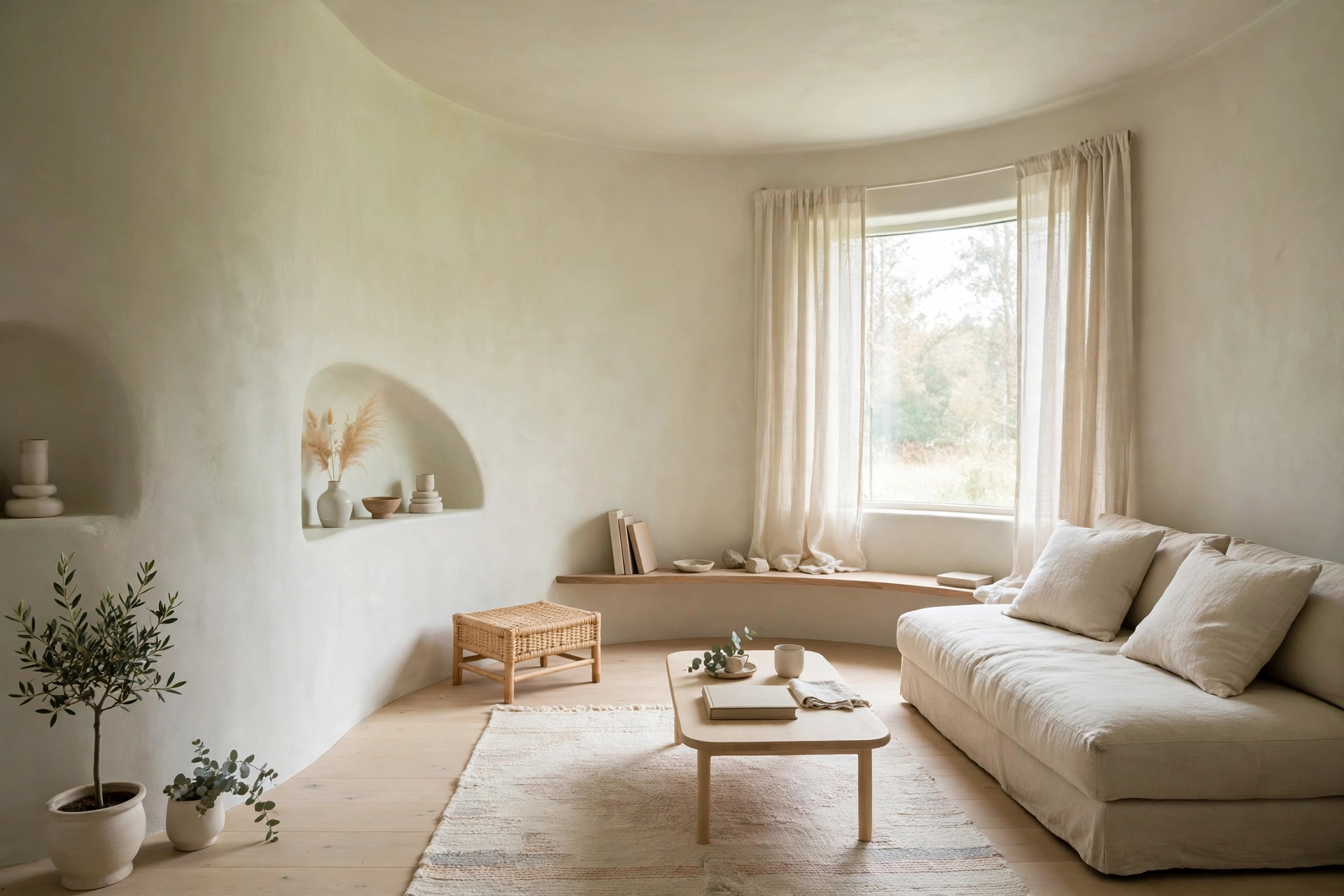
Small homes benefit most from curves, because a rounded corner frees floor space a square corner wastes. Replacing one sharp corner with a 300-millimetre-radius curve can gain room for a small stool or tall plant, while making the room feel less cramped.
In a studio or small apartment, use a single curved partition instead of several walls, so light and air keep moving through the space. Keep the palette pale and the furniture low, since dark colours and tall pieces will fight the openness the curve creates.
13. Curved Dining Nook
A curved dining nook makes everyday meals feel special, with a banquette that hugs the wall and invites everyone to slide in together. Build the banquette seat 450 millimetres high with a backrest angled at about 100 degrees, so long dinners stay comfortable for every guest.
Choose a round or oval table, roughly 1.1 metres across for four people, so nobody sits at an awkward corner. A pendant light hung 750 millimetres above the table will centre the nook and cast a warm glow over the whole curve.

14. Soft Curves in the Home Office
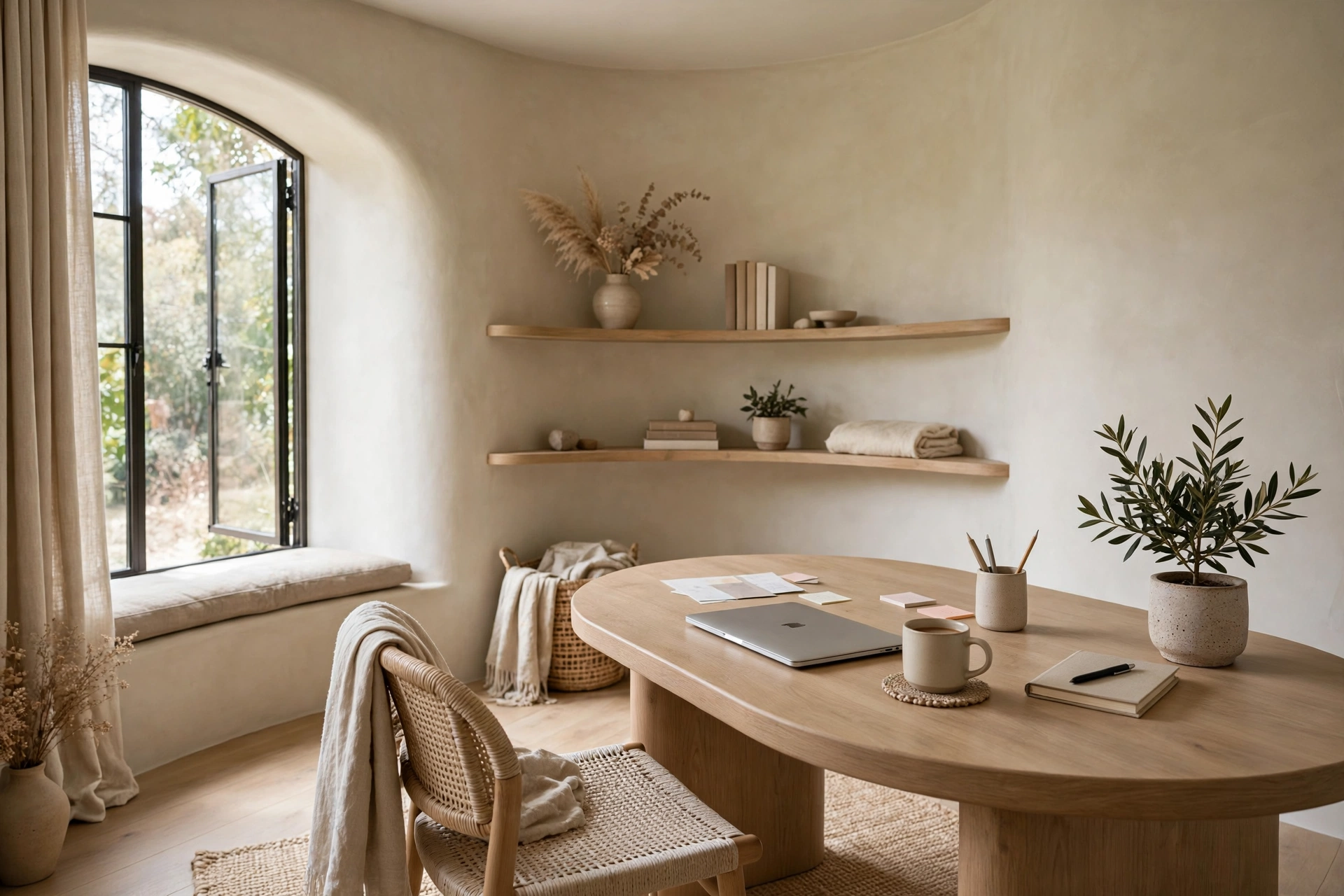
A home office with a curved wall feels calmer than a square box room, which helps concentration during long working days. Curve one wall behind the desk with a gentle radius, and place a rounded desk about 1.4 metres wide against it so the workspace follows the wall’s flow.
Add acoustic felt panels in a soft curve-friendly shape to cut echo, since curved plaster can bounce sound around a small room. Keep shelving open and low, no higher than 1.8 metres, so the office stays bright and the curve stays visible.
15. Curved Ceiling Coves and Lighting
Curved ceiling coves carry the soft-line theme overhead, hiding LED strips in a smooth channel where wall meets ceiling. Build the cove with a radius of about 150 millimetres, and run a warm-white LED strip at 2700K inside it for a gentle glow that flatters every skin tone.
Put the cove lighting on a dimmer so the room can shift from bright daytime work to a soft evening mood. Avoid recessed spotlights in a curved cove, since their hard circles of light break the smooth line the cove is meant to create.

16. Rounded Furniture to Echo the Walls
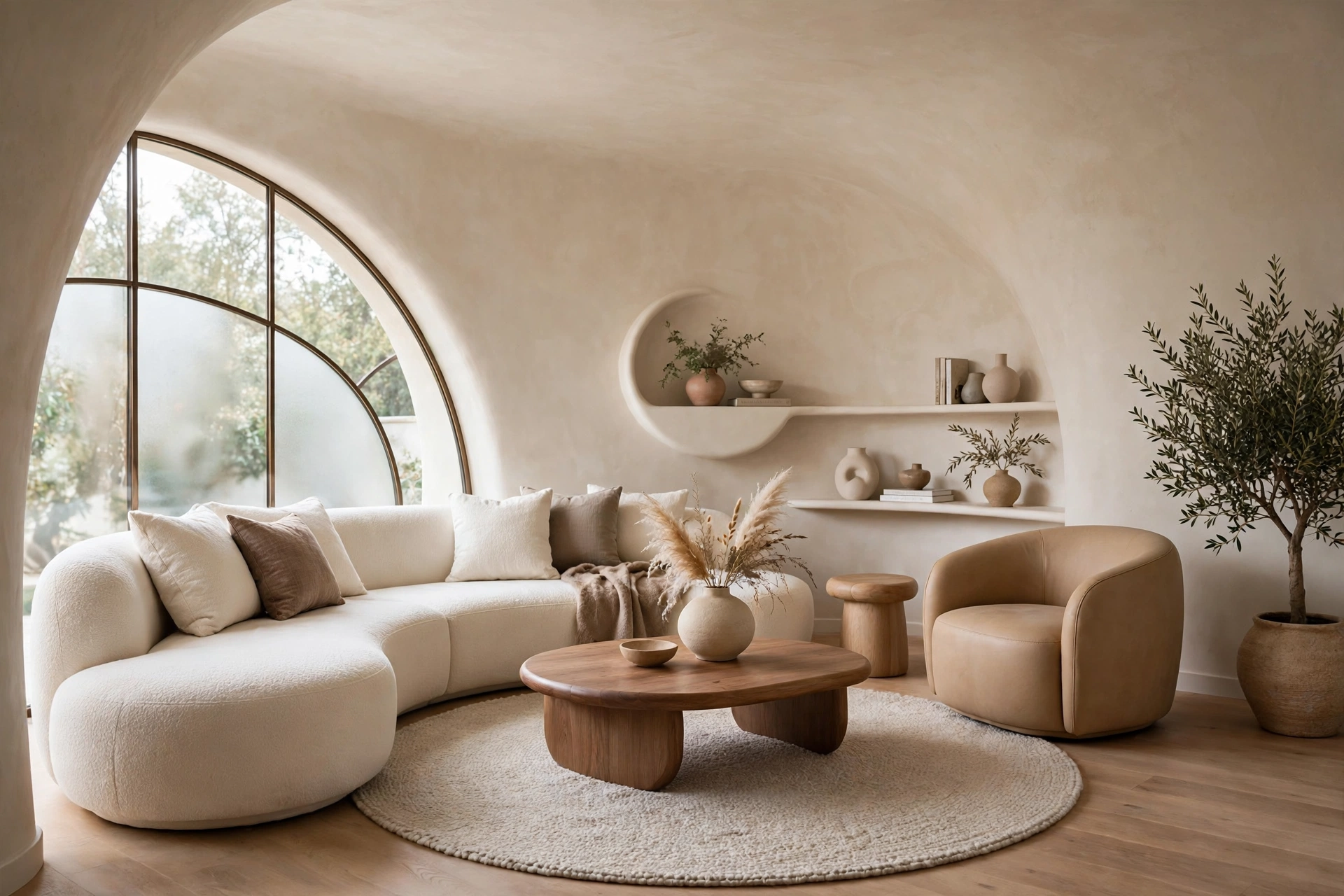
Rounded furniture completes a curved interior, because angular chairs and sharp-edged tables clash with soft walls. Choose a sofa with curved arms, a round coffee table about 900 millimetres across, and dining chairs with gently rounded backs to keep the whole room in harmony.
Mix materials rather than shapes: pair a curved bouclé sofa with a travertine round table and a bentwood chair. One mistake to avoid is buying every piece in the same curve, which can make the room feel like a theme park.
17. Curved Hallway That Feels Wider
Hallways are often the narrowest, darkest parts of a home, and a curved wall can transform them completely. Bow one hallway wall outward by just 150 millimetres at its midpoint, and the passage will feel noticeably wider without stealing space from the rooms beside it.
Run a slim picture ledge, no deeper than 100 millimetres, along the curve for art and family photos, since deep shelves would narrow the walkway again. Paint the hallway in a light warm white, which bounces light around the bend and keeps the passage bright.

18. Textured Plaster and Limewash Finishes
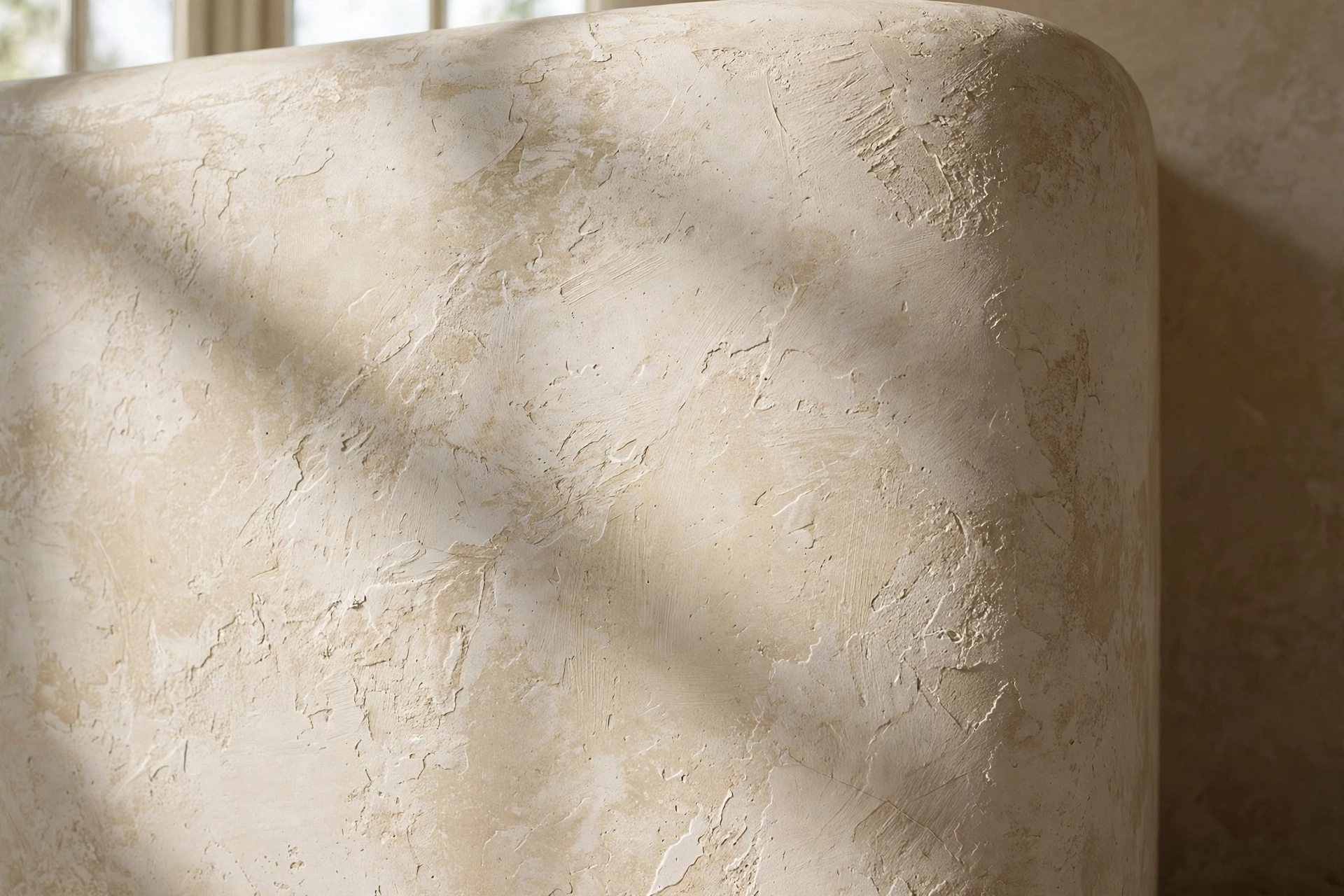
The finish you choose makes or breaks a curved wall, because smooth curves deserve a surface that shows off their shape. Limewash applied in two thin coats gives a soft, cloudy depth that flat emulsion paint cannot match, and it suits curves in both modern and Mediterranean-style homes.
For a more tactile look, try a fine-grained clay plaster, applied about 2 millimetres thick and burnished with a plastic trowel. Test any finish on a curved sample board first, since a texture that looks subtle on a flat sample can appear much stronger on a bend.
19. Curved Partition Walls Instead of Doors
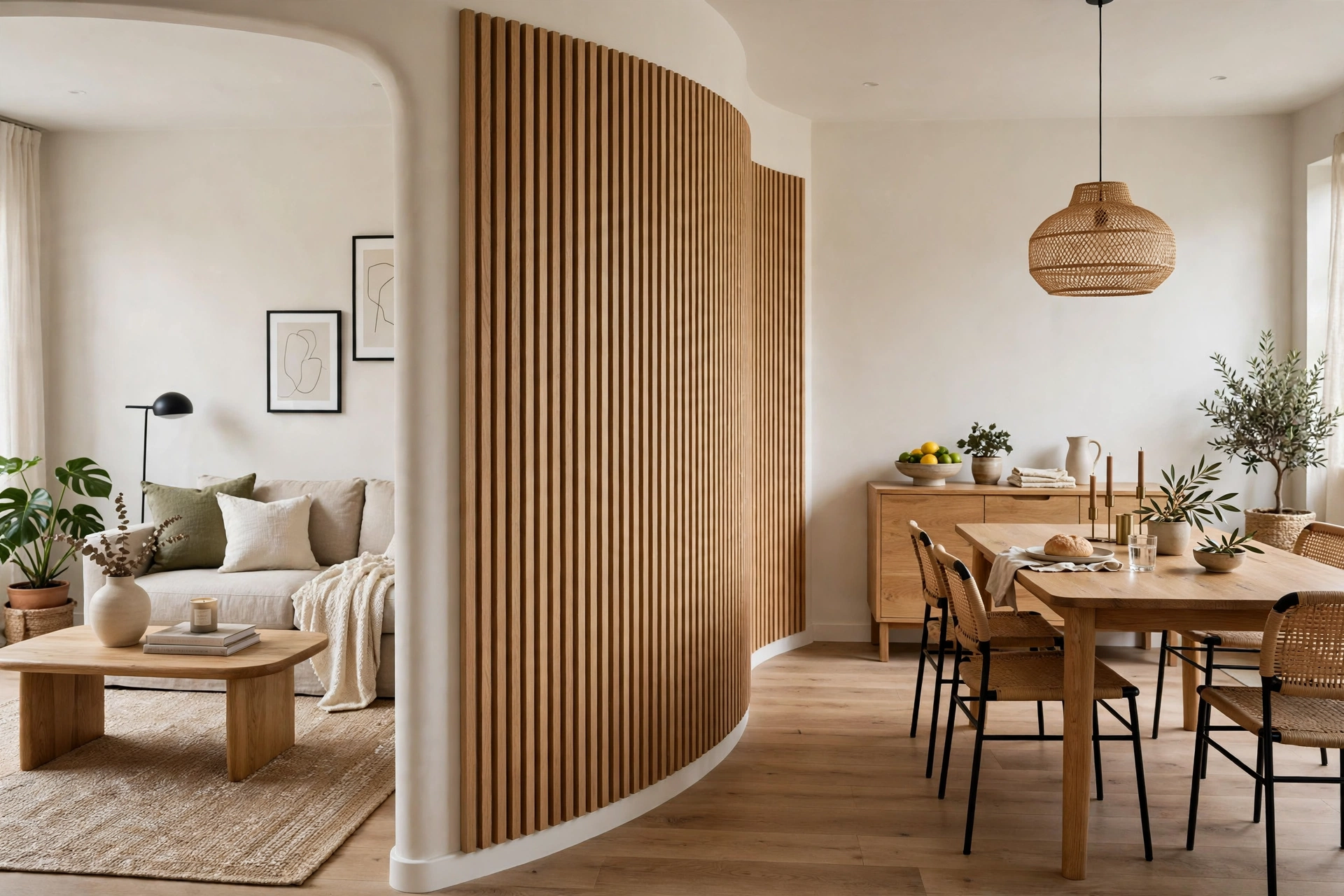
A curved partition wall can divide a large room into zones without doors, keeping the home open while giving each area its own identity. Build it as a freestanding curve about 2.4 metres long, stopping at least 600 millimetres short of the opposite wall.
Use the partition to hide a television wall or work zone from the seating area, capped with a curved oak shelf for plants. Avoid building it all the way to the ceiling, since a full-height wall would block light and defeat the open layout.
20. Budgeting a Home Interior with Curved Walls
Curved walls cost more than straight ones, so a realistic budget keeps the project enjoyable. Expect curved plasterboard work to add roughly 20 to 30 percent to a standard wall’s cost, and save money by curving one hero wall per room.
Arched doorways and curved niches are the most affordable ways to get the look, since they use standard framing with a simple curved template. Get at least two quotes from plasterers who have curved work in their portfolio, because an inexperienced finish will show every flaw on a bend.
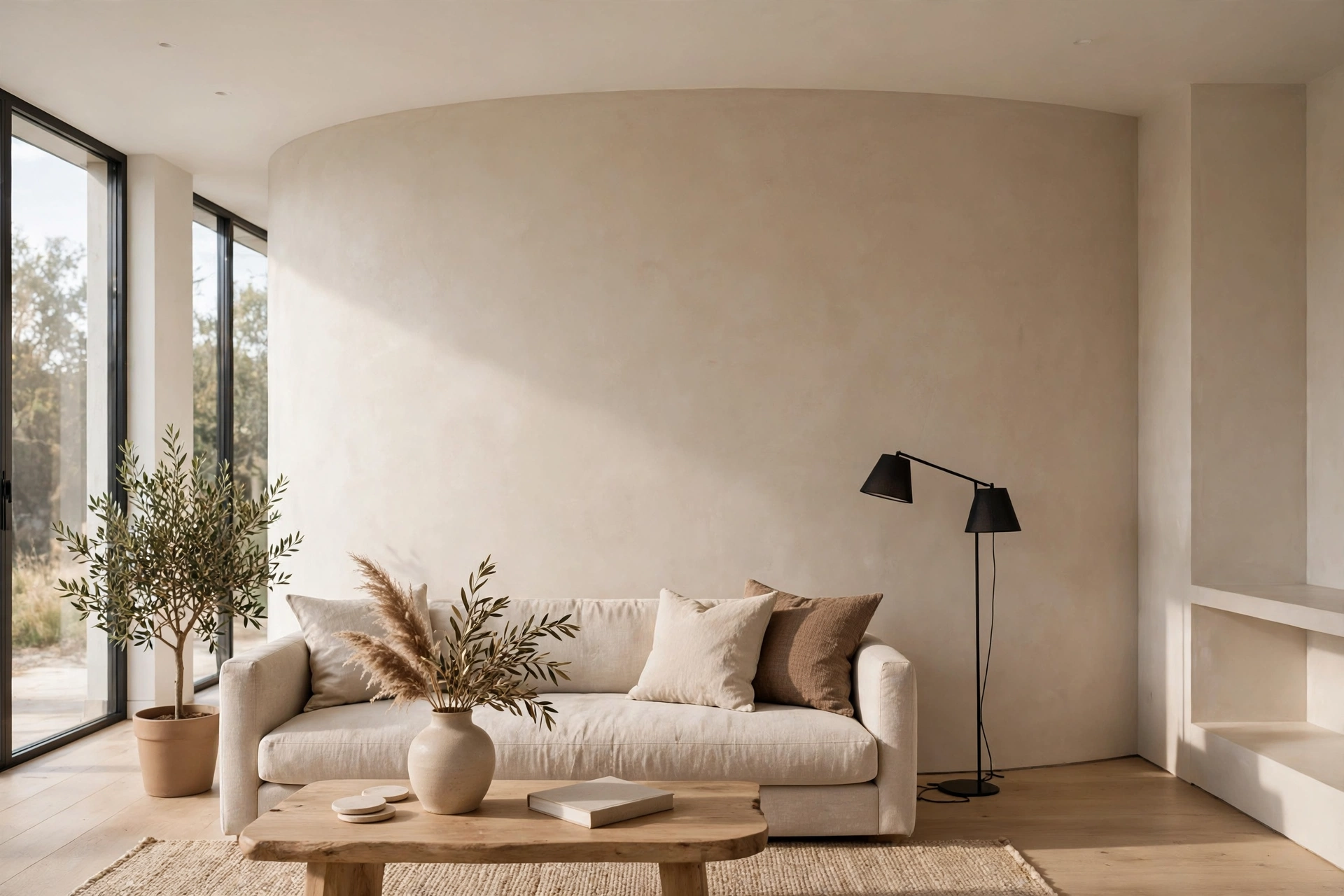
21. Curved Walls in Open-Plan Living
In open-plan homes, curved walls are the perfect tool for shaping space without closing it off. A single sweeping curve can separate the kitchen from the living area while keeping sightlines open, so the cook never feels cut off from family or guests.
Anchor the curve with a change of flooring, such as warm oak on the living side and stone tiles on the kitchen side. Keep ceiling height consistent across the open space, at least 2.7 metres, so the curve reads as one flowing room.
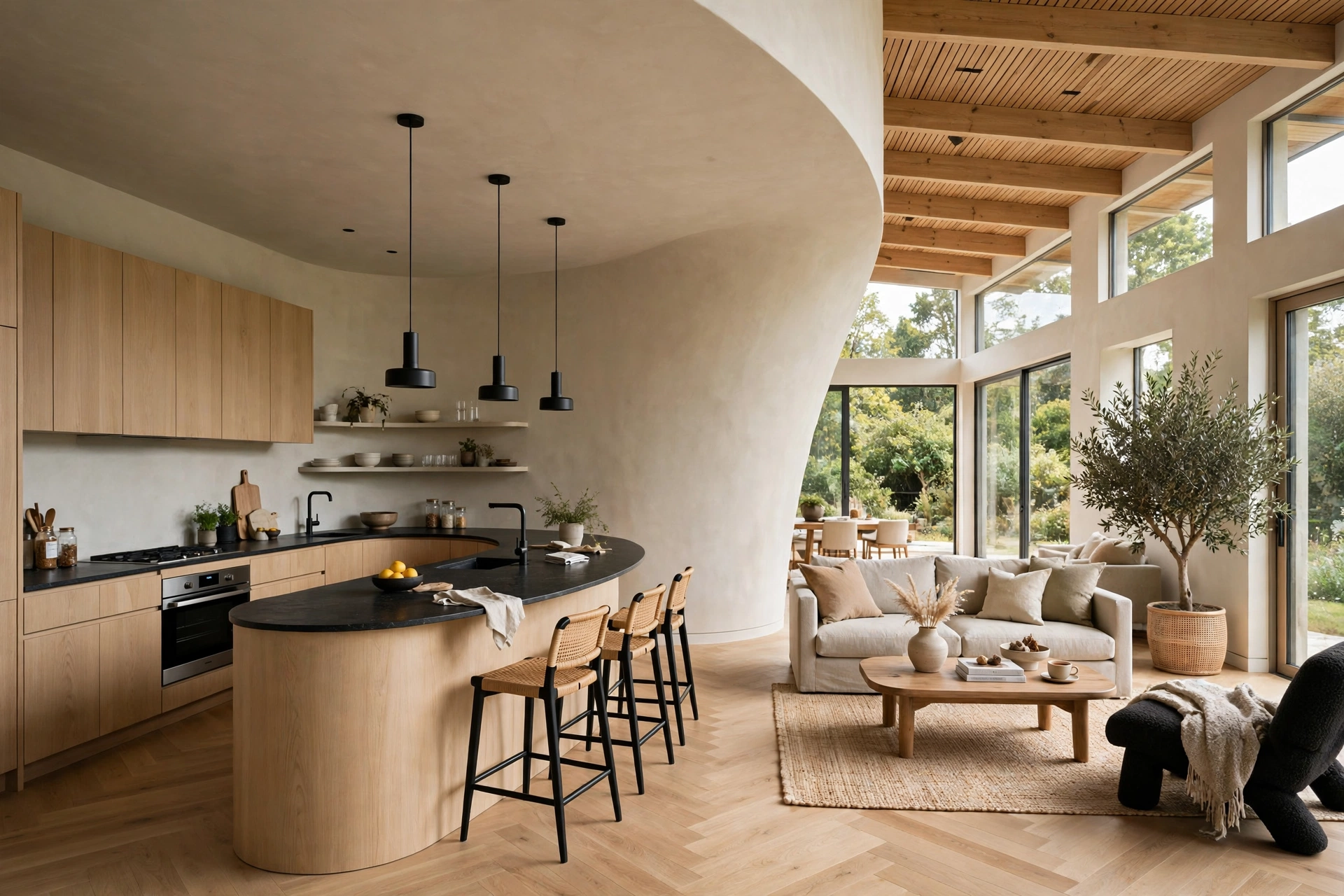
22. Arched Mirrors and Artwork on Curves
Arched mirrors and artwork are made for curved walls, since their rounded tops follow the wall’s geometry instead of fighting it. Hang an arched mirror about 1.6 metres high above a console table, centred on the curve, to double the light and make the room feel twice as deep.
For artwork, choose a single large arched canvas, roughly 900 by 1200 millimetres, rather than a grid of small square frames that would sit unevenly on a bend. Use two discreet wall fixings rated for the frame’s weight, since a slipping frame can damage soft plaster.
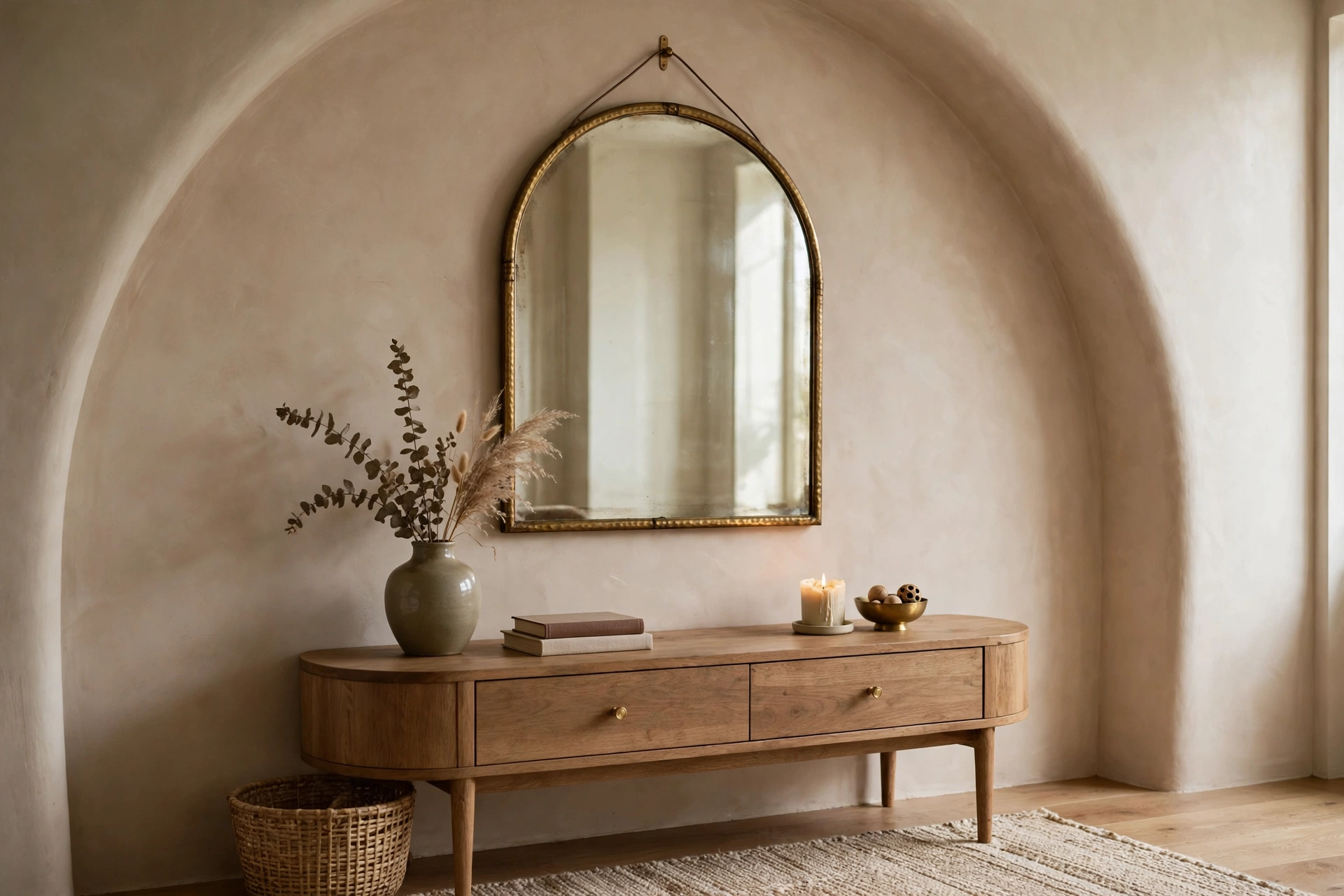
23. Curved Kids’ Room Walls
Children love curved rooms, and a curved wall in a kids’ bedroom feels playful, safe, and cozy. Round off the wall behind the bed with a soft curve, painted in gentle sage or warm cream so the room stays calm at bedtime.
Choose washable paint or a wipe-clean limewash, since little hands will touch the curve constantly, and keep furniture rounded too, with no sharp corners at head height. A curved reading nook with a 600-millimetre-deep bench gives children their own special corner to grow into.
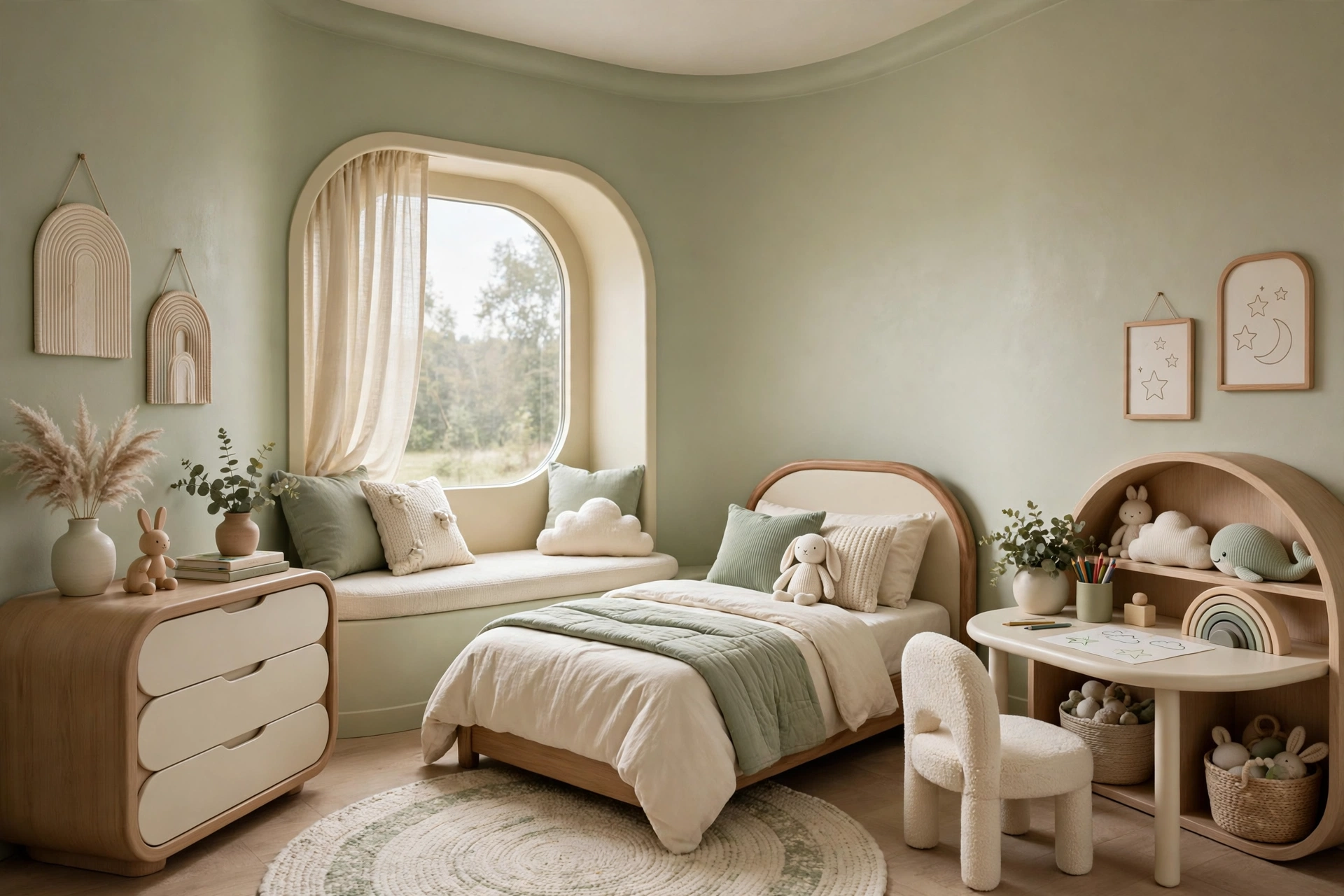
24. Mistakes to Avoid with Curved Walls
The biggest mistake with curved walls is overdoing them, because a home where every single wall bends can feel dizzying rather than elegant. Limit curves to one or two features per room, and let straight walls provide the calm background that makes the curves stand out.
Another common error is choosing a radius that is too tight, under 300 millimetres, which looks like a mistake. Always mock up the curve with cardboard or tape on the floor first, and live with the outline for a day before plastering.
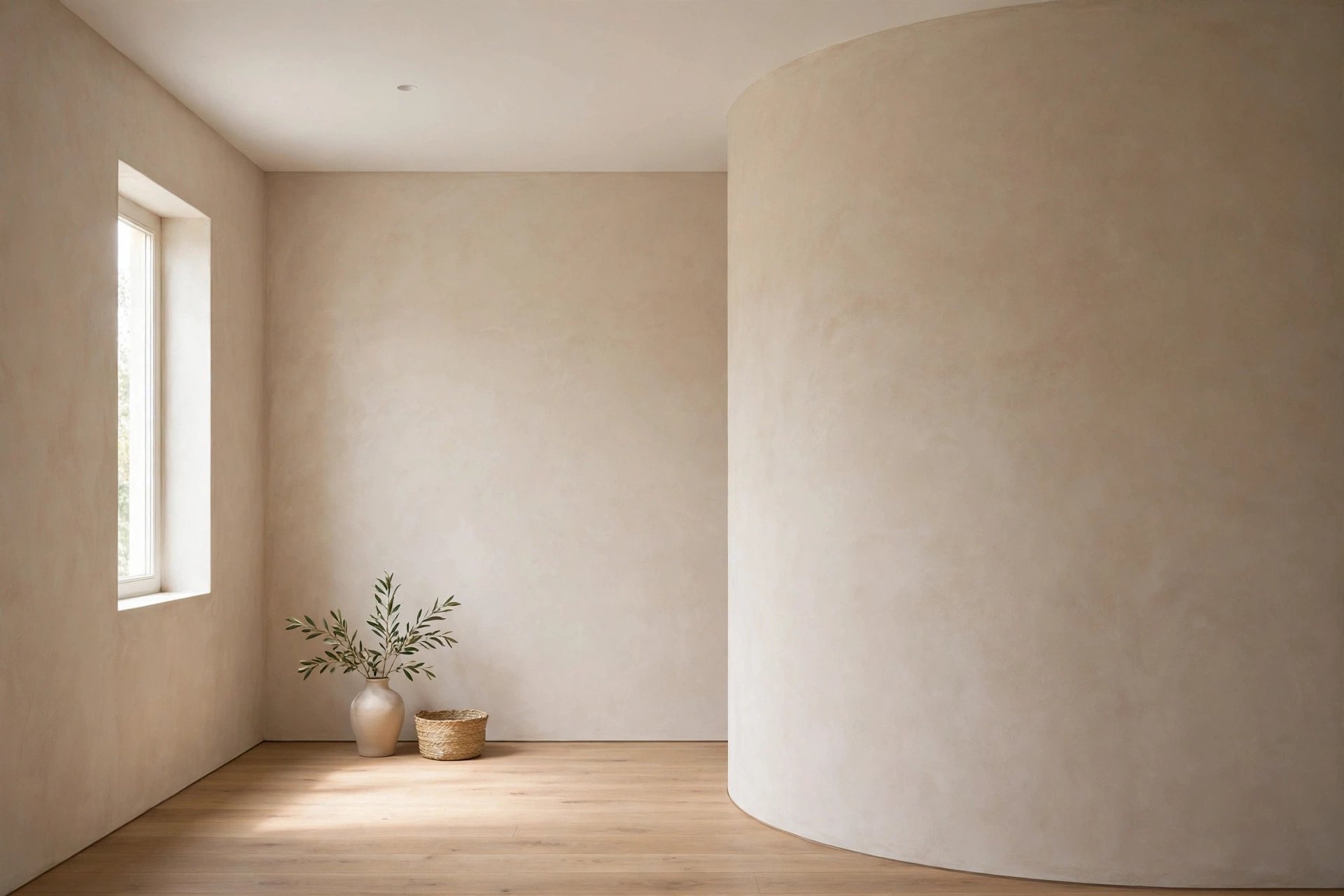
25. Finishing Touches for a Home Interior with Curved Walls
The finishing touches turn a curved interior from a building project into a home, with soft textiles, warm light, and objects you truly love. Add a curved floor lamp with a linen shade, a round tray, and one sculptural vase echoing the wall’s line.
Step back and look at each room as a whole, removing anything that fights the flow of the curves. A home interior with curved walls succeeds when every line feels soft, every room flows into the next, and the house feels calm and elegant.