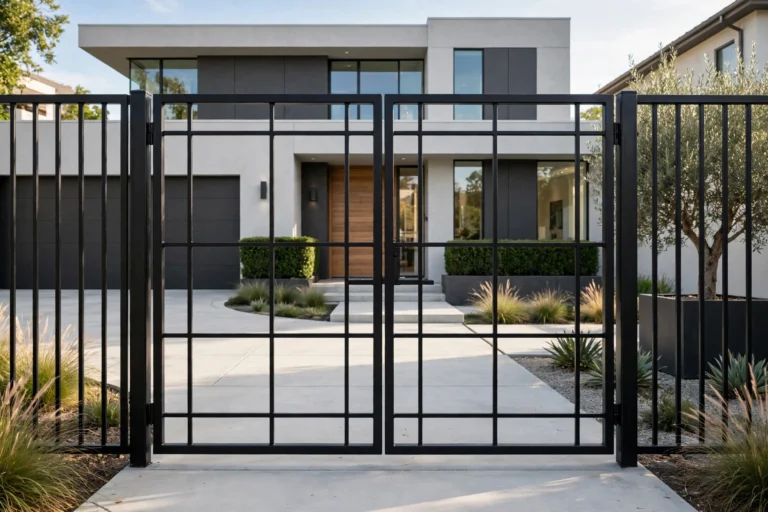
25 Modern Wood and Steel Main Gate
A modern wood and steel main gate is made for homeowners who love clean, contemporary design and want their entrance to feel warm, secure, and unforgettable the moment guests arrive. With rich timber slats, sleek black steel frames, and precise modern lines, the gate becomes the first statement of the whole home.
The secret is balancing the warmth of wood with the strength of steel, so the entrance feels inviting without ever looking soft. For a warm welcome just inside the door, see Farmhouse Entryway Ideas, and for the whole front of the house, explore Modern Front Yard Ideas for Instant Curb Appeal. The twenty-five ideas below will help you design a wood and steel gate of your own.
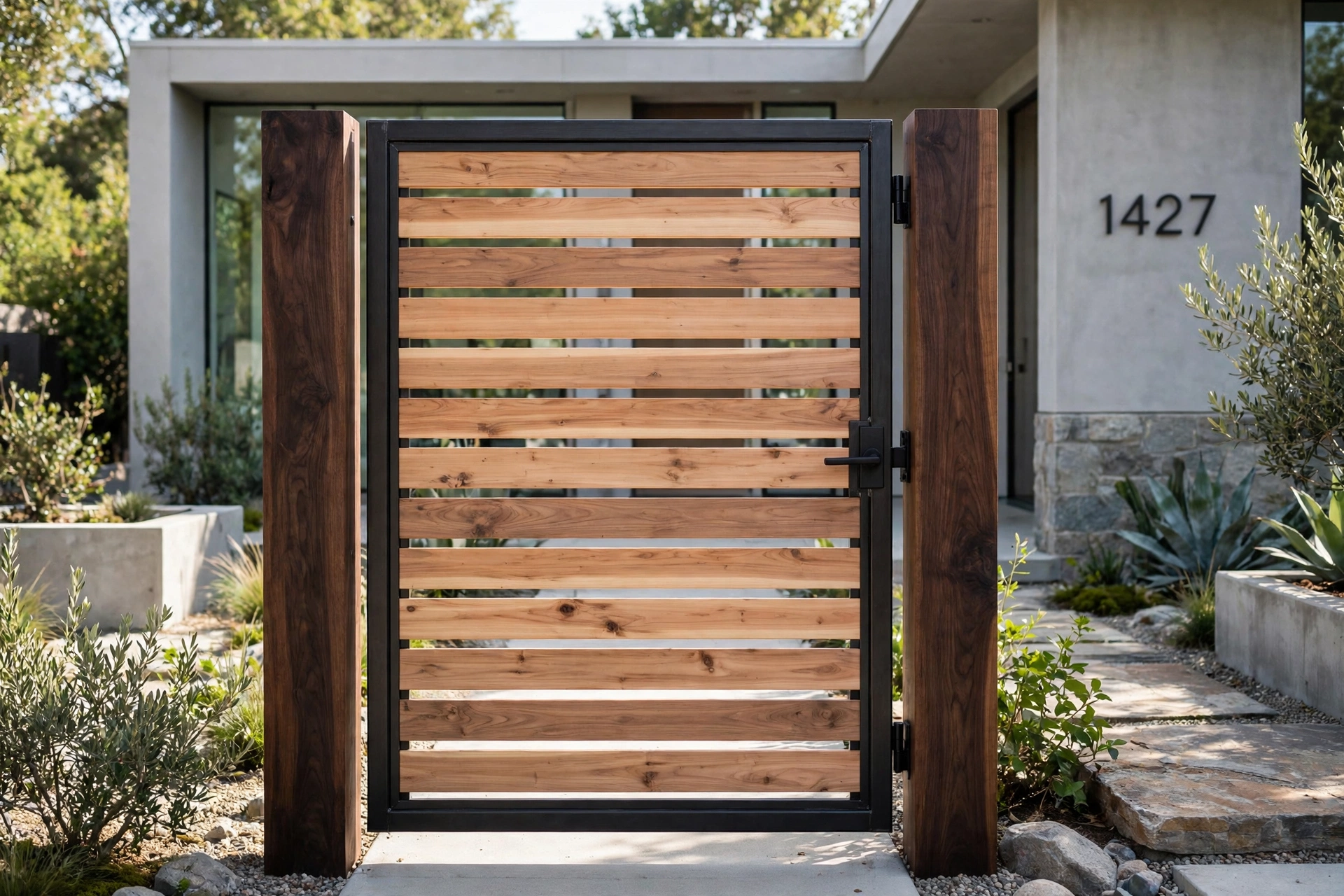
1. A Bold First Impression with a Modern Wood and Steel Main Gate
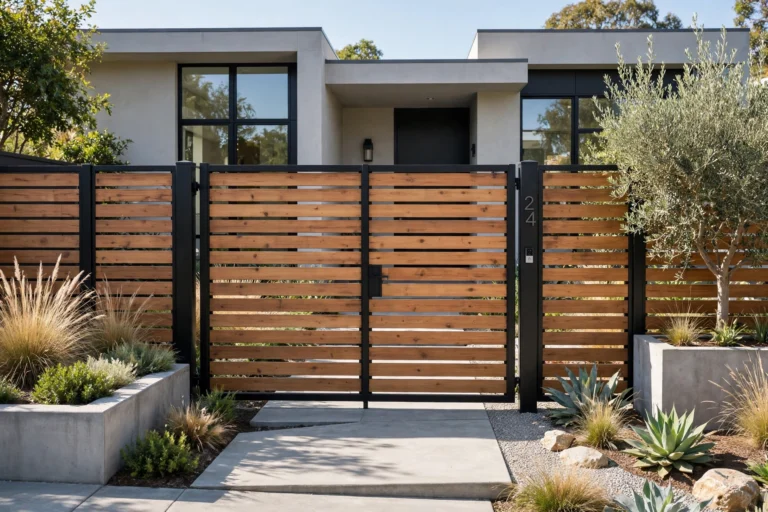
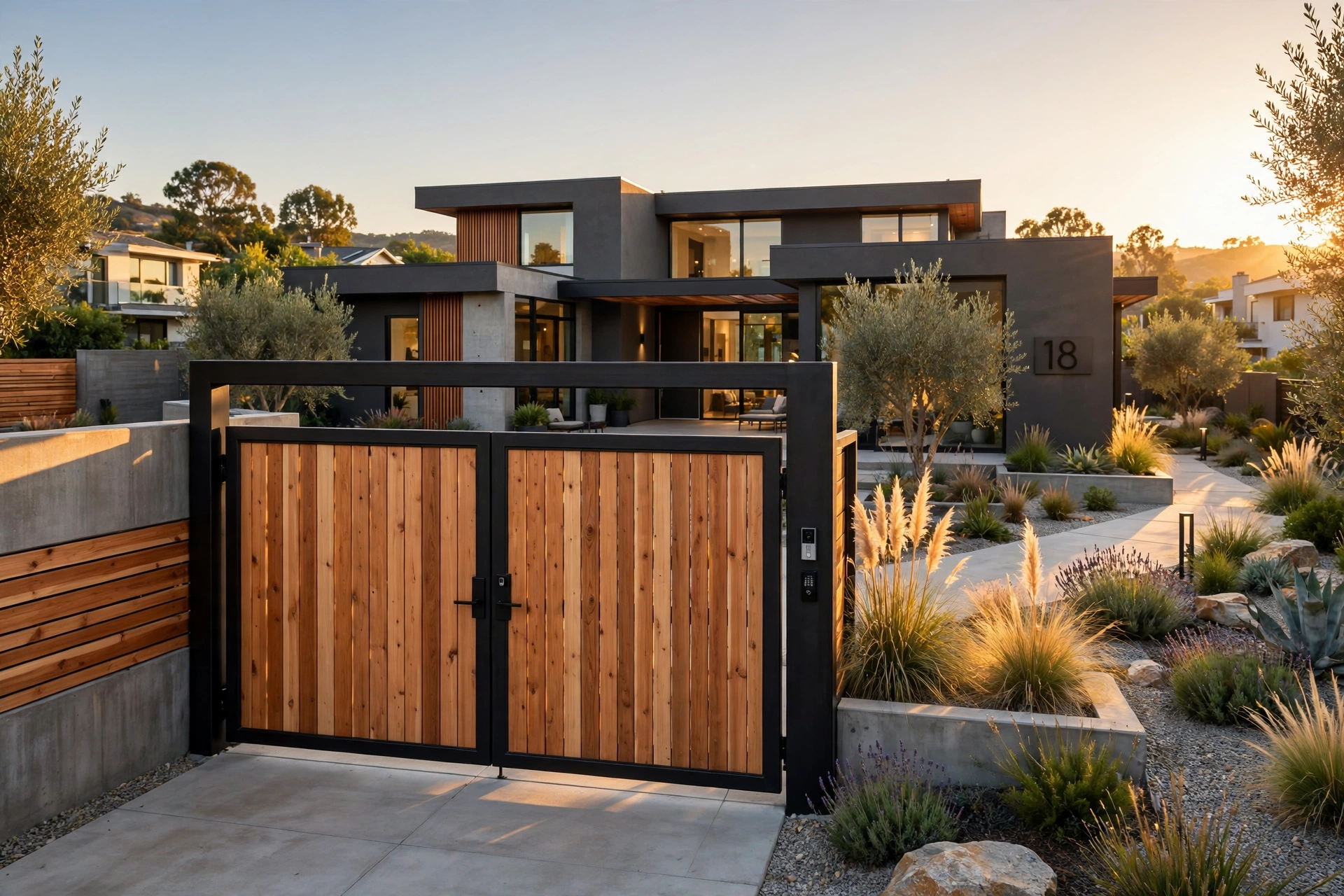
A bold first impression starts at the boundary, where a wood and steel gate frames the driveway and tells visitors what kind of home waits inside. Choose horizontal cedar slats set in a matte black steel frame, so the warm timber softens the industrial edge of the metal.
Keep the gate height between five and six feet, tall enough for privacy but low enough to stay friendly from the street. The mistake to avoid is a gate so solid and tall it hides the house completely, turning a welcome into a wall.
2. Horizontal Cedar Slats in a Steel Frame
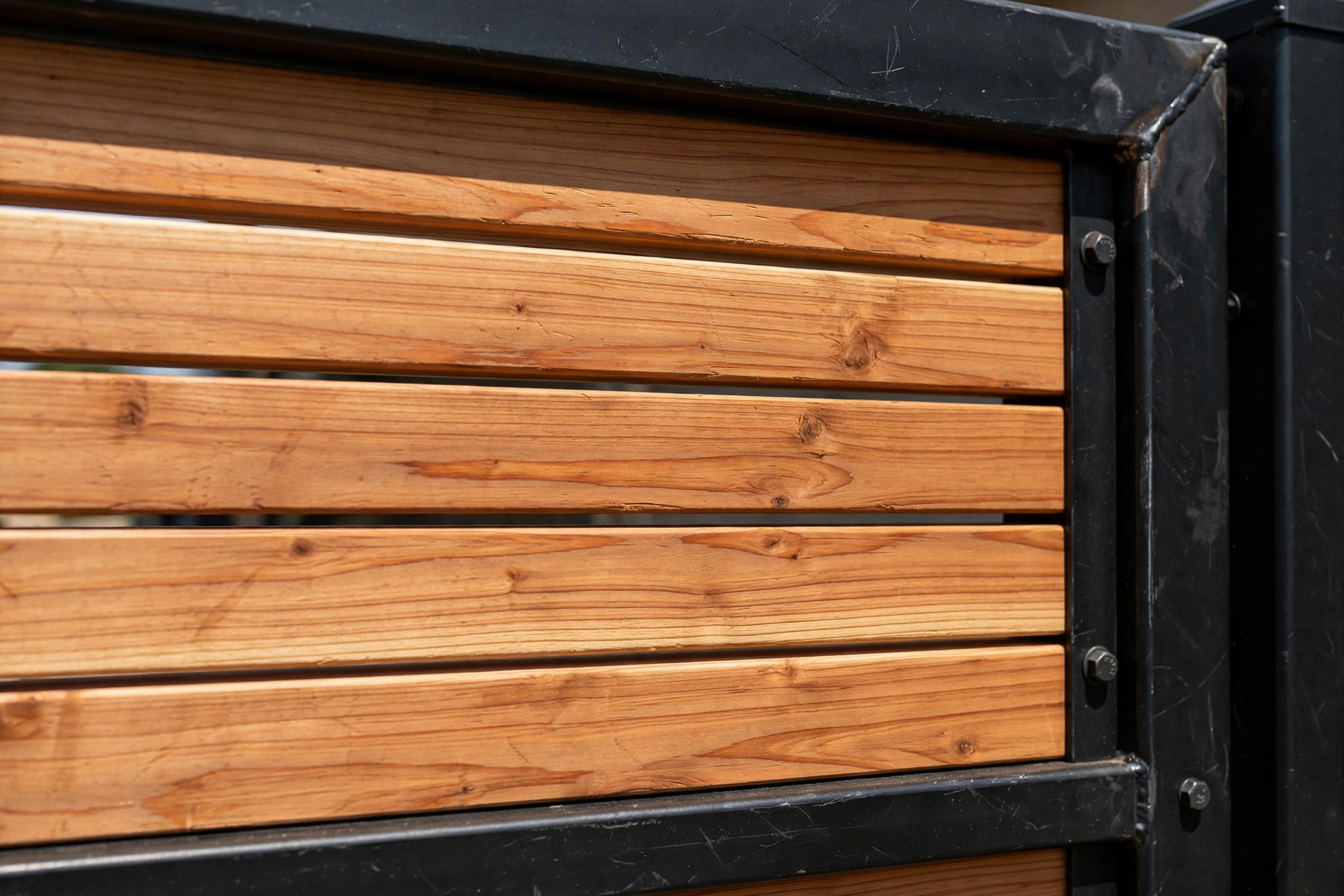
Horizontal cedar slats are the classic wood and steel combination, their warm grain running across a rigid steel rectangle. Use slats about six inches wide with a half-inch gap between them, which keeps airflow moving while still blocking a direct view inside.
Seal the cedar with an outdoor oil finish every year, since unsealed wood greys unevenly within a single season. A common error is screwing slats directly into thin steel without spacers, which traps water and rots the timber from behind.
3. Vertical Wood Battens for a Taller Look
Vertical wood battens make a gate look taller and more formal, drawing the eye upward along the driveway. Choose narrow battens about three inches wide in iroko or teak, fixed to a steel frame with concealed stainless screws for a clean, hardware-free face.
Leave a quarter-inch gap between battens so the wood can expand in summer heat without buckling. Avoid wide, flat boards here, since they warp easily and pull away from the frame within a year.
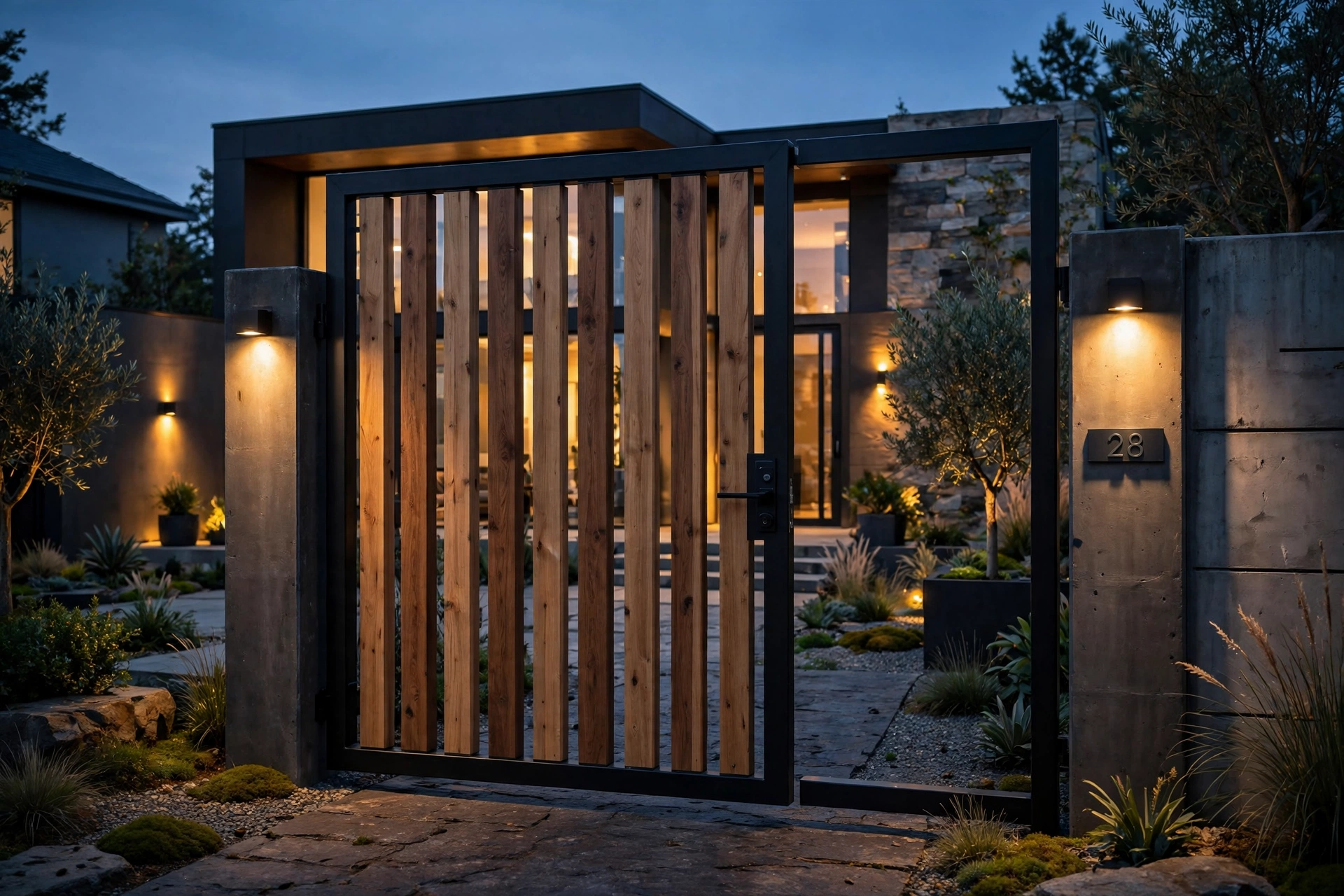
4. Matte Black Steel Frames That Disappear
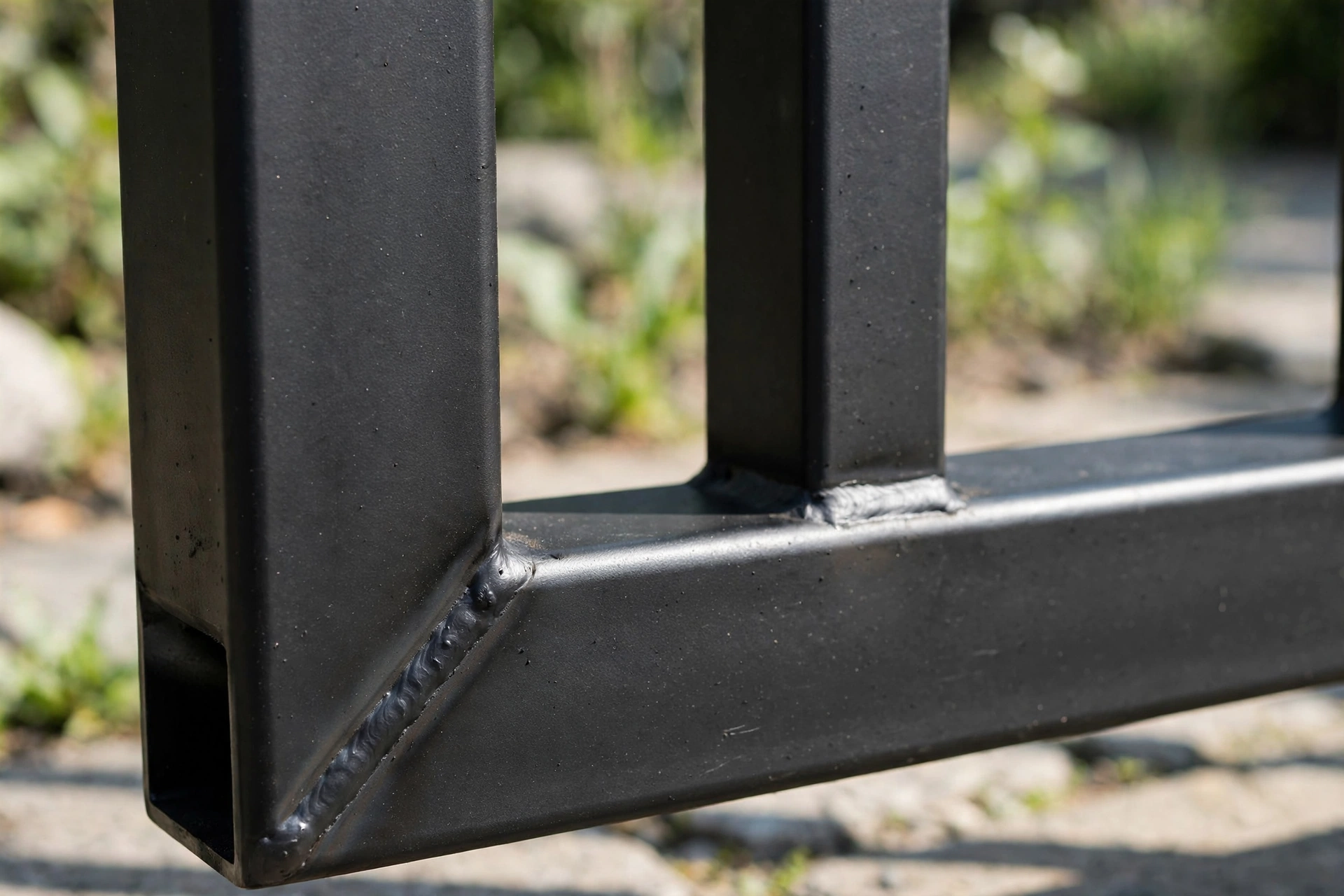
A matte black steel frame gives a wood gate its structure while visually disappearing against the timber. Specify square tube steel, at least two inches by two inches, powder-coated in matte black so it never shows fingerprints or glare in sunlight.
Ask the fabricator to weld the corners and grind them smooth, since bolted joints loosen and rattle over time. The mistake to avoid is glossy black paint, which chips quickly and looks cheap beside natural wood.
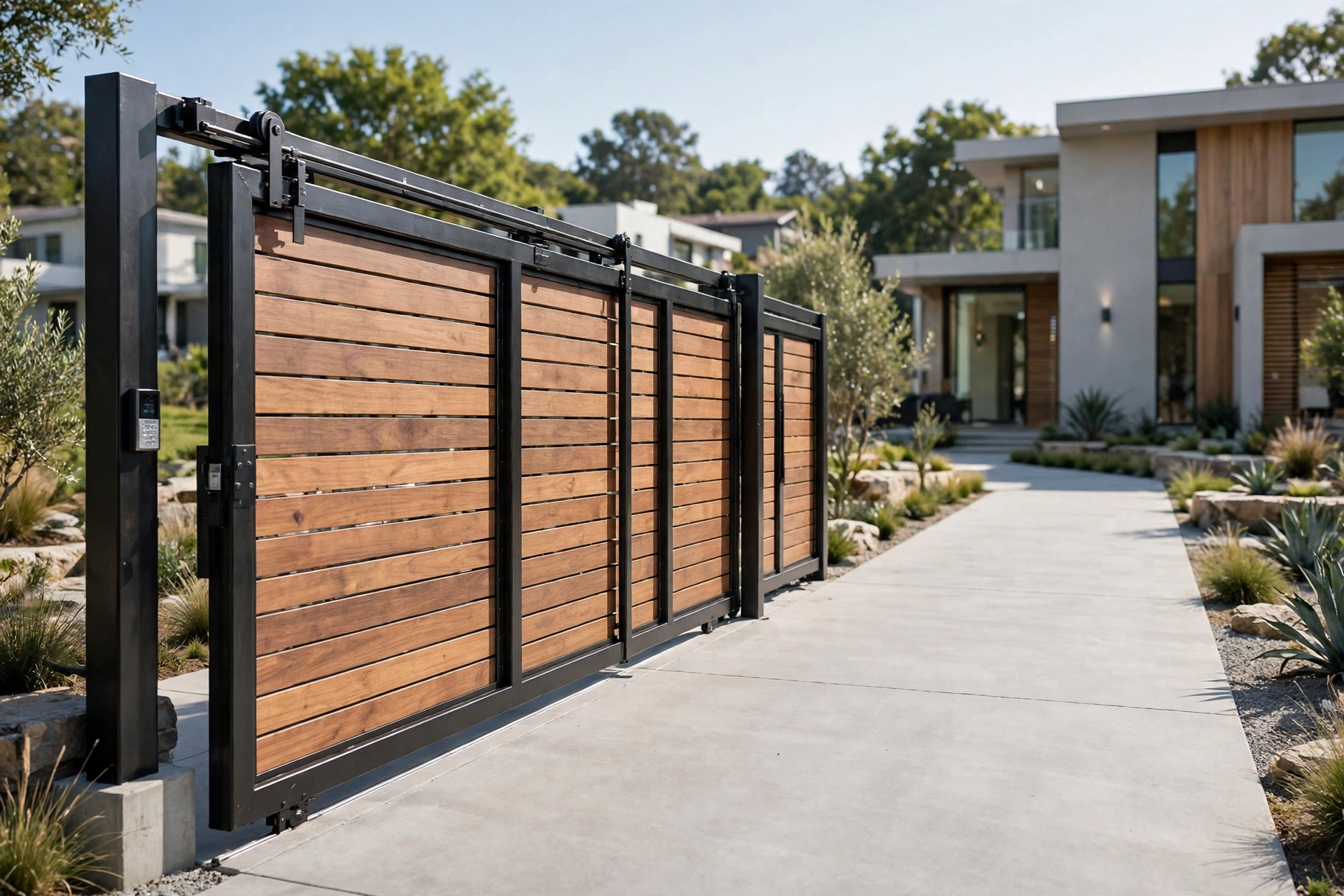
5. Sliding Wood and Steel Gates for Wide Driveways
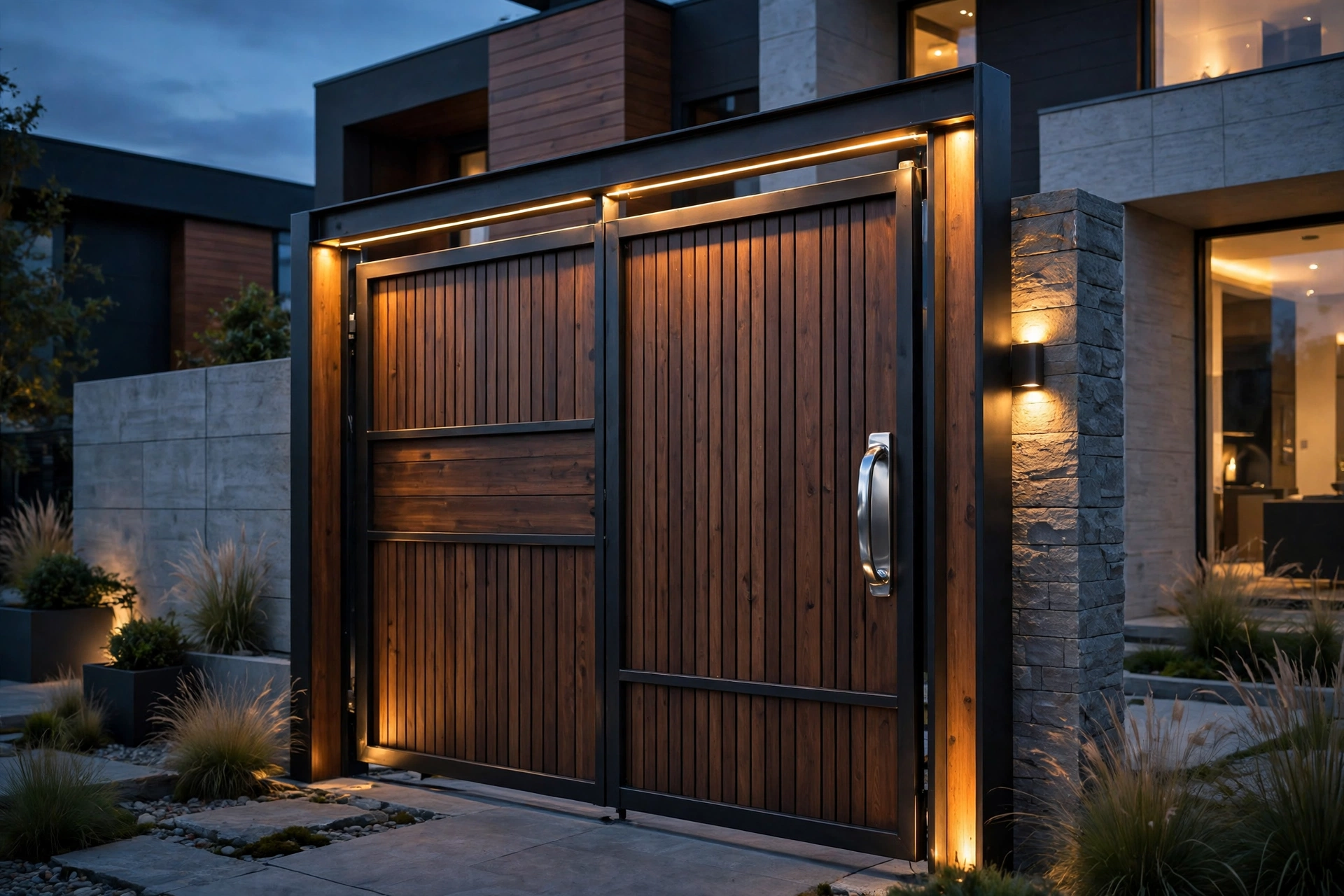
Sliding gates suit wide driveways best, gliding sideways on a track instead of swinging into the street or the yard. Install a ground track at least as long as the gate itself, plus two feet of run-off, and choose a cantilever design if the driveway slopes.
Keep the track clear of leaves and gravel with a weekly sweep, since debris is the main cause of sliding gates jamming. A frequent error is sizing the motor for the gate’s empty weight, which stalls once wood absorbs rain; size it for double the dry weight.
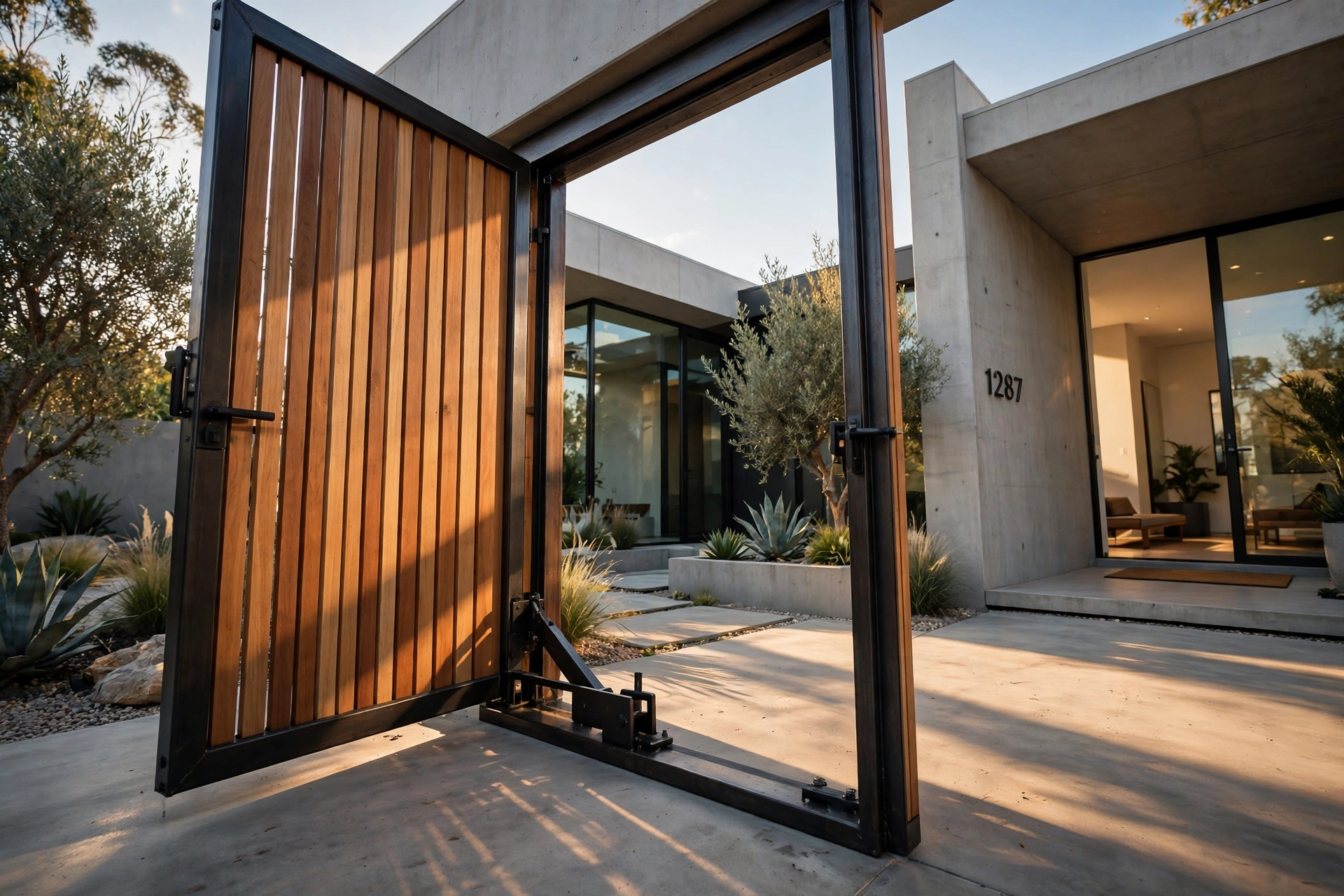
6. Pivot Gates with a Dramatic Swing
Pivot gates rotate on a central or offset hinge, giving a modern entrance a dramatic, architectural movement. Choose a pivot point about one-third from the edge, so the gate swings smoothly and the long leaf sweeps inward without hitting the driveway wall.
Set the pivot in a concrete footing at least three feet deep, since the whole weight of the gate hangs on that single point. Avoid cheap pivot hardware, which sags within months and lets the gate drag on the ground.
7. Mixed Timber Tones in One Gate
Mixing timber tones adds depth to a wood and steel gate, with darker end posts framing lighter slats in between. Pair walnut-stained posts with pale cedar slats, keeping both finishes matte so the contrast feels deliberate rather than accidental.
Test the two stains side by side in daylight before committing, since timber darkens noticeably once oiled. The common mistake is mixing three or more tones, which turns a refined gate into a patchwork.
8. Steel Mesh Panels Behind Wood Slats
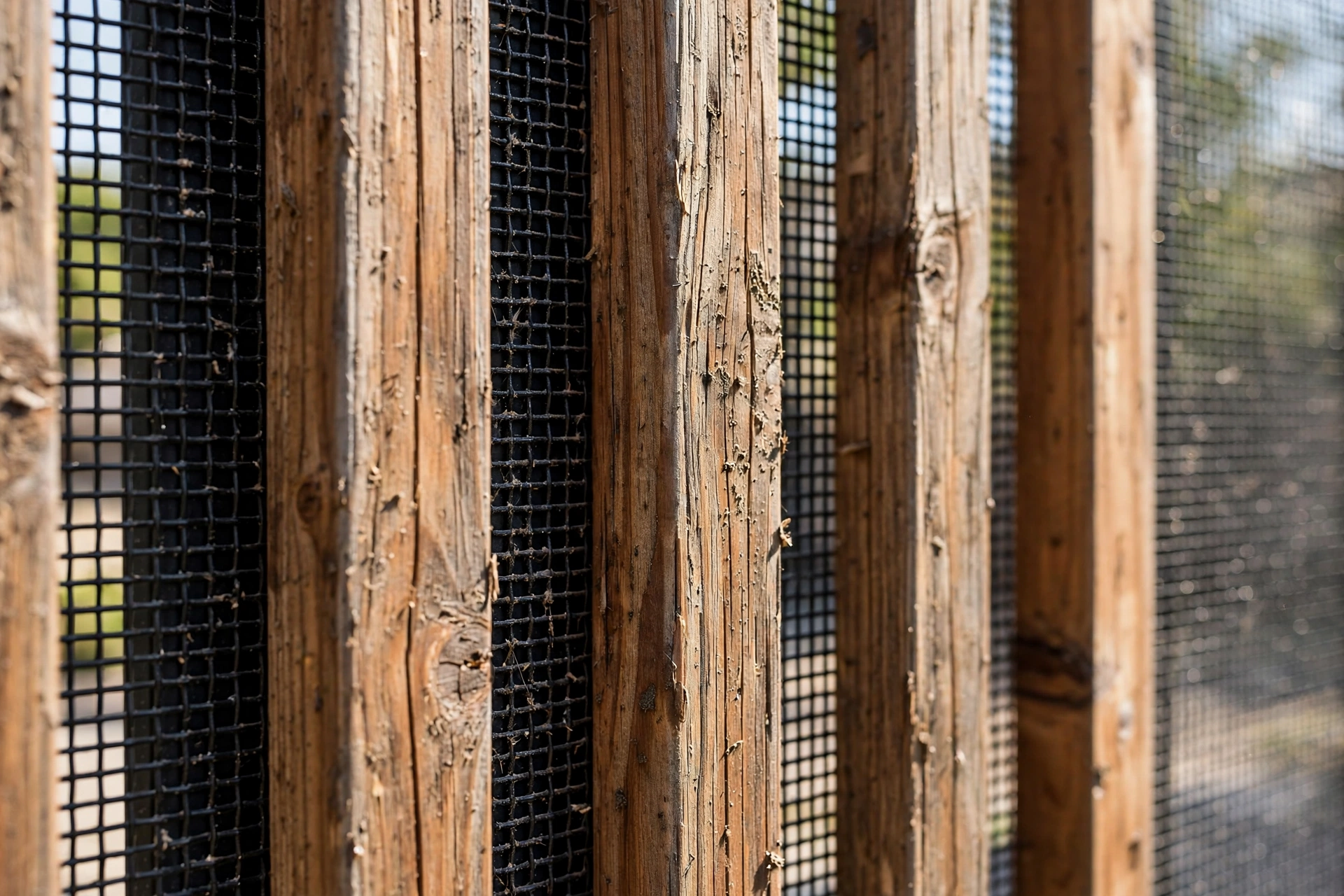
Steel mesh behind wood slats adds security without losing the open, airy feel of a slatted gate. Fix a fine black mesh, about one inch square, to the inside of the frame, so pets and small children stay in while the gate still breathes.
Choose powder-coated mesh rather than bare galvanized wire, which rusts and stains the wood within a year. Avoid solid backing panels, which trap heat and moisture behind the slats and shorten the timber’s life.
9. Planning a Modern Wood and Steel Main Gate on a Budget
A wood and steel gate does not need a luxury budget, since the steel frame carries the cost and the timber can be a single feature panel. Start with a steel frame and one cedar slat section, then add more timber later as the budget allows.
Buy the timber in standard lengths to avoid cutting waste, and choose a local softwood stained to look like cedar. A good rule is to spend about half the budget on the frame and hardware, where quality matters most.
10. Integrated LED Lighting in the Frame
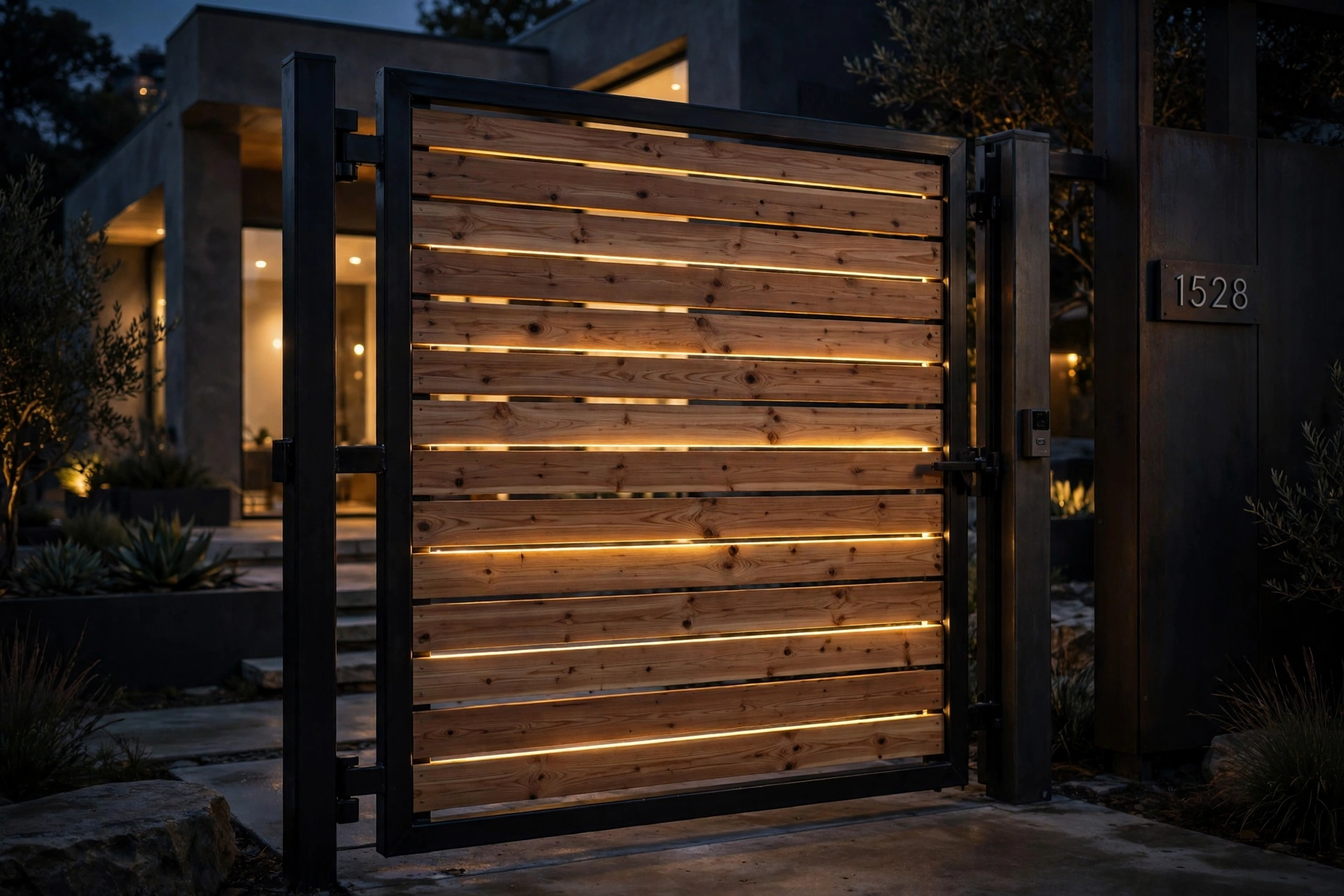
Integrated LED lighting turns a wood and steel gate into a glowing landmark after dark. Recess a warm LED strip, around 2700K, into the top rail of the frame, so light washes down across the timber slats without any visible fittings.
Use outdoor-rated, low-voltage lighting with a timer from dusk to 11 p.m., so the gate glows automatically. The mistake to avoid is cool white LEDs, which flatten the wood’s warmth and make the steel look cold and grey.
11. Automation and Smart Gate Openers
Automation makes a heavy wood and steel gate effortless, opening it from the car with a remote or a phone app. Choose a motor rated for at least twice the gate’s weight, and add safety sensors on both posts so the gate stops if a child or pet crosses.
Keep a manual release key accessible from outside, since power cuts leave an automated gate locked shut. Avoid the cheapest openers, which lack obstacle detection and can damage the gate or injure someone.
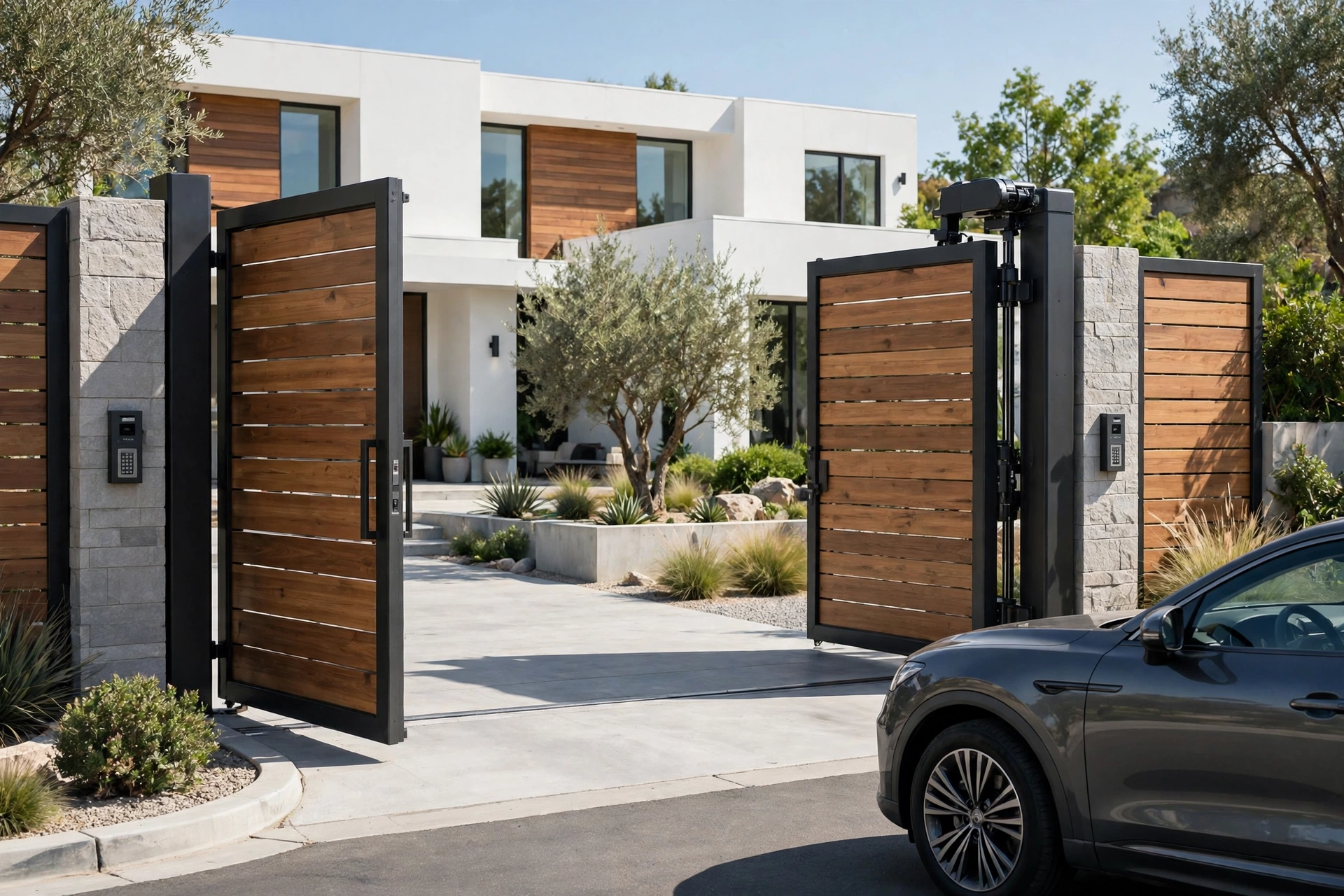
12. Matching Pedestrian Side Gates
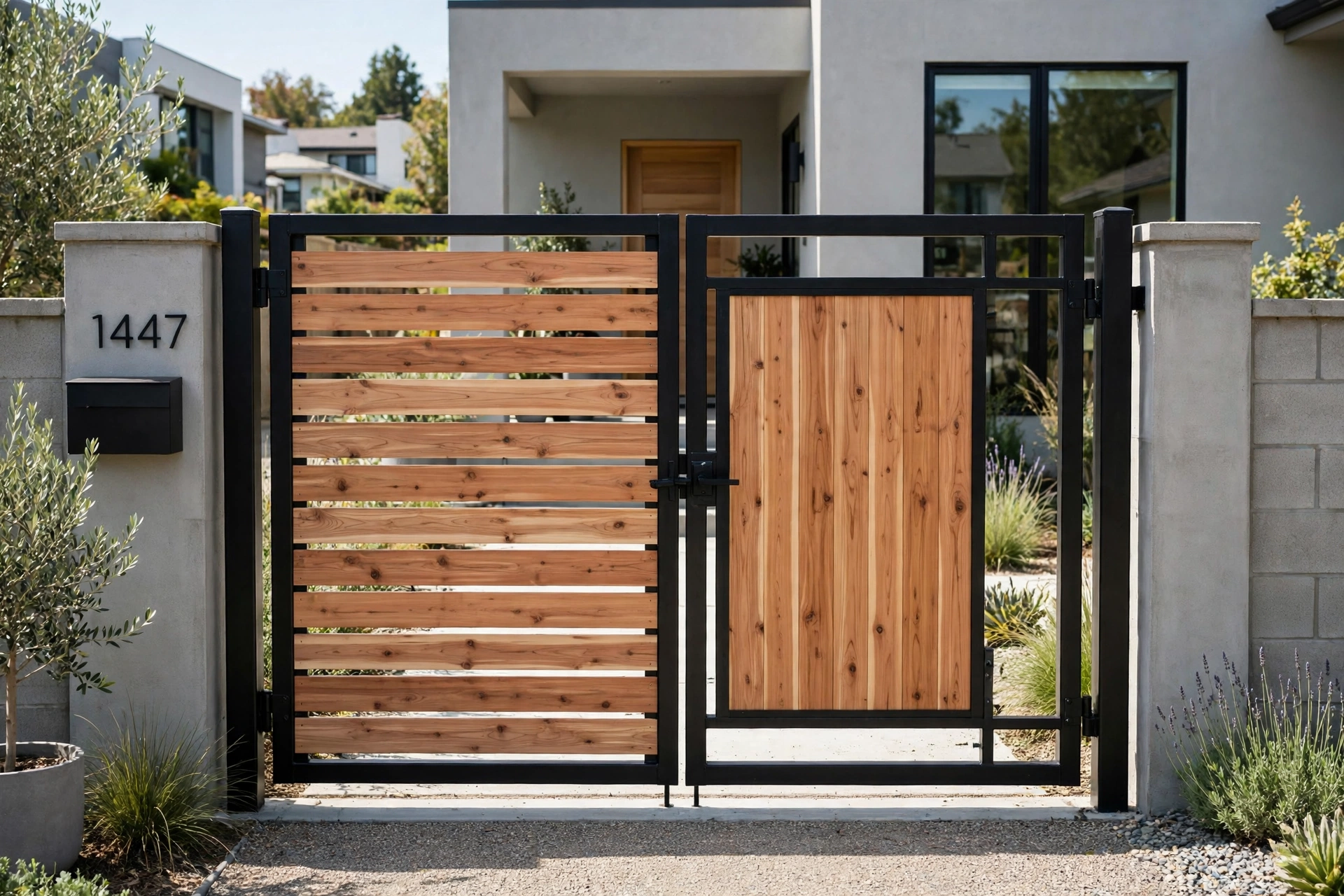
A matching pedestrian side gate keeps the whole entrance looking designed rather than improvised. Build the side gate from the same cedar slats and steel frame, scaled down to about 36 inches wide, with the same handle and hinges as the main gate.
Align the slat spacing exactly with the main gate, so the two read as one composition from the street. The common error is a side gate in a different style, which breaks the clean modern line of the entrance.
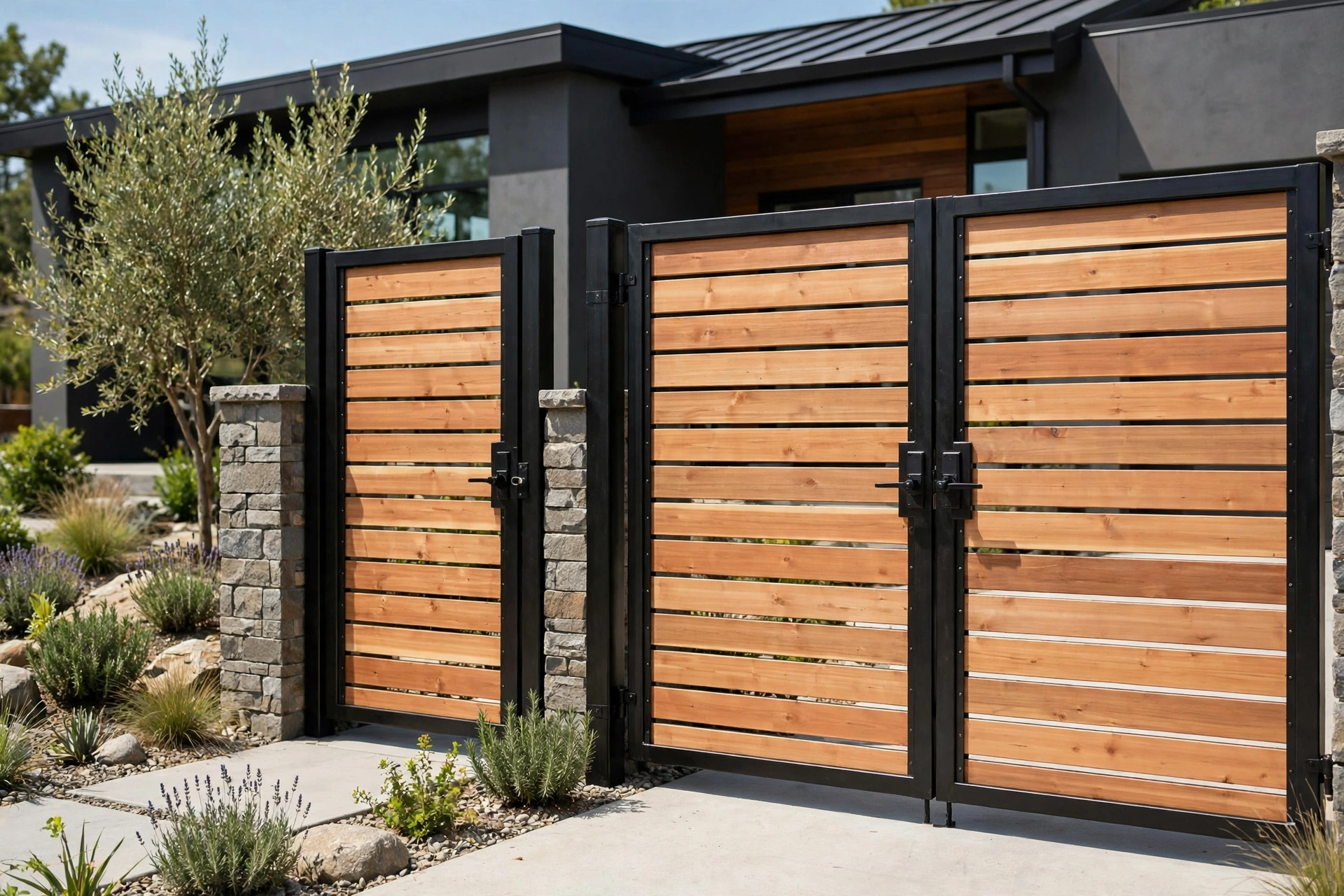
13. From Gate to Garden: A Cohesive Front Entrance
A beautiful gate deserves a front yard that matches it, with the same materials and lines continuing from the boundary to the front door. Repeat the cedar and black steel in a fence, a planter, or a house number sign, so the whole entrance feels like one design.
Keep the planting simple and architectural, with grasses and sculptural shrubs that echo the gate’s clean geometry. For a complete guide to the whole front of the house, see Modern Front Yard Ideas for Instant Curb Appeal and carry the same modern warmth from the gate to the door.
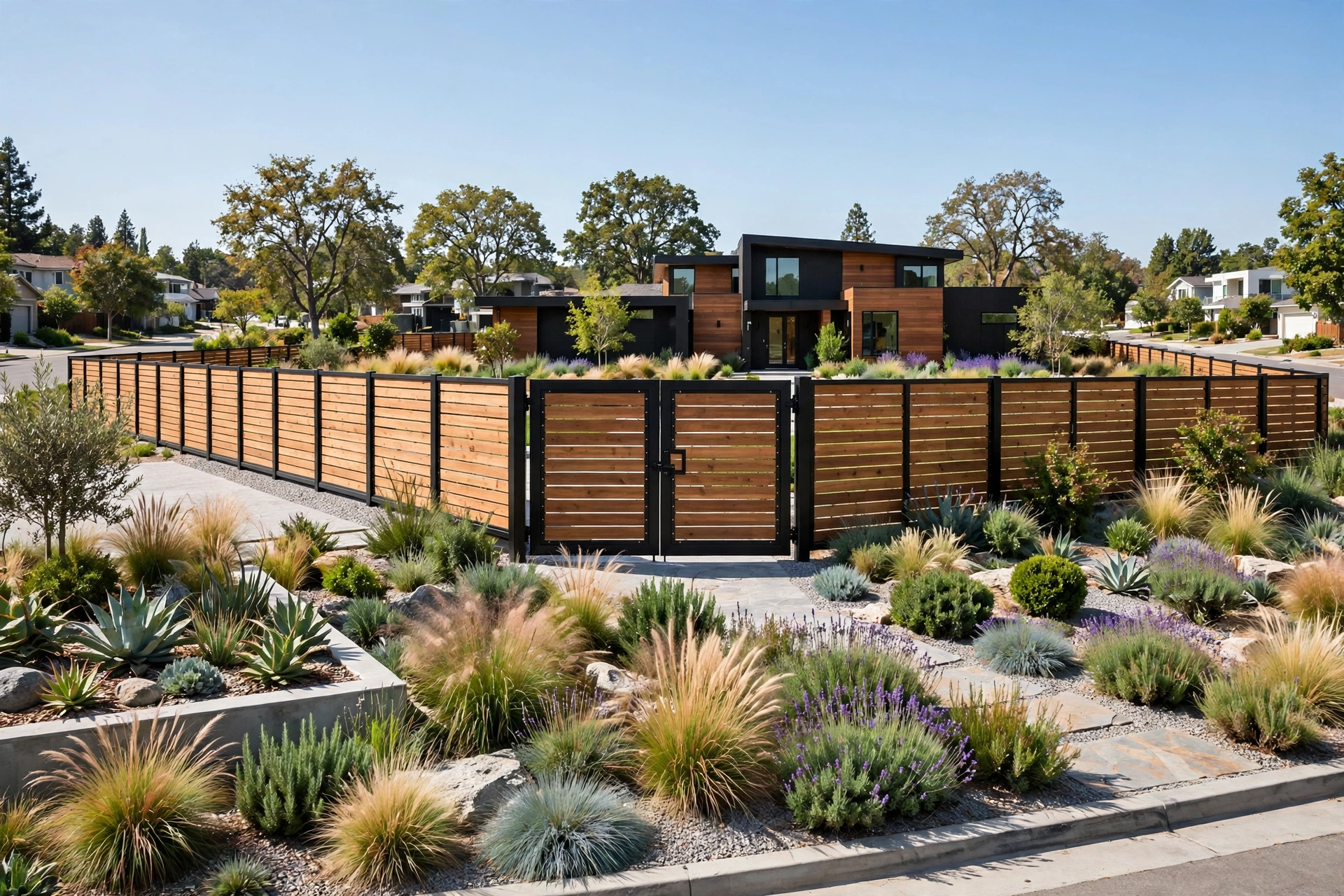
14. Weatherproofing Wood and Steel Together
Wood and steel age differently, so weatherproofing must protect both materials at once. Oil the timber twice a year and inspect the steel’s powder coating every spring, touching up any chip before rust can spread underneath.
Keep the bottom rail at least four inches above the ground, since standing water rots timber and rusts steel faster than rain ever will. The most common mistake is sealing wood that is already damp, which traps moisture inside and accelerates decay.
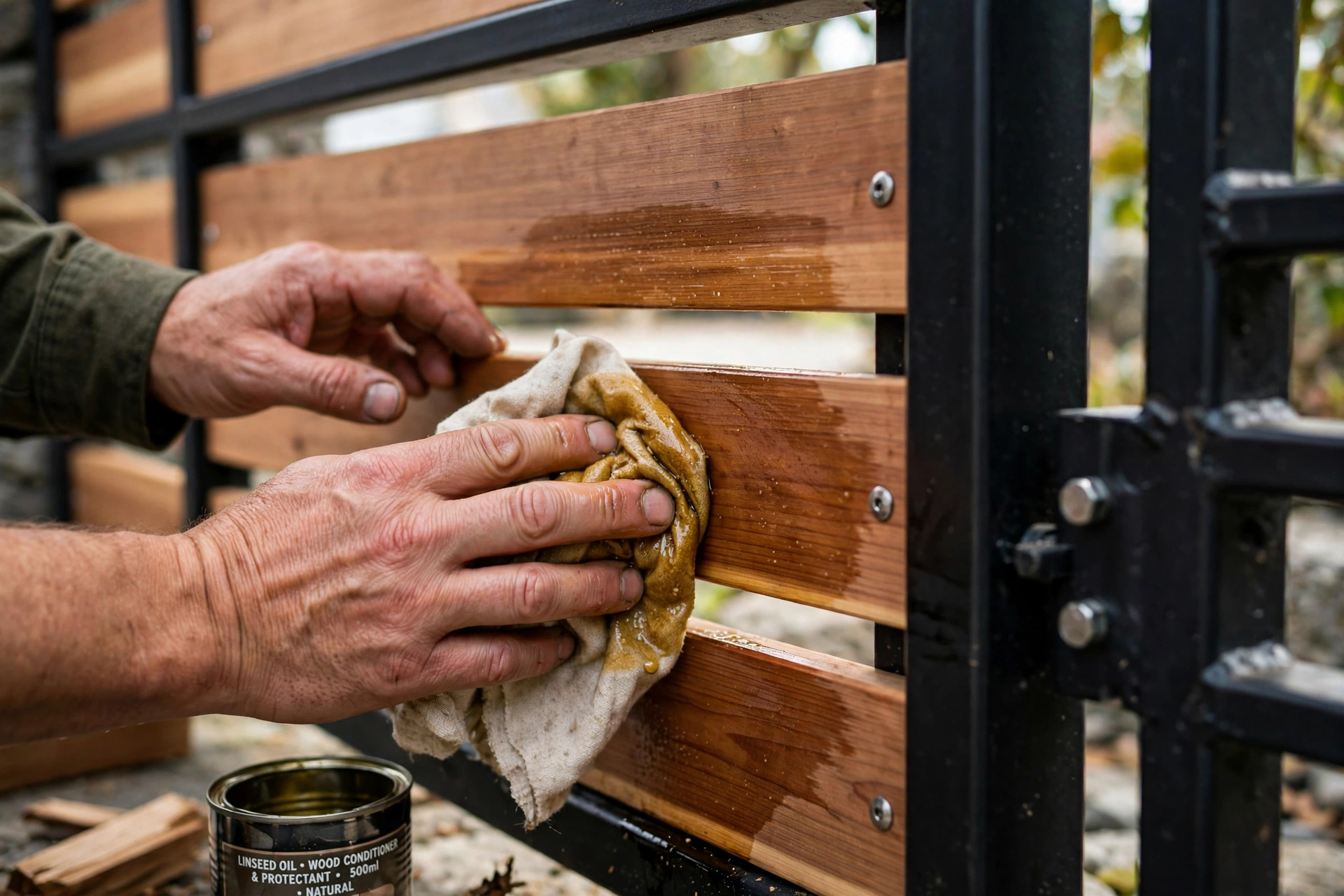
15. Privacy Without a Solid Wall
Privacy does not require a solid wall, since staggered slats block sightlines while still letting light and air through. Offset two layers of slats by half an inch, so the gate looks open from an angle but solid from straight on.
Stand at the street and test the view at different heights, since a gate that blocks an adult’s view may still reveal the yard to a child. Avoid gaps wider than one inch in the front layer, which defeat the privacy the staggered design promises.
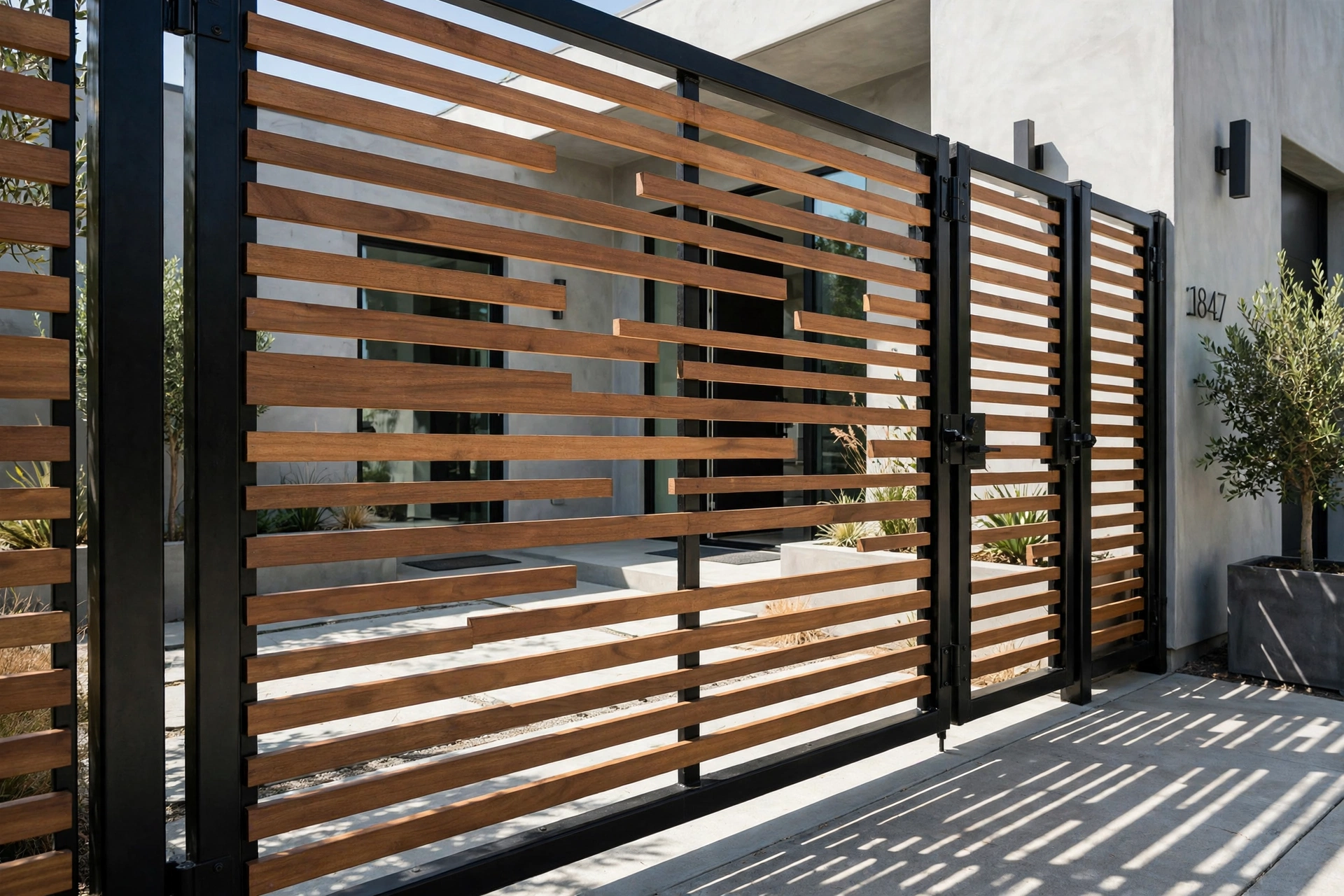
16. Corten Steel Accents with Warm Timber
Corten steel, with its rich rusted patina, pairs beautifully with warm timber for a modern gate with real character. Use corten for the frame or the posts, letting its orange-brown tones echo the wood while the texture stays distinctly industrial.
Seal the corten after the patina stabilizes, usually after three months, so rust never stains the driveway or the timber. A frequent error is placing fresh corten beside pale stone, which rust streaks stain within weeks.
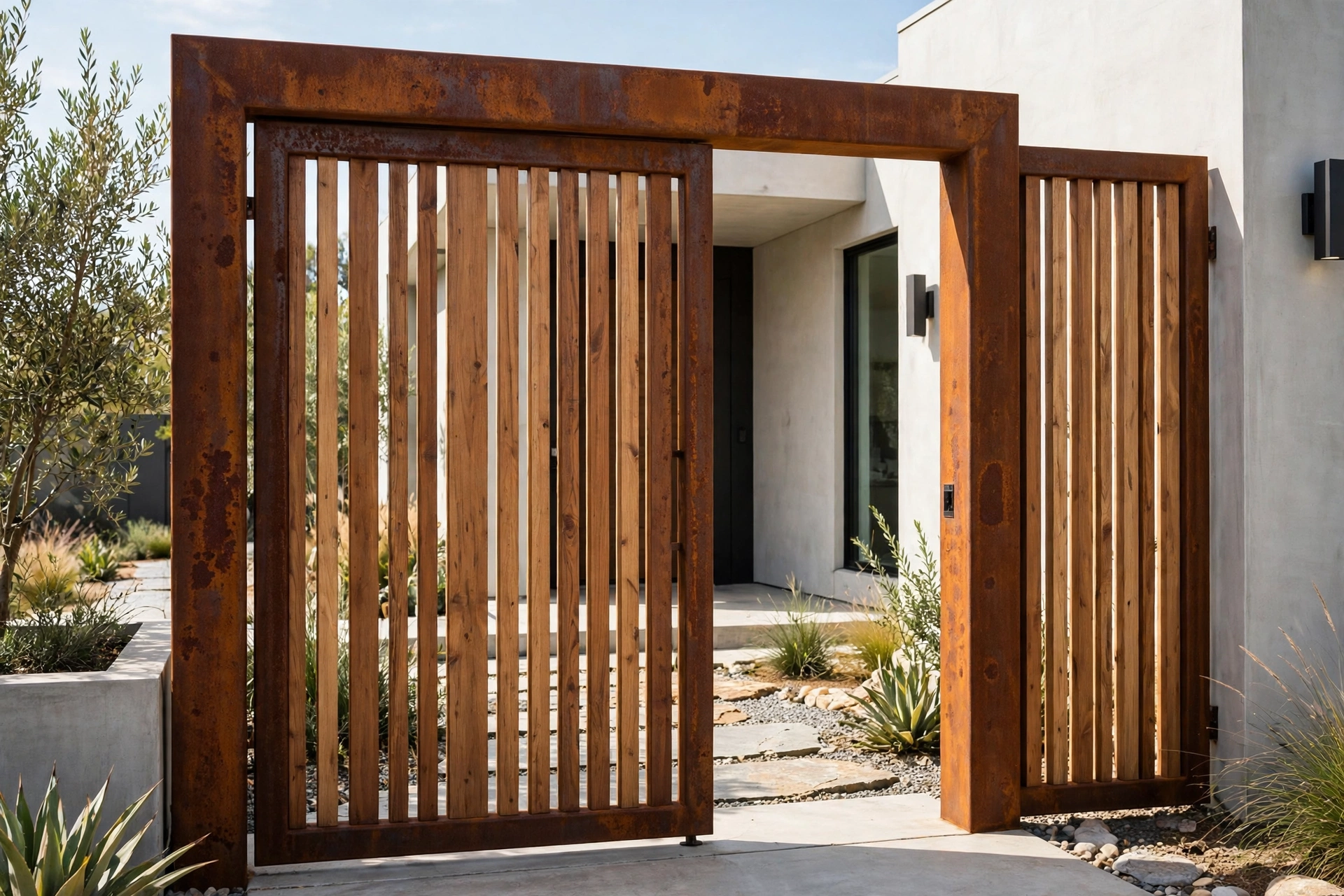
17. Small-Space Ideas for a Modern Wood and Steel Main Gate
Small frontages suit a wood and steel gate beautifully, because one compact gate makes a narrow entrance feel intentional. Choose a single swing gate about 10 feet wide, with slim slats and a narrow steel frame, so the design never overwhelms the plot.
Skip the sliding track on a small driveway, since it needs as much run-off space as the gate itself. The mistake to avoid is a double gate on a narrow frontage, which leaves no room for a pedestrian path beside it.
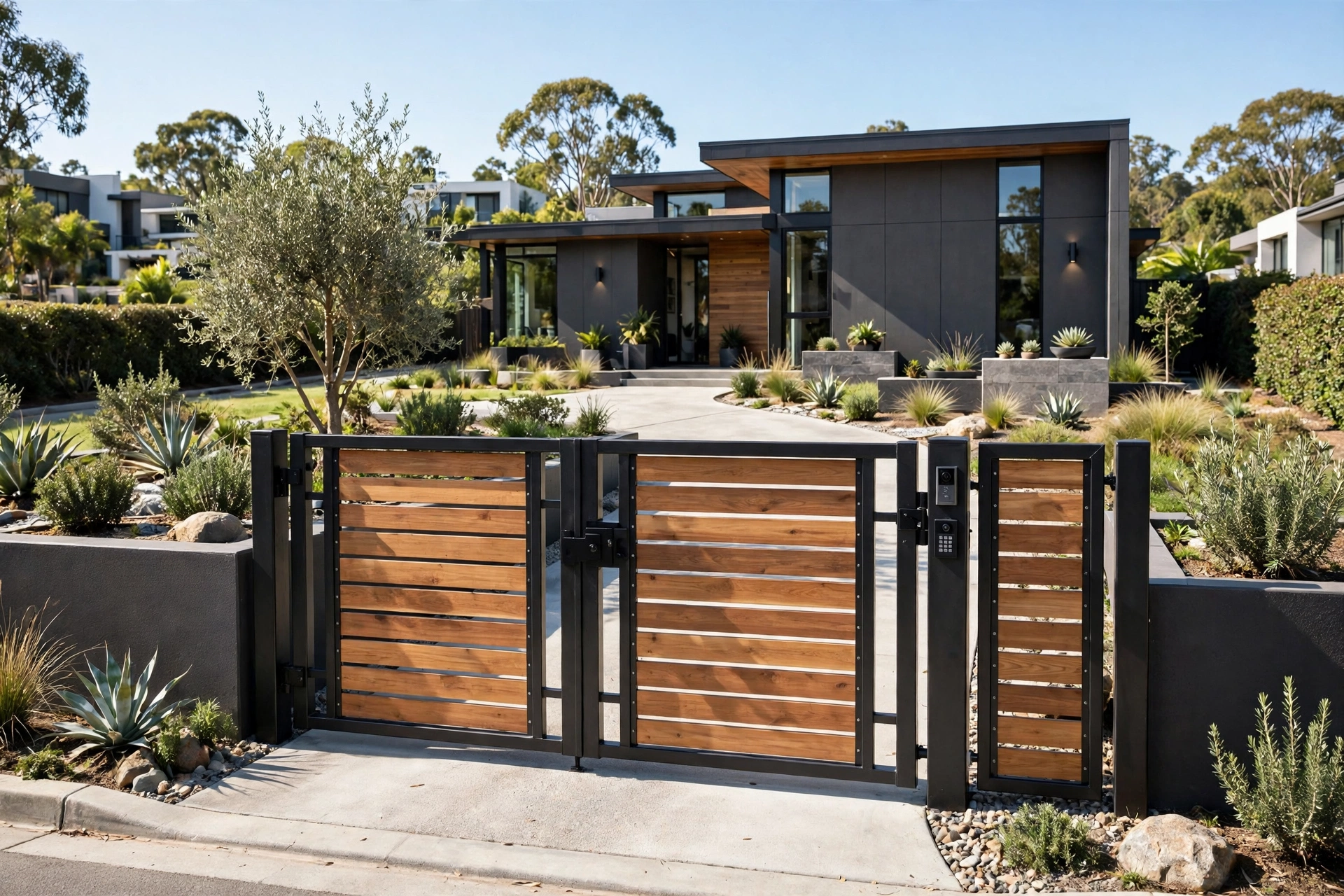
18. House Numbers and Letterboxes in the Gate
House numbers and a letterbox built into the gate turn a boundary into a complete, functional entrance. Mount laser-cut steel numbers, about eight inches tall, directly onto the timber slats, and fit a slim letterbox into the steel frame near the pedestrian side.
Align the numbers with the top rail so they read clearly from the street, and choose a letterbox at least 12 inches wide for large envelopes. Avoid sticking numbers on with adhesive, which fails in heat and leaves them dangling within months.
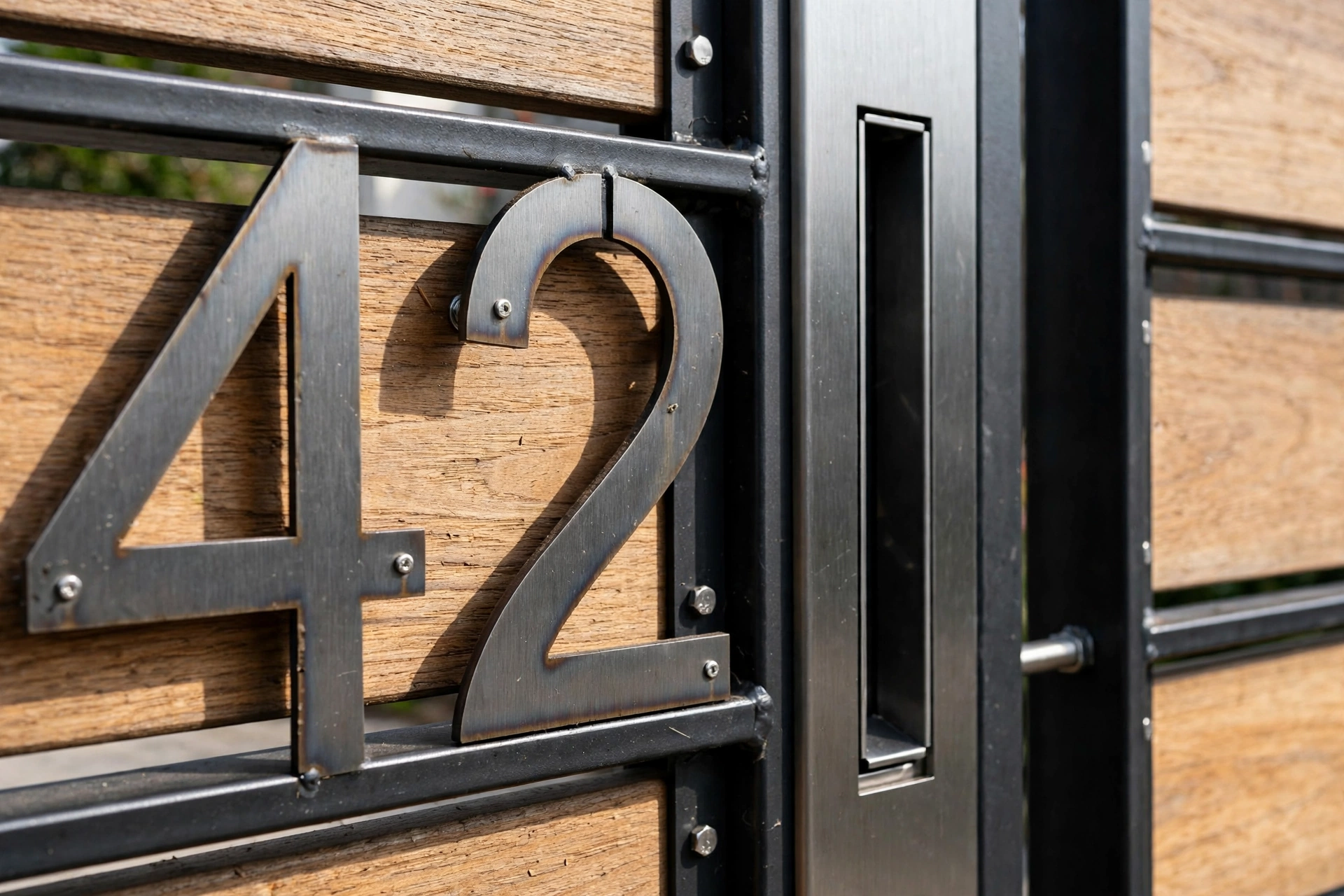
19. Double Swing Gates for Grand Entrances
Double swing gates give a grand entrance its symmetry, with two matching leaves opening outward or inward together. Size each leaf to half the driveway width, usually six to eight feet, and fit heavy-duty hinges rated for at least 200 pounds per leaf.
Install a drop bolt on the fixed leaf so it stays shut while the other opens for daily use. The common error is gates that swing onto the pavement, which can block pedestrians and breach local regulations.
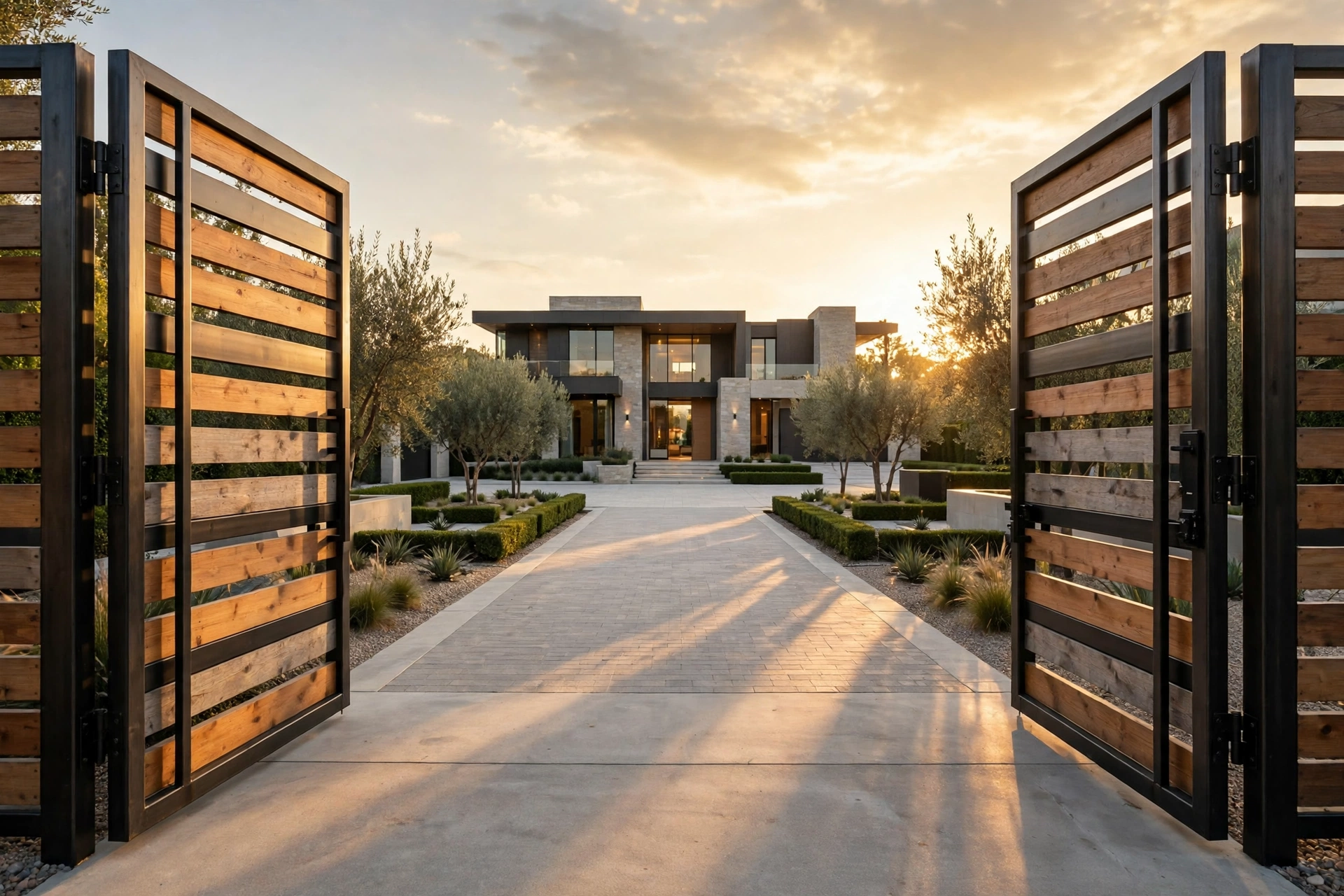
20. Timber and Steel Fencing to Match
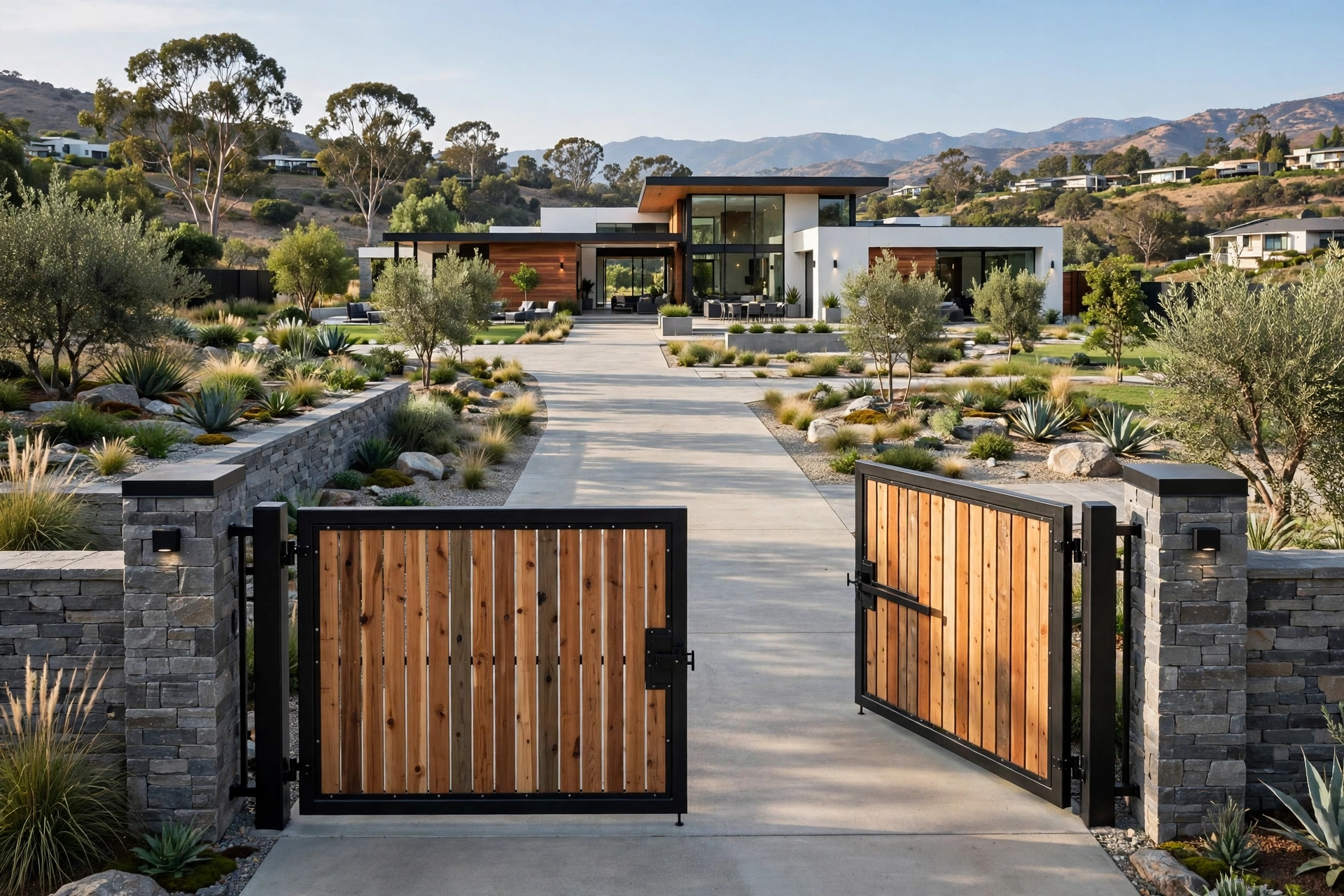
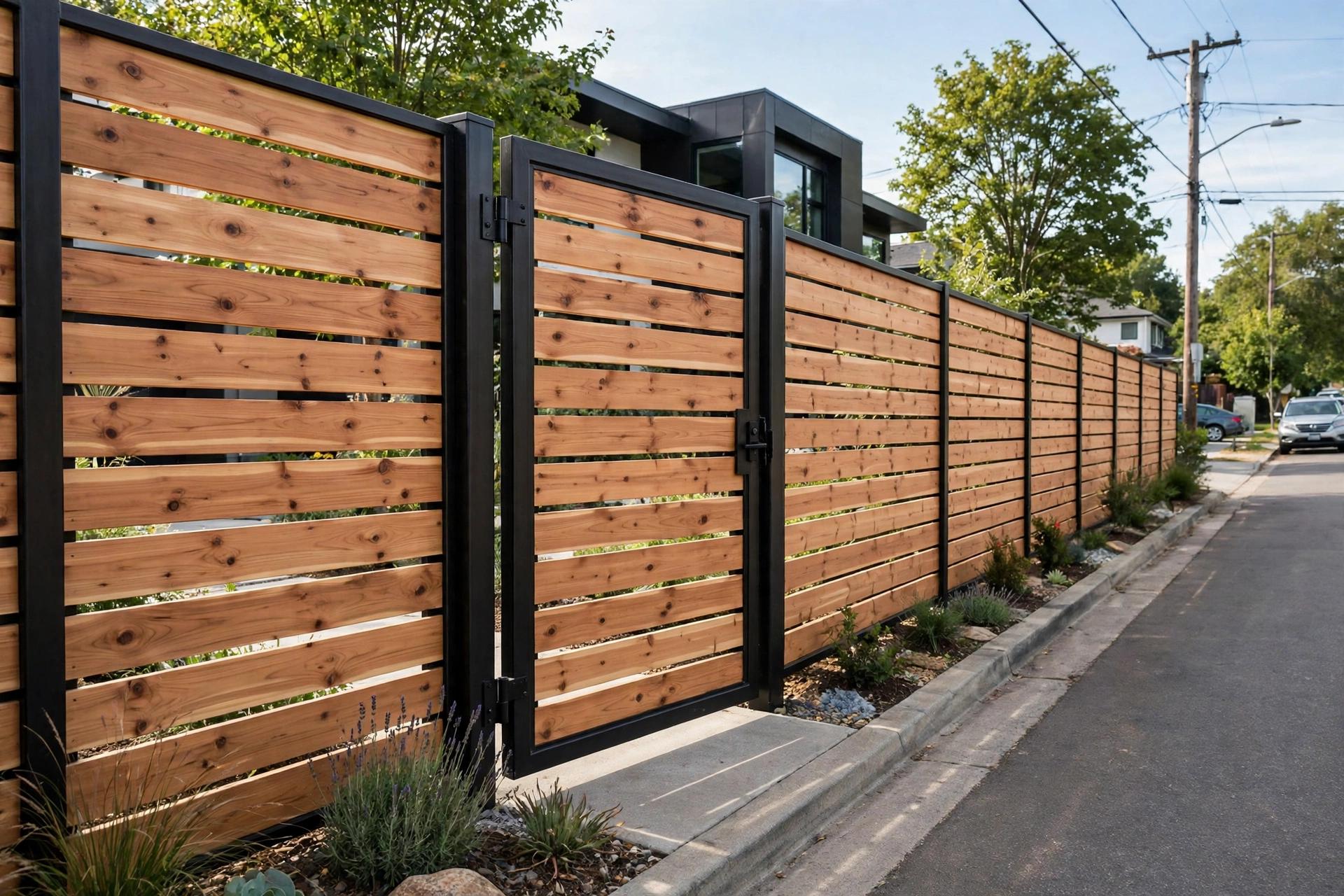
Matching fencing extends the gate’s design along the whole boundary, so the entrance never looks like an afterthought. Use the same cedar slats and steel posts for the fence, running the slats horizontally at the same spacing as the gate.
Set steel posts in concrete footings every six feet, since timber posts rot at ground level within a few years. Avoid mixing fence styles along one boundary, which makes even a beautiful gate look unfinished.
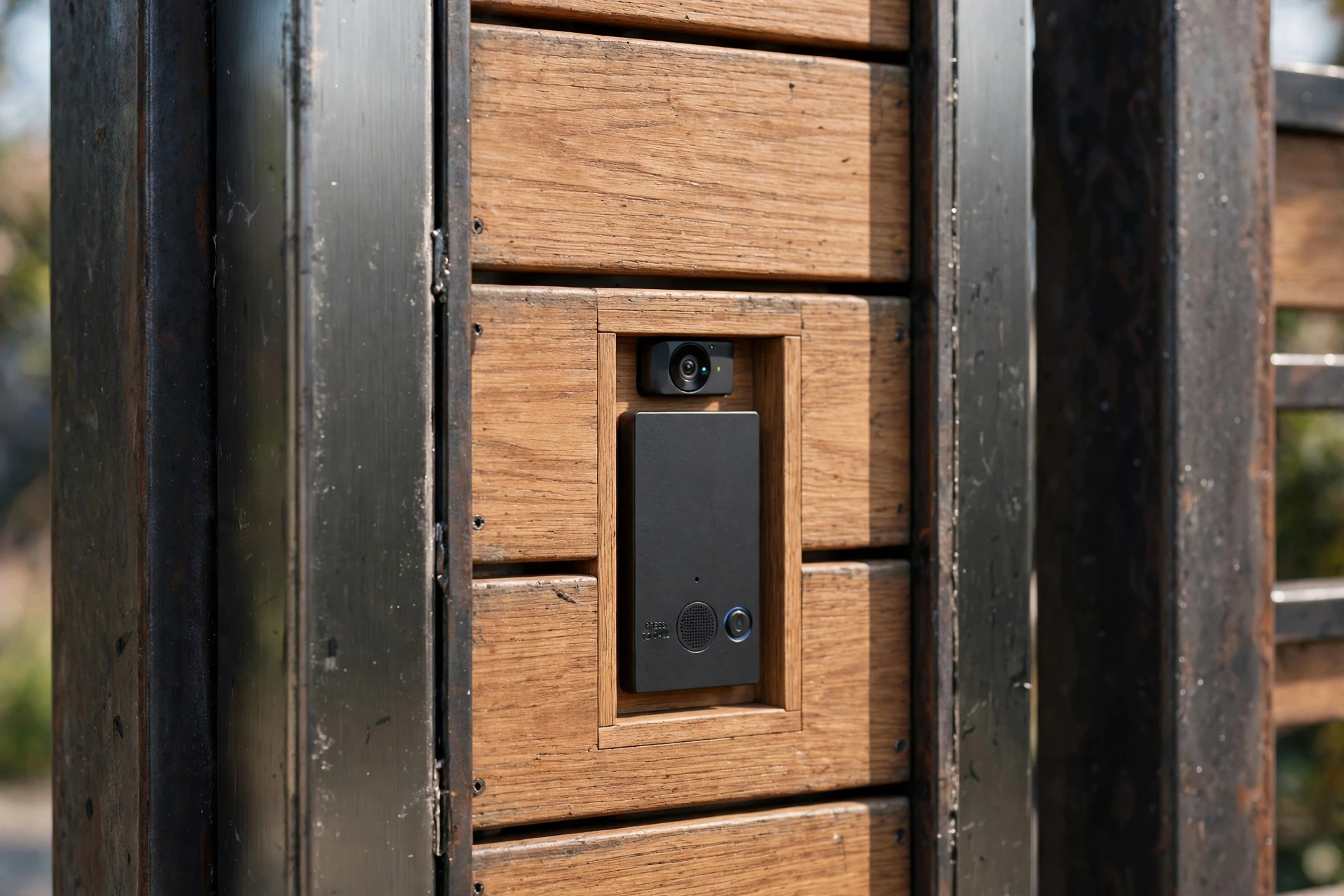
21. Security Features That Stay Invisible
Good security stays invisible, with locks, cameras, and intercoms hidden inside the gate’s clean design. Fit a magnetic lock into the steel frame, mount a small camera in the top rail, and place the intercom panel flush with a post.
Choose a lock rated for outdoor use with a stainless bolt, since cheap locks seize in rain and frost. The mistake to avoid is a visible padlock and chain on a modern gate, which ruins the design and signals weak security.
22. Mistakes to Avoid with Wood and Steel Gates
The biggest mistakes with wood and steel gates are easy to avoid once you know them: unsealed timber, undersized hinges, and no drainage under the gate. Oil the wood before installation, size hinges for double the gate’s weight, and keep the ground beneath clear.
Another frequent error is measuring the opening once and ordering the gate to fit exactly, with no tolerance for posts that shift. Leave at least one inch of clearance on each side, so the gate never binds in summer heat.
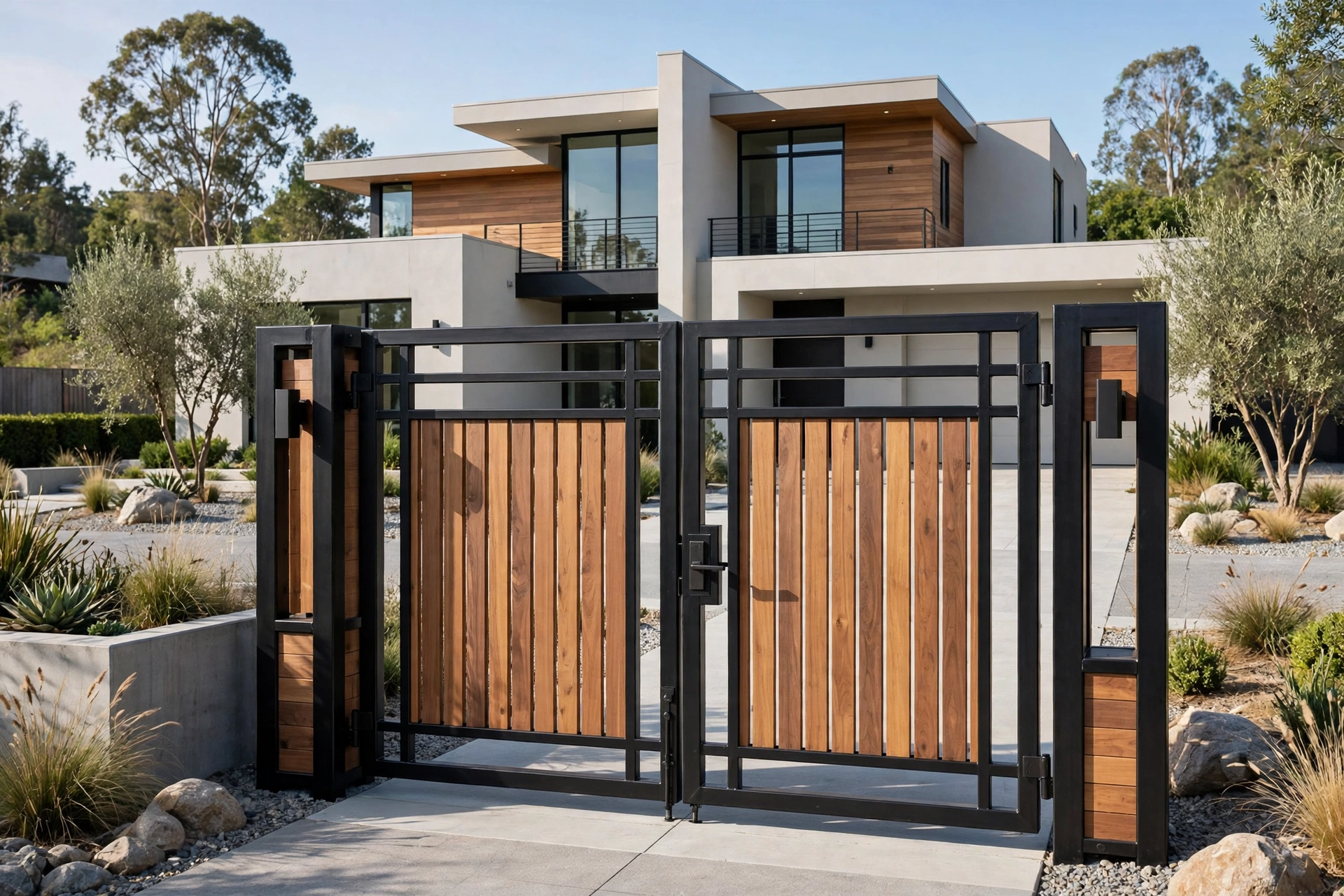
23. Choosing the Right Timber for Your Climate
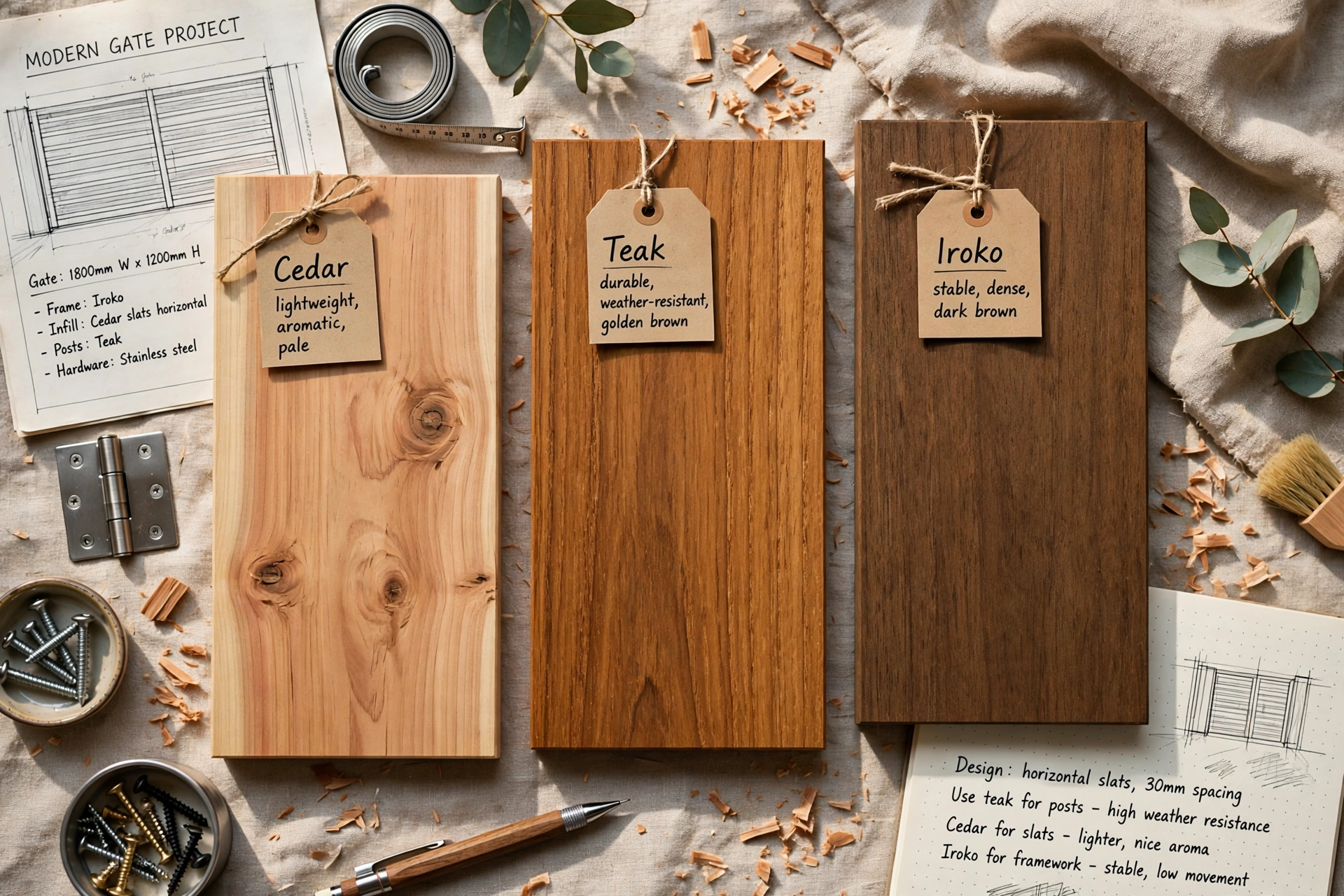
Timber choice depends on climate, since cedar thrives in wet regions while teak and iroko handle hot, dry summers better. In rainy areas choose western red cedar, which resists rot naturally, and in dry heat choose iroko, which barely moves with temperature swings.
Always buy kiln-dried timber at 12 percent moisture or less, so the slats do not shrink and gap after installation. Avoid untreated pine outdoors, which warps and rots within two years no matter how often it is painted.
24. Keeping a Wood and Steel Gate Looking New
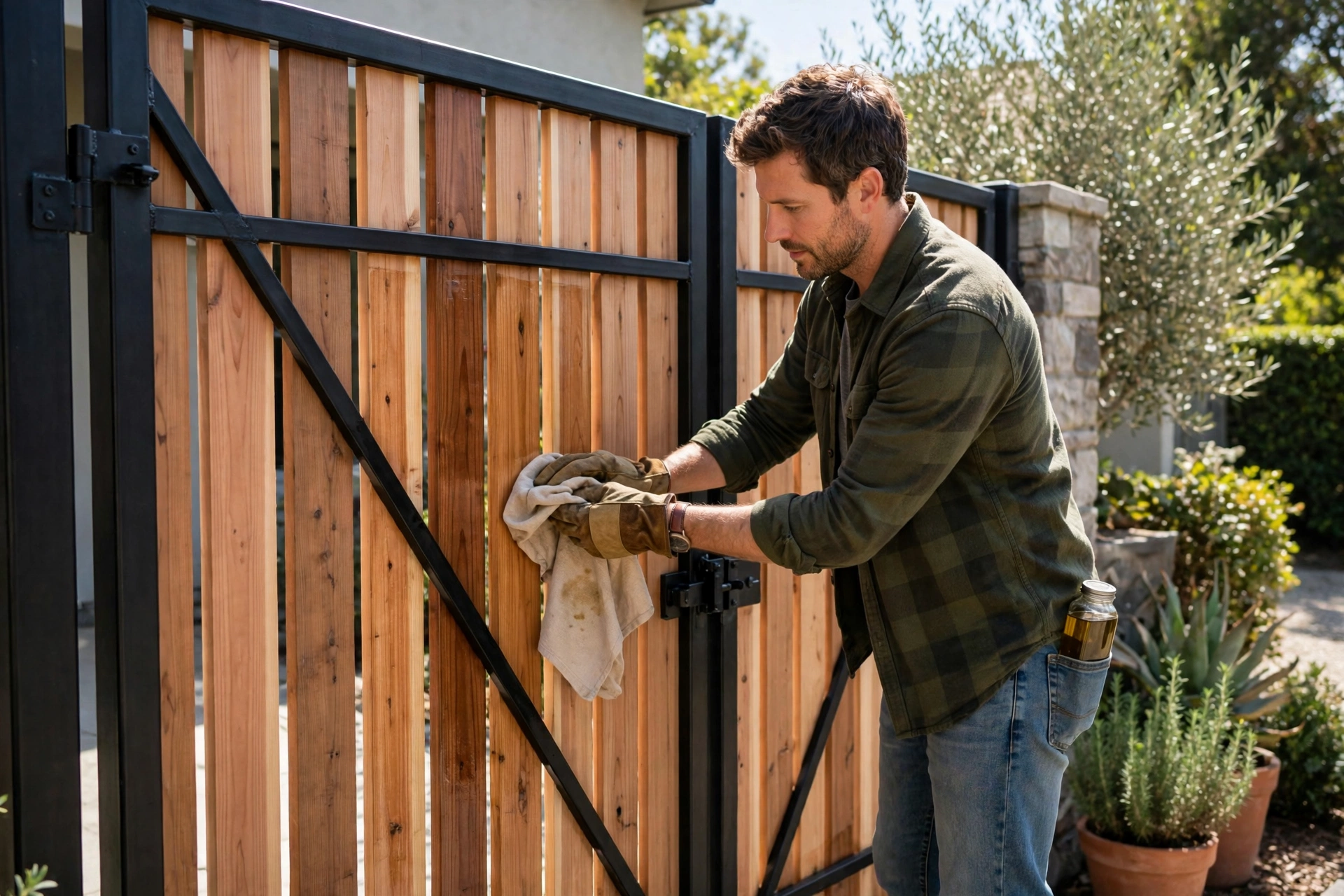
Keeping a gate looking new is simple with a twice-yearly routine: wash the steel with soapy water, oil the timber, and grease the hinges. A thirty-minute check every spring and autumn catches rust spots and loose screws before they become repairs.
Re-oil the timber as soon as water stops beading on its surface, which is the clearest sign the finish has worn thin. The common mistake is waiting until the wood turns grey, which needs sanding back to bare timber before it can be refinished.
25. Finishing Touches for a Modern Wood and Steel Main Gate
The finishing touches turn a good gate into a great one: a polished handle, a neat house number, and one warm light glowing above the entrance. Walk to the street at dusk and look back, removing anything that feels busy or unfinished.
These modern wood and steel main gate ideas work best when built slowly, starting with a strong frame, then the timber, and finally the small details. With patience and care, your entrance will feel warm, modern, and unmistakably yours for years.