Modern Main Gate Design: 25 Contemporary Ideas for Your Home
The main gate is your home’s handshake — and modern design has rewritten the rules. Clean lines, smart materials, and integrated technology turn a simple barrier into a statement of how you live. Whether you’re building new or upgrading an existing entrance, these modern main gate design ideas will help you get it right. For more styles, see our Luxury Black Gate Design and Handy Front Yard Gate Ideas guides.
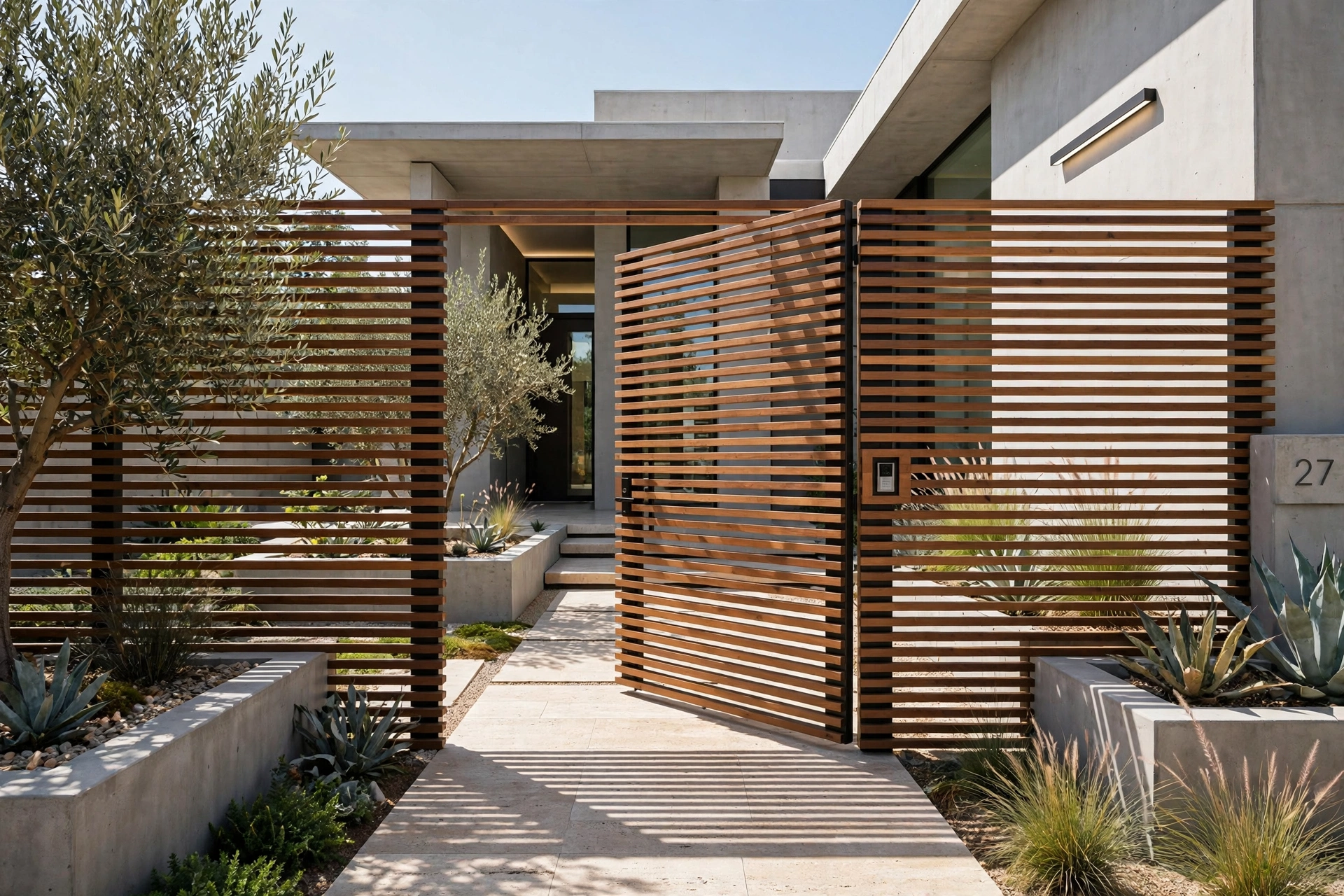
1. Line Up Horizontal Slats
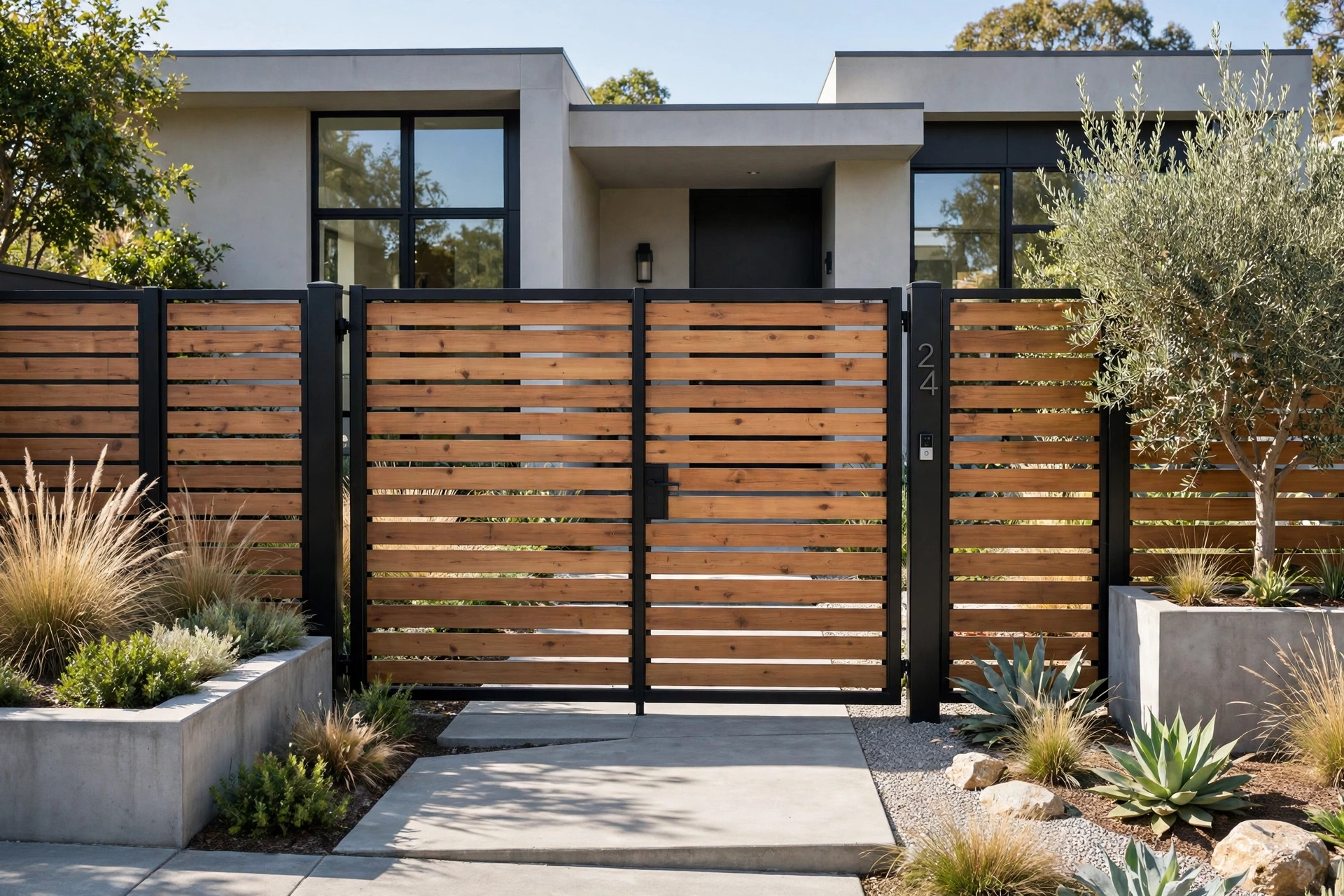
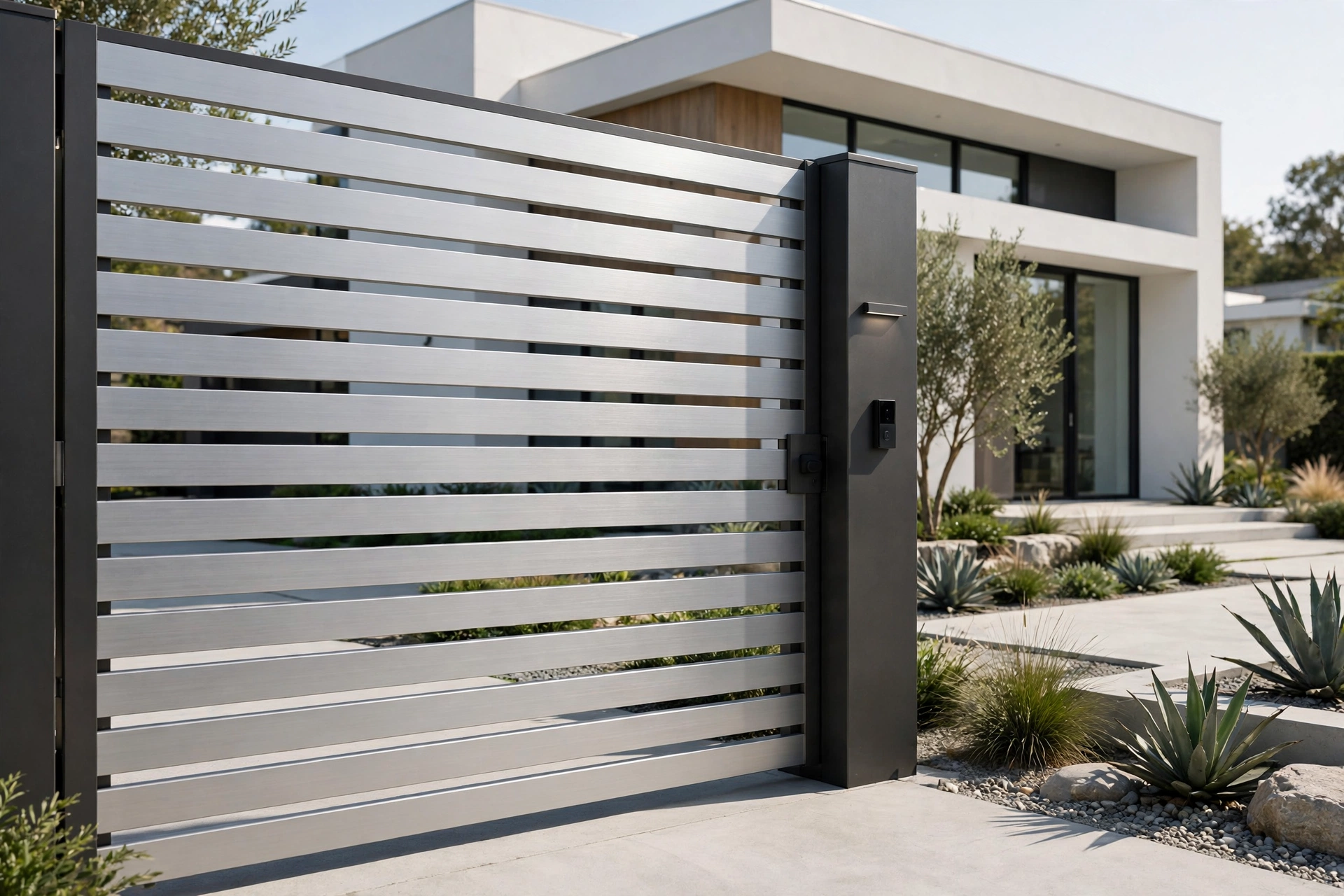
Horizontal slats are the defining motif of the modern gate — clean, rhythmic, endlessly adaptable. In timber, aluminum, or steel, they give privacy without heaviness.
Horizontal lines make entrances feel wider. Vary the gaps for light and air. They suit ranch and contemporary homes.
2. Go Full-Height for Privacy
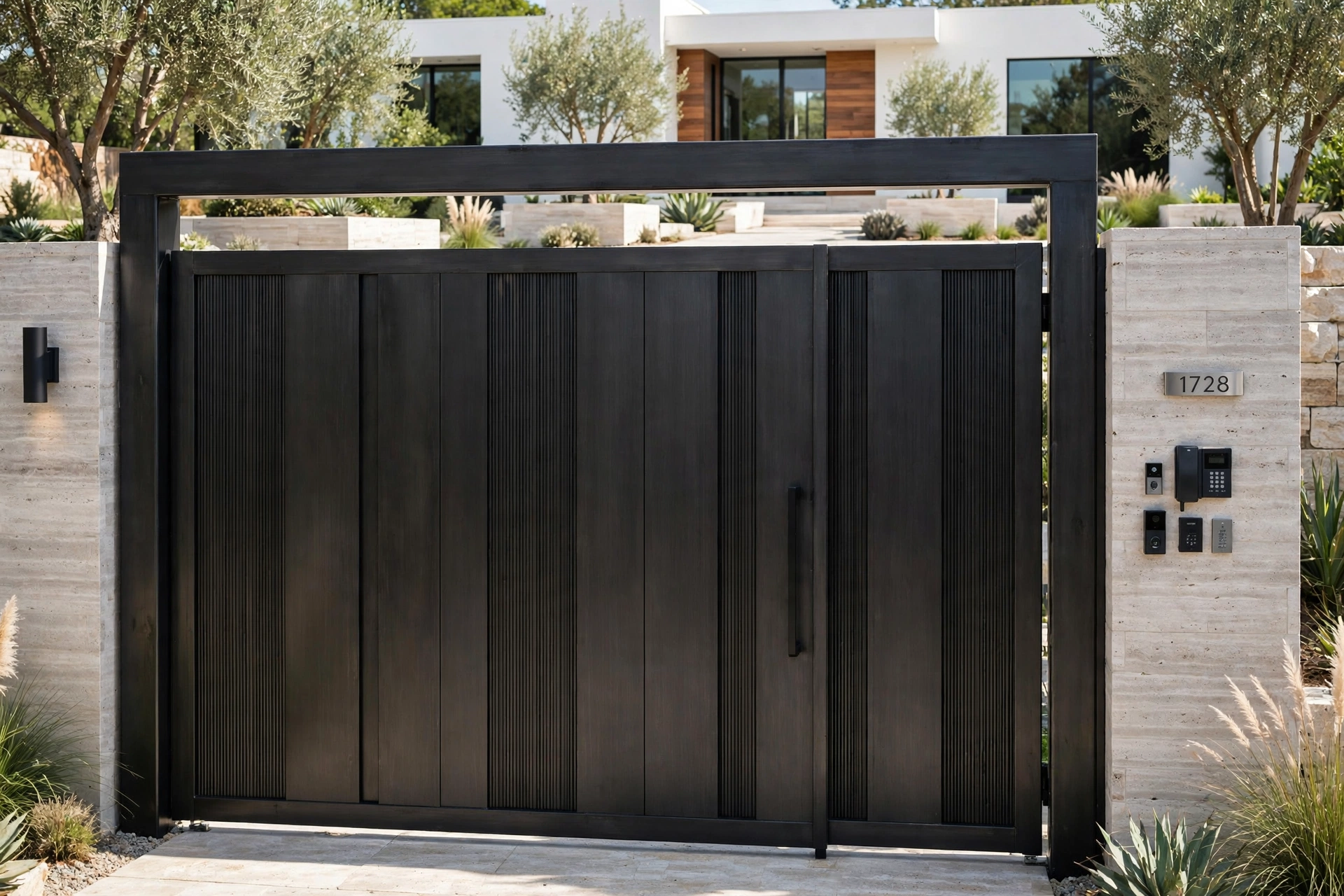
A full-height modern gate — six feet or more of considered design — creates a private world behind it. Done in quality materials, it reads as architecture, not a wall.
Full-height gates maximize privacy. They need solid engineering. Balance mass with refined detailing.
3. Float a Cantilever Slider
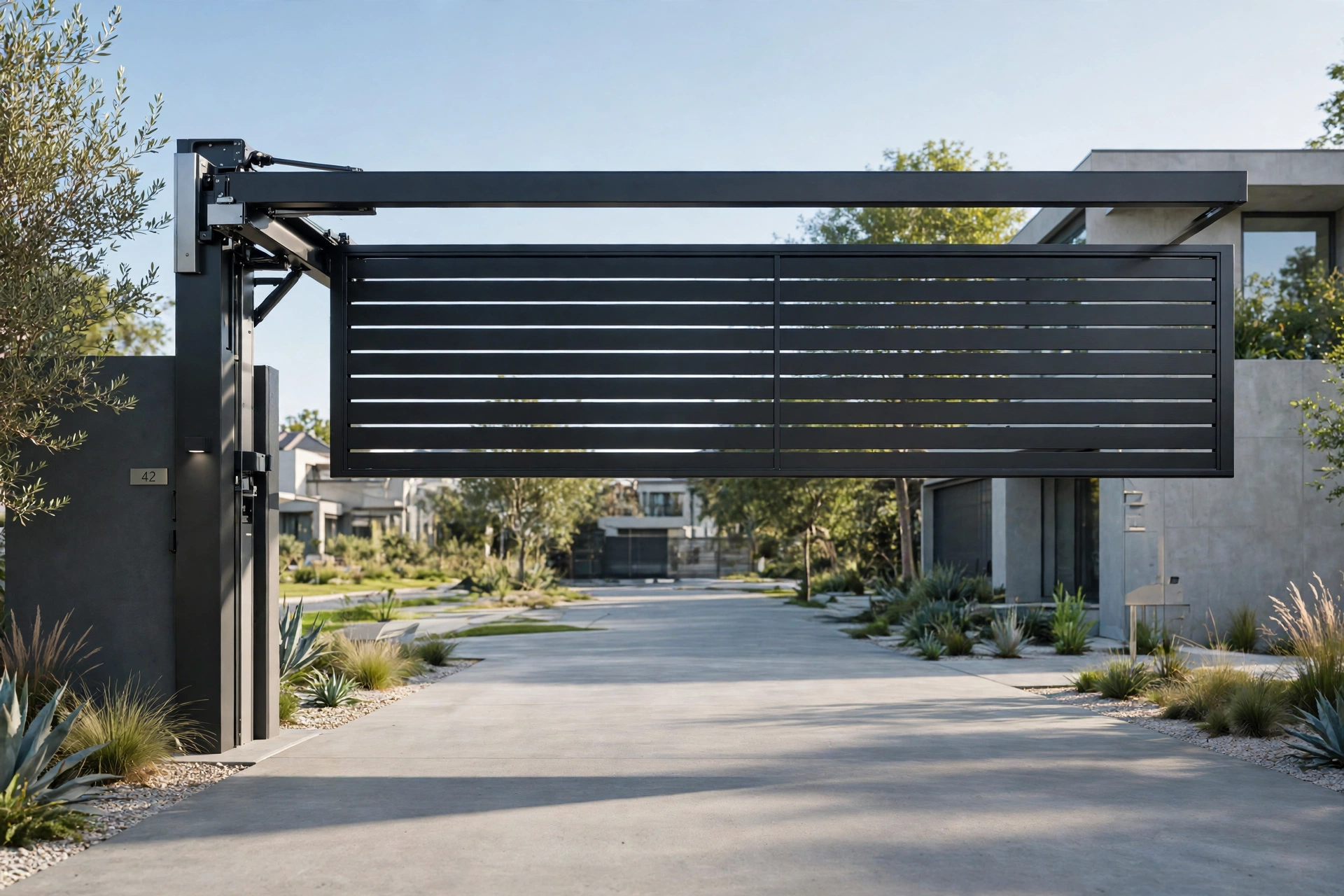
A cantilevered sliding gate floats above the driveway with no ground track — pure engineering elegance. The clean motion and uncluttered threshold scream modern.
No ground track means no debris jams. The floating look is striking. It suits level driveways best.
4. Mix Wood and Metal
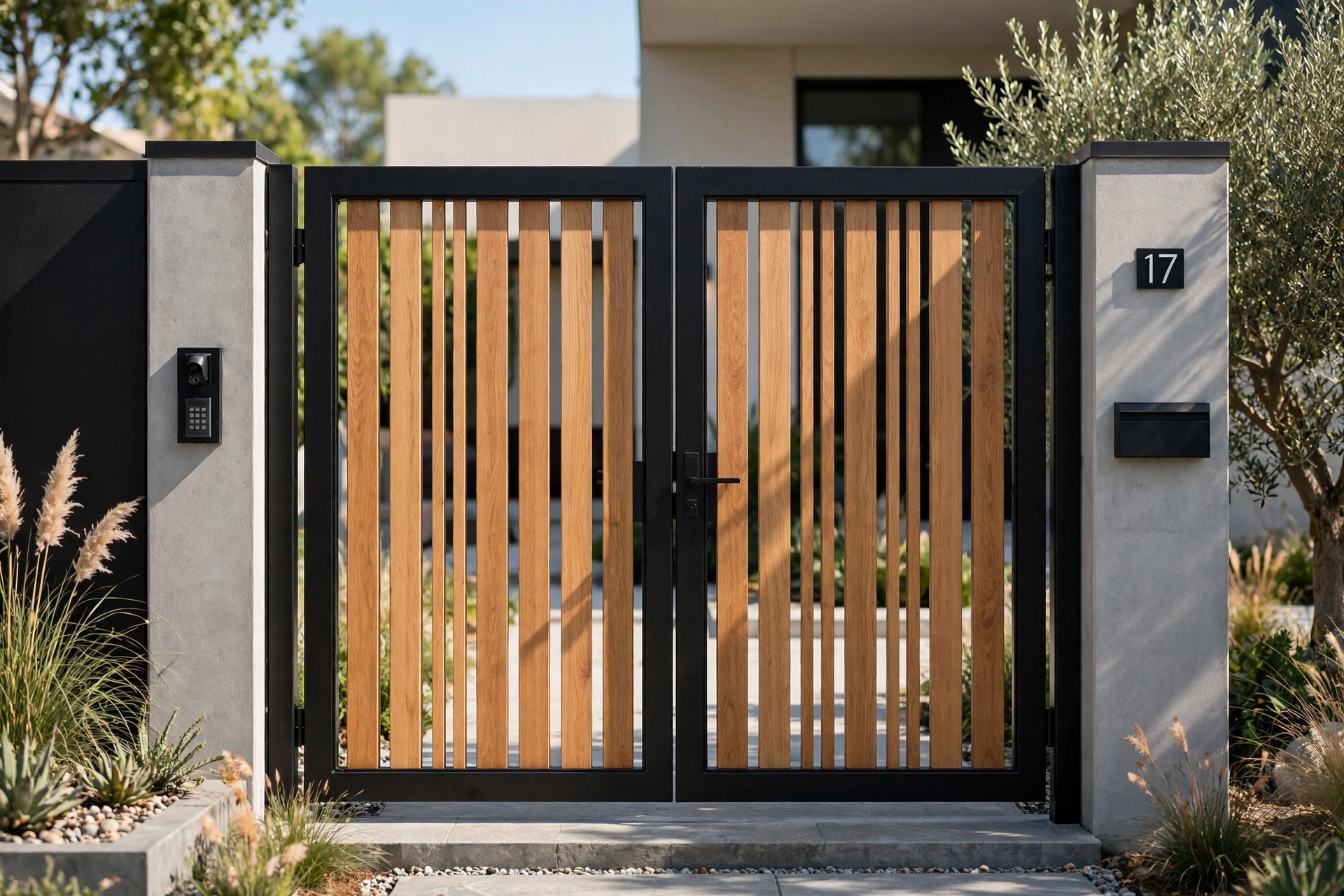
Warm timber set in a crisp metal frame gets you modernism with a soul. The wood softens the industrial edge; the frame keeps it precise and durable.
Wood-metal mixes feel balanced. Use weather-resistant timber. The frame protects the wood’s edges.
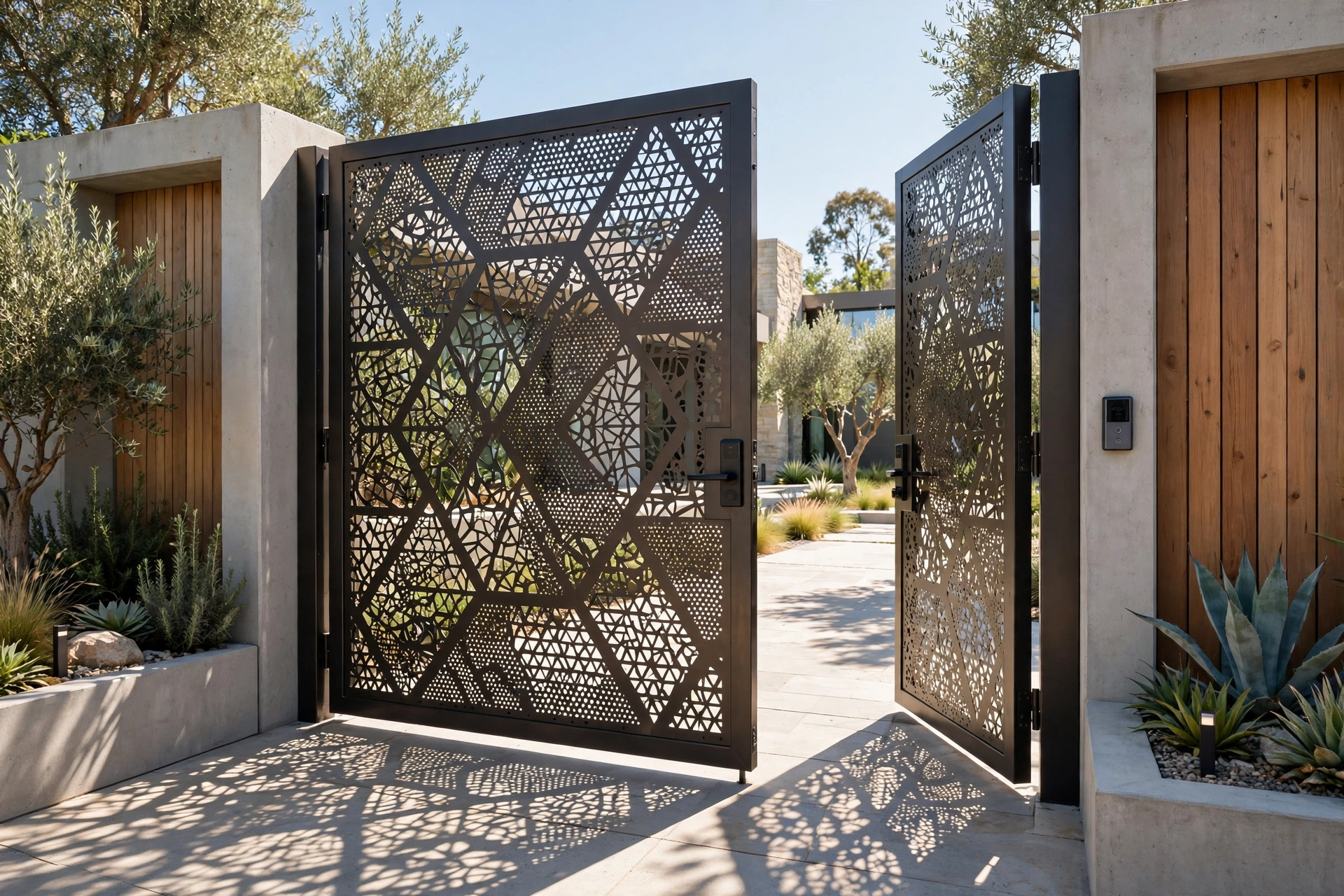
5. Perforate for Pattern and Light
Perforated metal panels filter light into beautiful patterns while keeping the property secure. By day they’re graphic; backlit at night, they’re magical.
Perforations balance privacy and light. Patterns can be fully custom. Night lighting transforms them.
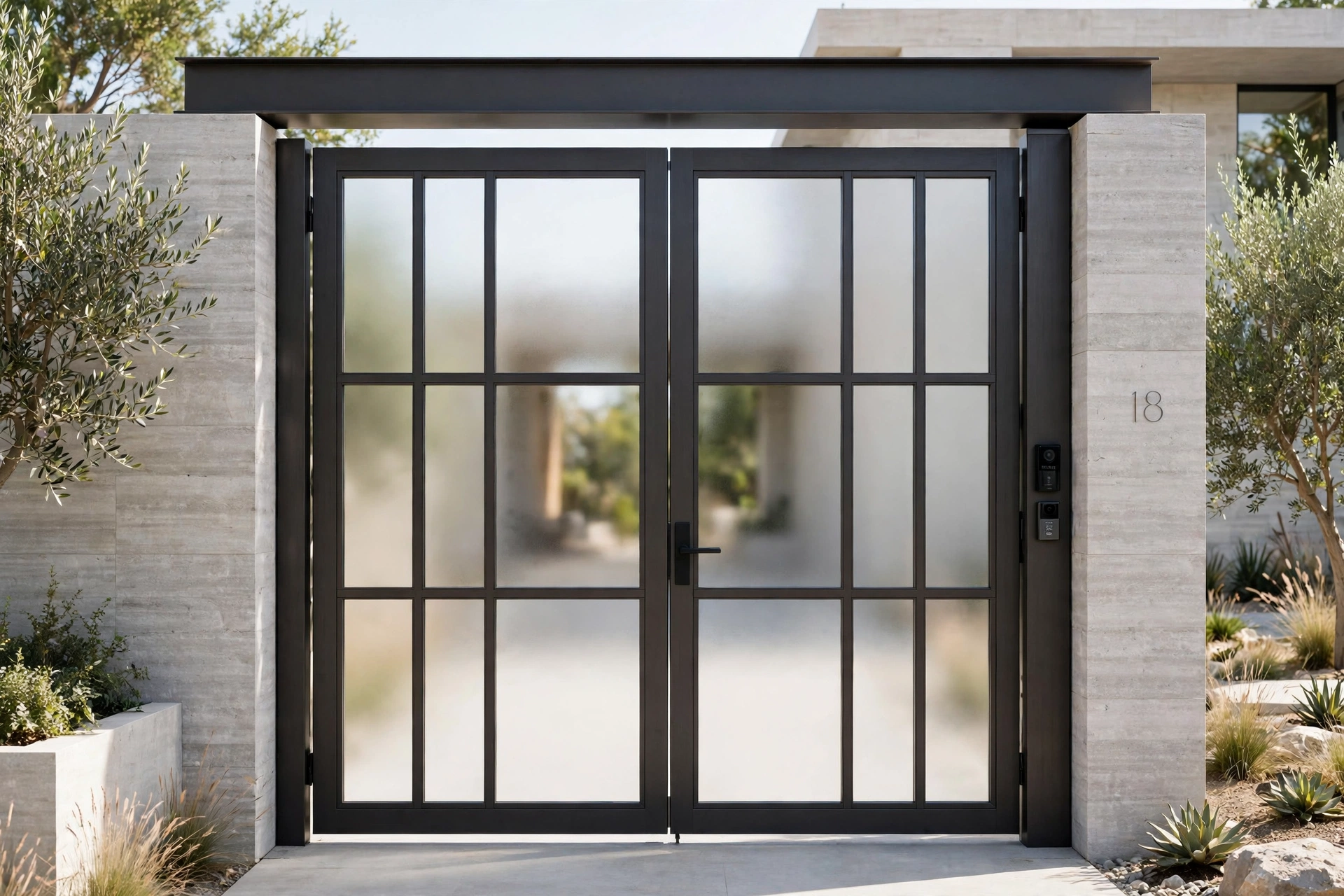
6. Accent with Glass
Framed glass inserts — frosted for privacy, clear for views — lighten a modern gate’s mass. It’s the detail that separates a good gate from a designed one.
Glass inserts add lightness. Frosted options keep privacy. They suit minimalist architecture.
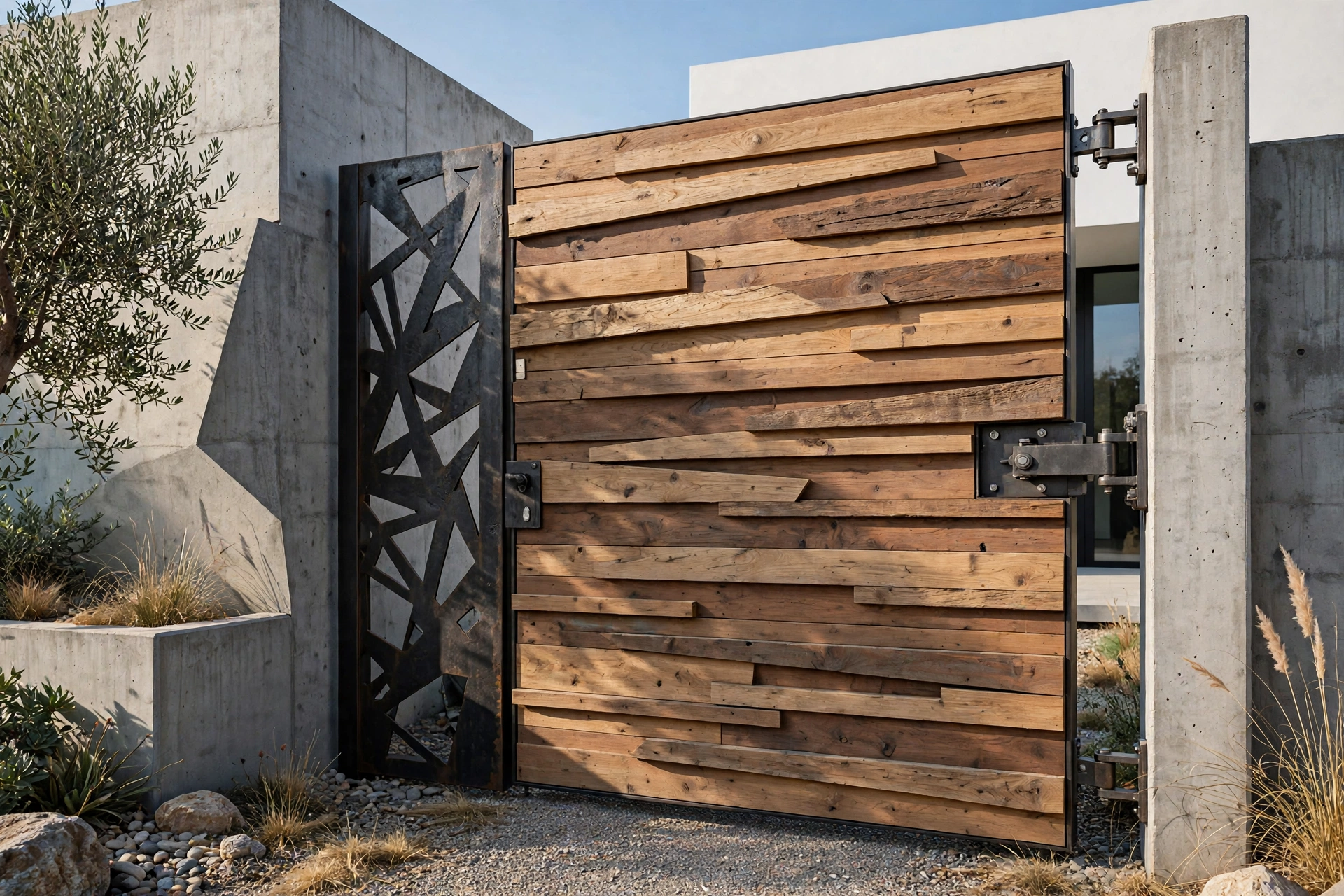
7. Design Asymmetrically
Who says a gate must be symmetrical? An off-center pivot, unequal panels, or a single bold diagonal brings avant-garde energy to the entrance.
Asymmetry signals design confidence. It suits architect-designed homes. Keep the engineering robust.
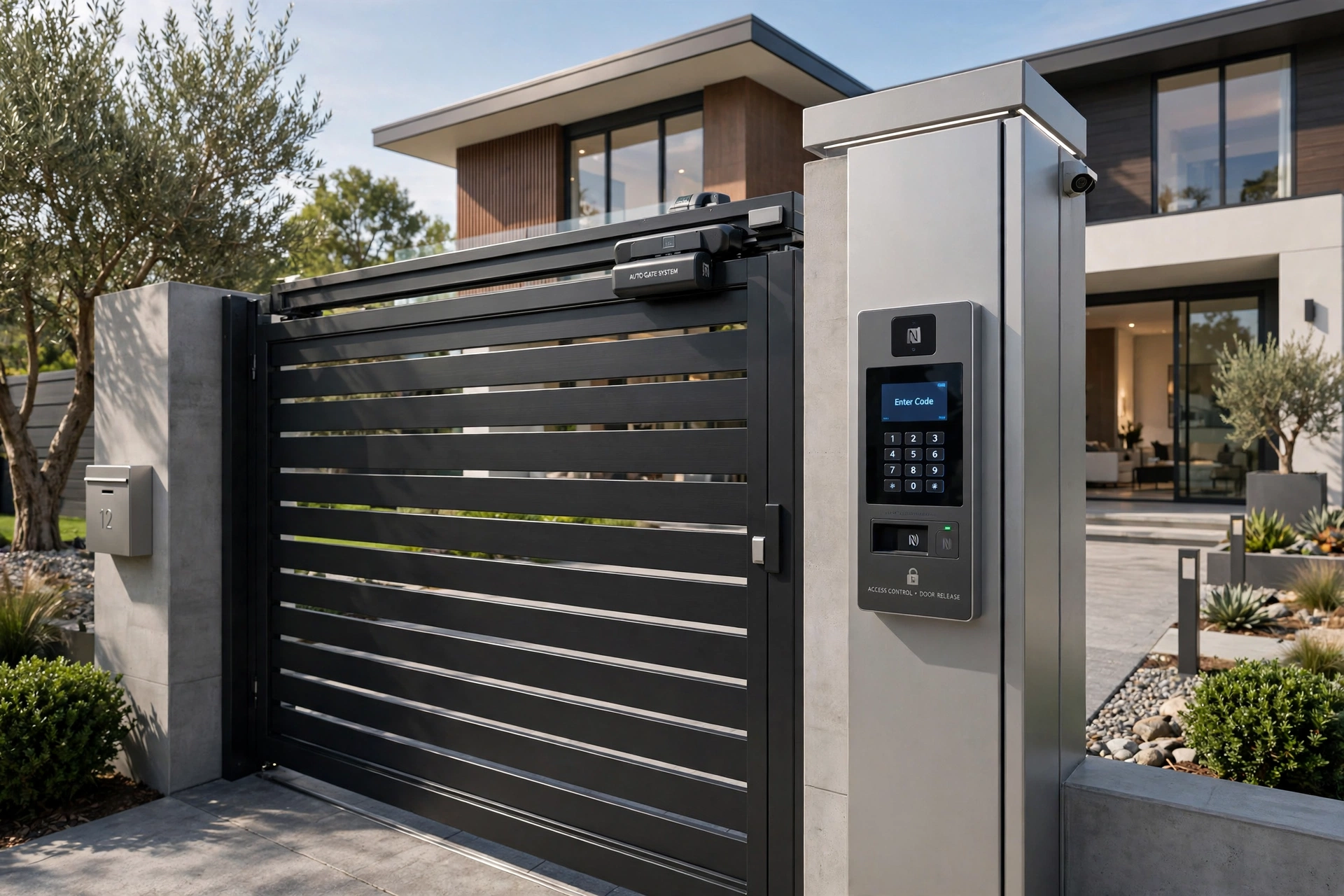
8. Automate Everything
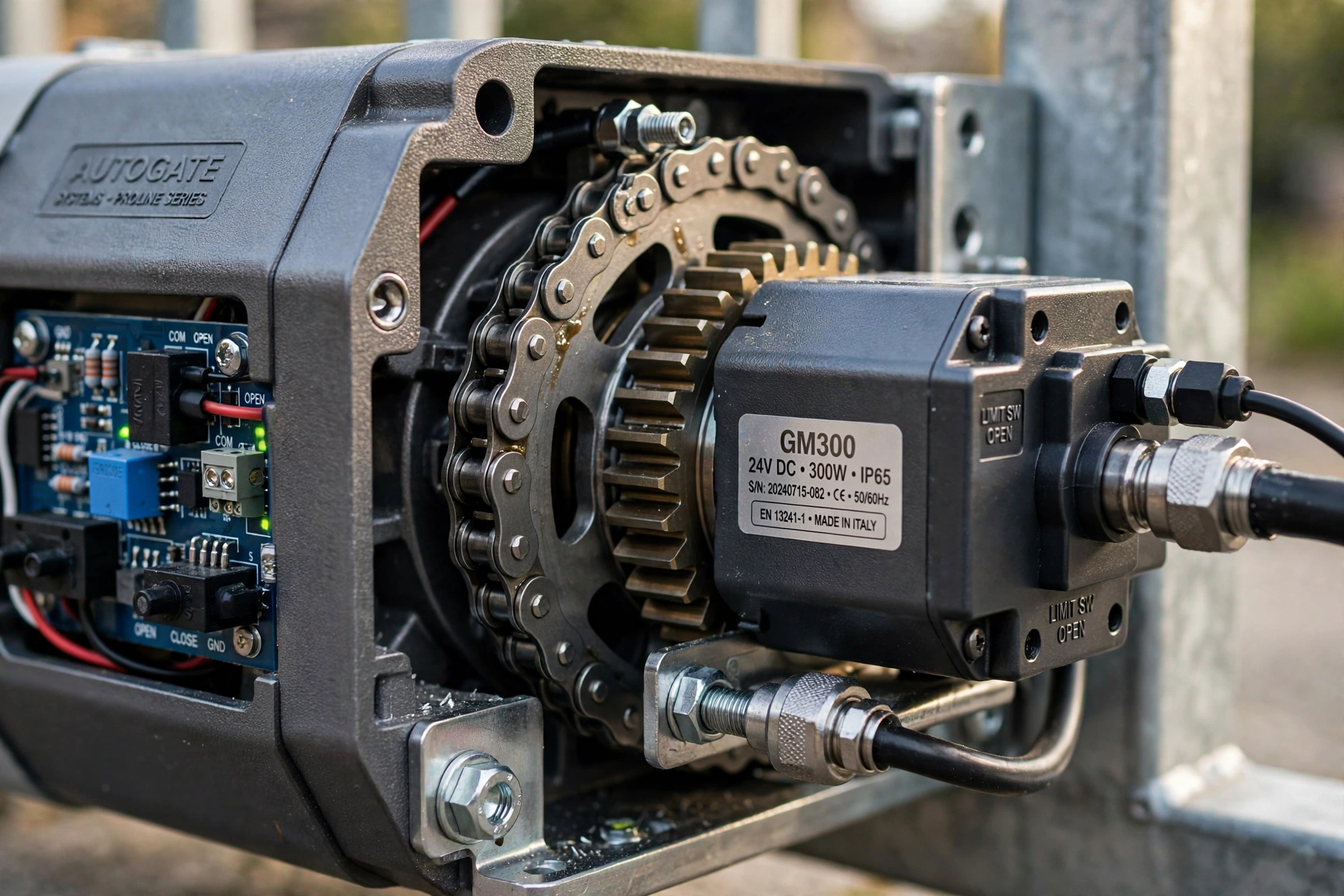
The modern gate opens itself — phone, remote, keypad, or car sensor. Silent motors and smart controls turn the entrance into a seamless experience.
Smart control is the modern standard. Choose quiet, reliable motors. Battery backup keeps you moving in outages.
9. Light It with LEDs
Integrated LED strips — along the top rail, behind slats, in the pillars — give modern gates their after-dark identity. The entrance glows; the street notices.
LEDs are efficient and long-lived. Integrated strips look intentional. Warm white flatters most materials.
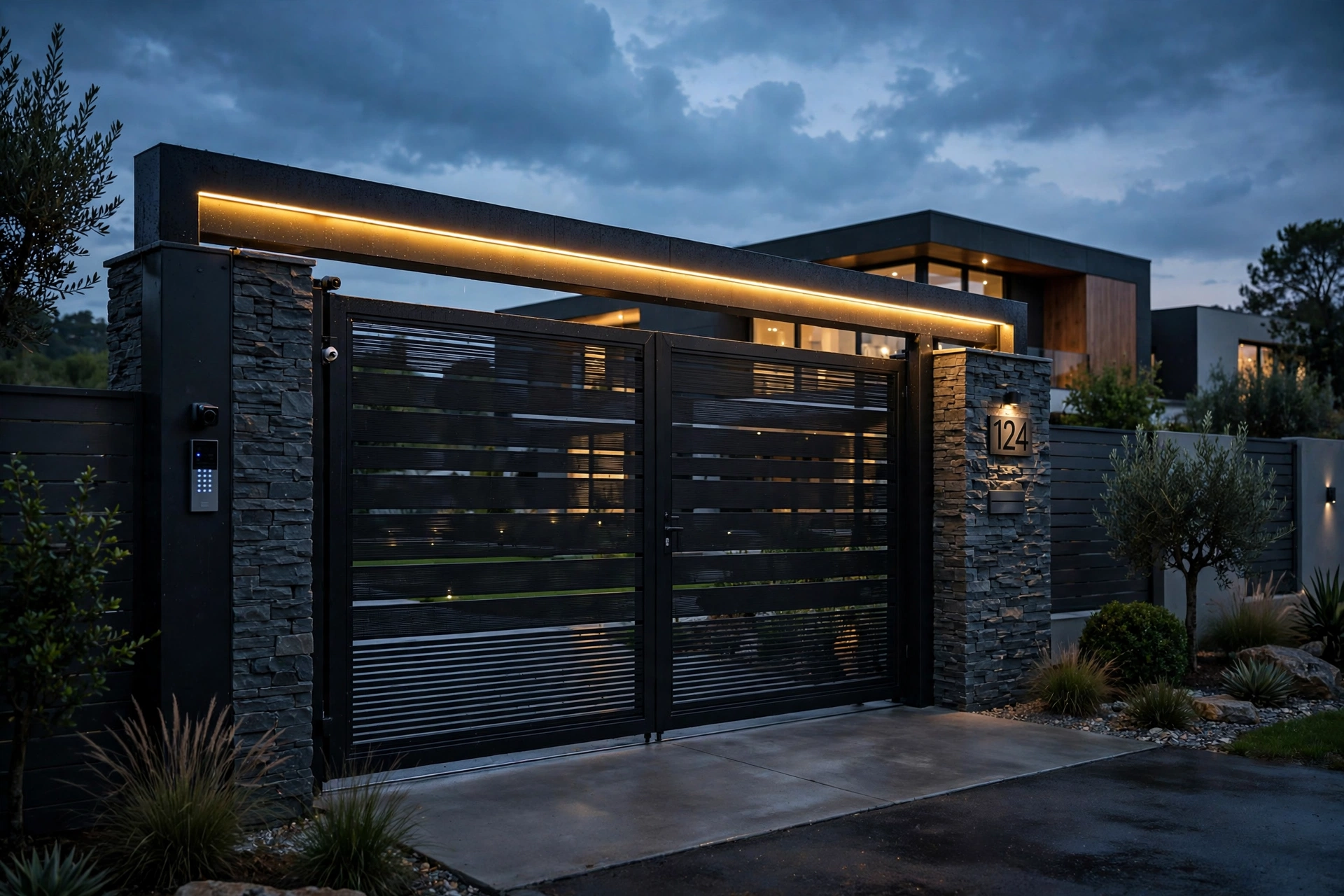
10. Keep Panels Flat and Clean
Sometimes the most modern move is the simplest: flat panels, hidden fixings, zero ornament. The material and proportions do all the talking.
Flat-panel gates are timelessly modern. Quality materials matter more here. Precision fabrication is essential.
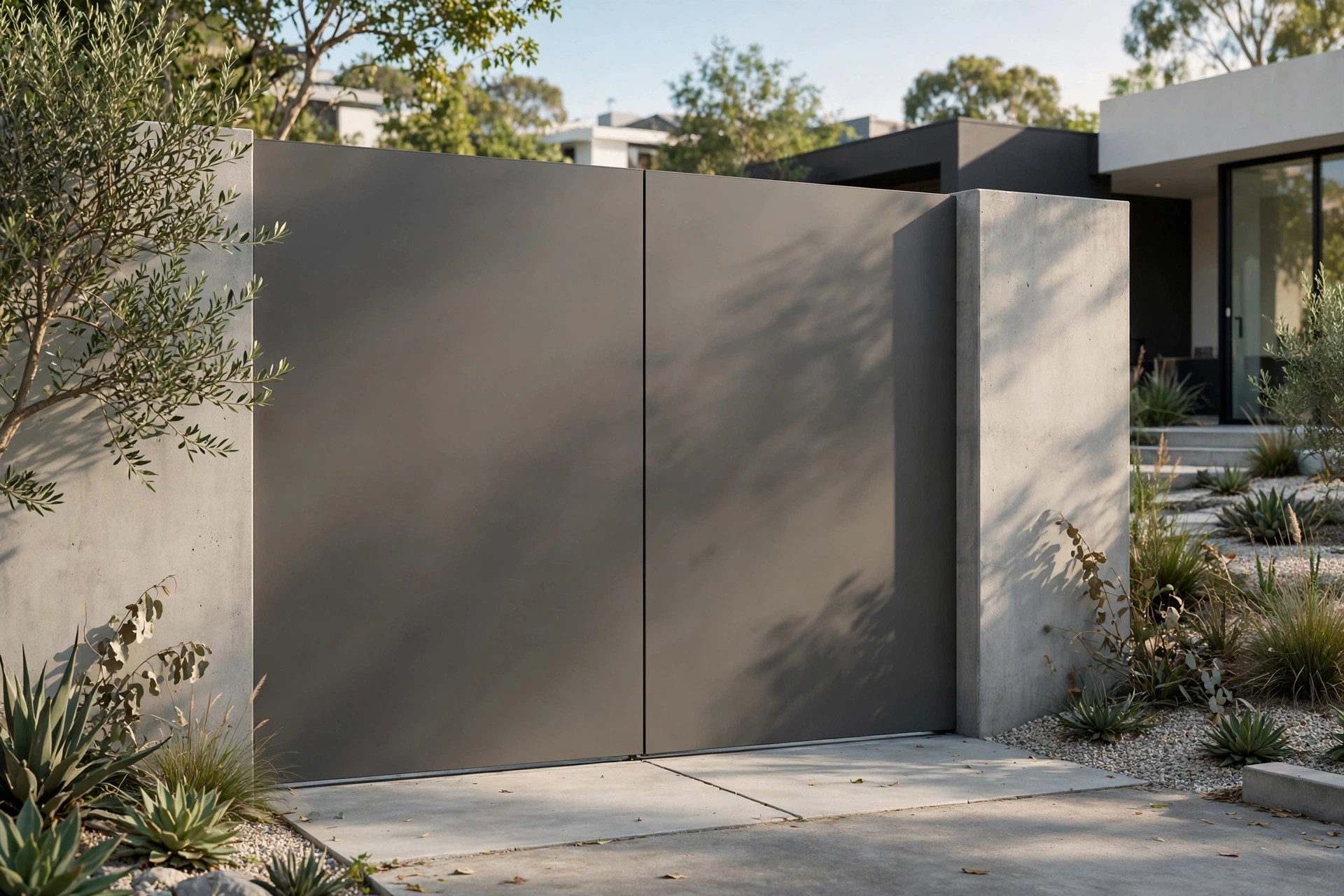
11. Integrate the Mailbox
A mailbox built into the gate pillar or panel keeps the entrance composed — one less object cluttering the frontage. Match the finish for a seamless look.
Integrated mailboxes reduce clutter. They need weather protection. It’s a small detail with big polish.
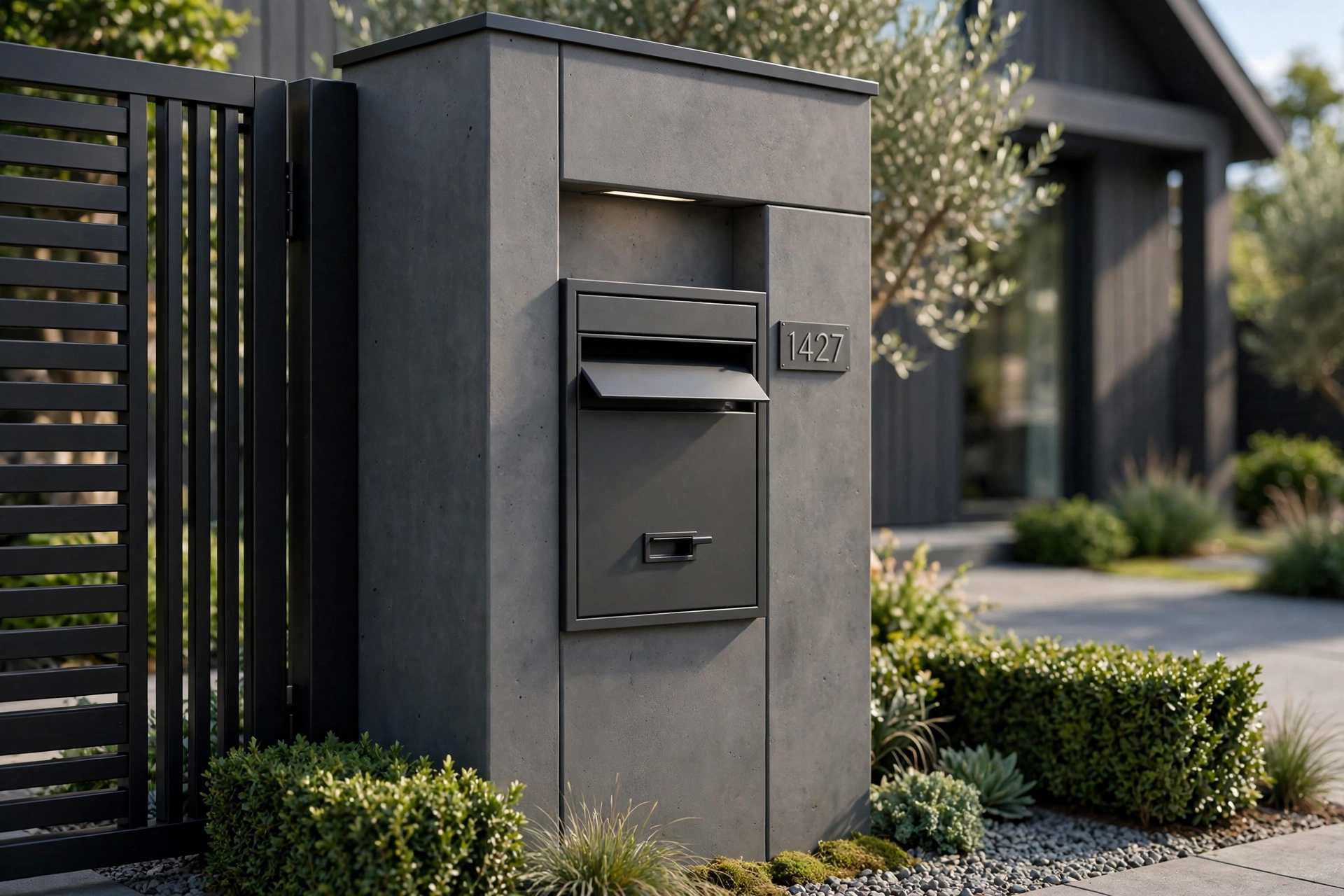
12. Swing Double and Modern
Two modern panels swinging inward — flat steel, timber slats, or mixed materials — bring symmetry to contemporary design. Automate both leaves for effortless use.
Double swing suits wide entries. Both leaves should match precisely. Automation handles the weight.
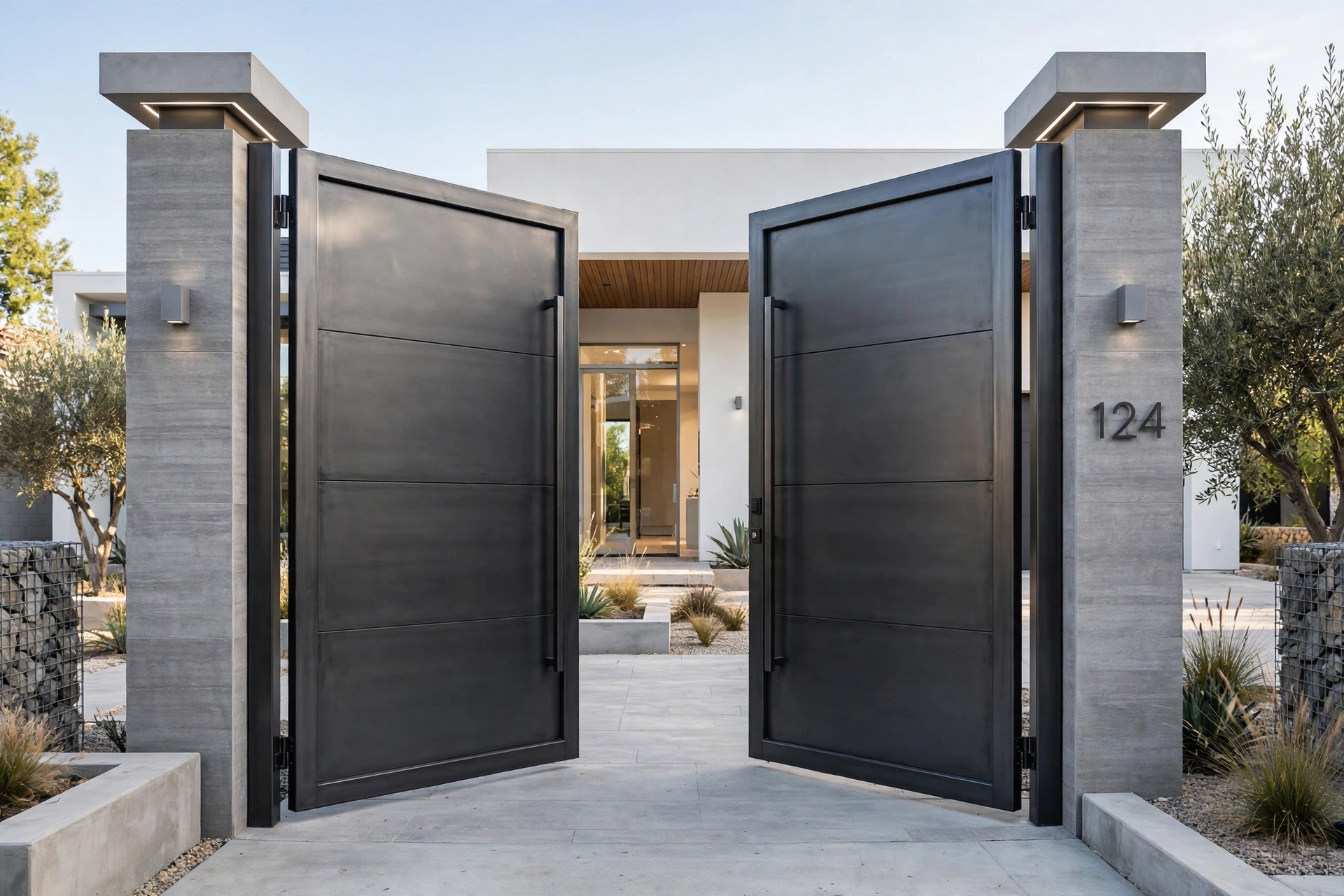
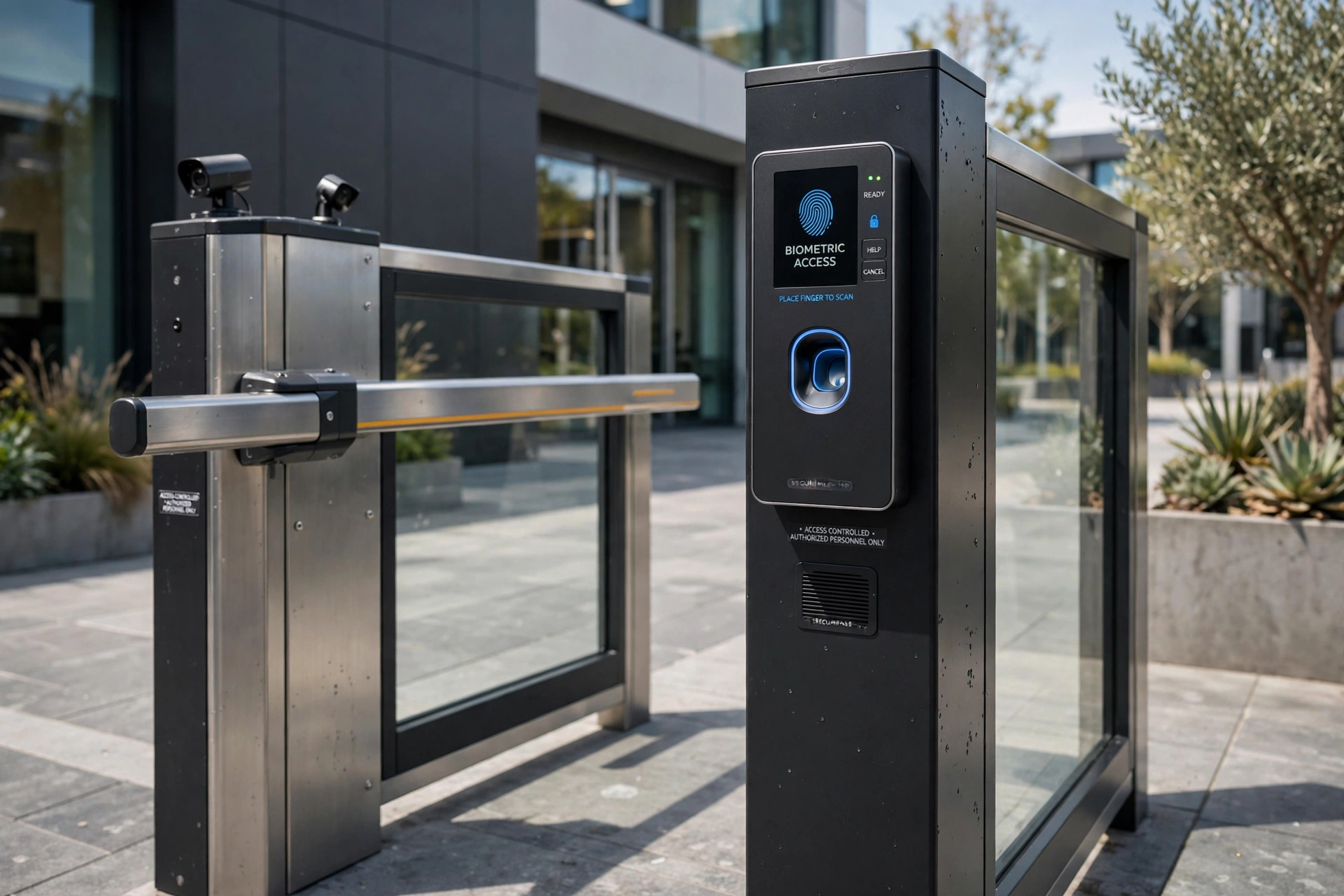
13. Secure with Biometrics
Fingerprint or facial-recognition entry on the pedestrian gate is modern living at its most seamless. No keys, no codes to forget — just walk up and in.
Biometrics add convenience and security. Choose weatherproof rated units. Keep a backup entry method.
14. Weather in Steel
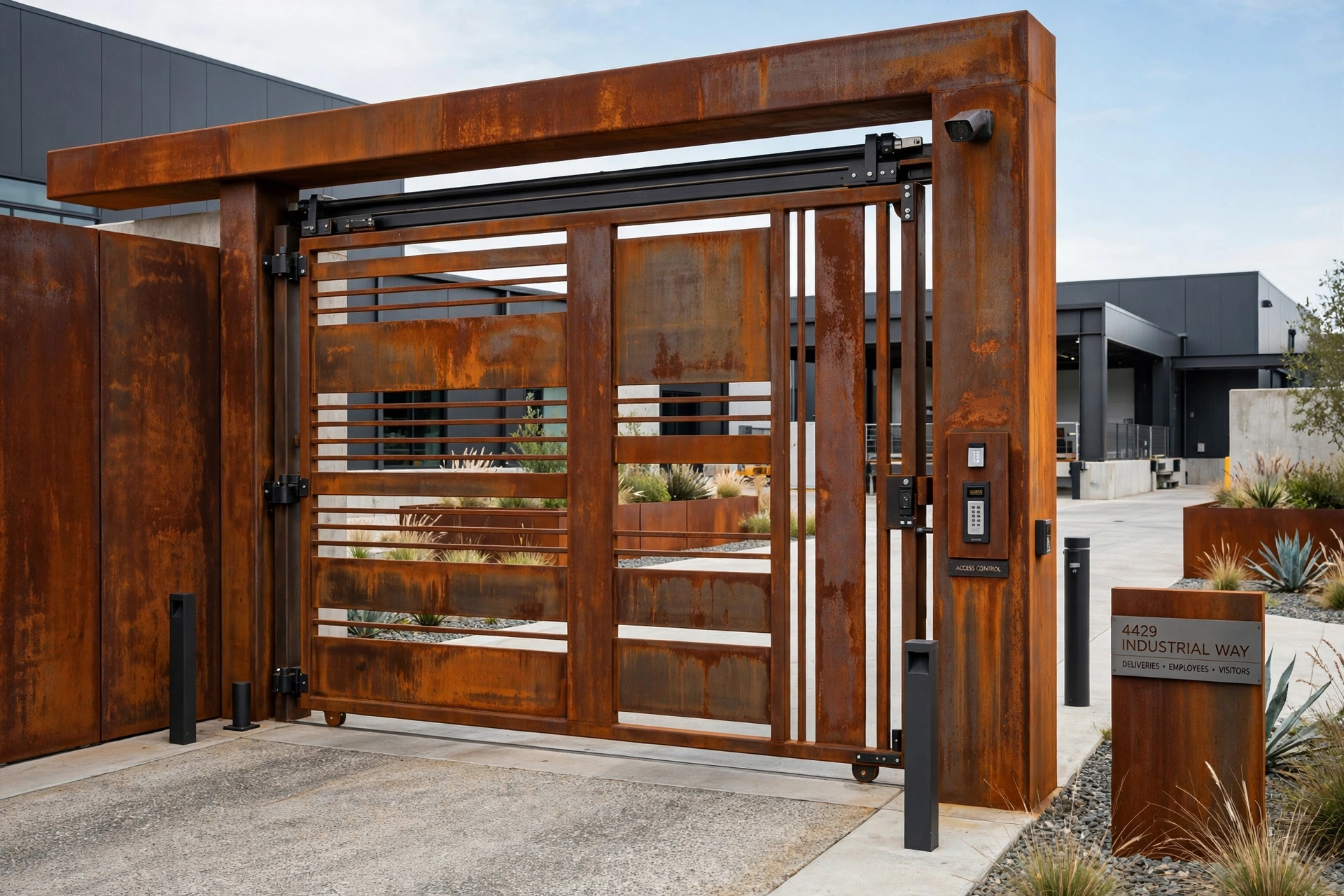
Corten weathering steel gates develop a rich rust patina that protects itself — industrial character that only improves with age. It’s modernism with a memory.
Corten’s patina is self-protecting. It pairs beautifully with concrete. Allow for runoff staining nearby.
15. Design Gate and Fence as One
The most resolved entrances treat gate and fence as a single design — same materials, same rhythm, the gate distinguished by its frame or hardware. Unity reads as intention.
Unified design looks architect-designed. The gate stands out through detail. Plan both together from the start.
16. Stand Tall with Vertical Slats
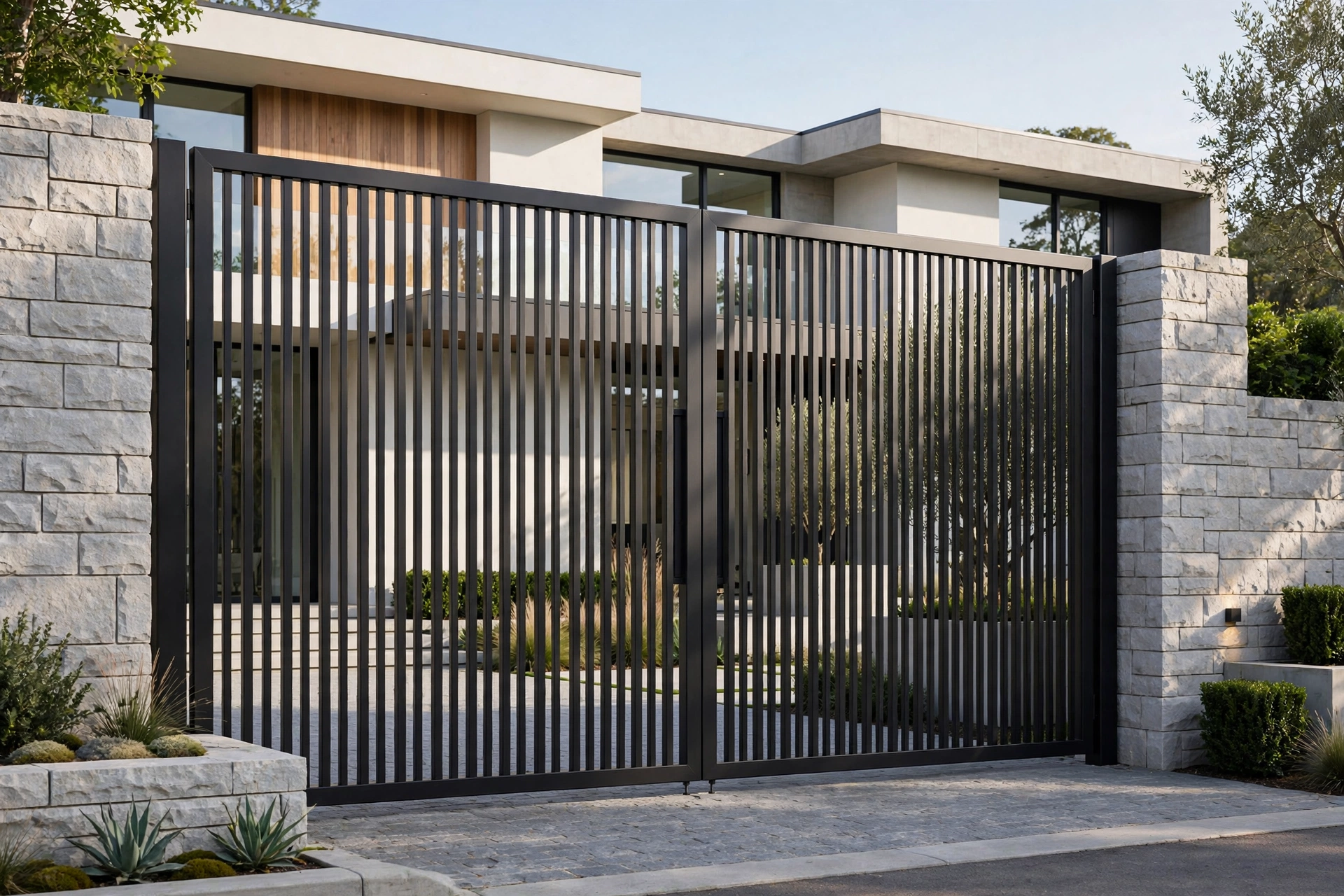
Vertical slats give modern gates a different rhythm — more formal, more architectural. They draw the eye upward and make entrances feel taller.
Vertical lines add height. They suit narrow frontages. Spacing controls privacy precisely.
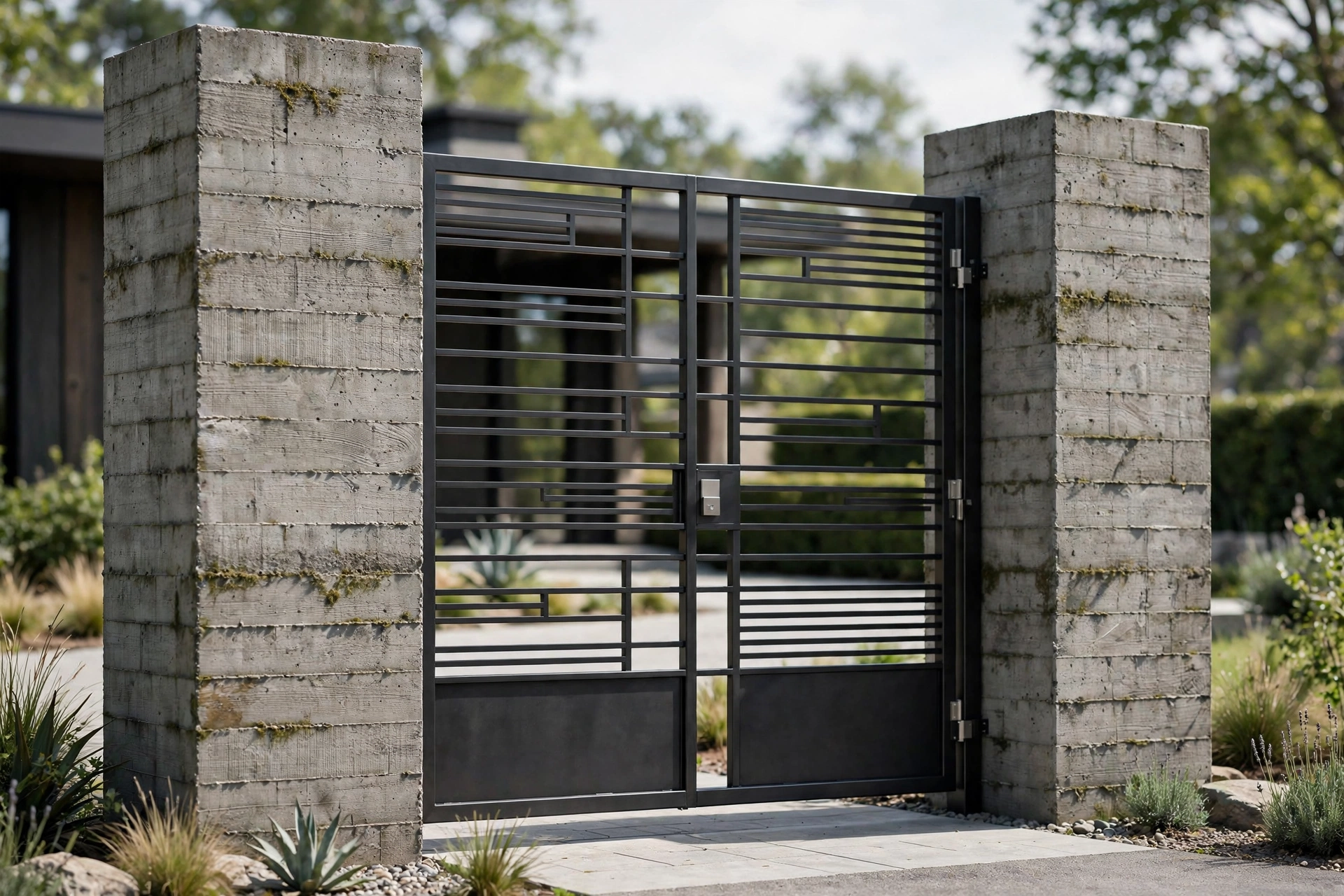
17. Combine Concrete and Metal
Board-formed concrete pillars with a steel gate between them — brutalist warmth meeting precision. The material contrast is the whole design.
Concrete pillars give permanence. Steel gates give finesse. The pairing is unmistakably modern.
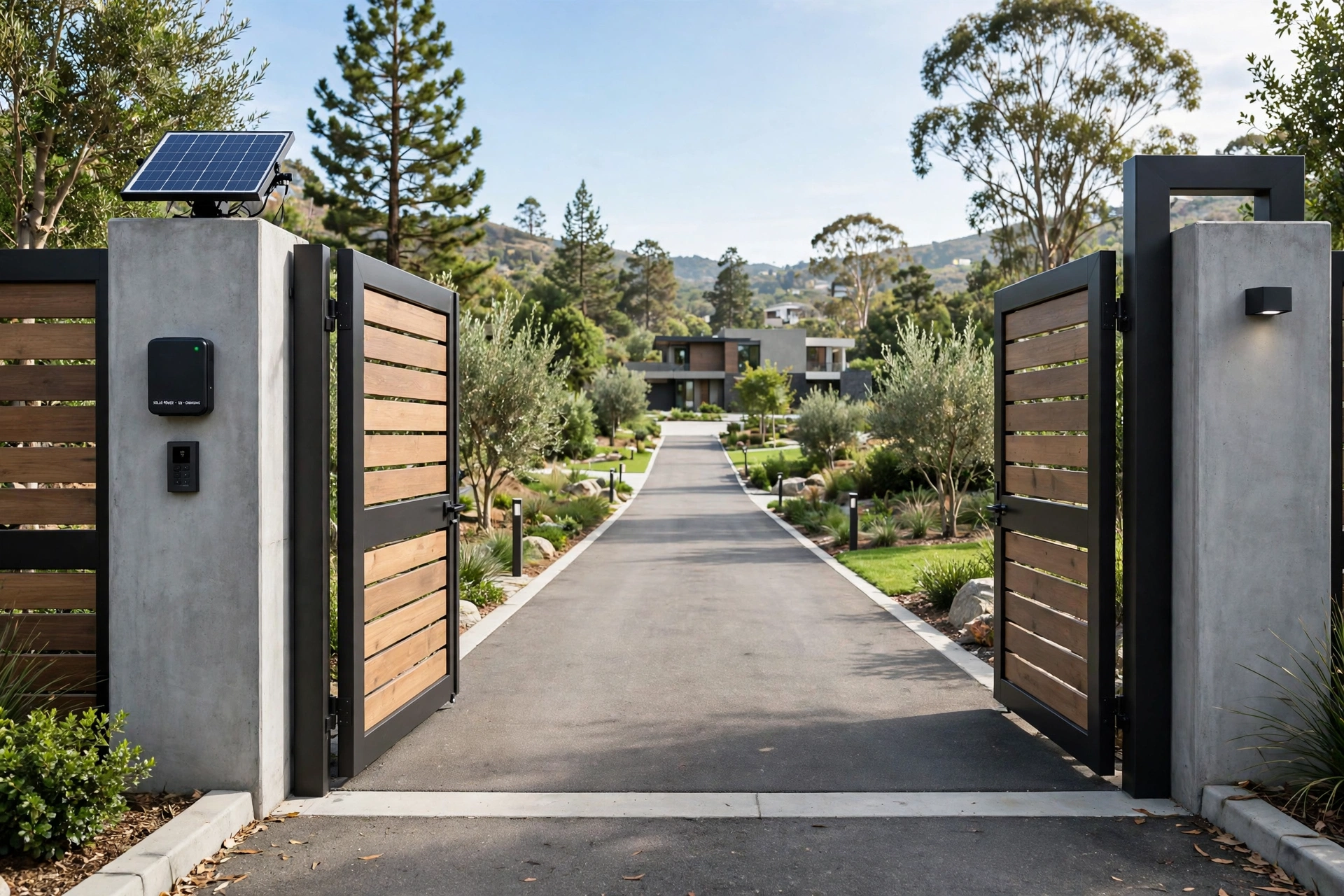
18. Power It with Solar
Solar-powered gate automation frees the entrance from wiring trenches — ideal for long driveways or remote gates. Modern kits are reliable and tidy.
Solar suits gates far from the house. Battery storage covers cloudy days. It’s genuinely low-maintenance.
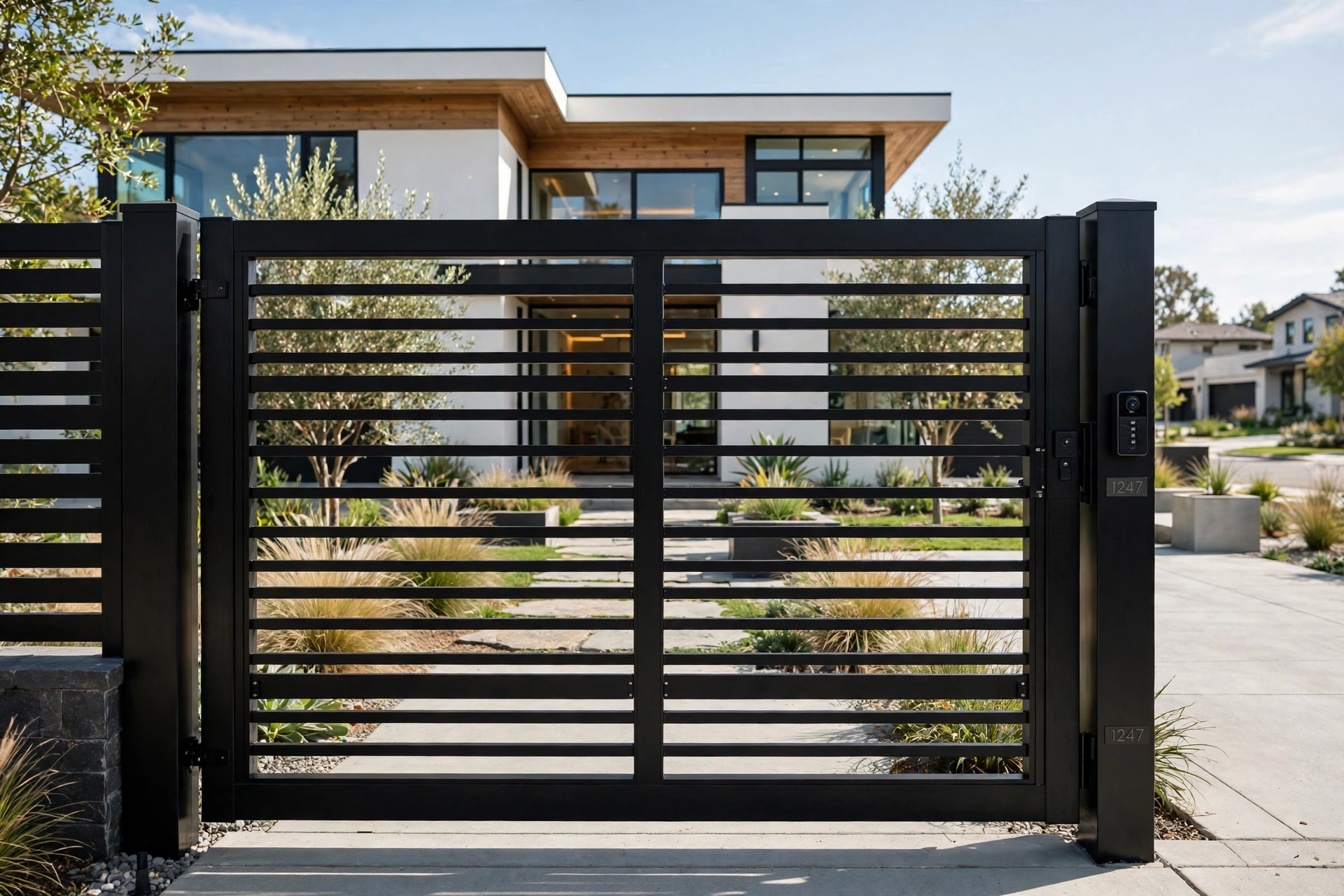
19. Go Sleek in Black Aluminum
Black aluminum gates hit the modern sweet spot — crisp, lightweight, rust-proof, and sharp against any architecture. It’s the default choice for a reason.
Black aluminum suits almost any home. It never needs painting. The look stays sharp for decades.
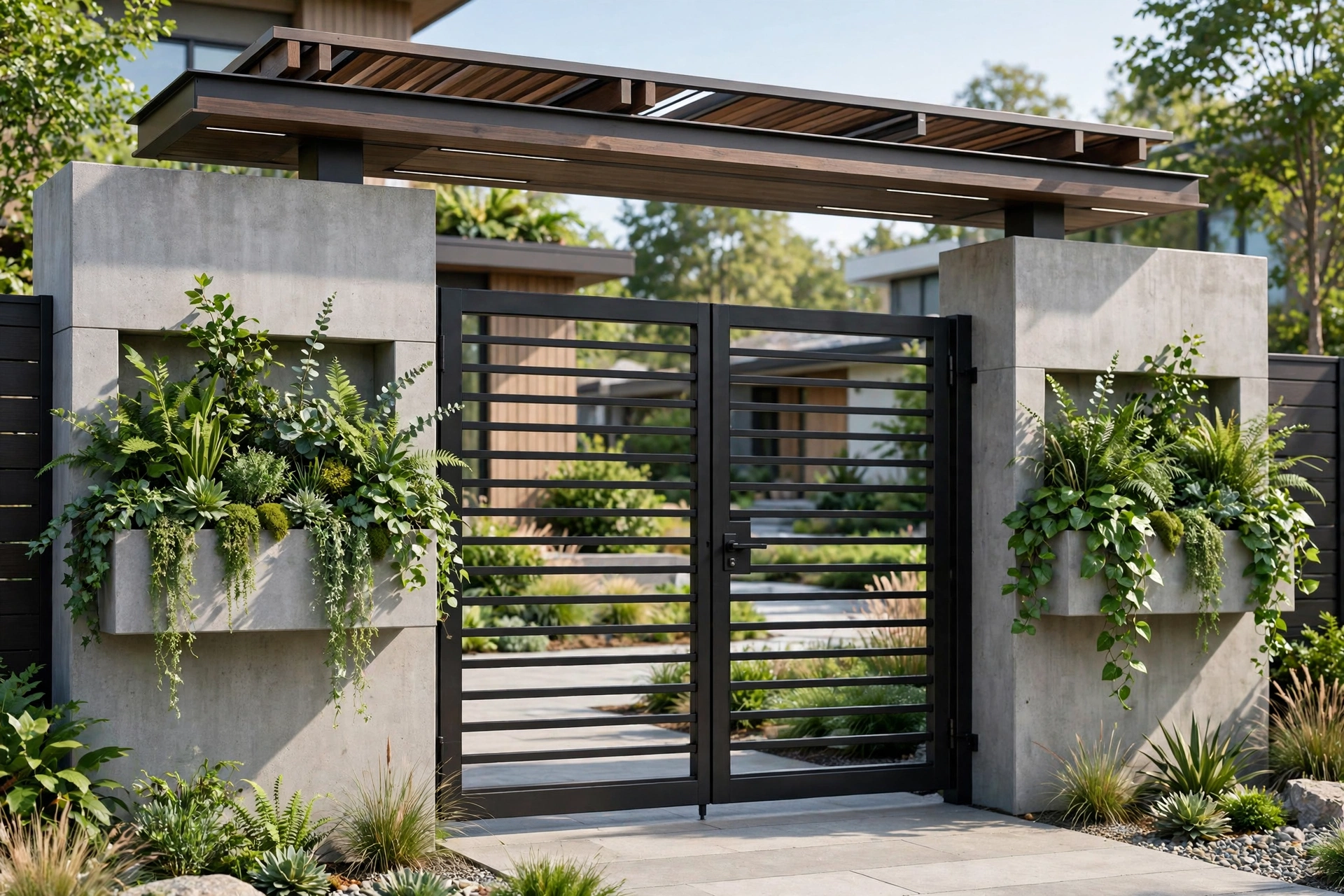
20. Plant Into the Design
Integrate planters into the gate pillars or alongside the panels — greenery softening the geometry. A modern gate with living edges feels designed, not installed.
Planters soften hard materials. Choose plants for the exposure. Irrigation keeps them effortless.
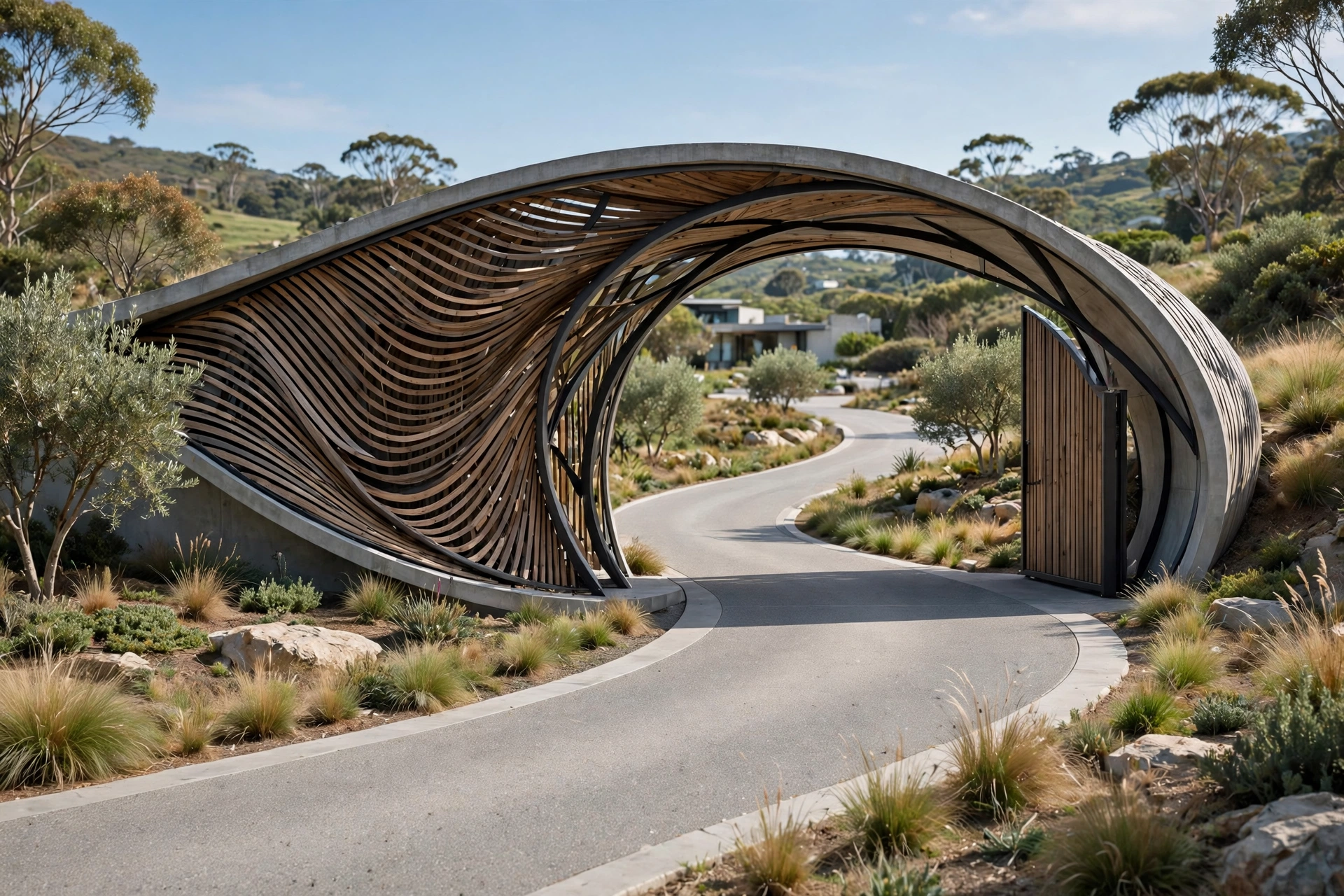
21. Curve It Gently
A subtly curved gate — following the driveway’s arc or just softening the line — brings organic movement to modern geometry. It’s unexpected and memorable.
Curved gates follow landscape lines. They need specialist fabrication. The result is one-of-a-kind.
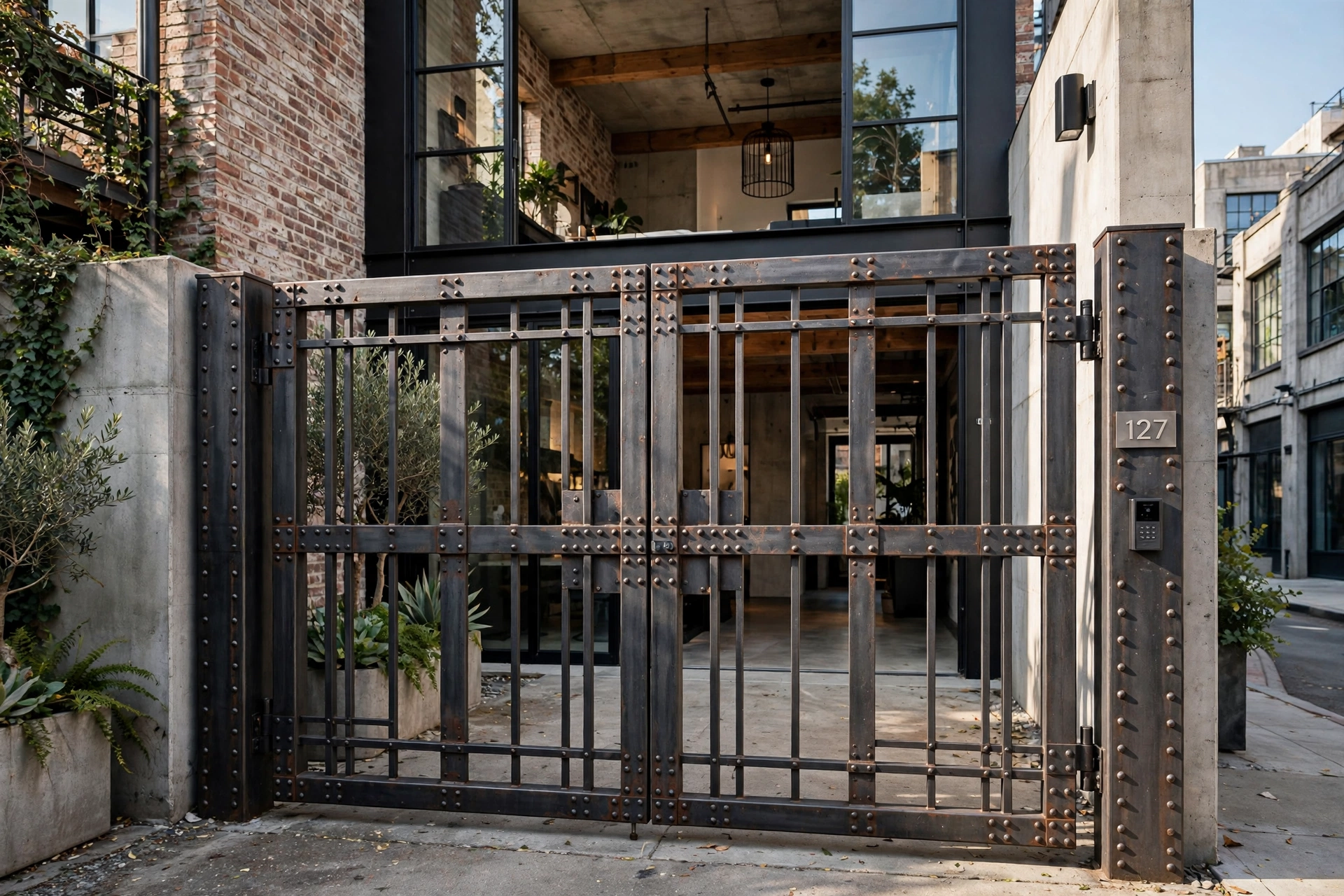
22. Embrace Industrial Chic
Exposed frames, rivets, raw steel — industrial-chic gates wear their construction proudly. It’s modernism with an edge, perfect for lofts and urban homes.
Industrial details celebrate structure. Raw steel needs sealing. It pairs well with brick.
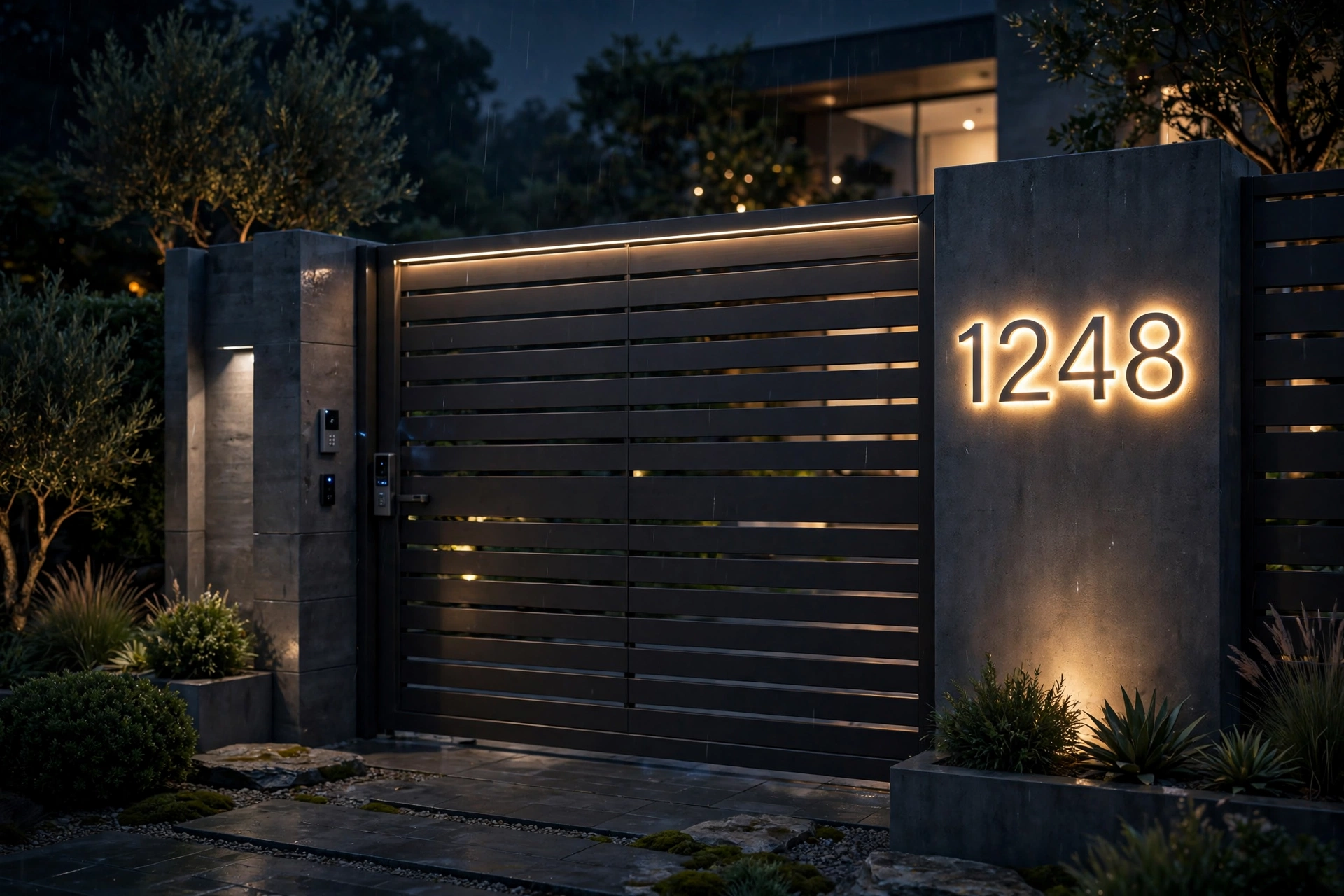
23. Light the House Numbers
Backlit house numbers integrated into the gate design are equal parts practical and beautiful. Visitors find you; the entrance glows with intention.
Lit numbers are legible at night. Integration looks far better than bolt-ons. Match the light temperature to the gate lighting.
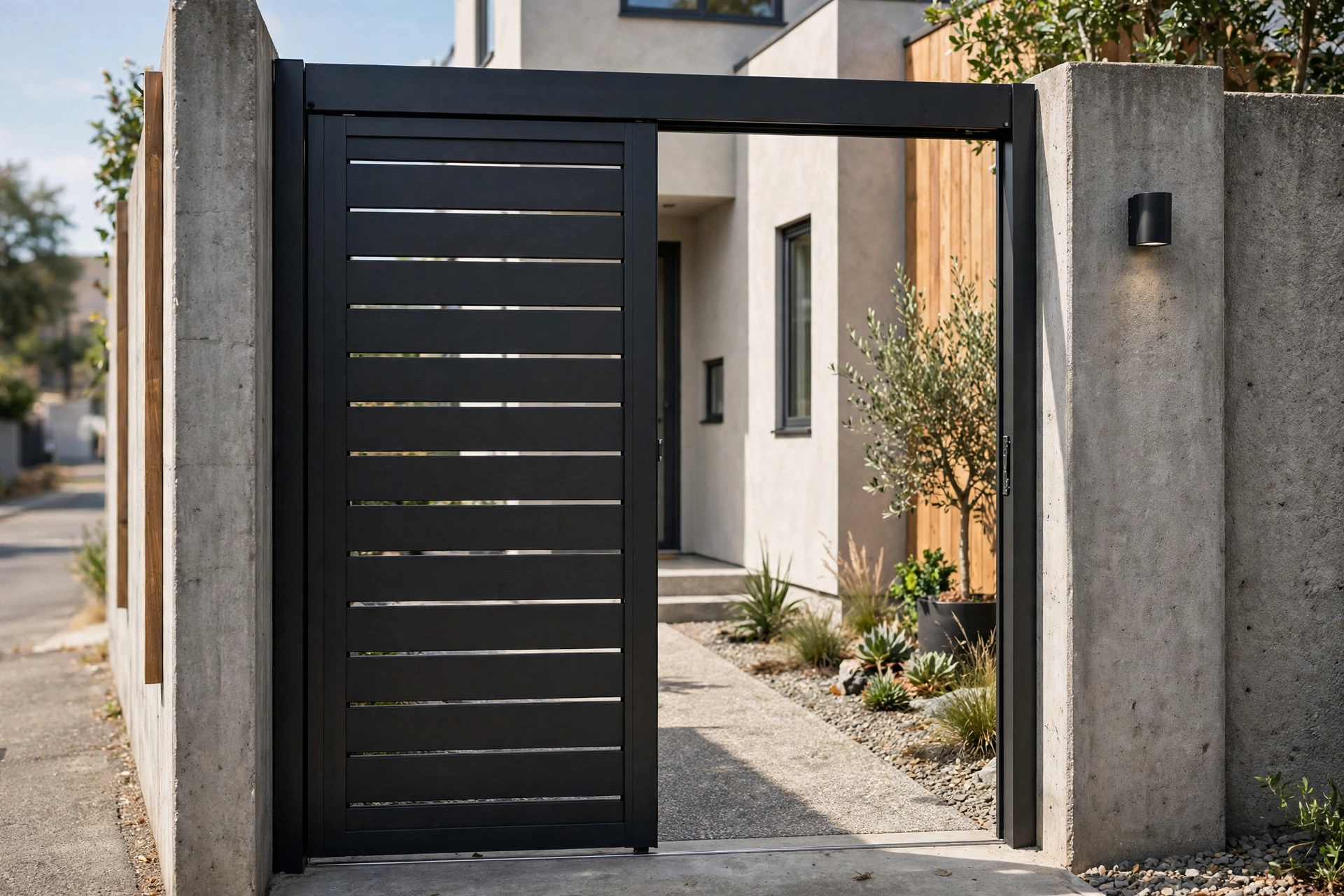
24. Scale for Small Frontages
A narrow frontage still deserves great design — a single slim panel, a pocket slider, or a pedestrian-scale gate with presence. Small entrances reward precision most.
Compact gates need careful proportioning. Pocket sliders save swing space. Details matter more at small scale.
25. Choose Automation Wisely
The final decision is the motor: sliding vs swing, power needs, safety sensors, backup power. Get the engineering right and the gate serves beautifully for decades.
Match the motor to the gate type. Safety sensors are non-negotiable. Quality automation is worth every penny.