
25 Mexican Entryway with Arched Walls and Terracotta Decor
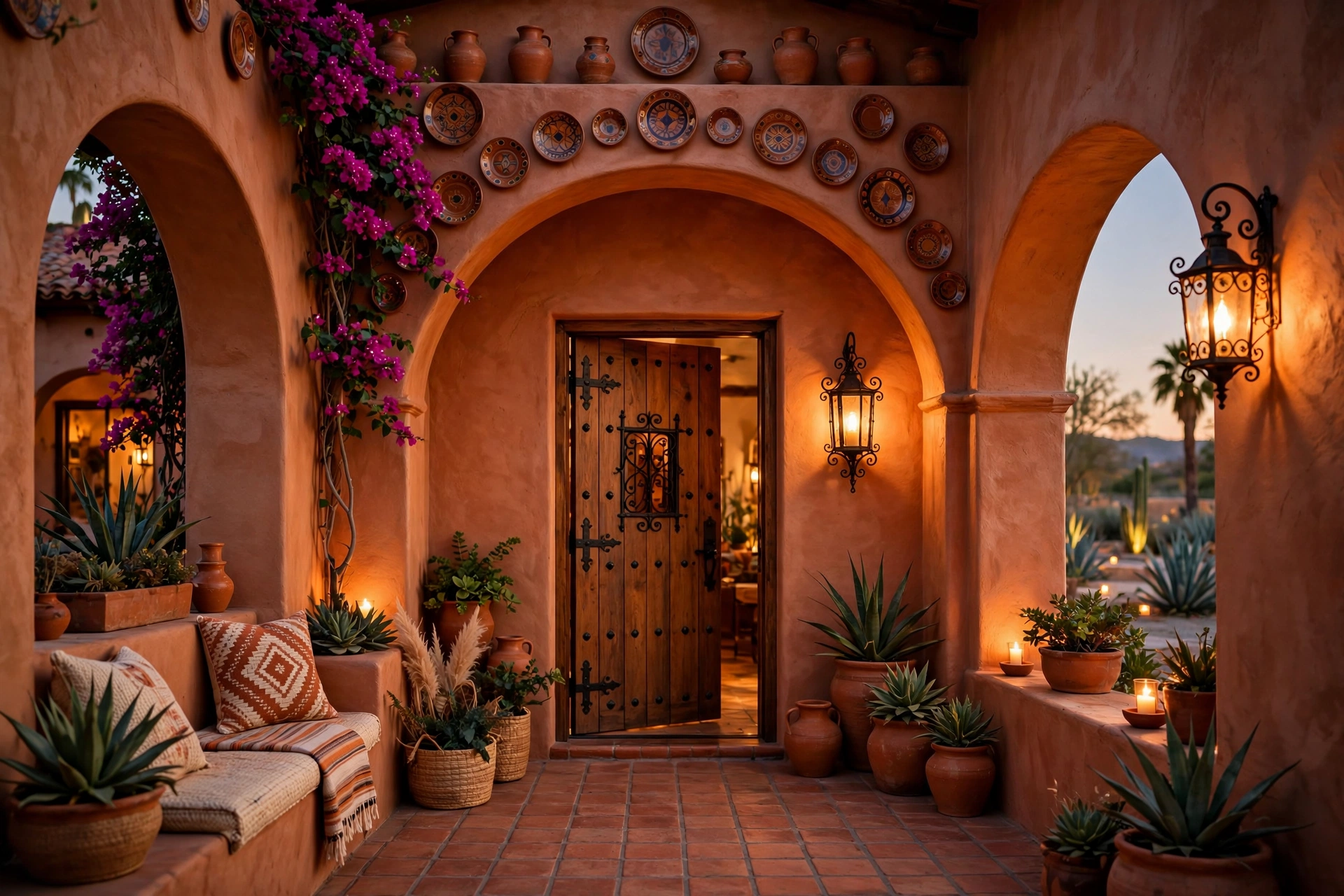
A Mexican entryway with arched walls and terracotta decor is made for homeowners who love warm, old-world character and want guests to feel welcomed the moment they step inside. With soft curved arches, sun-baked clay tiles, and rich earthy colour, the entrance becomes a warm, inviting passage into the heart of the home.
The secret is letting the architecture do the talking: curved plaster walls, terracotta floors, and handcrafted details that feel collected over time rather than bought in one trip. For a matching living space, see Mexican Living Room with Warm Earthy Decor, for a colourful cooking space, explore Mexican Kitchen with Colorful Talavera Accents, and for a relaxed sleeping space, visit Mexican Bedroom with Bohemian Rustic Charm. The twenty-five ideas below will help you design an entryway full of Mexican warmth.
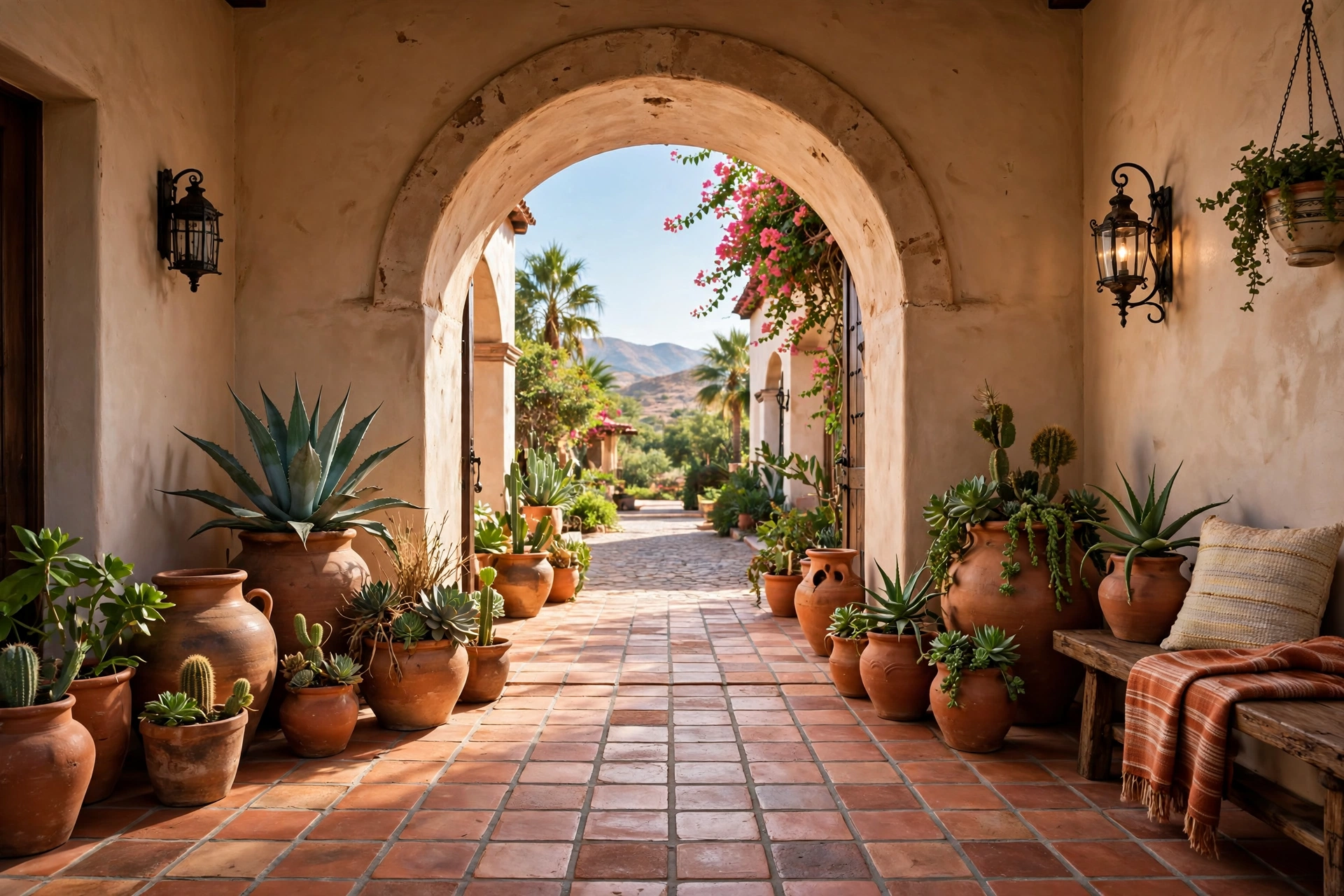
1. A Grand Arched Entrance in a Mexican Entryway with Arched Walls and Terracotta Decor
A grand arched entrance sets the tone for the whole home, framing the front door in a soft curve rather than a sharp rectangle. Build the arch at least seven feet high and four feet wide, so it feels generous to walk through, and finish it in warm white or sand-coloured plaster.
Keep the arch curve gentle and symmetrical, since a lopsided arch is hard to ignore once the plaster is set. A common mistake is making the opening too narrow, which turns a welcoming entrance into a tight bottleneck for guests carrying bags.
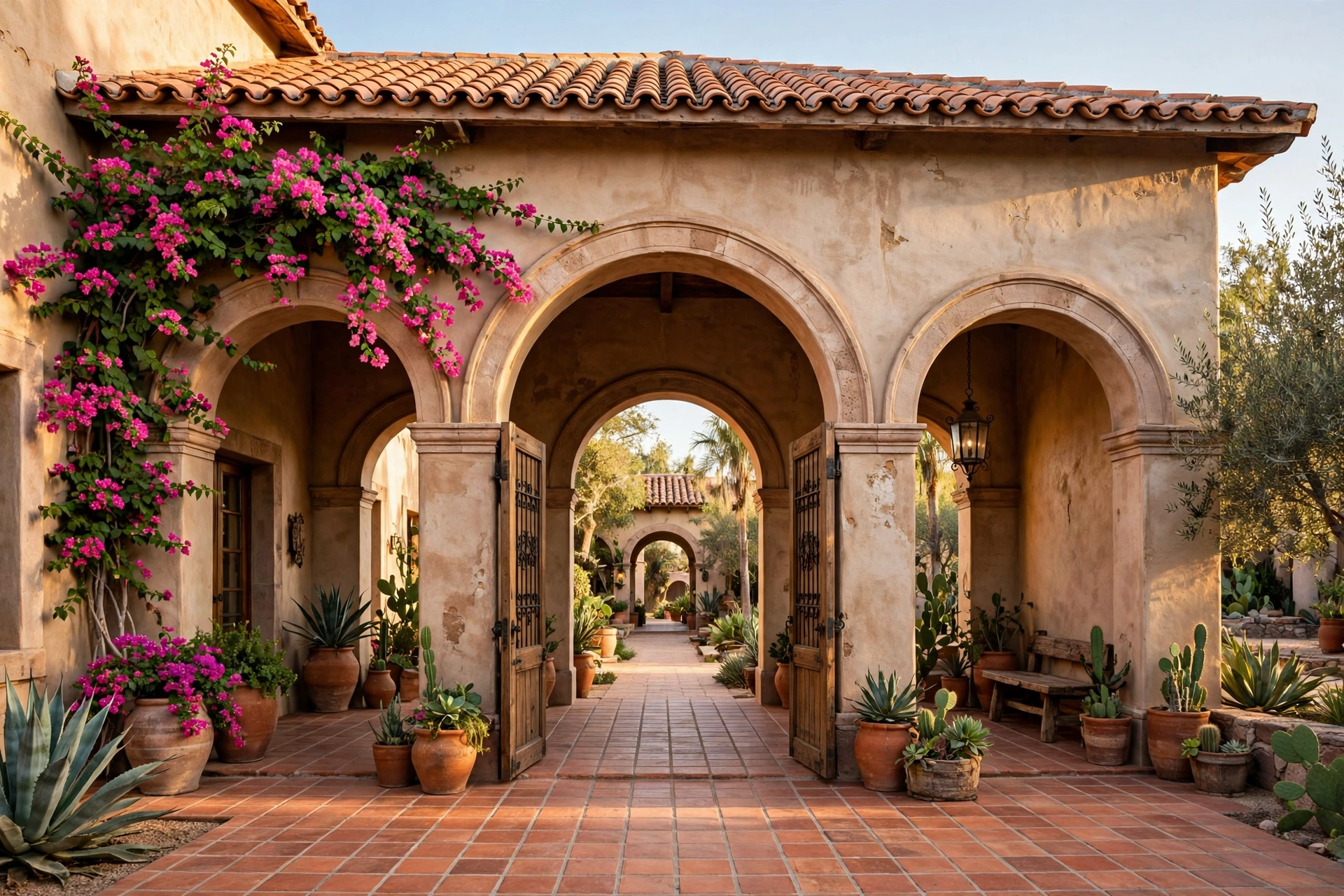
2. Terracotta Tile Flooring Underfoot
Terracotta tile flooring is the soul of a Mexican entryway, bringing warmth and earthy colour right underfoot. Choose Saltillo tiles in 12-inch squares, sealed with a matte finish, so the floor glows softly without becoming slippery when wet.
Lay the tiles in a straight grid for a calm look, or a diagonal pattern to make a small entry feel larger. Avoid unsealed tiles near the door, since rain and muddy shoes will stain raw clay permanently within a single winter.

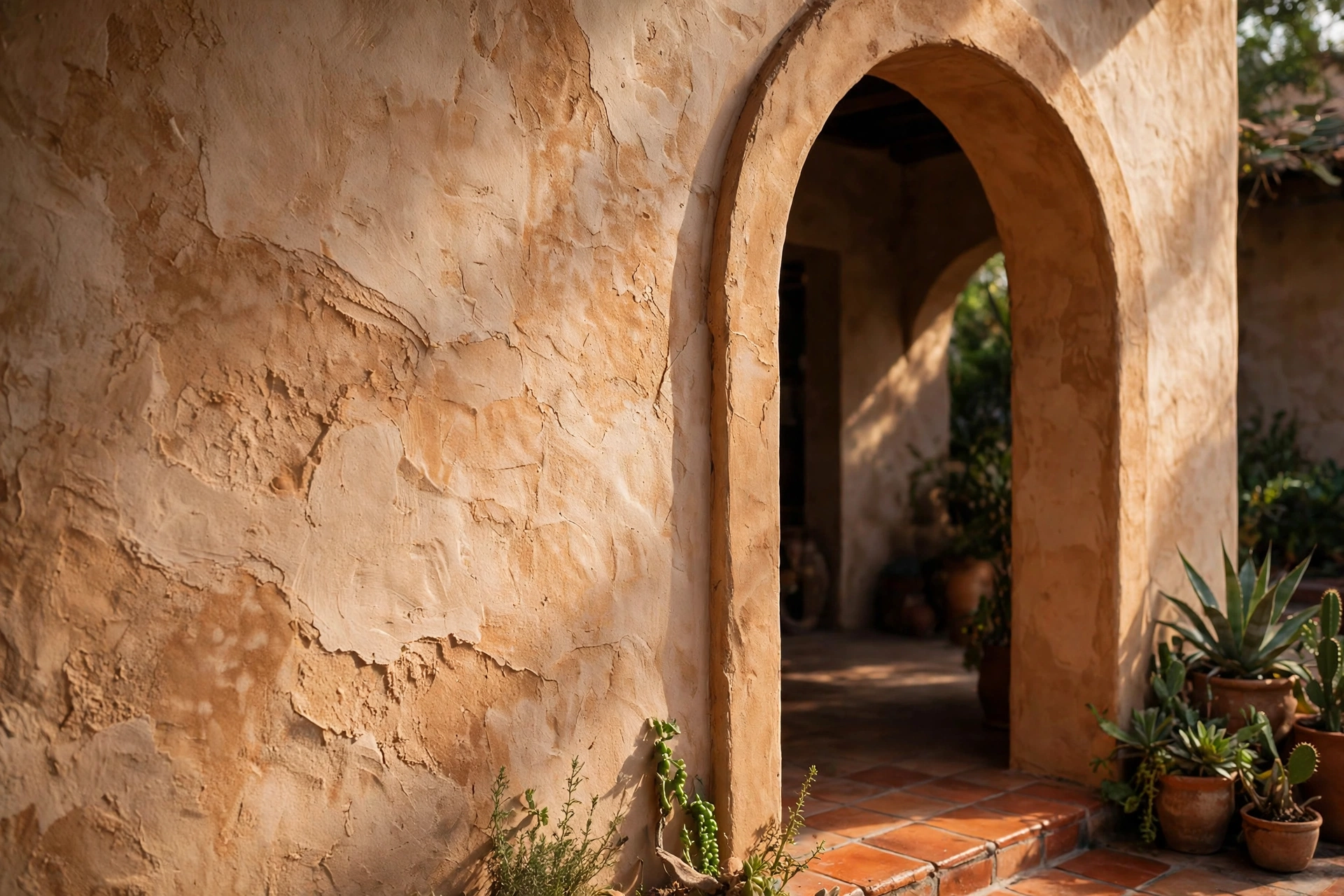
3. Warm Plaster Walls in Sun-Baked Tones
Warm plaster walls give a Mexican entryway its soft, handcrafted feeling, with subtle texture that flat paint can never match. Use a lime plaster or textured paint in sand, ochre, or warm cream, applied in two thin coats for an even, sun-baked finish.
Keep the wall colour one shade lighter than the terracotta floor, so the room feels bright rather than heavy. The mistake to avoid is a perfectly smooth, glossy wall, which fights the rustic character the arches are meant to create.
4. Terracotta Pots and Planters by the Door
Terracotta pots flanking the entry instantly signal Mexican style, especially when planted with agave, olive, or trailing succulents. Choose pots at least 18 inches tall for either side of the door, so they read as architecture rather than decoration.
Group pots in odd numbers, three or five, mixing heights for a natural, collected look. Avoid plastic pots painted to look like clay, since the colour fades unevenly and breaks the authentic, handcrafted feeling of the entry.
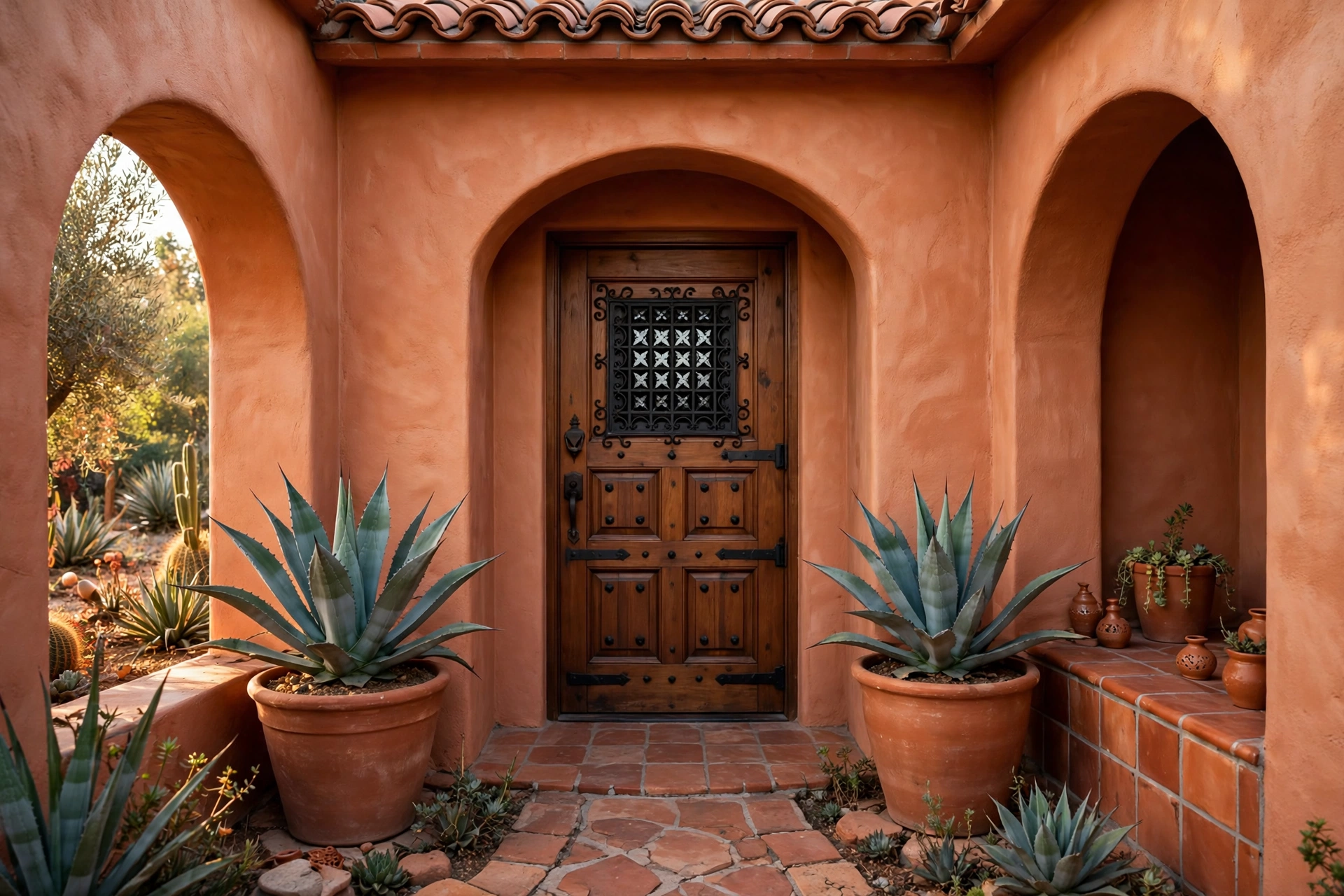
5. Wrought Iron Details on Doors and Railings
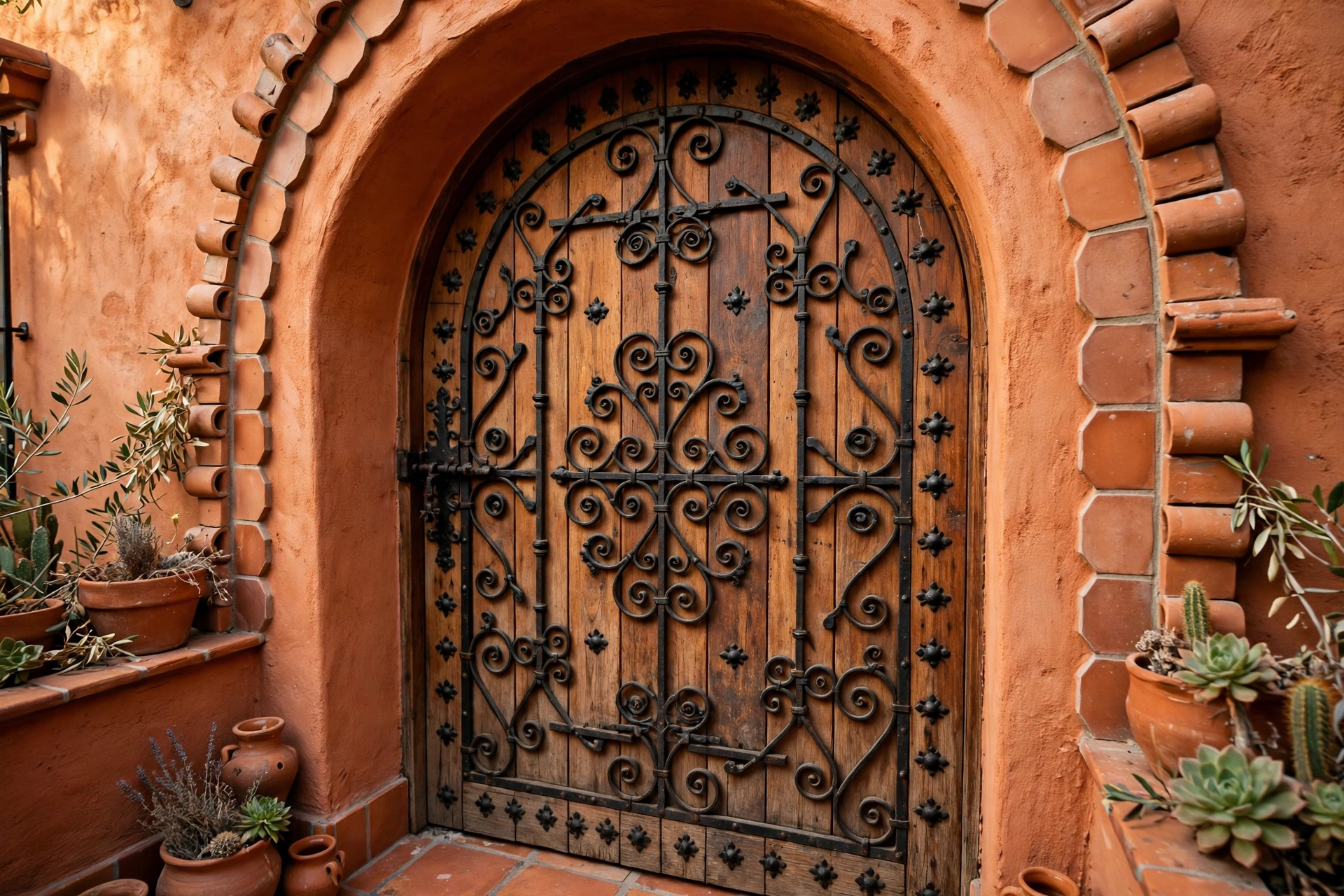
Wrought iron details add the dark, handcrafted contrast a Mexican entryway needs against warm plaster and clay. Use iron hinges, door studs, and a simple scroll grille on a sidelight, all in matte black, to frame the entrance beautifully.
Keep the ironwork simple and bold rather than fussy, since over-detailed scrolls can look busy beside a clean arch. One strong iron lantern by the door is worth more than five small ornaments scattered around the entry.
6. A Rustic Wooden Console Table
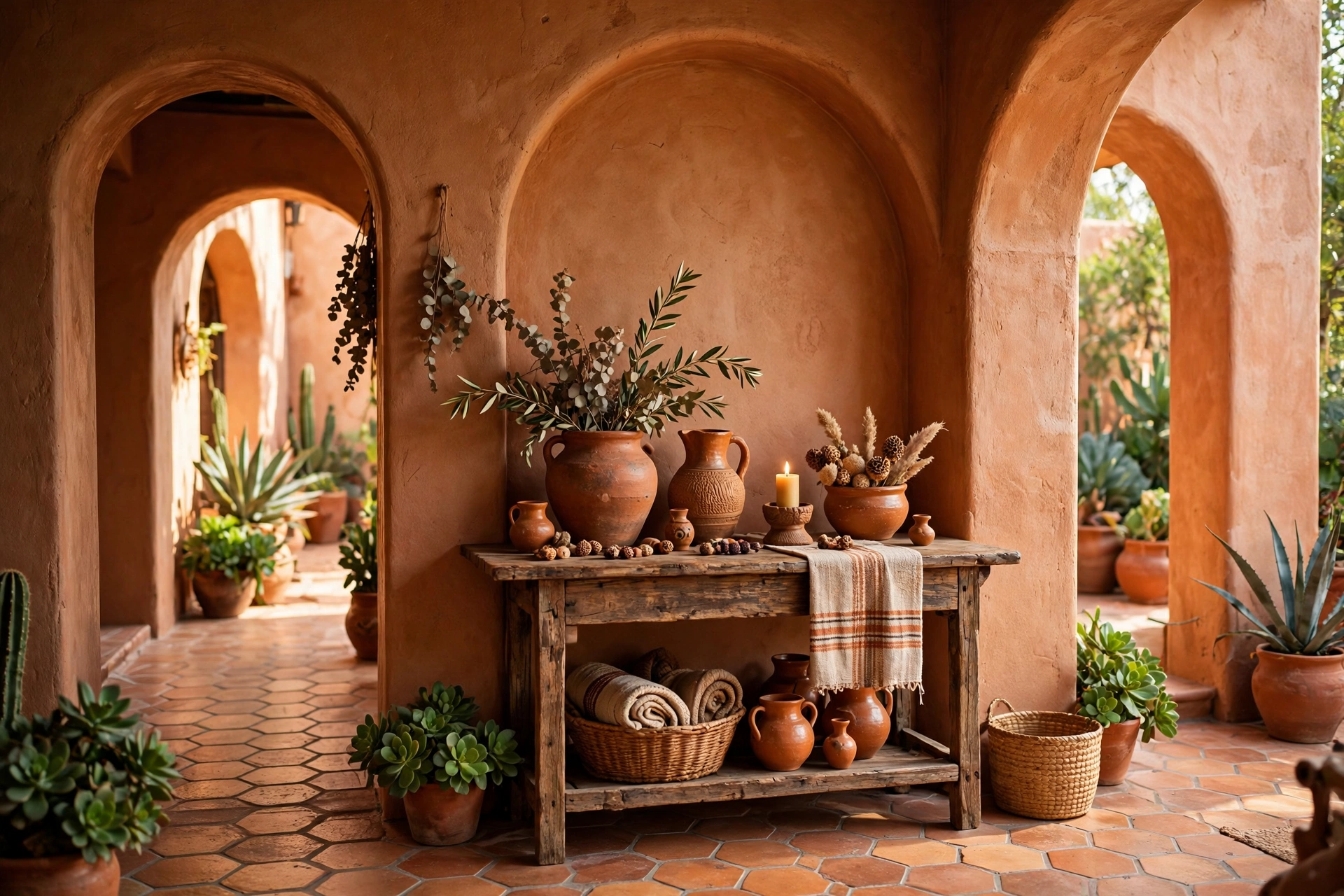
A rustic wooden console table gives the entry a place for keys, mail, and a welcoming bowl of fruit. Choose a reclaimed pine or mesquite table about 48 inches long and 14 inches deep, so it fits a narrow entry without blocking the walkway.
Leave at least 36 inches of clear passage in front of the console, so guests never have to squeeze past it. The common mistake is a table too deep for the space, which turns a gracious entry into an obstacle course.
7. Hand-Painted Tile Risers on Entry Steps
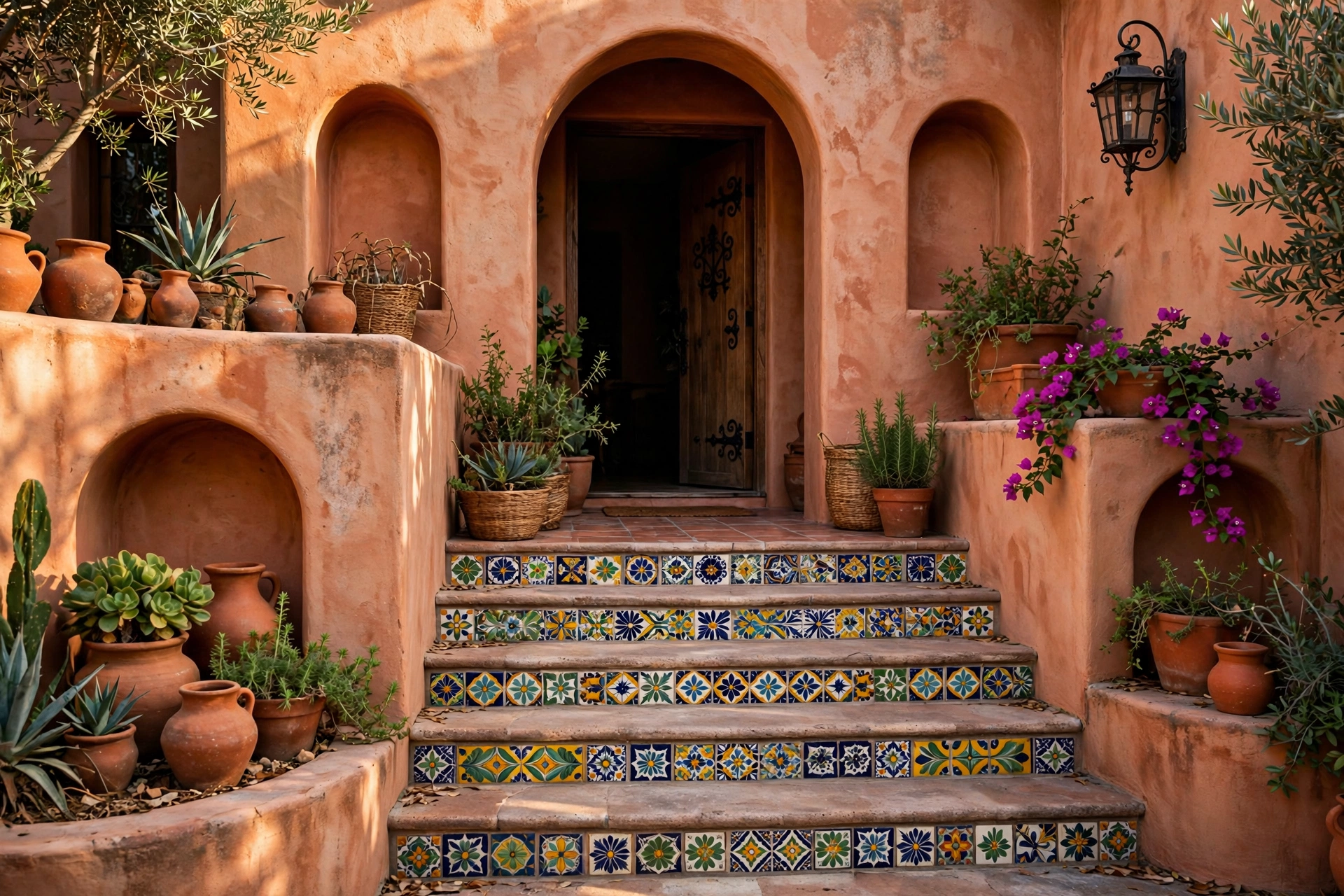
Hand-painted tile risers turn plain entry steps into a burst of colour, with each step showing a different folk pattern. Use weatherproof tiles on the vertical risers only, keeping the treads in plain terracotta for safe footing.
Mix two or three patterns in the same colour family rather than a random jumble, so the steps feel curated. Avoid painted treads, which wear quickly underfoot and become slippery when wet, ruining both the look and the safety.
8. Arched Wall Niches for Pottery and Candles
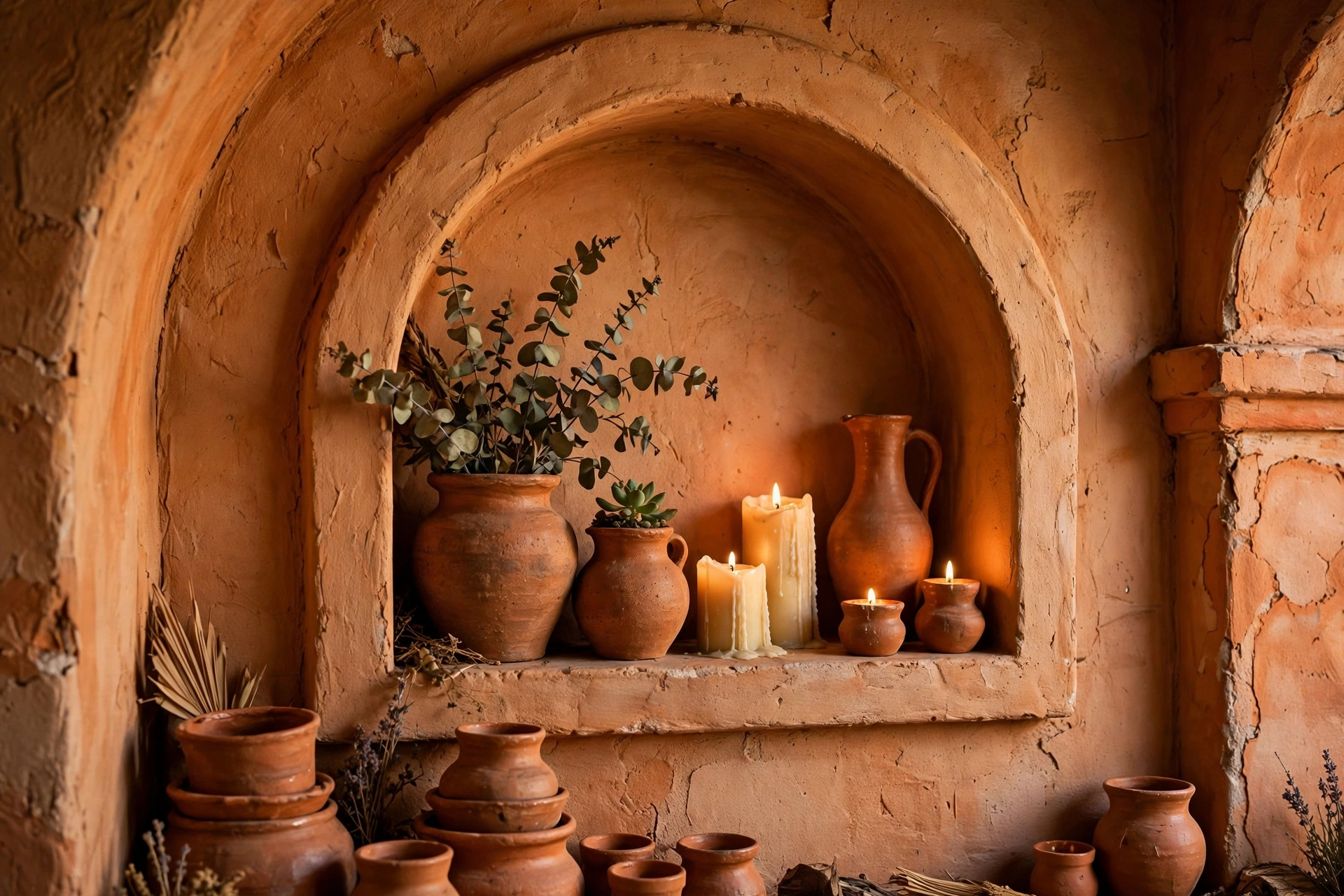
Arched wall niches echo the main archways on a smaller scale, giving pottery and candles a perfect home. Carve or build niches about 18 inches high into the entry wall, with a small shelf inside, and line the back in a deeper terracotta tone.
Place niches at eye level, around 60 inches from the floor, so their contents are admired rather than overlooked. Never overload a niche with five small objects, since one bold clay vase reads far stronger than a crowded shelf.
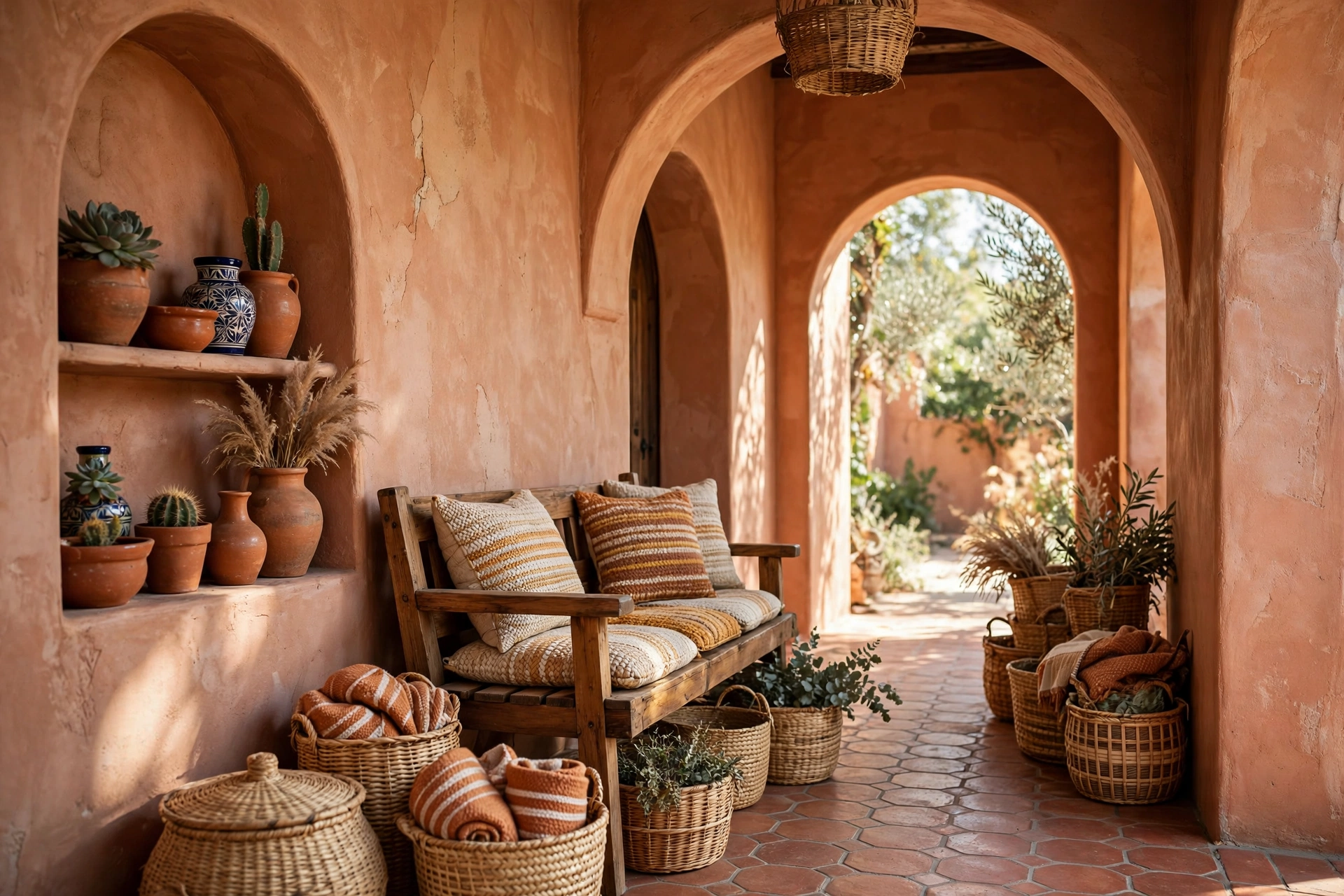
9. A Wooden Bench with Woven Cushions
A wooden bench in the entry gives guests a place to sit while removing shoes, and it anchors the space beautifully. Choose a bench about 42 inches long in warm pine, topped with woven cushions in rust, cream, and deep red stripes.
Store shoes in baskets beneath the bench rather than in a pile beside it, keeping the entry tidy. Avoid a bench without a back or cushion in a narrow hall, since an uncomfortable seat will simply never be used.
10. Hanging Lanterns with a Warm Glow
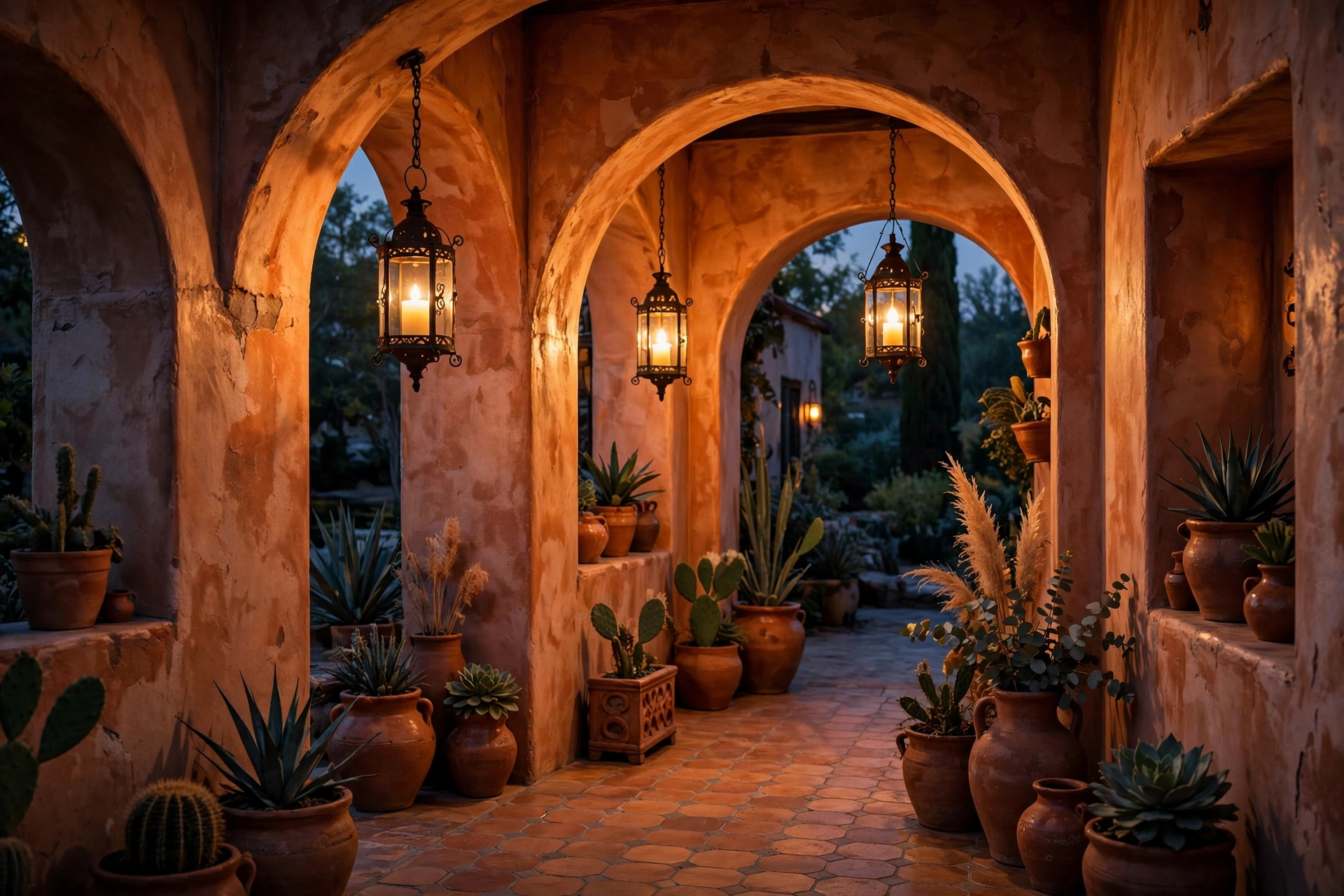
Hanging lanterns cast the warm, flickering light that makes a Mexican entryway feel magical at dusk. Hang one large iron lantern, at least 16 inches tall, from the ceiling centre, or a pair flanking the front door at seven feet high.
Use warm LED candles or 2700K bulbs inside, since cool white light kills the cosy atmosphere instantly. The mistake to avoid is hanging lanterns too low, where tall guests duck, or too high, where their glow never reaches the floor.
11. A Woven Runner Along the Entry Floor
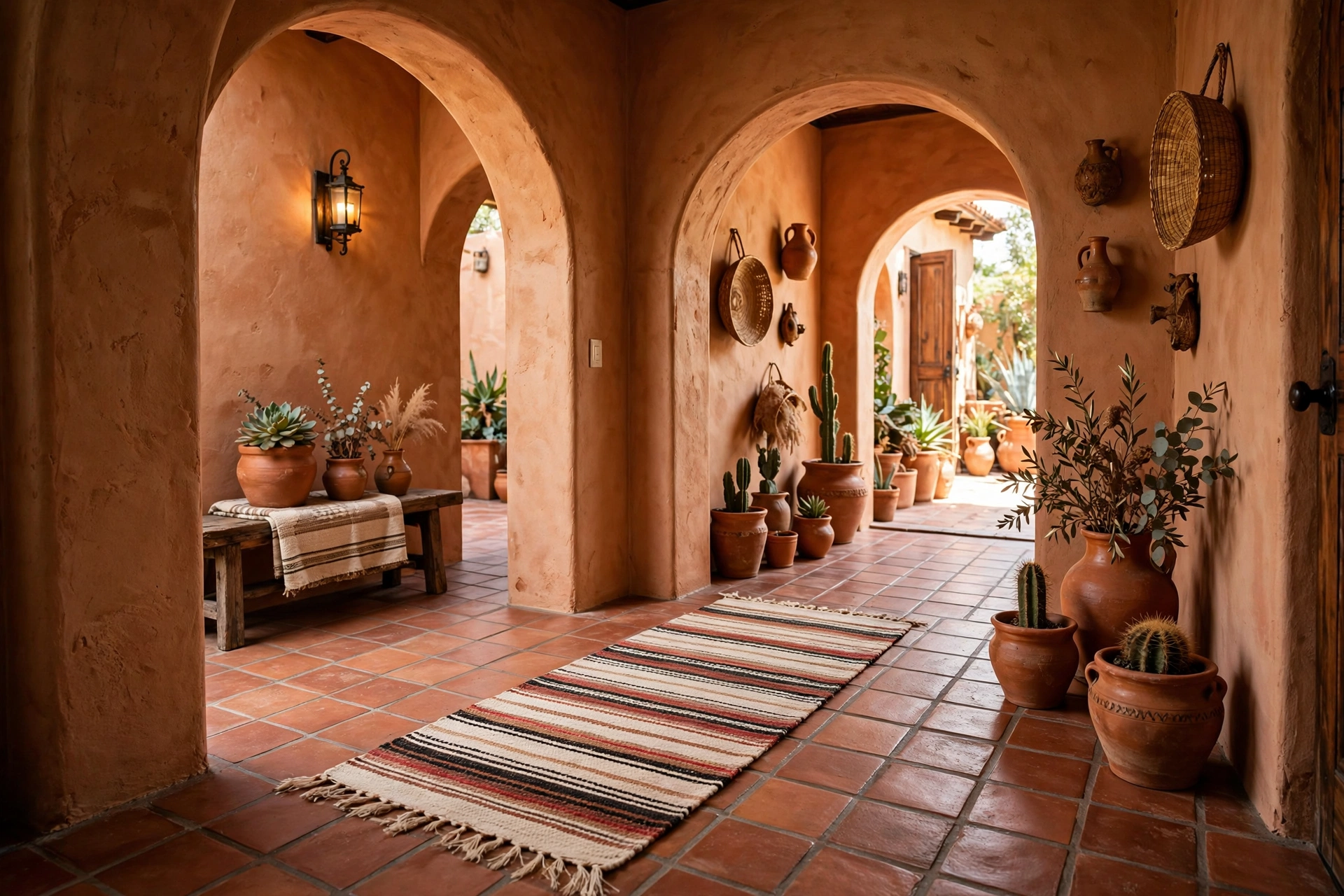
A woven runner softens terracotta floors and adds pattern without hiding the beautiful tiles completely. Choose a flat-weave runner about 30 inches wide in terracotta, cream, and rust stripes, long enough to cover the main walkway.
Secure the runner with a non-slip pad underneath, since a sliding rug on tile is a real tripping hazard. Avoid thick pile rugs here, which trap dirt from shoes and hide the very tiles that define the entry.
12. An Arched Mirror to Open the Space
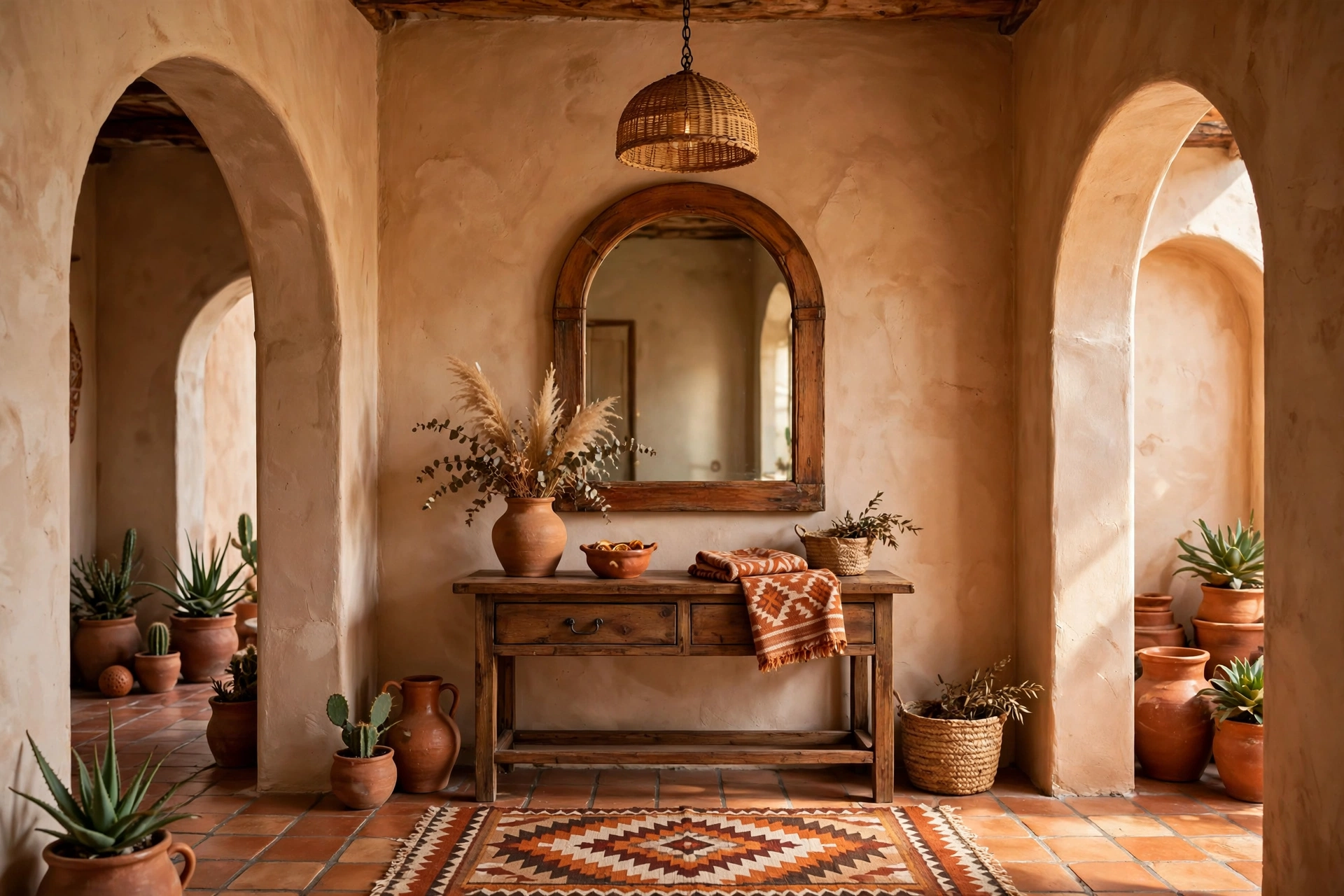
An arched mirror repeats the entryway’s curves and bounces light into the darkest corners of the hall. Choose a mirror at least 36 inches tall with a wooden or iron arched frame, hung above the console table at eye level.
Position the mirror to reflect a window or lantern, doubling the light in the space. Never hang a mirror facing the front door directly, since guests see themselves the moment they enter, which feels abrupt rather than welcoming.
13. Carrying Terracotta Warmth into the Rest of the Home
An entryway should hint at the rooms beyond, so carry one terracotta accent through the doorway: a clay vase, a rust cushion, or a matching tile border. This thread of warm clay ties the entrance to the rest of the house without repeating the whole scheme.
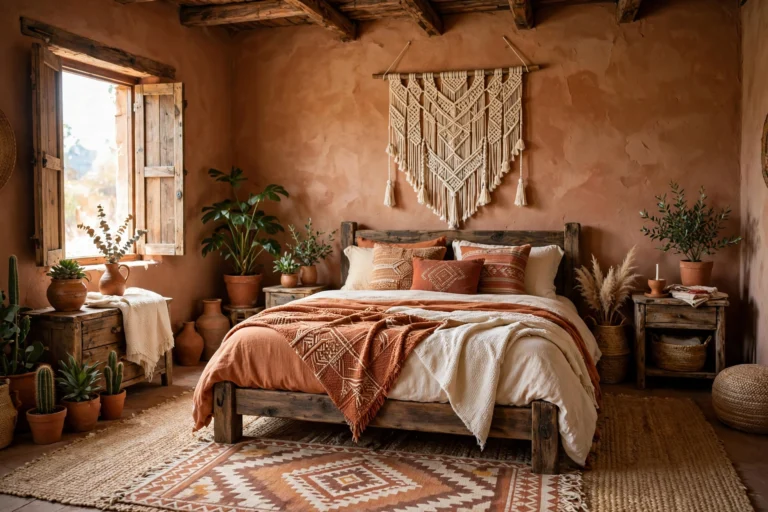
The same idea works beautifully in a sleeping space, where clay tones feel calm and grounding, as shown in Mexican Bedroom with Bohemian Rustic Charm. Keep the carried accent small, though, so each room still keeps its own character and the entry remains the star.
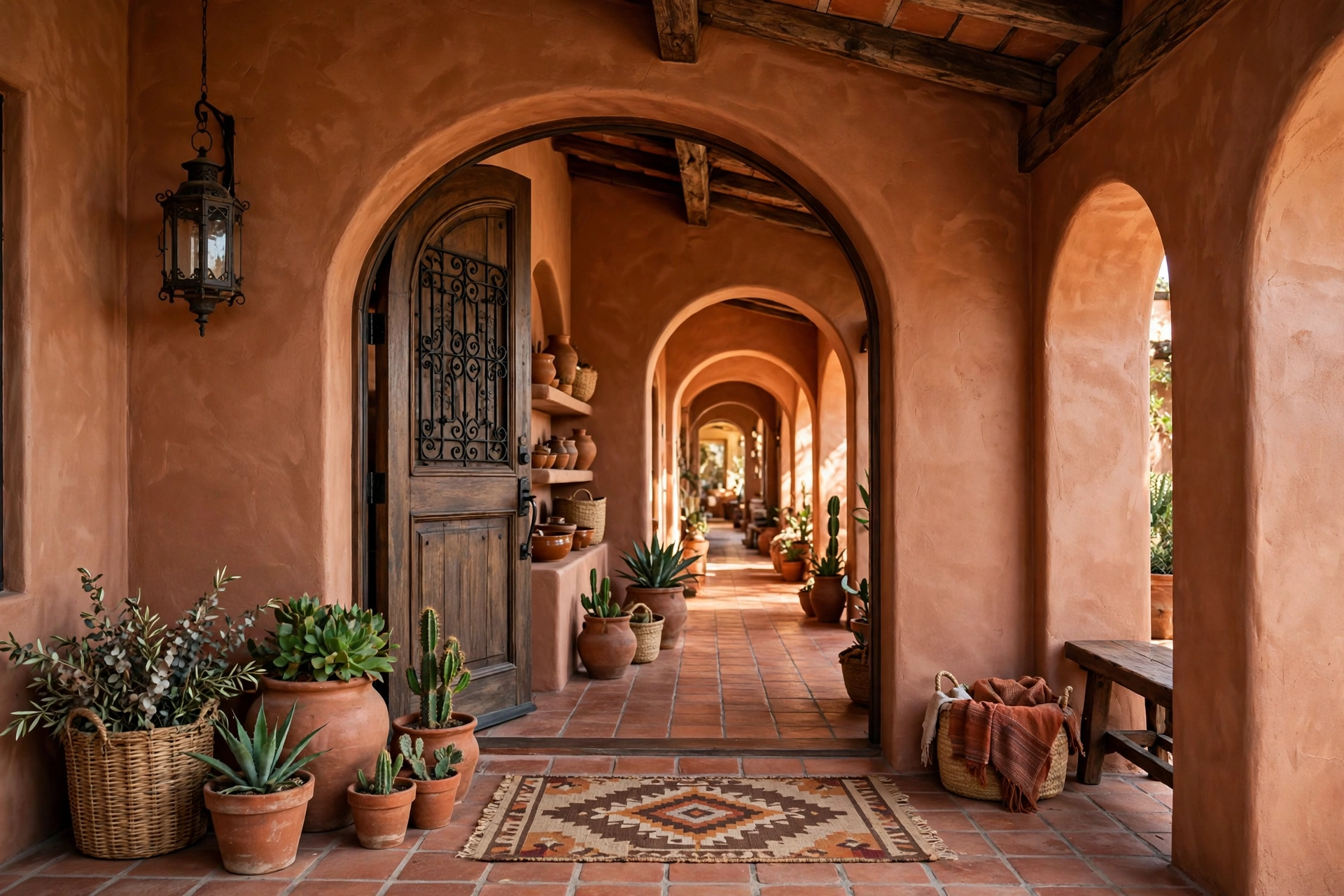
14. Terracotta Wall Sconces Beside the Arch
Terracotta wall sconces beside the main arch add a second layer of warm light and reinforce the clay palette. Mount a pair of clay sconces about 66 inches high, one on each side of the arch, wired to a dimmer for evening control.
Choose sconces with an open top so light washes up the curved plaster, emphasising the arch shape. Avoid sconces that shine straight into the eyes of entering guests, which feels harsh instead of welcoming.
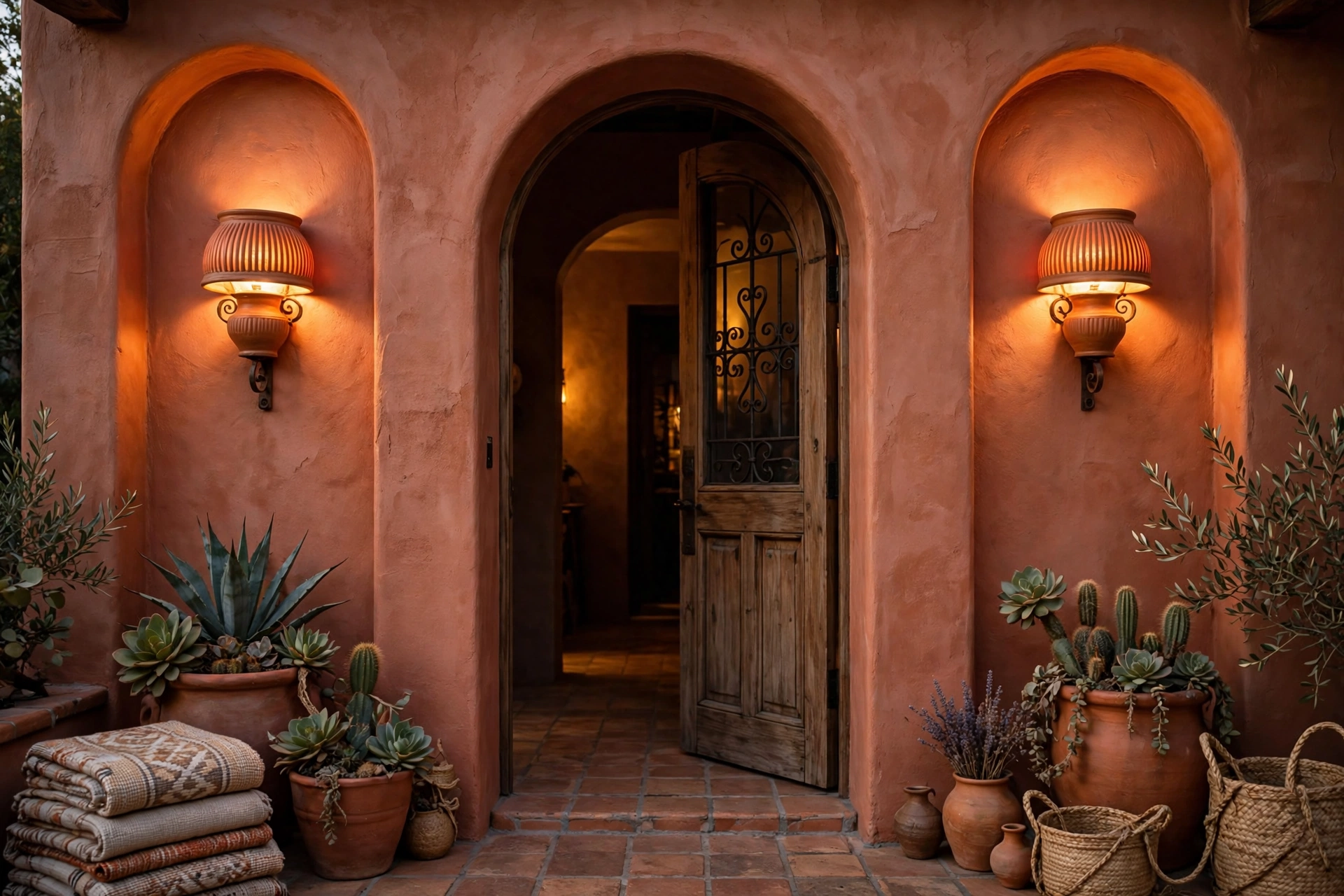
15. Lush Plants in Clay and Basket Planters
Lush plants soften the hard surfaces of a Mexican entryway, bringing life to plaster, tile, and wood. Use tall plants like palms or monstera in clay pots at floor level, and trailing pothos in hanging baskets near the arch.
Keep plants clear of the main walkway by at least 12 inches, so leaves never brush guests as they pass. The common mistake is choosing plants that need constant sun for a shaded entry, where they yellow and die within weeks.
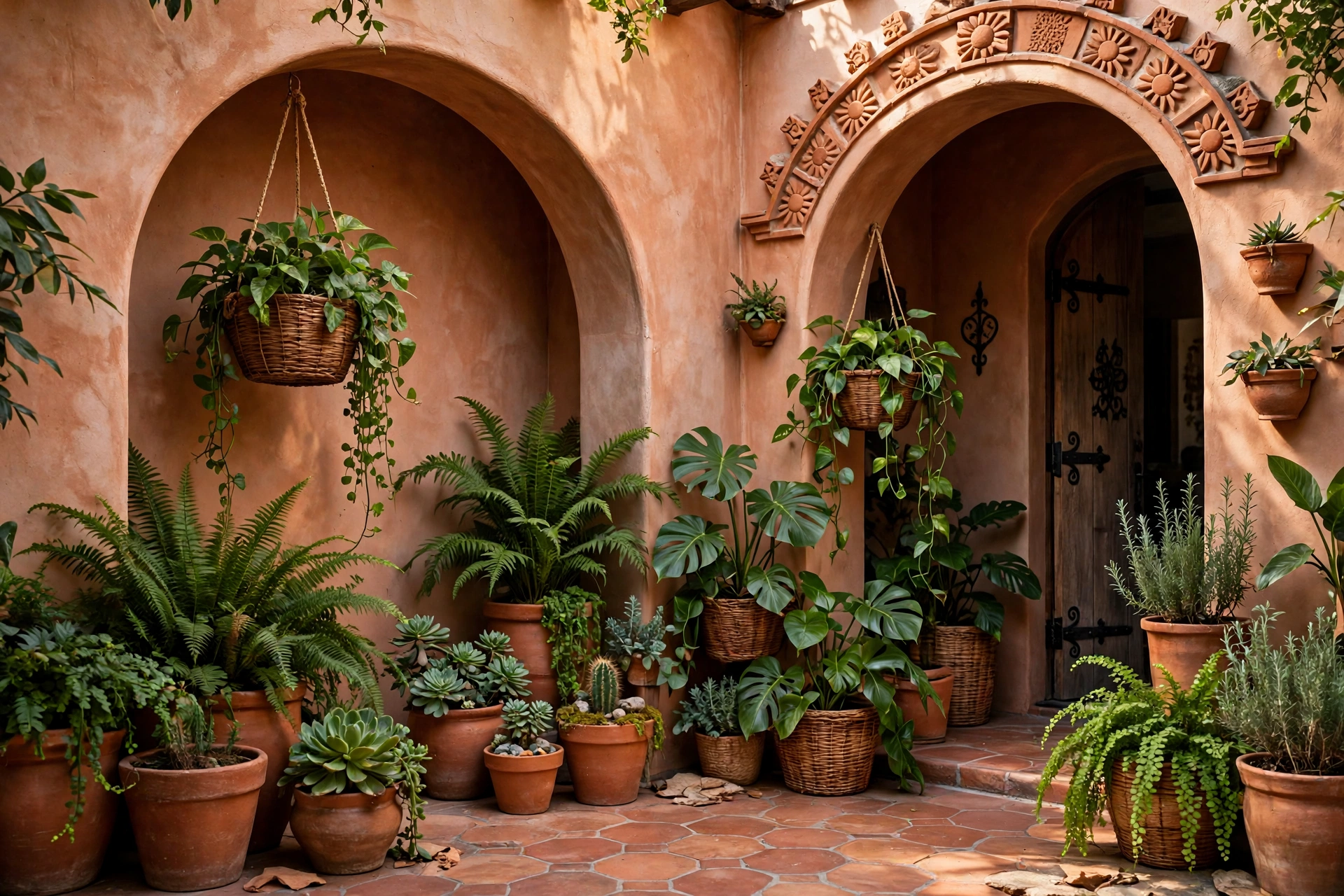
16. An Arched Doorway Opening to a Courtyard
Where the layout allows, an arched doorway opening to a courtyard is the most authentic Mexican entry feature of all. Frame the opening with a deep, thick-walled arch, at least 12 inches deep, so it reads as solid masonry rather than a thin partition.
Place a terracotta fountain or a large clay pot just beyond the arch, so the eye travels outward to a focal point. Avoid blocking the view with a closed door or heavy curtain, which wastes the indoor-outdoor connection the arch creates.
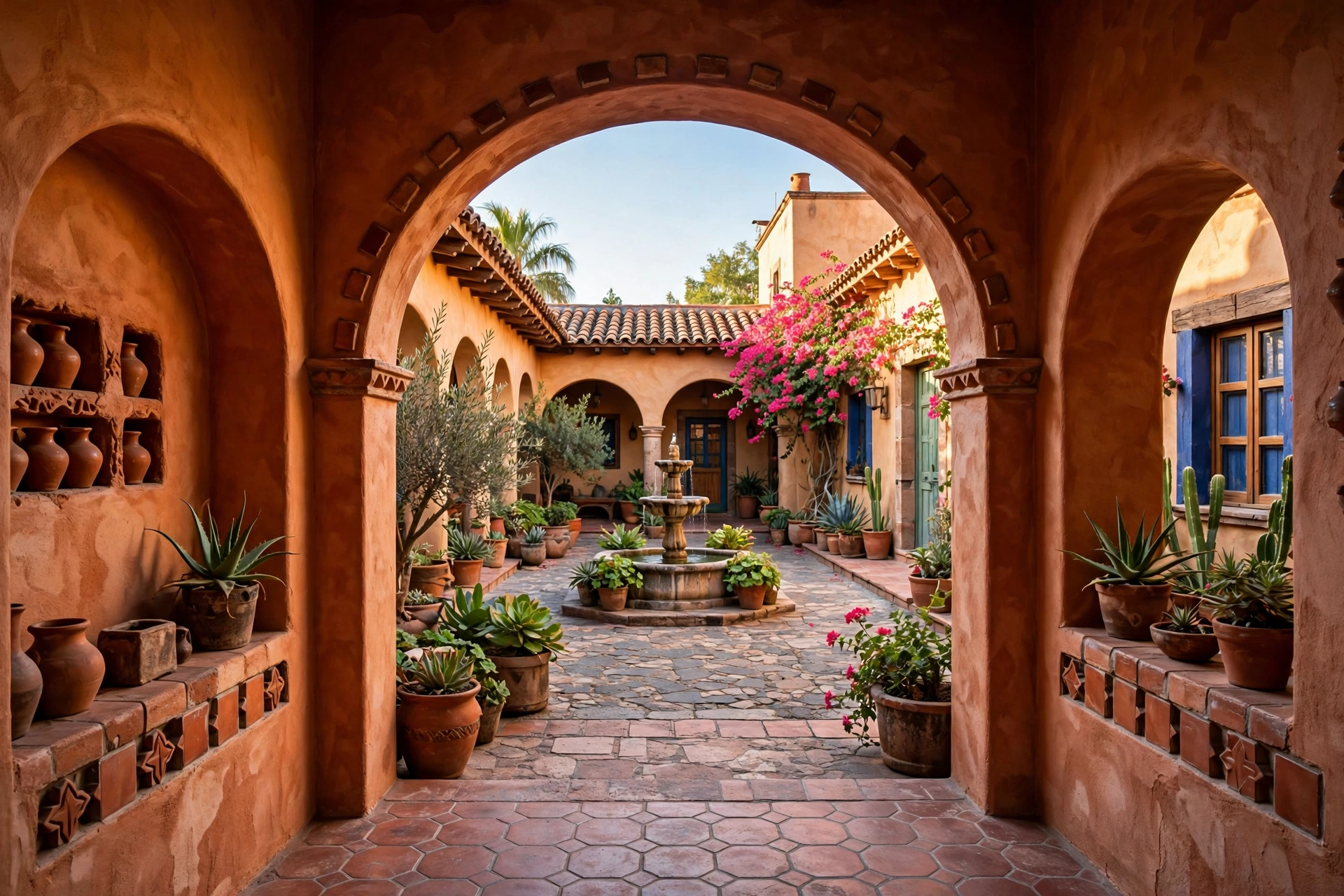
17. Baskets and Storage That Hide the Clutter
Woven baskets keep a Mexican entryway tidy while adding texture that suits the rustic style perfectly. Use two large seagrass baskets, about 16 inches wide, for shoes and scarves, tucked under the bench or beside the console.
Label nothing and keep lids off, since open baskets are easier to use daily than lidded boxes that get ignored. The mistake is buying baskets too small for real life, which leaves overflow piled on the floor beside them.
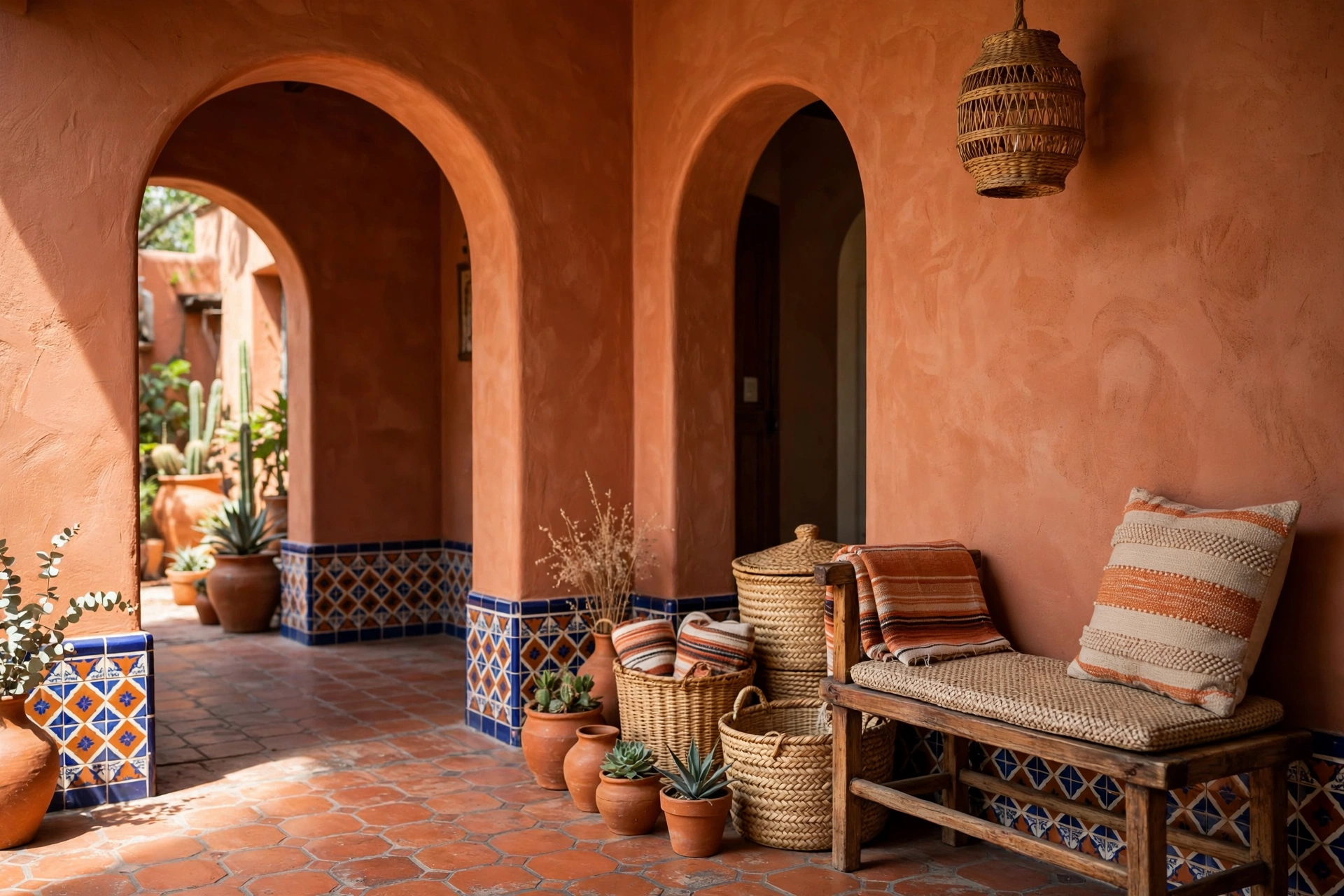
18. Saltillo Tile Patterns and Borders
Saltillo tile borders add a crafted finish to an entry floor, framing the main field of tiles like a rug. Run a border of darker terracotta or patterned tiles around the perimeter, about one tile wide, to define the entry zone clearly.
Plan the border before laying the field tiles, since retrofitting a border means lifting finished work. Avoid borders wider than two tiles in a small entry, where they shrink the room instead of framing it.
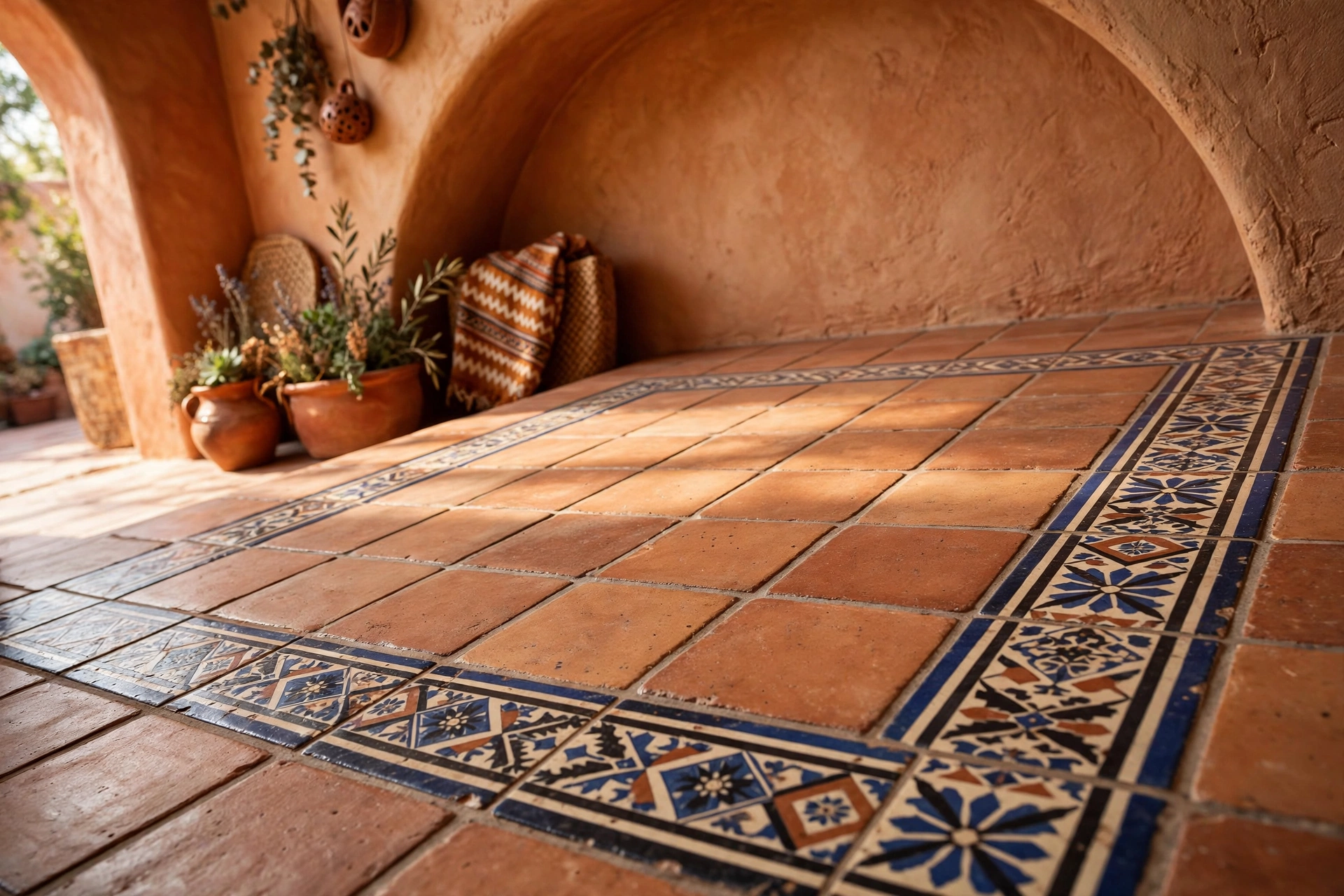
19. A Heavy Wooden Front Door with Iron Studs
A heavy wooden front door is the anchor of a Mexican entryway, best in warm cedar or mesquite with vertical planks. Add hand-forged iron studs and a large ring pull, spaced evenly down the door, for an authentic hacienda feeling.
Choose a door at least 42 inches wide if the arch allows, since a generous door makes every arrival feel grand. Never paint the door a bright modern colour, which clashes with the earthy palette the whole entry is built around.
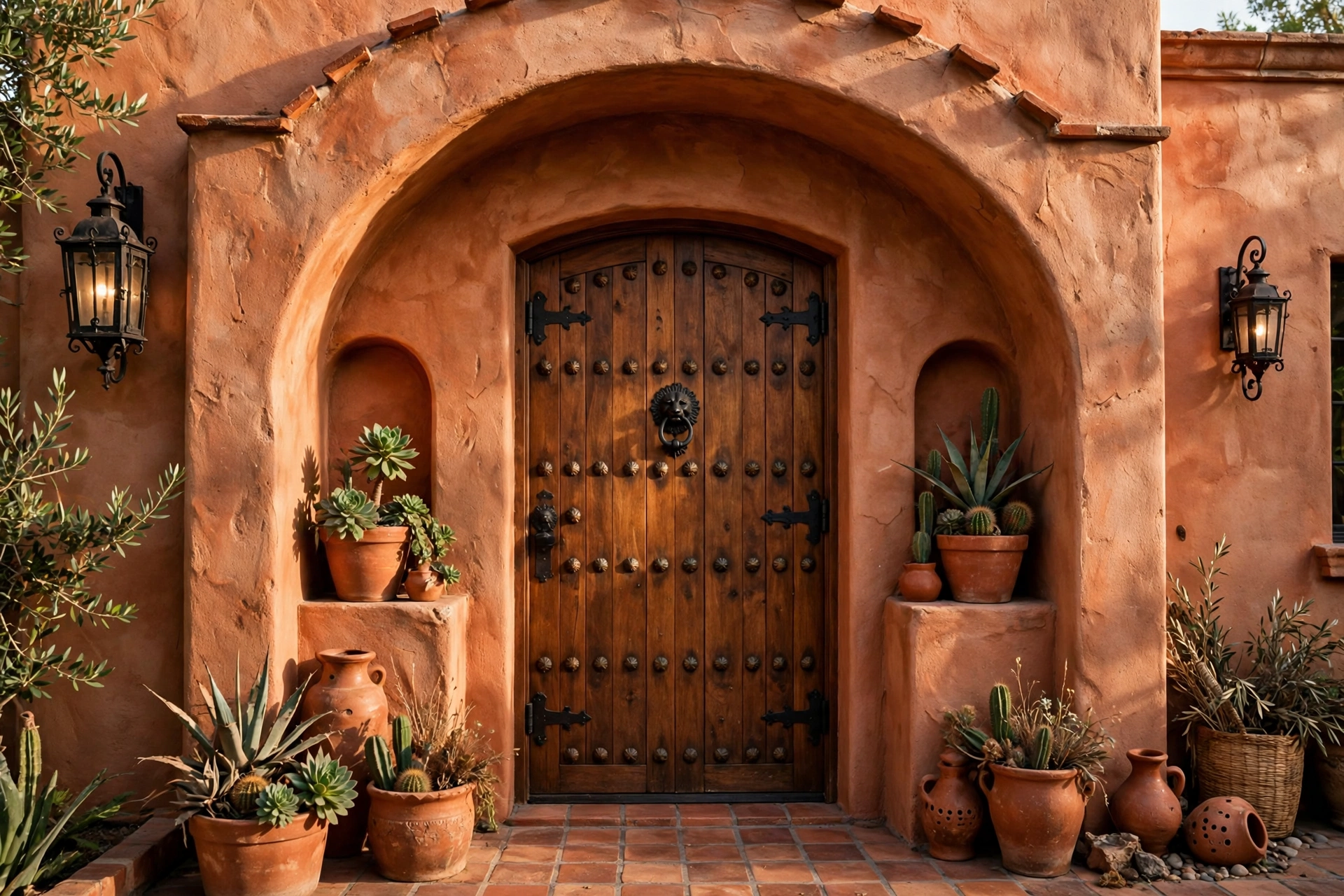
20. A Mexican Entryway with Arched Walls and Terracotta Decor for Small Homes
Small homes can carry this style beautifully, because one arch and a terracotta floor make a big impression in a small space. Use a single arch at the front door, pale plaster to keep the hall bright, and just two clay pots instead of five.
Skip the console table in a hall under four feet wide, and use a wall-mounted shelf 12 inches deep instead. The error to avoid is crowding a small entry with furniture, which hides the arch that should be the star.
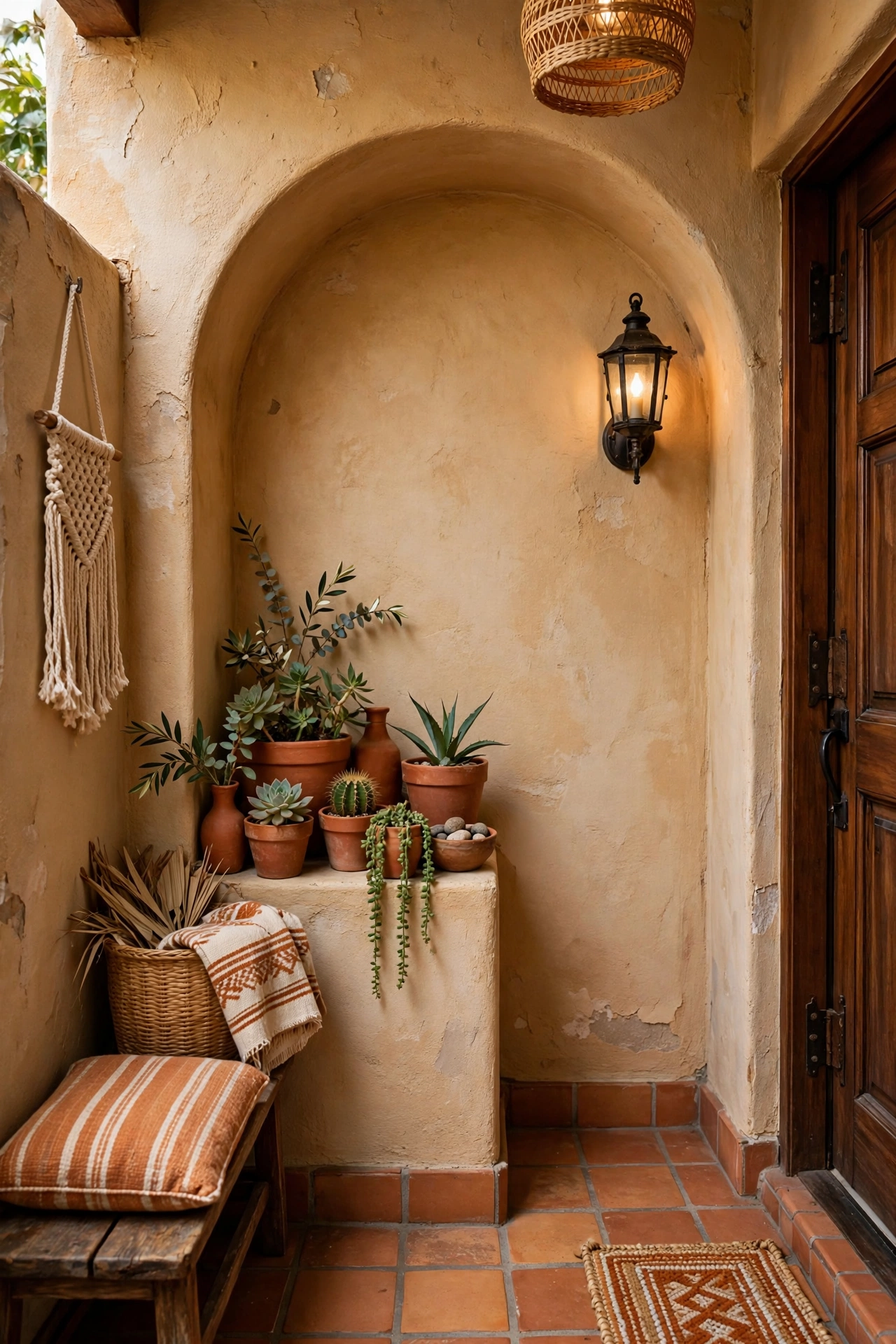
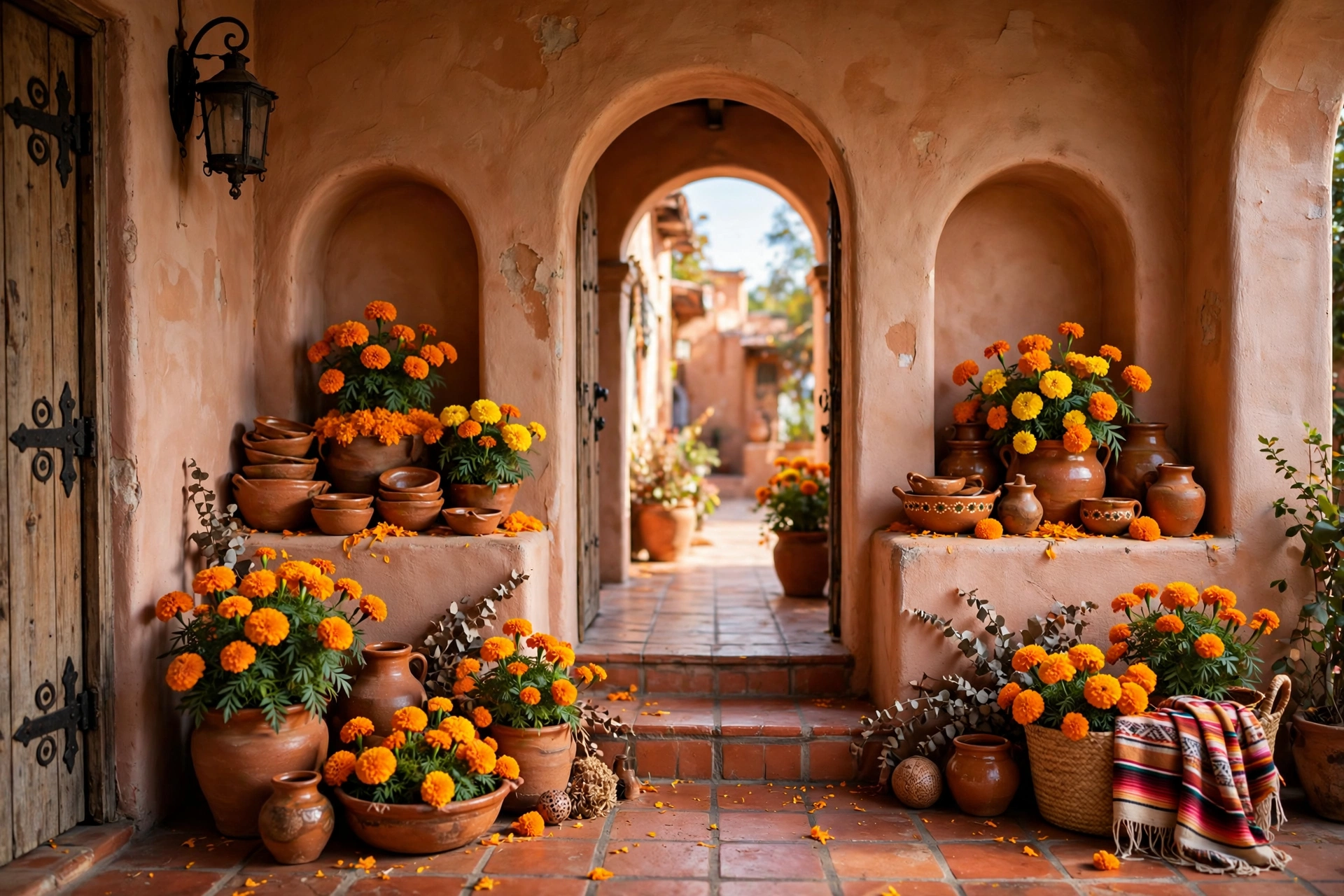
21. Seasonal Styling for the Entry
Seasonal styling keeps a Mexican entryway feeling alive, with small swaps rather than full redecoration. In autumn, add dried marigolds and pumpkins in clay bowls; at Christmas, hang a simple wreath of dried chillies and pine on the door.
Change only the console display and one pot arrangement each season, leaving the arches, tiles, and furniture untouched. The mistake is redecorating the whole entry four times a year, which wears out the very pieces that give it character.
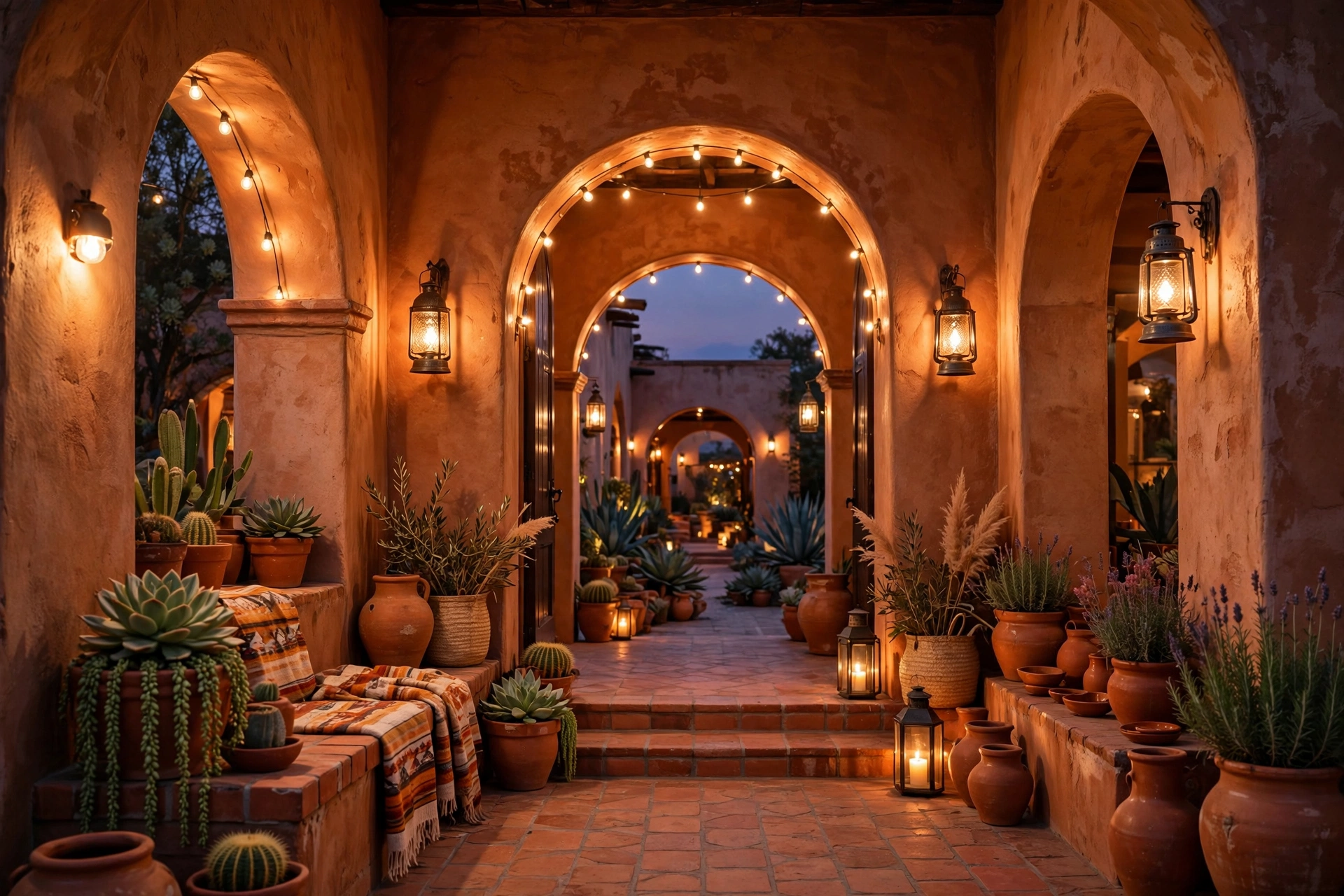
22. Layered Lighting for Evening Arrivals
Layered lighting makes evening arrivals feel warm rather than gloomy, so combine three sources in the entry. Use a ceiling lantern for general light, sconces beside the arch for warmth, and a small lamp on the console for a welcoming pool of light.
Put each layer on its own dimmer or switch, so the entry can shift from bright daytime to soft evening in seconds. Avoid a single harsh overhead light, which flattens the arches and makes terracotta look dull instead of glowing.
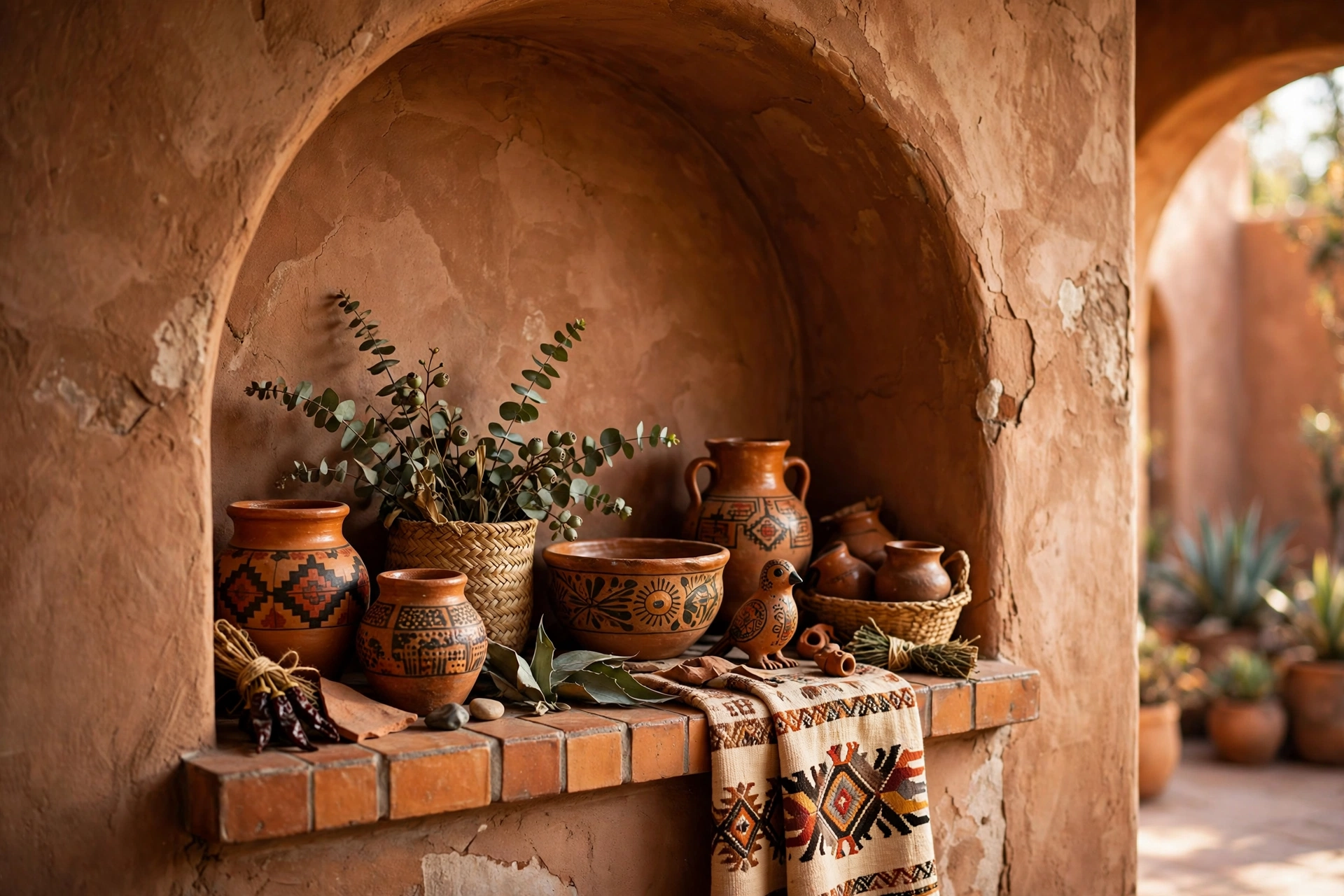
23. Folk Art and Pottery on Display
Folk art and pottery give a Mexican entryway its personal, collected character, telling a story beyond the architecture. Display one large clay vase, a woven wall hanging, and a small carved wooden figure, each given breathing room on the console or a niche.
Choose pieces with genuine craft marks, uneven glazes, and hand-painted details, rather than perfect factory copies. The common error is filling every surface with souvenirs, which turns a curated entry into a crowded shop window.
24. Mistakes to Avoid with Arches and Terracotta
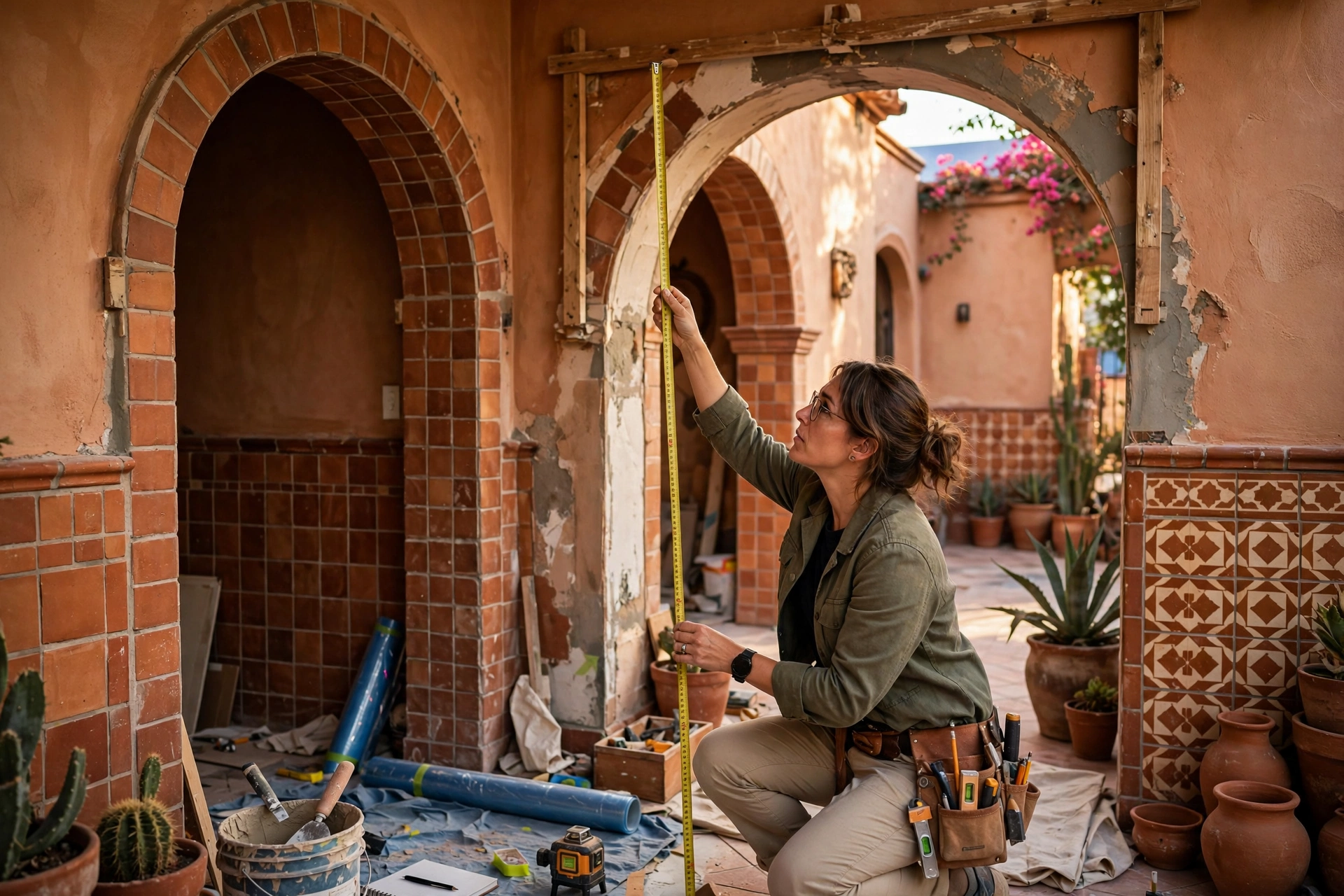
The biggest mistakes with this style are easy to avoid once you know them: arches too narrow, unsealed tiles, and cool lighting. Test arch widths with painter’s tape on the wall before building, seal every terracotta surface, and keep all bulbs warm.
Another frequent error is mixing in cold modern materials like chrome and glass, which fight the warm, handmade palette. Stick to wood, clay, iron, and plaster, and the entry will feel coherent from the first step inside.
25. Finishing Touches for a Mexican Entryway with Arched Walls and Terracotta Decor
The finishing touches turn a good Mexican entryway into a great one: a woven doormat, a clay bowl for keys, and a trailing plant by the arch. Walk through the entry as a guest would at dusk, and remove anything that feels busy or unfinished.
These mexican entryway with arched walls and terracotta decor ideas work best when layered slowly, starting with the arches, then the tiles, and finally the small details. With patience and care, your entryway will welcome every guest with warmth for years.


One Comment