
25 Mexican Kitchen with Colorful Talavera Accents
A Mexican kitchen with colorful Talavera accents is made for homeowners who love bold, joyful color and want a kitchen that feels warm, welcoming, and full of handcrafted personality. With hand-painted tiles, vibrant pottery, and sun-warmed terracotta, the kitchen becomes the happiest, most inviting room in the whole home.
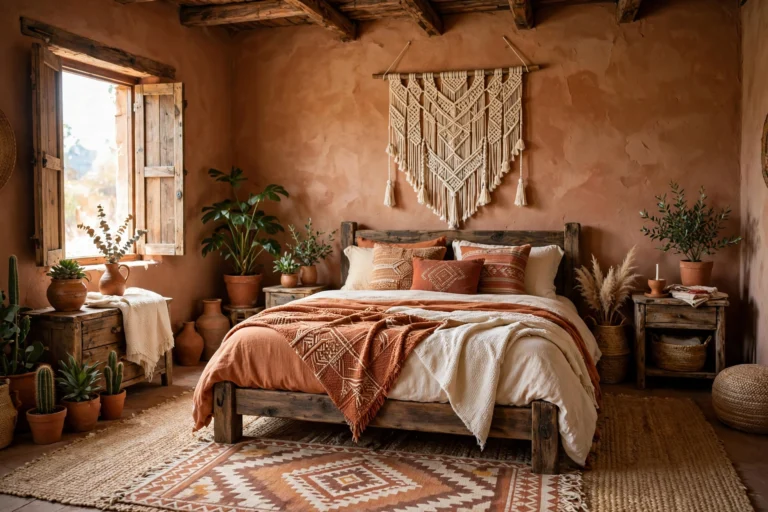
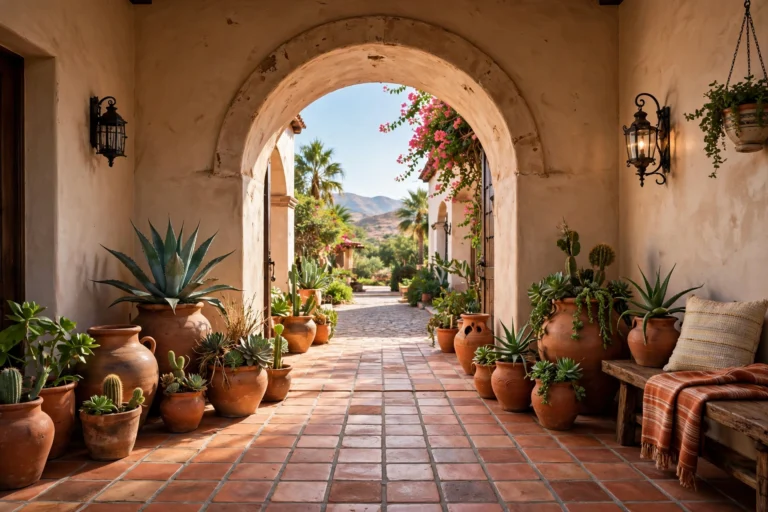
The secret is letting the Talavera lead: a few strong bursts of hand-painted color against warm wood and plaster, so the room feels festive without feeling busy. For the same warmth in the living room, see Mexican Living Room with Warm Earthy Decor, for a grand arched entrance, explore Mexican Entryway with Arched Walls and Terracotta Decor, and for a softer, relaxed bedroom, visit Mexican Bedroom with Bohemian Rustic Charm. The twenty-five ideas below will help you design a Talavera kitchen of your own.
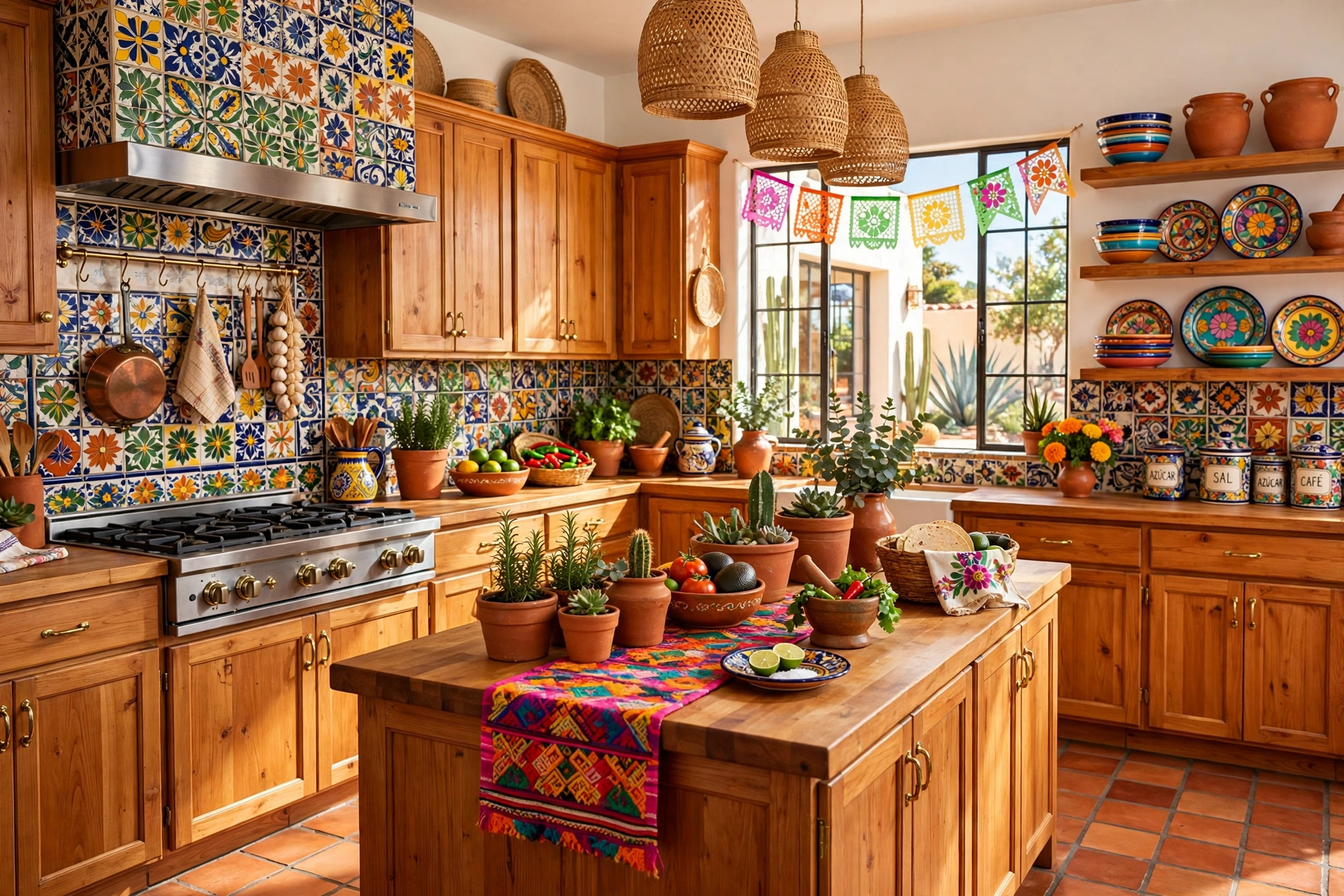
1. A Bright Welcome in a Mexican Kitchen with Colorful Talavera Accents
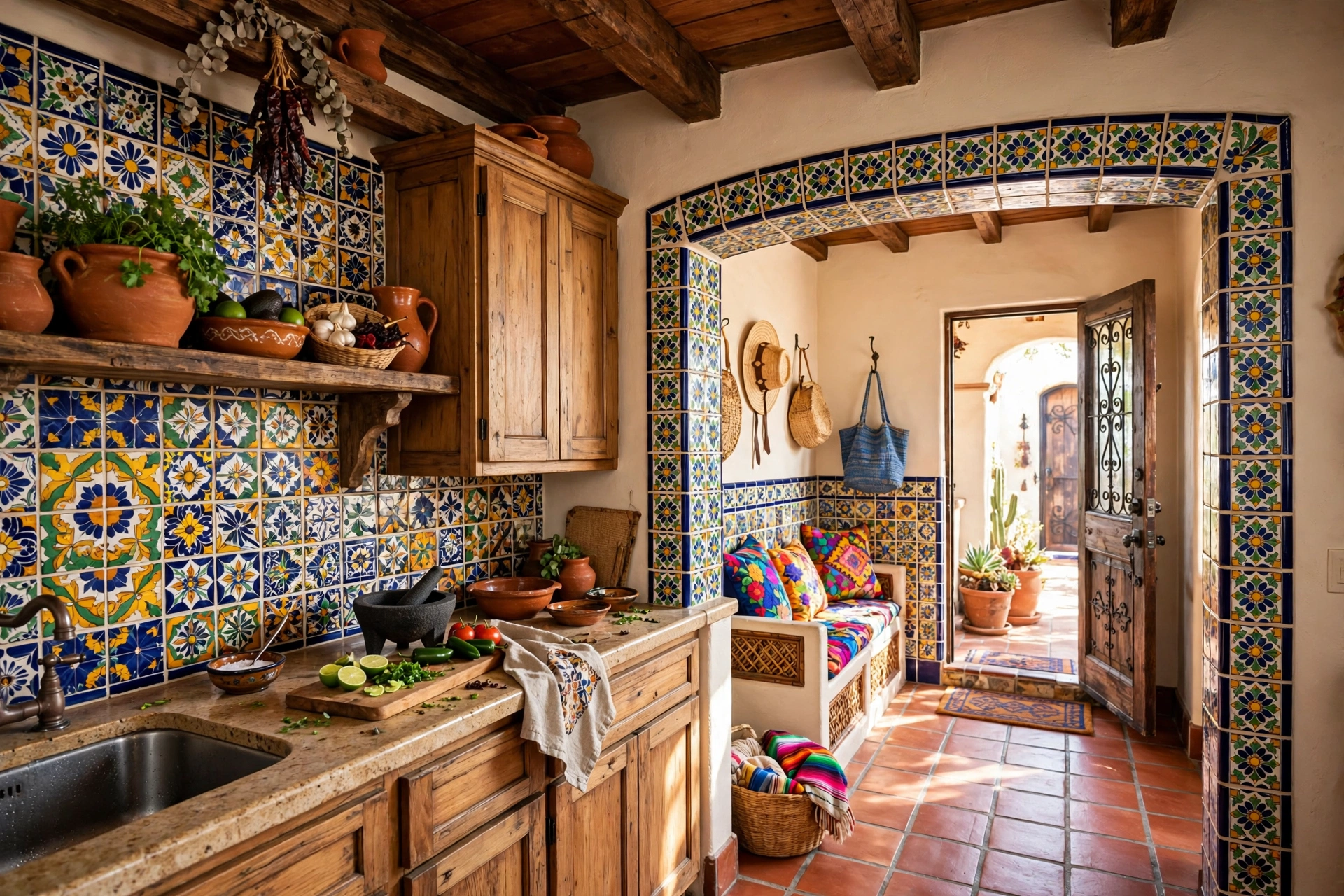
The entrance to a Talavera kitchen should feel like stepping into a celebration, so frame the doorway with a border of hand-painted tiles in cobalt, yellow, and green. Keep the first view open toward the island or range wall, where the boldest tilework can greet guests immediately.
Avoid the common mistake of hiding the colorful tiles behind tall cabinets near the entrance, which wastes their welcoming power. Instead, leave at least four feet of open sightline and let the Talavera patterns draw the eye gently into the room.
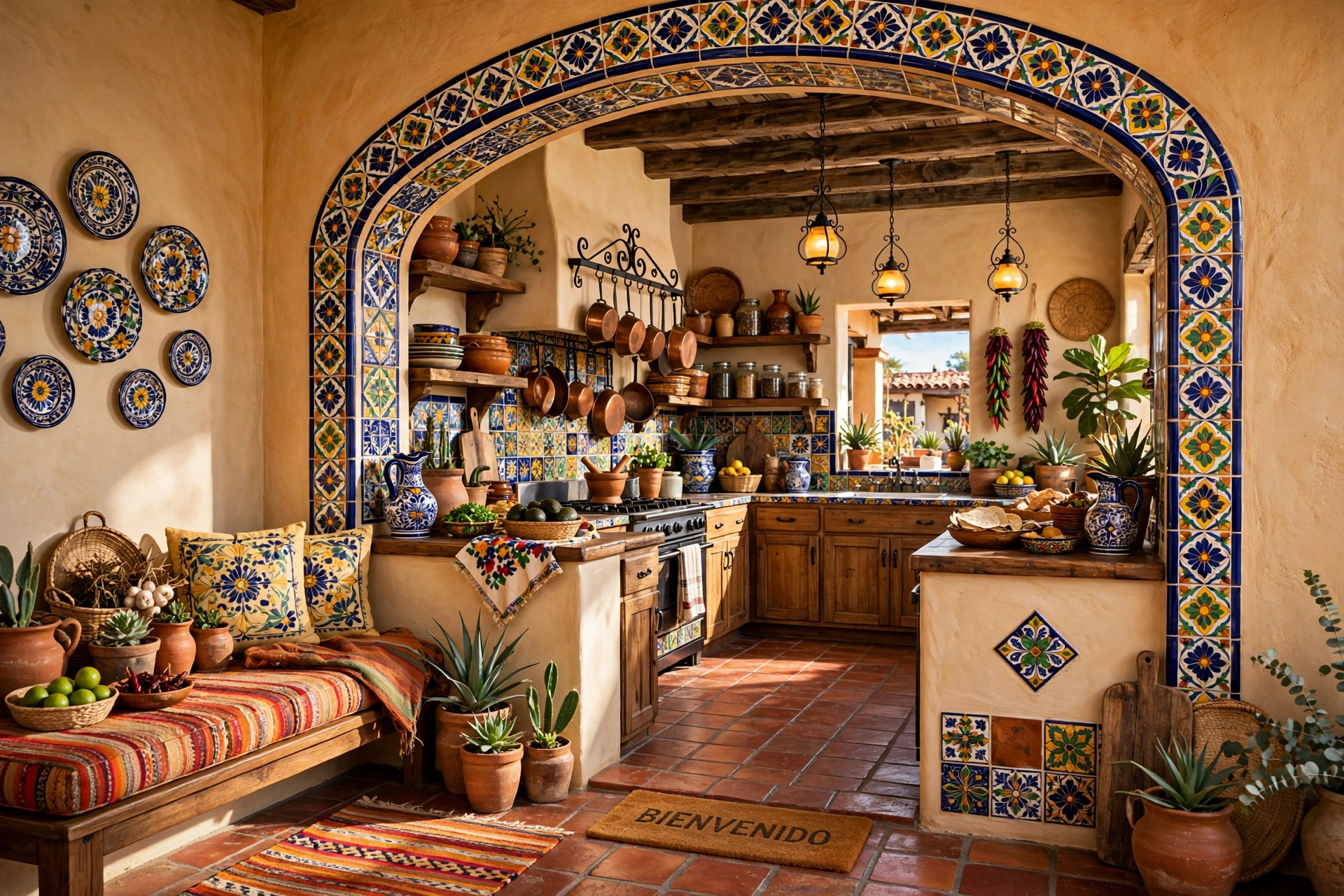
2. Hand-Painted Talavera Tile Backsplash
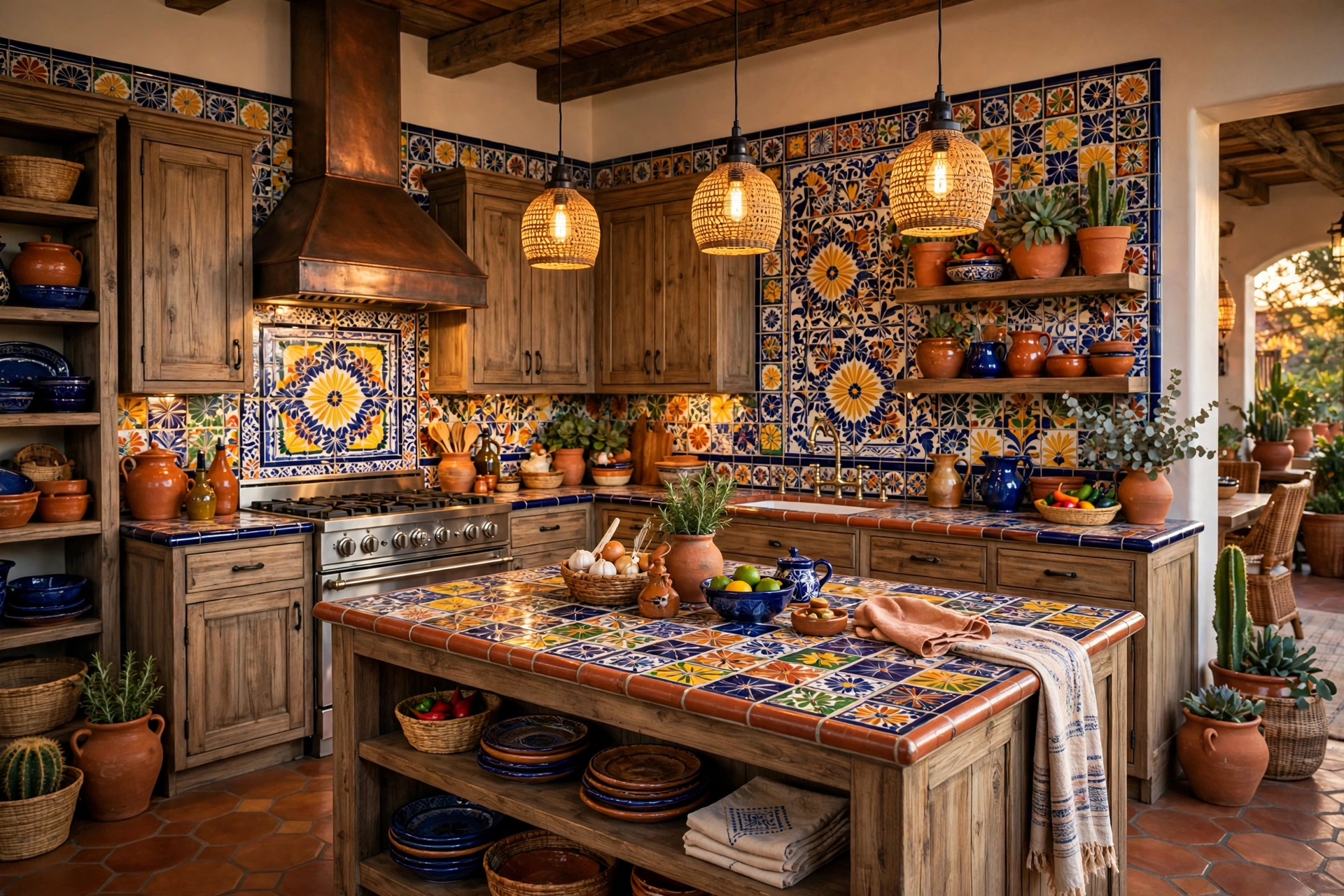
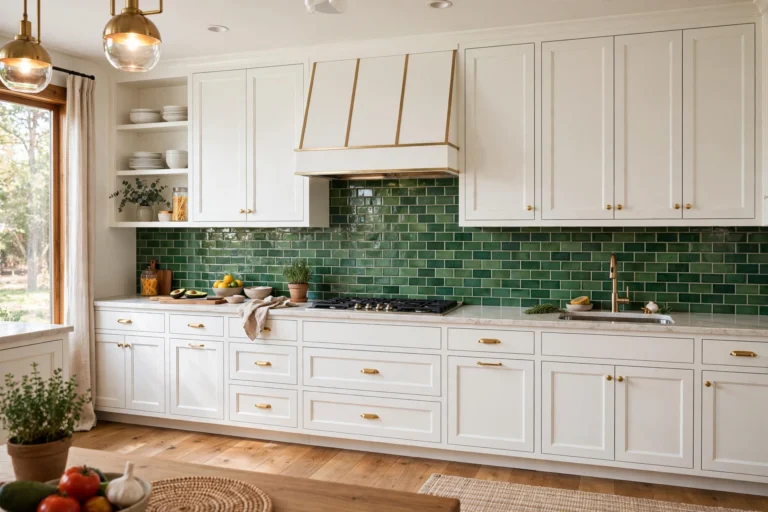
A hand-painted Talavera tile backsplash is the heart of this kitchen, turning a plain cooking wall into a work of folk art. Use 4-inch square tiles in mixed floral and geometric patterns, set with narrow grout lines so the painted designs read as one continuous tapestry.
Choose a grout color close to the tiles’ background, usually warm white or soft cream, so the joints disappear and the colors stay vivid. The mistake to avoid is mixing too many unrelated patterns, which can look chaotic rather than joyful.
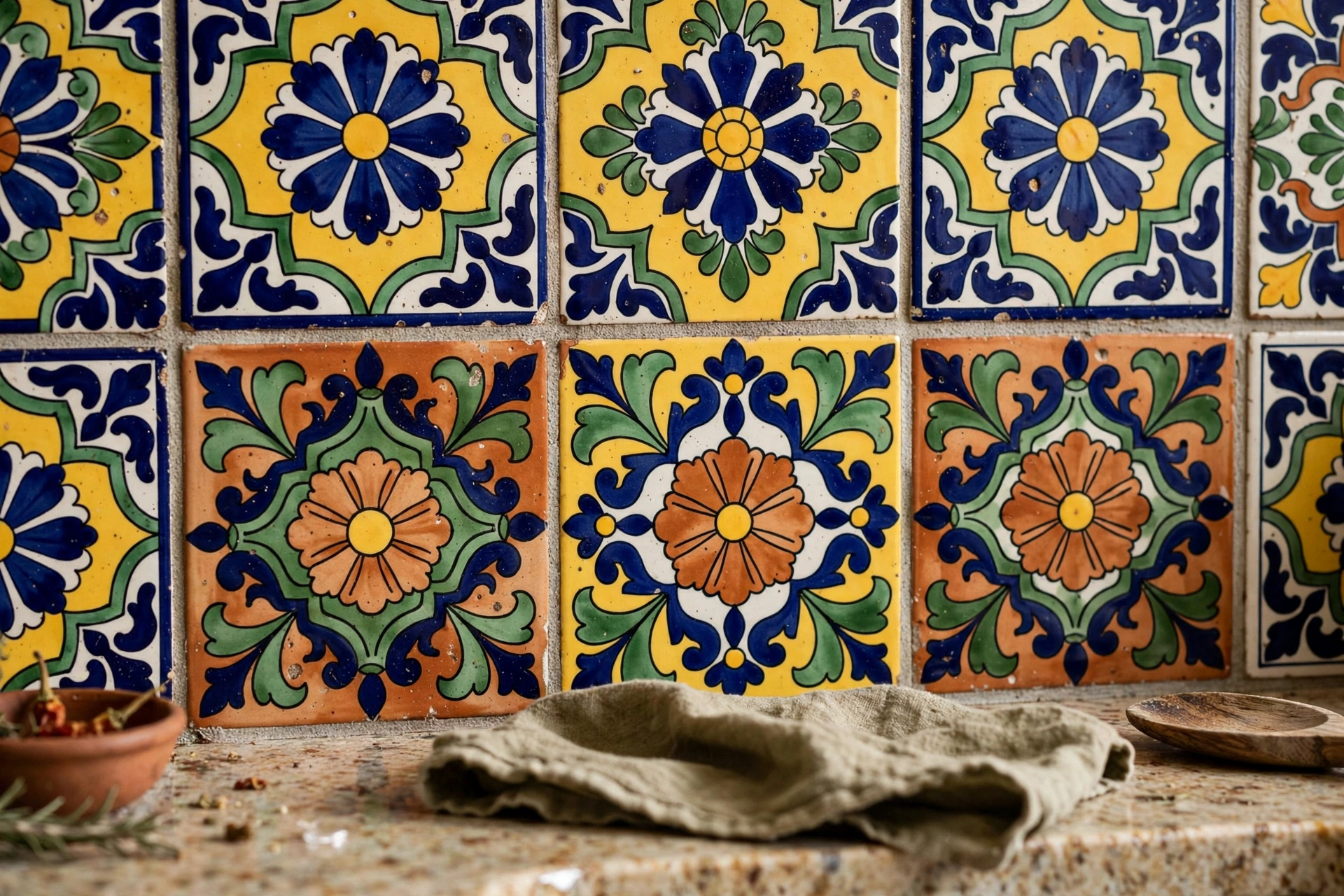
3. Talavera Tile Around the Range
The wall behind the range deserves the boldest Talavera treatment, since it is the natural focal point of any Mexican kitchen. Build a framed panel of feature tiles above the hob, at least 30 inches wide, bordered by a simple solid-color tile trim.
Use heat-resistant grout and seal the tiles twice, because cooking splashes and steam attack unsealed glaze over time. Keep the panel symmetrical around the range hood, so the composition feels deliberate rather than improvised.
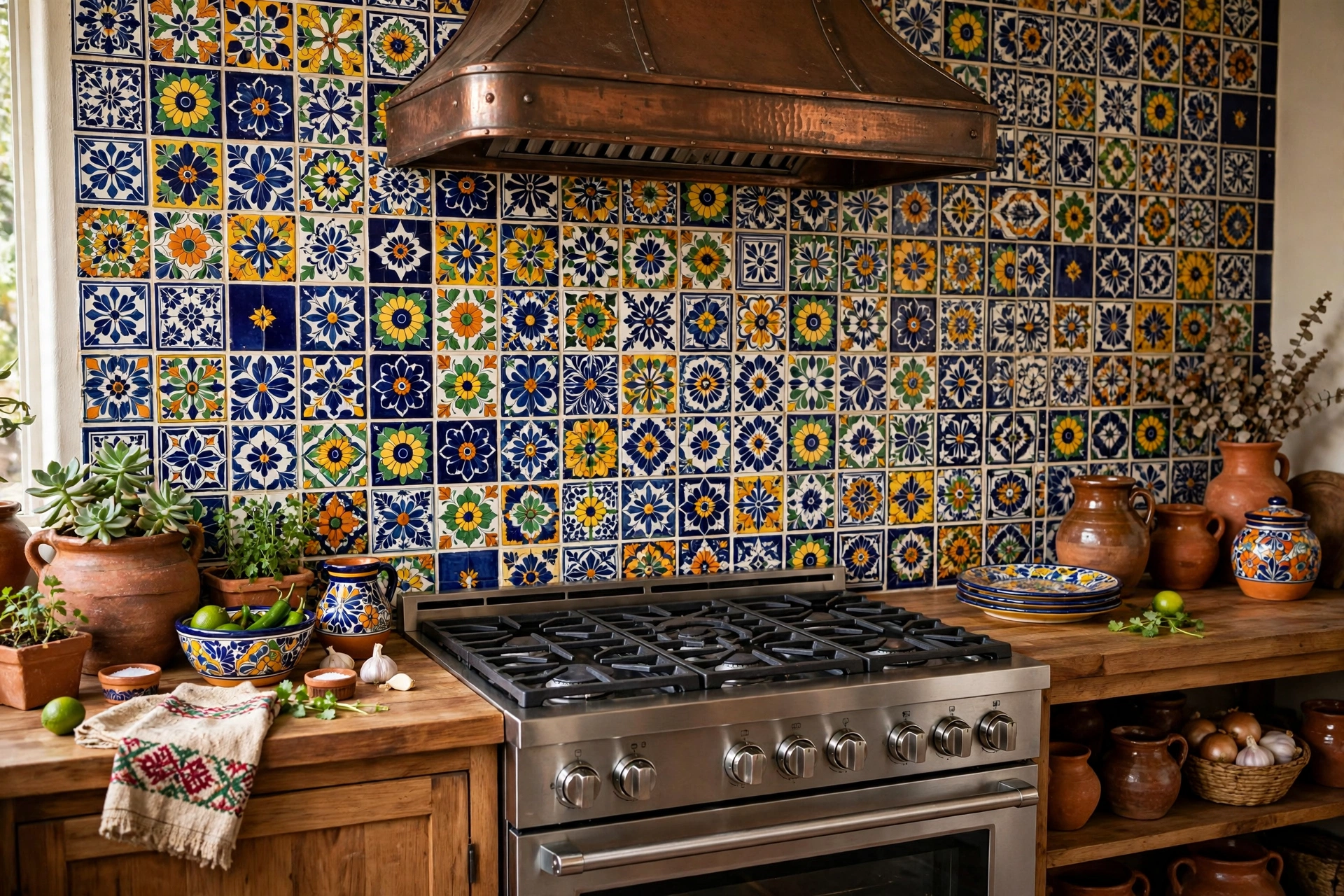
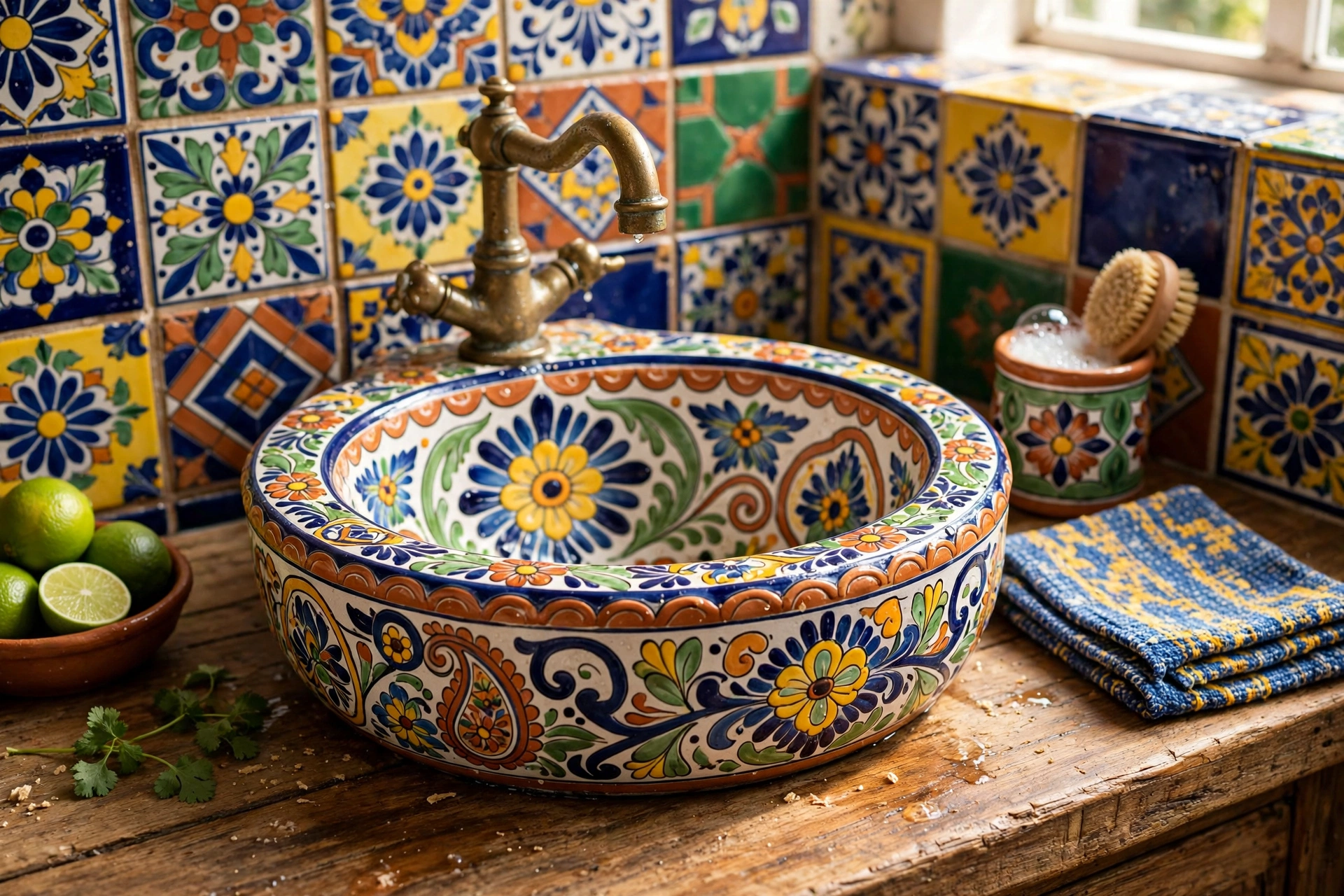
4. Colorful Talavera Sink and Faucet Area
The sink area becomes a jewel box when its surround is tiled in bright Talavera, with a hand-painted Talavera sink basin as the centerpiece. Pair the basin with a simple wrought-iron or oil-rubbed bronze faucet, so the metal never competes with the painted color.
Choose a sink at least 24 inches wide for daily use, and check that the Talavera basin’s drain fits standard plumbing before ordering. A common error is choosing a purely decorative basin that is too shallow, which splashes badly with everyday washing.
5. Talavera Accent Tiles on the Island
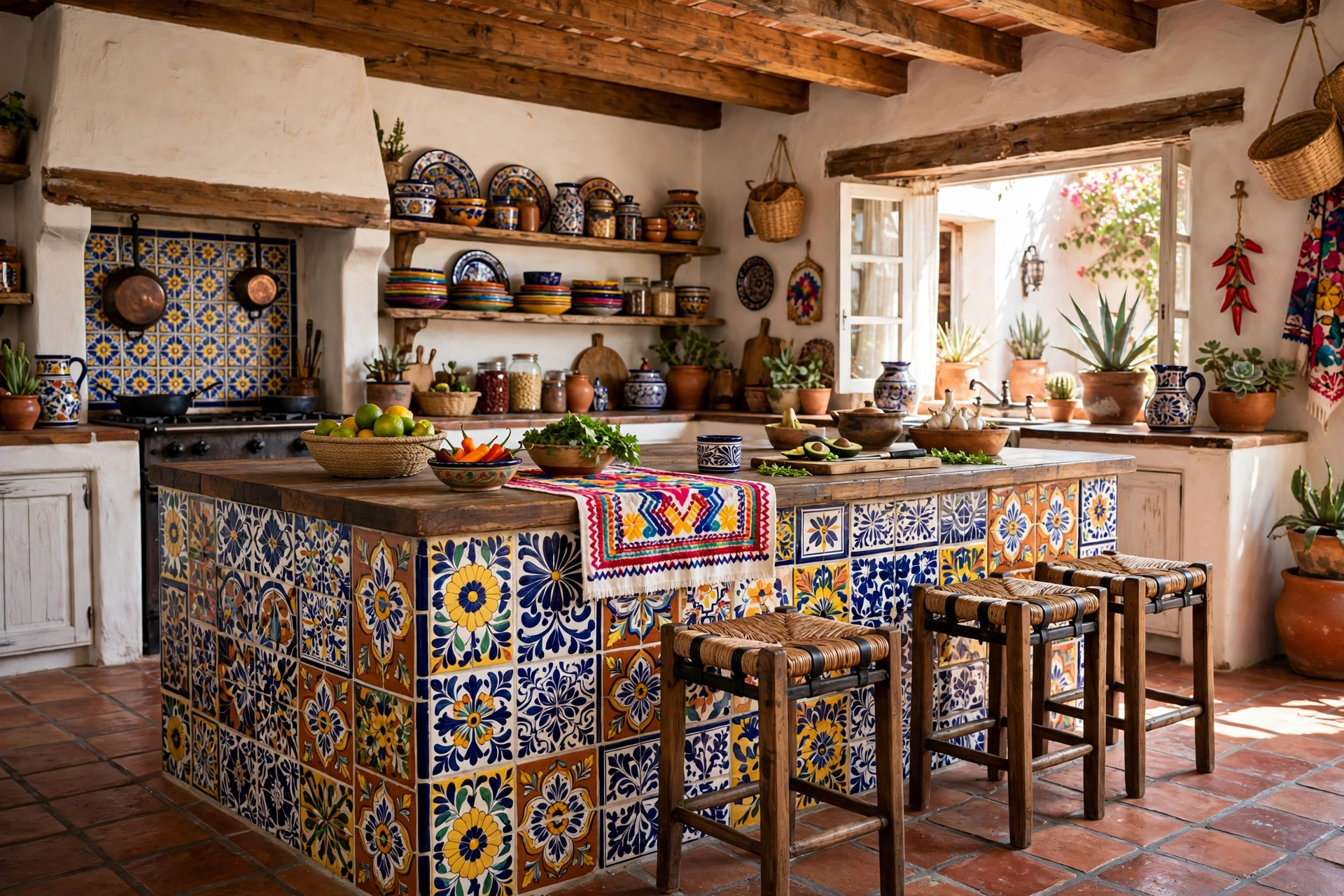
Adding Talavera accent tiles to the island base spreads color through the center of the room, where everyone gathers. Set a band of patterned tiles around the island’s base or a medallion on each end panel, using the same palette as the backsplash.
Keep the island overhang at twelve inches for comfortable knee room, and place the tile band above kick-plate height so it never gets scuffed by feet. Avoid tiling the entire island base, which can overwhelm the room and fight the backsplash.
6. Open Shelving with Talavera Pottery
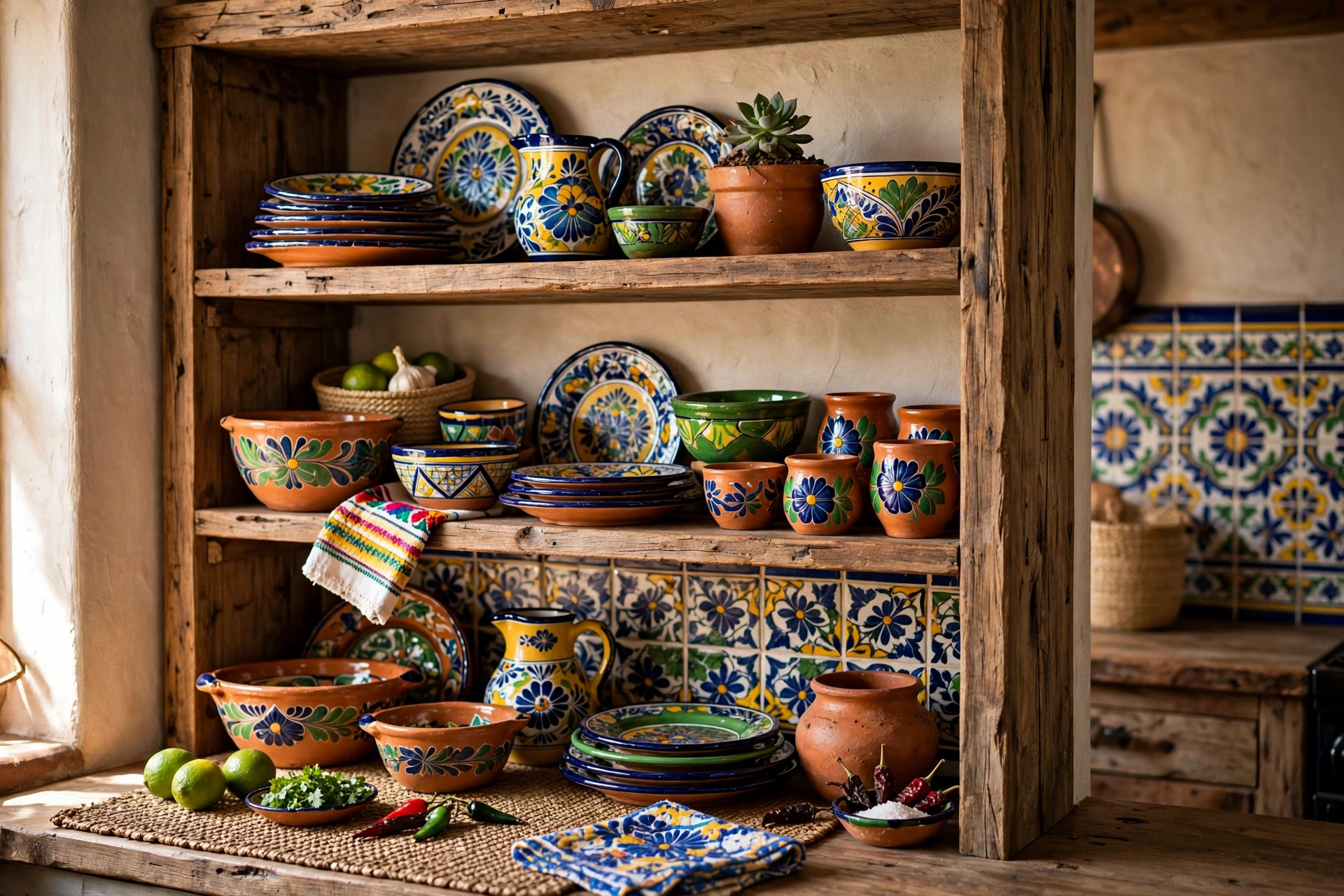
Open wooden shelving gives Talavera pottery a stage, displaying painted bowls, pitchers, and plates where they can be admired daily. Use shelves of warm pine or mesquite, at least twelve inches deep, mounted on wrought-iron brackets for an authentic hacienda feel.
Limit each shelf to one row of pieces with breathing room between them, since crowded pottery quickly looks like a shop display. Keep the heaviest pitchers on the lowest shelf, where they are safest and easiest to reach.
7. Talavera Tile Trim Around Windows and Doorways
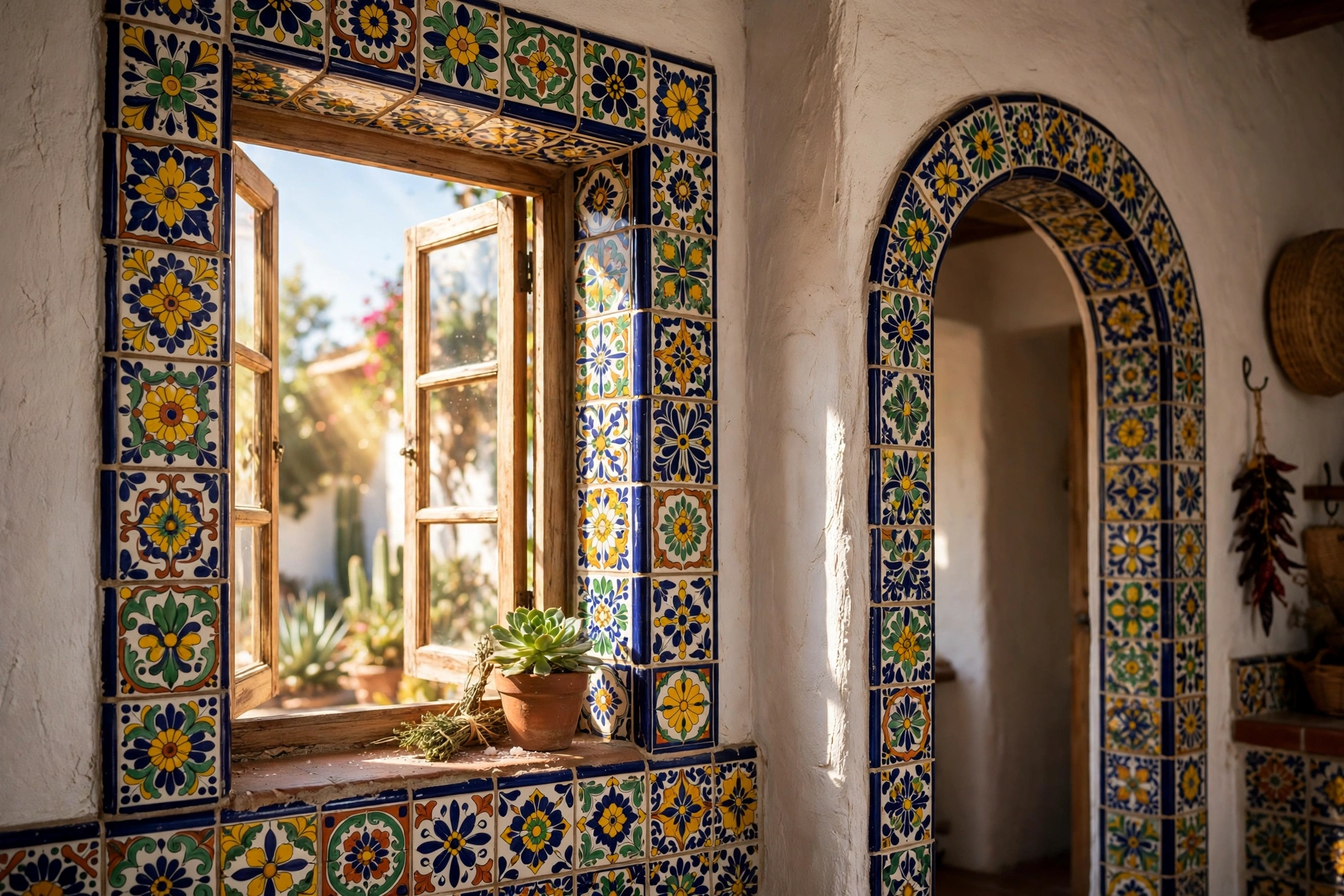
Framing windows and doorways with Talavera tile trim carries color to every edge of the kitchen, not just the backsplash. Run a single row of patterned tiles around the window casing, or a double border around a wide arched doorway, for a finished look.
Measure each opening before ordering, since handmade tiles vary slightly in size and a shortfall mid-project is frustrating. The trim works best in one repeating pattern, which reads as intentional framing rather than leftover tile.
8. Mixing Talavera Patterns Without Clashing
Mixing Talavera patterns successfully depends on one shared color that appears in every design, usually cobalt blue or warm terracotta. Let that anchor color repeat in at least sixty percent of the tiles, with accent patterns providing variety around it.
Lay out a test panel of at least twenty tiles on the floor before installing, and view it in daylight and evening light. A frequent mistake is combining patterns from unrelated color families, which turns a joyful mix into visual noise.
9. Planning a Mexican Kitchen with Colorful Talavera Accents on a Budget
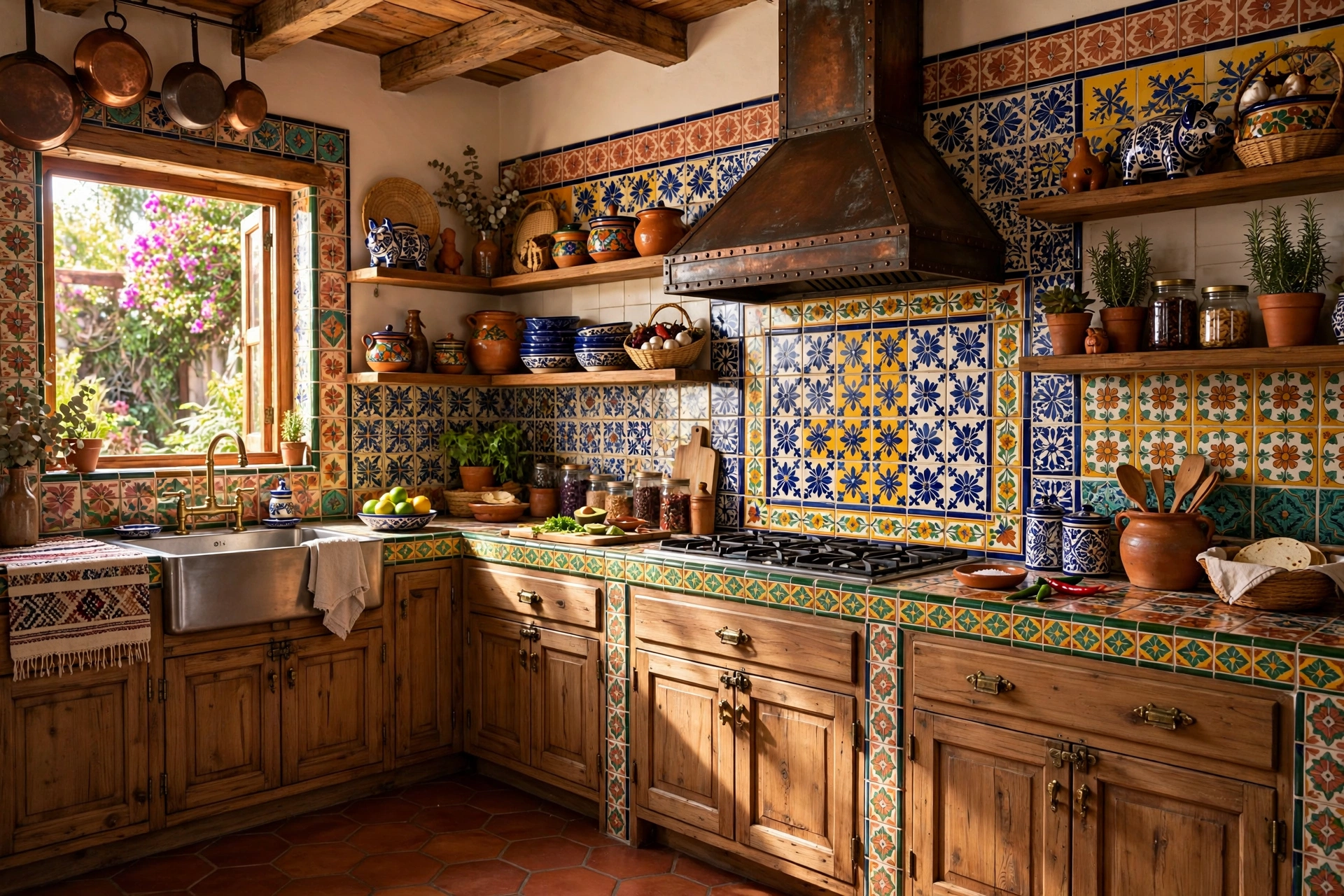
A Talavera kitchen does not need a luxury budget, since a little hand-painted tile goes a long way when placed with intent. Concentrate the tile on one feature wall and the sink surround, and use plain terracotta or cream tiles elsewhere for balance.
Buy ten percent extra tile to cover breakage and handmade size variation, and put the savings into quality grout and sealer. A good rule is to spend about forty percent of the tile budget on the feature areas, where the color makes the biggest impact.
10. Talavera Pottery for Everyday Cooking
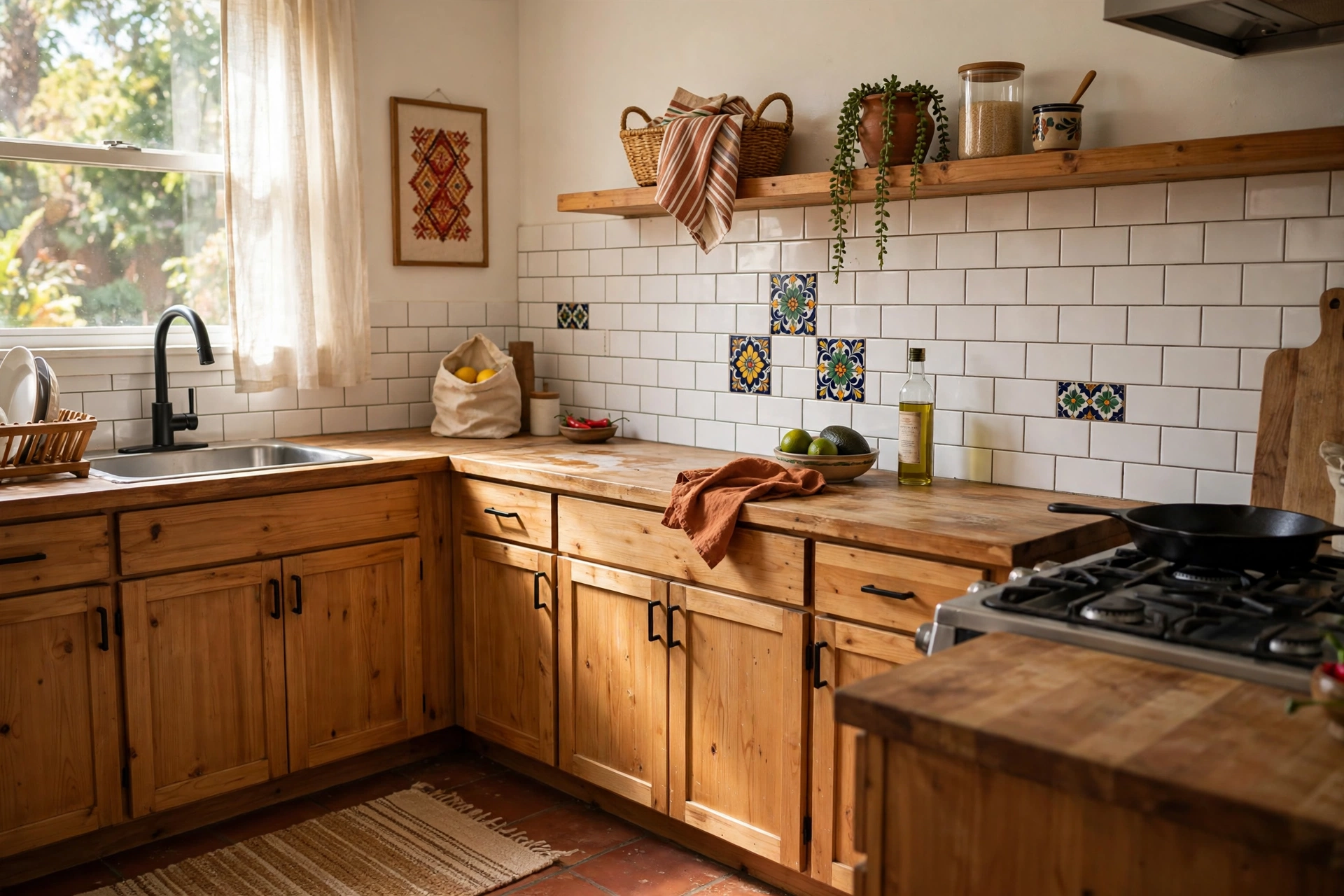
Talavera pottery is not just decoration; its bowls, cazuelas, and pitchers are made for real cooking and serving. Use lead-free, food-safe Talavera for anything that touches food, and confirm the glaze is food-safe before buying antique or unmarked pieces.
Keep everyday Talavera within arm’s reach of the range and prep areas, so it gets used rather than merely displayed. Avoid thermal shock by never moving a hot cazuela straight into cold water, which can crack even the sturdiest pottery.
11. Colorful Talavera Knobs and Drawer Pulls
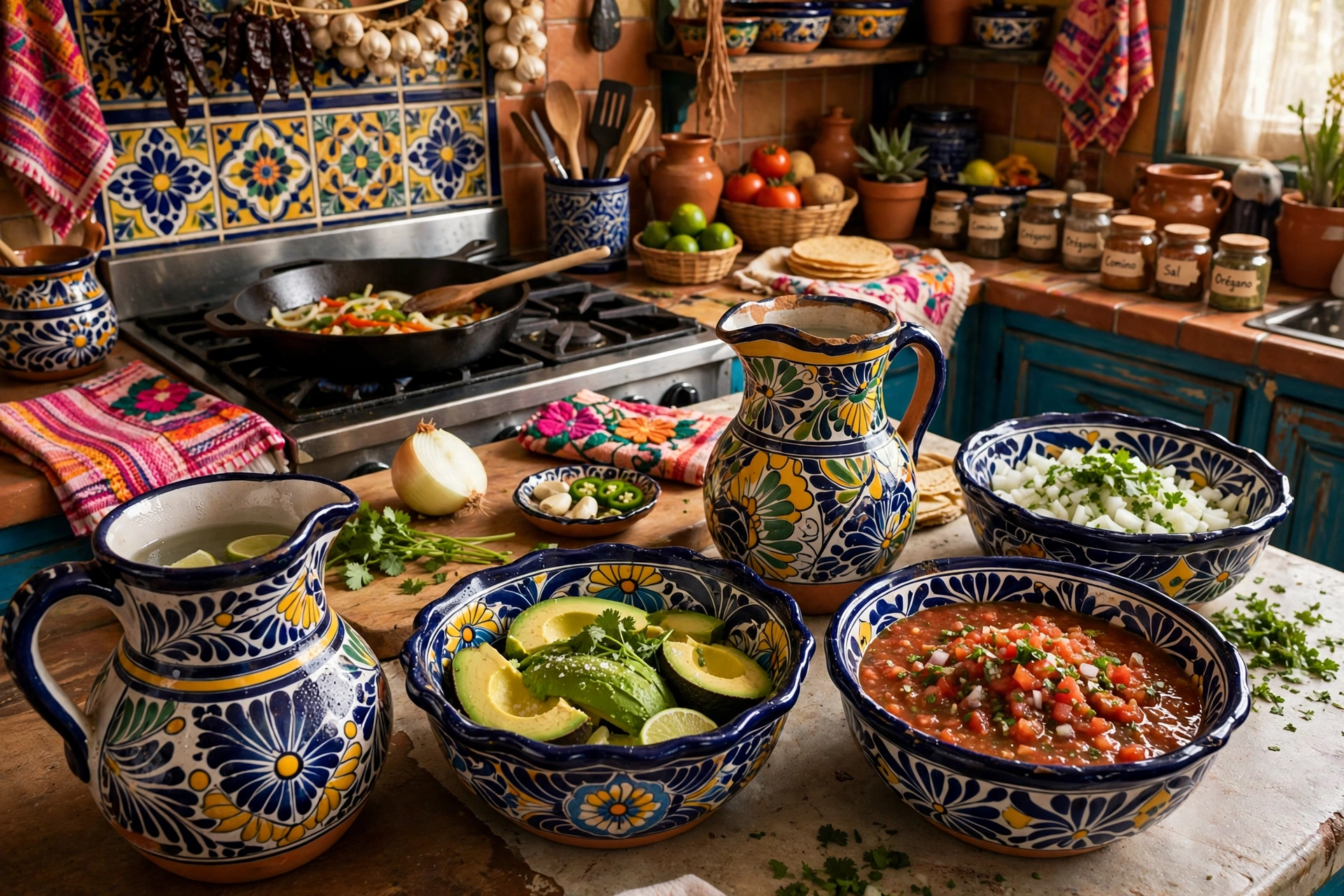
Swapping plain hardware for colorful Talavera knobs is the fastest, cheapest way to bring this style into any kitchen. Choose knobs about one and a half inches wide for drawers and slightly smaller ones for doors, all in the same palette as the backsplash.
Fit the knobs with a simple jig so every one sits at the same height, since uneven hardware ruins an otherwise polished look. Avoid mixing Talavera knobs with modern chrome bar pulls on adjacent cabinets, which reads as two unfinished ideas.
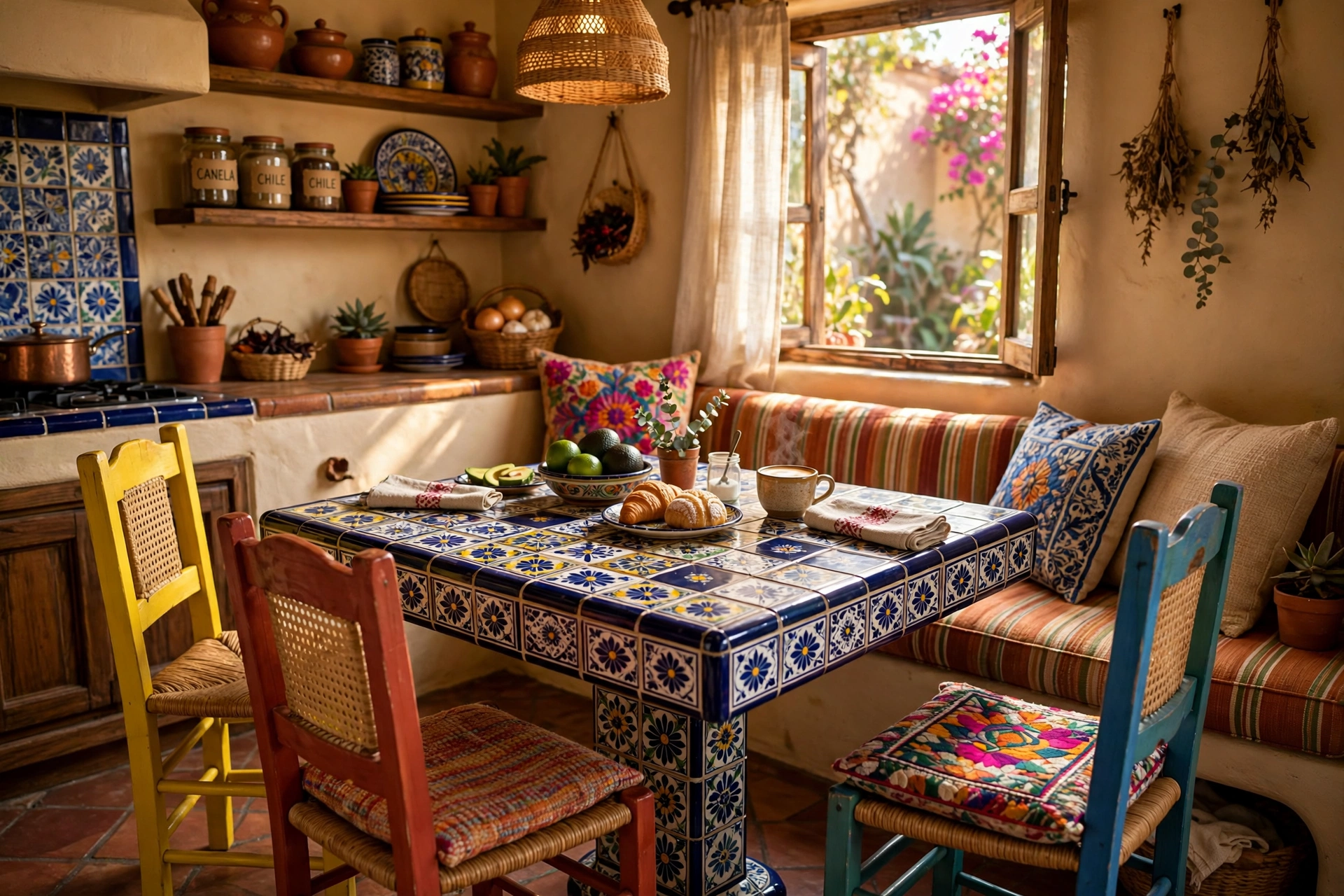
12. Talavera Tile Table and Breakfast Nook
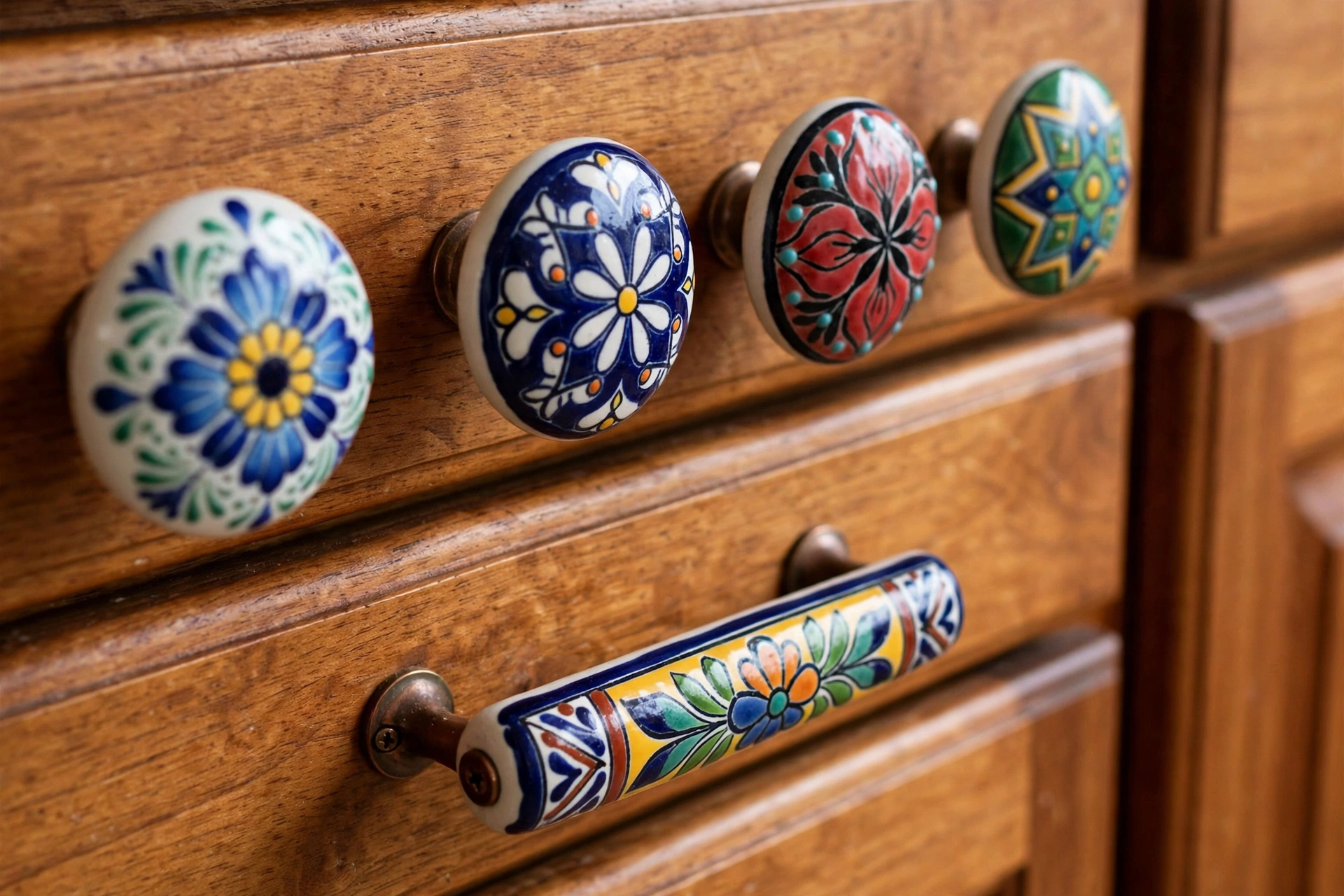
A breakfast nook with a Talavera-tiled table top turns morning coffee into a small daily celebration. Choose a sturdy wrought-iron or wood table base, and top it with a mosaic of Talavera tiles sealed under a smooth, food-safe finish.
Allow at least thirty inches of table depth so plates fit comfortably, and pair the table with simple wooden chairs in a solid warm color. The table’s pattern should echo the backsplash without copying it exactly, for a collected, not matched, feel.
13. From Kitchen to Entryway: Carrying Talavera Through the Home
Talavera looks best when it flows beyond the kitchen, so carry one tile pattern from the backsplash into the adjoining entryway as a visual bridge. A matching border along the hallway floor or a tiled niche by the front door ties the two rooms together beautifully.
The trick is restraint: repeat just one pattern and one color, not the whole backsplash, so the entryway feels related rather than duplicated. For ideas on arched walls and terracotta entrances, see Mexican Entryway with Arched Walls and Terracotta Decor and plan the transition as one continuous design.
14. Talavera Tile Flooring and Borders
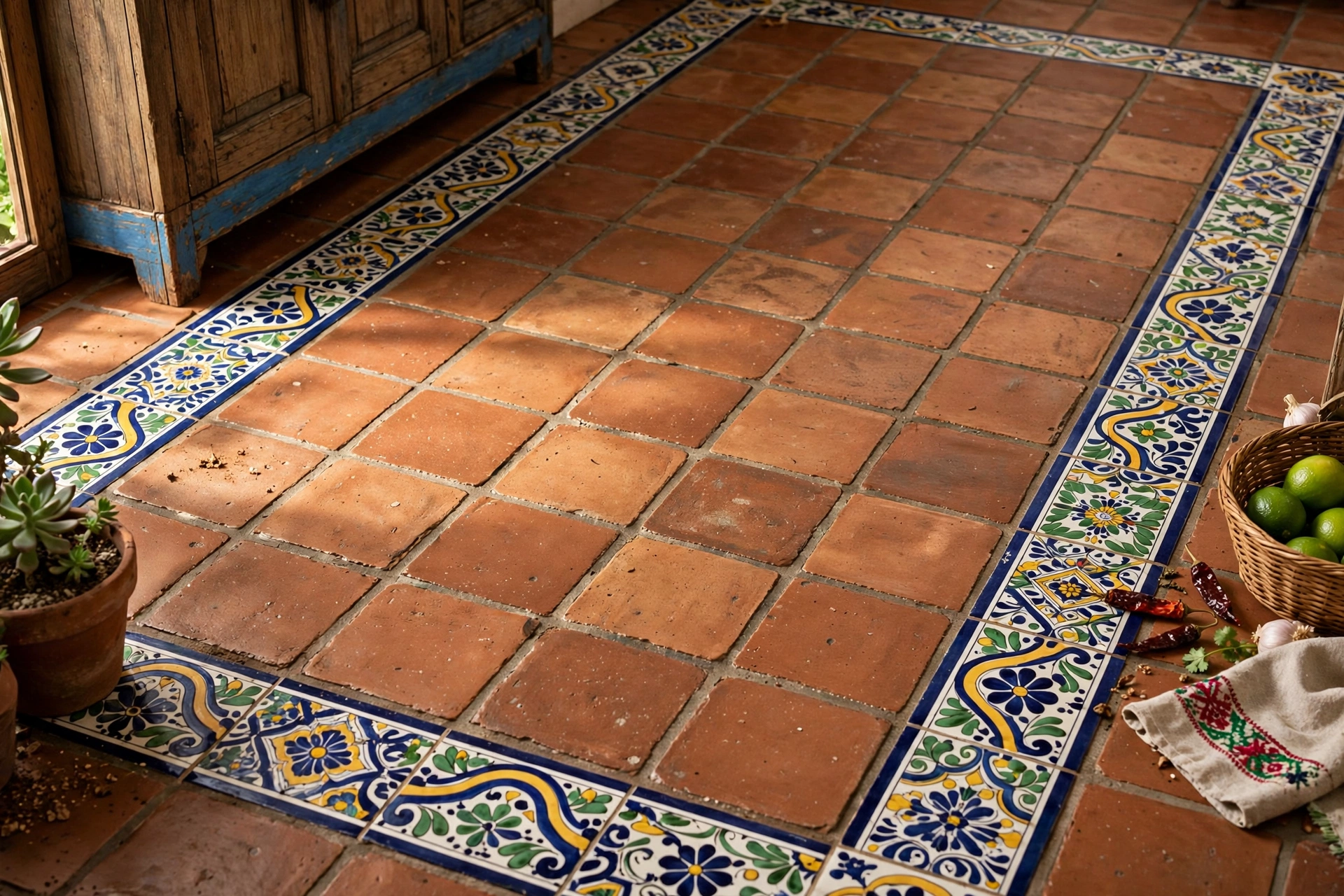
Talavera floor tiles bring color underfoot, especially as a decorative border around a plainer terracotta or Saltillo tile floor. Lay the patterned border about twelve inches wide around the room’s edge, where it frames the space without overwhelming it.
Choose floor-rated Talavera or sealed Saltillo tiles, since wall tiles can be too soft for foot traffic and will wear quickly. Seal the floor twice before grouting, and reseal high-traffic paths once a year to keep the colors rich.
15. Warm Wood Cabinets with Talavera Accents
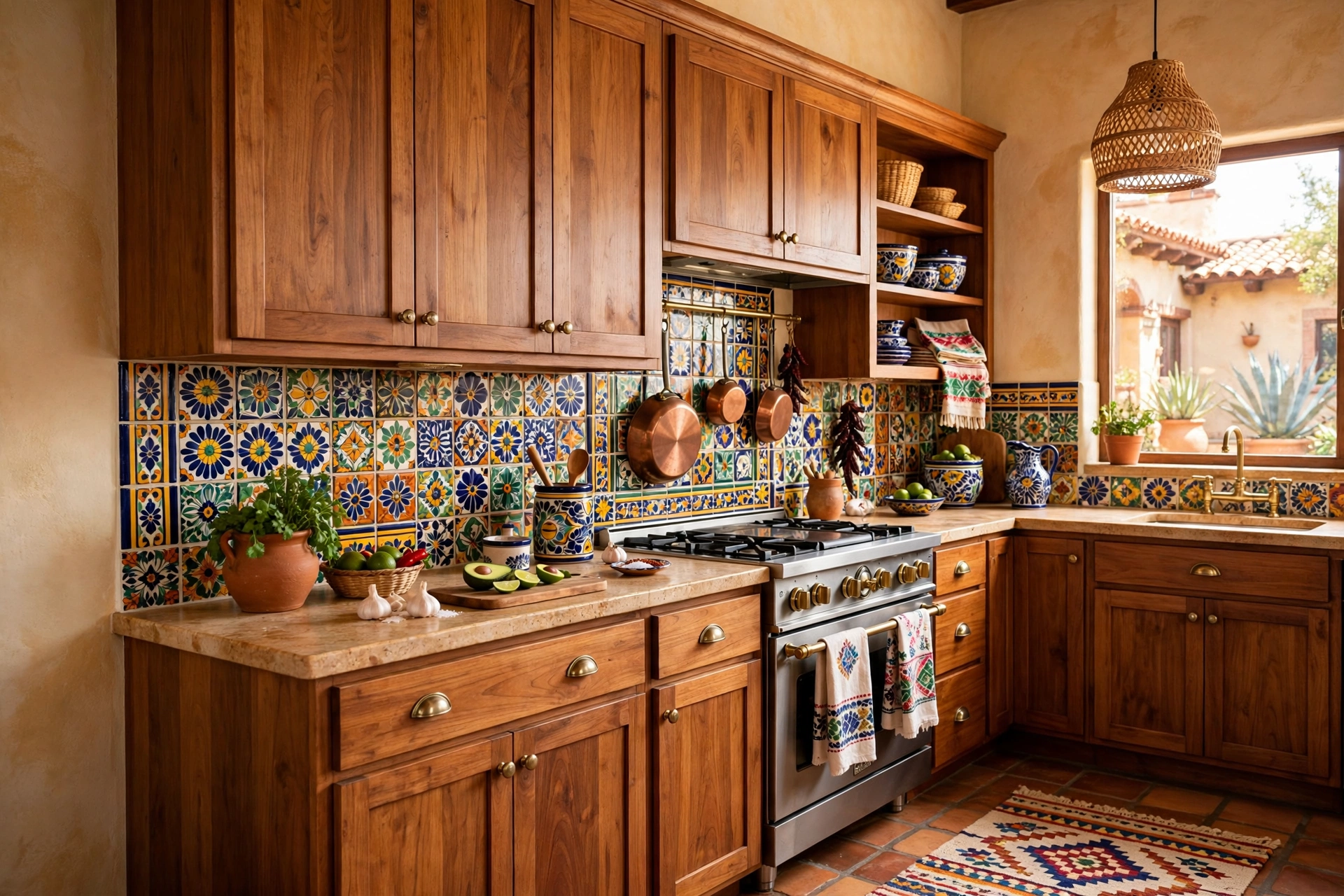
Warm wood cabinets are the perfect partner for Talavera, grounding the bright tile with honey-toned pine or mesquite. Choose a matte or satin finish on the wood, so the cabinets feel handmade rather than glossy and commercial.
Keep the cabinet style simple, with flat or Shaker doors, so the painted tiles stay the star of the room. A common mistake is choosing ornate carved cabinets, which compete with the Talavera patterns instead of supporting them.
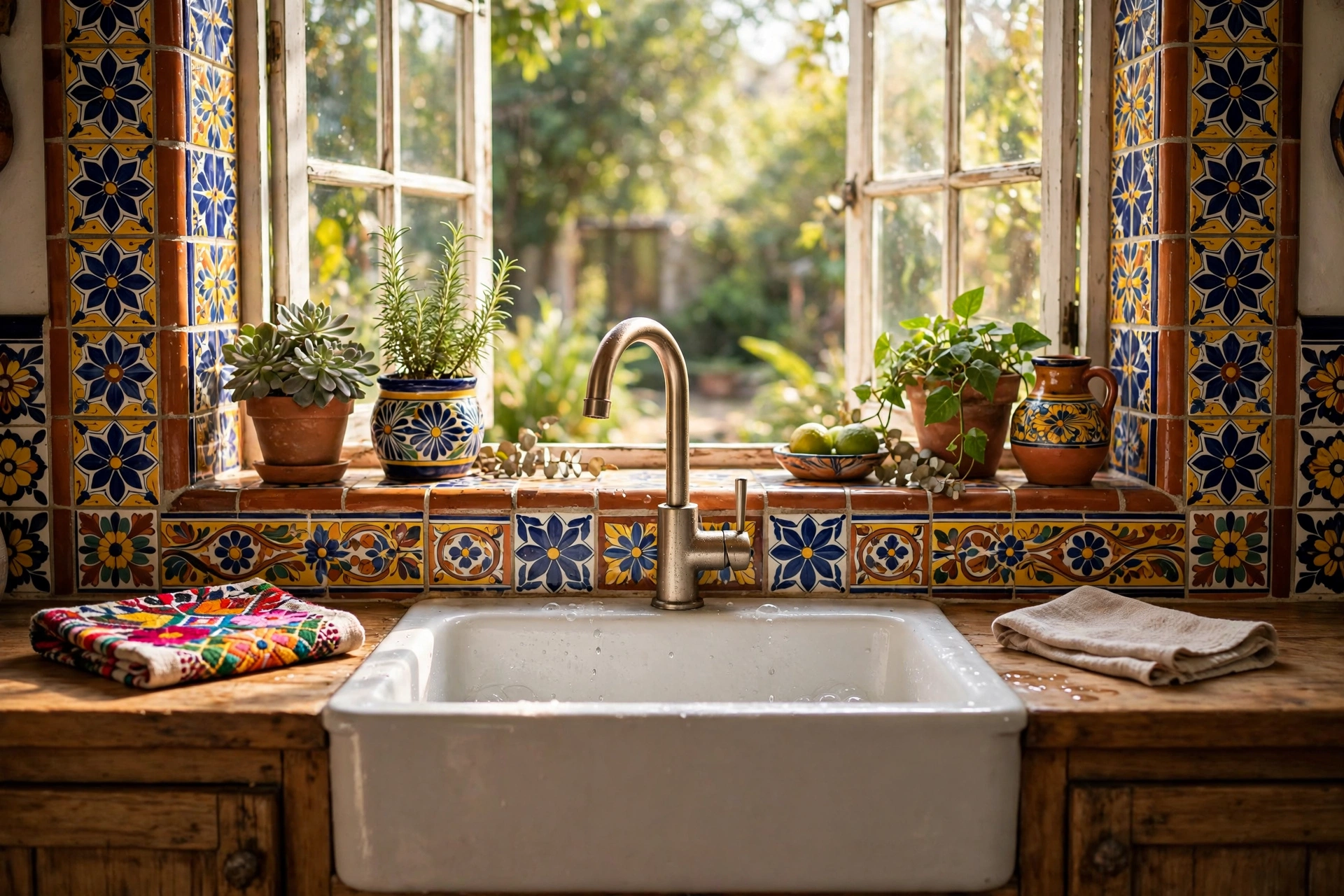
16. Talavera Tile Around the Sink Window
The window above the sink is a natural frame for Talavera, catching daylight that makes the painted glazes glow. Tile the window surround in a single cheerful pattern, and add a deep sill in solid terracotta where potted herbs and small pottery can sit.
Seal the sill tiles especially well, since splashes and condensation collect there daily. Avoid dark, heavy patterns around a small window, which can make the opening feel smaller instead of brighter.
17. Small-Space Ideas for a Mexican Kitchen with Colorful Talavera Accents
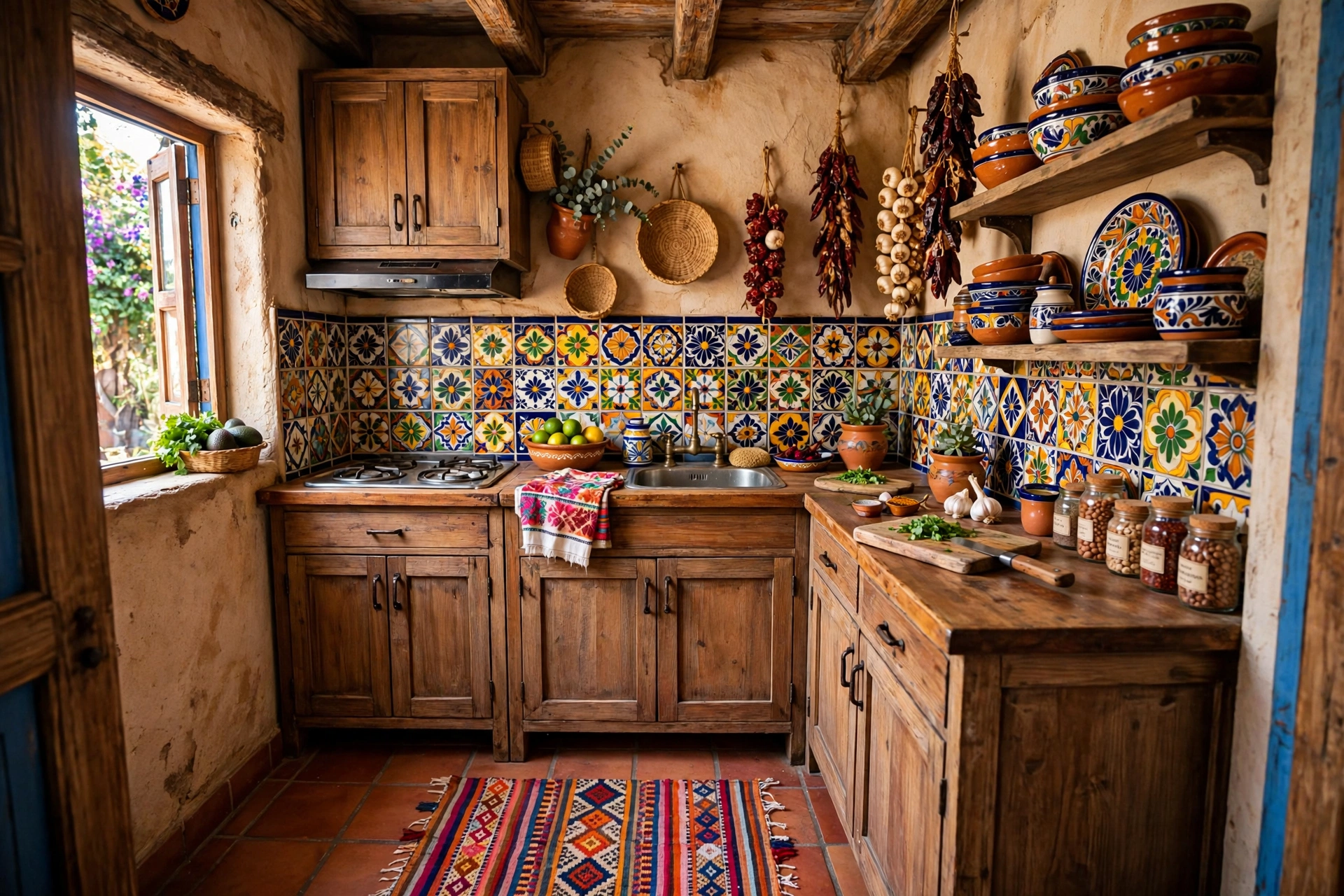
Small kitchens benefit enormously from Talavera, because a little color makes a compact room feel intentional rather than cramped. Concentrate the tile on the backsplash and one shelf wall, and keep the remaining walls in warm white plaster.
Choose smaller 4-inch tiles rather than large murals in a tiny kitchen, since big patterns can overwhelm a short wall. Add one open shelf of colorful pottery, and the small space will feel curated and joyful instead of crowded.
18. Talavera Tile Murals and Decorative Panels
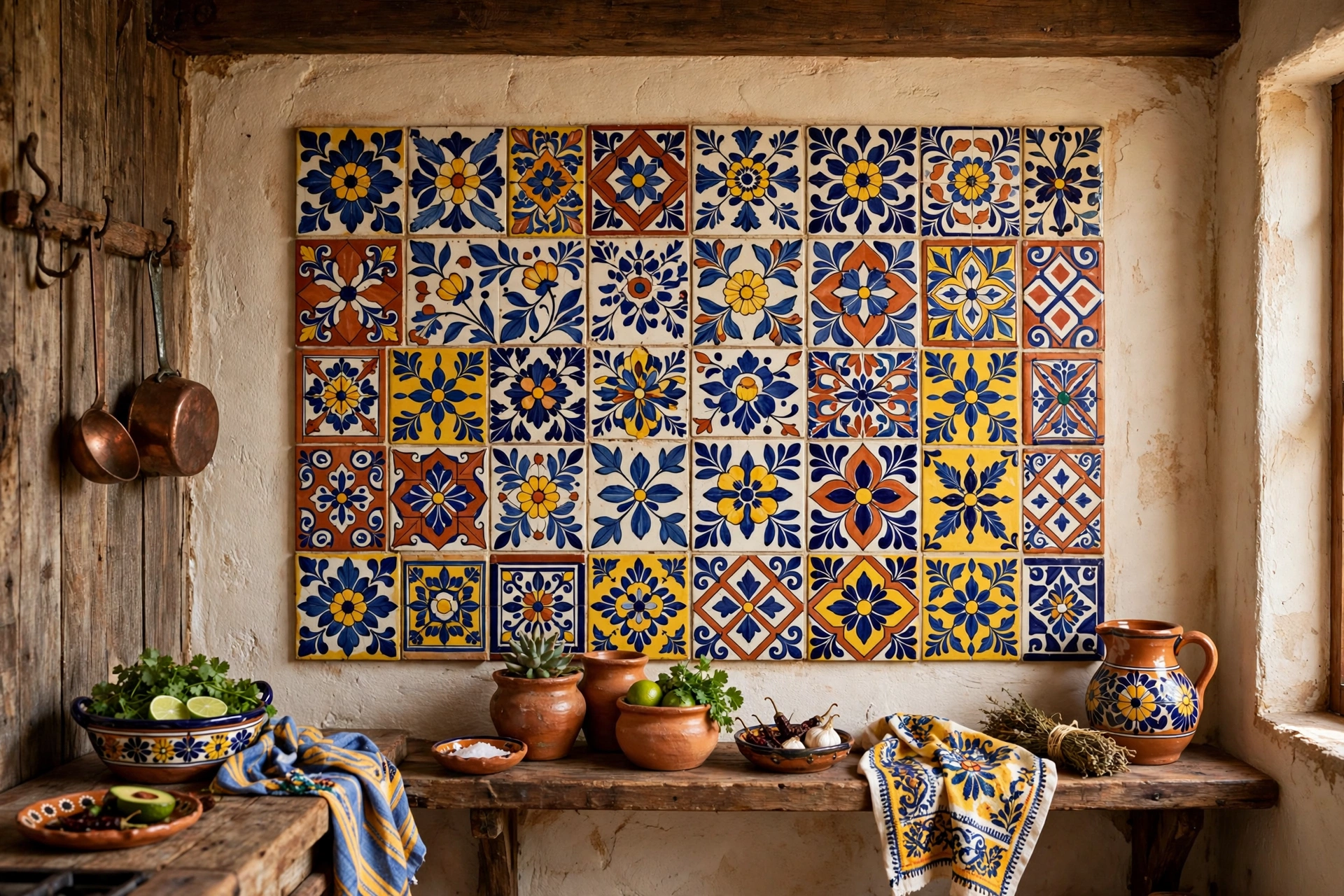
A Talavera mural panel, painted across many tiles to form one large floral or sun design, makes a stunning kitchen showpiece. Place the mural on a wall that is visible from the dining area, at least 24 by 36 inches, so the full design can be appreciated.
Order the mural as one numbered set from a single artisan, and photograph the layout before installing, since mixed-up mural tiles are nearly impossible to reorder. Keep the surrounding tiles plain, so the mural reads as art, not clutter.
19. Terracotta, Iron, and Talavera: Mixing Materials
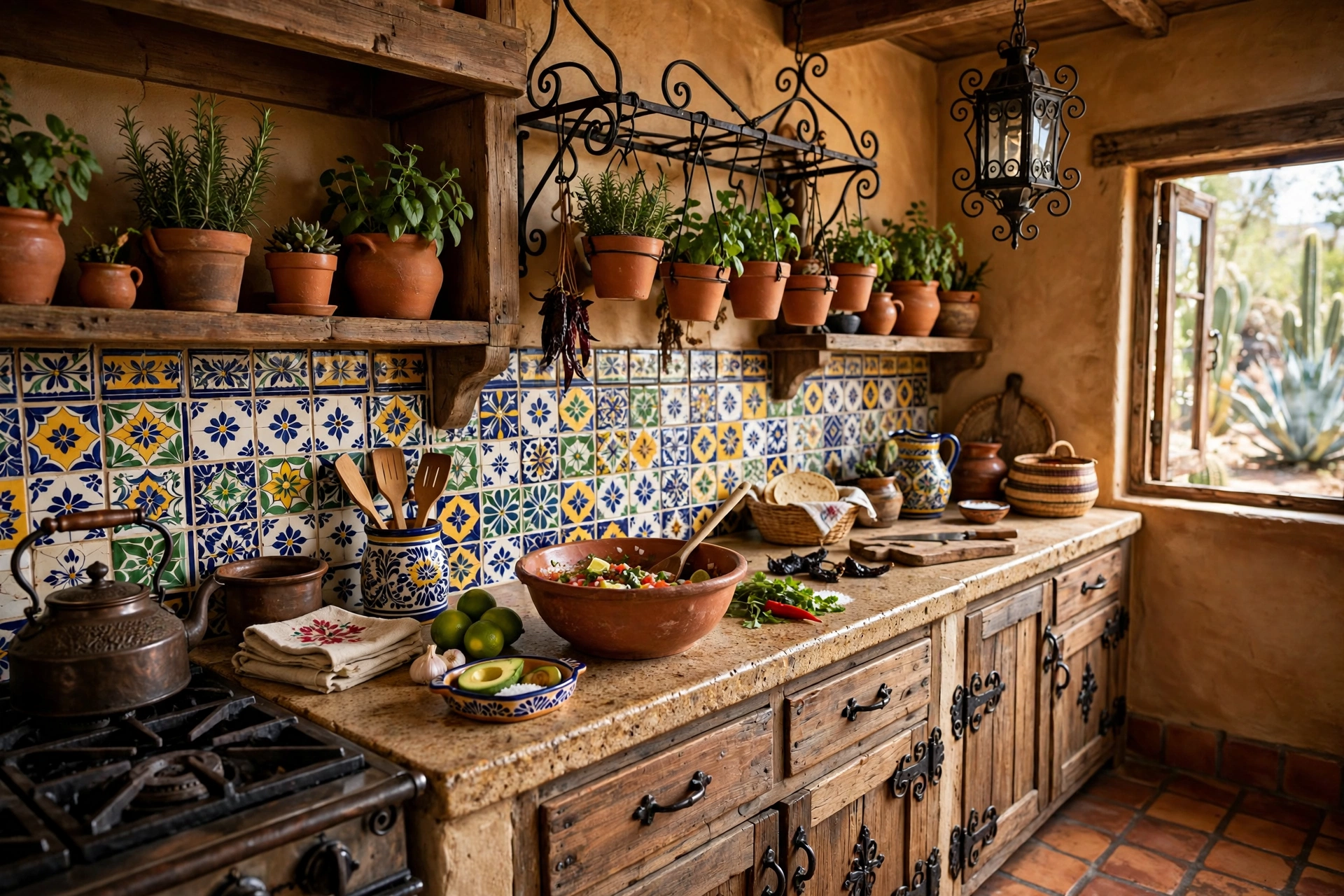
The classic Mexican kitchen trio is terracotta, wrought iron, and Talavera, each balancing the others beautifully. Let terracotta warm the floors and pots, iron darken the hardware and lighting, and Talavera supply the bright painted color.
Keep the proportions roughly equal in feel rather than exact in area, with no single material dominating the room. A frequent error is adding a fourth strong material, like polished chrome, which breaks the earthy, handmade story.
20. Talavera Tile Care and Cleaning
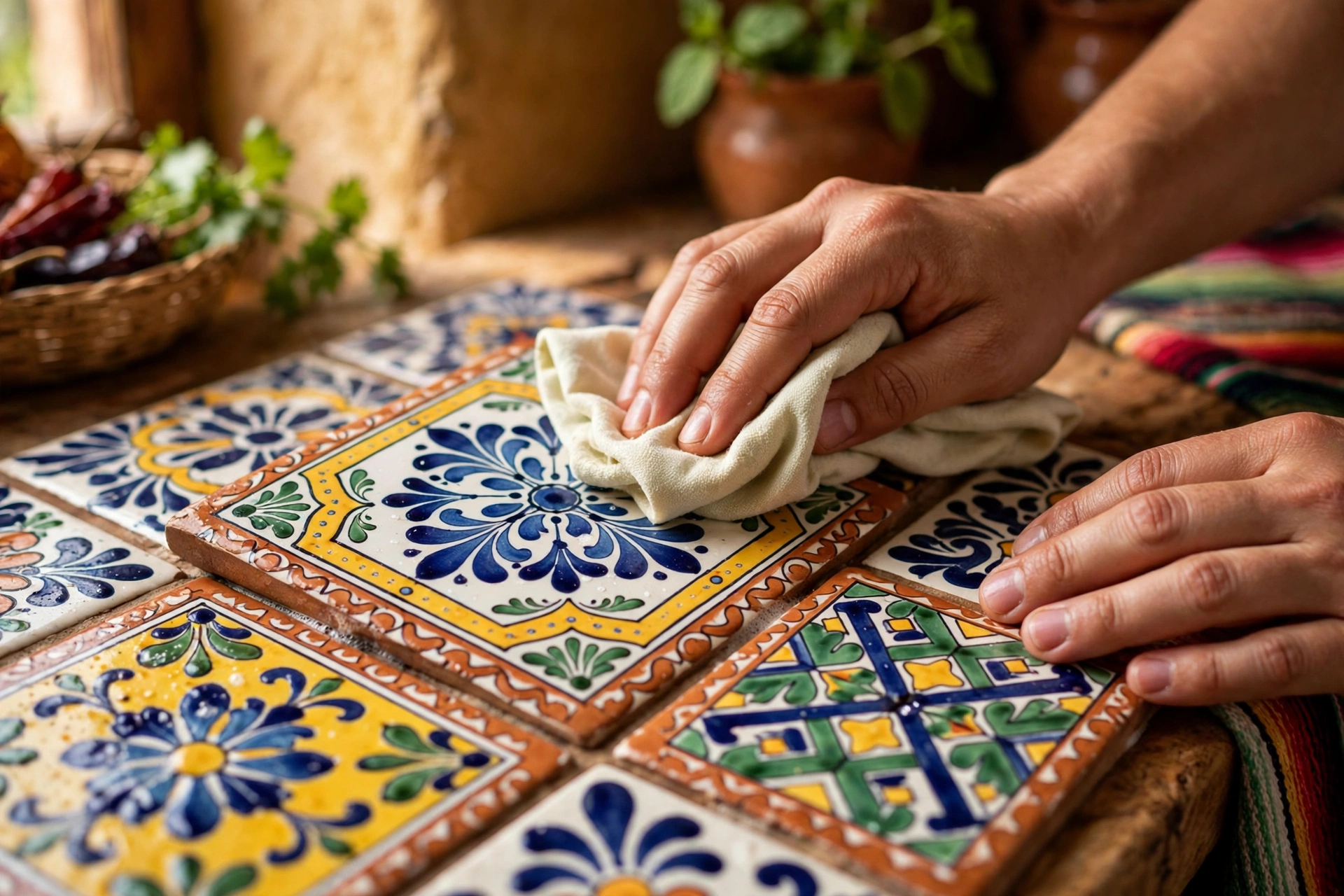
Talavera tiles reward gentle care, so clean them with warm water and a drop of mild dish soap, wiping with a soft cloth. Never use abrasive pads or acidic cleaners, which can dull the hand-painted glaze and fade the brightest colors over time.
Reseal grout lines once a year in cooking and sink areas, where grease and moisture attack them most. The most common mistake is letting spills sit on unsealed grout, which stains permanently and makes even beautiful tile look tired.
21. Lighting That Makes Talavera Colors Glow
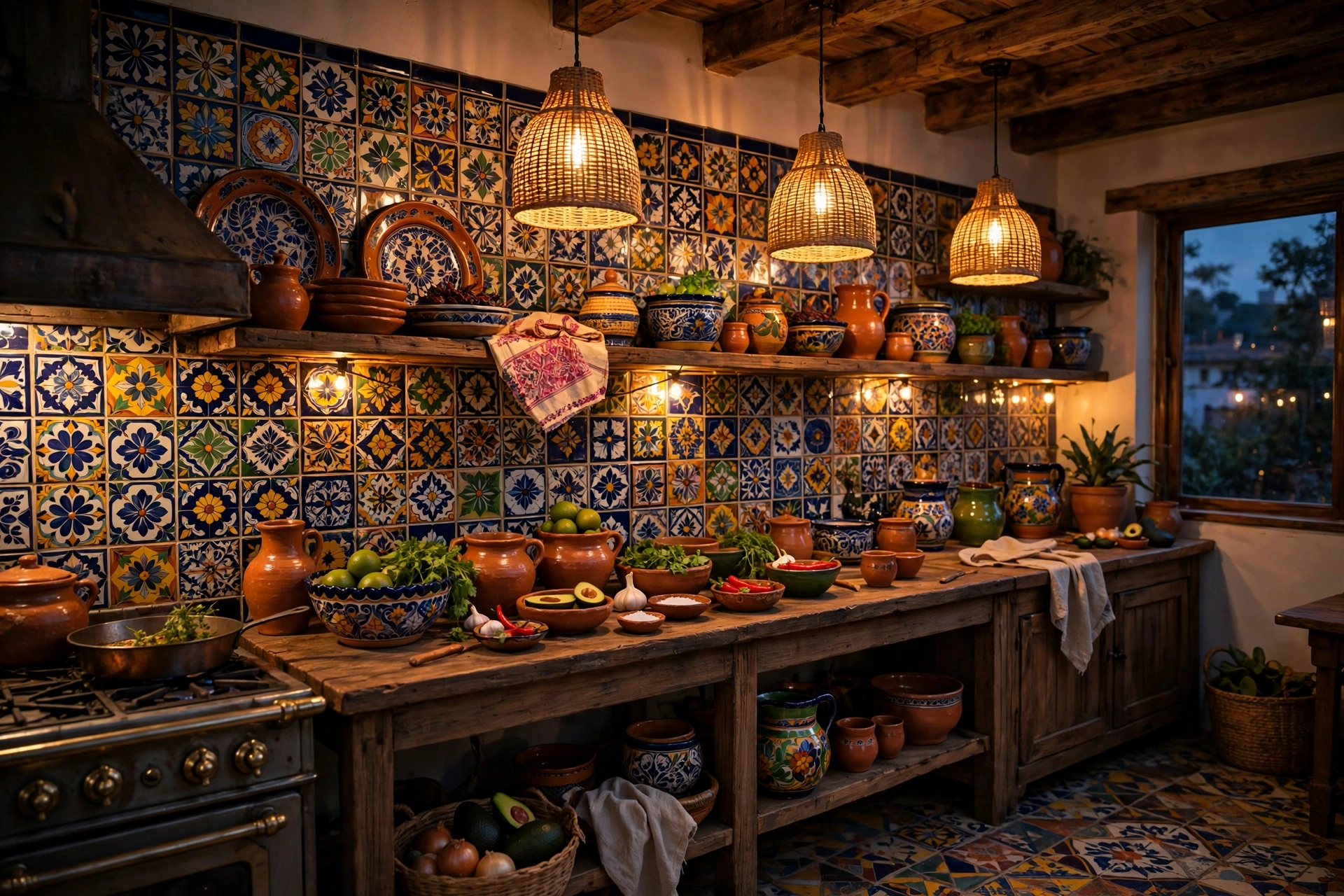
Warm lighting is what makes Talavera colors glow, so choose bulbs around 2700K for under-cabinet strips and pendants. Mount under-cabinet lights toward the front of the cabinet, washing the backsplash evenly instead of casting shadows across the tiles.
Add a pendant or two with amber or seeded glass over the island, which deepens the warm tones beautifully. Avoid cool white bulbs above 4000K, which flatten cobalt and terracotta into dull, greyish versions of themselves.
22. Talavera Accents in a Modern Mexican Kitchen
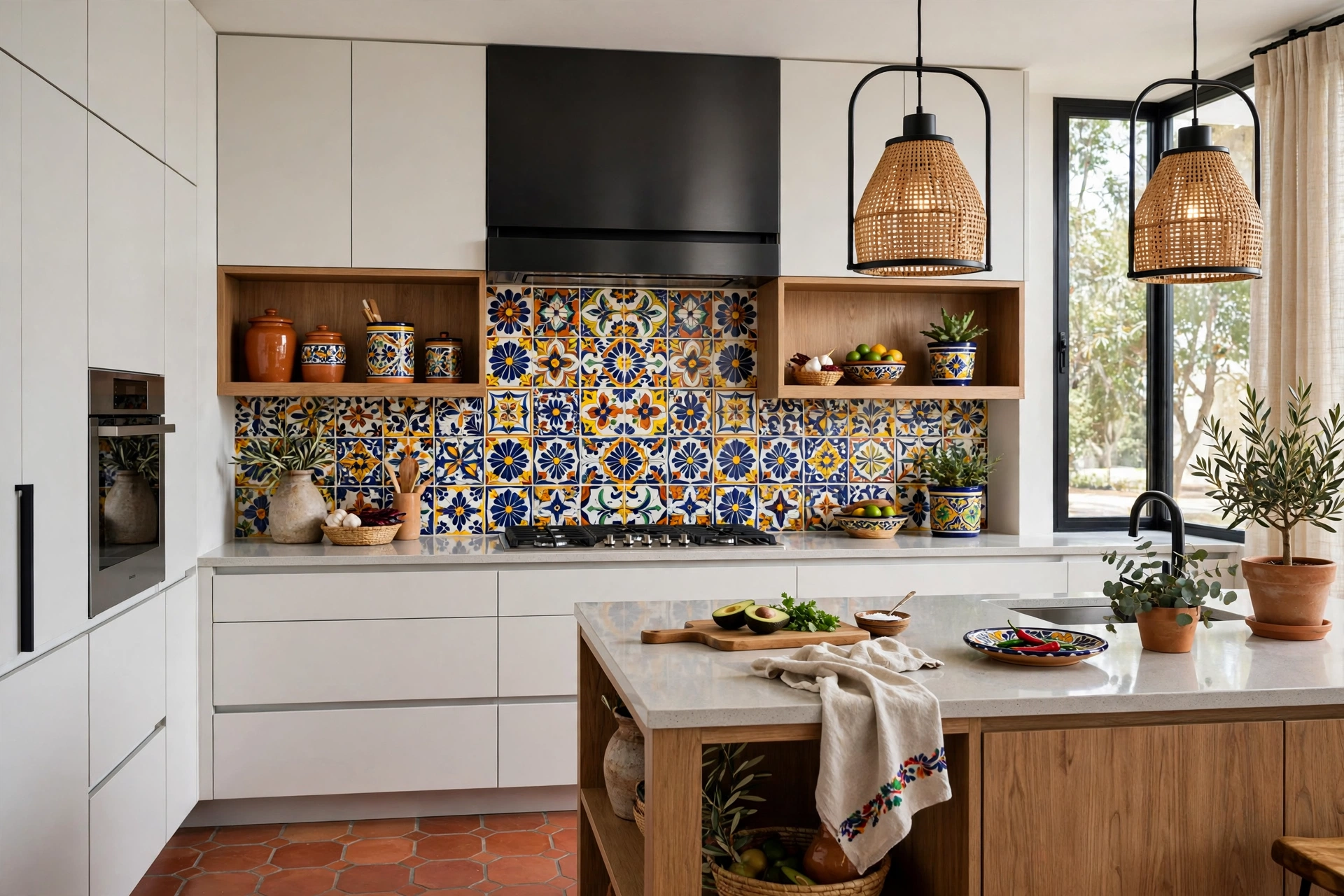
Talavera works in a modern kitchen too, when the tile is used as a single bold accent against clean, simple lines. Pair one colorful backsplash with flat-panel cabinets in warm white or pale wood, and keep countertops in plain quartz or concrete.
Limit the Talavera to the backsplash and a few pottery pieces, resisting the urge to tile every surface. This restraint lets the hand-painted color shine like art in a gallery, rather than competing with the modern architecture.
23. Mistakes to Avoid with Talavera Tile
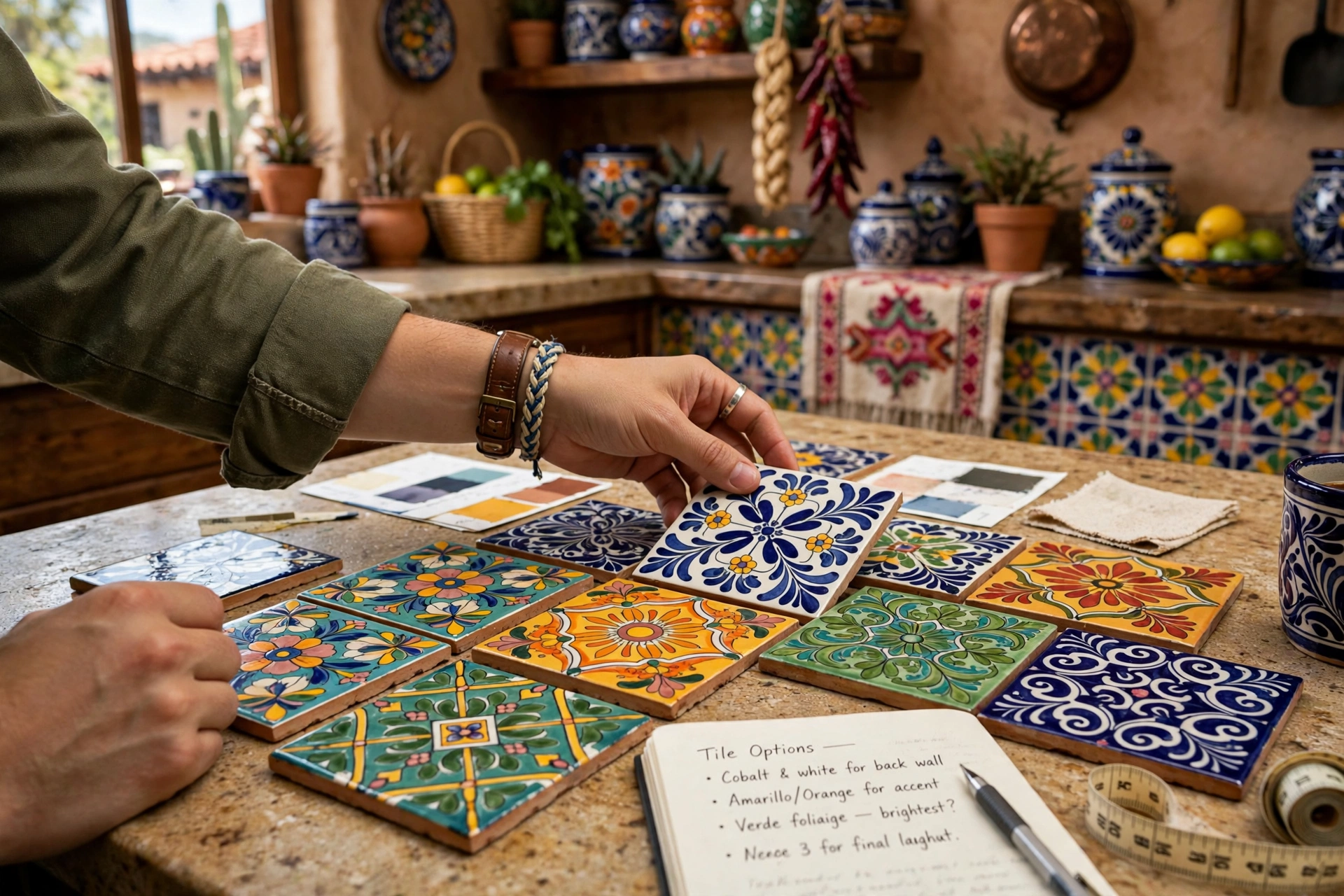
The biggest Talavera mistakes are easy to avoid once you know them: skipping sealer, mixing unrelated palettes, and tiling every surface at once. Test your chosen tiles together under your own kitchen lighting before ordering the full quantity.
Another frequent error is grouting with a dark, contrasting color, which chops the painted designs into a busy grid. Choose grout close to the tile background, seal it well, and the hand-painted patterns will read as one joyful whole.
24. Sourcing Authentic Hand-Painted Talavera
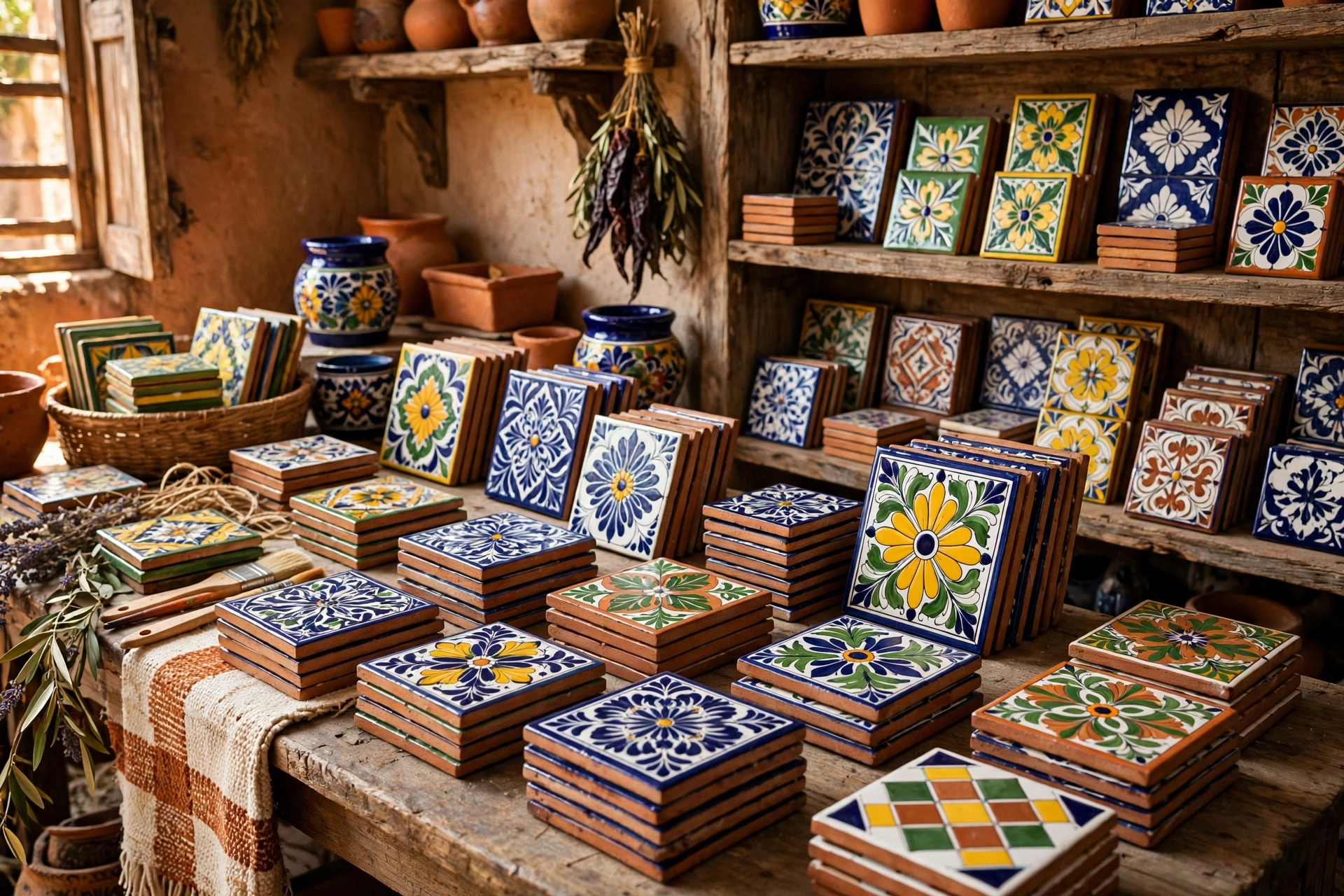
Authentic Talavera comes from Puebla, Mexico, where artisans hand-paint each tile and fire it twice for durability. Look for slight variations in brushwork and glaze, which prove the tiles were painted by hand rather than printed by machine.
Buy from reputable importers who can confirm the tiles are lead-free for food areas, and order samples before committing to a large batch. The mistake to avoid is choosing the cheapest printed imitation, which fades quickly and lacks the depth of real Talavera.
25. Finishing Touches for a Mexican Kitchen with Colorful Talavera Accents
The finishing touches turn a good Talavera kitchen into a great one: a bowl of limes on the counter, embroidered tea towels, and one trailing plant above the cabinets. Walk through the kitchen as a guest would, and remove anything that feels busy or unfinished.
These mexican kitchen with colorful talavera accents ideas work best when layered slowly, starting with the backsplash, then the pottery, and finally the small details. With patience and joyful color, your kitchen will feel warm, vibrant, and unmistakably Mexican for years.
One Comment