Sage Green Kitchen Backsplash Ideas You’ll Love: 25 Ways to Style It
Sage green is the color kitchens have been waiting for — soft, earthy, and endlessly versatile. As a backsplash, it brings calm to busy mornings and sophistication to dinner parties, pairing beautifully with everything from crisp white to warm walnut. Whether you’re planning a full remodel or a weekend refresh, these sage green kitchen backsplash ideas will help you get the look exactly right. And if you’re rethinking the whole space, don’t miss our Modern Kitchen Ideas and Small Kitchen Ideas with Dining Table guides.
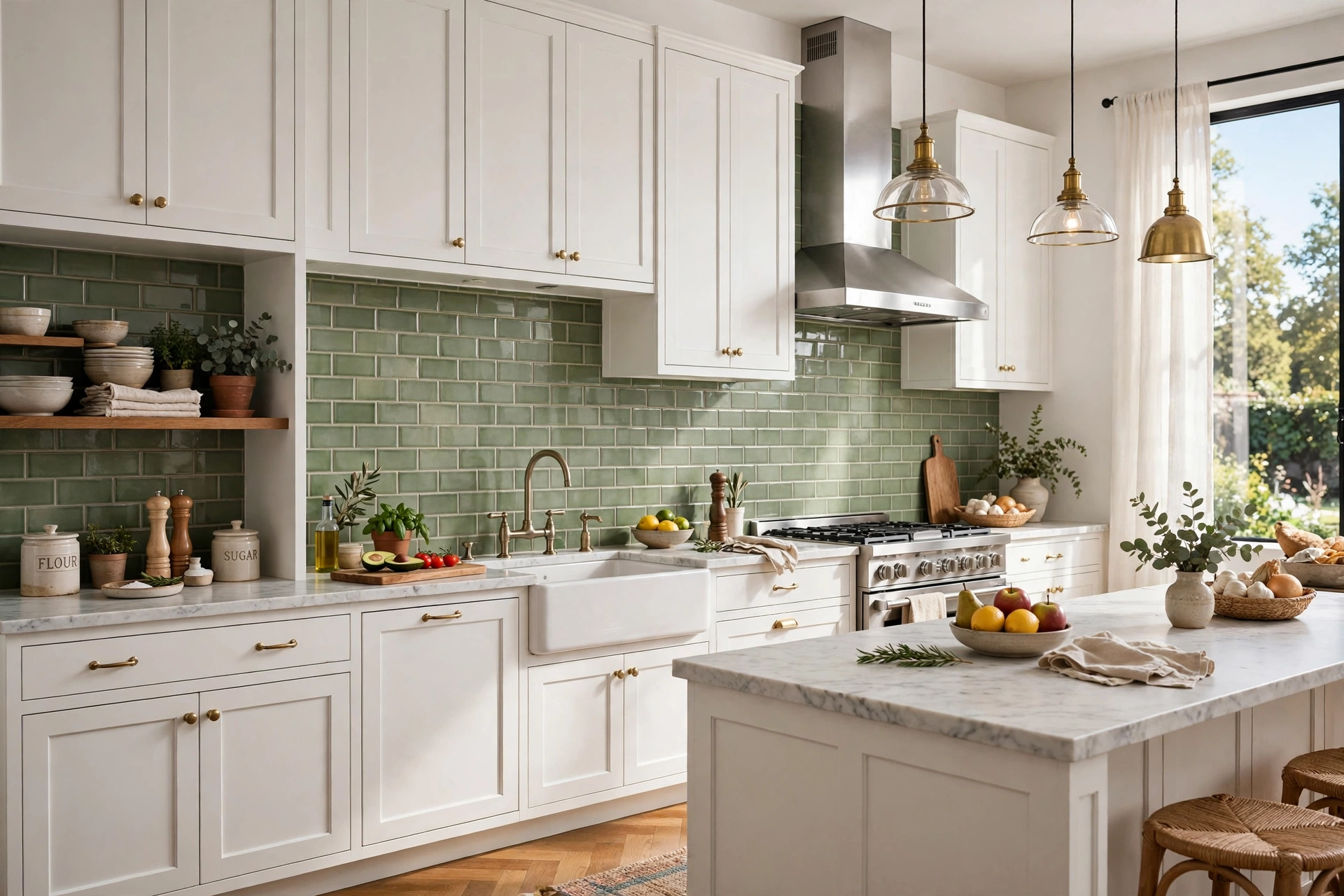
1. Go Classic with Sage Subway Tile
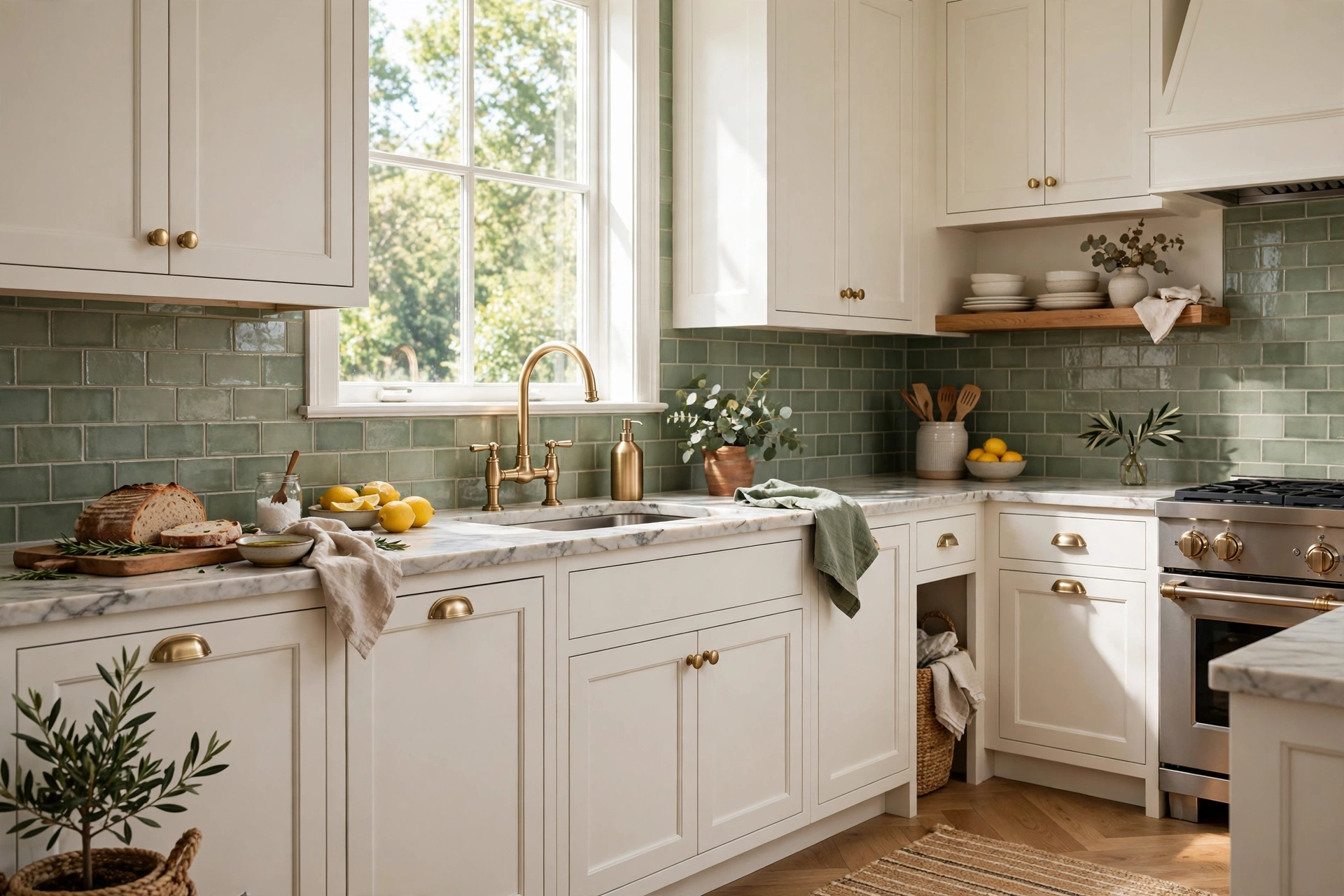
The subway tile is a classic for a reason — and in sage green, it’s anything but boring. The familiar brick pattern keeps things timeless while the muted green adds a fresh, current feel.
Subway tile suits every kitchen style. Sage keeps the classic from feeling stark. Try a contrasting grout for extra definition.
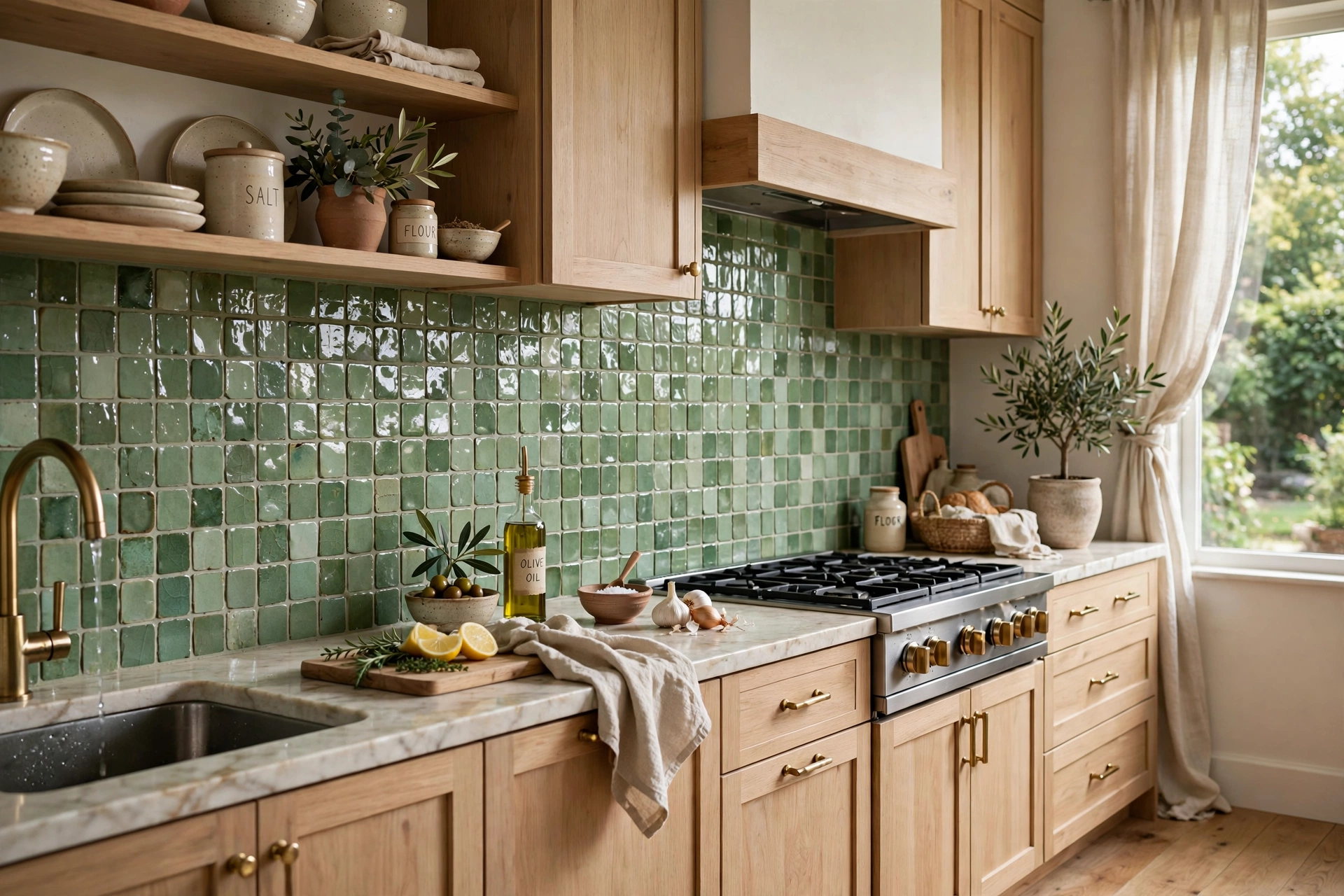
2. Add Texture with Handmade Zellige
Zellige tiles are handmade, so no two are exactly alike — the result is a backsplash with shimmer, depth, and movement that flat ceramic can’t match. In sage, it’s quietly luxurious.
Handmade variation creates living texture. The glaze catches light beautifully. Imperfection is the whole point.
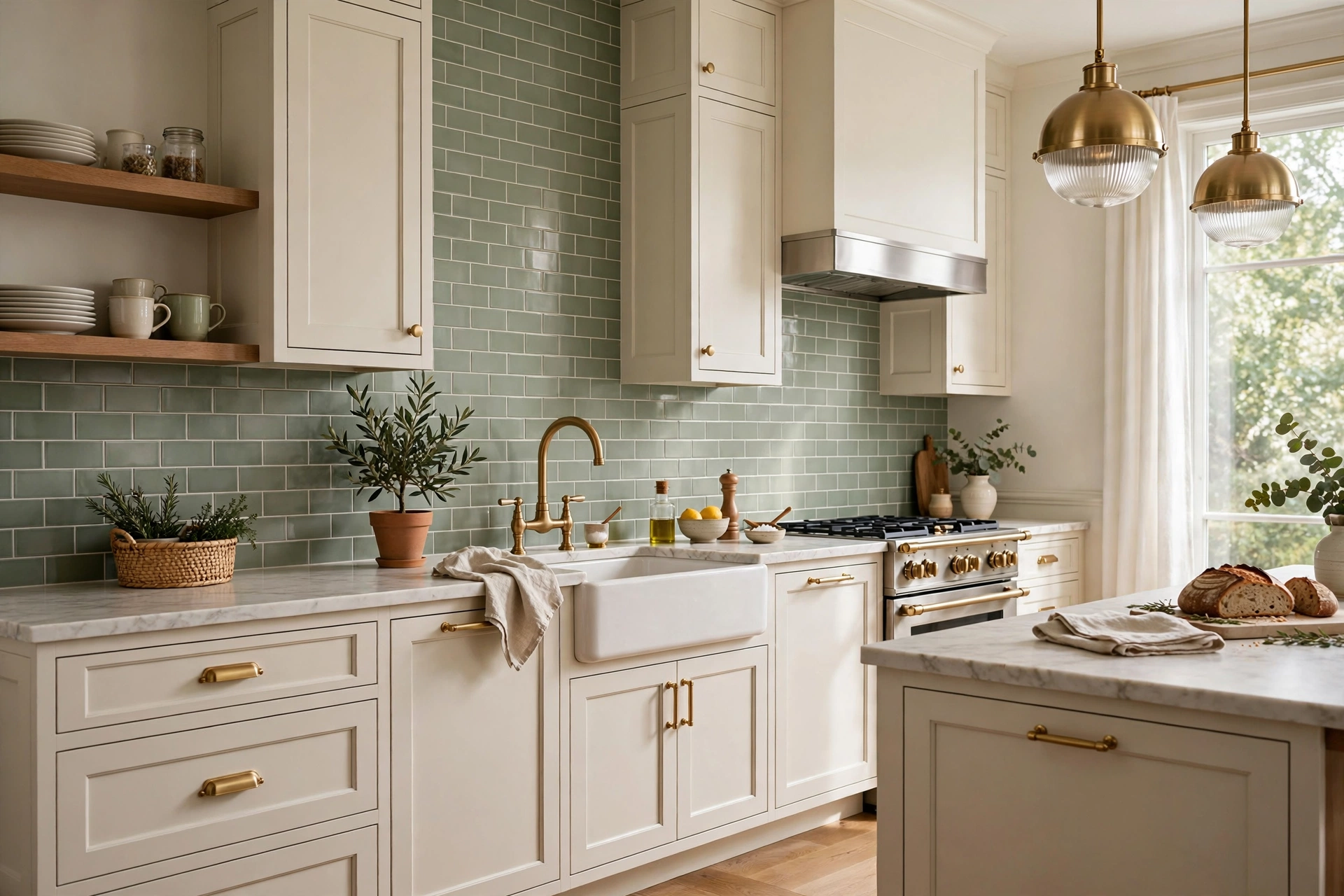
3. Pair Sage with Warm Brass
Sage green and brushed brass are a match made in design heaven. The cool earthiness of the tile makes warm metallics glow — faucets, handles, and pendants all get an upgrade by association.
Brass warms up sage’s cool undertones. Mixed metals stay in the same warm family. Even small brass accents make an impact.
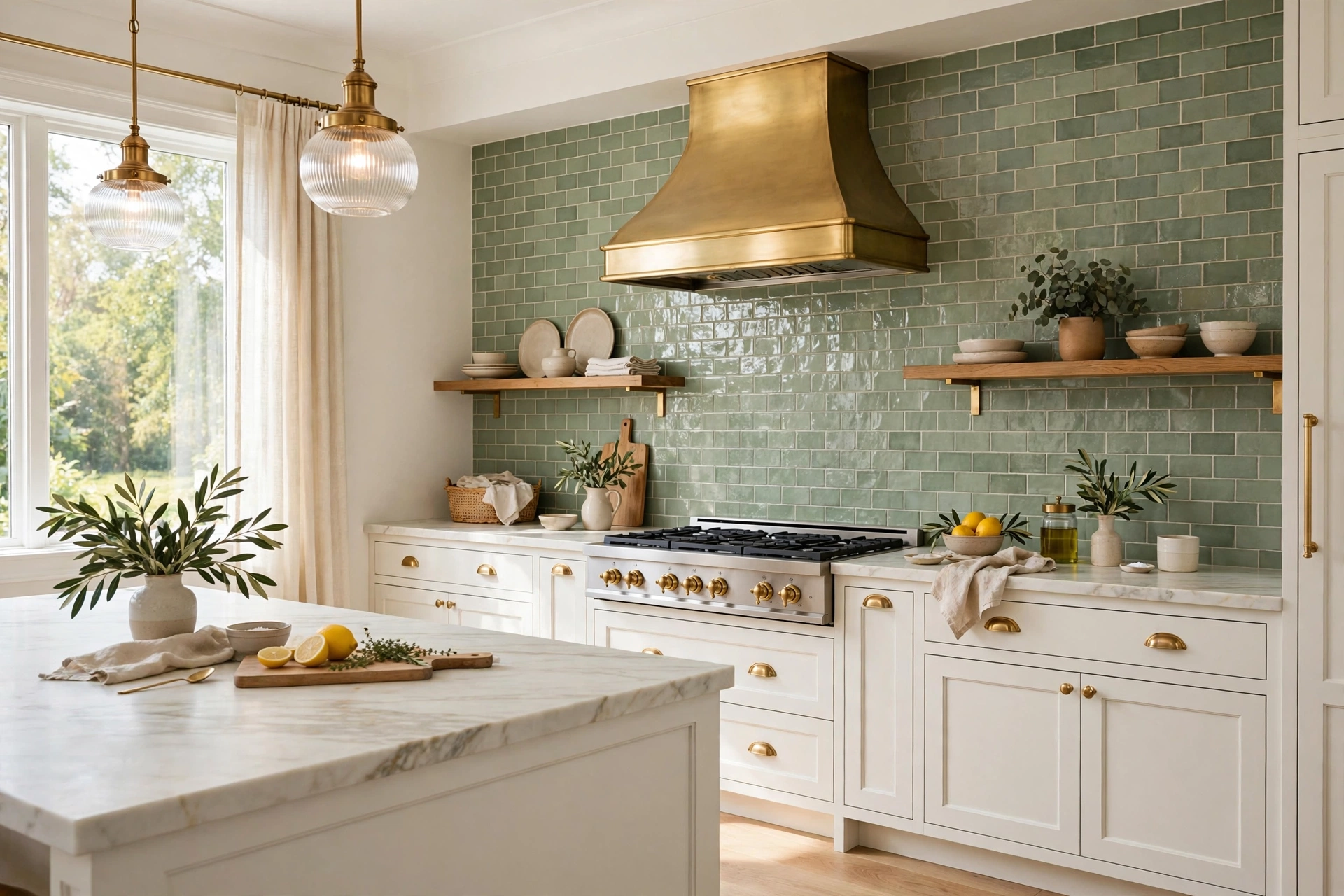
4. Combine with Marble Countertops
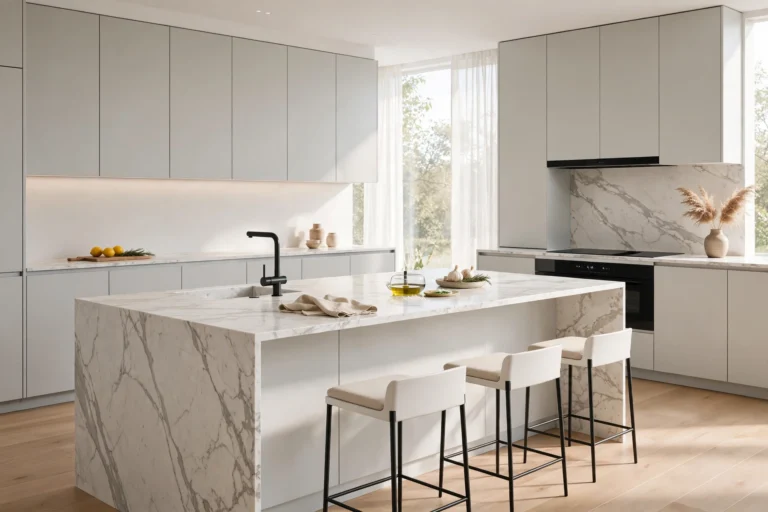
White marble with soft veining next to a sage backsplash is elegance without effort. The stone’s natural movement plays against the tile’s calm color for a high-end, collected look.
Marble’s veining adds organic pattern. Honed finishes feel softer than polished. Seal it well in a working kitchen.
5. Choose Between Matte and Glossy
Finish changes everything: glossy sage bounces light around and feels fresh, while matte reads as velvety and modern. In a dark kitchen, gloss is your friend; in a bright one, matte adds calm.
Glossy tile amplifies natural light. Matte hides smudges and water spots. Sample both in your actual lighting.
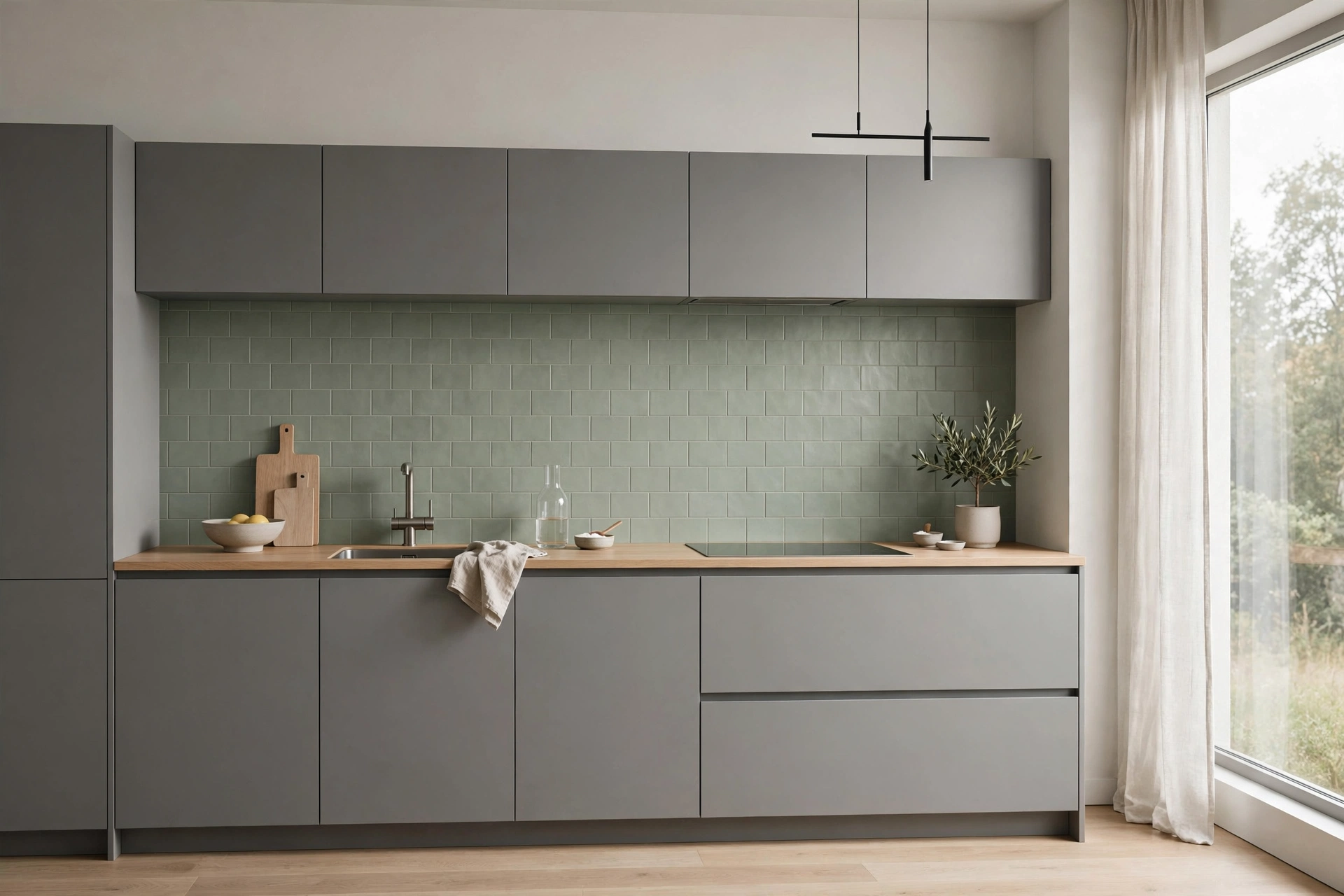
6. Lay It in Herringbone
A herringbone pattern turns simple sage tile into a design statement. The zigzag adds energy and craftsmanship, making even budget tile look custom and considered.
Herringbone adds movement to calm color. It makes small areas feel larger. Expect slightly higher installation costs.
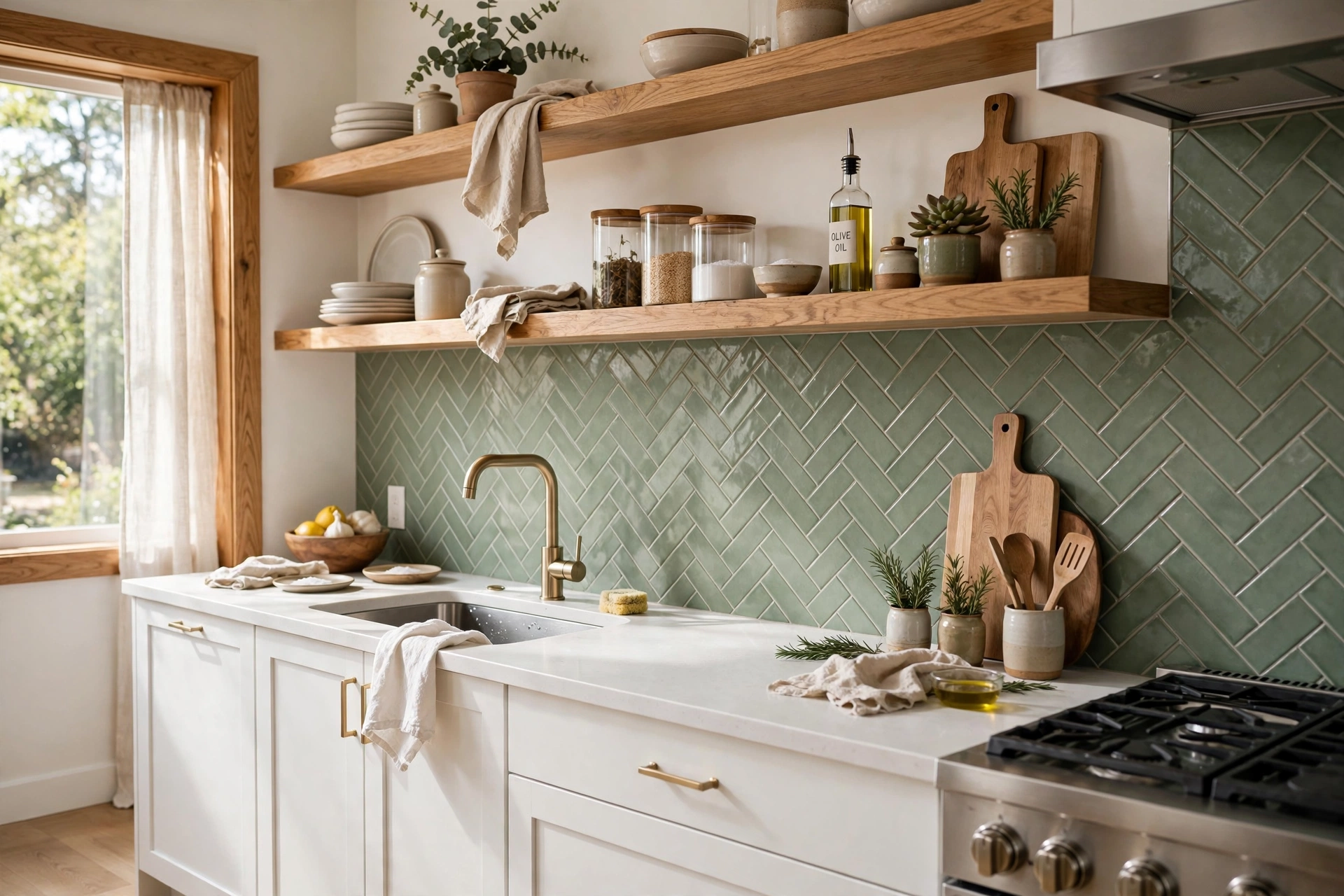
7. Ground White Cabinets with Sage
White cabinets plus a sage backsplash is the can’t-miss combination — crisp up top, earthy in the middle, and endlessly fresh. It’s the kitchen equivalent of a white shirt with olive chinos.
White keeps the kitchen feeling bright. Sage adds the personality. The combo works in any size space.
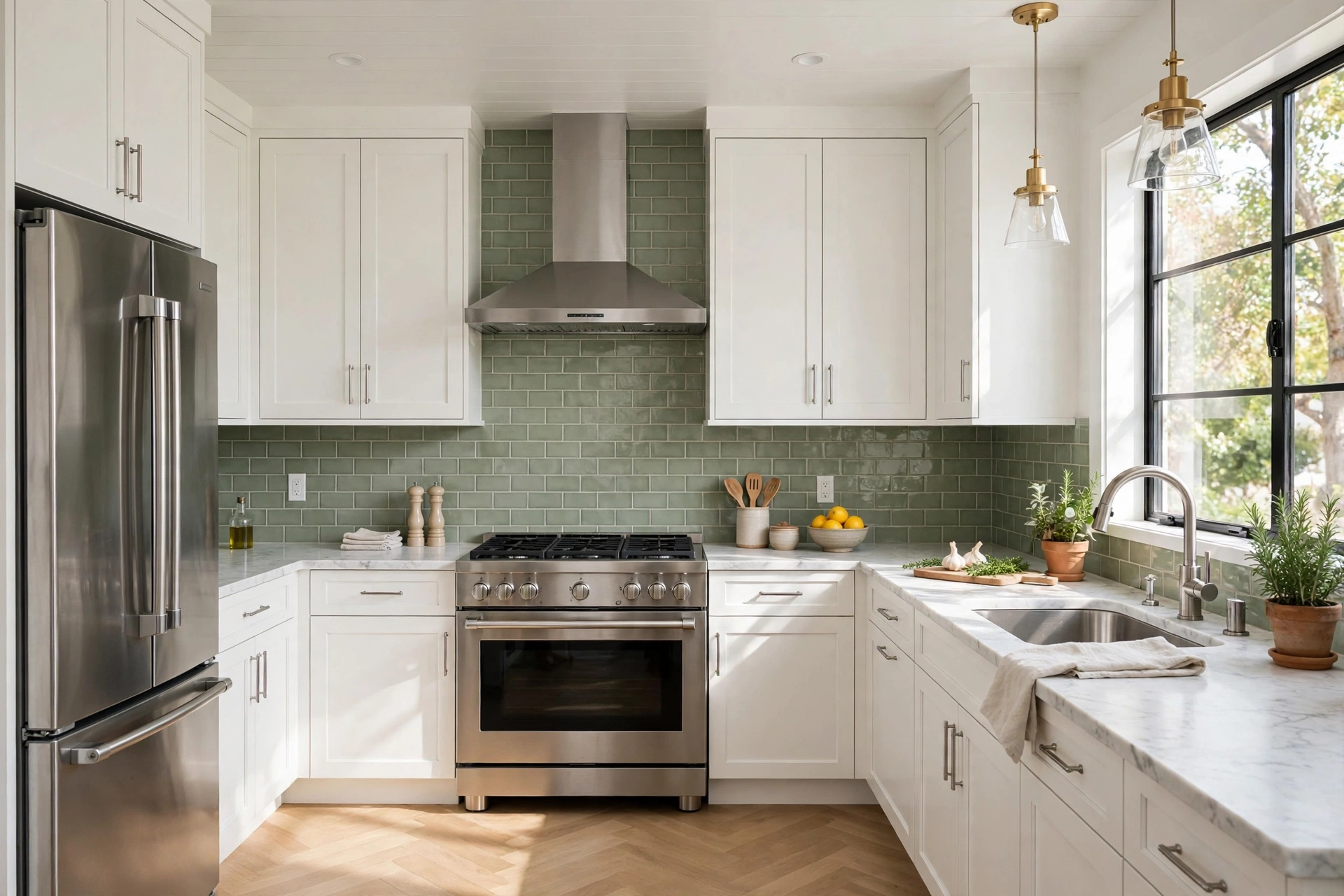
8. Warm It Up with Wood Tones
Sage green loves natural wood — oak floors, walnut shelves, butcher-block counters. The combination feels organic and grounded, like a kitchen that grew rather than was installed.
Wood tones echo sage’s earthiness. Open wood shelves break up tile expanses. Mix light and mid-tone woods freely.
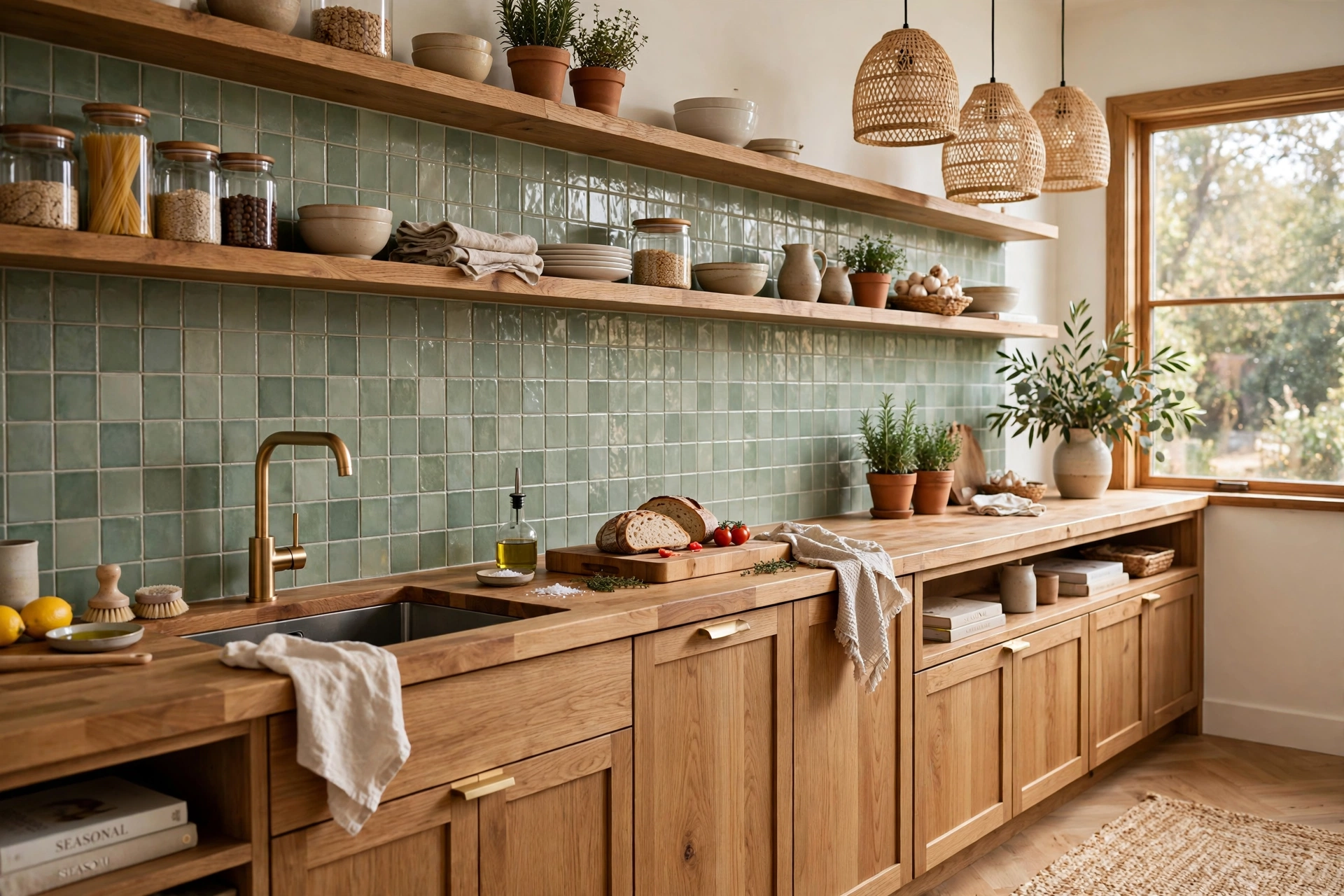
9. Take the Tile Full-Height
Running the backsplash all the way to the ceiling — especially behind the range or around a window — creates a dramatic, cohesive wall of color. It’s bold, but sage’s softness keeps it serene.
Full-height tile makes ceilings feel taller. It’s ideal behind a statement range. The fewer the upper cabinets, the better it looks.
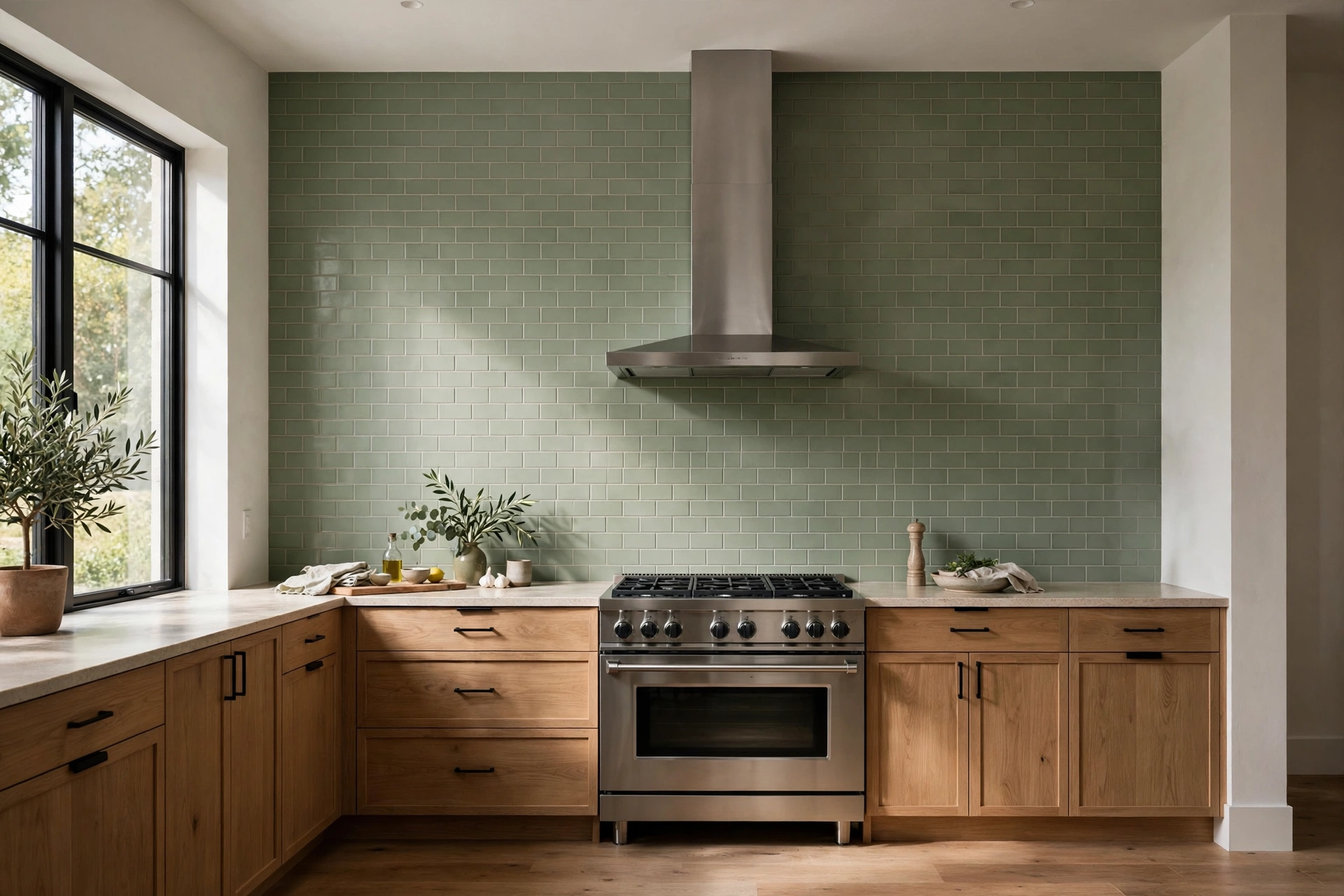
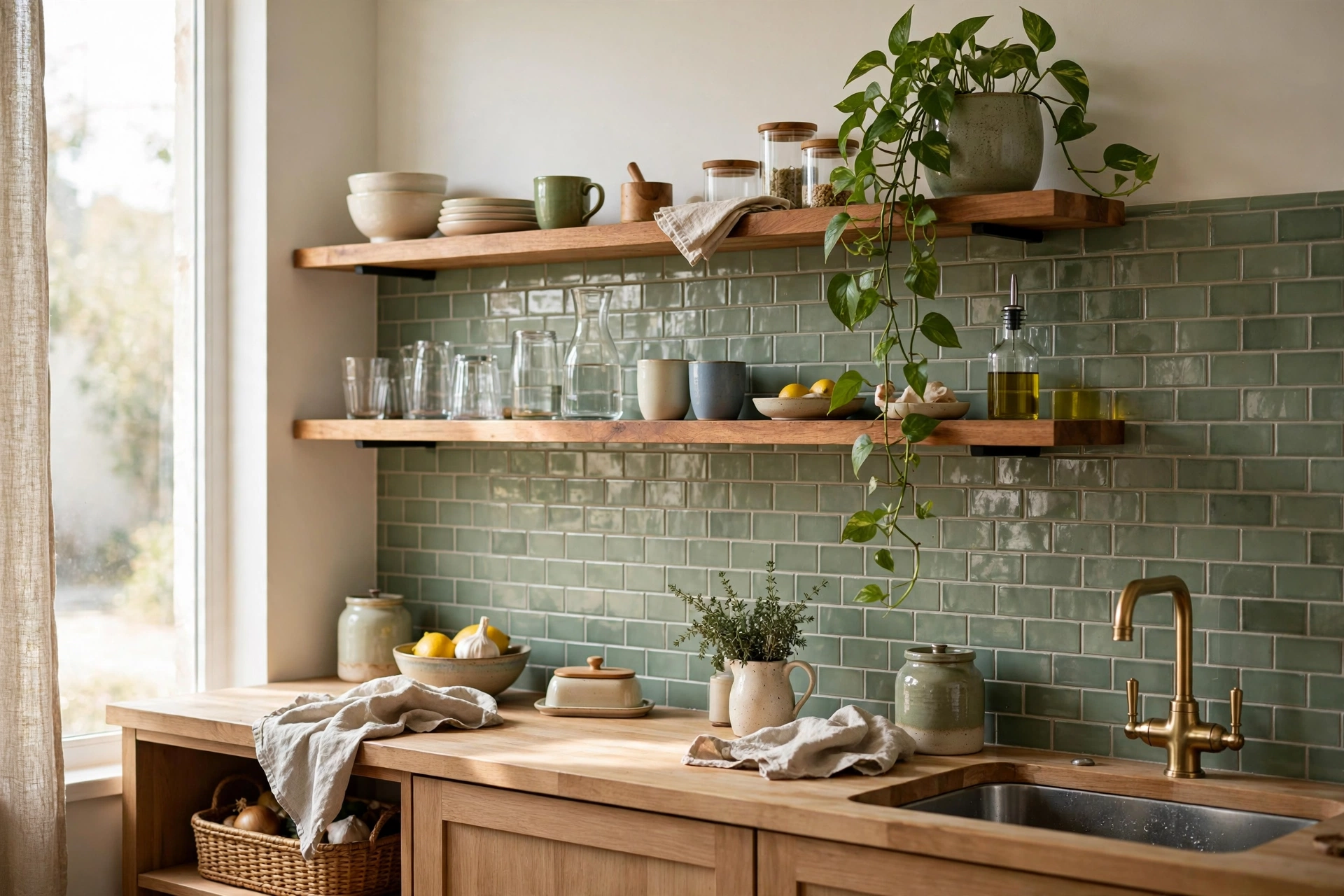
10. Layer Behind Open Shelving
Open shelves over a sage backsplash give you styling space and color in one move. Ceramics, glassware, and trailing plants pop against the green — a display that changes with the seasons.
Open shelving shows off the tile. Keep shelf styling simple and edited. Plants thrive in kitchen humidity.
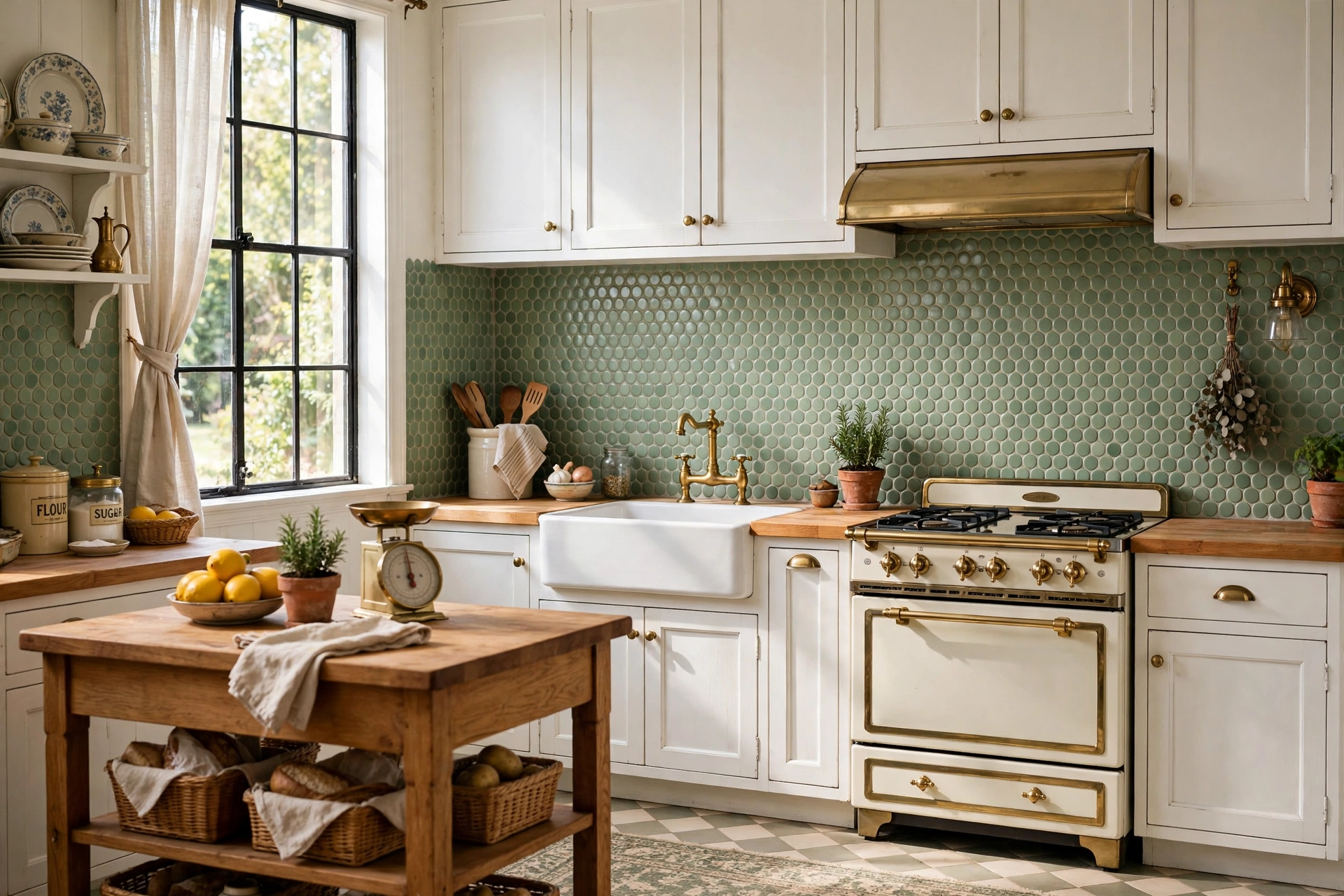
11. Try Playful Penny Tile
Penny rounds in sage green bring retro charm with a modern color story. The small scale adds texture and works beautifully as an accent strip or a full charming backsplash.
Penny tile suits vintage and eclectic kitchens. The grout lines add slip resistance. It’s a great DIY-friendly option.
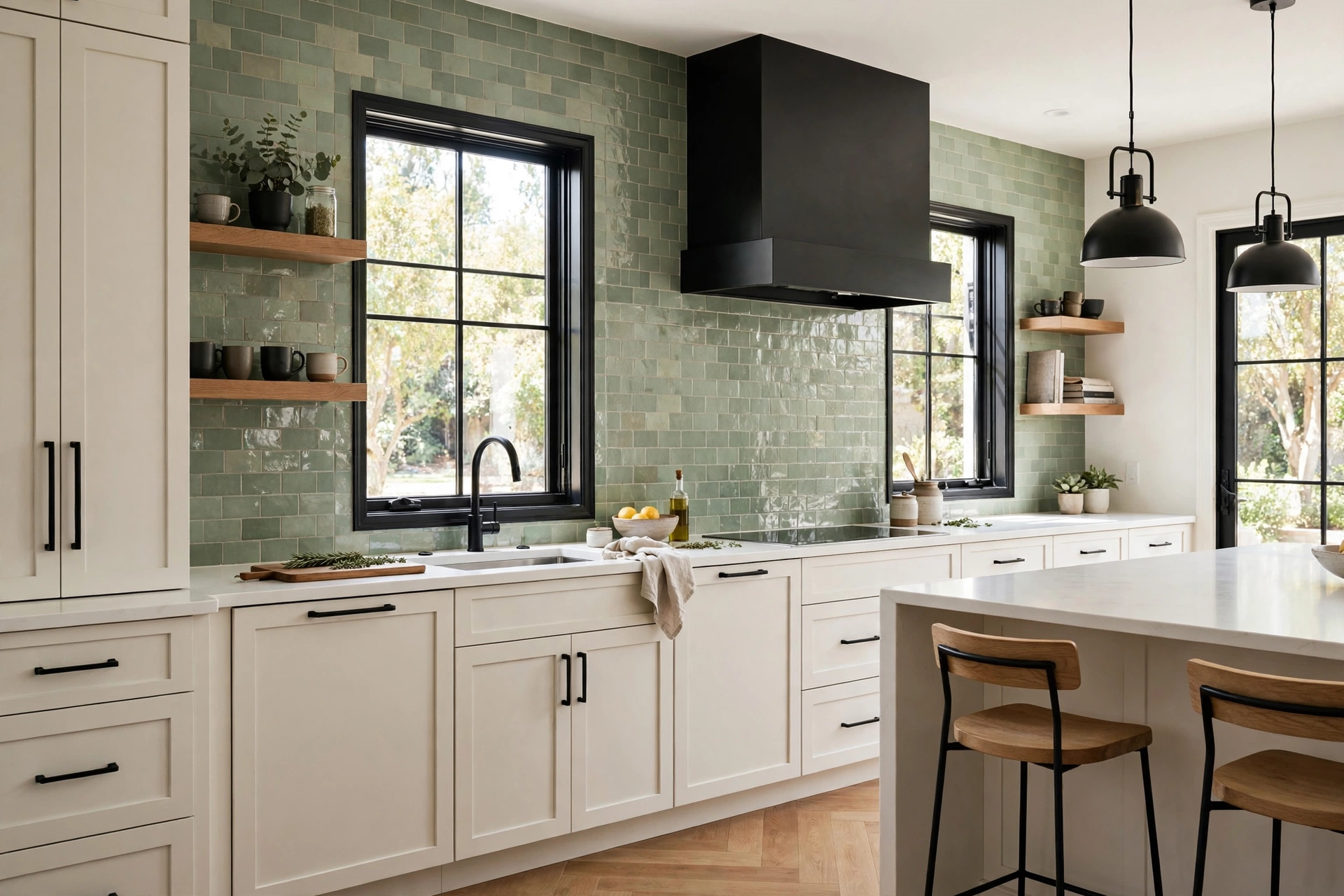
12. Add Drama with Black Accents
Sage goes sophisticated fast when paired with black — black window frames, a black faucet, dark hardware. The contrast sharpens the green and gives the kitchen a tailored edge.
Black accents add crisp definition. A little goes a long way. Matte black feels current, not harsh.
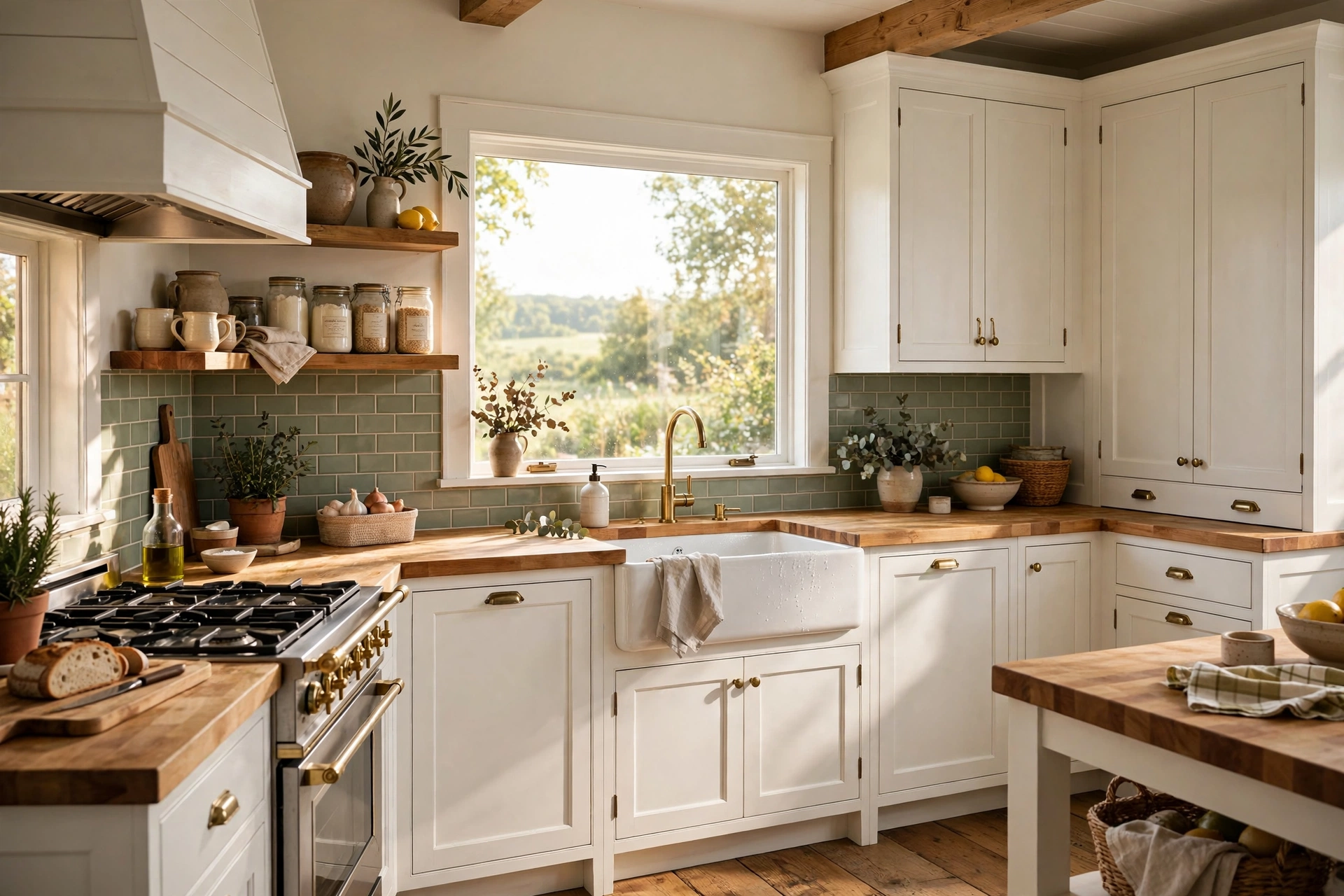
13. Embrace Farmhouse Sage Style
Sage green was born for farmhouse kitchens — apron sinks, shaker cabinets, and butcher block. The color’s earthy roots make rustic details feel intentional rather than themed.
Shaker cabinets are the natural partner. Apron-front sinks complete the look. Keep hardware simple and sturdy.
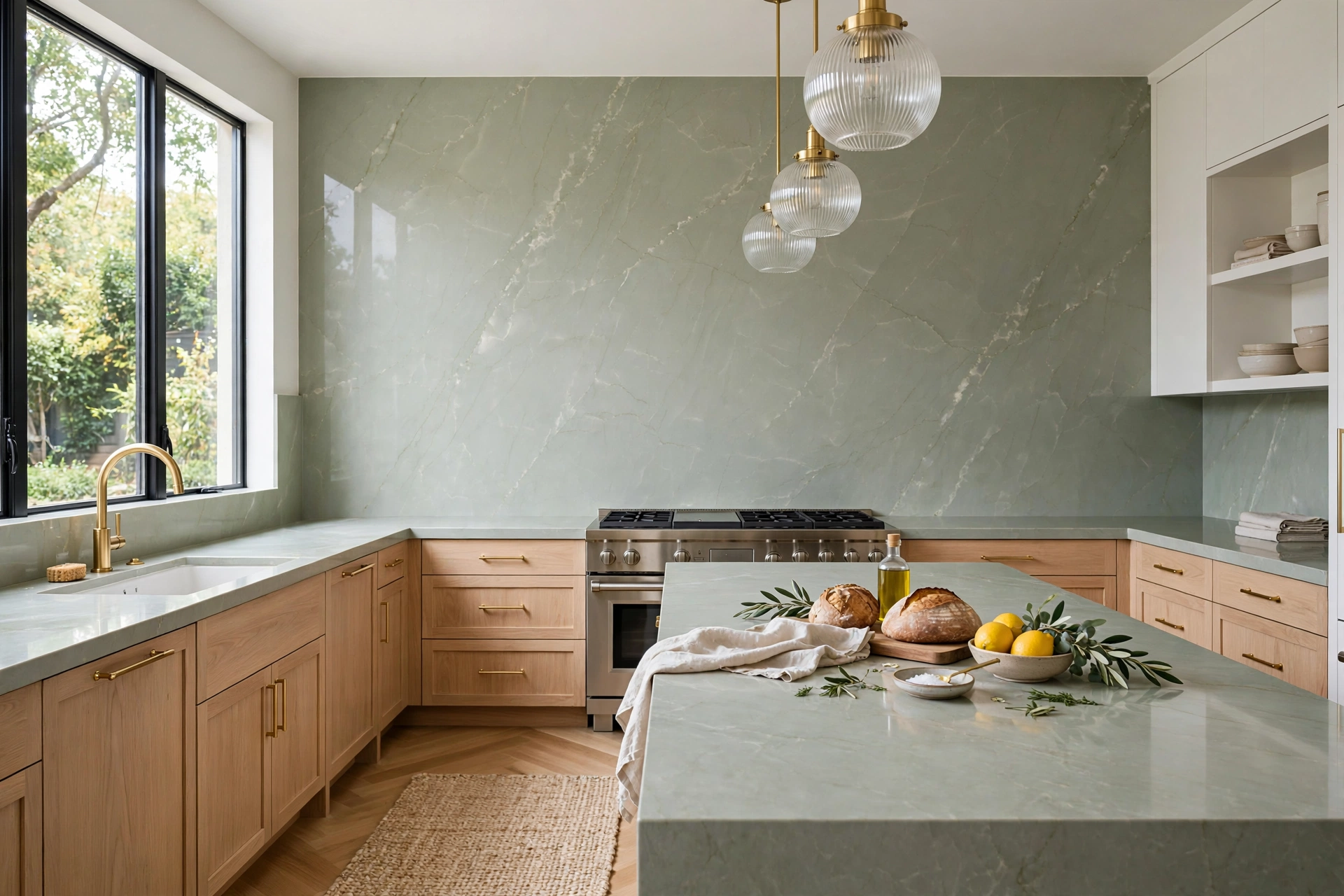
14. Go Seamless with a Slab Backsplash
A single slab of sage-toned quartz or stone running up the wall means zero grout lines and maximum drama. It’s the most luxurious backsplash move — and the easiest to wipe clean.
Slab backsplashes look seamless and high-end. No grout means easy cleaning. Book-matched veining doubles the artistry.
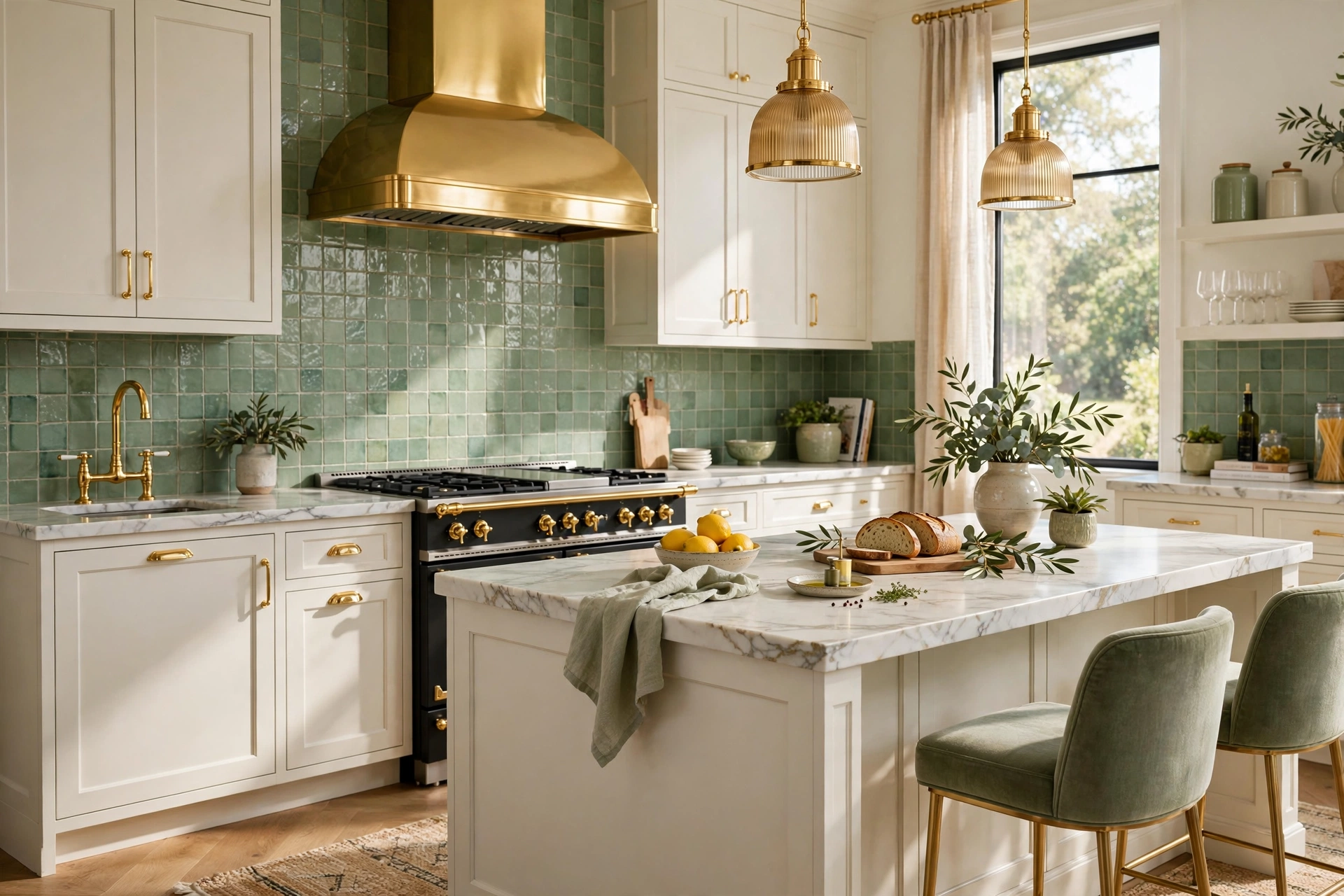
15. Shine with Gold Fixtures
Polished gold or champagne bronze fixtures against sage tile read as pure glamour. The warm metallics pick up the green’s yellow undertones and make the whole kitchen glow.
Gold fixtures elevate sage instantly. Keep the finish consistent across pieces. Unlacquered brass patinas beautifully.
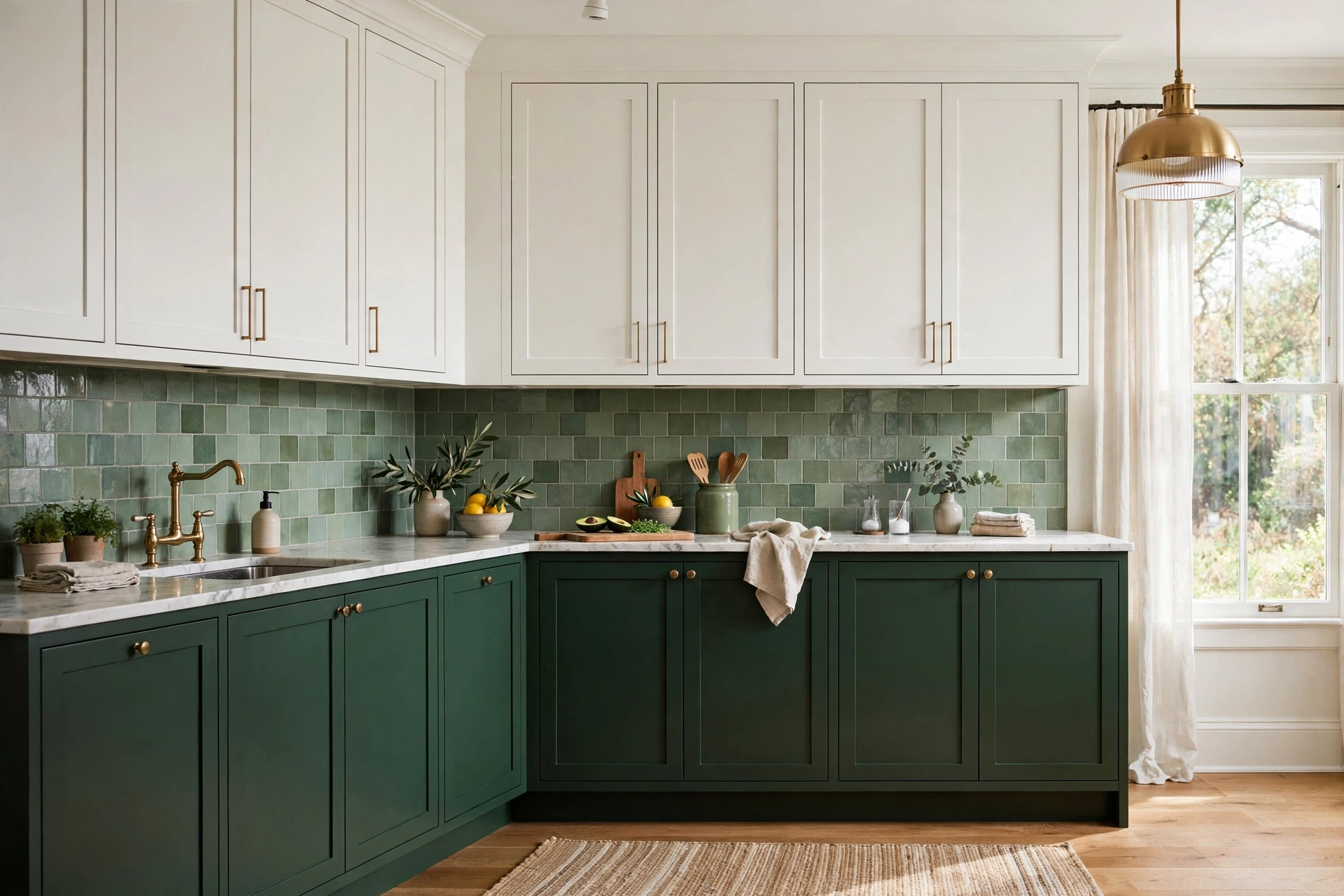
16. Try Two-Tone Cabinets
Sage backsplash between two cabinet colors — say, white uppers and deep green or navy lowers — creates a layered, designer look. The backsplash becomes the bridge between the two tones.
Two-tone cabinets add depth and interest. The backsplash ties the palette together. Dark lowers ground the room.
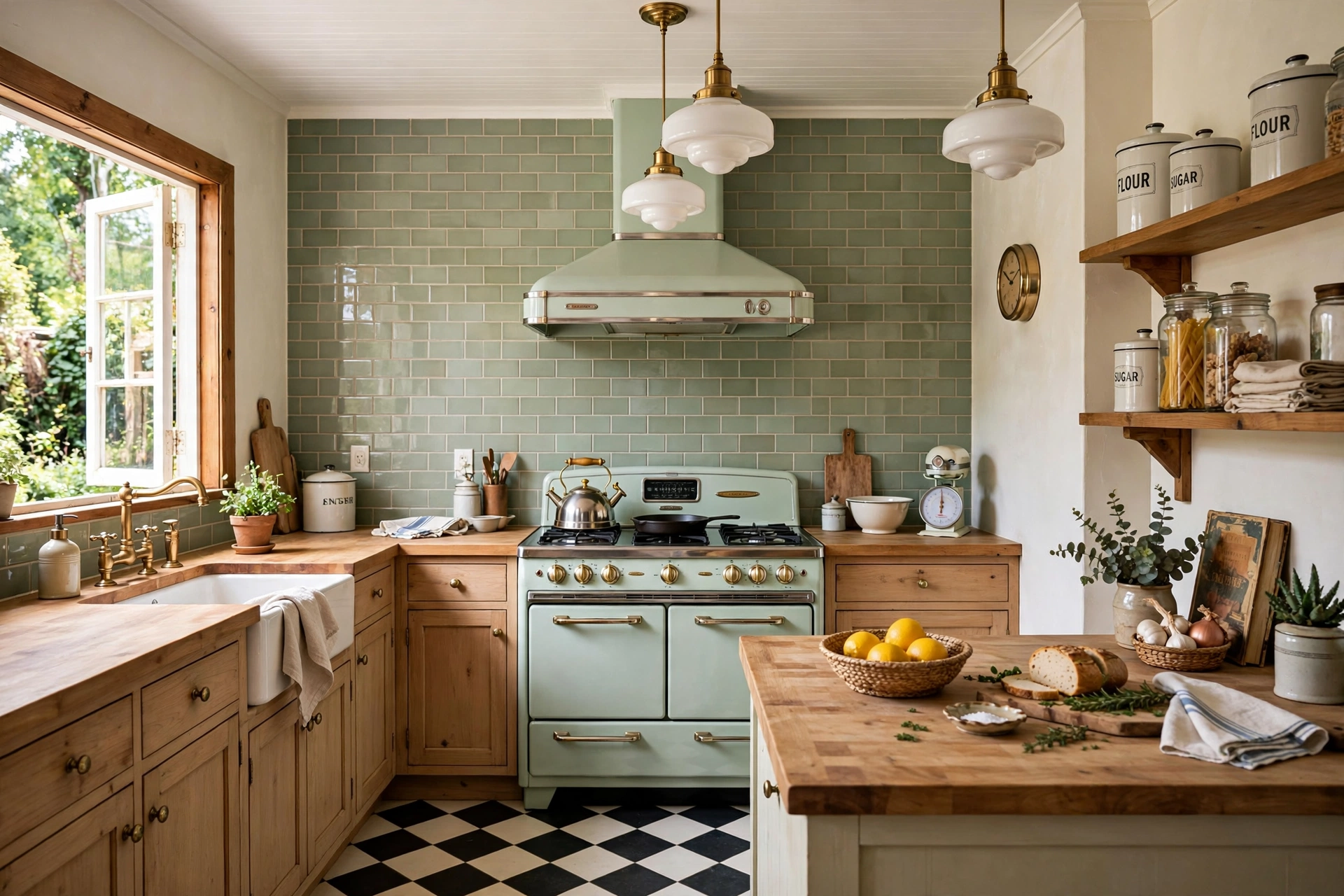
17. Channel Vintage Charm
Sage green has vintage soul — pair it with retro appliances, schoolhouse pendants, or checkerboard floors for a kitchen with nostalgic character that still feels fresh.
Vintage details give sage context and charm. Reproduction fixtures keep function modern. A little patina goes a long way.
18. Use Sage in Small Kitchens
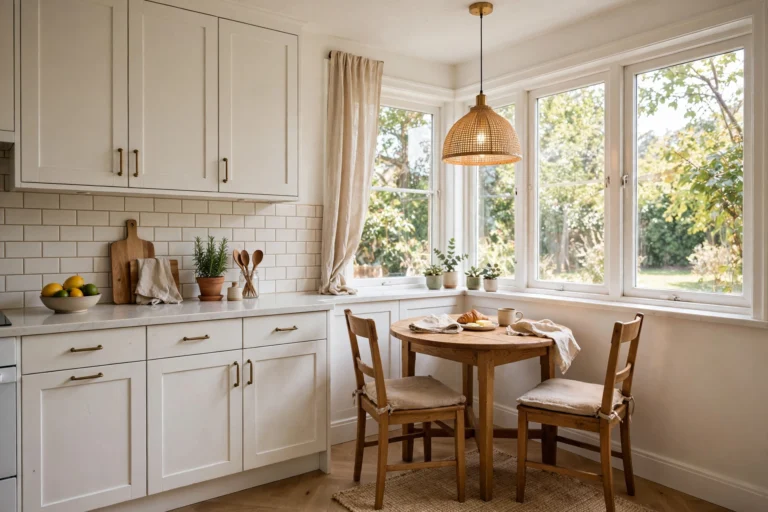
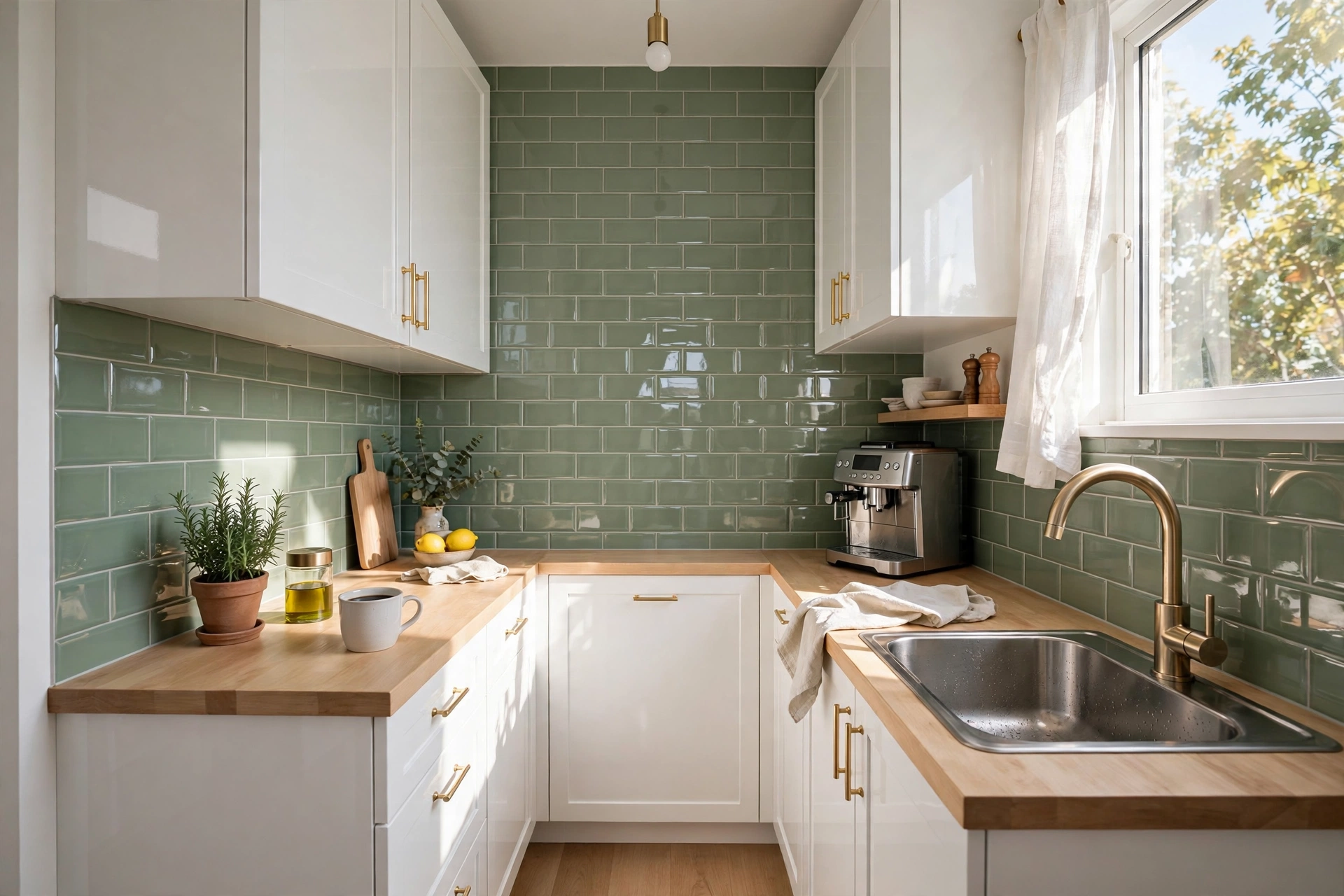
In a compact kitchen, sage green adds color without closing in the space. It reads as a neutral with personality — especially when balanced with white and plenty of light. For more compact-space strategies, see our Small Kitchen Ideas with Dining Table.
Sage acts as a colorful neutral. Light surrounding surfaces keep it airy. Glossy finishes bounce light around.
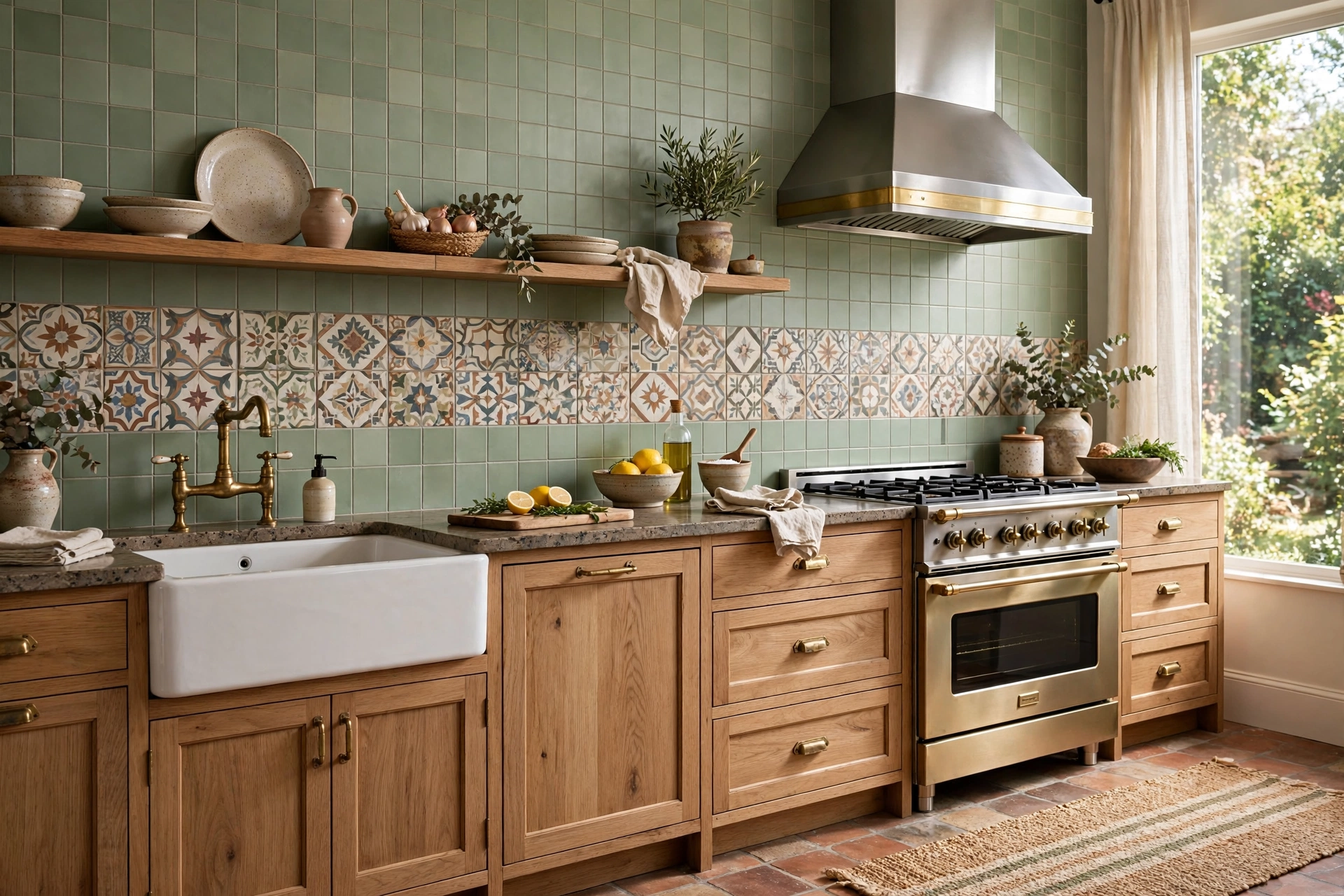
19. Add Pattern with Encaustic Accents
A band of patterned encaustic-look tile within a sage field gives you pattern without commitment. It’s the jewelry — a little goes a long way, and it’s easy to love for years.
Patterned accents add artisanal character. Use them as a feature strip. Cement-look porcelain is durable and practical.
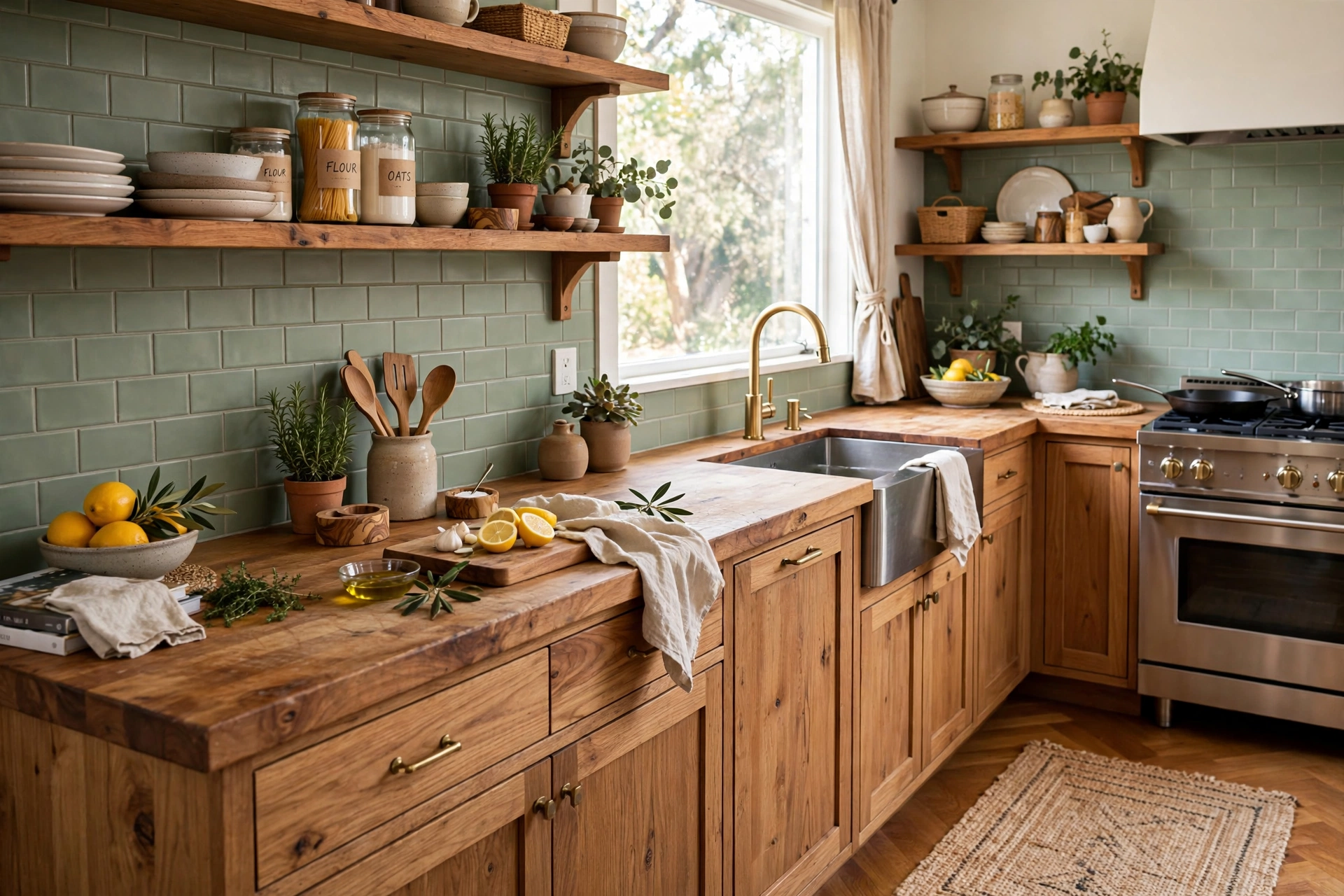
20. Pair with Butcher Block
Butcher-block counters next to sage tile create the warmest, most inviting kitchen combination. It’s casual, tactile, and ages beautifully with daily use.
Butcher block warms up any palette. Oil it regularly for protection. The combo suits relaxed, lived-in kitchens.
21. Contrast with Dark Countertops
Soapstone, honed black granite, or dark quartz against sage tile is moody in the best way. The dark counters anchor the softness of the green for a sophisticated, grounded kitchen.
Dark counters add depth and contrast. Honed finishes feel modern. The pairing suits contemporary spaces.
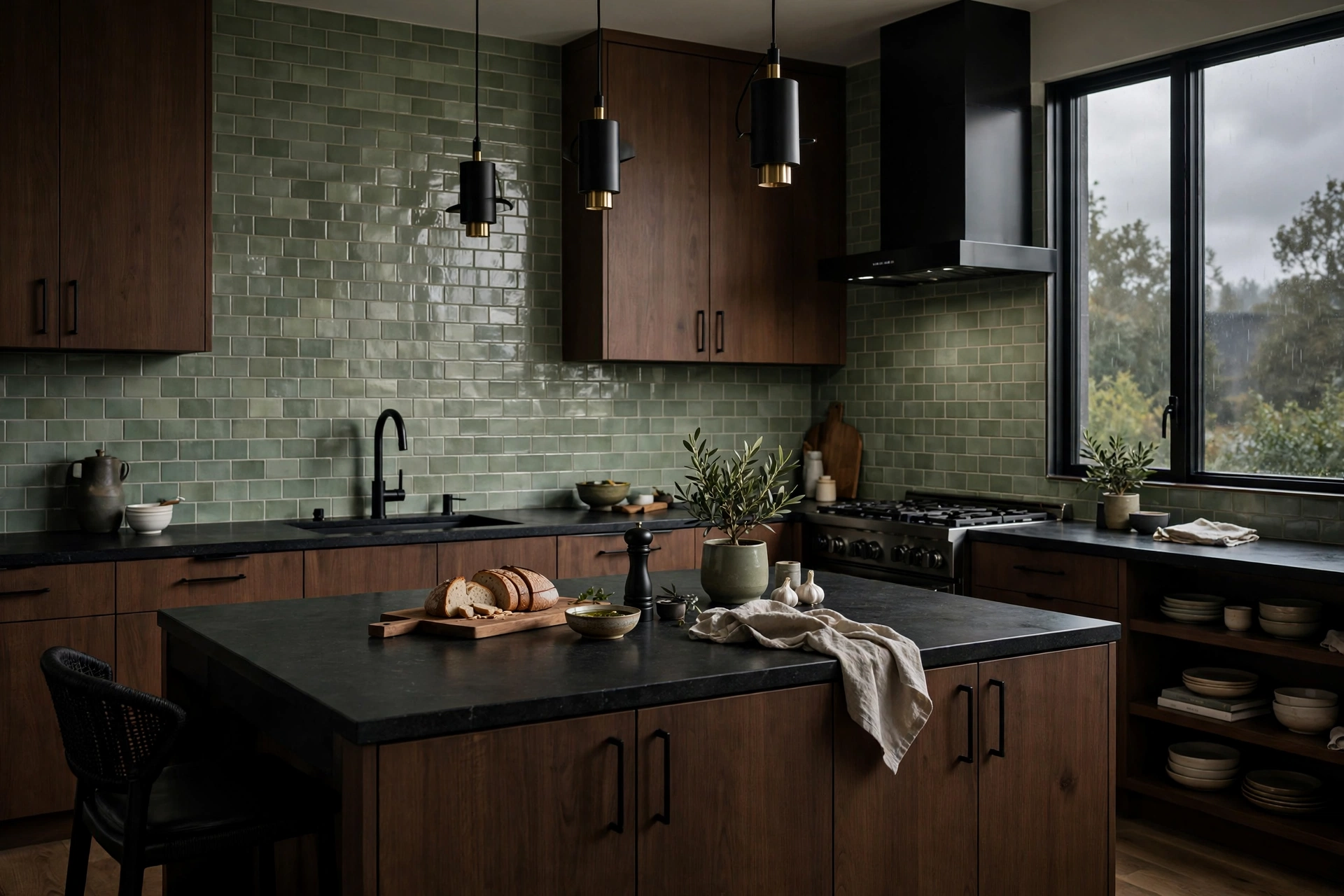
22. Try Reflective Glass Tile
Sage glass tile shimmers — catching under-cabinet light and daylight in a way ceramic can’t. It’s sleek, easy to clean, and gives the green an almost liquid quality.
Glass tile reflects light beautifully. It’s non-porous and stain-proof. Keep grout lines minimal for a sleek look.
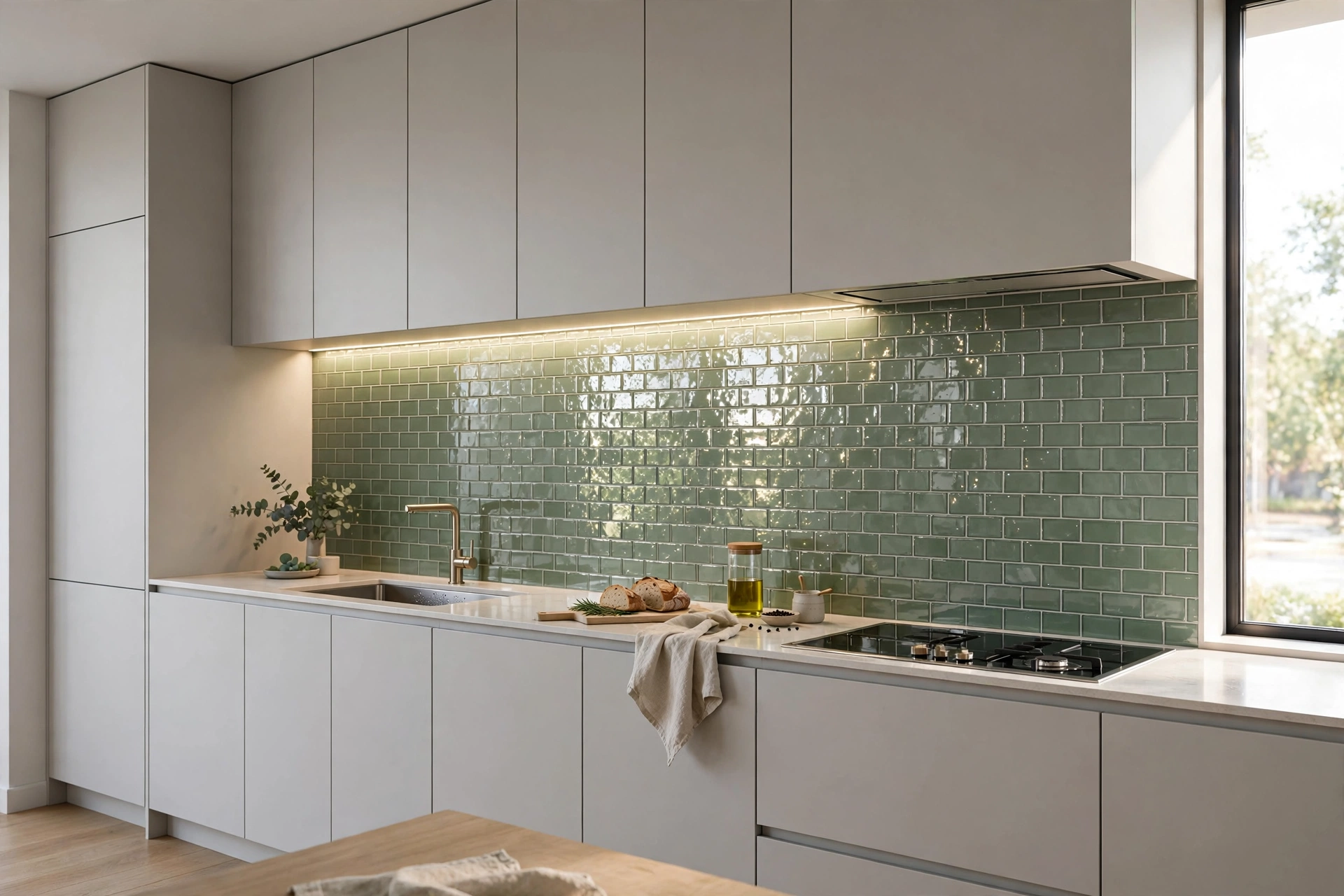
23. Make the Range Wall a Feature
Give the wall behind your range the full treatment — sage tile to the ceiling, maybe a contrasting inset or arched detail. The cooking zone becomes the kitchen’s artwork.
A feature range wall anchors the design. Arched insets add architectural interest. Extend tile behind open ranges fully.
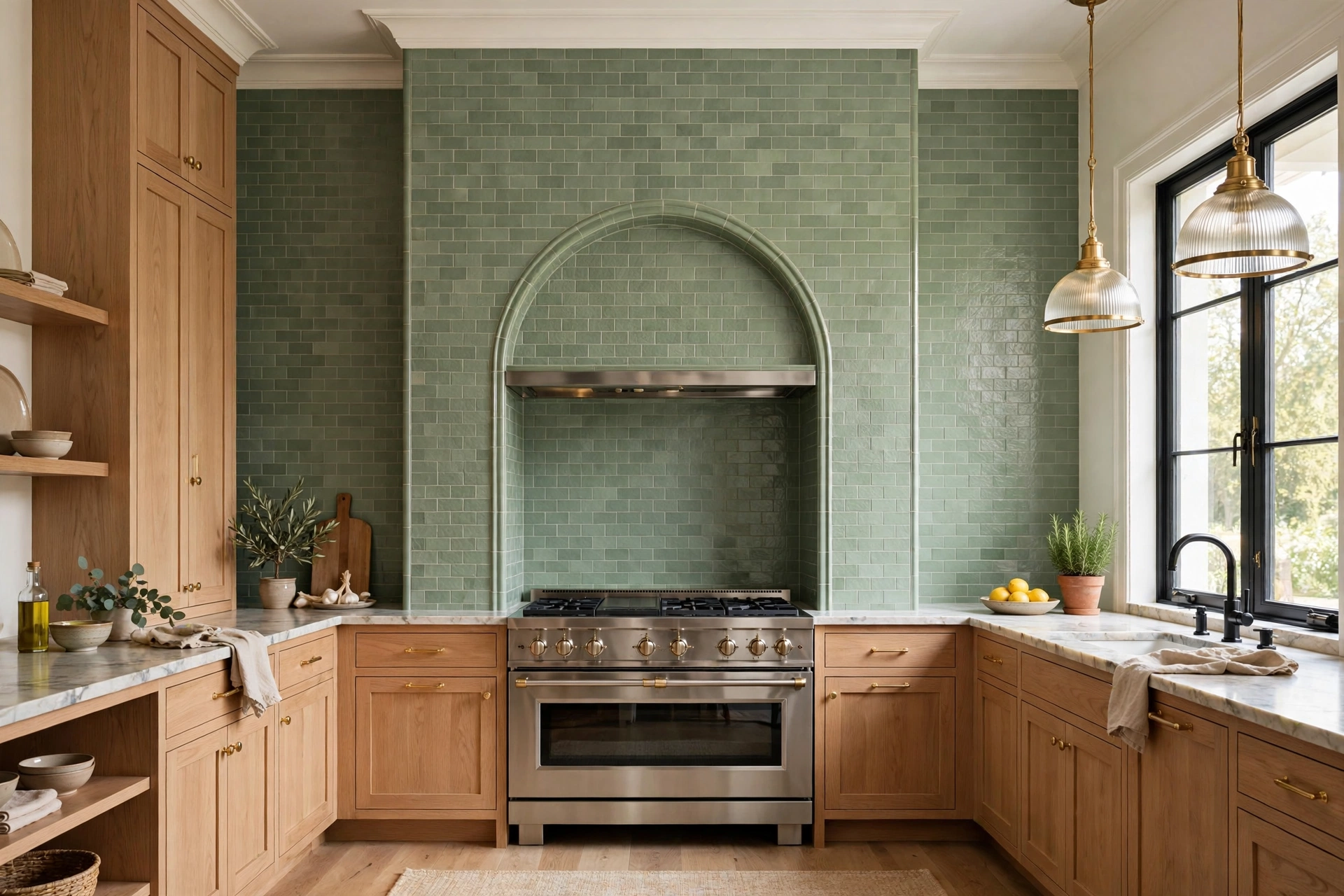
24. Start with Peel-and-Stick
Not ready to commit? Peel-and-stick sage tiles let you test the color for months — or years — at a fraction of the cost. Modern versions look surprisingly convincing.
Peel-and-stick is renter-friendly and reversible. Quality has improved dramatically. It’s perfect for testing a color.
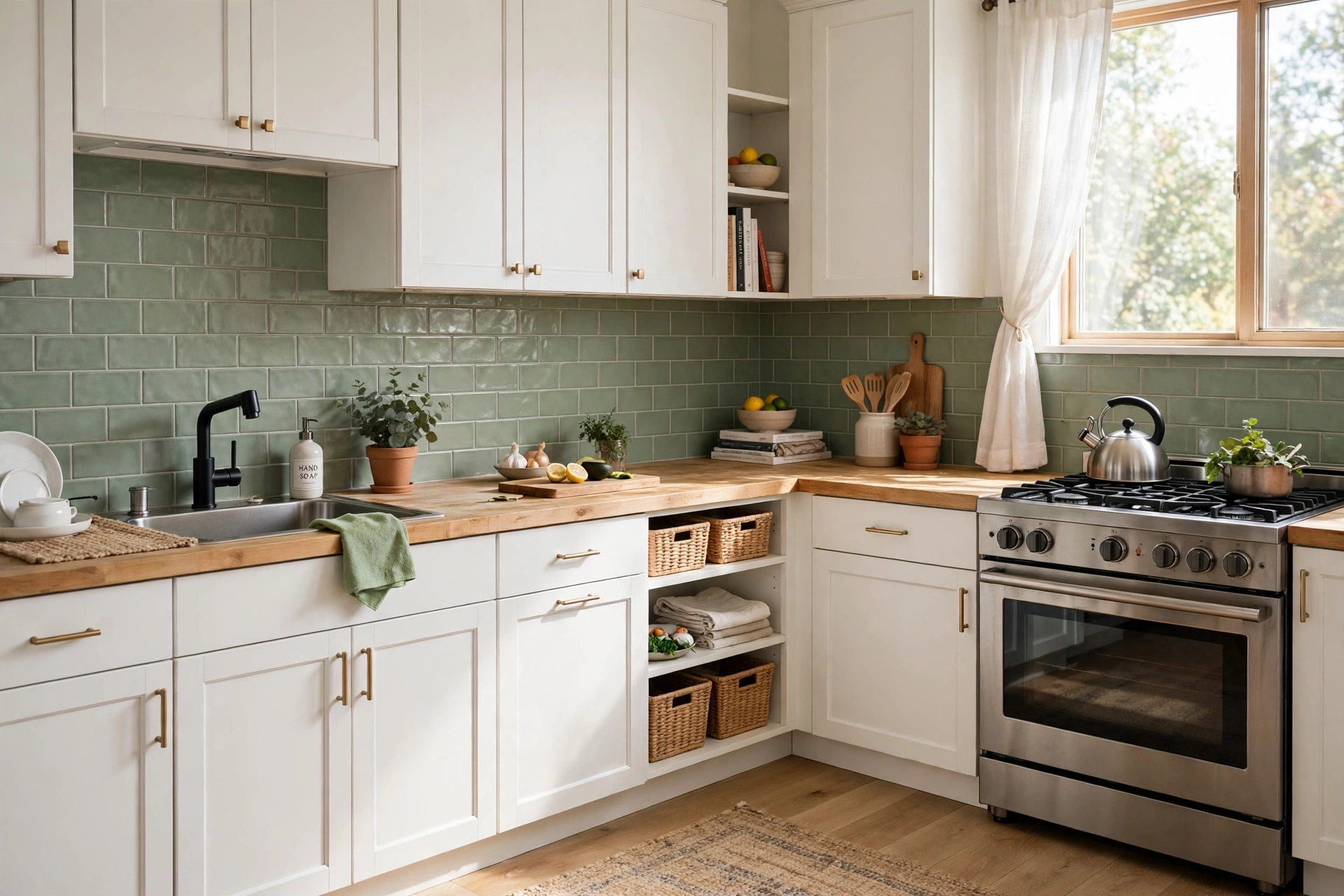
25. Style the Finished Look
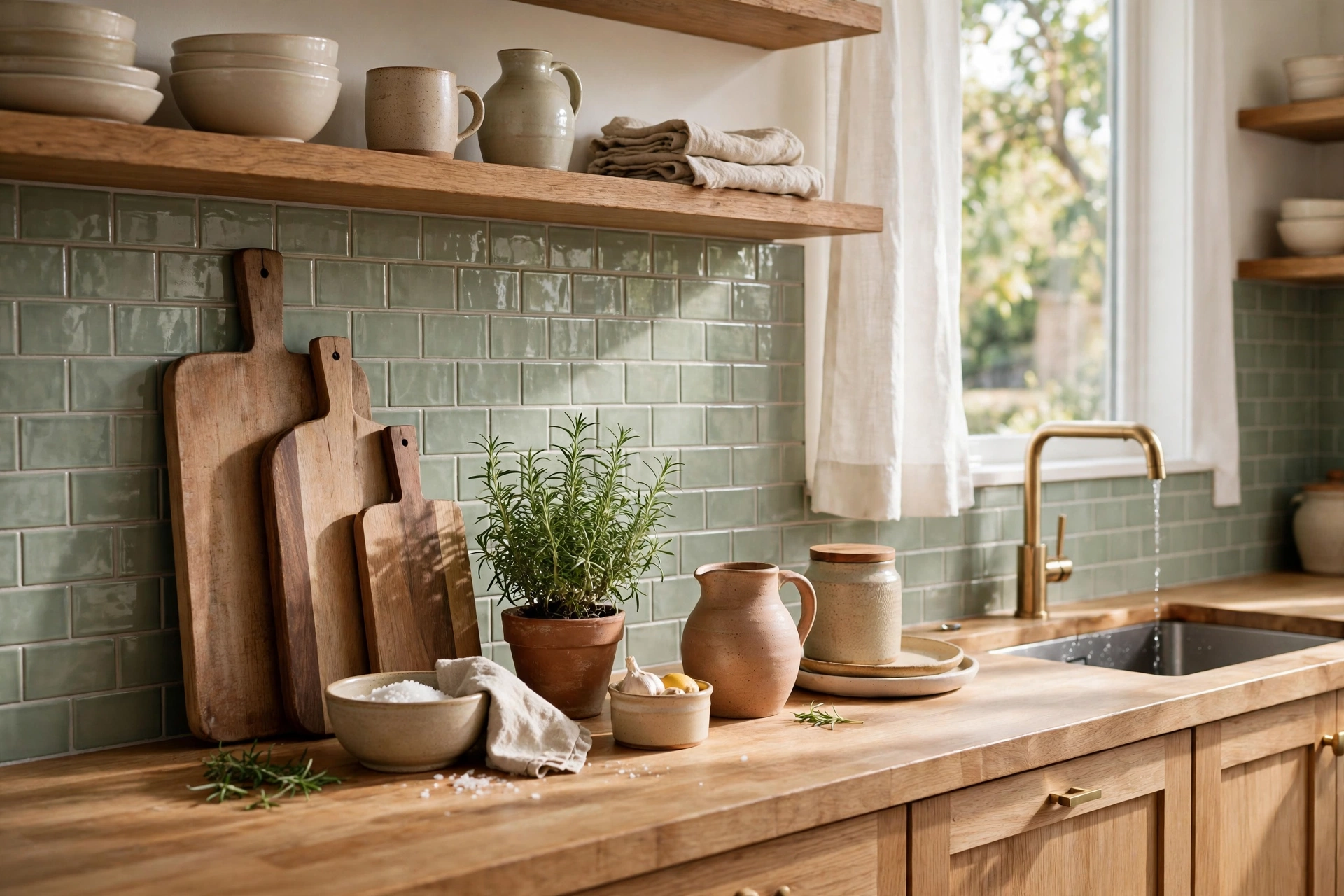
The final step is styling: wooden cutting boards against the tile, a small potted herb, ceramics in complementary tones. Sage is a backdrop that makes everyday objects look curated.
Simple styling lets the tile shine. Natural materials complement sage best. Edit ruthlessly — less is more.